
REVIEW · MOUNT FUJI DAY TRIPS
Full Day Tour to Mount Fuji in Spanish
Mount Fuji in a small group feels personal. This full-day tour around Shizuoka is built for real conversation, not just check-the-box sightseeing. I like the way the day mixes famous spots with quieter, Fuji-centered stops, and you get Spanish explanations that connect the scenery to local faith and everyday life. I also like the max 9-person group size, which keeps the pace human and your questions answered.
There is one drawback to plan for: it is a long day, around 10 to 11 hours, and lunch is not included, so you’ll want to eat when the guide stops and budget time for it.
In This Review
- Key things I’d pay attention to
- A Mount Fuji day that mixes faith, food, and photo stops
- Price and logistics: what you get for about $96.17
- The full route, from Shiraito Falls to Fugaku Wind Cave
- Start with Shiraito Falls, where Fuji’s eruptions are still visible
- Lake Motosu, the view tied to the ¥1,000 bill
- Saiko Iyashi no Sato Nemba, a rebuilt ancestral town
- Saiko Lake, near Aokigahara and connected to film culture
- Lake Kawaguchiko, plus two less obvious viewpoints
- Oshino Hakkai, ancestral town snacks and local food
- Aokigahara Forest, nature with heavy stories
- Chureito Pagoda, the Fuji postcard that locals recognize
- Kitaguchi Hongu Fuji Sengen Jinja, shrine energy for climbers
- Yamanakako-mura, swans, koi, and the biggest lake area
- Fugaku Wind Cave, volcanic lava you can walk through
- Weather decides the day, and the guides react fast
- Small group pace: why max 9 matters on a long day
- What to bring so the day feels easy
- Should you book this full-day Mount Fuji tour in Spanish?
- FAQ
- What time does the tour start, and where do we meet?
- How long is the Mount Fuji day tour?
- Is lunch included?
- What’s included in the price?
- Are entrance fees included for the attractions?
- Do I need good weather for this tour?
- How big is the group?
Key things I’d pay attention to
- Small group of up to 9 people, so the tour feels closer than most bus days
- Spanish guidance with cultural context, not just directions and times
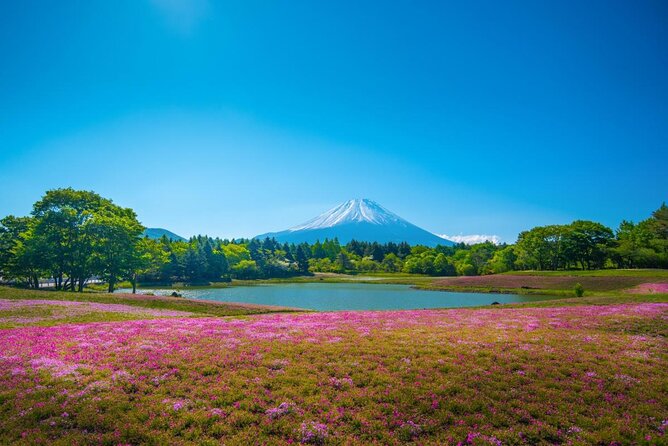
- A full Mt. Fuji loop across lakes, shrines, towns, and volcanic sites
- Weather-aware routing, since Mount Fuji views depend on conditions
- Snacks and drinks included, plus entrance fees and taxes covered
- Mobile ticket, so you can keep everything on your phone
A Mount Fuji day that mixes faith, food, and photo stops
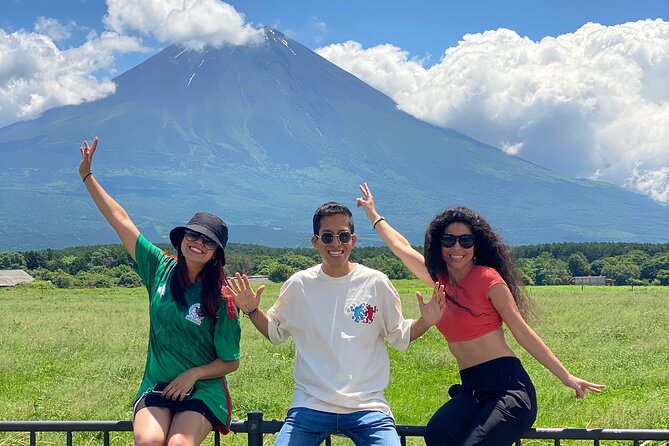
This is not the usual “stand here, take a picture, move on” format. The tour’s tone is more like hanging out with friends who really know the area. You’ll still visit the big names around Mount Fuji, but the day has breathing room, and each stop links to something tangible: past eruptions, the way locals live near the lakes, the rituals tied to climbing, and the stories placed into forests and towns.
What makes it work is the rhythm. You move early, you hit key sights in the morning light when possible, and you keep enough structure to see a lot without feeling rushed every minute. And because it runs with a limited group size, you get more interaction than you would on larger tours.
Price and logistics: what you get for about $96.17
The price is $96.17 per person for a 10 to 11 hour excursion that includes snacks, drinks, and all fees and taxes. That matters because the Mount Fuji region can add up fast once you start paying for transport and admissions across multiple stops. Here, you’re paying for one organized day with entry costs handled for the covered sites, plus you aren’t worrying about buying a bunch of small things during the route.
Logistics are straightforward. The tour starts at 8:00 am at the Tokai Bus Mishima Information Office (17-1 Ichibanchō, Mishima, Shizuoka). You return to the same meeting point at the end. It’s also described as near public transportation, so you should not feel trapped if you’re already in the Mishima area.
The itinerary runs on a mobile ticket, which is handy for keeping the essentials in one place. If you prefer paper, just remember you may not need it here.
The full route, from Shiraito Falls to Fugaku Wind Cave
This day is designed as a loop around the Fuji lakes and surrounding towns. Below is what you’ll experience and why each stop earns its place.
Start with Shiraito Falls, where Fuji’s eruptions are still visible
You begin with Shiraito Falls, often admired for how clean and bright the water looks. The key idea is that the falls formed from the results of Mt. Fuji’s past eruptions. In plain terms, you’re seeing geology in motion: water dropping in multiple threads, shaped by the mountain’s volcanic history.
You’ll have about 30 minutes here, and admission is free. This is a good first stop because it instantly sets the theme of the day: Mt. Fuji is not just a view, it is a force that shaped the land.
Lake Motosu, the view tied to the ¥1,000 bill
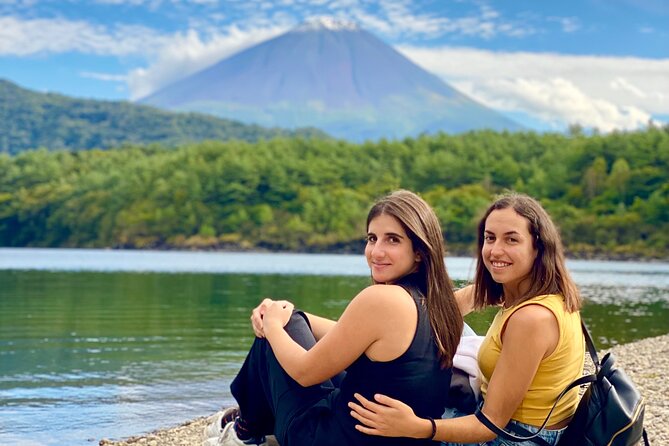
Next is Lake Motosuko, known for the view used on the back of the Japanese ¥1,000 banknote. You get around 30 minutes, admission free. Even if you’ve seen the image before, seeing it in person can feel like a shortcut to understanding why this area is so iconic.
Practical note: this is also a “read the air” stop. If clouds sit low, you may see the lake without the full Fuji silhouette. That’s normal. The guide will adjust the day based on weather and daylight, so your best odds are that the most important photo angles happen when conditions cooperate.
Saiko Iyashi no Sato Nemba, a rebuilt ancestral town
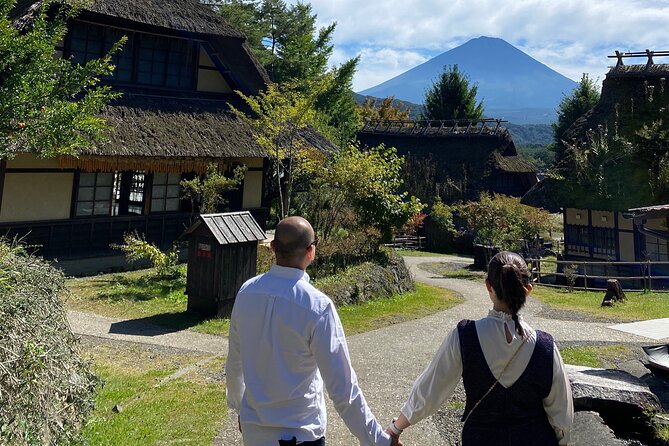
Then you head to Saiko Iyashi no Sato Nemba, an ancestral town set between mountains. The focus here is human resilience. The town was destroyed and later rebuilt over decades, and you can walk through a preserved atmosphere that helps you understand how communities survived and adapted near the volcanic landscape.
You get about 1 hour and admission is included. This is one of the best stops when you want more than scenery. It slows the pace just enough to make the cultural side feel real.
Saiko Lake, near Aokigahara and connected to film culture
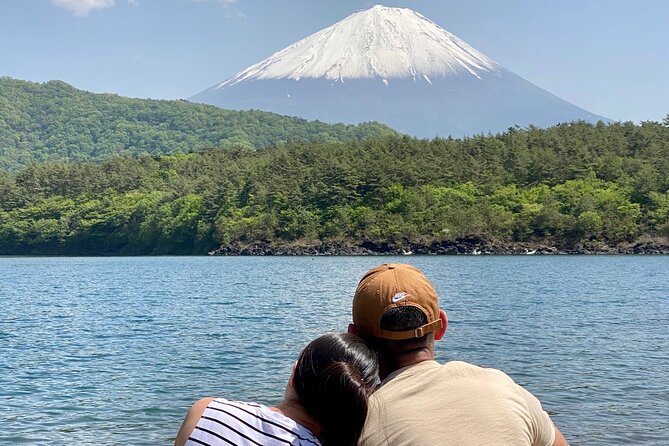
After that, it’s Saiko Lake, about 30 minutes, admission free. The area is described as a side of the Aokigahara Forest, and it has been used for filming. That matters because the region is not just “nature.” It is also a stage that shows up in stories, movies, and the way people imagine Japan.
This stop can be a calm reset between busier town moments. If you’re sensitive to heavier themes later on, this is a good moment to breathe, stretch, and reset your head.
Lake Kawaguchiko, plus two less obvious viewpoints
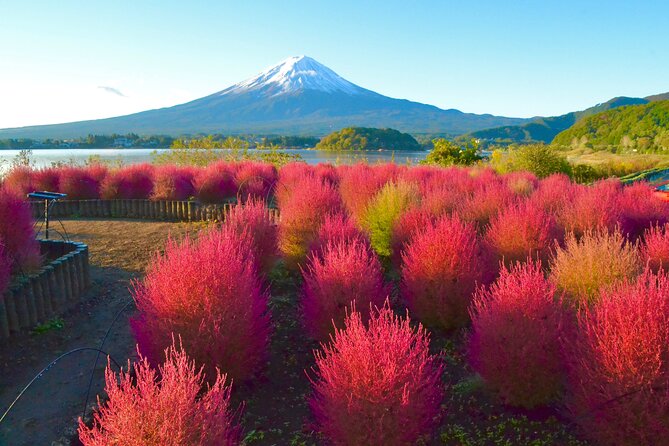
You continue to Lake Kawaguchiko, around 50 minutes, admission free. Around the lake, there are famous angles and also quieter, more personal places. The tour is designed to explore a couple of those lesser-known spots, and that’s where you often get less crowd pressure and more time for photos.
It’s a longer stop than the quick roadside views, which tells you the goal: not just “check the lake,” but give you enough time to actually enjoy it.
Oshino Hakkai, ancestral town snacks and local food
Next is Oshino Hakkai, about 45 minutes, admission free. This is the ancestral town where you’ll find a variety of typical Japanese foods. You can treat this as your food break and also a chance to see the town feel built for visitors, without turning it into a single-note souvenir street.
If you’re the kind of traveler who likes eating while sightseeing, this stop is one of the better payoff moments. Even if you don’t plan to buy much, wandering slowly and sampling what’s offered fits the pace of this tour.
Aokigahara Forest, nature with heavy stories
Then the route moves to Aokigahara Forest, with about 45 minutes and free admission. This is the forest people associate with suicides, and that is part of its reputation and the stories connected to it.
The tour’s framing is clear: it is still a forest people live in and visit, but with sad endings and difficult history. Go in with the right expectations. If you prefer light, carefree sightseeing, you might find this stop emotionally heavy. If you’re curious about how cultures handle difficult topics, this can feel informative and grounded.
Chureito Pagoda, the Fuji postcard that locals recognize
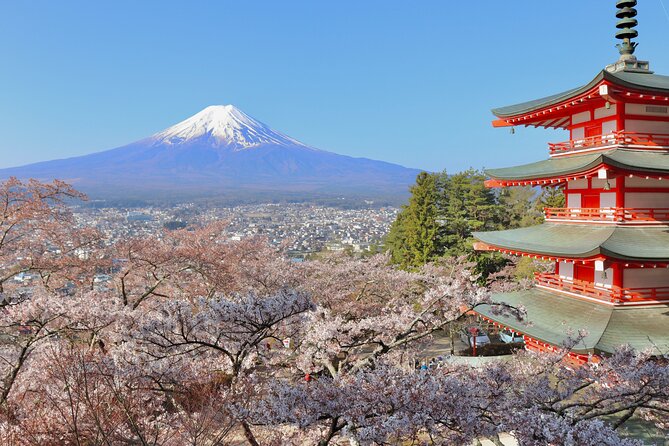
After that comes Chureito Pagoda, again about 45 minutes, admission free. This is the representative view that shows up in many guides: pagoda lines up with Mt. Fuji in classic postcard composition. It is also described as a symbol for the city of Fujiyoshida.
The real value here is timing and perspective. Even a short stop can feel worthwhile if the angle works and the light makes the mountain pop. If weather is cloudy, you may still enjoy the pagoda and its setting, but the “Fuji reveal” is weather-dependent.
Kitaguchi Hongu Fuji Sengen Jinja, shrine energy for climbers
Next is Kitaguchi Hongu Fuji Sengen Jinja Shrine, about 30 minutes, free admission. This shrine is dedicated to Mt. Fuji and its climbers. It is treated as a starting point, part of the cultural pathway that links worship to the idea of climbing.
This is a meaningful stop because it explains why Mt. Fuji is not just a mountain. It’s a spiritual symbol. Even if you’ve seen shrines before, this one has a specific focus on Fujiyama and climbing, which gives you context for what you’re seeing around the lakes and towns.
Yamanakako-mura, swans, koi, and the biggest lake area
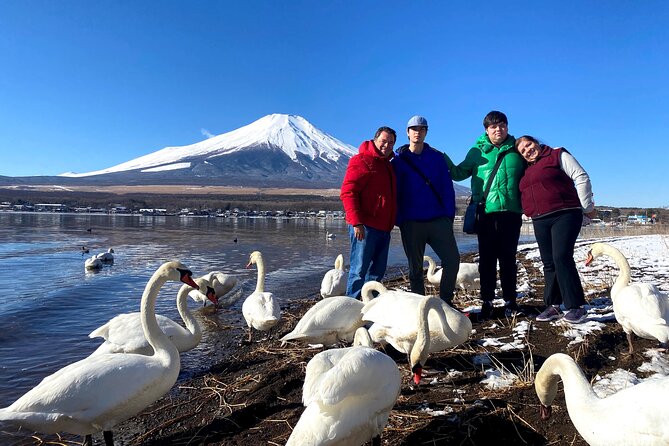
Then you head to Yamanakako-mura, about 30 minutes, admission free. This is described as the largest lake of the five lakes around Mt. Fuji. The tour also highlights that in the water you may see swans, koi, and other birds, and you can feed them.
This is one of those stops that feels relaxed and lively. It’s not about temples or volcanic structures. It’s about daily-life scenery, where animals and people share the lake space.
Fugaku Wind Cave, volcanic lava you can walk through
Finally, you visit Fugaku Wind Cave, about 30 minutes. Admission is included. This is a natural underground formation created over centuries by volcanic activity from Mt. Fuji, and it contains volcanic lava that remains.
This is a great last stop because it gives you a different kind of Fuji connection. Above ground you saw waterfalls and lakes. Underground you see the result of eruption and cooling. It turns “Mount Fuji” into something physical, not just a view.
Weather decides the day, and the guides react fast
This experience needs good weather. That’s not small print. It is the difference between a day that feels like postcards all day and a day where you see more clouds than summit.
The upside is that the guides adjust the plan depending on conditions and daylight. That means you are not just stuck with one rigid route if visibility changes. It also helps when the mountain disappears for a while, because you’ll still get valuable stops and not waste hours staring at fog.
A practical way to use this: keep your expectations flexible. You can enjoy the culture, food, shrines, and volcanic sights even if the summit stays hidden. If Fuji shows itself, you’ll be ready to catch it without panicking.
Small group pace: why max 9 matters on a long day
A 10 to 11 hour day can feel brutal on a big bus. Here, the tour caps at 9 travelers, which changes the experience in subtle ways:
- You can ask questions without yelling over crowds.
- The guide can manage timing at each stop more naturally.
- You’re more likely to get personal attention when something is unclear.
This also ties back to the “among friends” vibe. When a guide is speaking with you, not at you, the cultural explanations land better. That’s especially true for the shrine and town stops where context matters.
What to bring so the day feels easy
Nothing fancy. Just plan for a full day outdoors.
Bring:
- Comfortable walking shoes for pagoda and shrine areas
- Layers, since mornings and lake areas can feel different from midday
- A phone battery or charger, since the ticket is mobile and you may use it for photos
- Money for lunch, since lunch is not included
Also, treat snacks and drinks as bonus fuel, not your full meal plan. Snacks and drinks are included, but you’ll still want to handle lunch thoughtfully during the day.
Should you book this full-day Mount Fuji tour in Spanish?
I’d book it if you want one organized day that covers the main Fuji region without turning into a frantic photo sprint. It’s especially strong when:
- You have limited time and want a lot of meaningful stops in one circuit
- You prefer Spanish explanations with cultural context
- You like small groups and a guide who adapts to weather and light
I’d skip it if:
- You hate long days and would rather split Mt. Fuji into shorter trips
- You want lunch included in the price
- You feel uncomfortable with the heavy tone of Aokigahara Forest, even with respectful framing
If your priority is seeing the Mt. Fuji area deeply in 1 day, with the kind of guidance that connects the stops, this is a good fit.
FAQ
What time does the tour start, and where do we meet?
The tour starts at 8:00 am at the Tokai Bus Mishima Information Office, 17-1 Ichibanchō, Mishima, Shizuoka 411-0036, Japan. It ends back at the same meeting point.
How long is the Mount Fuji day tour?
The duration is about 10 to 11 hours.
Is lunch included?
No. Lunch is not included in the tour price.
What’s included in the price?
The tour includes snacks, drinks, all fees and taxes, and admission where noted as included on the schedule.
Are entrance fees included for the attractions?
Yes, fees and taxes are included. Specifically, admission is included at Saiko Iyashi no Sato Nemba and Fugaku Wind Cave, while the other listed stops are marked as free.
Do I need good weather for this tour?
Yes. The experience requires good weather, and if it is canceled due to poor weather, you’ll be offered a different date or a full refund.
How big is the group?
The tour has a maximum of 9 travelers.
Mount Fuji Day Trips, side by side.
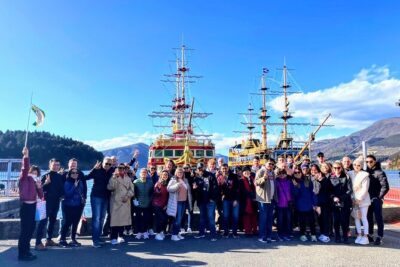 ★ 5.0Mt Fuji and Hakone 1-Day Bus Tour Return by Bullet TrainFrom $16326,383 reviews
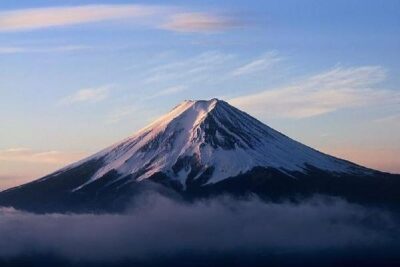 ★ 4.0Mt Fuji & Hakone Cruise, Drum Show Bullet Train 1 Day from TokyoFrom $1497,413 reviews
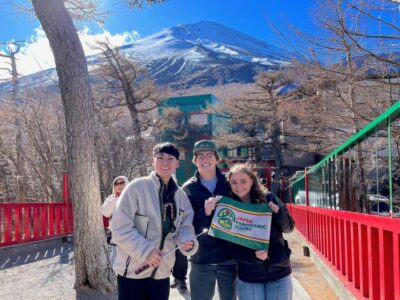 ★ 4.4Tokyo Mt Fuji 5th St & Hakone Cruise Bus Tour w/Bullet TrainFrom $1545,024 reviews
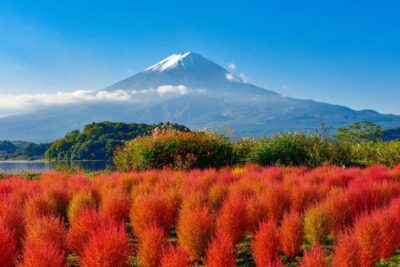 ★ 4.5From Tokyo: Mount Fuji Full-Day Sightseeing TripFrom $684,970 reviews
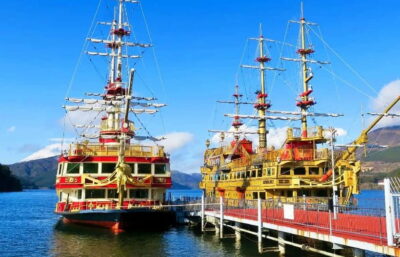 ★ 4.7Mt. Fuji Tour, Hakone Ropeway, Owakudani, Lake AshiFrom $544,002 reviews
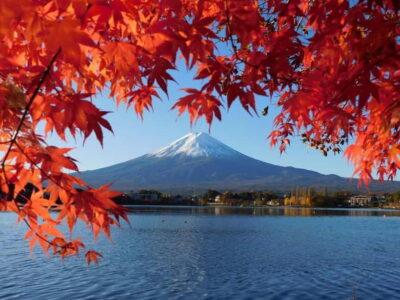 ★ 4.4Mt.Fuji,Kawaguchiko Oishi Park,Arakurayama Sengen ParkFrom $542,682 reviews
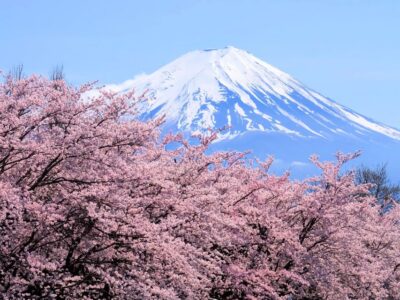 ★ 4.2Mt. Fuji 5th Station & Hakone Cruise 1-Day Bus TourFrom $1292,381 reviews
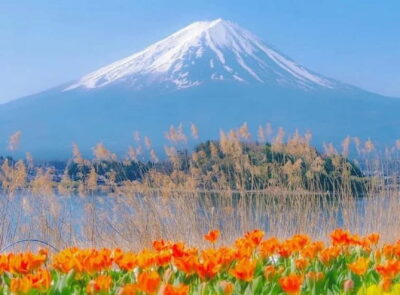 ★ 4.7Mt Fuji Top 5 Spots Day Tour: Arakurayama Park,Oshino HakkaiFrom $532,066 reviews
Filed on these lists too