
REVIEW · FUKUOKA, BEPPU AND KYUSHU
Fukuoka Essentials: History, Culture, & Charms
A good Fukuoka morning starts with calm temples and ends with city lights. This private, on-foot tour strings together the most meaningful places in Hakata so you do not waste time hunting them down. I like that it mixes Zen Buddhism, shrines, and local street life in one smooth route. I also love the Hakata Station rooftop view at the end, because it gives you perspective fast.
What I like most here is the balance. You get a guided look at Shofukuji and Kushida Jinja, then free time to breathe in the local scene at Kawabata Arcade without feeling rushed. The one potential drawback is that it is primarily walking, so if your legs need frequent breaks, you will want to tell the guide early.
In This Review
- Key points at a glance
- Why this Fukuoka Essentials walk works (and saves your energy)
- Meeting at Casetify Studio near Hakata Station, the easy start
- Shofukuji Temple: Kyushu’s oldest Zen stop with real atmosphere
- Tochoji Temple: the big Buddha statue comparison that clarifies the story
- Kushida Jinja: where Hakata’s yearly energy really lives
- Kawabata Shopping Street: your 15-minute hit of real Hakata life
- Sumiyoshi Jinja: quieter, sea-linked, and architecturally different
- Hakata Station rooftop panorama: the best kind of farewell
- Price and value: what $58 buys you here
- Walking pace, private guide control, and why it matters
- Who should book this Fukuoka Essentials tour
- Should you book it or keep planning on your own?
- FAQ
- Where does the tour meet?
- What language is the guide?
- How long is the tour?
- Is the tour mostly walking?
- What is included in the price?
- What is not included?
- Which places will we visit?
- What is the cancellation policy?
Key points at a glance
- Shofukuji visit with a focus on what makes it Kyushu’s oldest Zen temple
- Tochoji Temple stop, including the big Buddha statue contrast
- Kushida Jinja as the heart of Hakata life, tied to the Hakata Gion Yamakasa festival
- Kawabata Shopping Arcade experience for sights, sounds, and quick shopping or snacks
- Sumiyoshi Jinja for a quieter, sea-connected shrine style
- Hakata Station rooftop for a classic city overview when the light shifts
Around Kyushu, from the city to the hot-spring towns
- Mt. Aso & Takachiho Gorge Tour with Optional Boat Ride
★ 4.7 · 222 reviews - Fukuoka: Takachiho Gorge & Scenic Railway One Day Tour
★ 4.8 · 178 reviews - Private Fukuoka Tour with a Local, Highlights & Hidden Gems 100% Personalised
★ 5.0 · 143 reviews - Fukuoka Your Way: 100% Customisable Private Tour with Local Guide
★ 5.0 · 83 reviews
Why this Fukuoka Essentials walk works (and saves your energy)
Fukuoka can feel laid-back, but its highlights are not always obvious if you arrive with only a map. This tour earns its name by linking a temple, two shrines, a local arcade, and a top-floor city view into one logical loop.
You are paying for guidance, not just entry stops. A good guide helps you read what you are looking at, and it keeps the pace comfortable so you actually enjoy the details.
Meeting at Casetify Studio near Hakata Station, the easy start
Your meeting point is simple: CASETiFY STUDiO アミュプラザ博多店, right next to the main entrance, under the big clock. If you are staying near Hakata, you will find this start spot easy to reach and easy to recognize.
I also like that the tour can start from your hotel for central locations when requested. That small convenience matters in Japan, where getting across town can eat up a morning faster than you expect.
Shofukuji Temple: Kyushu’s oldest Zen stop with real atmosphere
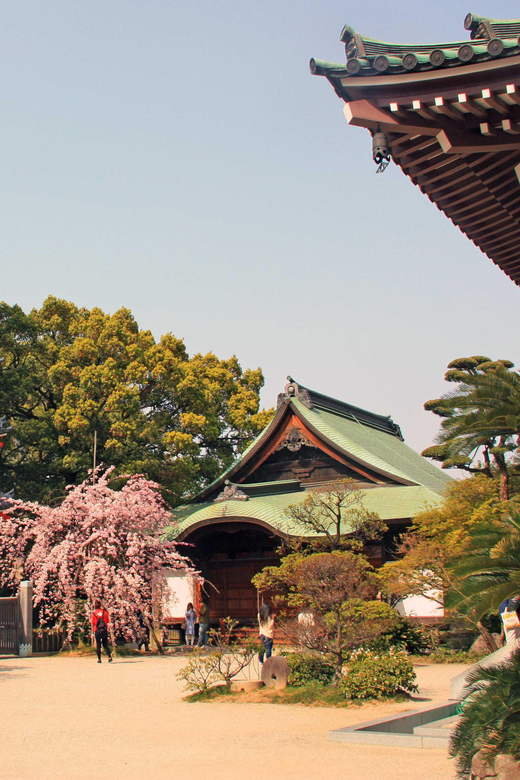
The tour begins with Shofukuji, known as the oldest Zen Buddhist temple in Kyushu. This is not a quick photo hit. You get a guided walk through the grounds so the space makes sense, not just the buildings.
What makes Shofukuji special for your trip is the Zen rhythm. It tends to slow you down in a good way, and it is a reminder that Fukuoka is not only about seafood stalls and train platforms.
Practical tip: If you like quiet spaces, arrive with a calm mindset. Temples read best when you stop moving long enough to notice the layout.
- Day Tour to Miyazaki Takachiho Gorge & Shrine depart from Fukuoka★ 4.5 · 61 reviews
- Fukuoka Full-Day Private Tour with Government Licensed Guide★ 5.0 · 55 reviews
- Fukuoka: Nakasu Food Stall Private Guided Tour with Tastings★ 4.8 · 48 reviews
- Fukuoka Private and Personalized Walking Tour with a Local★ 4.7 · 46 reviews
- From Fukuoka: Miyazaki, Takachiho Gorge And Shrine Day Tour★ 4.5 · 44 reviews
Tochoji Temple: the big Buddha statue comparison that clarifies the story
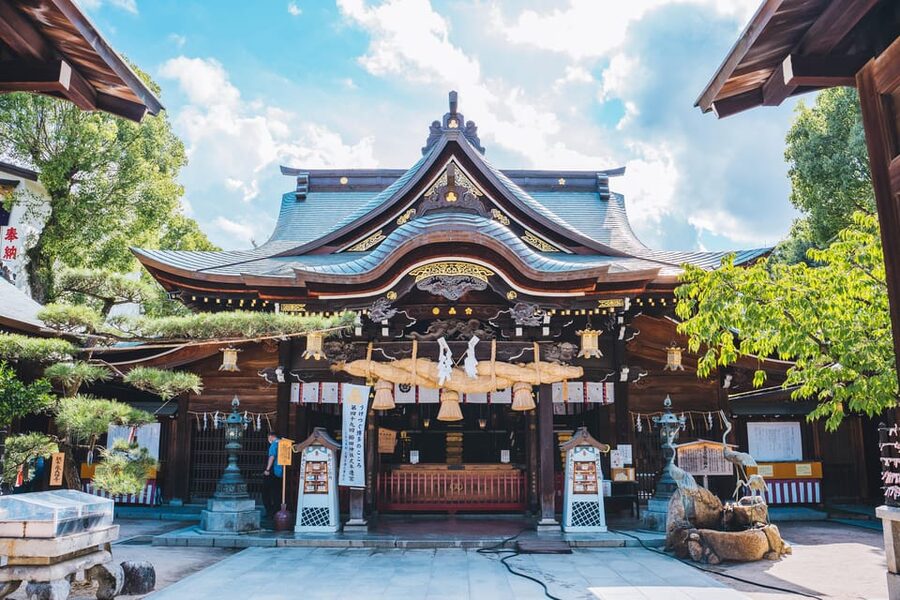
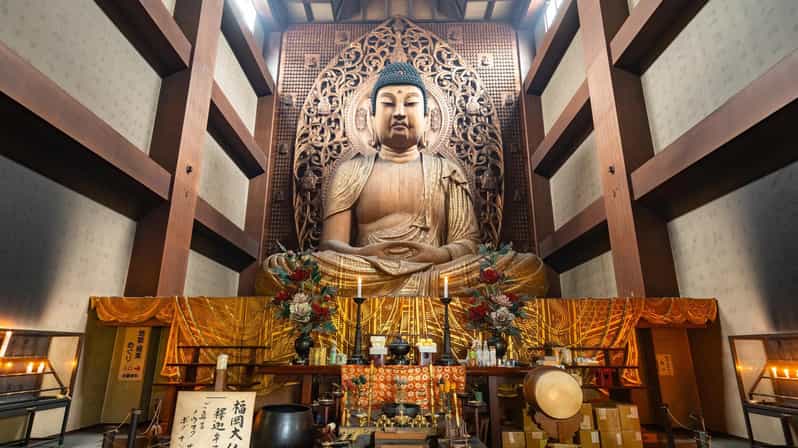
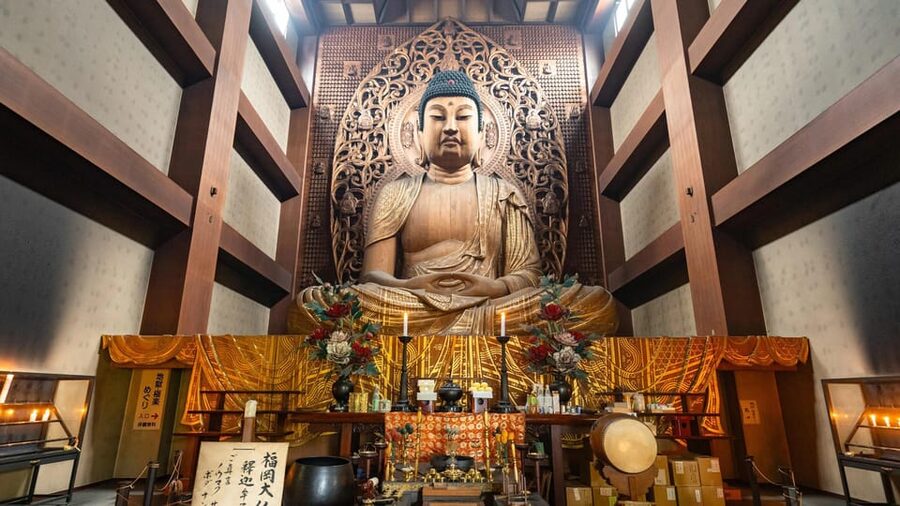
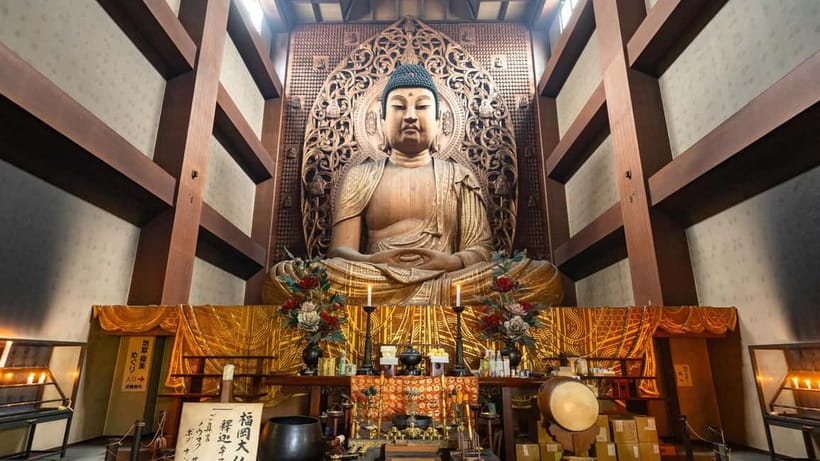
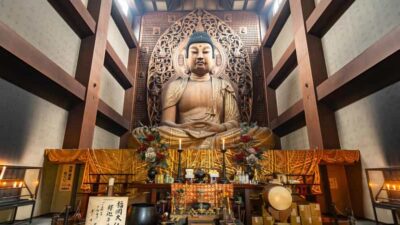
After Shofukuji, you head to Tochoji Temple. The standout here is the famous Buddha statue, and the value of this stop is the contrast it creates.
If Shofukuji feels like a historical lens, Tochoji helps you understand the scale of Buddhist devotion in the region. You will likely notice how the emphasis shifts from serene Zen tradition to monumental presence.
This pairing is smart. It prevents you from treating each temple like a separate checklist item. Instead, you start seeing the broader religious and cultural patterns of Kyushu.
Kushida Jinja: where Hakata’s yearly energy really lives
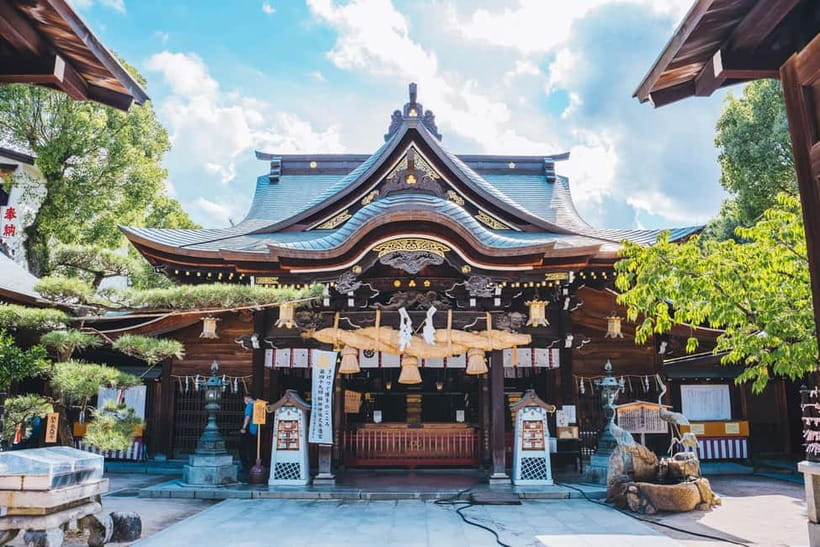
Next comes Kushida-jinja Shrine, Fukuoka’s main shrine and a key setting for the Hakata Gion Yamakasa festival. Even when you are not in festival season, the shrine area carries that sense of preparation and community.
I love this stop because it teaches you how shrines function in everyday life. You are not just looking at architecture, you are learning what role the shrine plays, and why the festival connection matters.
Look for the intricate building details. A guided approach helps you spot what you might otherwise miss if you simply walked through.
Kawabata Shopping Street: your 15-minute hit of real Hakata life
Then you hit Kawabata Shopping Street, the kind of arcade where your senses get involved before your brain catches up. Shops crowd the walkway, and food stall smells pull you toward decisions fast.
The tour gives you a practical window of free time here, so you can choose what fits your day. If you want a snack, this is where it makes sense. If you want a small souvenir, the arcade is an easy place to browse without turning it into a half-day quest.
One consideration: 15 minutes is not long. If you care a lot about shopping, plan to prioritize one goal, snack or souvenir, and then enjoy the street atmosphere instead of trying to cover everything.
Sumiyoshi Jinja: quieter, sea-linked, and architecturally different
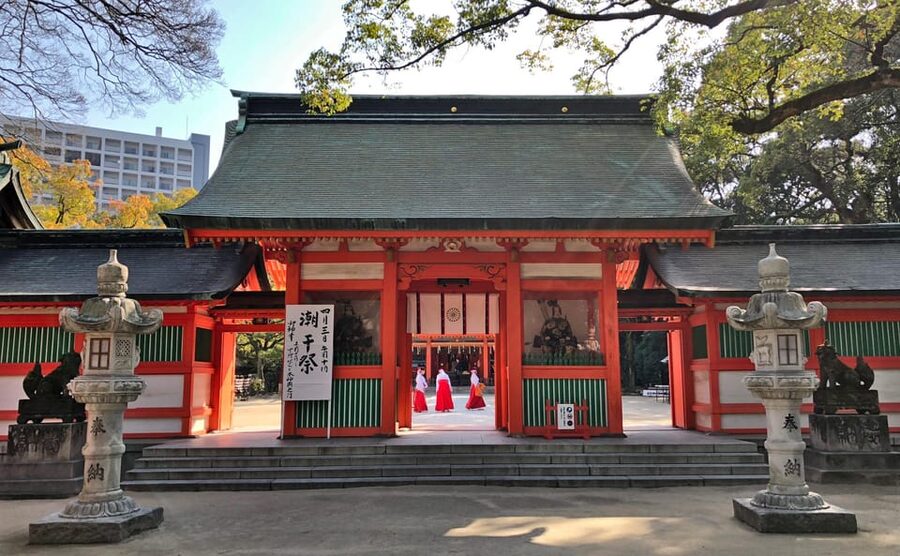
After the shopping energy, the route shifts to Sumiyoshi Jinja. This shrine has a different feel from many others, including its distinctive architecture, and it connects to the sea in a way that brings a calmer mood to an urban area.
This is a great stop if you want a break from crowd noise. You get a chance to slow down again, similar to the Zen temple feeling, but with shrine character instead of temple character.
If you like variety, Sumiyoshi Jinja delivers it. It is not trying to be like the other shrines you have seen, which is exactly why it is worth including in a “essentials” route.
Hakata Station rooftop panorama: the best kind of farewell
The final move is to Hakata Station rooftop for a sweeping view of Fukuoka. On good timing, you get the city stretching out as the day fades, then the shift into twinkling lights.
This rooftop stop works for two reasons. First, it helps you place the places you just saw on a mental map. Second, it is a natural wrap-up moment, so the tour ends with a memory that feels bigger than the individual stops.
Practical tip: If you are sensitive to cooler evening air, bring a light layer. Rooftops can feel breezy, even when the streets seem comfortable.
Price and value: what $58 buys you here
At about $58 per person, you are buying a guided, private, walking-focused experience across multiple major landmarks. The value is not that it is cheap, it is that it is efficient.
You are guided through temples and shrines where context matters. Without that, you might see the same buildings, but you would likely miss the why behind them, especially with places like Shofukuji and Kushida Jinja.
What is not included is also clear: transportation costs, food and drinks, and any attraction tickets. That means you can control spending day by day. If you want street snacks at Kawabata, you can keep it casual. If you prefer a sit-down meal later, you are free to plan it yourself.
Duration note: The experience is offered in time slots from 3 to 8 hours, depending on availability. A shorter version keeps it focused, while a longer day gives breathing room if you want extra stops or slower sightseeing.
Walking pace, private guide control, and why it matters
This tour is designed as a walking experience. Other transport can be arranged for an additional cost, but the default is walking.
The best part of this setup is control. With a private host, you can set the pace. If your legs tire, you are not stuck just pushing through. Guides can also tailor the route to what you care about, like focusing more on the shrine side or slowing down for temple gardens.
A few practical thoughts before you go:
- Wear comfortable shoes, because you will move between multiple sites.
- Tell your guide what you enjoy, temple calm, festival history, or shopping street energy.
- Decide in advance if Kawabata Arcade is for one snack or for actual browsing.
Who should book this Fukuoka Essentials tour
This is a strong fit if you want a guided overview of Hakata that still feels local. It works well for first-timers who want a tight route, and for repeat visitors who like seeing cultural context without spending days piecing it together.
I would especially recommend it if you:
- Want a private walking plan instead of guessing transit and entrances
- Care about understanding how shrines and temples shape Fukuoka
- Like mixing sightseeing with street atmosphere at a place like Kawabata Arcade
- Want a memorable finish from Hakata Station rooftop
Should you book it or keep planning on your own?
Book this tour if you want to save time and get context while you are in town. The route is built around high-signal places, and the private guide format means you can slow down or adjust based on how you feel that day.
Skip it, or choose a different style of tour, if you are the kind of traveler who enjoys wandering without structure for hours. Also consider skipping if walking long distances is not your thing, since the experience is primarily on foot.
If you want a reliable “Fukuoka essentials” day that feels guided but not overly scripted, this one is a smart choice.
FAQ
Where does the tour meet?
The meeting point is CASETiFY STUDiO アミュプラザ博多店, next to the main entrance under the big clock.
What language is the guide?
The live tour guide is available in English and Czech.
How long is the tour?
The tour duration is 3 to 8 hours, depending on availability and starting times.
Is the tour mostly walking?
Yes, it is primarily a walking experience. Other transport can be arranged for an additional cost.
What is included in the price?
Included is a private and personalized experience, a 3-hour tour with a local host, walking time, and hotel meetup for central locations (on request).
What is not included?
Not included are transportation costs, food and drinks, and tickets to any attractions.
Which places will we visit?
You will visit Shofukuji, Tochoji Temple, Kushida-jinja Shrine, Kawabata Shopping Arcade (free time), Sumiyoshi Jinja, and you will end with Hakata Station rooftop scenic views.
What is the cancellation policy?
You can cancel up to 24 hours in advance for a full refund.
Around Kyushu


Newest Fukuoka write-ups from the Loving Japan desk

Fukuoka, Beppu and Kyushu, side by side.
 ★ 5.0Ultimate Sumo Tournament: Tokyo, Osaka, Nagoya, FukuokaFrom $184468 reviews
 ★ 4.6From Fukuoka: Miyazaki, Takachiho Gorge and Shrines Day TourFrom $50233 reviews
 ★ 4.8Takachiho Gorge & Scenic Railway One Day TourFrom $44178 reviews
 ★ 5.0Private Fukuoka Tour with a Local, Highlights & Hidden Gems 100% PersonalisedFrom $66143 reviews
 ★ 5.0Fukuoka Your Way: 100% Customisable Private Tour with Local GuideFrom $5983 reviews
 ★ 4.6From Fukuoka: Mount Aso, Kurokawa Onsen, and Shrine TourFrom $5072 reviews
 ★ 4.5Day Tour to Miyazaki Takachiho Gorge & Shrine depart from FukuokaFrom $9961 reviews
 ★ 5.0Fukuoka Full-Day Private Tour with Government Licensed GuideFrom $15555 reviews
Filed on these lists too