
REVIEW · KANAZAWA AND KENROKU-EN GARDEN
Kanazawa: Sushi & Japanese Cooking Class at a Historic School
You get to cook every bite. That is the hook, and it is why this class is such a good use of your time in Kanazawa.
Chef Seiji Nakata (with his wife, Ikumi, helping run things) leads a fully interactive session at Nakata Cooking School, just about 3 minutes from Kanazawa Station. You are not stuck watching. You shape sushi, learn dashi, and make classic Kanazawa comfort food with guidance you can actually repeat later.
I love that you cook every dish yourself, not just assemble a plate at the end. I also love the real-time AI translation setup, with voice and text on a big screen, which keeps the teaching clear and even the jokes landing. The main drawback to plan around is diet, because the class cannot accommodate vegan diets or guests avoiding fish-based dashi.
In This Review
- Key Highlights You Will Feel in the Kitchen
- Getting There Fast: Why This Class Starts So Close
- Meeting Seiji Nakata and Ikumi, Then Getting Translation Under Control
- What You Cook: The Five-Dish Flow That Teaches More Than Recipes
- Nigiri Sushi: Sushi Shaping With Wild Fish
- Jibuni: Kanazawa’s Samurai-Era Chicken Stew
- Dashi-Maki Tamago: The Rolled Omelet That Looks Simple, Isn’t
- Dashi Broth: Bonito and Kelp, the Flavor Backbone
- Seasonal Side Dish and Miso Soup
- The Dashi Lesson: The Skill That Transfers to Your Next Meal
- Knives, Uniforms, and the Little “Chef Standards” That Matter
- Eat What You Make: Plum Wine or Sake and a Proper Tasting Moment
- Value Check: What $99.10 Buys in Real Practice
- Logistics That Matter Day-of: What to Expect When You Arrive
- Dietary Rules: The One Thing You Must Check Before You Book
- Who This Class Suits Best, and Who Might Prefer Something Else
- My Practical Tips So You Get the Most From 2.5 Hours
- Should You Book This Kanazawa Class?
- FAQ
- What dishes will I cook during the class?
- Is this a demonstration or hands-on cooking?
- How long is the class?
- How many people are in the class?
- Does the class include translation support in English?
- Can the class accommodate vegan diets or fish-free dashi?
- What ingredients are used for the sushi?
- What is included in the price besides cooking?
- Are drinks and tips required?
- Can I buy knives during or after the class?
- What is the cancellation window?
Key Highlights You Will Feel in the Kitchen
- Five dishes you make, including sushi nigiri, jibuni, dashi-maki tamago, dashi broth, and a seasonal side plus miso soup
- Omicho Market seafood used for the sushi, including wild fish
- Live AI translation (voice and text) on a large screen, so you can follow without guesswork
- Premium Japanese kitchen knives used during class, with an optional purchase opportunity
- Small group, max 8 people, which means more hands-on help when you mess up (you will, and that is part of the fun)
- Take-home value, including photos, a Japanese certificate with your name, and an English recipe emailed the day before
What else fills a Kanazawa afternoon
- World Heritage Shirakawa-go and Experience Tours from Kanazawa
★ 5.0 · 4,049 reviews - Kanazawa: Kenrokuen Tea Ceremony Experience
★ 4.8 · 1,139 reviews - Kanazawa Half Day Tour (Private Guide)
★ 5.0 · 361 reviews - Kanazawa Full Day Tour (Private Guide)
★ 5.0 · 323 reviews
Getting There Fast: Why This Class Starts So Close
Kanazawa is a city where your best plans often depend on saving steps. This class meets at Nakata Cooking School and Knife Shop, on the second floor in Konohanamachi, and it is by appointment. The meeting point is near public transportation, and the school is about 3 minutes from Kanazawa Station, which matters if you are bouncing between Omicho Market and the rest of your day.
What I like about a close meeting point is mental clarity. You can arrive, change, and start cooking without turning your schedule into a sprint. And because the class is around 2.5 hours, it fits cleanly between sightseeing blocks.
Meeting Seiji Nakata and Ikumi, Then Getting Translation Under Control
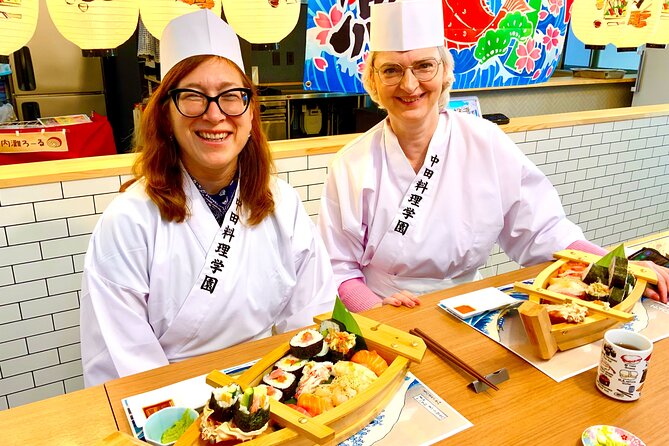
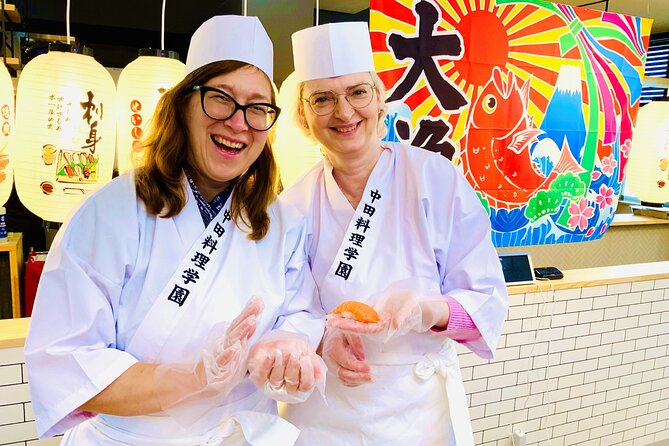
The first moment is practical: you change into a sushi chef uniform, then jump into food culture and ingredient basics. Chef Seiji Nakata sets the tone fast, with humor and an easy pace that works well even if your Japanese is limited.
The other big factor is the real-time AI translation system on a large screen. It provides both voice and text, so you can read along when pronunciation is tricky. In a kitchen, that reduces one of the biggest travel-class problems: you do not just hear what to do, you can confirm you heard it correctly before you commit knife or hand motions.
In my experience, that kind of translation support is not just comfort. It is speed. When you can follow instructions confidently, you stay focused on technique instead of translating everything in your head.
What You Cook: The Five-Dish Flow That Teaches More Than Recipes
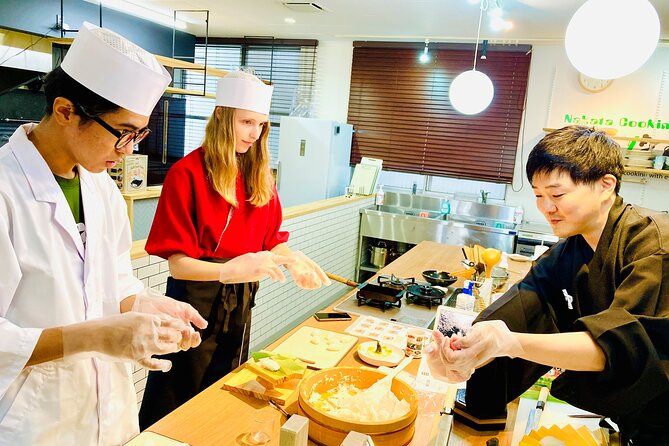
This is a five-dish hands-on program. You will cook, not just taste. The class builds from foundational Japanese cooking ideas into Kanazawa-specific comfort food, and you get to eat what you make at the end.
- [One-day bus tour departing from Kanazawa Station] Shirakawa-go and Gokayama – Two World Heritage Villages Enjoyable Bus Tour★ 5.0 · 253 reviews
- 1 Day Private Charter Tour to Shirakawa-go & Takayama★ 4.5 · 253 reviews
- World Heritage Shirakawa-go Perfect Guided Tour from Kanazawa★ 5.0 · 220 reviews
- From Kanazawa: Shirakawa-go, Gokayama and Wood Carving Art★ 4.9 · 180 reviews
- Kanazawa Night Tour with Local Meal and Drinks★ 5.0 · 148 reviews
Nigiri Sushi: Sushi Shaping With Wild Fish
You start with nigiri sushi, using wild fish sourced from Omicho Market. Sushi rice matters, and the class treats it like a skill, not a guess. You will learn the shaping process and the small judgment calls that make nigiri feel balanced instead of sloppy.
One detail you might notice in the way the teacher explains presentation and precision is how technique gets broken into parts, not vibes. For example, some classes here include presentation-minded knife work, like carving a star pattern on mushrooms, because Japan often uses visual cues to signal care.
Jibuni: Kanazawa’s Samurai-Era Chicken Stew
Next is jibuni, a Kanazawa specialty with samurai-era roots. This is your “warm Kanazawa” dish, chicken stew with flavors that feel deep without needing a complicated ingredient list.
Jibuni is also useful training. It shows you how Japanese comfort food uses broth and simmering to build flavor. You get to understand what to aim for while it cooks, which is the sort of knowledge that helps when you try it later at home.
Dashi-Maki Tamago: The Rolled Omelet That Looks Simple, Isn’t
Then comes dashi-maki tamago, a soft rolled omelet. The class uses a Michelin-style recipe approach, which tells you they care about technique beyond taste.
Rolled omelet is the one dish where timing and texture matter. You learn how to get the “fluffy” inside and how to handle the rolling step so it does not fall apart. Even if you have cooked eggs before, you will likely pick up new rhythm here.
Dashi Broth: Bonito and Kelp, the Flavor Backbone
You also make dashi broth the traditional way, using bonito and kelp. Dashi is the foundation beneath a lot of Japanese food, and the class explains the role it plays so your results make sense.
If you have ever tried making Japanese food at home and ended up with bland soup or flat simmered dishes, this is where it usually fixes. When you understand dashi as a system, miso soup and sauces stop feeling random.
Seasonal Side Dish and Miso Soup
Finally, you make a seasonal side dish and miso soup. This part is about taking what you learned from dashi and applying it in a real meal. It rounds out the class so you leave with more than sushi techniques.
The Dashi Lesson: The Skill That Transfers to Your Next Meal
If I had to pick one “take-home win,” it is learning dashi in a structured way. Dashi is not just stock. It is a flavor language used across Japan.
In the class, you see how ingredients like bonito and kelp work together, and you understand why the broth is treated as an ingredient, not a background thing. That matters for you at home because Japanese cooking often relies on subtle flavor building, not heavy seasoning.
Also, because there is a firm focus on process, you get a feel for consistency. When dashi behaves the way it is supposed to, many other dishes become easier, even if you tweak ingredients later.
Knives, Uniforms, and the Little “Chef Standards” That Matter
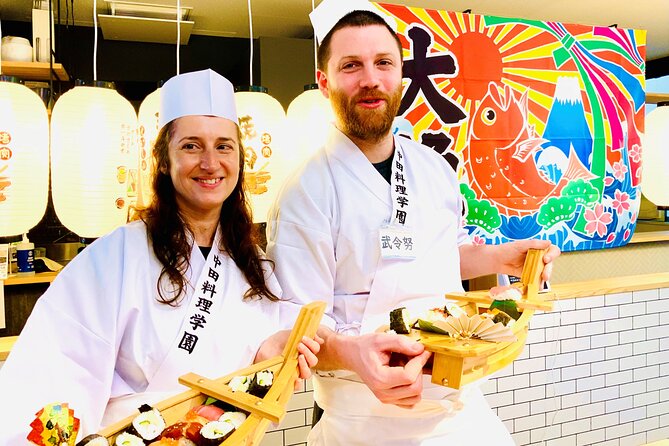
You will use premium Japanese kitchen knives during the class, and you can rent an apron (chef-style). If you are the type who enjoys tools, this part is worth noticing.
Two things make knife time valuable here:
- You get to practice with the kinds of knives Japanese cooks actually use.
- You learn how technique affects the final result, especially for sushi and neatly cooked items.
The school also has an in-house Knife Museum option, with an opening planned for July 2025 and a 10% discount for participants. So if your timing lines up, you may tack on extra knife culture after cooking, or plan your visit around that future opening.
And yes, there is an optional participants-only chance to purchase premium Japanese knives. I would treat that as a bonus, not a requirement. If you do want one, ask questions during the class so you match the knife to your cooking style.
Eat What You Make: Plum Wine or Sake and a Proper Tasting Moment
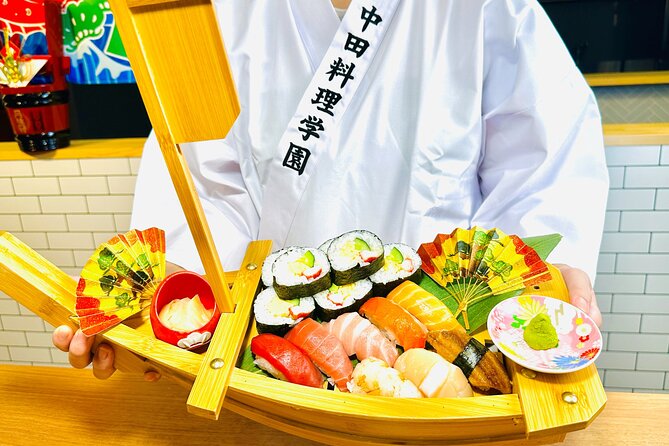
At the end, you eat everything you cooked. The class includes a full tasting of the dishes you prepare, plus a small aperitif: Kanazawa plum wine or local sake.
This is more than a nice touch. Eating your own food right away is when the lessons lock in. Sushi you shaped, broth you made, omelet you rolled, stew you simmered. It all becomes connected in your memory.
If you are cautious about alcohol, you can likely still enjoy the meal. The tour data only says aperitif is included, and any other drinks are available for purchase. So expect the class to stay focused on the food moment, not a party atmosphere.
Value Check: What $99.10 Buys in Real Practice
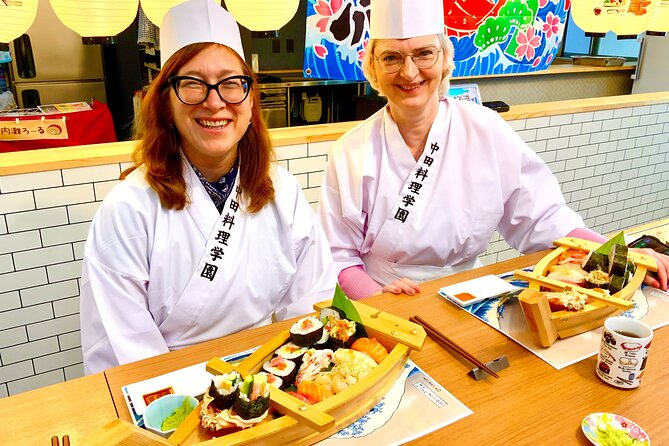
Let us talk money in a way that helps you decide.
At $99.10 per person for about 2 hours 30 minutes, you are paying for several things most budget cooking classes skip:
- Ingredient access, including premium seafood from Omicho Market
- Proper training for multiple dishes, not a single demo
- Use of premium knives
- Real-time communication support through AI translation
- Photo service, a completion certificate with your name, and an English recipe emailed the day before
This adds up to a strong “learning per hour” experience. You are not just eating a meal. You are taking home techniques, and you leave with visuals and recipes that make your memory usable later.
The class is also capped at 8 travelers, which helps keep instruction from turning generic. In a bigger crowd, hands-on sushi shaping can become a waiting game. Here, you are more likely to get corrections while you still have food in your hands.
Logistics That Matter Day-of: What to Expect When You Arrive
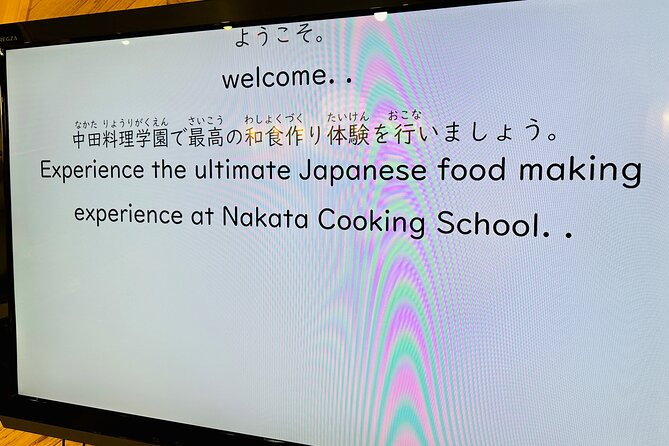
Here is how the flow tends to feel based on what the class is built around.
You meet at Nakata Cooking School and Knife Shop, then change into uniform. After a quick cultural and ingredient setup, you start cooking in stages. Translation runs on the big screen throughout, which keeps the class from stalling whenever a vocabulary moment hits.
Photos are taken during the experience, and you receive them later. Many cooking classes take pictures, but the useful ones also help you enjoy the moment. This one is designed so you can cook without constantly thinking about your phone.
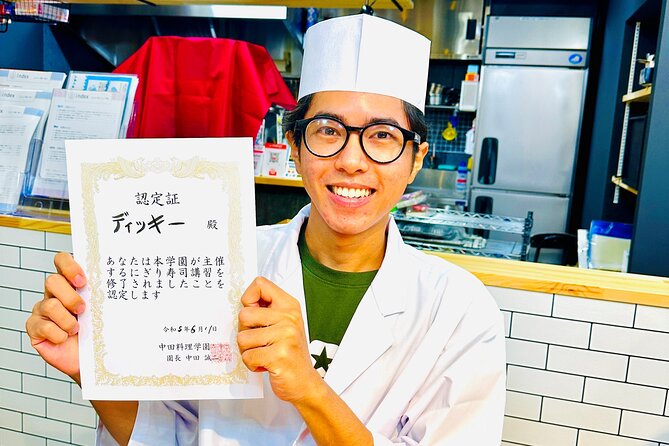
You also get a Japanese Certificate of Completion with your name. It sounds small until you realize it is an actual souvenir from doing, not just from visiting.
Dietary Rules: The One Thing You Must Check Before You Book
This class is straightforward about limitations. It cannot accommodate vegan diets or guests avoiding fish-based dashi.
If your diet avoids fish sauce, seafood, or bonito-based broth, you need to treat this as a hard stop. Same-day changes are not possible, so if you have dietary constraints, communicate them at booking so they can confirm fit.
If you do eat fish-based dashi, you will likely find the flavors align well with what makes Japanese cooking satisfying: broth depth, balanced seasoning, and ingredients used for flavor clarity.
Who This Class Suits Best, and Who Might Prefer Something Else
This class is a great fit if you want:
- hands-on instruction you can repeat at home
- sushi skills beyond ordering takeout
- a clear explanation of dashi and why it matters
- a small-group setting with guidance while you cook
It may be less ideal if:
- you need vegan-friendly cooking substitutions
- you avoid fish-based broth entirely
- you want a long, sightseeing-heavy day instead of a focused cooking block
If you enjoy cooking, this is easy to love. If you just love eating, you still get a strong meal, but you will enjoy it more if you are willing to get your hands involved.
My Practical Tips So You Get the Most From 2.5 Hours
- Arrive with curiosity, not pressure. Rolled omelet and nigiri shaping take practice. Your first attempt will not look like a chef’s final photo, and that is fine.
- Use the translation screen. If you can read along while someone speaks, you keep your technique correct in real time.
- Take notes on dashi basics. Even a few quick reminders about ingredient choices and timing help a lot later.
- Plan your shopping mindset. If you are interested in knives, decide your budget before the class. The option to purchase is there, and it can be tempting.
- Be ready for photos. The class includes photo service and certificates, so keep your hands clean when they need shots, then back to cooking.
Should You Book This Kanazawa Class?
Book it if you want a small-group, fully hands-on Japanese cooking experience near Kanazawa Station, with real instruction on sushi, dashi, and Kanazawa’s own jibuni. The price feels fair because you are not just tasting, you are practicing with premium tools and leaving with recipes and photos.
Skip it if your diet avoids fish-based dashi or you need vegan substitutions. That is the one constraint that changes everything.
If you are on the fence, my advice is simple: if you can eat fish-based dashi and you want skills you can reproduce at home, this is one of the better ways to spend a couple of hours in Kanazawa.
FAQ
What dishes will I cook during the class?
You will cook five dishes: nigiri sushi, jibuni (Kanazawa chicken stew), dashi-maki tamago (soft rolled omelet), dashi broth (bonito and kelp stock), and a seasonal side dish plus miso soup.
Is this a demonstration or hands-on cooking?
It is hands-on. You cook every dish with step-by-step guidance rather than watching only.
How long is the class?
The duration is about 2 hours 30 minutes.
How many people are in the class?
The class has a maximum of 8 travelers.
Does the class include translation support in English?
Yes. Real-time AI translation (voice and text) is provided on a large screen.
Can the class accommodate vegan diets or fish-free dashi?
No. Vegan diets and guests avoiding fish-based dashi cannot be accommodated.
What ingredients are used for the sushi?
The sushi uses wild fish from Omicho Market.
What is included in the price besides cooking?
You get premium Japanese knives used during the class, chef-style apron rental, tasting of all dishes you make, one aperitif (Kanazawa plum wine or local sake), photo service, a Japanese Certificate of Completion, and an English recipe emailed the day before.
Are drinks and tips required?
Additional drinks are available for purchase, and tips are not required.
Can I buy knives during or after the class?
Yes. There is an optional participants-only option to purchase premium Japanese knives. There is also an in-house Knife Museum opening planned for July 2025, with a 10% discount for participants.
What is the cancellation window?
Free cancellation is available up to 24 hours before the experience start time for a full refund. Canceling less than 24 hours before does not get refunded.
A Kanazawa Afternoon



Newest Kanazawa write-ups from the Loving Japan desk


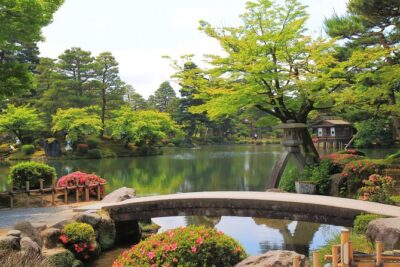

Kanazawa and Kenroku-en Garden, side by side.
 ★ 5.0World Heritage Shirakawa-go and Experience Tours from KanazawaFrom $1224,049 reviews
 ★ 4.8Kenrokuen Tea Ceremony ExperienceFrom $351,139 reviews
 ★ 4.9World Heritage Shirakawa-go Morning Guided TourFrom $77988 reviews
 ★ 5.0Kanazawa Half Day Tour (Private Guide)From $134361 reviews
 ★ 5.0Kanazawa Full Day Tour (Private Guide)From $183323 reviews
 ★ 4.9World Heritage Shirakawa-go & Two Local ExperienceFrom $116274 reviews
 ★ 5.0[One-day bus tour departing from Kanazawa Station] Shirakawa-go and Gokayama – Two World Heritage Villages Enjoyable Bus TourFrom $88253 reviews
 ★ 5.0World Heritage Shirakawa-go Perfect Guided Tour from KanazawaFrom $81220 reviews