
REVIEW · ONSEN, HOT SPRINGS AND BATHHOUSES
Osaka: Wakayama Cat Train, Seafood market, Hot Springs Tour
A cat legend starts the day. It is a fun mix of story-driven sightseeing and real food culture, with Tama at Kishi Station and a whimsical cat-themed train ride. I also like that the day is structured so you get both guided moments and breathing room to wander, plus a pro guide who keeps the pace clear. One thing to consider is that the schedule depends on the tuna show and site timing, so a highlight like the cutting demonstration can be canceled due to weather.
I really appreciate the combination of Toretore Market and the coastal viewpoints. A live tuna cutting show is rare, and pairing it with Senjojiki and Sandanbeki makes the day feel like more than just a food stop. The cat train component is short, and you will likely want to spend extra time around Kishi Station and the cat café to get maximum value from that first segment.
In This Review
- Key things I’d watch for before you go
- From Namba to Wakayama, the day starts smoothly
- Kishi Station and the Tama cat train: small ride, big story
- ToreTore Market: tuna cutting show and seafood shopping you can actually use
- Lunch on your own: how to spend your time well
- Shirahama Toretore Onsen: a long-time soak with simple logistics
- Senjojiki rock plateau and Sandanbeki cave: Pacific views plus pirate-era caves
- Price and logistics: what $83 gets you, and what you need to budget
- Guide and group pace: the difference between fine and great
- Who this tour fits best in Osaka and Kansai
- Should you book this Osaka to Wakayama cat-and-seafood day trip?
- FAQ
- What is the duration of this Osaka to Wakayama tour?
- Where do I meet the group in Osaka?
- What time is pick-up?
- What is included in the price?
- What is not included?
- Is lunch provided?
- How long is the cat-themed train ride?
- How often does the tuna cutting show happen?
- Can the tuna cutting show be canceled?
- Is the hot spring stop optional, and are tattoos allowed?
- Is this tour wheelchair accessible?
- What language is the tour guide?
- Is there free cancellation?
Key things I’d watch for before you go
- Tama at Kishi Station: a real local legend behind the cat-shaped station story.
- Cat train variety: Tama, Strawberry, or Toy trains run on different days, depending on schedule.
- Live tuna cutting show timing: it runs 2 to 3 times daily, but the exact timing can vary and it may be canceled.
- Market lunch is on you: you get free time and then can eat what looks best.
- Shirahama hot springs are optional: entry is extra, and tattoos may restrict access.
- Senjojiki plus Sandanbeki: big ocean views and a sea-level cave area reached by elevator.
From Namba to Wakayama, the day starts smoothly
Your morning begins at Nipponbashi Station Exit 2 in Osaka, in the Namba and Shinsaibashi area. Pick-up is at 8:30am, so build in time to find the exact meeting point and get with your group early. I like tours that meet close to major transit hubs, and this one does that.
You’ll ride an air-conditioned coach to Wakayama. The drive is about 1.5 hours before you reach Kishi Station, and you can use that time to get your camera ready and decide how much you want to buy at the market later. On the road, expect a mix of roadside views, and in one group’s day-to-day experience, people noted seeing countryside and citrus plantations along the way.
A practical note: no food is allowed in the vehicle. So if you snack during the ride, plan that after you step off at stops, not during bus time.
Kishi Station and the Tama cat train: small ride, big story
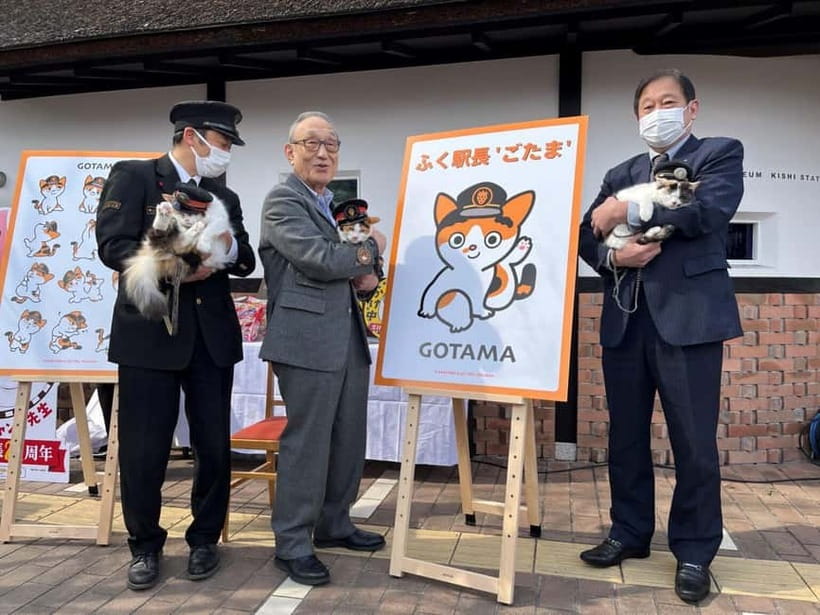
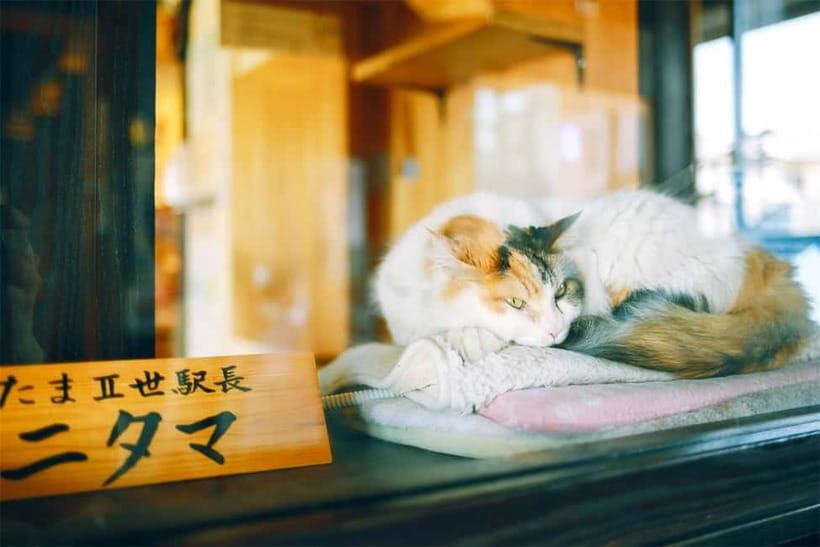
Kishi Station is the emotional heart of this trip. The station area is shaped like a cat face, and the story centers on Stationmaster Tama, a calico cat whose presence helped revive the station when it was threatened. Today, the legacy continues through Nitama (Second Tama), and the atmosphere is the kind of gentle local pride you usually only find outside the big tourist circuits.
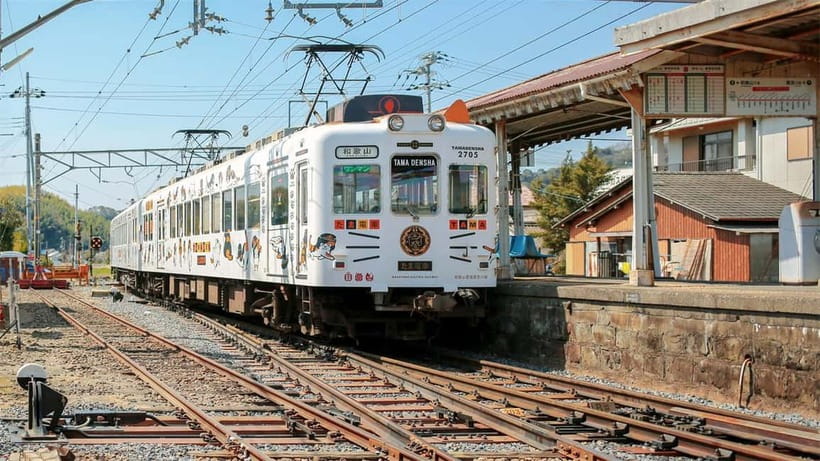
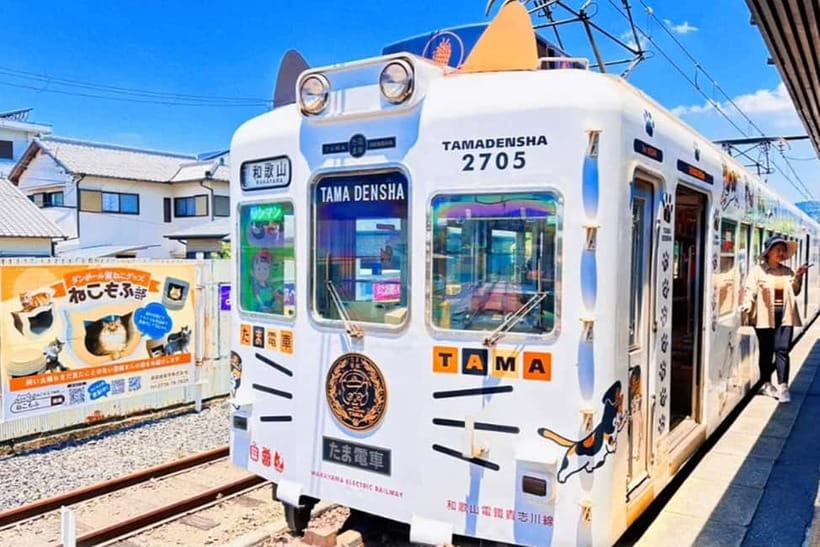
This is also where the cat train element fits in. Depending on the day’s operations, you board a cat-themed train such as the Tama Train, Strawberry Train, or Toy Train. The riding time on the cat train is about 15 minutes, which is short, but it is part of what makes it feel whimsical rather than rushed.
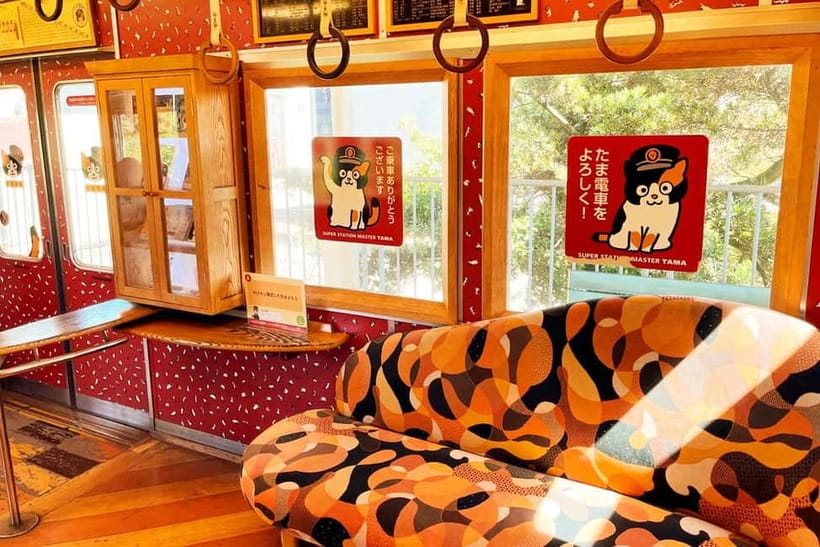
Before or after the ride, take your time around the cat-themed spaces at Kishi. There is a cat café area, the Tama Shop, collectible cat stamps, and cat-themed souvenirs. If your priority is the cat stuff, that extra time is where you turn a quick train moment into a full stop.
One small caution: the longer you linger at the café and shop, the more you will want to keep your eye on the group schedule. The tour stays on a clock, because later stops like the tuna show and coastal caves have specific window times.
ToreTore Market: tuna cutting show and seafood shopping you can actually use
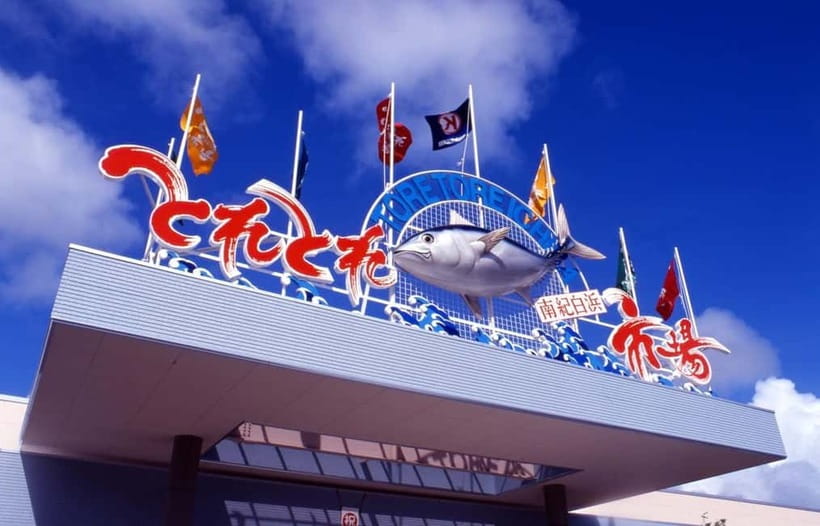
Then you head to ToreTore Ichiba (Toretore Market), described as the largest seafood market in western Japan. This is not a quiet museum stop. It is a working market environment with daily fresh catches, and the tuna cutting show is the main performance.
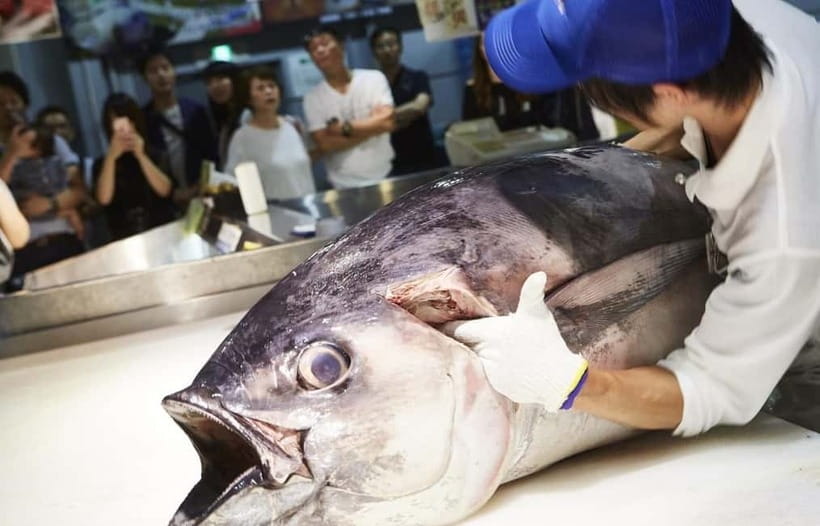
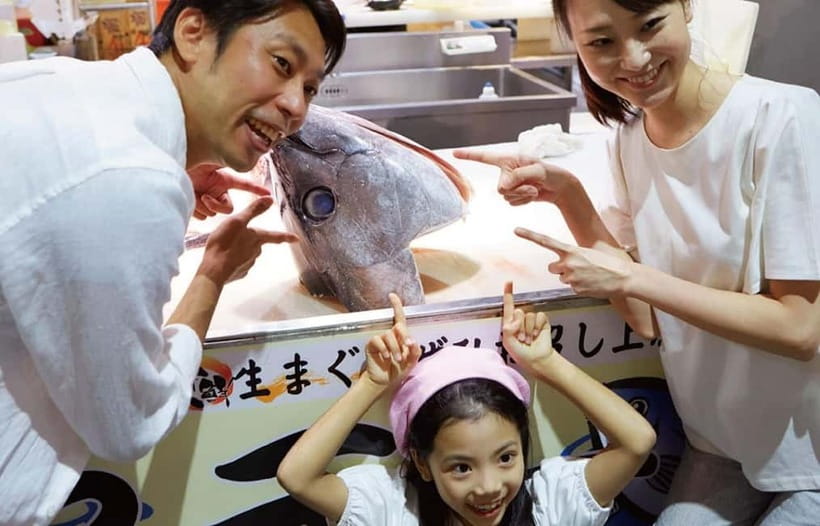
You get guided time plus a photo stop and sightseeing time, totaling about 2 hours at the market area. The tuna show is live and narrated, with expert cutting and explanations that make the anatomy and process easier to follow even if you are not fluent in Japanese. It is both educational and exciting in a way that feels practical, because tuna is something you can understand more when you see how it is portioned.
Important reality check: the tuna cutting show runs 2 to 3 times per day, but the actual cutting time is random. Even with the best planning, the show can be canceled due to weather or unforeseen circumstances. So if tuna cutting is your top dream moment, bring flexibility mentally, and use the rest of the market time to enjoy the seafood regardless.
Lunch is not included, and that is a good thing here. You get free time to choose what you want, and the variety is exactly what you want from a market stop: tuna sashimi bowls, grilled cuts, octopus rice, and more. When lunch is on your own, you can pick the most tempting stall, not the most average one.
Also save time in your head for the souvenir zone. The market sells seasoned seafood, gourmet goodies, and cute local gifts, and this is often the easiest place to buy something practical to take home without turning your day into a separate shopping quest.
Lunch on your own: how to spend your time well
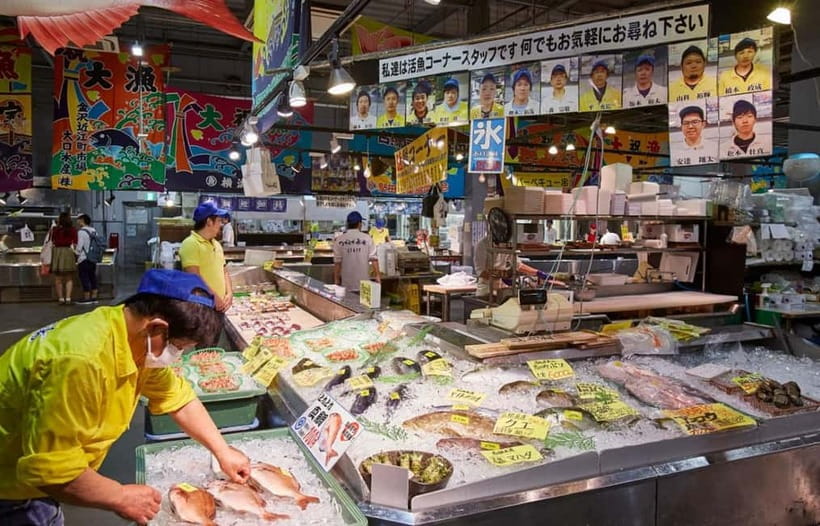
You’ll have free time for lunch after the market tour segment. Because prices vary by what you order and how fancy the bowl or set looks, your best value move is to pick based on freshness and portions, not just the most photogenic option.
Here is how to make the most of your lunch window:
- Watch what looks busiest and freshest around the time you arrive.
- If you want to eat quickly, look for places serving bowls or ready-to-order hot items rather than long custom prep.
- Plan your souvenir shopping for right after you eat, so you are not stuck deciding while your stomach is empty or full.
If you are the type who likes to browse first, you can also use your guided time to get oriented and then use the free time to buy and eat. That keeps the pace fun instead of feeling like you are always rushing.
Shirahama Toretore Onsen: a long-time soak with simple logistics
Next comes the hot springs portion in Shirahama, centered on Toretore Onsen. This is one of Japan’s oldest and most famous hot spring resorts, with over 1,350 years of history, and it is the kind of place where soaking feels like part of local life, not just an optional add-on.
The onsen features a salt-stone bedrock bath and sodium bicarbonate spring water that is described as smooth and skin-friendly. If you choose to go in, you will get a calmer reset after the market and before the cliffs.
The biggest thing to keep in mind is that hot spring entry is optional. The tour includes the stop time, but you pay separately if you go in. Also, if you have tattoos, entry may be restricted.
If you want your day to feel balanced, I recommend treating the hot spring as a “choose your own pace” moment. If you are tired, go for a soak. If you are not, keep your energy for Senjojiki and Sandanbeki, where the views ask for your full attention.
Senjojiki rock plateau and Sandanbeki cave: Pacific views plus pirate-era caves
After Shirahama, you will hit the coastal highlights. First up is Senjojiki Rock Plateau, where you stand above layers of massive rock slabs facing the roaring Pacific. Photo stop time is about 30 minutes, which means you want to arrive ready to shoot, then spend a few minutes just looking.
Timing matters here. The viewpoints are the kind of place where sunset can be magic, but your actual light will depend on the day and the route timing. Even without perfect sunset, this is still the part of the trip where you feel the scale of the coastline.
Then you go to Sandanbeki. There is another photo stop of about 30 minutes, plus the cave area option. The Sandanbeki cave experience includes an elevator down to sea level, about 36 meters. Inside, you find exhibits tied to stories of Heian-era pirates, and the rock formations are shaped by natural erosion.
Cave admission is listed as optional, so don’t count on it being a guaranteed spend unless you choose to pay. If you like dramatic geology and atmospheric stories, it is worth considering. If you just want photos and fresh air, you can keep it simple and stick to the viewpoint time.
Price and logistics: what $83 gets you, and what you need to budget
This day trip runs about 10 hours and costs $83 per person. For that price, you get a lot of the expensive “time cost” items covered.
Included:
- Cat-themed train ride
- Round-trip transportation by air-conditioned bus
- Multilingual tour guide
- Expressway tolls, vehicle fuel cost
- Parking fees and professional driver
Not included:
- Lunch and personal expenses
- Hot spring entry (optional)
- Sandanbeki cave admission (optional)
That inclusion list is a big part of the value. You are not just paying for sites, you are paying to remove the stress of getting between Osaka and Wakayama, navigating timing, and staying on a group plan that works around shows and viewpoints.
My value take: if you are the type who wants food culture plus coastal scenery plus one quirky local attraction, this price can be a fair deal. If you only care about one item, like the hot springs alone, you might find cheaper ways to do that. But the strength of this day is that it strings together three distinct experiences without you needing to plan connections.
For practical planning, bring comfortable shoes and cash. Also bring a camera since you will have multiple photo stops where you will want to remember the angles of the cliffs and the market activity.
Guide and group pace: the difference between fine and great
Most of the day lives or dies by pacing, and you get that handled with a tour guide plus driver. One highlight from real past experiences: a guide named Tiger was repeatedly praised for keeping guests informed and making the schedule feel manageable. In one group, Tiger also shared updates via WhatsApp in English and Chinese, which is a nice way to reduce confusion at busy meeting points.
You should still plan for occasional adjustments. On weekends, holidays, or peak seasons, traffic can be slower. The guide may change the order of attractions or adjust stop duration based on real-time conditions. That is normal, and it is also why tours like this are better than trying to stitch everything together solo with no buffer.
This trip is also not suitable for wheelchair users, so if mobility access is part of your planning, you’ll want to choose an alternative format.
Who this tour fits best in Osaka and Kansai
This day trip is a strong fit if you like:
- Quirky, story-based stops like Kishi Station and Tama
- Food culture with action, especially a live tuna cutting show
- Coastal scenery that is more dramatic than typical city sightseeing
- One guided day that covers a lot without you spending hours on transit planning
It is also a nice pick for mixed travel groups, because parts of the day have guided narration and parts have open time for you to wander and decide. If you love snapping photos, you will get plenty of chances at Senjojiki and Sandanbeki.
Where you might feel mismatch:
- If you expect the cat train to be the main event for a long time, note that the ride itself is about 15 minutes.
- If you are chasing the tuna cutting show at all costs, keep expectations flexible because it can be canceled.
Should you book this Osaka to Wakayama cat-and-seafood day trip?
Book it if you want a single day that mixes Tama’s cat legend, a market experience with a live tuna show, and real ocean viewpoints plus an optional hot spring soak. The price makes sense because you are paying for transport, a guide, and multiple major stops that would be more work to coordinate on your own.
Skip it or change your plan if your interests are narrow, like only hot springs or only one viewpoint. And if tuna cutting is your must-see moment, go in with a calm Plan B attitude so you still enjoy the market even if the show gets canceled.
If you are comfortable walking, bringing cash, and managing your own lunch choices, you will likely have a memorable day that feels genuinely different from typical Osaka-only sightseeing.
FAQ
What is the duration of this Osaka to Wakayama tour?
The tour lasts about 10 hours.
Where do I meet the group in Osaka?
You meet at Nipponbashi Station Exit 2 in the Namba and Shinsaibashi area, at 1-chōme-3-6 Nipponbashi, Chuo Ward, Osaka, 542-0073.
What time is pick-up?
Pick-up time is 8:30am.
What is included in the price?
Included are the cat-themed train ride, round-trip air-conditioned bus transportation, a multilingual tour guide, expressway tolls, vehicle fuel cost, parking fees, and a professional driver.
What is not included?
Lunch and personal expenses are not included. Hot spring entry (optional) and Sandanbeki cave admission (optional) are also not included.
Is lunch provided?
Lunch is not provided. You get free time for lunch and you pay at your own expense.
How long is the cat-themed train ride?
The experience time on the cat-themed train is about 15 minutes (with the rest of the first stop time spent around Kishi Station and related cat areas).
How often does the tuna cutting show happen?
The tuna cutting show runs 2 to 3 times per day, but the exact cutting time is random.
Can the tuna cutting show be canceled?
Yes. The tuna cutting show may be canceled due to weather or unforeseen circumstances.
Is the hot spring stop optional, and are tattoos allowed?
The hot spring experience is optional, and tattoo restrictions may apply for entry.
Is this tour wheelchair accessible?
No, it is not suitable for wheelchair users.
What language is the tour guide?
The guide offers English, Japanese, and Chinese.
Is there free cancellation?
Yes, you can cancel up to 24 hours in advance for a full refund.
Onsen, Hot Springs and Bathhouses, side by side.
 ★ 4.4Nara and Uji Day Trip with Deer Park and Hot SpringFrom $57302 reviews
 ★ 4.9Traditional Concert at Townhouse or BathhouseFrom $32224 reviews
 ★ 5.0From Tokyo: Private Tour to Fuji/Hakone – Onsen, Art, NatureFrom $322116 reviews
 ★ 5.0Mt. Fuji, Hakone Private Tour from Tokyo – Onsen, Arts and NatureFrom $85279 reviews
 ★ 4.3Mount Fuji 5th Station & Onsen Day TripFrom $5075 reviews
 ★ 4.6From Fukuoka: Mount Aso, Kurokawa Onsen, and Shrine TourFrom $5072 reviews
 ★ 5.0Private Nagano 1-Day Tour:Snow Monkeys,Zenko-ji,Obuse,Sake,OnsenFrom $33771 reviews
 ★ 5.0Mt Takao Tour with Ramen and Tattoo-Okay Hot SpringFrom $12069 reviews