
REVIEW · ONSEN, HOT SPRINGS AND BATHHOUSES
Kyoto: Traditional Concert at Townhouse or Bathhouse
Koto sounds different when it’s that close. In Kyoto, you can hear professional koto and shamisen players in either a tiny traditional townhouse or a historic bathhouse hall, with bilingual explanations and a Q&A afterward. I love the small-group intimacy in the townhouse, where every note feels close. I also love the optional hands-on koto workshop, where you get to try basic techniques in a friendly, beginner way.
One possible drawback is that the location can be a little tricky to find, especially if you rely only on the street address, so save the map pin or coordinates before you go.
In This Review
- Key points you will actually care about
- Townhouse solo set or bathhouse duet hall in Kyoto
- The 45 to 105 minutes you will likely remember for years
- Your quick crash course in koto and shamisen
- What you will hear: classical, contemporary, and performer-driven choices
- Getting close enough to learn in the townhouse workshop
- The bathhouse hall: why tiled walls make koto sound different
- How to pair it with your Kyoto sightseeing day
- Price and value: what $32 buys you in Kyoto
- Who this Kyoto concert fits best
- Should you book this koto and shamisen experience?
- FAQ
- How much does this Kyoto concert cost?
- How long is the concert experience?
- What is included in the concert?
- Is there an optional workshop?
- What’s the difference between the two venues?
- How often is the bathhouse hall offered?
- Are the explanations in English?
- Can I do both venues?
- Is transportation or food included?
- Who is this experience not suitable for?
Key points you will actually care about
- Townhouse concerts stay small (around 11 guests max), so you can ask questions and hear details
- Bathhouse hall turns music into a room-filling sound, thanks to tiled walls and duet pairings
- You get a quick instrument lesson first, including how the koto and shamisen work and how the music is read
- Q&A and photo time with the musicians make it feel personal, not staged
- Workshop at the townhouse uses sanitized instruments and is designed for beginners
- You can choose solo-only, duet-based, or both, depending on your schedule
Still weighing up options in Kyoto? These are the ones our reviewers rated highest.
- PERFECT KYOTO 1-Day Bus Tour
★ 5.0 · 13,518 reviews - Kyoto: Fushimi Inari, Kinkakuji, Bamboo Grove 1 Day Bus Tour
★ 4.8 · 4,316 reviews - Kyoto: Tea Ceremony in a Traditional Tea House in Kiyomizu
★ 4.9 · 3,519 reviews - Kyoto Geisha Walking Tour: Gion District & Hidden Gems
★ 4.7 · 3,273 reviews
Townhouse solo set or bathhouse duet hall in Kyoto
This experience gives you two very different listening rooms, and that changes everything.
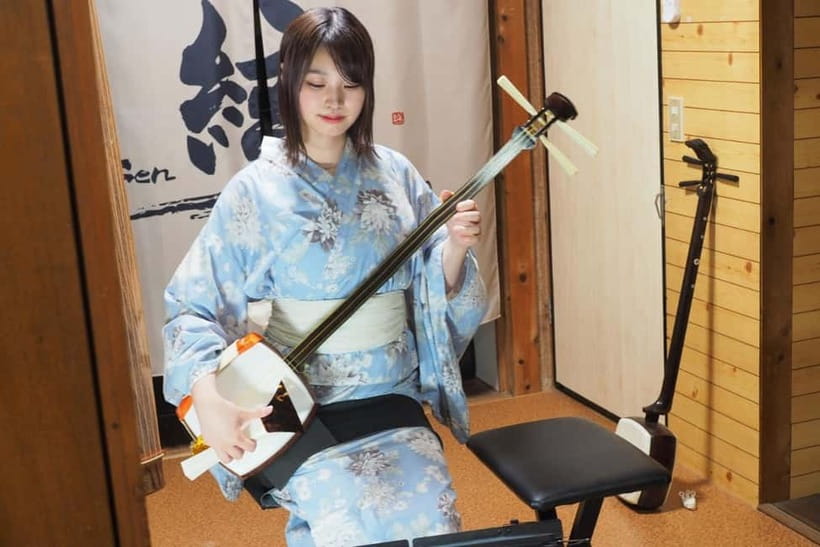
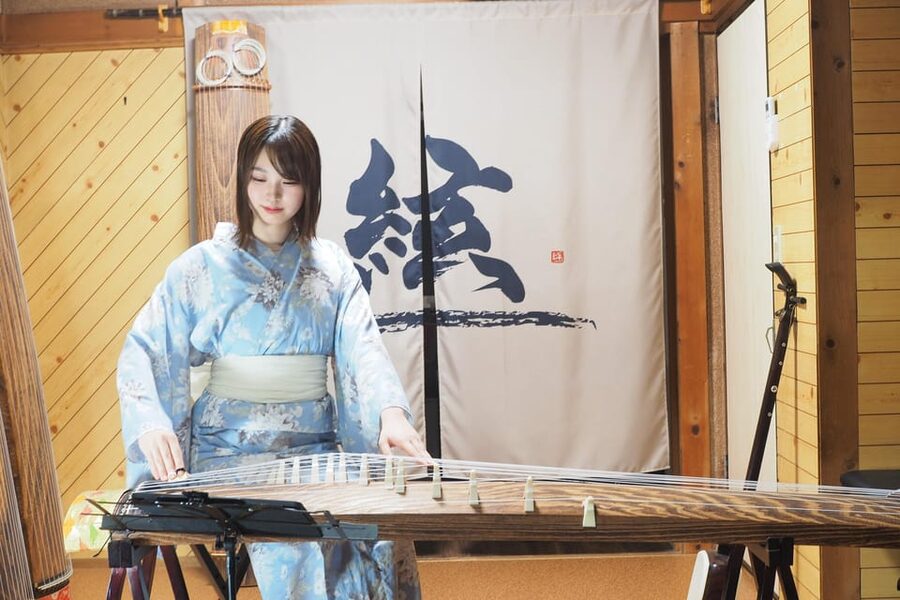
The Traditional Townhouse option is built for a cozy, living-room feel. Expect solo sets on koto and shamisen, usually with 4 to 5 pieces (some are classical, some are contemporary, and some are original works tied to the performer’s style). Capacity is up to about 11 guests, and that small number is the whole point: you hear nuance, not just volume.
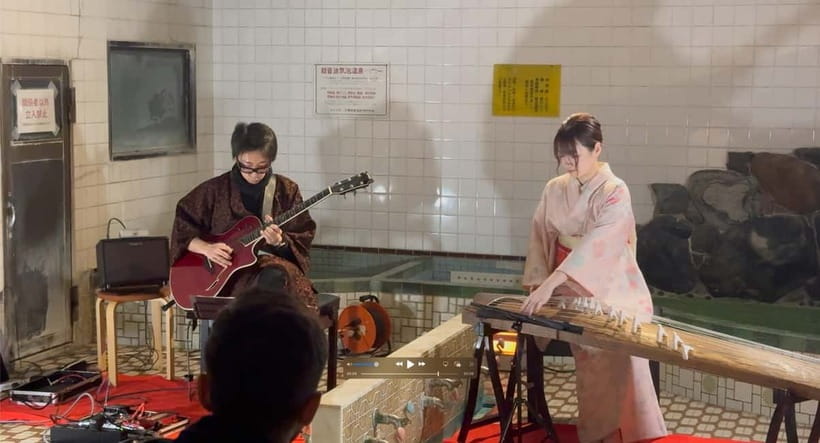
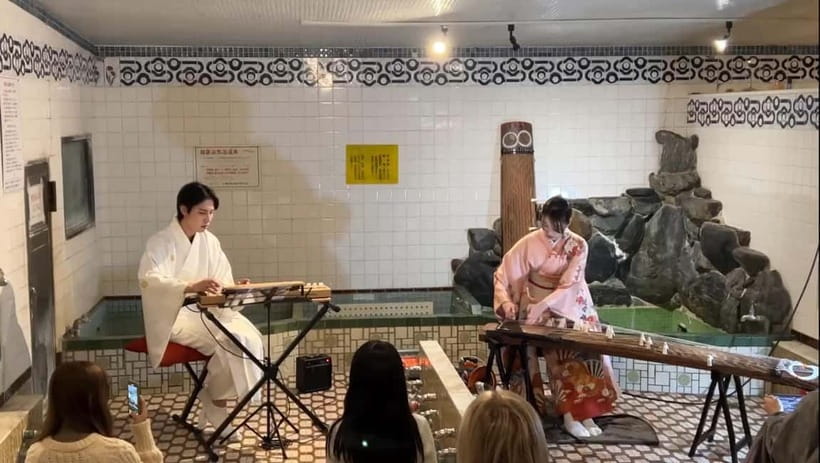
The Historic Bathhouse Hall option is the opposite vibe. Capacity can be up to about 30 guests, and you’ll hear a duet program in a space with strong natural reverberation from tiled surfaces. It typically pairs koto with another instrument such as shamisen, shakuhachi, taishōgoto, flute, guitar, and others, across 4 to 5 pieces (with an opener also included). It’s also offered irregularly on Mondays, so check the calendar when you plan your trip.
If you’re trying to choose quickly, I’d do it like this: want quiet detail and a workshop, pick the townhouse. Want bigger sound and duet chemistry, pick the bathhouse.
The 45 to 105 minutes you will likely remember for years
Even though start times vary, the flow is steady and easy to follow. Check-in and seating comes first, then you get a short instrument primer, then the performance, then Q&A and photos. If you book the townhouse workshop, the total time can stretch longer.
Here is the structure you can expect:
- Check-in and seating (about 5 to 10 minutes), plus basic venue etiquette
- Instrument introduction (about 10 to 15 minutes), focused on how the koto/shamisen are played, what parts do what, and how the notation works
- Concert (about 25 to 30 minutes), typically 4 to 5 pieces
- Q&A and photos (about 5 to 10 minutes)
- Optional hands-on workshop (about 35 to 40 minutes), if you select that package
In practice, this format works because it avoids the usual problem with concerts where you are left guessing. You get a mini roadmap before the music begins, so when a piece shifts rhythm or mood, you know what to listen for.
Also, the Q&A is short but real. People ask practical questions, and the musicians respond. In the small rooms, that turns “watching” into a conversation.
Your quick crash course in koto and shamisen
The best part for first-timers is that you do not need prior knowledge. The show starts with plain, bilingual guidance, and it focuses on the stuff that actually changes the sound.
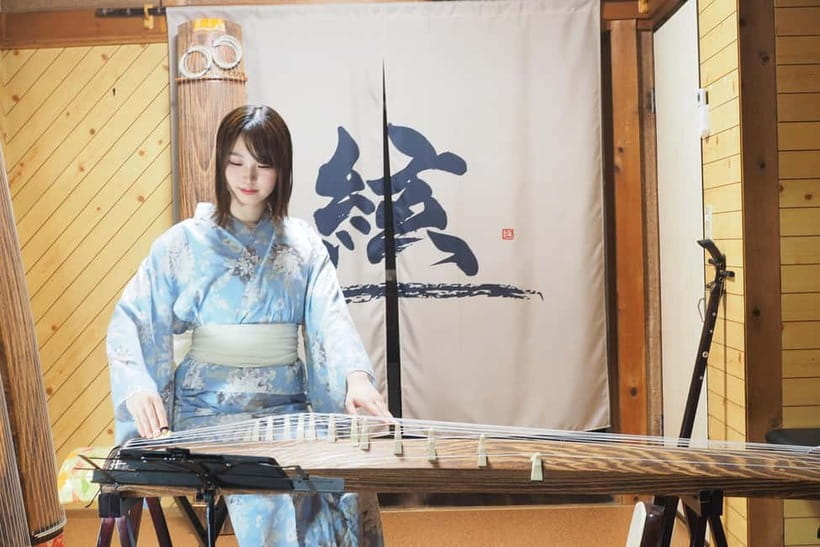
You’ll get an instrument introduction that covers:
- How the koto and shamisen are played in practical terms
- The role of picks/bridges and other key components (the kind of details that explain why the tone has that particular bite or softness)
- How the music is represented in notation, so you can follow along better during the pieces
The explanations are often led by hosts and English support, and you may hear different staff names depending on the session. In past programs, hosts like Gen, Shima, Shoei, Samuel, and Sofia have guided guests through the instruments and the stories behind the music. That matters because you are not just sitting with translations. You are getting human answers and context that make the performance feel less mysterious.
And yes, singing may show up in some programs. A number of past performances described singing alongside the koto and shamisen, which adds an extra layer of emotion and storytelling.
- PERFECT KYOTO 1-Day Bus Tour★ 5.0 · 13,518 reviews
- Kyoto: Fushimi Inari, Kinkakuji, Bamboo Grove 1 Day Bus Tour★ 4.8 · 4,316 reviews
- Kyoto: Tea Ceremony in a Traditional Tea House in Kiyomizu★ 4.9 · 3,519 reviews
- Kyoto Geisha Walking Tour: Gion District & Hidden Gems★ 4.7 · 3,273 reviews
- Kyoto: Tea Ceremony Ju-An at Jotokuji Temple★ 4.9 · 3,207 reviews
What you will hear: classical, contemporary, and performer-driven choices
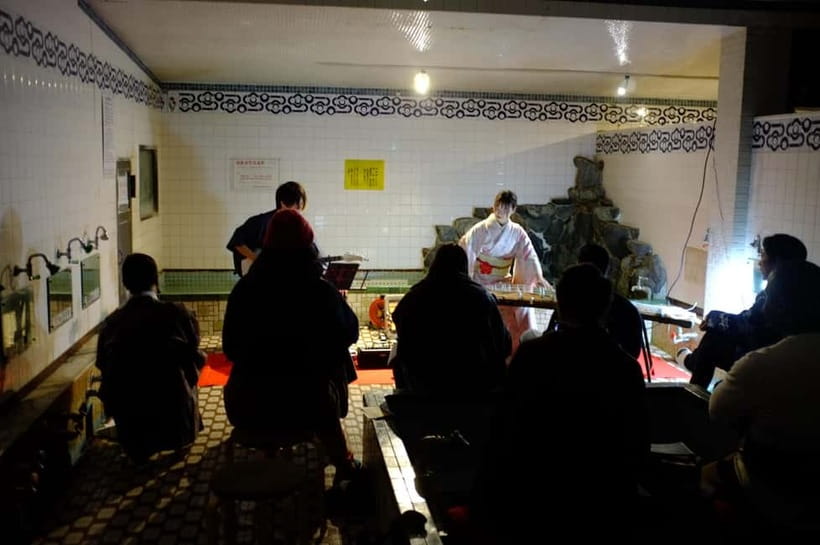
The music is not stuck in one era. Programs can include Japanese classical material, contemporary works, and original compositions. That range is exactly why I like this kind of show for Kyoto.
In the townhouse solo programs, you usually get 4 to 5 pieces played by a single performer, designed to show tone control, phrasing, and musical personality. Titles can include pieces like Kajimakura, Chidorino Kyoku, and Kaede no Hana, though the exact mix depends on the performer and season.
In the bathhouse duet setting, the emphasis shifts toward how two instruments fit together in the same emotional space. The koto can trade lines with another instrument, or it can act like a “voice” while a partner instrument answers. Because the hall has natural reverberation, the duet can feel bigger and more dramatic than what you’d hear in a small living room.
A practical tip: don’t worry about identifying every piece. Instead, listen for patterns. Notice when the melody feels lyrical versus when the rhythm gets more driving. The explanations you get beforehand help you catch those shifts.
Getting close enough to learn in the townhouse workshop
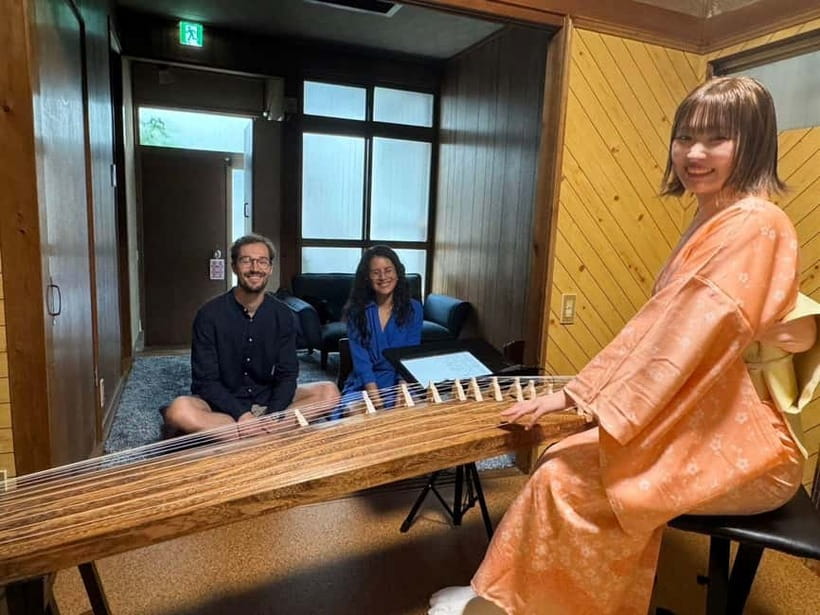
If you book the townhouse option, consider adding the optional hands-on koto workshop. It’s the kind of activity that turns you from a listener into an observer with a deeper understanding of what’s going on.
Workshop time is usually about 35 to 40 minutes and is beginner-friendly. You try basic koto techniques and learn a short phrase or small musical idea. Instruments are sanitized, and staff guide you on things like sitting position, how to pluck, and how to read the sheet music basics.
Even if you only manage a small tune, it changes what you hear during the concert. After you feel how controlled plucking and finger positioning works, the performance stops being abstract.
From the way people describe the experience, the workshop is also emotionally rewarding, especially if you are traveling with a partner or a child who is curious about trying something new. The tone stays friendly and patient.
The bathhouse hall: why tiled walls make koto sound different
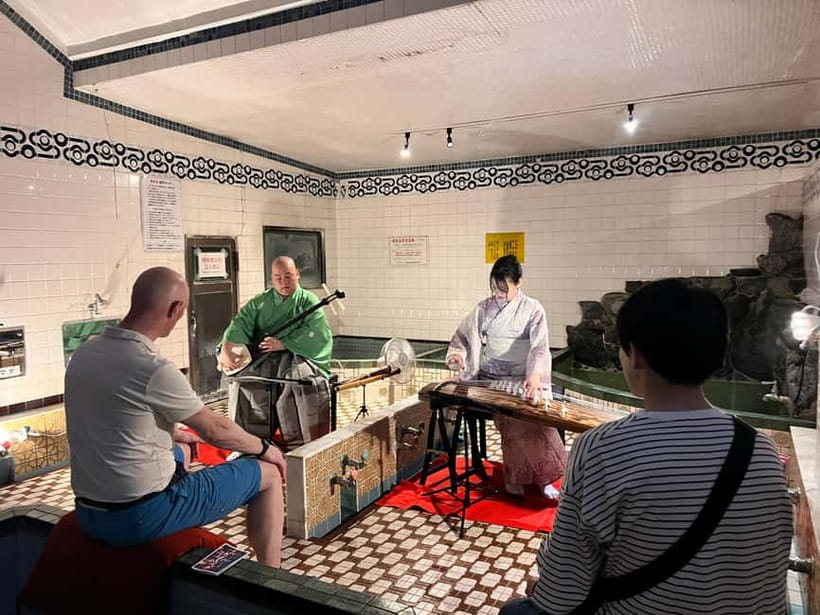
The bathhouse hall is the “sound engineer’s dream,” but in a human way.
Tiled walls create richer resonance, so notes linger longer and duets feel more enveloping. That matters for koto and shamisen because their texture is part of the magic. When sound blooms naturally, you can hear the attack, then the sustain, then the fade, instead of everything flattening into one blended line.
Capacity is larger here, up to about 30 guests, with rows in the hall setting. That can be great if you want a shared atmosphere. Just don’t choose the bathhouse if you want maximum close-up detail. The townhouse is better for that.
Also, because the bathhouse option runs irregularly on Mondays, you might need to be flexible. If your schedule is tight, the townhouse is more predictable since it runs almost every day.
How to pair it with your Kyoto sightseeing day
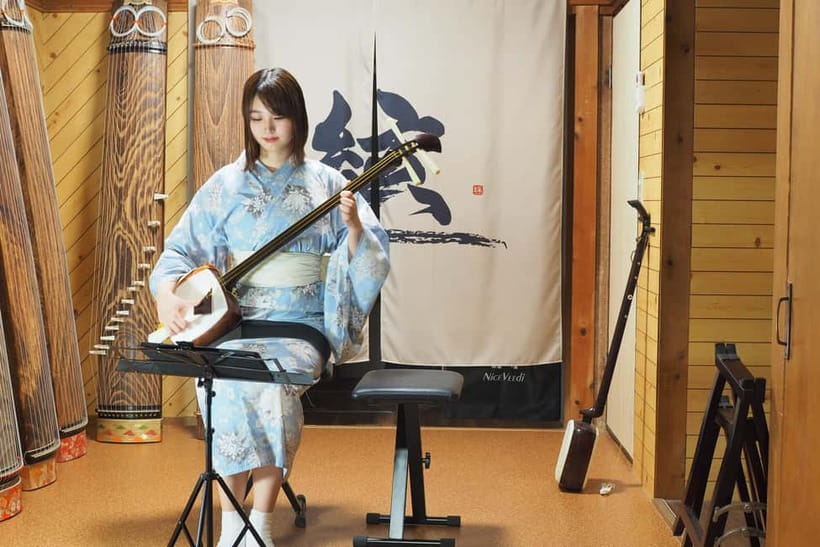
This show is short enough to fit into a normal Kyoto day. It’s also a good reset when the city feels busy. After, you’ll have a calmer mind, and that makes temple and market time feel more enjoyable.
Here are practical pairings based on nearby transit:
- Arashiyama: about 25 minutes by walk to Saiin Station, then Hankyu to Katsura, and a transfer to the Randen Line
- Nijō Castle: about 20 minutes, with one subway stop on the Tozai line from Saiin
- Kinkaku-ji: about 20 minutes by bus plus a short walk from Nishioji Sanjō
- Nishiki Market: about 25 minutes, with a direct Hankyu ride to Karasuma or Kawaramachi, great for snacks after the concert
One small warning, based on how many people talk about it: the venue can be hard to find at first glance. Plan for that. Put the meeting point into your map app with coordinates if address directions seem unclear. You do not want to arrive stressed, because the experience starts with proper seating and a calm intro.
Price and value: what $32 buys you in Kyoto
$32 per person can sound simple, but the value is in the access.
For that price, you get:
- Live koto and shamisen performance with 4 to 5 pieces
- Bilingual mini-commentary in Japanese and English
- Post-concert Q&A with the musicians
- Photo-opportunity time with the performers
- Venue seating (cushions or chairs depending on venue)
- Optional hands-on workshop if you book the townhouse package
The key point is that you are not paying just for music. You are paying for explanation, access, and space. In a small townhouse, you get proximity. In the bathhouse, you get acoustics and duet structure. Either way, you are guided through what you hear instead of being left alone in a dark theater with vague program notes.
Also, because the concert durations are typically under two hours, you get a “high culture per hour” activity. That’s a real advantage in a city like Kyoto where travel time and crowds can eat your day.
Who this Kyoto concert fits best
This experience is best for people who want something calm and focused. It also works well if you like small group settings and don’t want a big tour bus vibe.
It is a strong match if you:
- Want a short, meaningful cultural activity that doesn’t require prior music knowledge
- Love intimate venues and direct conversation with performers
- Prefer a night plan that feels quieter than temples or nightlife
- Are curious about traditional instruments and want a hands-on element
It may be less ideal if you:
- Need a guaranteed large English-only narration throughout (the experience includes bilingual support, but the exact balance can vary by session)
- Want a major nighttime spectacle with lots of visual action, because this is primarily about sound, technique, and listening
Families are often comfortable here, but note that it is not suitable for babies under 1 year.
Should you book this koto and shamisen experience?
Yes, if you want Kyoto culture at human scale. The townhouse option is my pick for people who like closeness, clear explanations, and the option to try the koto. The bathhouse hall is the right choice if you want duet interplay and acoustics that make the music feel larger than the room.
If you can only choose one and you are unsure, think about your goal. For learning and hands-on fun, choose the townhouse. For sound and duet chemistry in a resonant hall, choose the bathhouse.
If your budget allows, doing both is a smart way to see how the same instruments can feel completely different in different spaces. Either way, you’ll walk away knowing what you heard, not just hearing something pretty.
FAQ
How much does this Kyoto concert cost?
The price is listed as $32 per person.
How long is the concert experience?
Duration ranges from 45 to 105 minutes depending on the option you book.
What is included in the concert?
You’ll get the live concert performance of 4 to 5 pieces, bilingual mini-commentary (Japanese and English), post-concert Q&A, and a photo opportunity. Venue seating is also included.
Is there an optional workshop?
Yes. A hands-on koto workshop is available only with the Traditional Townhouse booking, with sanitized instruments and beginner-friendly guidance.
What’s the difference between the two venues?
The Traditional Townhouse option is a cozy solo setting for about 11 guests, with solo performances. The Historic Bathhouse Hall option is a resonant duet setting for up to about 30 guests, usually featuring koto paired with another instrument.
How often is the bathhouse hall offered?
It is offered irregularly on Mondays, so you should check the calendar for the next dates.
Are the explanations in English?
Yes. The experience includes English and Japanese support, including bilingual mini-commentary.
Can I do both venues?
You can book one venue or both. The choice affects whether you get mainly solo programming or also the duet bathhouse program.
Is transportation or food included?
No. Transfers, food, drinks, and bathing are not included.
Who is this experience not suitable for?
It is not suitable for babies under 1 year.
Newest Kyoto write-ups from the Loving Japan desk
Onsen, Hot Springs and Bathhouses, side by side.
 ★ 4.4Nara and Uji Day Trip with Deer Park and Hot SpringFrom $57302 reviews
 ★ 5.0From Tokyo: Private Tour to Fuji/Hakone – Onsen, Art, NatureFrom $322116 reviews
 ★ 5.0Mt. Fuji, Hakone Private Tour from Tokyo – Onsen, Arts and NatureFrom $85279 reviews
 ★ 4.3Mount Fuji 5th Station & Onsen Day TripFrom $5075 reviews
 ★ 4.6From Fukuoka: Mount Aso, Kurokawa Onsen, and Shrine TourFrom $5072 reviews
 ★ 5.0Private Nagano 1-Day Tour:Snow Monkeys,Zenko-ji,Obuse,Sake,OnsenFrom $33771 reviews
 ★ 5.0Mt Takao Tour with Ramen and Tattoo-Okay Hot SpringFrom $12069 reviews
 ★ 5.0Snow Monkey & Shibu Onsen Afternoon Tour (Depart: Iiyama & Nozwa)From $7854 reviews
Filed on these lists too