
REVIEW · TOKYO MUSEUMS, GALLERIES AND TEAMLAB
Seki: Samurai Knife Making Experience at the Knife Museum
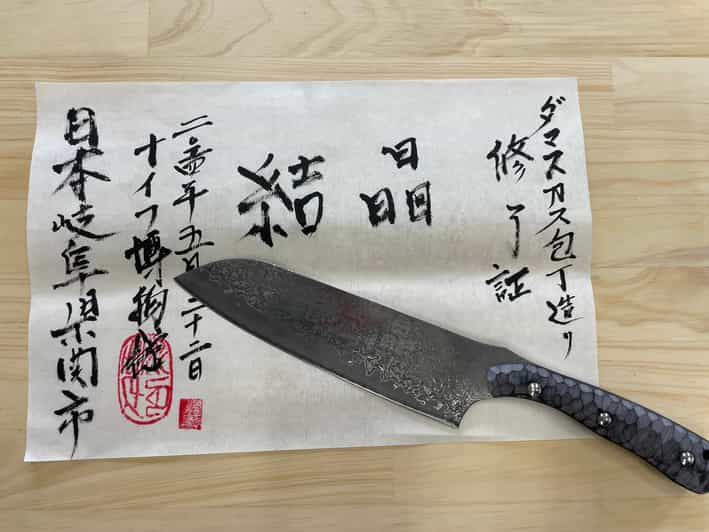
You write your name on steel. This one-day experience in Seki turns a blank into a usable Damascus kitchen knife, and I loved how personal the process feels, especially the name etching on the blade. I also like that you do a real-world edge check by cutting fresh vegetables right after you sharpen. One consideration, the hands-on stages take time, so plan for a day that can run longer than a simple museum visit.
You’re not just watching craft happen. You’ll also spend time with the collections and history at the Knife Museum and the sword-focused museum in Seki, plus you finish with an authentic Japanese meal. The best part is the small group setup, limited to 5 people, which means you get help when you need it, and you’re not stuck feeling rushed.
In This Review
- Key things you’ll notice right away
- Turning a Knife Blank into Your Own Damascus-Style Kitchen Knife
- The G. Sakai Knife Museum Workshop, where craft meets collectibles
- Testing your edge on fresh vegetables (the moment it becomes real)
- Lunch in Seki: fuel after craft, and part of the culture
- The Seki swordsmith museum stop, Samurai context you can feel
- Price and logistics: what $322 buys in a small group
- Who should book this Seki knife-making day, and who should skip it
- Should you book the Seki Samurai Knife Making experience?
- FAQ
- What will I make during the experience?
- How do you check the sharpness of the knife?
- How long is the tour day and what stops are included?
- What museums will I visit?
- Is lunch included?
- What languages do you get for the tour?
- How big is the group?
- Is it suitable for children, and can I cancel?
Key things you’ll notice right away
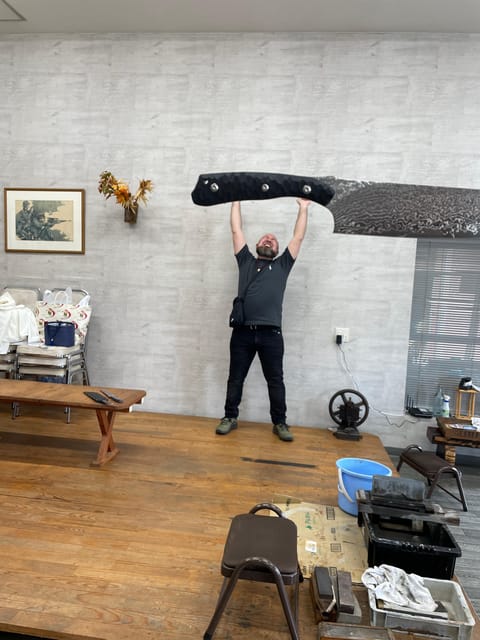
- A Damascus-style knife you build yourself, then take home as a real kitchen tool
- Name engraving with a special method, plus sharpening practice you can use later
- A hands-on vegetable edge test, so you can feel the difference, not just admire it
- Knife Museum access inside the G. Sakai knife world, with a strong collection to browse
- Samurai sword context at a swordsmith museum, tied to Seki’s blade-making tradition
- Japanese lunch included, often described as a top meal of the trip
Turning a Knife Blank into Your Own Damascus-Style Kitchen Knife
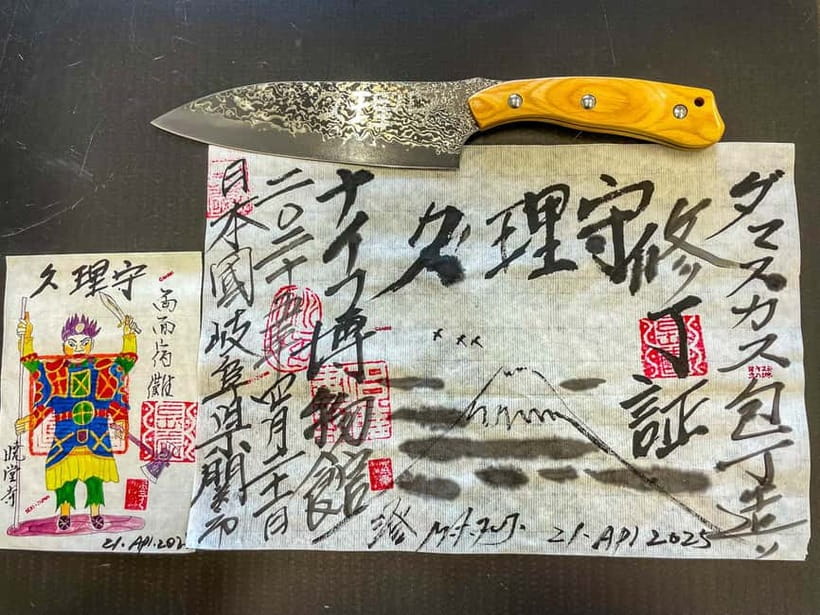
Seki City is where Japan’s knife making culture really shows up in everyday life. This experience is built around that idea: you spend the morning and early afternoon learning a traditional, step-by-step process, guided by a master craftsman with 50+ years in the craft.
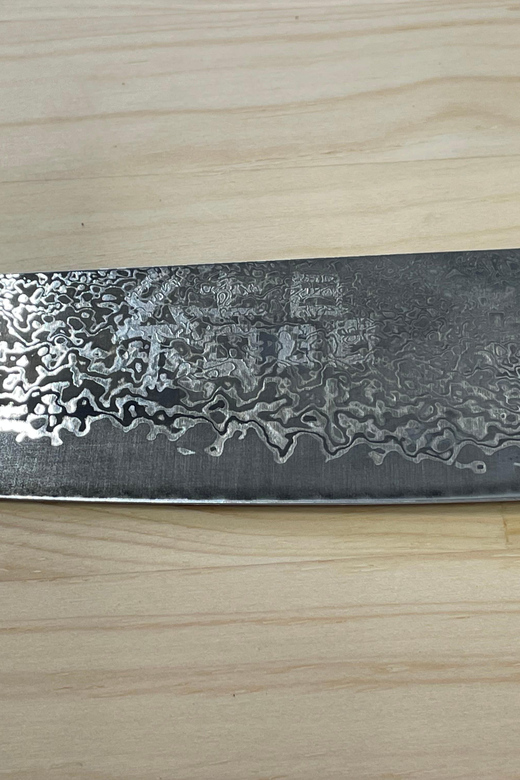
What you actually make is a Damascus kitchen knife. You go through the key stages yourself, including polishing and sharpening, and you engrave or “write” your name onto the blade using a special technique. The day is structured so you’re not just assembling pre-made parts. You’re doing the work.
You also get skills that matter after you leave. The workshop includes sharpening instruction, so your knife is not just a souvenir. And in multiple parts of the day, you get chances to evaluate what you made, which is a big reason people walk away impressed.
A quick reality check: this is not a fast activity. Even though it’s “one day,” it feels like focused craftsmanship time. If you’re the type who only wants quick sightseeing, you may feel the pace is deliberate. If you like learning skills you can use again later, this pace makes the whole thing click.
The G. Sakai Knife Museum Workshop, where craft meets collectibles
Your day centers on the G. Sakai Knife Museum and workshop. The museum is in part of the G. Sakai factory, which matters because you’re seeing knives in a place tied directly to production culture, not just a staged exhibit. You also get an English guide, and the pace is paced for a small group.
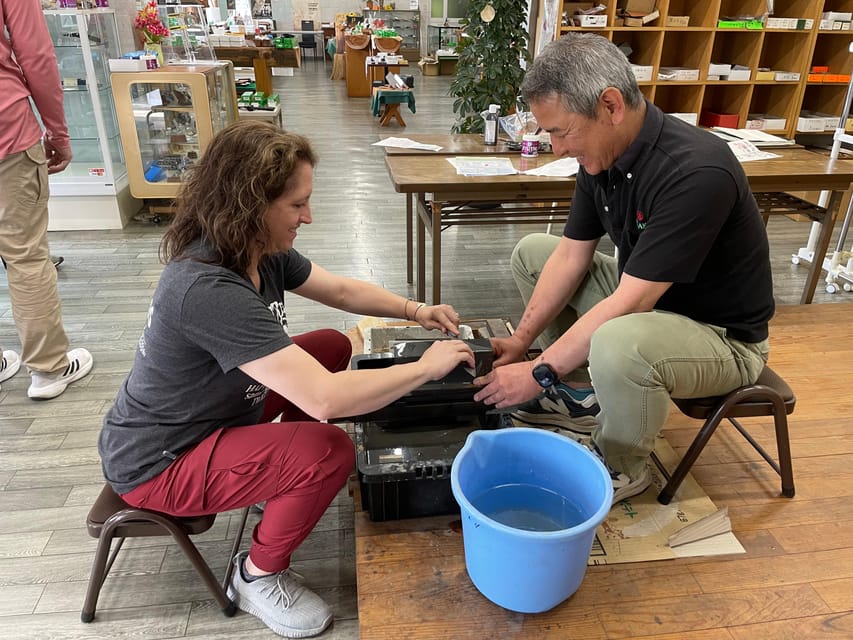
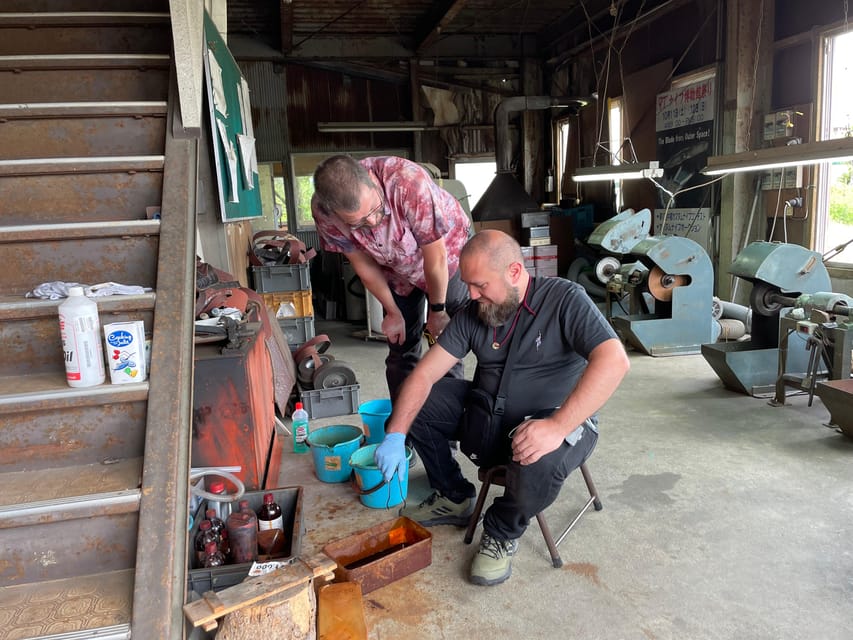
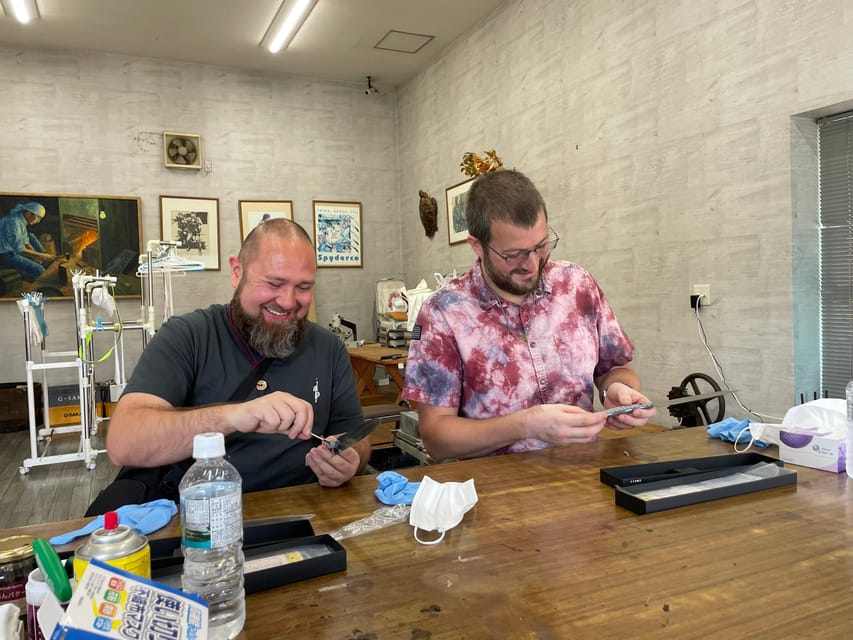
The workshop block runs about 2.5 hours, and that time includes both instruction and hands-on work. You start with your knife set, follow the instructor’s steps, and work through polishing, sharpening, and your personalized engraving. The tools and workflow are set up so you can contribute without needing prior experience.
After the workshop portion, the museum experience becomes more than “wait for your knife.” You get time to see the knife collection and learn what makes rare knives special. Many people love this part because it turns your personal experience into context. You stop seeing knives as generic “steel objects” and start noticing details like design choices, finish quality, and how different blades are built for different jobs.
There’s also a shop atmosphere tied to the museum. Even if you do not plan to buy anything extra, it helps to understand how much variety exists in the world of Japanese blades, from smaller styles to more serious kitchen and specialty knives.
Testing your edge on fresh vegetables (the moment it becomes real)
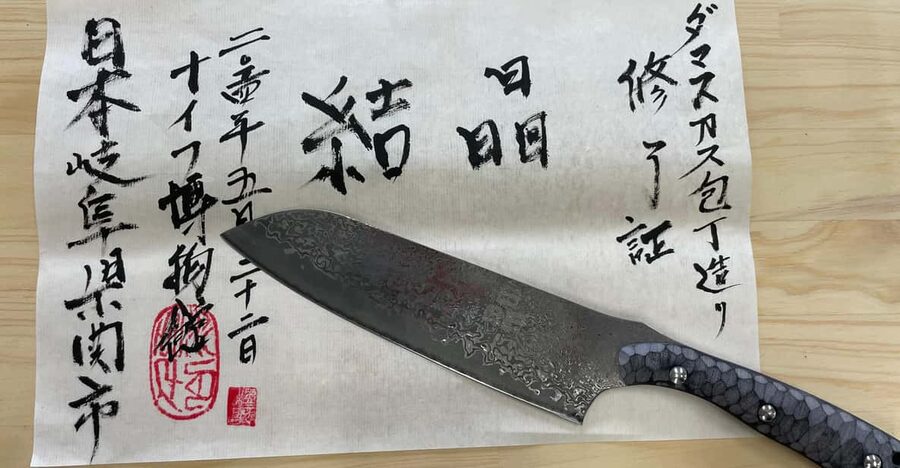
One of the smartest parts of the experience is the performance test on fresh vegetables. Instead of ending with only photos and a certificate, you check what you made using something immediate and honest: a fresh ingredient that responds to sharpness.
This matters more than it sounds. When a knife is truly sharp, you notice it in the start of the cut, the smoothness, and how little force you need. If your edge has a different bevel or finish than expected, vegetables tend to show it quickly. It’s one of the few “tests” you can do at the table that connects your workshop effort to real use.
If you want to get the most out of the vegetable test, pay attention to what feels easy. I’d also watch your grip and wrist position, because the same blade will feel better or worse depending on how you hold it. You’re not just judging sharpness, you’re learning how this knife wants to be used.
And yes, it’s genuinely fun. You’re not doing this in a classroom, you’re checking your own knife with your own hands, right after sharpening.
Lunch in Seki: fuel after craft, and part of the culture
After the knife-making block, you head to lunch at a local restaurant in Seki. Lunch runs about 1 hour, and it’s included.
This is where Seki shows another side of itself. The meal is described as authentic Japanese cuisine, and many sessions include sushi prepared by a sushi master. Some people also mention eel as a highlight, and there may be options during the meal service.
For me, the value of including lunch is simple. Your hands are tired, your focus is sharp, and you’re going to want a meal that feels like part of the day instead of a rushed stop near a train station. A good meal also gives you a natural reset before the museum and sword history portion.
A practical tip: after making and testing your knife, eat at a relaxed pace if you can. It helps you stay present for the rest of the tour, especially when you shift from “making” to “history and context.”
The Seki swordsmith museum stop, Samurai context you can feel
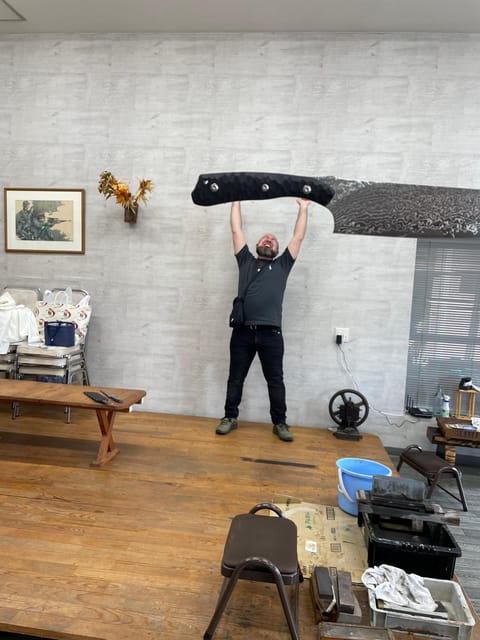
In the afternoon, you visit the Seki Swordsmith Museum. This is where the day’s theme widens. Instead of only kitchen blades, you learn about Japanese sword culture and why Seki became a place where steel craft mattered.
You learn Samurai and Japanese sword history, and you also connect it to Seki City and the materials that supported forging traditions over centuries. The tour explains why Seki’s location and resources mattered, pointing to quality iron sand, charcoal, and water that helped make traditional forging possible.
This stop is only about 1 hour, so it’s not a full museum day. But it gives you something useful: a reason behind what you saw earlier. When you’ve spent time polishing and sharpening, it becomes easier to appreciate why sword-making techniques carried prestige and practical value.
Some people also talk about getting close to real blades through related showrooms in the area, including time with experts who can answer questions. You might not get a full hands-on sword session every time, but the overall feel is that this is an industry town, not a theme park.
If you like understanding how tools connect to culture, this museum segment is where you’ll feel the day click.
Price and logistics: what $322 buys in a small group
At $322 per person, you’re paying for more than entry tickets. You’re paying for instruction, materials and a guided workshop, plus lunch, plus museum access, plus transportation as part of the day.
The included items listed for the experience cover the big cost drivers:
- A samurai kitchen knife set for the workshop
- Lunch
- Entry tickets to the Knife Museum and the sword museum stop
- Transportation
- An English guide and an instructor for making the knife
Then there’s the part you can’t fully price on a spreadsheet, which is the small group size: limited to 5 participants. In a workshop involving polishing, sharpening, and engraving, that smaller group count matters. It reduces waiting, helps instructors spot issues early, and makes it more likely you’ll finish feeling proud, not rushed.
One more logistics detail that helps your stress level: you meet at Sekitomioka Station when the Nagara River train arrives at 10:06 AM, and the driver picks you up by car. The tour is built around that simple handoff.
As for timing from big cities, Seki is reachable as a day trip. From Kyoto, it’s roughly 1.5 to 2 hours by train, so you can often add this to a Kyoto base without losing your whole day to transit.
Who should book this Seki knife-making day, and who should skip it
This is a strong fit if you:
- Want a hands-on cultural experience, not just a museum walk
- Like food and craft, since lunch is part of the day
- Enjoy learning a practical skill, especially sharpening
- Care about taking home something you will actually use
It’s also a good “first Japan craft day” choice because the tour mixes three things in one block: making, testing, and museum context.
It’s not ideal if you:
- Want a quick stop with minimal time commitment
- Dislike longer, careful step-by-step activities
- Are traveling with children under 18, since the experience is noted as not suitable for them
One more thing to consider: your schedule needs buffer. Even when the official blocks look tidy, the workshop is detailed. Plan to enjoy the pace.
Should you book the Seki Samurai Knife Making experience?
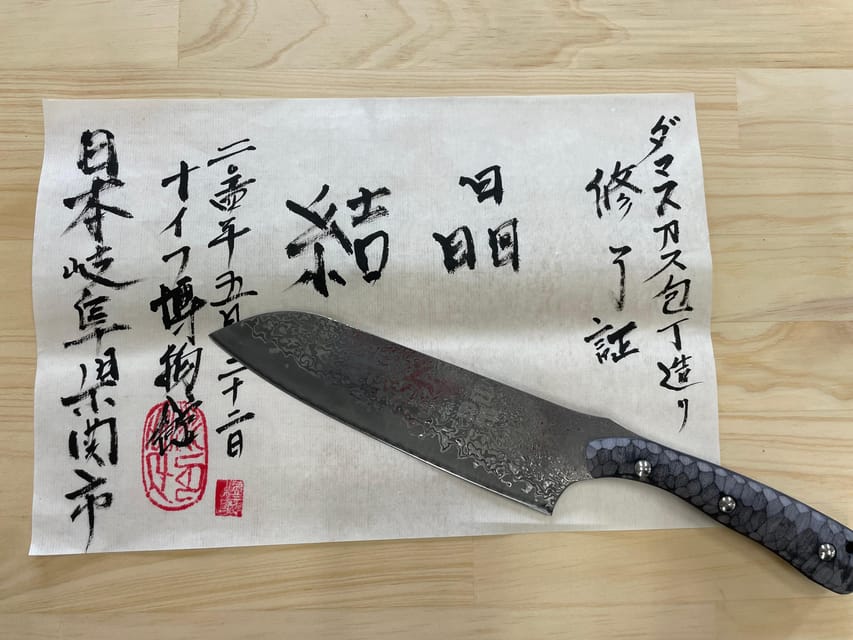
I think you should book this if your idea of a great day in Japan is craft you can touch, plus context you can understand. The big draw is that you don’t end with only a photo and a story. You end with a personalized Damascus-style kitchen knife, sharpening instruction, and a hands-on edge test that makes the results tangible.
If you’re the type who wants only classic sights and quick wins, you may find the workshop time and careful process a little too slow. But if you want something memorable, skill-based, and rooted in Seki’s identity, this is a great bet.
FAQ
What will I make during the experience?
You’ll make your own personalized Damascus kitchen knife from start to finish, including polishing, sharpening, and engraving your name on the blade.
How do you check the sharpness of the knife?
After you sharpen and polish, you test the knife’s performance by cutting fresh vegetables.
How long is the tour day and what stops are included?
The full experience is for 1 day, with a workshop at the Knife Museum (about 2.5 hours), lunch (about 1 hour), and a visit to the Seki Swordsmith Museum (about 1 hour), then return to the station.
What museums will I visit?
You visit the G. Sakai Knife Museum and then the Seki Swordsmith Museum to learn about Samurai and Japanese sword history.
Is lunch included?
Yes. Lunch is included after the knife-making workshop and is described as authentic Japanese cuisine.
What languages do you get for the tour?
The tour provides a live guide in English and Japanese.
How big is the group?
The group is small, limited to 5 participants.
Is it suitable for children, and can I cancel?
It is not suitable for children under 18. The tour also offers free cancellation up to 24 hours in advance for a full refund.
Tokyo Museums, Galleries and teamLab, side by side.
 ★ 4.6teamLab Planets TOKYO Digital Art Museum Entry TicketFrom $259,779 reviews
 ★ 4.5Osaka Castle: Museum and Tower Entry TicketFrom $72,380 reviews
 ★ 4.5teamLab Botanical Garden Entry TicketFrom $111,710 reviews
 ★ 4.6Samurai Ninja Museum Guided tour and ExperienceFrom $271,010 reviews
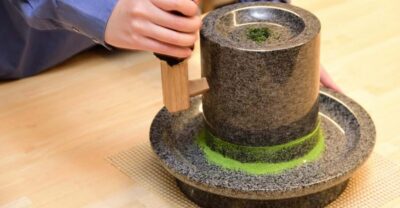 ★ 4.9Tea Museum Tickets and Matcha Grinding ExperienceFrom $23739 reviews
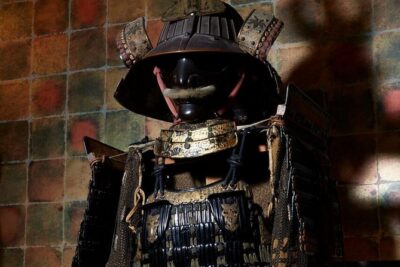 ★ 4.5Skip the lines Basic Ticket at SAMURAI NINJA MUSEUM KYOTOFrom $28632 reviews
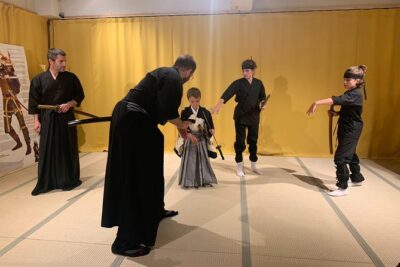 ★ 5.0Ninja Experience (Family Friendly) at Samurai Ninja Museum TOKYOFrom $47441 reviews
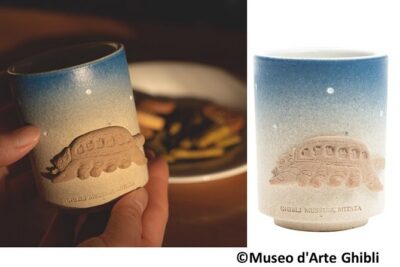 ★ 4.5Tokyo Studio Ghibli Museum and Ghibli Film Appreciation TourFrom $193421 reviews