REVIEW · JAPAN
Tokyo Metropolis
Tokyo can feel like one giant photo theme, but it is easy to shoot on autopilot. This 2.5-hour urban photography walk turns the city’s steel-and-glass look into something you can actually frame, with an expert local photographer guiding your eye through Shiodome and Ginza. You also get a strong architecture finale at the Tokyo International Forum, plus chances to hunt for less obvious street angles.
I especially like two things: the small group format (limited to six, with the experience listed as private for your group), and the hands-on coaching focused on composition, timing, and camera settings. A guide named Stephane, and others like Lukasz, get praised for constructive, practical feedback that helps your pictures make more sense.
One thing to consider: this is a good-weather kind of shoot. If the weather turns, the tour can be canceled, and the operator will offer a different date or a full refund, but it is still a bit of a gamble compared with indoor-only activities.
In This Review
- Quick hits you can plan around
- A 2.5-hour Tokyo photo walk with a pro instructor
- Who this fits best
- Meeting at Shinbashi, then learning to shoot Shiodome’s glass towers
- What you practice here
- A note on style and pacing
- Ginza back alleys: patterns, lines, and street-level photography
- What you’ll likely focus on
- Practical comfort tip
- Tokyo International Forum interiors: dramatic architecture in the last act
- Why this stop matters for your results
- How the workshop improves your photos fast (composition, timing, settings)
- Composition tips that pay off immediately
- Timing and camera settings coaching
- Guides matter here
- What’s included, what costs extra, and what that means for value
- What is included
- What is not included
- Entry fees
- Price per person math (if you’re two)
- Where you end up, and how to plan your rest of the day
- Practical tips for shooting better on this walk
- Bring your camera, and be ready to adjust
- Plan for light and weather
- Use comfortable walking strategy
- Be ready to ask questions
- Should you book this Tokyo photography workshop?
- FAQ
- How long is the Tokyo Metropolis photography workshop?
- How much does the tour cost, and how many people are in a group?
- Where do we meet the guide?
- Where does the tour end?
- What stops are included in the route?
- Are there admission fees at the stops?
- What is included in the price?
- Is the tour suitable for beginners?
- What happens if the weather is bad?
Quick hits you can plan around
- Small group, strong feedback: limited to six people, with personalized guidance along the way
- Three focused photo zones: Shiodome skyline, Ginza street patterns, and Tokyo International Forum interiors
- Pro-taught photo skills on the street: framing, composition, and using people and environment together
- Short walks, big views: about 1.3 miles (2 km) total, mostly on foot
- Mobile ticket for easier arrival: no paper ticket hassle
- Value math for couples: listed as up to 2 people per group price, which can be a good deal per person
Still weighing up options in Tokyo? These are the ones our reviewers rated highest.
- Mt Fuji and Hakone 1-Day Bus Tour Return by Bullet Train
★ 5.0 · 26,383 reviews - 1-Day Tokyo Bus Tour
★ 5.0 · 14,250 reviews - Tokyo: teamLab Planets TOKYO Digital Art Museum Entry Ticket
★ 4.6 · 9,779 reviews - Mt Fuji & Hakone Cruise, Drum Show Bullet Train 1 Day from Tokyo
★ 4.0 · 7,413 reviews
A 2.5-hour Tokyo photo walk with a pro instructor
This workshop is built for real improvement, not just sightseeing with a camera. You move through modern districts where you can study lines, reflections, and “how Tokyo holds light,” especially around glassy towers and dense streets. It also helps that it runs about 2 hours 30 minutes, so it fits cleanly into a morning plan.
Your instructor is the big draw. The experience includes a professional photography instructor, and the coaching is described as technical but still practical, like how to craft a story with what you see. In the feedback I saw, guides such as Stephane and Lukasz are highlighted for answering questions with detailed explanations, and for checking photos as you go so you can adjust quickly.
Who this fits best
- If you are a beginner, you get structure for composition and camera settings while you learn on real streets.
- If you already shoot, you get a new way to see modern architecture, plus prompts that push you beyond the usual skyline shot.
Meeting at Shinbashi, then learning to shoot Shiodome’s glass towers
The tour starts at 10:00 am at SL Square, Shimbashi Station West Entrance Square, a very practical meeting point because it is right by public transportation. From there you head toward Shiodome, where the morning light and the business-district look create an easy starting point for architecture photography.
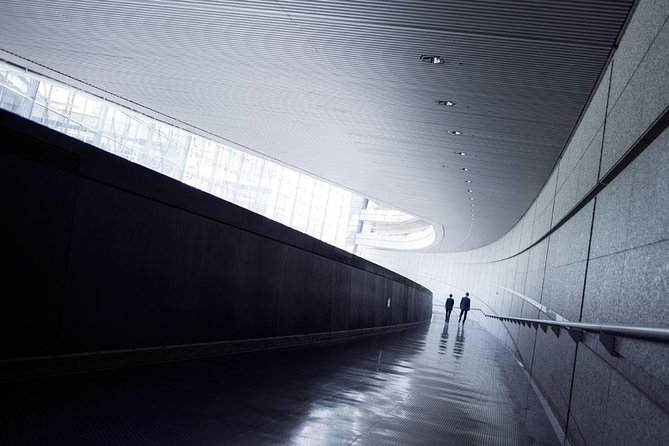
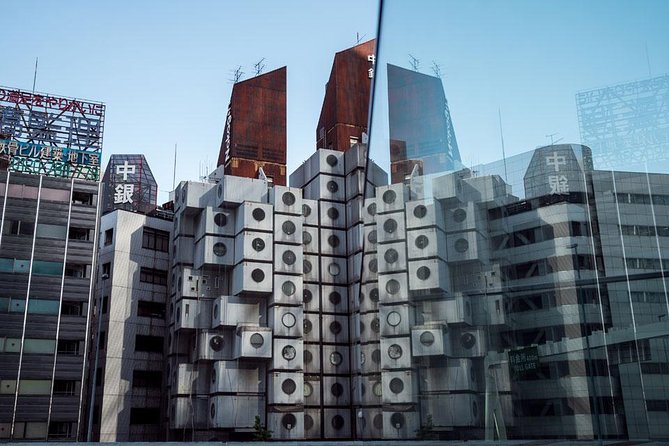
The first stop is Shiodome Siosite, with an hour allocated for shooting. This is where you can learn the basics of framing and composition in a place that naturally offers strong geometry: verticals, repeating window grids, and angled building edges that pull the eye.
- Mt Fuji and Hakone 1-Day Bus Tour Return by Bullet Train★ 5.0 · 26,383 reviews
- 1-Day Tokyo Bus Tour★ 5.0 · 14,250 reviews
- Tokyo: teamLab Planets TOKYO Digital Art Museum Entry Ticket★ 4.6 · 9,779 reviews
- Mt Fuji & Hakone Cruise, Drum Show Bullet Train 1 Day from Tokyo★ 4.0 · 7,413 reviews
- Tokyo: Shinjuku Food Tour (13 Dishes at 4 Local Eateries)★ 5.0 · 6,603 reviews
What you practice here
You are not just pointing a camera at tall buildings. You work on:
- How to frame a scene (so the photo reads instantly)
- How to build a story using the environment and also people within the scene
That “story” focus matters in Tokyo. Even when the city feels high-tech and uniform, a small human moment can make a photo feel alive instead of just impressive.
A note on style and pacing
Expect walking and stopping in short bursts, not one long “stand here and hope.” The itinerary is time-blocked, and the guide is there to help you get the shot you are aiming for, not only to talk.
Ginza back alleys: patterns, lines, and street-level photography
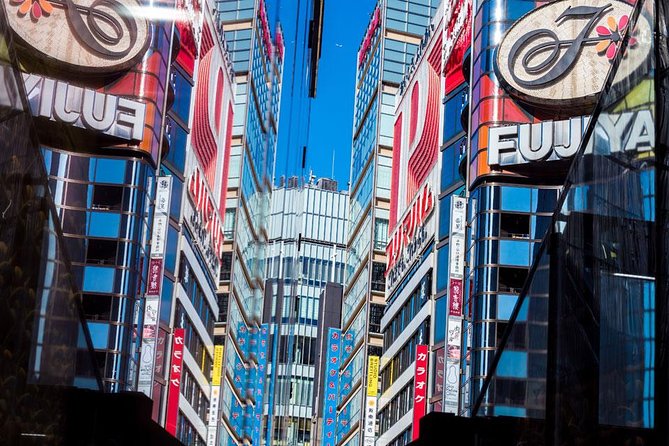
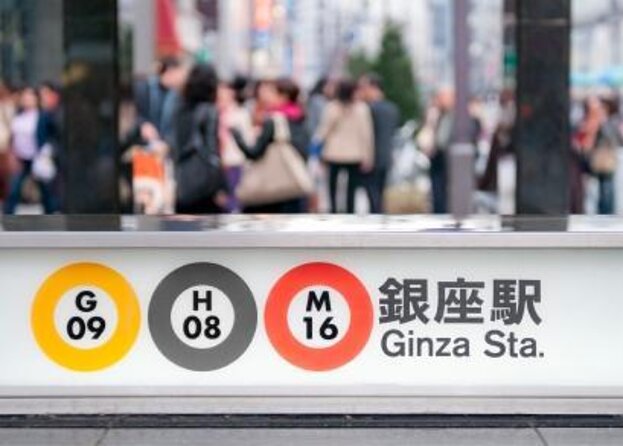
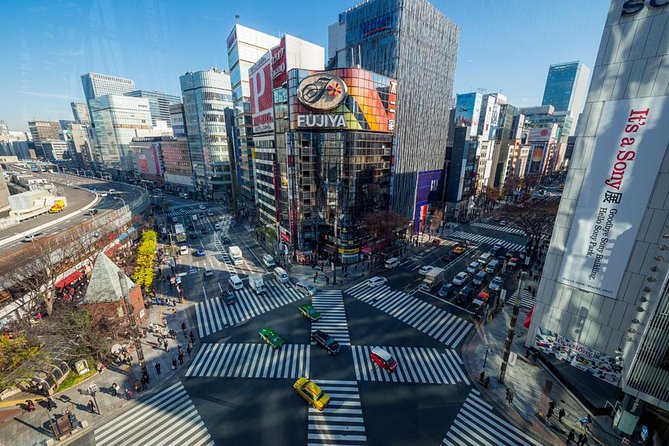
Next you head to Ginza for about 45 minutes, with the emphasis on architecture and street photography. Ginza is famous for shopping, but this tour approach is different because it also targets smaller, quieter pockets and back-leaning alleys where lines and reflections become your subject.
This is one of the parts of the tour that makes it feel like more than a skyline tour. The streets around Ginza can be visually busy, yet that busyness is exactly what gives you opportunities: repeating storefront shapes, shadows cutting across pavement, and the small choreography of daily life.
What you’ll likely focus on
As you walk, you may work on how to use:
- Lines and patterns in building edges and street layouts
- Reflections in glass surfaces
- Timing for moments involving salarymen and service workers as they move through the area
In the feedback, people mention looking specifically for lines, reflections, and architecture angles. That tells you the coaching is geared toward seeing the city as design, not just a place to photograph.
Practical comfort tip
Because this part is street-heavy, wear shoes you can trust for steady walking. The tour’s total walking distance is about 1.3 miles (2 km), which is reasonable, but you will still spend a lot of it looking down, up, and through your viewfinder.
Tokyo International Forum interiors: dramatic architecture in the last act
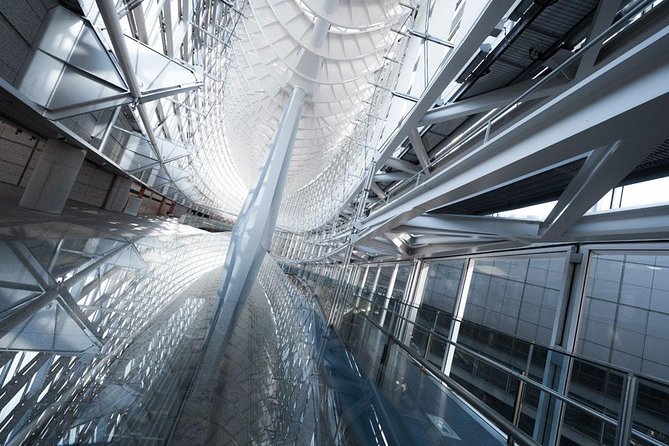
The final photo zone is Tokyo International Forum for about 45 minutes. This is where the tour leans into interiors and more dramatic architectural challenges, giving you a change of pace from exterior skyscraper angles.
If you want photos with stronger contrast and more “wow” structure, this is the spot. The International Forum can create scenes where light from the outside, the geometry of interior spaces, and the scale of the building all work together.
Why this stop matters for your results
A lot of architecture photos look similar unless you vary angles and environments. Adding an interior stop helps you:
- Test your composition in a new setting
- Photograph architectural details with less distraction than street exteriors
- Create a last set of images that feels like a complete visual story
Also, the tour notes that you can get to your next destination easily from Yurakucho, which is a major transport area. So you are not stuck far from the rest of Tokyo after the workshop ends.
How the workshop improves your photos fast (composition, timing, settings)
The main promise here is skill building, and the best part is that it happens in real time. Instead of learning theory in a classroom, you get prompts while you are standing where the photo will actually happen.
Composition tips that pay off immediately
You get practice on framing. That sounds basic, but it is the difference between a photo that looks like a snapshot and one that guides the eye. The tour also emphasizes using the environment and people together, so your shots avoid looking sterile even when the setting is very modern.
Timing and camera settings coaching
The feedback I saw repeatedly mentions advice on timing and camera settings. You can use that for everything from capturing the right moment with people in motion to getting the exposure to handle glassy buildings without your image washing out.
If you want a quick way to level up, this is it: shoot several short bursts in each location, then use the guide’s feedback to adjust. People mention that the guide checks photos and discusses how to capture mood and story, which means you get a feedback loop, not just a list of suggestions.
Guides matter here
Different instructors have different teaching styles, but the recurring strength is that they are friendly and accommodating while still pushing you to see differently. Stephane is specifically praised for enthusiasm and detailed explanations. Lukasz is mentioned as a guide who knows hidden spots and also helps with composition and angles without getting in other pedestrians’ way.
What’s included, what costs extra, and what that means for value
The price is $158.52 per group (up to 2), and it is listed as booked about 16 days in advance on average. The tour runs about 2 hours 30 minutes, and you get a mobile ticket.
Here is the value angle that matters for real decisions: you are paying for an expert instructor plus a guided route through three photo-heavy zones. The walking route also makes the tour time-efficient. You are spending a morning focused on one goal, instead of wandering and hoping you land on the right angles at the right light.
What is included
- Professional photography instructor
What is not included
- Bus fare
Entry fees
The stops listed include free admission tickets. That is a nice touch, because it keeps your total cost predictable while you focus on shooting.
Price per person math (if you’re two)
If you go as a couple or with a friend (up to 2 people per group), the cost works out to about $79.26 per person based on the listed group price. That can be a strong value for Tokyo, especially because the instruction is the core product.
Where you end up, and how to plan your rest of the day
The tour ends near Anthony Caro’s Barcelona Ballad in Marunouchi (Chiyoda City). That area is convenient if you plan to continue sightseeing around central Tokyo.
The schedule also places the last shooting moment in the Tokyo International Forum / Yurakucho area, which means you will likely be well positioned for train connections. The overall pacing is designed so you can move on afterward without feeling trapped.
Practical tips for shooting better on this walk
You do not need to become a tech wizard to enjoy this. But you can make the most of the time by preparing like a photographer.
Bring your camera, and be ready to adjust
You will get advice on camera settings, so bring the camera you want to learn with. If you shoot with something other than a phone, you will likely get more out of the guidance because you can apply changes immediately.
Plan for light and weather
The tour requires good weather. If rain or harsh conditions hit, the operator will either switch you to a different date or refund you in full. Tokyo can change fast, so check forecasts closely for the morning you want.
Use comfortable walking strategy
You will walk about 1.3 miles (2 km) total. Bring shoes that handle city sidewalks and quick stops. You will also want to keep one hand free if you are adjusting straps or lens caps while moving through crowds.
Be ready to ask questions
This type of workshop works best when you tell the guide what you are struggling with. If you wonder how to expose for bright glass buildings, or how to frame tall architecture without making it look like a tall blob, ask right away. People mention that guides answer questions with detailed explanations.
Should you book this Tokyo photography workshop?
If your goal is to take better photos in Tokyo without spending the whole day wandering, I think this is a solid buy. The combination of small group size, a professional instructor, and a route through three distinct photo environments makes it easy to measure improvement session to session.
Book it if you:
- Want hands-on feedback on composition and camera settings
- Prefer walking tours with a clear photo mission
- Like modern architecture and want more than one generic skyline shot
I would hesitate only if:
- You are traveling on a tight weather-dependent schedule and cannot be flexible with plans
- You want a purely casual photo stroll with no coaching or technical focus
If you like getting your images to look intentional, not accidental, this is the kind of morning that can change how you photograph Tokyo for the rest of your trip.
FAQ
How long is the Tokyo Metropolis photography workshop?
It lasts about 2 hours 30 minutes.
How much does the tour cost, and how many people are in a group?
The price is $158.52 per group, up to 2 people.
Where do we meet the guide?
You meet at SL Square (Shimbashi Station West Entrance Square), 2-chōme-7-先 Shinbashi, Minato City, Tokyo 105-0004.
Where does the tour end?
It ends near Anthony Caro’s Barcelona Ballad, 3 Chome-5 Marunouchi, Chiyoda City, Tokyo 100-0005.
What stops are included in the route?
The tour includes Shiodome Siosite, Ginza, and Tokyo International Forum.
Are there admission fees at the stops?
The admission tickets listed for the stops are free.
What is included in the price?
A professional photography instructor is included.
Is the tour suitable for beginners?
Most travelers can participate, and it is described as great for both beginner and more advanced photography lovers.
What happens if the weather is bad?
This experience requires good weather. If it is canceled due to poor weather, you will be offered a different date or a full refund. If you cancel for any other reason, it is non-refundable and cannot be changed.