
REVIEW · NAGANO, SNOW MONKEYS AND SKI COUNTRY
Wild Japanese Flying Squirrel Watching Tour in Nagano
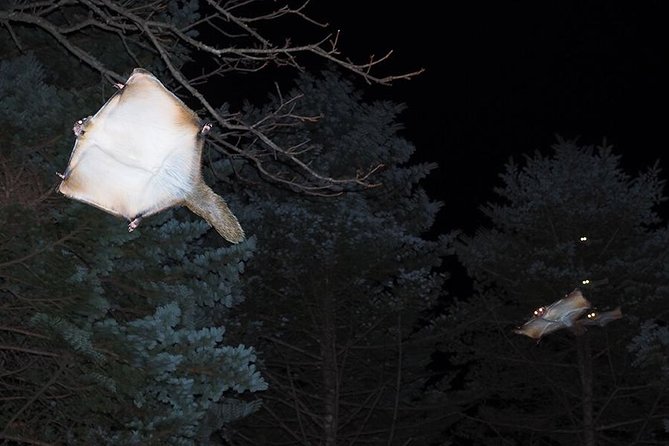
One hour and change can feel like a wildlife documentary. This Nagano-area tour is built around spotting the wild Japanese giant flying squirrel, called the musasabi, in the places where gliding squirrels actually show up. I like that you get context first, then you go outside with a plan, not just hope.
Two things I really like: the Picchio Visitor Center talk, which covers diet, size, and even gliding distance, and the fact that binoculars are included so you can focus on movement instead of guessing. A pro nature guide helps you read the habitat and understand what you are seeing.
One consideration is that you need good conditions. The tour depends on weather and squirrel activity, and you should know that you may not see flying squirrels on every run.
In This Review
- Key Points Worth Knowing Before You Go
- A Musasabi Tour That Starts With Real Clues, Not Guesswork
- Meeting at Karuizawa Wild Bird Sanctuary (Star Spot for the Start)
- Stop 1: Picchio Visitor Center Lesson, What You Learn Before You Look
- Stop 2: Karuizawa Hoshino Area Walk, Watching for Glides and Gasps
- Binoculars, Group Size, and How You Get a Better View
- Price and Timing: Is This Good Value at $28.69?
- Who This Tour Is Best For in Your Nagano Plan
- What the Picchio Center Adds to Your Field Seeing
- Weather Reality Check (And How to Think About It)
- Should You Book This Japanese Flying Squirrel Tour?
- FAQ
- What time does the tour start?
- How long is the tour?
- Where do I meet for the tour?
- Are binoculars included?
- Is the tour guided in English?
- What kind of physical fitness is required?
- What happens if the tour is canceled due to weather?
Key Points Worth Knowing Before You Go
- Picchio first, then field searching: you learn what to look for before you step outside
- Binoculars included: you can track small shapes and motion without squinting
- Guides trained on gliding behavior: the viewing spots are chosen with the musasabi in mind
- English support via subtitles: even if your guide’s spoken English is limited, slides include English subtitles
- Small group setting: up to 30 travelers keeps the search focused
- Late-afternoon timing: a 4:00 pm start helps sync with natural activity windows
A Musasabi Tour That Starts With Real Clues, Not Guesswork
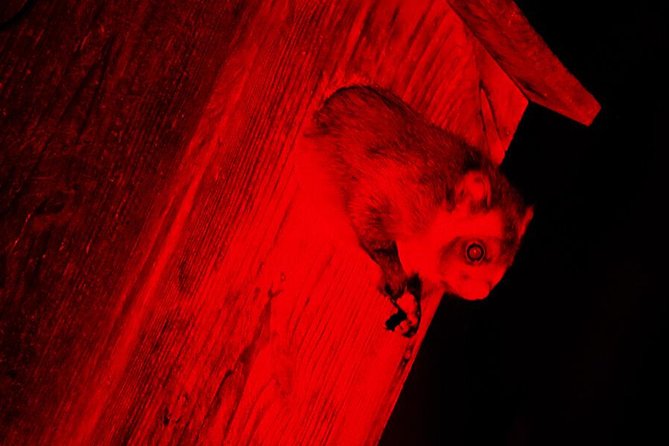
The best wildlife experiences feel calm and purposeful. This tour runs on that idea, starting with a short ecology lesson and then moving into quiet observation where the real magic happens. You are not expected to know the squirrel’s rhythms already, because the guide gives you a framework.
I also like the “silence broken by excitement” approach. After the indoor talk, you head into the Karuizawa Hoshino area for a one-hour observation window where you can actually listen and watch. That matters because flying squirrels can be easy to miss if you are busy talking, walking too fast, or looking only at obvious tree gaps.
The group size cap is another practical win. With a maximum of 30 people, you will usually have enough room to look comfortably and avoid turning the viewing area into a crowded shuffle. It does not guarantee that you will see a squirrel, but it does keep the experience from feeling chaotic.
And yes, this is for a specific animal. If you want a general sightseeing walk, this is not that. If you want one targeted shot at a rare, native species, this format makes sense.
Meeting at Karuizawa Wild Bird Sanctuary (Star Spot for the Start)
Your tour starts at the Karuizawa Wild Bird Sanctuary in Nagakura, Hoshino 2148, Karuizawa, Kitasaku District, Nagano, 389-0111. The session begins at 4:00 pm, and it ends back at the same meeting point, so you are not stuck planning your own return.
This timing is worth your attention. Late afternoon is often when animals become more visible and active, and the schedule is clearly set up to match that. You are also doing this as a compact, 1 hour 30 minutes experience, which makes it easier to slot into a Nagano day without losing a whole afternoon.
The location is described as near public transportation, so you should be able to reach it without a private car. Still, I recommend you check your exact route ahead of time, especially if you are coming from Karuizawa Station or the Hoshino area, since the start is specific and the tour feels most rewarding when you are on time.
Physical fitness is listed as moderate. That usually means you should be comfortable walking at a steady pace and standing during viewing. Nothing suggests extreme hiking, but you will likely want to wear shoes that are stable on outdoor ground.
Stop 1: Picchio Visitor Center Lesson, What You Learn Before You Look
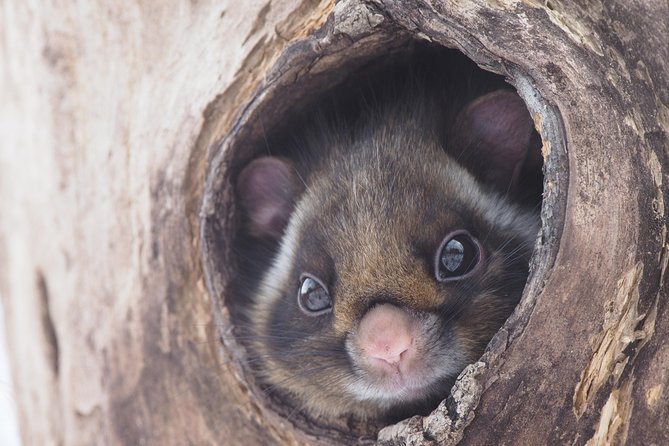
Stop 1 is Picchio – Nature Tours and Conservation, right at the visitor center. The tour begins with a professional nature guide explaining the ecology of the Japanese giant flying squirrel, including practical details like diet, size, and flying distance. Admission here is listed as free within the experience.
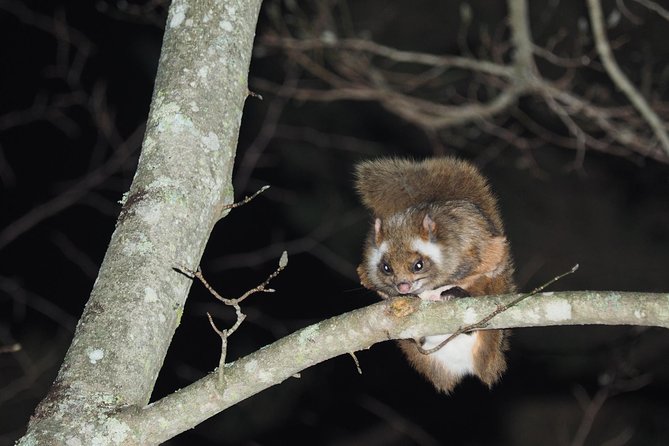
This part matters more than it sounds. When you understand what the musasabi eats, how it moves, and roughly what its gliding range looks like, your eyes change. Instead of scanning randomly for a flash in the trees, you start watching for the right kind of motion and the right locations where glides and landings are more likely.
The talk is also a confidence-builder if you are nervous about “not being able to spot wildlife.” Even if you have never seen a musasabi before, the lesson sets you up with a checklist in your head. That turns the later walk into a search with meaning, not just standing around.
One helpful detail is language support. Some guides do not speak English that much, but the lecture slides have English subtitles. That means you are not completely dependent on perfect spoken translation to get the value out of the talk. You can follow the structure, and that helps you know what you are looking for once you step outside.
Stop 2: Karuizawa Hoshino Area Walk, Watching for Glides and Gasps
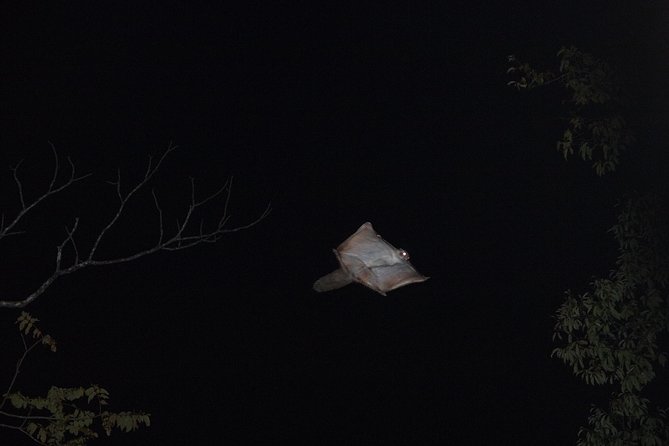
After the lecture, the group heads outside to the Karuizawa Hoshino area for observation. The second stop runs about one hour and is designed as a quiet viewing time where the “glide” becomes the star of the show.
Here is the key idea I want you to keep in mind: flying squirrels are not like birds where you can easily track a constant flutter. A musasabi glide is a movement event. You are usually watching for a smooth transit through the canopy area, followed by a landing and stillness that can be easy to miss.
That is why the tour emphasizes the guide knowing the best areas to look. Without local experience, you would likely spend your time staring at the wrong tree lines or waiting in the wrong spot. With a trained guide, you get directed searching, and your viewing time feels more efficient.
The tour style is also built around patience. You will get a chance to “bask in the silence,” with only the occasional gasps from the group when something appears. Even if you end up not seeing a squirrel, the hour is still a guided nature experience rather than a rushed sprint.
Drawback in real life: if the forest feels too noisy, visibility is poor, or activity is low, you may have a slower search. Weather is explicitly called out as important, so plan to treat this as a conditions-based wildlife outing, not a guaranteed sighting.
Binoculars, Group Size, and How You Get a Better View
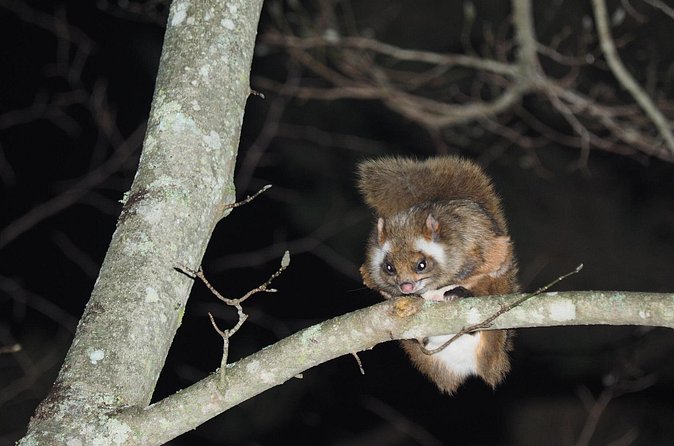
Binoculars are included, which is a small detail that makes a big difference. For wildlife viewing in trees, the biggest challenge is often distance and tiny motion. Having binoculars ready means you can respond quickly when the guide points something out.
Binoculars also change your role in the group. Instead of staring wide-eyed in the general direction, you can scan with intention and zoom in on the movement that matters. That helps you actually enjoy the experience even if you are not the person with sharpest eyesight.
The maximum group size is 30 travelers. That is not tiny, but it is small enough for a guide to manage viewing locations without turning it into a crowded spectacle. You should still be prepared for the practical realities of outdoor viewing, like limited space at the best angle and the need to line up calmly.
A practical tip: keep your attention on what the guide is focusing on. This tour is designed around the guide’s local knowledge of where musasabi are likely to appear. When people get distracted by photographing everything, they often miss the short window when an animal is moving between trees.
Price and Timing: Is This Good Value at $28.69?

At $28.69 per person, this tour is priced like an accessible nature experience rather than a premium private guide outing. For that money, you are getting a guided ecology lesson at the visitor center, an outdoor observation walk, and binoculars included.
One reason it feels like good value is that the experience is compact. A 1 hour 30 minutes duration means you can fit it into a busy itinerary without spending a full evening. You also start at 4:00 pm, which can make it easy to pair with dinner plans afterward.
Also, notice that the admission ticket at the visitor center and the experience components are listed as free for the stops in the itinerary. You are not paying extra just to get into the learning point. Your payment is centered on the guide, the equipment provided, and the guided search.
The only financial risk is the nature of wildlife. The tour can be canceled due to poor weather or due to squirrel absence, and there is no refund for travel costs if cancellation is needed for unexpected reasons. The flip side is that free cancellation is available up to 24 hours in advance, and if weather causes a cancellation, you are offered a different date or a full refund for the experience.
In short: the cost makes sense if you want one focused attempt at musasabi viewing and you are comfortable with the “conditions apply” reality of wildlife.
Who This Tour Is Best For in Your Nagano Plan
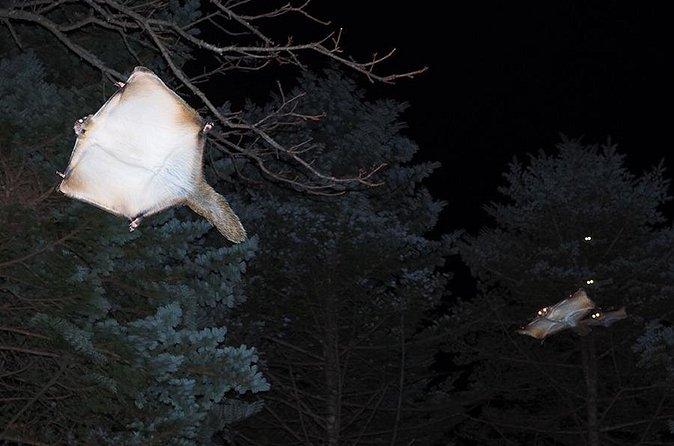
This experience is a strong fit if you:
- Want a Japan-native animal experience without a complicated plan
- Like guided interpretation, not just passive sightseeing
- Enjoy patient outdoor watching and can stay calm if the animals are quiet
It is also ideal if you are the kind of traveler who reads nature signs better after someone explains what they mean. The tour does not treat spotting as a mystery. It teaches you what the musasabi’s lifestyle looks like, including diet and gliding behavior, so your eyes know where to go.
On the other hand, it may not be the best match if you need a guaranteed big-ticket sighting. Even with expert guidance, wildlife timing is unpredictable. If you are short on flexible time, choose this when you can reschedule if the tour date changes.
English support is a plus. Even when spoken English is limited, English subtitles on the slides help you follow the lecture content. That makes this more welcoming if you are not fluent in Japanese.
What the Picchio Center Adds to Your Field Seeing

One of the best parts of this tour is the sequence: lesson first, then searching. That is not just educational. It changes how you experience the outdoor portion.
At Picchio, you get the squirrel’s basic “how it lives” information, which includes diet, size, and flying distance. Those details help you recognize what a musasabi might look like in motion and why the guide expects activity in certain spots. When you later watch trees and canopy edges, you are not just waiting for a miracle. You are looking for a specific kind of behavior.
You also learn about where they live and why, which is a subtle but important shift. If you understand habitat, you start reading the environment rather than only hunting for an animal silhouette. That is the sort of learning that stays with you even after the tour ends.
Finally, admission at the learning point is handled as part of the experience, so you do not have to build your own mini plan. You show up, learn, and then head directly into the viewing area with everything set up.
Weather Reality Check (And How to Think About It)
This tour requires good weather. That is clearly stated, and it is common sense for wildlife watching. Rain, heavy wind, or low visibility can reduce both animal movement and how well you can spot glides.
Because of that, I suggest you schedule this on a day where you have some flexibility. If the operator needs to cancel due to poor weather, you are offered another date or a full refund. If you want to maximize your chance of seeing something, build this into your plan early enough that a switch is possible.
Also, keep expectations honest. Wildlife tours are not controlled events. The guide improves your odds, but the forest decides what it will show.
If you do get a sighting, it is likely to feel special precisely because the tour slows you down. You are not chasing a scene. You are observing something that does not perform for you.
Should You Book This Japanese Flying Squirrel Tour?
Book it if you want a focused, guided wildlife experience with real interpretation. I think it is strong value for the price, especially because binoculars are included and the tour starts with a practical ecology talk at Picchio. The format also respects your time, with a 4:00 pm start and about 1 hour 30 minutes total.
Skip it only if you need a guaranteed animal sighting, or if you cannot handle the “weather and activity affect outcomes” reality. If you are okay with that trade, you will likely enjoy the calm, patient pace and the satisfaction of learning how to actually watch for gliding squirrels.
If you do book, show up rested. This is a viewing experience, not a stamina marathon, but your attention will matter. And bring your curiosity, because the guide’s job is to help you see what you might otherwise miss.
FAQ
What time does the tour start?
The tour starts at 4:00 pm.
How long is the tour?
The duration is about 1 hour 30 minutes.
Where do I meet for the tour?
Meet at Karuizawa Wild Bird Sanctuary, 2148 Nagakura, Karuizawa, Kitasaku District, Nagano, 389-0111.
Are binoculars included?
Yes. Binoculars are included for convenience.
Is the tour guided in English?
Some guides do not speak English that much, but the lecture slides have English subtitles.
What kind of physical fitness is required?
A moderate physical fitness level is recommended.
What happens if the tour is canceled due to weather?
This experience requires good weather. If it is canceled due to poor weather, you will be offered a different date or a full refund.
Nagano, Snow Monkeys and Ski Country, side by side.
 ★ 5.01-Day Snow Monkeys, Zenko-ji Temple & Sake in NaganoFrom $1511,020 reviews
 ★ 4.9Nagano: Snow Monkeys, Zenkoji Temple & Sake Day TripFrom $135833 reviews
 ★ 4.6From Tokyo: Snow Monkey 1 Day Tour with Beef Sukiyaki LunchFrom $151295 reviews
 ★ 4.7From Tokyo: Private Tour Snow Monkey Park & Zenko-ji TempleFrom $445184 reviews
 ★ 4.7Hokkaido Seasonal: Lake Toya & Noboribetsu Jigokudani ValleyFrom $55173 reviews
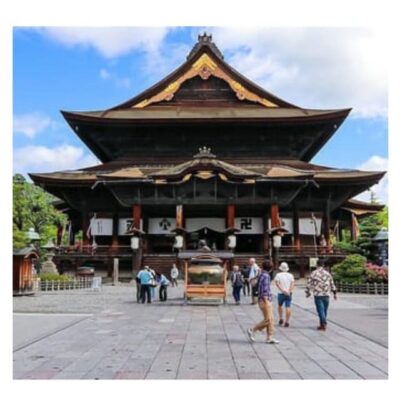 ★ 4.8Snow Monkey & Nagano Customiseable Private Day TourFrom $466138 reviews
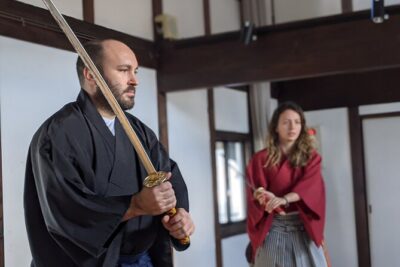 ★ 4.9Matsumoto Castle Tour & Samurai ExperienceFrom $88128 reviews
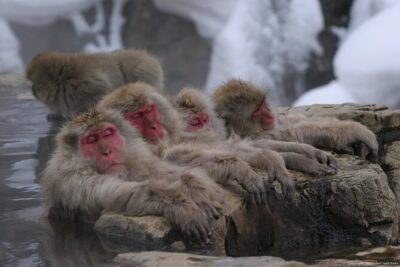 ★ 4.5Nagano Snow Monkey 1 Day Tour with Beef Sukiyaki Lunch from TokyoFrom $151123 reviews
Filed on these lists too