REVIEW · JAPAN
Badminton in Osaka & Kyoto with Locals!
Badminton in Japan feels like a conversation. You join friendly games across Osaka and Kyoto gyms, meet locals and other international players, and keep moving for a full 3 hours. I especially like the small group setup that makes it easy to talk between rallies, and the included shower access that helps you feel human again after play.
One thing to plan for: you need indoor sports shoes that have not been worn outdoors, and the session takes place at different gyms depending on the day and venue.
In This Review
- Key points before you go
- Why This Osaka and Kyoto Badminton Session Is Such a Smart Travel Add-On
- The Real Shape of the 3-Hour Session
- Gear and Venues: What Changes When You Play Different Gyms
- Meeting Locals and New Friends Through Doubles Matches
- Skill Level: Why This Works for Beginners and Regular Players
- The Included Shower and Locker Room Benefit More Than You Think
- Price and Value: Why About $6 Can Make Sense
- Practical Tips That Will Save You Friction
- Who Should Book This, and Who Should Skip It
- Should You Book It? My Decision Guide
- FAQ
- What is the duration of Badminton in Osaka and Kyoto with Locals?
- How much does it cost?
- Where does the badminton take place?
- Is the group size small?
- What language is the instructor?
- What is included with the activity?
- Do I need indoor shoes?
- Are feather shuttles provided?
- Who is this not suitable for?
- Can I cancel, and do I have to pay right away?
Key points before you go
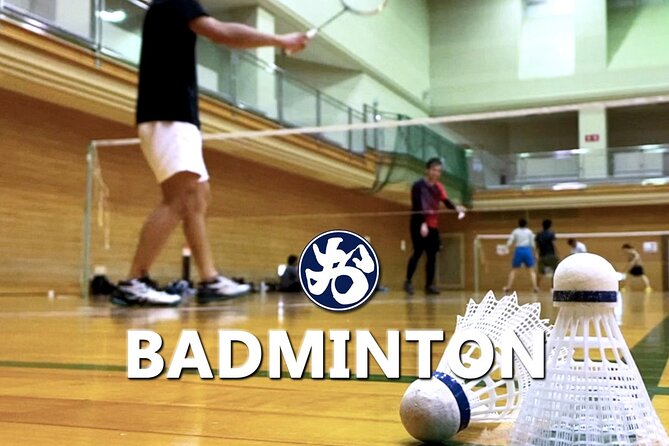
- Small group of 5 means more court time, less waiting, and easier introductions.
- Doubles-focused play is perfect for mixing skill levels without awkward solo drills.
- Multiple gym locations around Osaka and Kyoto keep it feeling local, not staged.
- Included rackets, shuttles, locker rooms, and showers make the experience feel like good value.
- English and Japanese support helps you get instructions and tips on the fly.
Still weighing up options in Osaka? These are the ones our reviewers rated highest.
- Osaka Go Karting Tour with Funny Costume
★ 5.0 · 2,658 reviews - Osaka Castle: Museum and Tower Entry Ticket
★ 4.5 · 2,380 reviews - Osaka: Shinsekai Food Tour with 13-15 Dishes at 5 Eateries
★ 4.8 · 2,204 reviews - Osaka Food Tour: 13 Dishes at 5 Local Eateries
★ 5.0 · 2,149 reviews
Why This Osaka and Kyoto Badminton Session Is Such a Smart Travel Add-On
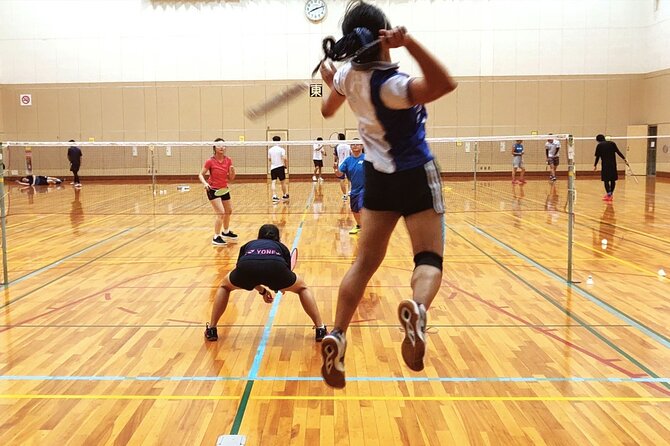
When you travel, it is easy to rack up sightseeing and then realize you have not moved your body in days. This is an activity that flips that. You are not studying badminton history in a museum, you are playing. And because it is based around doubles matches, the rhythm stays social and active.
What makes it especially appealing in Osaka and Kyoto is how practical it feels. You get to interact with people who actually live in the area, not just follow an English script. The group includes both Japanese players and other international players, so conversation happens naturally, even if your Japanese is basic. If you like the idea of training, practicing, and still making friends, this format does both.
I also like that it is designed for different comfort levels. The goal is to play and improve, not to sort players into permanent skill boxes. In a lot of group sports, you either feel like you are holding everyone back or you feel bored because the pace is too easy. This setup is built to keep the matches moving while still offering learning moments.
The Real Shape of the 3-Hour Session
The duration is 3 hours, and that matters because badminton is not a quick hello-and-leave sport. You need time for a warmup, a few rotations, and enough matches that you actually get better during the session, not just at the start.
In practice, you should expect the session to flow like this:
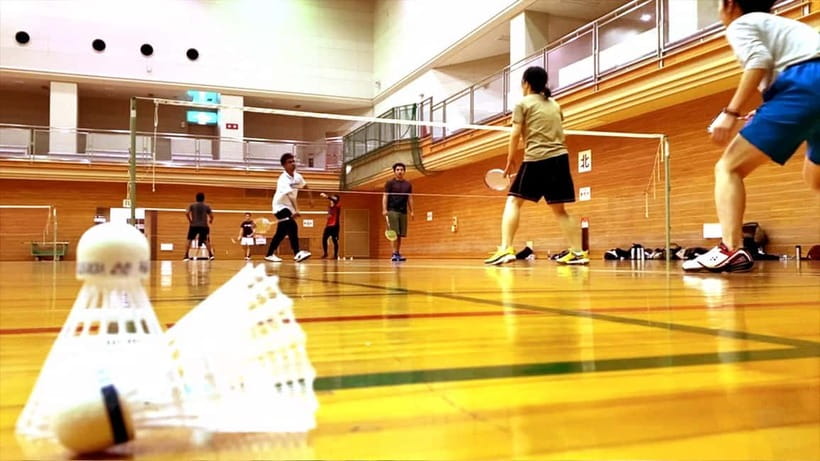
You arrive, get into the gym routine, and then you split into games. Doubles matches keep things lively, and the smaller group size helps you meet new people without feeling lost. You will likely rotate through courts so you do not spend the entire time waiting on the sidelines.
One review mentioned a specific court-queue habit: you queue for the next match by piling a racket near the net. That kind of detail is exactly what makes the experience feel authentic. You are not just watching rules on a poster, you are learning the actual local rhythm.
Also, the event includes locker room and showers. That changes how the 3 hours feel. It is easier to go hard because you know you will have an actual reset after, not just a sweaty walk back into the city.
Gear and Venues: What Changes When You Play Different Gyms
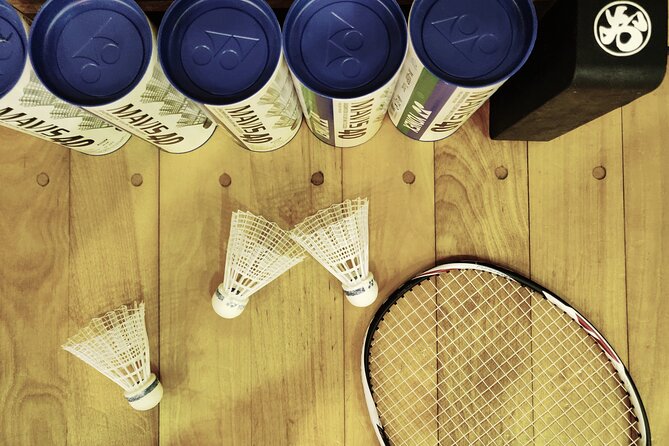
Badminton sessions happen at various gyms around Osaka, with Kyoto also part of the plan depending on the option you book. That means you are not locked into one building or one court layout for the entire trip. It is more than a novelty. Different gyms can mean slightly different court conditions, lighting, and layouts, and you get used to adjusting your play on the go.
Good news: the important equipment is handled. You get:
- Badminton rackets
- Shuttles (plastic Yonex)
- Access to locker rooms and showers
So you do not have to worry about bringing gear. You also do not have to gamble on whether the facility has what it needs, because this activity supplies the core items.
The one gear-related catch is shoes. You must bring indoor sports shoes that have not been worn outdoors. There are no shoe rentals. This is not just a rule for neatness. Outdoor-worn shoes can damage court surfaces, and many Japanese sports facilities are strict about it. If you arrive in your regular travel sneakers, you are the one who has to improvise.
- Hungry Osaka Street Food Tour:15 Tastings & 3 Drinks with a Local★ 5.0 · 1,727 reviews
- Osaka: Tea Ceremony Experience★ 4.9 · 1,426 reviews
- Osaka Kickstart: Hotspots & Hidden Gems Tour★ 5.0 · 1,306 reviews
- Osaka: Hotspots & Hidden Gems Walking Tour Private or Group★ 4.9 · 1,300 reviews
- Deep Backstreet Osaka Tours (Option to add Dinner)★ 5.0 · 1,290 reviews
Meeting Locals and New Friends Through Doubles Matches
This is the social engine of the experience. Doubles badminton naturally forces interaction. Even when you are focused on the next shot, you still have to communicate with your partner, react to where the opponent is hitting, and share small tips mid-game.
Because the group is limited to 5 participants, you are not just anonymous “another foreigner.” You meet the same people multiple times during the session. That helps friendships form quickly, even if language is limited.
You should also expect an instructor presence. The activity includes an English and Japanese instructor who can teach and offer tips. That is helpful if you are learning fundamentals, but it is also useful if you already play. You can ask about grip, footwork timing, positioning in doubles, or simple strategies for clearing and attacking without feeling pressured.
One thing I like is that learning does not feel like a lecture. It happens while you play. If you miss a shot, you can adjust. If you are confused about positioning, someone can explain in plain language, and you can try again immediately on the next rally.
Skill Level: Why This Works for Beginners and Regular Players
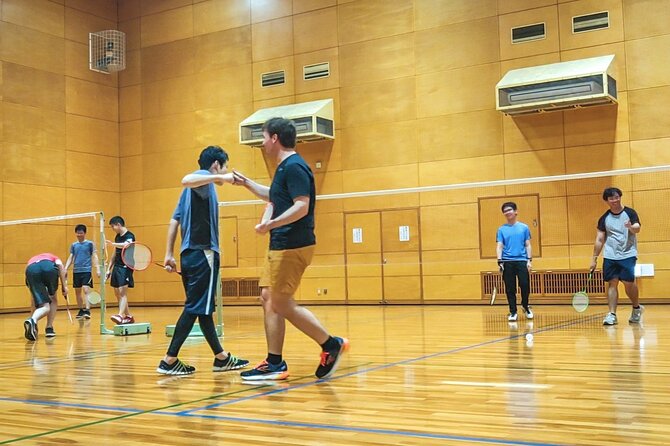
The activity is described as welcoming for all skill levels, and the doubles-first structure is the key reason. Singles badminton can quickly turn into a power contest, and it can punish newer players with constant speed pressure. Doubles tends to distribute the workload across more angles and more tactical choices.
That means you can contribute even if your shots are not fully developed. You can focus on placement, basic clears, and keeping rallies going. At the same time, more experienced players can push pace, try patterns, and practice setups.
You also get feedback without it feeling harsh. In a good session, feedback is about helping your next match, not correcting you in front of everyone. With a small group, organizers and instructors can read the room, then suggest adjustments when they matter.
If you are an intermediate or advanced player, you might appreciate the chance to practice with different partner styles. When you play with unfamiliar people, you learn how to adapt your tempo and your shot selection. That kind of practice is hard to recreate when you only play with the same club back home.
The Included Shower and Locker Room Benefit More Than You Think
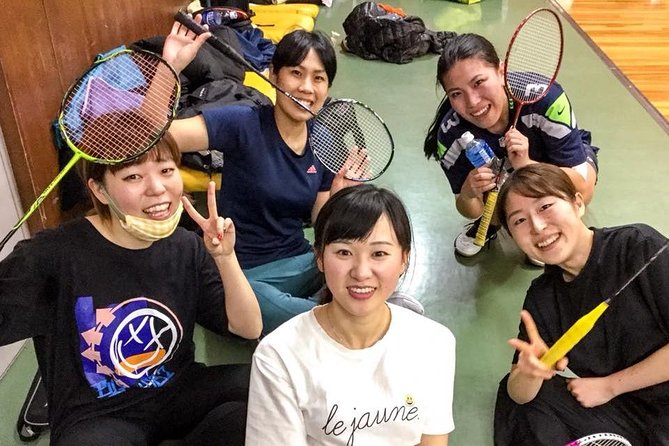
Shoes off, shower on. That simple cycle is why I think this activity feels like real value, not just a low-cost sport block.
After 3 hours of badminton, you will want to cool down and reset. The locker room and shower access means you can clean up properly before heading out to dinner, a night stroll, or Kyoto sightseeing. It is a practical detail that changes the day.
It also helps you pack lighter. If you know you will have shower access, you might bring fewer changes of clothes than you would for an all-day excursion without facilities. And because the activity includes these amenities, you can plan without guessing.
Price and Value: Why About $6 Can Make Sense
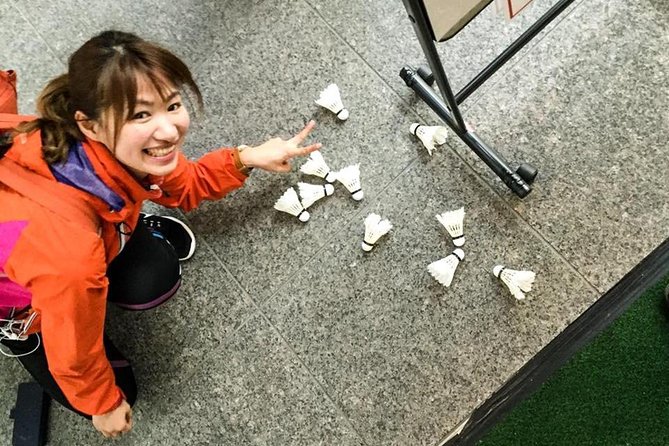
The price is listed at $6 per person for 3 hours. That is cheap in a good way, but the real question is what you actually get.
You get:
- Court time for doubles matches
- Rackets and shuttles included (plastic Yonex)
- Locker room and shower access
- An instructor who can teach in English and Japanese
- A small group capped at 5 participants
In many paid sports activities, you end up paying extra for gear or you skip showers and make do. Here, the core costs are bundled. That is why it can feel like a bargain.
Still, there is one “hidden” value check to make: the shoes rule. If you do not already have proper indoor shoes, you may need to buy or rent them elsewhere. This activity does not offer shoe rentals, so the true cost can rise slightly if you are unprepared.
If you show up with the right footwear, it is hard to beat the balance of time, gear support, and social learning.
Practical Tips That Will Save You Friction
Here are the details that matter most, based on the way sessions run at different gyms.
First, bring the right shoes. Indoor-only, unworn outdoors. Many people travel with shoes they have already stepped on sidewalks in, and that will not work here.
Second, plan for location variety. The session takes place at various gyms around Osaka, and Kyoto can also be part of the experience. Meeting point details can vary depending on what you book. If you hate last-minute scrambling, double-check the exact meeting point before you go and give yourself extra time.
Third, think about your shuttle preference. Plastic Yonex shuttles are included. If you prefer feather shuttles for your own games, you need to bring your own. This is not required, just an option if you have a personal feel for the difference.
Finally, get ready for a simple court-queue rhythm. One venue uses a rackets-near-the-net queue approach. Follow what the organizer shows you. It is usually quick to understand once you see it in action.
Who Should Book This, and Who Should Skip It
This experience is best for you if you want:
- A low-cost way to stay active in Osaka or Kyoto
- A social sports session with locals and international players
- Doubles play that teaches through doing
- Included gear and a way to shower afterward
It is also a good fit if you are a solo traveler who feels awkward joining group tours, because sports are naturally interactive.
Skip it if you:
- Use a wheelchair
- Have back problems
- Have a pre-existing medical condition
You are doing physical exercise, and the activity is not positioned as medically adaptable.
Should You Book It? My Decision Guide
Yes, I would book it if your goal is to play real badminton while meeting people and getting exercise. The small group size, the included rackets and shuttles, and the shower access make it feel practical, not just fun in theory. And the fact that it supports different skill levels means you are not locked into being either a beginner or an expert.
I would hesitate only if you are missing proper indoor shoes or you dislike the idea of playing in different gyms. Location variation is part of the charm here, but it can be stressful if you prefer a single predictable venue.
If you want a simple, active day that fits easily into a Osaka or Kyoto itinerary, this is the kind of experience that pays off fast. Book it, show up with the right shoes, and you will likely spend 3 hours that feel more like making friends than “doing an activity.”
FAQ
What is the duration of Badminton in Osaka and Kyoto with Locals?
The experience lasts 3 hours.
How much does it cost?
The price is listed at $6 per person.
Where does the badminton take place?
The sessions happen at various gyms around Osaka and Kyoto, depending on the option booked.
Is the group size small?
Yes. It is a small group limited to 5 participants.
What language is the instructor?
The instructor speaks English and Japanese.
What is included with the activity?
Included items are badminton rackets, shuttles (plastic Yonex), locker room access, and shower access.
Do I need indoor shoes?
Yes. You must bring indoor sports shoes that have not been worn outdoors. There are no shoe rentals available.
Are feather shuttles provided?
Plastic Yonex shuttles are included. If you want to use feather shuttles for your own games, you must bring your own.
Who is this not suitable for?
It is not suitable for wheelchair users, people with back problems, or people with pre-existing medical conditions.
Can I cancel, and do I have to pay right away?
Free cancellation is available up to 24 hours in advance for a full refund. You can reserve now and pay later.