REVIEW · JAPAN
Osaka’s Secret Adventures: Daruma Magic and Minoh Falls
Skip the Osaka rush, and breathe in calm. This full-day walking and public-transport outing takes you from the big-station energy of Umeda to the quieter north side of the city, where hundreds of Daruma dolls and a real 33-meter waterfall do the talking. It is a simple plan with a clear rhythm: gardens, forest trails, a lunch break, then a couple of smaller temple stops.
I especially like the Katsuoji Temple segment, because it is not just pretty. The place is famous for Daruma dolls linked to perseverance and good luck, and you get time to walk through the gardens at an unhurried pace. I also like that the day includes both culture and nature, so you get more than one kind of memory, temple atmosphere and cool mountain air included.
One consideration: the day includes a long ride on bus and train to get out to Minoh City. If that sounds tiring, the good news is the guide helps you navigate so you are not stressing about transfers and timing the whole way.
In This Review
- Key highlights worth your attention
- Daruma Dolls at Katsuoji Temple, perseverance in color
- The forest trail to Minoh Falls and 33-meter waterfall time
- Minoo Park after lunch, a slower return toward the station
- Ryuanji and Bentendō Temple, water and music symbolism
- Getting there from Osaka Umeda, transit support that matters
- Price and what $149.58 buys you in real terms
- Who should book this Osaka day, and who should skip it
- Should you book Osaka’s Secret Adventures: Daruma Magic and Minoh Falls?
- FAQ
- What is the tour price?
- How long is the tour?
- What is the start time and meeting point?
- Where does the tour end?
- Is transportation included?
- Are entrance fees included?
- Is lunch included?
- Is a mobile ticket used?
- How big is the group?
- Are service animals allowed?
Key highlights worth your attention
- Daruma everywhere at Katsuo-ji Temple: hundreds of dolls for perseverance and good luck, plus peaceful gardens.
- Minoh Falls with real spiritual roots: a guided walk to the 33-meter cascade, tied to mountain ascetics and En no Gyōja.
- A balanced walking day: forest trails, then park time after lunch, not just temple after temple.
- Small group size (up to 15): easier listening and less waiting around.
- Transit and entrance fees handled: you pay one price, then focus on the day.
Still weighing up options in Osaka? These are the ones our reviewers rated highest.
- Osaka Go Karting Tour with Funny Costume
★ 5.0 · 2,658 reviews - Osaka Castle: Museum and Tower Entry Ticket
★ 4.5 · 2,380 reviews - Osaka: Shinsekai Food Tour with 13-15 Dishes at 5 Eateries
★ 4.8 · 2,204 reviews - Osaka Food Tour: 13 Dishes at 5 Local Eateries
★ 5.0 · 2,149 reviews
Daruma Dolls at Katsuoji Temple, perseverance in color
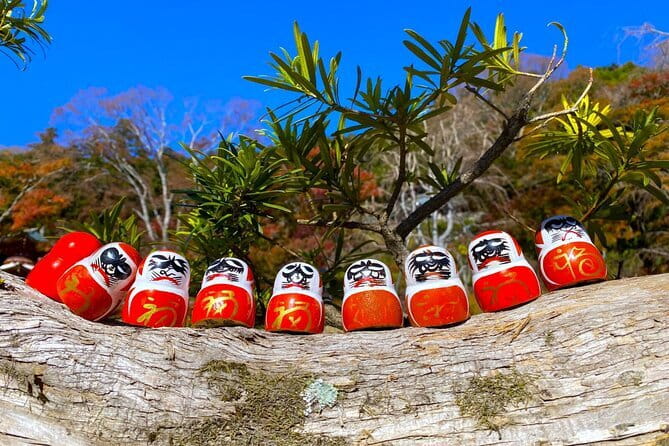
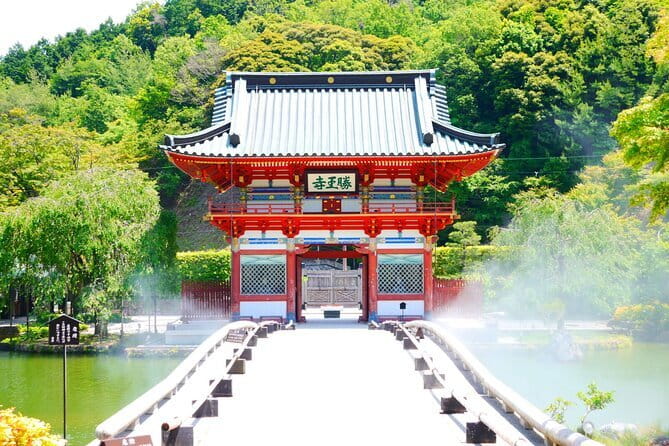
Your day starts at Katsuo-ji Temple in Osaka’s northern area, with about 2 hours and 15 minutes to take it in. This is one of those places that feels like a reset button. You are surrounded by gardens and traditional temple buildings, but the visual hook is the sheer number of Daruma dolls.
Daruma are the round, freckled-looking dolls tied to perseverance and good luck. Here, the dolls are part of the atmosphere, not a side display. You get time to wander the grounds, look closely at the colors and arrangements, and let the place slow your thoughts down. It is the kind of stop where you appreciate details more when you are not rushing through them.
A practical thing I like about this temple portion is the timing. You start with something calm and structured, and you are less likely to feel rushed before the walking begins. Since an admission ticket is included for this stop, you are not stuck figuring out which ticket counter to find before the group moves on.
What to watch for: If you like photos, this is where you will get the most interesting results. The dolls create strong color blocks against softer garden greens and wood tones. If you prefer fewer photos and more presence, you can still enjoy it by simply walking and pausing where the gardens feel quietest.
Possible drawback: If you dislike crowds or prefer very long solo wandering, your pace is still guided by the group schedule. The stop is long enough to feel relaxed, though, as long as you can handle the slow ebb and flow of a small group.
The forest trail to Minoh Falls and 33-meter waterfall time
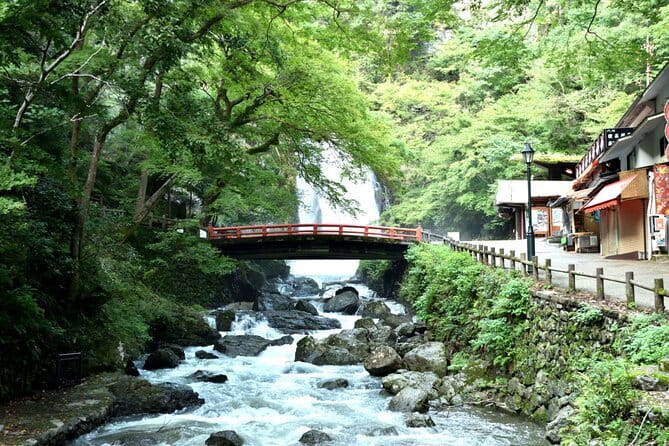
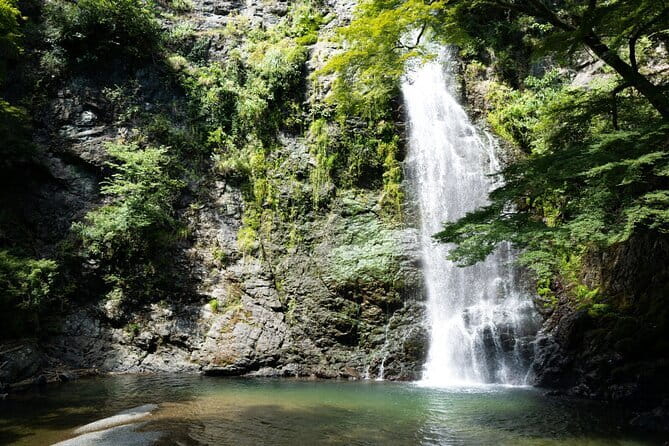
Next comes the reason many people make the trek: Minoh Falls, a 33-meter cascade reached via a gentle forest trail. You have about 1 hour here, and admission is free for this stop, so you are paying for the experience of being there, not for another ticket line.
This waterfall is not just scenery. It has spiritual connections, historically visited by mountain ascetics like En no Gyōja. That matters because it changes how the place feels. Instead of treating it like a photo spot only, you understand it as a site tied to retreat and devotion. When you see people behaving with quiet attention near sacred spaces, you are more likely to mirror that energy and enjoy the setting instead of just rushing past it.
The walk to the falls is a key part of the experience. It keeps you moving, but it is not presented as an extreme hike. Still, you are on forest trails, which typically means uneven footing and damp patches depending on season. Wear shoes that can handle a little slipperiness, and plan to take it slow on the way down if the path is wet.
What you will feel: Cooler air when you get closer, the sound of water building as you approach, and a brief kind of reset that is hard to replicate in central Osaka. Waterfall time works even if you are not a big nature person. It is atmospheric in a way temples and city streets usually are not.
Also good to know: Since this stop is relatively time-contained, you get waterfall views without sacrificing the rest of the day. That balance is part of why this tour works.
Minoo Park after lunch, a slower return toward the station
After the falls, you move to Minoo Park for about 40 minutes. This is where the day shifts gears from peak nature moments to easier strolling and scenic breaks.
Lunch is not included as part of the price, but the day is designed with that pause in mind. You will have time after the waterfall, and the plan allows for a picnic lunch or grabbing something from nearby roadside stalls. If you want the simplest approach, bring something light and easy to eat, then use the park time to reset. If you prefer shopping for food locally, plan your timing so you are back with the group when it is time to move.
Minoo Park also helps you experience the softer side of the area. It is not only about the dramatic cascade. You get a chance to connect the dots between the spiritual temple world and everyday outdoor life. Even if you are not a park person, it is a pleasant transition because it breaks up the day before the final temple stop.
Practical tip: Since food and drink are not included, do not assume you will be able to purchase everything at the exact moment you want. Bring a little buffer, like a snack or a small bottle of water if that works for you.
- Hungry Osaka Street Food Tour:15 Tastings & 3 Drinks with a Local★ 5.0 · 1,727 reviews
- Osaka: Tea Ceremony Experience★ 4.9 · 1,426 reviews
- Osaka Kickstart: Hotspots & Hidden Gems Tour★ 5.0 · 1,306 reviews
- Osaka: Hotspots & Hidden Gems Walking Tour Private or Group★ 4.9 · 1,300 reviews
- Deep Backstreet Osaka Tours (Option to add Dinner)★ 5.0 · 1,290 reviews
Ryuanji and Bentendō Temple, water and music symbolism
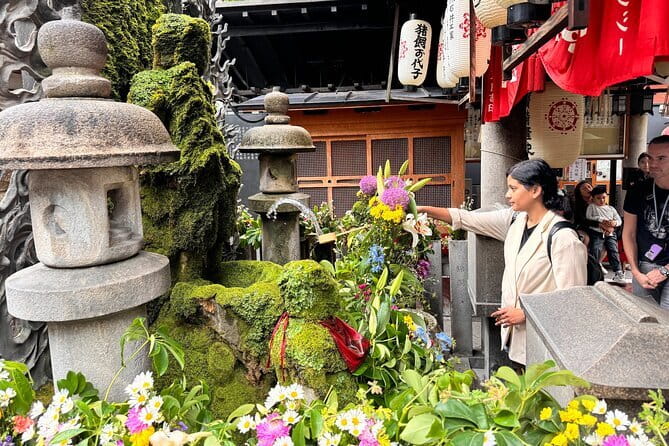
The final cultural stop is Minoosan Ryuanji Temple (about 30 minutes), with Bentendō Temple nearby. This portion is shorter, but it is meaningful in how it ties the day together.
Bentendō is said to have been founded by En no Gyōja to honor Benzaiten, the goddess of water and music. The idea is simple: the day starts with perseverance-themed Daruma, hits a major water feature, and then lands on a temple connection to water as a spiritual force. You get a satisfying narrative arc without any extra effort on your part.
Because this is off the main path, it can feel a bit quieter than your typical major-city temple experience. That quietness is a plus if you want reflection time after the louder waterfall walk. It also gives you a chance to notice how religious spaces are integrated into everyday terrain.
What to expect: A focused, shorter stop where the guide’s context is likely to make more sense than just seeing buildings and moving on. If you care about meaning rather than just landmarks, this is a good place to pay attention.
Possible drawback: If you are someone who likes to linger for long stretches, 30 minutes can feel brief. The tradeoff is you avoid dragging the day out longer than it already is.
Getting there from Osaka Umeda, transit support that matters
Meet at Akatsuki Plaza Japan at Osaka Station (Central North Exit), in Umeda, starting at 9:20 am. The end is back at the same meeting point, so you do not need to re-plan your return.
Here is the big value point: the tour includes public transportation costs required for the tour, plus a guide who helps you navigate. One of the clearest takeaways from people’s experiences is that the ride involves bus and train, which can take time, and the guide removes most of the stress around transfers. In other words, you still experience transit, but you are not doing it alone while you figure out which platform to use.
The group is kept to a maximum of 15 travelers, which makes a difference. Smaller groups tend to move with less chaos. You also have a better chance of hearing explanations without leaning in or getting separated.
You’ll also use a mobile ticket, which is convenient if you prefer not to carry printed documents around Osaka station.
Your best move: If you are sensitive to long commutes, treat the ride as part of the sightseeing. Bring a fully charged phone, a light layer, and water if you think you will need it.
Price and what $149.58 buys you in real terms
The price is $149.58 per person for roughly 6 hours and 40 minutes. That total duration includes travel time, which matters. Many tours advertise a short walk, then quietly add long transit after you have already invested time and energy. Here, the full timing is part of the package, so you can plan your day in Osaka without guessing.
What you actually get included is practical:
- Entrance fees for each tour spot
- Public transportation costs required for the tour
Food and drink are not included, so that is the one category you still need to handle yourself.
So is it good value? For me, it comes down to this: you are paying to combine several things that are annoying to coordinate by yourself, getting to Minoh City, managing the ticket side for temple stops, and having someone interpret the cultural meaning of Daruma, En no Gyōja, and Benzaiten while you are actually there.
Also, the day is short enough to keep it from feeling like a marathon. You get long enough at Katsuoji Temple to make the Daruma theme satisfying, then you get the waterfall hit, then you finish with temples without stretching the day past what most people can comfortably handle.
A final note on service: the guide name Justin has been called out for clear explanations of history, customs, and temple context. That kind of guidance is what turns an outing from just seeing places into understanding why the places matter.
Who should book this Osaka day, and who should skip it
This is a great match if you want a break from Osaka city life and you enjoy mixing nature with cultural stops. It suits people who like walking, appreciate temple symbolism, and do not mind a bus and train day outside the center.
You might especially enjoy it if:
- You like tranquil garden settings as much as outdoor views
- You want a guided plan that handles logistics
- You enjoy the meaning behind Japanese religious symbols like Daruma and Benzaiten
It might not be the best fit if:
- You want food included. Lunch is on you.
- You dislike public transport or long rides. The day runs on transit.
- You want a completely free-form schedule. This tour is structured by timing at each stop.
Should you book Osaka’s Secret Adventures: Daruma Magic and Minoh Falls?
If you like the idea of pairing Daruma magic with a real hike to Minoh Falls, and you want a guide to handle the transit and ticket side, I think this is an easy yes. It is one of those days where the “secret” part is not that you will find a life-changing mystery, it is that you will spend your time in the kind of quieter northern Osaka areas that most people miss when they stay in the obvious neighborhoods.
Book it if your ideal Osaka day looks like calm gardens, forest air, and a couple of meaningful temple stops, all wrapped into one small group outing. Consider skipping or swapping days if you do not want to manage food plans or you know long transit will drain you.
If you do book, plan simple: wear good walking shoes, bring or budget for food and water, and treat the ride time as the warm-up for the falls. You will get a satisfying contrast to the city you came from.
FAQ
What is the tour price?
The tour costs $149.58 per person.
How long is the tour?
The duration is about 6 hours 40 minutes.
What is the start time and meeting point?
It starts at 9:20 am at Akatsuki Plaza Japan, at Osaka Station Central North Exit.
Where does the tour end?
The tour ends back at the same meeting point.
Is transportation included?
Yes. Public transportation costs required for the tour are included.
Are entrance fees included?
Yes. Entrance fees for each spot during the tour are included.
Is lunch included?
No. Food and drink, including lunch, are not included.
Is a mobile ticket used?
Yes. The tour uses a mobile ticket.
How big is the group?
The maximum group size is 15 travelers.
Are service animals allowed?
Yes, service animals are allowed.