
REVIEW · ONSEN, HOT SPRINGS AND BATHHOUSES
Become a local! A Walking Tour of Arts, Crafts&Onsen Culture
Bamboo, art, and onsen culture in two hours. I like how this small-group walk trades the usual checklist for quieter downtown Beppu streets, where you can actually talk with people making the city run. Two things I especially enjoy are the chance to see daily creative life up close and the way the tour ties art, craft, and onsen culture together in one easy stroll.
My second favorite part is the stop at the Nagai bamboo factory, where you can watch skilled artisans at work and buy products directly from the workshop. The one drawback to plan around is that the tour does not take you inside an onsen building, so you are learning about onsen culture from the local context rather than doing a full onsen visit.
In This Review
- Key highlights you will care about
- Arts, crafts, and onsen culture in Beppu, not the usual tourist route
- How the 2-hour walking format works (and why timing matters)
- Beppu Station Market, the simple start that sets context fast
- Nagai bamboo factory since 1908, watching hands make objects you can feel
- Kiyoshima apartment artist residence, meeting the people behind the work
- Space Beppu in a century-old house, art gallery plus a history room
- Onsen culture without an onsen visit, what you should expect instead
- Price and what you actually get for $58
- Who this Beppu tour is best for
- Should you book this walking tour?
- FAQ
- How long is the walking tour?
- What is the group size limit?
- Where do I meet the guide in Beppu?
- What languages will the guide speak?
- Will the tour take me inside an onsen building?
- Is food or bottled water included?
- What is the cancellation policy?
Key highlights you will care about
- Small group of up to 8 people, so you can ask questions and actually talk with artisans.
- Nagai bamboo factory (since 1908), including a look at craft methods using bamboo from Oita Prefecture.
- Kiyoshima Artist Residence time, where you meet resident artists and see their work in the place they live.
- Space Beppu in a century-old house, with a contemporary art gallery, gift shop, and history room with photos.
- No “Hells” detour, since the focus is Beppu’s lesser-known cultural streets and alleys.
- Masa and other guides are reported to be patient, friendly, and able to answer questions in English.
Warmer options. Baths we have been into
- Become a local! A Walking Tour of Arts, Crafts & Onsen Culture
★ 5.0 · 36 reviews
Arts, crafts, and onsen culture in Beppu, not the usual tourist route
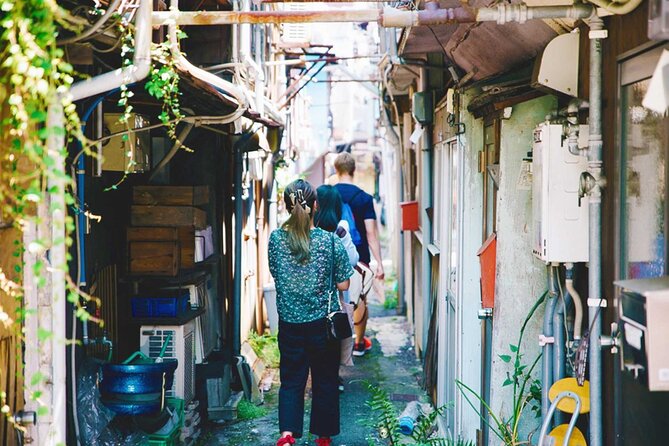
This is the kind of tour that fits travelers who want something more human than a quick photo stop. The focus is downtown Beppu and the side streets, the places locals pass every day. If you already did the big-name sights, this route gives you a different picture of the city.
You also get a clear cultural link: Beppu is famous for onsen, but the tour shows onsen culture as part of daily life, alongside the arts and crafts that shape local identity. You will not be dragged into a standard sightseeing circuit. Instead, you move between craft work, artist life, and a final cultural stop where you can see art and Beppu’s past side by side.
How the 2-hour walking format works (and why timing matters)
The tour runs about 120 to 150 minutes. That time window is short enough to keep it lively, but long enough to make each stop feel like a real encounter, not a drive-by.
You meet at the Beppu Station tourist information centre, Wander Compass, just outside the east exit. Aim to arrive about 5 minutes early so you are not rushed. The walking itself is part of the value, because the tour is designed around street-level exploration of quieter areas rather than a bus hop.
One practical note: the route and businesses visited may shift depending on opening times. That is usually a sign the organizers are trying to keep the experience working smoothly, not just following a rigid script. Wear comfortable shoes, and plan for a lot of walking in downtown streets.
Beppu Station Market, the simple start that sets context fast
The tour begins near Beppu Station with a brief visit to the Station Market. This stop is short, about 10 minutes, but it helps you get your bearings. It is a good moment to see what locals are buying and notice the everyday rhythm of the area.
You might find fresh fish, vegetables, and the kind of shop talk that makes a city feel lived-in. Food and drinks are not included, so treat this as a window-shopping moment or a chance to grab a quick snack if you want one. Even if you do not buy anything, it gives you context before the tour shifts into craft and art.
- Become a local! A Walking Tour of Arts, Crafts & Onsen Culture★ 5.0 · 36 reviews
- Calligraphy Class for Beginners in a Century-old Japanese House★ 5.0 · 18 reviews
- Become a local! A Walking Tour of Arts, Crafts&Onsen Culture★ 5.0 · 13 reviews
Nagai bamboo factory since 1908, watching hands make objects you can feel
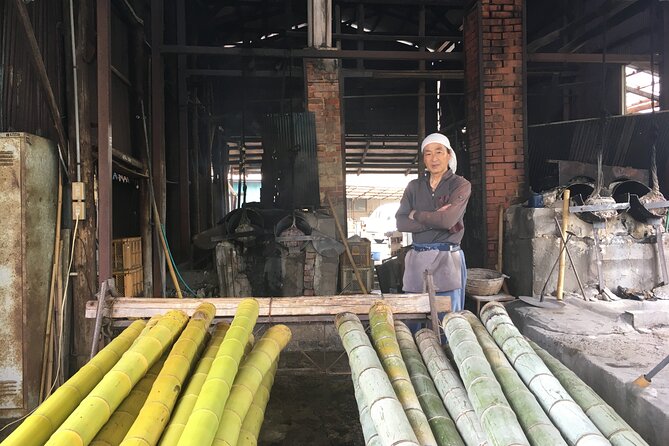
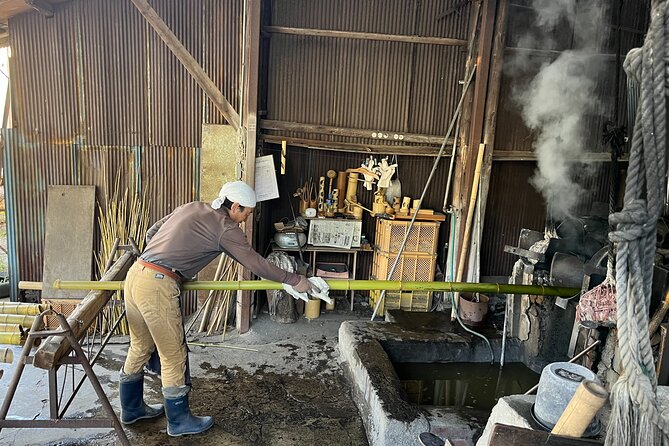
Next comes the craft centerpiece: Nagai Bamboo Factory. It has been operating since 1908, which matters because it means you are seeing a working tradition, not a staged demo. You will get time to observe bamboo products being made by skilled artisans.
One detail I like for planning: the factory uses bamboo from Oita Prefecture. That adds meaning to the souvenirs. Instead of buying a generic “Japan” item, you are buying something tied to local materials and local technique.
You will also have time to browse and purchase products. Souvenirs are excluded from the tour price, so come prepared if you want to take something home. If you are sensitive to carrying bags, consider bringing a small lightweight tote, or plan to buy something smaller.
If you care about craft, this is the stop you will remember most. People are often moved by how much patience and precision go into bamboo work, and the workshop time is built for exactly that kind of attention.
Kiyoshima apartment artist residence, meeting the people behind the work
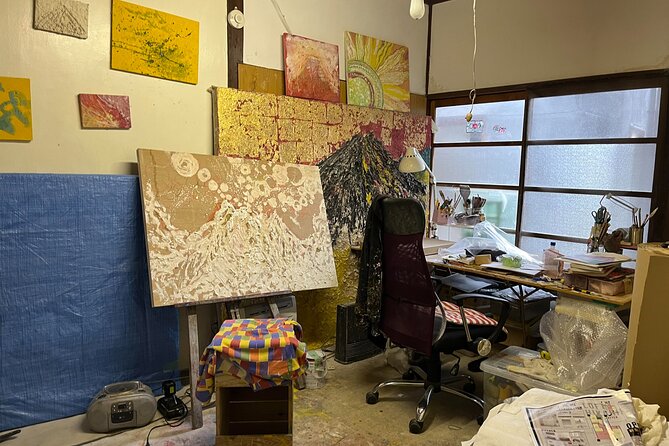
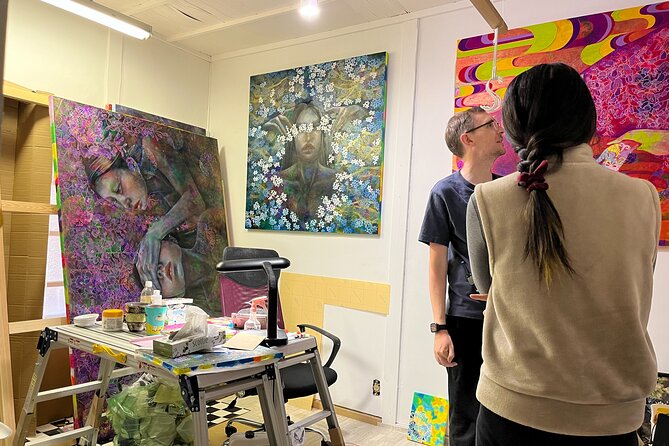
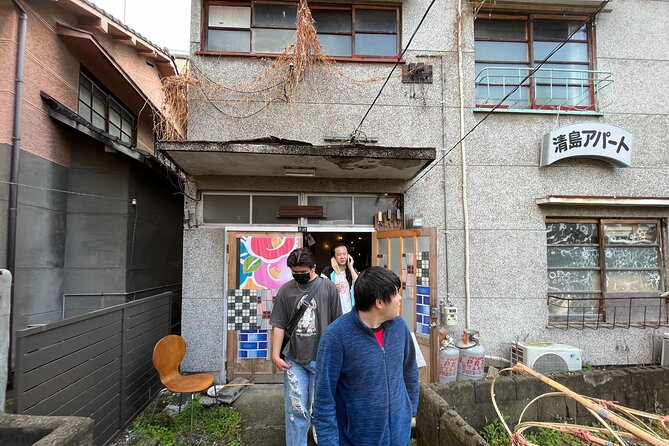
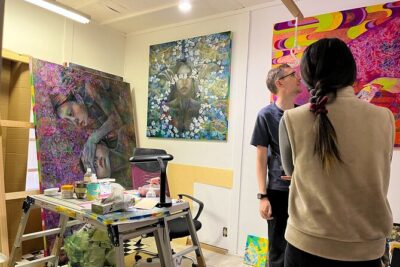
The tour then shifts from workshop production to living art. You visit the Kiyoshima Apartment, an artist residence where residents live and create. This stop lasts about 20 minutes, and the key point is access to real daily life.
You can meet artists, see their work, and get a sense of how art fits into routines rather than sitting only in galleries. One practical reason this matters: it changes your questions. Instead of asking what something costs or where it comes from, you start asking how it is made and why it exists in that space.
Expect a warm, conversational tone. In the experience feedback, visitors noted residents greeted them warmly and answered questions about local life. That is the difference between looking at art and talking with the people who live with it.
Space Beppu in a century-old house, art gallery plus a history room
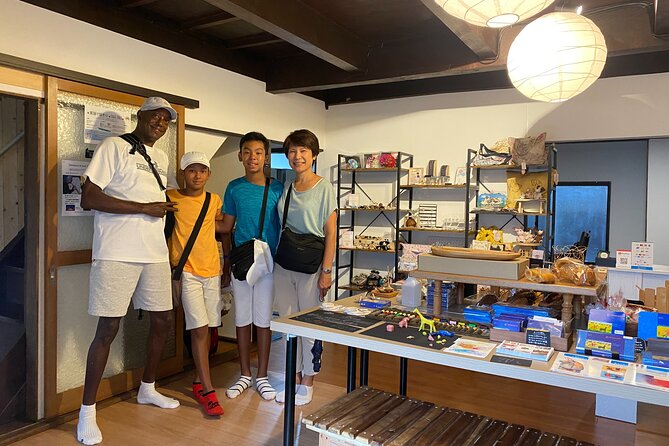
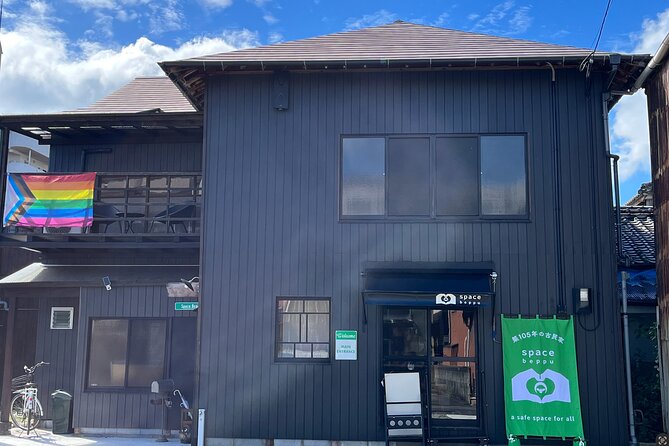
The tour culminates at Space Beppu. It is housed in a century-old Japanese house, and it blends a few different functions in one place: a contemporary art gallery, a gift shop, and a history room with historic photographs of Beppu’s past.
This is where the whole tour theme connects. Earlier stops are present-day craft and living artists. Here, you get context for how Beppu has changed over time. Seeing older photos while you are still thinking about the craft hands you just watched creates a fuller picture of place.
Space Beppu also includes exhibitions featuring artwork by artists residing in the Kiyoshima Apartments. So you are not only meeting artists, you are also seeing their work placed in a public setting. It gives you a chance to slow down, rest a bit, and take in what you have learned through the walk.
Onsen culture without an onsen visit, what you should expect instead
Onsen is part of the tour title for a reason, but here is the key planning detail: you will not be shown inside an onsen building. Still, you will learn how locals enjoy onsen.
So think of this as cultural orientation rather than a paid onsen experience. You are walking through the parts of Beppu that support everyday life, and the onsen conversation happens in that real-world setting. If you are hoping for a soak, you will need to plan that separately after the tour.
One more consideration: the tour is not recommended for travelers with back problems, and it is not suitable for wheelchair users. That matters if you need frequent seating or if uneven streets make walking hard.
Price and what you actually get for $58
At $58 per person, this tour is priced for access, not just movement. You get a small-group walking experience, live guide support in English and Japanese, and admission fees included for the facilities on the route.
That included admission piece is a big part of the value. Instead of paying separately for gallery or museum-type entries, you are bundling it into one guided experience. Food, beverage, souvenirs, and bottled water are not included, so your main extra costs are your own snacks and any purchases from the factory or gift shop.
If you like buying directly from makers, this tour can pay off quickly. If you do not plan to buy anything, it still works as a cultural education walk because the main value is the access to artisans and resident artists.
Who this Beppu tour is best for
This tour fits you if you want a calmer, human-sized Beppu experience. It is a strong match for:
- People who enjoy crafts and want more than photos
- Travelers who like meeting the creators, not only seeing finished works
- Anyone interested in onsen culture but happy to learn it through local context instead of a soak
- Visitors who prefer quiet streets over major tourist landmarks
It is less ideal if you need full wheelchair access or if you want a guaranteed onsen building visit as a major activity. Also note that the tour is for ages 0 to 80, so it is generally flexible for adults, but you should still consider the walking and uneven surfaces.
Should you book this walking tour?
Book it if your goal is to understand Beppu through people, craft, and everyday creative life. The small-group size helps, and the stops are built around access, including the Nagai bamboo workshop and the Kiyoshima artist residence. The final stop at Space Beppu adds that missing context by pairing contemporary art with historic photographs.
Skip or rethink it if you mainly want a classic onsen experience inside a facility. Since you are not going inside an onsen building, you would need a separate plan for soaking. Also, if walking is difficult for you, this one is probably not the right fit.
FAQ
How long is the walking tour?
The tour lasts about 120 to 150 minutes, roughly 2 hours.
What is the group size limit?
It is a small group limited to 8 participants.
Where do I meet the guide in Beppu?
Meet in front of the Beppu Station tourist information centre, Wander Compass, just outside the east exit of Beppu Station. Arrive about 5 minutes early.
What languages will the guide speak?
The live guide speaks English and Japanese.
Will the tour take me inside an onsen building?
No. This tour does not show you inside an onsen building, even though you will learn about how locals enjoy onsen.
Is food or bottled water included?
No. Food, beverage, souvenirs, and bottled water are excluded.
What is the cancellation policy?
You can cancel up to 24 hours in advance for a full refund.
Baths We Have Been Into
Newest Beppu write-ups from the Loving Japan desk
Onsen, Hot Springs and Bathhouses, side by side.
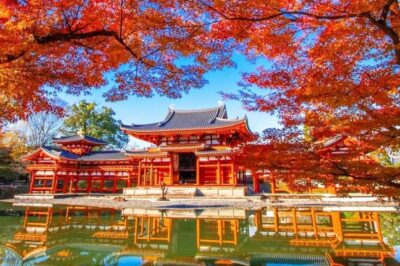 ★ 4.4Nara and Uji Day Trip with Deer Park and Hot SpringFrom $57302 reviews
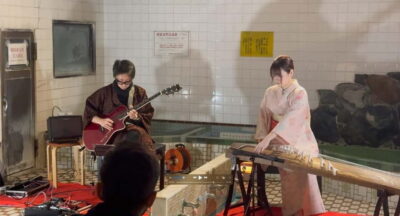 ★ 4.9Traditional Concert at Townhouse or BathhouseFrom $32224 reviews
 ★ 5.0From Tokyo: Private Tour to Fuji/Hakone – Onsen, Art, NatureFrom $322116 reviews
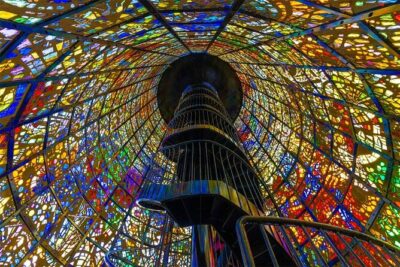 ★ 5.0Mt. Fuji, Hakone Private Tour from Tokyo – Onsen, Arts and NatureFrom $85279 reviews
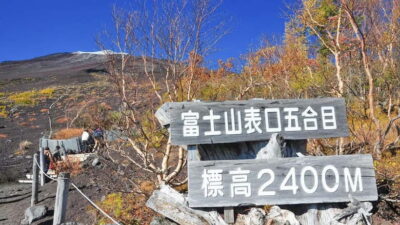 ★ 4.3Mount Fuji 5th Station & Onsen Day TripFrom $5075 reviews
 ★ 4.6From Fukuoka: Mount Aso, Kurokawa Onsen, and Shrine TourFrom $5072 reviews
 ★ 5.0Private Nagano 1-Day Tour:Snow Monkeys,Zenko-ji,Obuse,Sake,OnsenFrom $33771 reviews
 ★ 5.0Mt Takao Tour with Ramen and Tattoo-Okay Hot SpringFrom $12069 reviews
Filed on these lists too