
REVIEW · FOOD & DRINK
Flavors of Japan Food Tour in Tokyo
A Tokyo food walk can be a lot more than eating. This one turns wagashi craft and regional Japan food into a guided lesson you can taste, from dashi stock to green tea. I also like that you get a real Washoku lunch with multiple menu choices, so you are not stuck with tiny bites. One thing to consider is that the tour is about a short walking route plus tastings, so come hungry, but plan your day around a tight 3-hour window.
You meet in the Nihonbashi area and follow your guide through places that feel old and still current, including the craft stops tied to sweets, tea, and classic kitchen tools. The group stays small (max 10), and the food variety is high, which is exactly what you want when you are trying to decode Japanese menus. If you need lots of time for wandering on your own before lunch, you might feel slightly rushed, because the schedule is built around shop-to-shop tastings and then a group lunch talk.
In This Review
- Key points at a glance
- Wagashi, dashi, and lunch in the Nihonbashi block
- How the 3-hour walking pace really works
- The route: tastings that match Japanese regions, not random snacks
- Stop setup at Nihonbashi Suruga Building (Starbucks meeting point)
- Coredo Muromachi and the sheltered food-culture area
- Traditional craft stops: fruit, knives, tea, and the sweets you will taste
- Shrines and bridges as a pause, not just photo ops
- Nihonbashi Takashimaya and the big department store food world
- What you taste across the nine shops
- Lunch that actually teaches you Japanese meal logic
- After lunch in Depachika: snacks with a purpose
- Dietary fit: vegetarian, vegan, and pescetarian friendly
- Price and value: $209 for guidance, tastings, and lunch
- Who should book this tour, and who might skip it
- Practical tips before you go
- Should you book Flavors of Japan Food Tour in Tokyo?
- FAQ
- How long is the Flavors of Japan Food Tour in Tokyo?
- Where does the tour start?
- What time does the tour begin?
- What food is included in the tour?
- Is lunch included, and can I choose what I eat?
- Are vegetarian, vegan, or pescetarian diets supported?
- How many people are on the tour?
- Is alcohol included, and is there a drinking age requirement?
- Is the tour free to cancel, and how close can I cancel?
- Is the tour good for rainy days?
Key points at a glance
- Wagashi making, tea, and sweets craft: you learn how Japanese sweets are built, not just what they taste like
- Regional food sampling across multiple stops: from tsukemono pickles to dashi stock and snacks
- A proper Washoku lunch with choices: soba, tempura, sashimi sets, grilled fish, chicken, or sukiyaki
- Traditional stores and landmarks inside the route: including a 300-year-old knife shop and shrine stops
- After-lunch freedom in Depachika: your guide points you toward great snack options underground
Still weighing up options in Tokyo? These are the ones our reviewers rated highest.
- Mt Fuji and Hakone 1-Day Bus Tour Return by Bullet Train
★ 5.0 · 26,383 reviews - 1-Day Tokyo Bus Tour
★ 5.0 · 14,250 reviews - Tokyo: teamLab Planets TOKYO Digital Art Museum Entry Ticket
★ 4.6 · 9,779 reviews - Mt Fuji & Hakone Cruise, Drum Show Bullet Train 1 Day from Tokyo
★ 4.0 · 7,413 reviews
Wagashi, dashi, and lunch in the Nihonbashi block
This tour is built around a simple idea: if you want to understand Japanese food, you should taste it in context. You do that by pairing food with the places and ingredients that shaped it. The star theme is wagashi, those refined Japanese sweets you often see with tea, seasonal color, and careful shapes. But the tour does not stop at dessert. You also get taught the building blocks behind everyday Japanese flavors, like dashi (soup stock), pickles, and snack textures that show up across regional cuisine.
What makes it feel especially practical is that you taste your way through the menu logic. Japanese cooking can look intimidating because ingredients and names are unfamiliar. Here, you get multiple examples in a single walk, plus a lunch where you can ask questions and connect the dots.
A second reason I think this works is the value mix. At $209 per person, you are paying for guided tastings plus lunch, not just a casual stroll. With only up to 10 people, you also get more attention than you would with a huge group tour. And yes, you will likely eat more than you expect in 3 hours, which is rare for food tours that usually overpromise and underdeliver.
How the 3-hour walking pace really works
The tour runs about 3 hours and uses a walking format. You meet at Starbucks Coffee – Nihonbashi Suruga Building in Tokyo, in the Nihonbashi area close to Coredo Muromachi. The start time is listed as 10:30am, so plan to arrive early enough to find the exact spot and settle in.
The structure is shop-to-shop tastings, then lunch together, then time to wander in the Depachika (Tokyo underground department store food floors). The tastings happen at multiple stops along the way, so the “3 hours” is not just a long coffee break. It is paced like a culinary circuit, where you move often enough to stay engaged, but not so long that you are sprinting between bites.
One more detail that affects your day: the tour includes one drink, but any extra beverages or extra food after lunch are on you. The Depachika time is free to explore, and that is where you might want cash or a card ready, because snack temptations are real.
The route: tastings that match Japanese regions, not random snacks
You visit nine shops along the way, with tastings representing different regions and traditional foods. Some of the route elements are landmarks you can recognize from a first-time Tokyo trip, like Nihonbashi Bridge, plus shrine visits including Fukutoku Shrine and Suitengu Shrine. Those stops matter because they help you understand why certain ingredients and traditions show up in everyday food.
Below is how the tour’s “story” tends to unfold, and what you should watch for at each type of stop.
- Mt Fuji and Hakone 1-Day Bus Tour Return by Bullet Train★ 5.0 · 26,383 reviews
- 1-Day Tokyo Bus Tour★ 5.0 · 14,250 reviews
- Tokyo: teamLab Planets TOKYO Digital Art Museum Entry Ticket★ 4.6 · 9,779 reviews
- Mt Fuji & Hakone Cruise, Drum Show Bullet Train 1 Day from Tokyo★ 4.0 · 7,413 reviews
- Tokyo: Shinjuku Food Tour (13 Dishes at 4 Local Eateries)★ 5.0 · 6,603 reviews
Stop setup at Nihonbashi Suruga Building (Starbucks meeting point)
You begin at the Starbucks location by Nihonbashi Suruga Building. It is a practical meeting point, easy to recognize, and it gets you started in a food-and-shopping area with lots of signage and transit access. I like meeting points like this because it reduces stress when you are learning Tokyo navigation.
Coredo Muromachi and the sheltered food-culture area
You continue into the Coredo Muromachi area. This part sets the tone for the walk. You get that Tokyo mixture of modern shops and traditional neighborhoods close together. It also helps if weather is bad, because you are not always exposed. The tour notes it is good for rainy days, and the schedule around covered areas helps with that.
Traditional craft stops: fruit, knives, tea, and the sweets you will taste
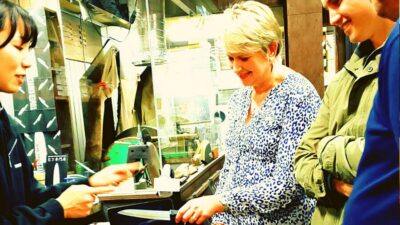
The tour highlights include visits tied to the essentials of Japanese food culture: sweets craft, tea, and kitchen tools. You will see stops described as Japan’s oldest fruit ship and a 300-year-old knife shop, plus a unique tea shop. Even if you have no interest in collecting knives or fruit, these stops explain something important: Japanese cuisine is obsessed with precision. Tools, ingredients, and techniques are part of the flavor story.
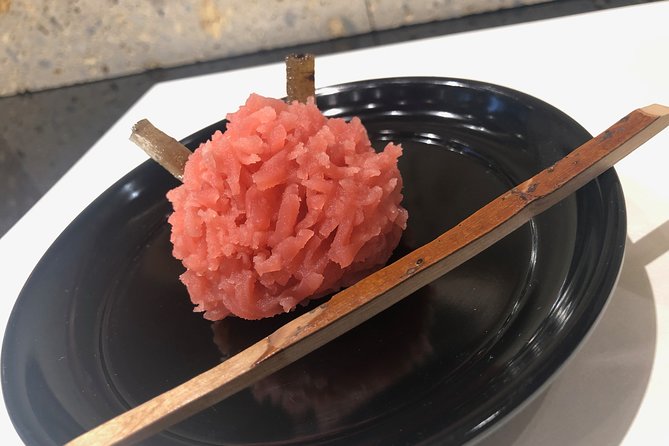
This is where the wagashi focus becomes more than a label. You will discover the art of wagashi and see how it is made. Then you taste it, including artistic wagashi desserts during the tour. The goal is not just to say it is pretty. You learn how flavors and textures are shaped, so you understand why Japanese sweets often pair so well with green tea.
Shrines and bridges as a pause, not just photo ops
You stop at Fukutoku Shrine and Suitengu Shrine, plus you pass Nihonbashi Bridge. These are not just scenic moments. They give you little breaks in the food flow and help you notice how Tokyo’s food culture sits next to spiritual and historical spaces. That context makes the later tastings feel less random.
If you want the best photos, bring your phone camera ready, but keep your eyes on your guide too. The guide will time movement so you are not stuck looking around while the group is lining up for tastings.
Nihonbashi Takashimaya and the big department store food world
You also include a stop at Nihonbashi Takashimaya. This kind of store stop matters because it shows the “current” face of Japanese food culture, not only the traditional side. You can also use this as a mental map for Tokyo: department stores are huge for food shopping, especially for gifts.
After lunch, the tour continues with time into the Depachika underground market, where your guide points you in the right direction to find good after-lunch snacks. This is a smart add-on because you go in with a clue, not blind wandering.
What you taste across the nine shops
The tour tastings and samples are where the value comes from. You can expect items including:
- Wagashi (Japanese sweets), including desserts tied to the tour’s sweets stops
- Satsuma imo (fried sweet potatoes)
- Tsukemono (pickled vegetables)
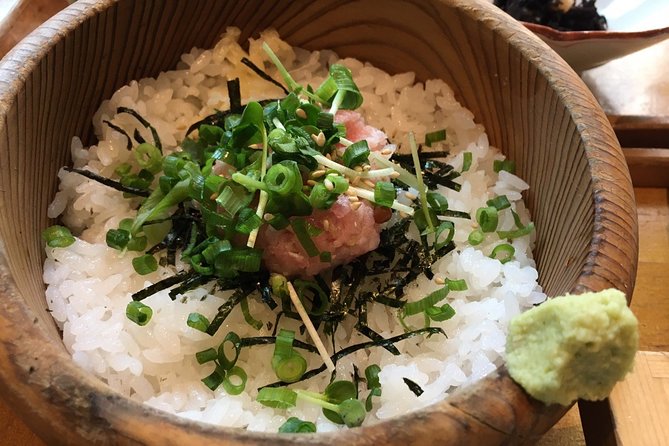
- Dashi (soup stock) samples
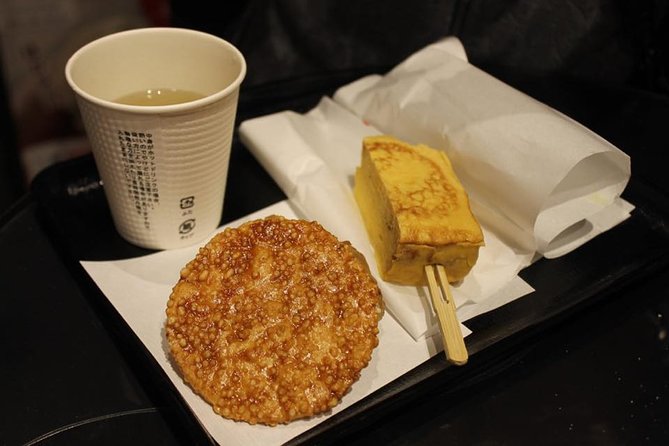
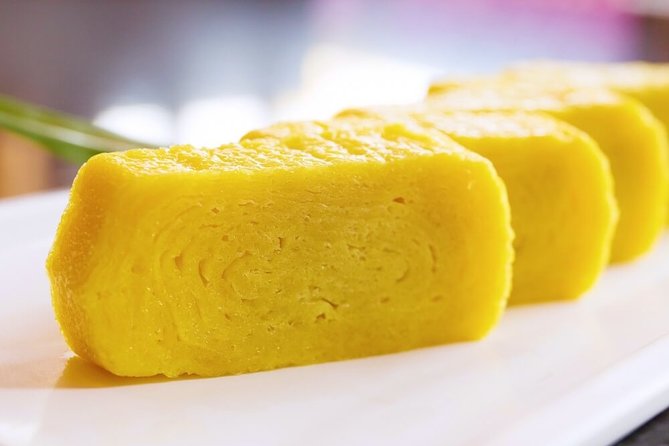
- Tamagoyaki (egg roll)
- Fish cakes from Kagoshima
- Eel sushi
- Regional snacks plus green teas
Even if you like Japanese food already, this mix is useful. It gives you a range of taste types: savory stock, sweet tea-pairing desserts, salty-snap snacks, and pickles that reset your palate. It is also a shortcut to learning what you enjoy, so you can order better later when you are exploring on your own.
Lunch that actually teaches you Japanese meal logic
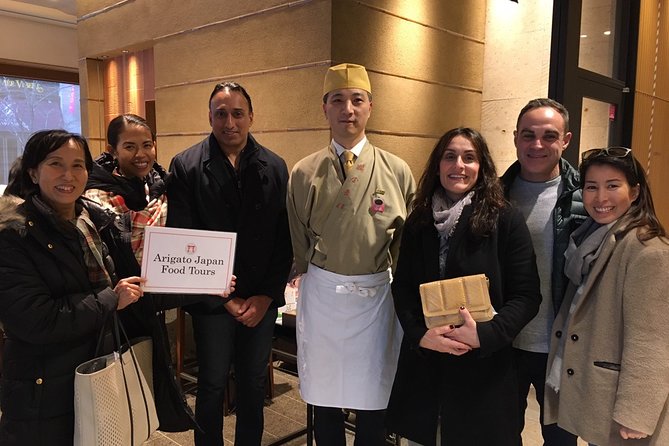
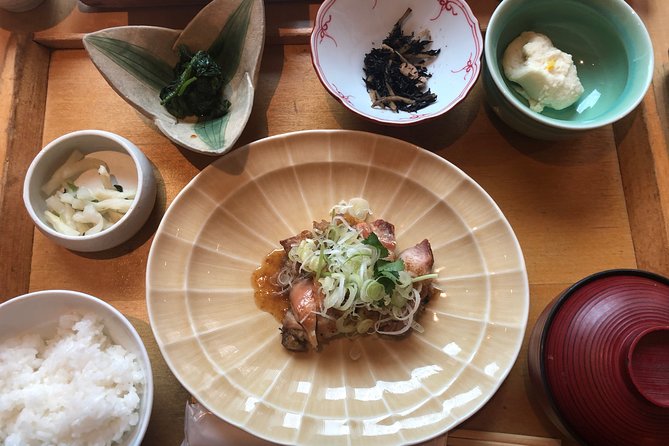
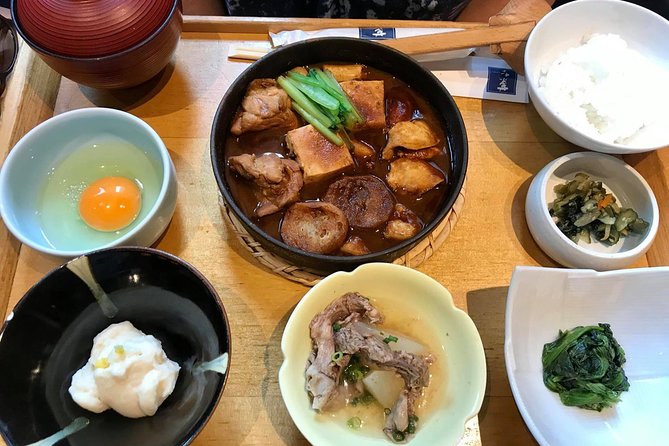
The lunch is a major part of the experience, and you do it together as a group. You get a Washoku lunch, and you discuss what you learned during the earlier tastings while you eat. That turns lunch from filler into part of the lesson, which is exactly what I want from a food tour.
You have lunch choices made upon booking. The menu options listed include:
- Soba, tempura, and sashimi sets
- Grilled fish
- Chicken
- Sukiyaki
That variety is helpful because it covers both “everyday comfort” meals and more special-occasion dishes. You also get a clearer sense of how Japanese sets are built, where a meal can be balanced across hot, cool, salty, and sweet components.
Because you already tasted dashi and other building blocks earlier, lunch makes more sense. You are not just eating, you are connecting flavor names to taste experiences.
And yes, you will likely leave full. But it is not only about volume. The choices mean you can pick something that fits your preferences.
After lunch in Depachika: snacks with a purpose
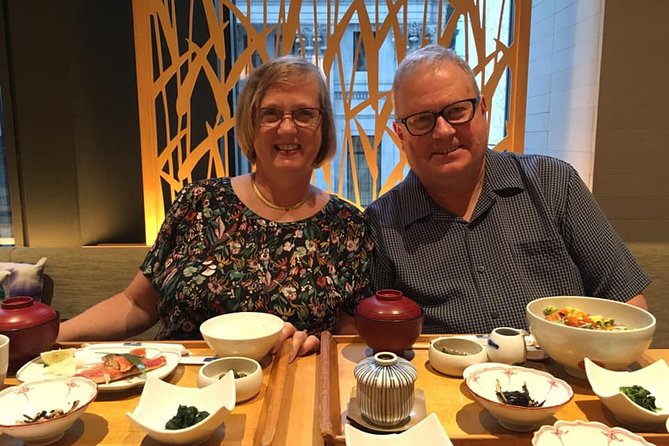
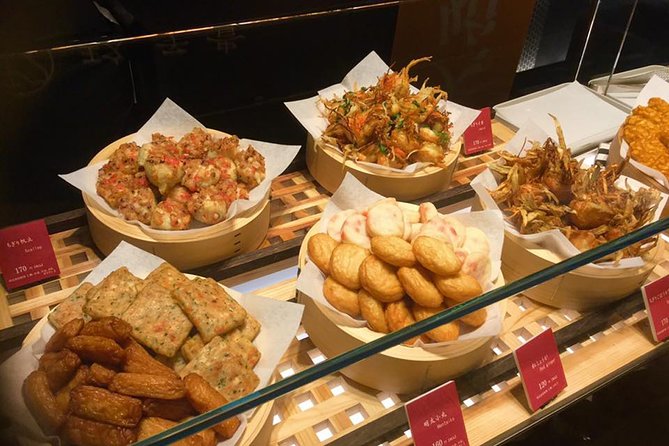
Once lunch ends, you continue into the Depachika, the underground department store food market. You are free to explore further on your own from there, and your guide points you to the right direction to find after-lunch snacks.
This is where the tour becomes a practical Tokyo tool. If you have never shopped in a Depachika before, it can feel overwhelming. You have endless packages, sweets, bento-style items, and snack rows that look the same until you know what to look for. Your guide’s guidance helps you choose faster and waste less time.
A good strategy here: take one snack you can eat right away and one you can bring back. That way you enjoy the moment and you also get a small “souvenir” that tastes like what you actually learned.
Dietary fit: vegetarian, vegan, and pescetarian friendly
The tour is listed as pescetarian, vegan, and vegetarian friendly. That matters, because wagashi and green tea alone would not be enough for a full lunch and a satisfying snack plan. The listing also says most travelers can participate, with a small group size that usually helps guides manage dietary needs better.
That said, you are still tasting a set menu of items. If you have strict allergies or you avoid specific ingredients beyond what is covered, you should check with the provider before booking. The tour data confirms dietary friendliness, but it does not spell out ingredient-by-ingredient allergy handling.
Price and value: $209 for guidance, tastings, and lunch
At $209.00 per person, this is not a bargain-bite crawl. It is priced like an experience, and in Tokyo that usually means three things: a local guide, time and coordination, and a set amount of food and drink that you cannot easily reproduce on your own.
Here is the “value math” that stands out:
- 7 food stops are specifically mentioned as tasting stops
- You get a Regional Food tasting plus Washoku lunch
- You get one drink included
- The group cap is maximum 10 travelers, which supports a guided pace and less waiting
If you try to copy this on your own, you would spend real money on guide services anyway, plus you would need to know where to go for the right foods like Kagoshima fish cakes, eel sushi, and wagashi that matches the tea pairing context. Without that, you might end up with lots of random snacks and fewer “teaching moments.”
One more value angle: the guide helps you decode Japanese menus. That comfort alone can be worth a lot on a first visit. If you have ever ordered something in Japan and felt unsure what you were getting, this tour is designed to reduce that anxiety.
Who should book this tour, and who might skip it
This tour is a strong fit if:
- You want a guided introduction to Japanese flavors and regional differences
- You care about wagashi, tea, and food craft as much as you care about eating
- You want a full lunch choice, not just small bites
- You prefer a small group with enough structure to avoid decision fatigue
You might consider a different option if:
- You want a long free-roaming food crawl where you pick everything yourself
- You dislike walking-based tours, even though the schedule is designed to be manageable
- You want only street food and no department store or structured lunch component
It also works well for rainy days, and it is family-friendly, as long as kids meet the listed requirements.
Practical tips before you go
A few things will make your day smoother:
- Arrive a bit early for the 10:30am start at Starbucks near Nihonbashi Suruga Building
- Come with room for both sweet and savory tastings, including pickles and fried items
- If you drink alcohol, remember there is a minimum drinking age of 21 years listed for the tour
- Wear comfortable shoes. You are doing repeated short walks between tasting points
- Bring your curiosity. The best part is learning why certain ingredients like dashi and tsukemono matter
Also, it helps to know this is a mobile ticket experience. That is usually easy, but make sure your phone is charged.
Should you book Flavors of Japan Food Tour in Tokyo?
If you want Tokyo food that feels organized, educational, and genuinely tasty in the same session, I think this is a smart booking. The wagashi focus plus the structured tastings, the Washoku lunch choices, and the after-lunch Depachika guidance make it more useful than a generic “eat and shop” tour.
At the same time, it is not trying to be the cheapest way to eat in Tokyo. You are paying for guidance, variety, and access to a route that mixes long-running food culture spots with places you can actually revisit later.
My call: book it if you want to leave with better menu confidence, not just full stomach satisfaction.
FAQ
How long is the Flavors of Japan Food Tour in Tokyo?
The tour lasts about 3 hours.
Where does the tour start?
You meet at Starbucks Coffee – Nihonbashi Suruga Building, near the Nihonbashi area.
What time does the tour begin?
The listed start time is 10:30am.
What food is included in the tour?
You get regional food tastings at multiple food stops, plus a Washoku lunch. The tour also includes samples such as dashi, snacks, and items like wagashi, tamagoyaki, and other regional foods.
Is lunch included, and can I choose what I eat?
Yes. Lunch is included and you select a lunch option upon booking. Options include soba, tempura, and sashimi sets, grilled fish, chicken, or sukiyaki.
Are vegetarian, vegan, or pescetarian diets supported?
Yes. The tour is listed as pescetarian, vegan, and vegetarian friendly.
How many people are on the tour?
The tour has a maximum group size of 10 travelers.
Is alcohol included, and is there a drinking age requirement?
One drink is included. The minimum drinking age is listed as 21 years.
Is the tour free to cancel, and how close can I cancel?
Free cancellation is offered. You must cancel at least 24 hours before the experience’s start time for a full refund.
Is the tour good for rainy days?
Yes. It is listed as good for rainy days.
Newest Tokyo write-ups from the Loving Japan desk

Food & Drink, side by side.
 ★ 5.0Shinjuku Food Tour (13 Dishes at 4 Local Eateries)From $866,603 reviews
 ★ 5.0Tokyo Tsukiji Fish Market Food and Culture Walking TourFrom $993,184 reviews
 ★ 4.8Shinsekai Food Tour with 13-15 Dishes at 5 EateriesFrom $532,204 reviews
 ★ 5.0Osaka Food Tour: 13 Dishes at 5 Local EateriesFrom $732,149 reviews
 ★ 4.9Shinjuku Food Tour (15 Dishes and 4 Eateries)From $852,033 reviews
 ★ 5.0Kyoto Night Foodie Tour in Gion (9+ dishes + 6 Sake tastings)From $1631,762 reviews
 ★ 5.0Hungry Osaka Street Food Tour:15 Tastings & 3 Drinks with a LocalFrom $731,727 reviews
 ★ 5.0Tsukiji Fish Market Food and Walking tourFrom $301,724 reviews
Filed on these lists too