
REVIEW · MOUNT FUJI DAY TRIPS
From Tokyo: Fuji Mountain Area – FujiQ – Lake Kawaguchiko – Chureito Pagoda
Mount Fuji in a single day, from your Tokyo door. I love how this tour mixes the classic photo stops with quieter, more meaningful moments like Oshino Hakkai’s springs. You also get comfort built in, with a private Toyota Alphard pickup, Wi-Fi, and snacks for the long day. The main thing to consider is that tickets for attractions are not included, and the best mountain views depend on the day’s weather.
What makes this one worth your time is the pace and order of stops. You’re not just ticking boxes, you’re moving through the Fuji area in a way that gives you multiple chances at the mountain, plus a true end-of-day finale at the Chureito Pagoda. Because it’s a private group, you can usually adjust how long you linger at each view, as long as you stay within the tour’s general timing.
In This Review
- Key highlights worth the hype
- Private Tokyo pickup, a Toyota Alphard, and a day that runs smoother
- The Fuji beat: how the timing sets you up for good views
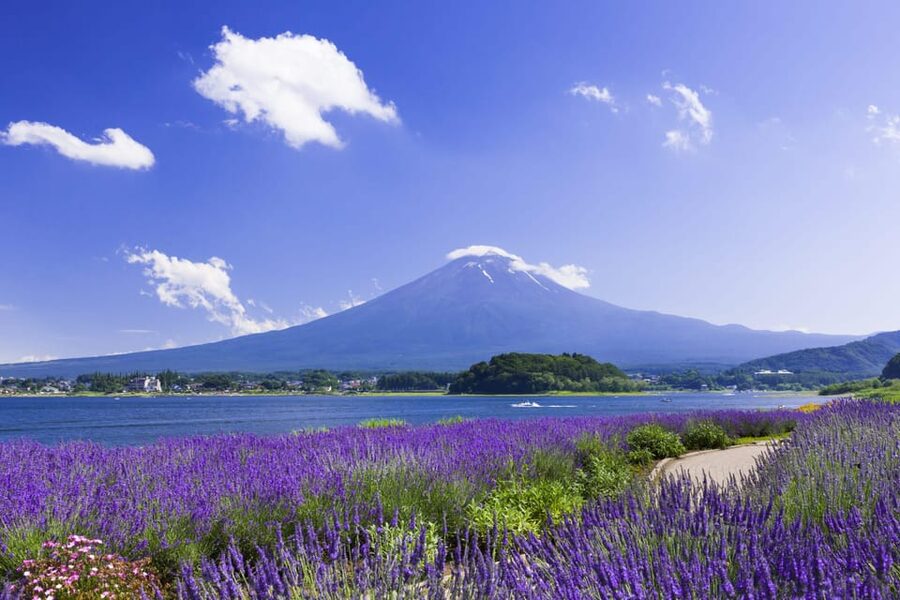
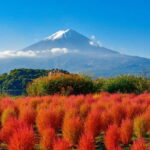
- Oishi Park: the classic Mount Fuji framed by seasonal flowers
- Lake Kawaguchiko: calm water, Fuji reflections, and optional extras
- Oshino Hakkai: crystal-clear springs with a guided walk that makes it click
- Fujiyoshida scenic stops: the in-between views you shouldn’t ignore
- Chureito Pagoda at sunset: the iconic view with room to play
- Guides and drivers: the human detail that shows up on a long day
- Price and value: why $292 can make sense for a private day
- Who should book this, and how to customize without breaking the day
- Should you book this Fuji day trip from Tokyo?
- FAQ
- How long is the tour?
- Is hotel pickup included, and where does the tour end?
- What vehicle is used for pickup and transport?
- Are the group and guide private?
- Is there Wi-Fi and snacks during the drive?
- What stops are included in the day?
- Can I choose activities at Lake Kawaguchiko?
- Are tickets and entrance fees included?
- Can the itinerary be customized?
Key highlights worth the hype
- Oishi Park’s iconic Fuji framing with seasonal flowers for strong, easy-to-repeat photos
- Chureito Pagoda views at sunset plus enough self-guided time to slow down and shoot
- Oshino Hakkai’s crystal springs and a guided walk that helps you read what you’re seeing
- Lake Kawaguchiko options including a TELEPHONE ride or an APPARE boat trip, if you want extra time on the water
- Hotel-to-hotel convenience in Tokyo with drop-off in the Tokyo 23 wards range
Fuji from Tokyo: the other approaches
- Mt Fuji and Hakone 1-Day Bus Tour Return by Bullet Train
★ 5.0 · 26,383 reviews - Mt Fuji & Hakone Cruise, Drum Show Bullet Train 1 Day from Tokyo
★ 4.0 · 7,413 reviews - Tokyo Mt Fuji 5th St & Hakone Cruise Bus Tour w/Bullet Train
★ 4.4 · 5,024 reviews - From Tokyo: Mount Fuji Full-Day Sightseeing Trip
★ 4.5 · 4,970 reviews
Private Tokyo pickup, a Toyota Alphard, and a day that runs smoother
This is one of those trips that starts working immediately. You’re picked up from your hotel or Airbnb and returned safely later, with drop-off set for places within the Tokyo 23 wards area. That saves you from transit puzzles, crowded buses, and the all-day stress of figuring out local connections.
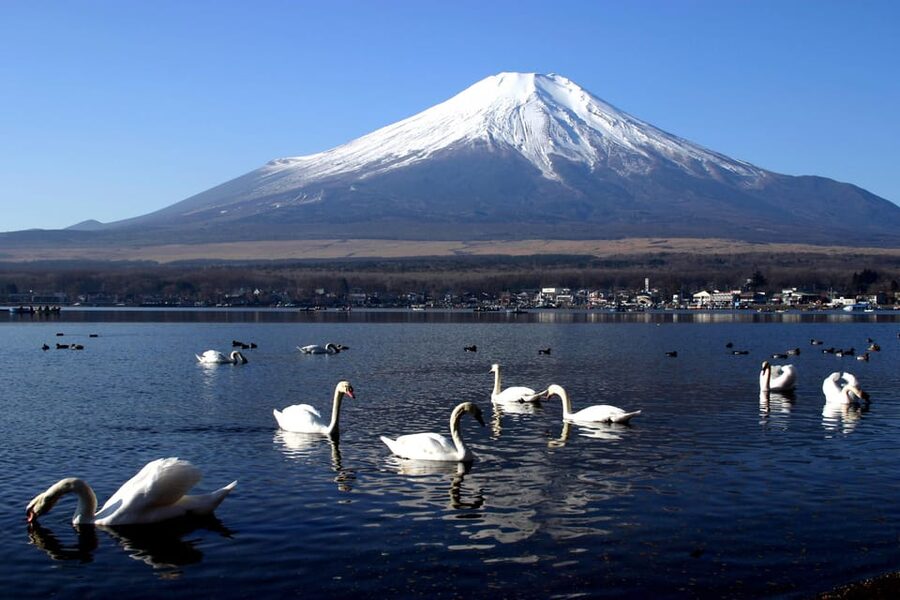
The vehicle choice matters too. You’ll ride in a black Toyota Alphard, high-quality and fully insured, with resident multi-lingual drivers. Inside, you get Wi-Fi, water, cookies, and special Japanese sweets, so the long drive from Tokyo doesn’t feel like a penalty.
You’ll also appreciate the guide language options: English, Portuguese, Spanish, and Japanese. It’s not just about translation. When you can ask simple questions in your own language, you tend to understand the viewpoints better, and you spend more time enjoying instead of guessing.
One practical note: because it’s private, your day can feel flexible. Still, you should assume there are fixed visit blocks at each major spot, so plan to manage your energy and pace.
The Fuji beat: how the timing sets you up for good views
The tour is built around a simple idea, get you to the Fuji area early enough to enjoy multiple viewpoints without sprinting. After pickup, there’s a drive of about 105 minutes to get you into the region. Then the day slows down on the ground: you’ll have a 2-hour mountain visit period, followed by shorter, photo-forward breaks.
The biggest “value” in timing is that you’re not betting everything on one single viewpoint. You’ll see Mount Fuji framed in different ways at Oishi Park, Lake Kawaguchiko, the Oshino area (in views from roads and paths), and finally the iconic layered architecture at Chureito Pagoda. If one spot is washed out by clouds, you still have other chances.
Another reason the schedule works is how it staggers the walking. You get a longer stop at the start, then a set of manageable walks, photo moments, and guided time. At the end, you have about 1.5 hours for Chureito Pagoda, which is the right length for sunset light and photo hopping without feeling rushed.
Oishi Park: the classic Mount Fuji framed by seasonal flowers
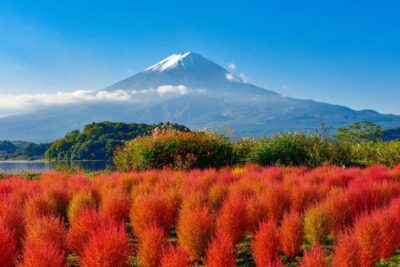
Oishi Park is famous for a reason. It’s one of the easiest places to understand why people build whole trips around Mount Fuji images. You get a full stop of about 1 hour, with a mix of break time, a photo stop, sightseeing, and a walk through the flower fields.
This is where you’ll see the mountain presented like a poster, often with the foreground flowers giving you color and depth. The tour description calls out that the park shines in different seasons, with spring flowers bringing color and autumn adding warm tones. Even if your expectations are just “take a nice photo,” Oishi Park gives you enough room to do better than a single snapshot.
What I like about this stop for real-life travel is how forgiving it is. You’re not stuck in one narrow corridor. You can step back for wider views, walk a bit for the framing angles, and pause when the light changes.
A small consideration: it’s a well-known location, so plan your photo mindset. If you go in thinking you’ll get the same angle without any crowding, you might feel impatient. If you go in ready to work a few angles and accept the flow, you’ll have a better time.
- Mt Fuji and Hakone 1-Day Bus Tour Return by Bullet Train★ 5.0 · 26,383 reviews
- 1-Day Tokyo Bus Tour★ 5.0 · 14,250 reviews
- Tokyo: teamLab Planets TOKYO Digital Art Museum Entry Ticket★ 4.6 · 9,779 reviews
- Mt Fuji & Hakone Cruise, Drum Show Bullet Train 1 Day from Tokyo★ 4.0 · 7,413 reviews
- Tokyo: Shinjuku Food Tour (13 Dishes at 4 Local Eateries)★ 5.0 · 6,603 reviews
Lake Kawaguchiko: calm water, Fuji reflections, and optional extras
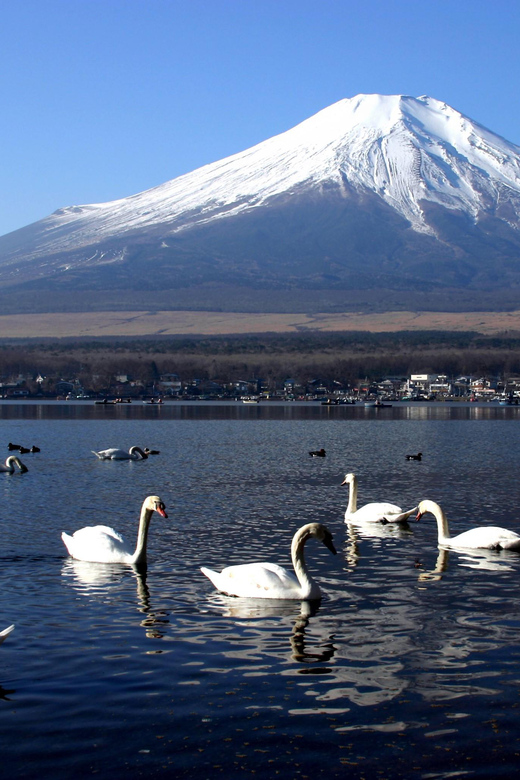
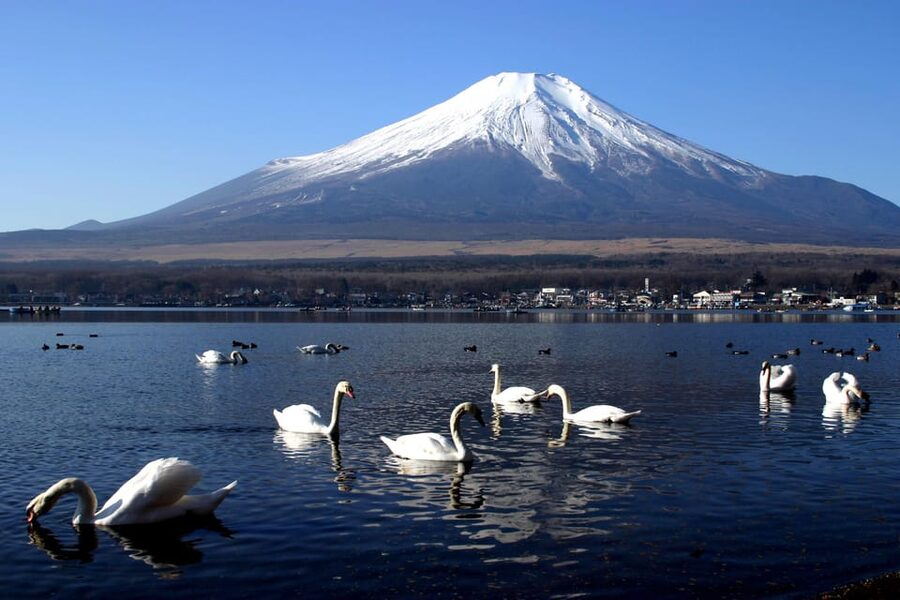
Lake Kawaguchiko is one of the easiest places in the Fuji Five Lakes region to feel the slower rhythm. You’ll have about 1 hour here, with sightseeing and a walk focused on the shoreline views.
The goal is simple: look at the water and see how Mount Fuji appears in the reflections. The tour also gives you options to add to your experience. You can choose a TELEPHONE ride for a different vantage point, or opt for an APPARE boat trip around the lake if you want to be on the water.
Those optional add-ons can change the mood of the stop. A higher viewpoint can feel like you’re watching the lake from above, while a boat gives you a moving perspective and more time “doing” instead of just looking.
Drawback to watch: since attraction tickets are not included, you’ll need to budget separately if you want the TELEPHONE ride or the boat. Also, the lake views are the point, so bring patience. If the mountain isn’t crisp that day, the lake still gives you a peaceful setting to enjoy.
Oshino Hakkai: crystal-clear springs with a guided walk that makes it click
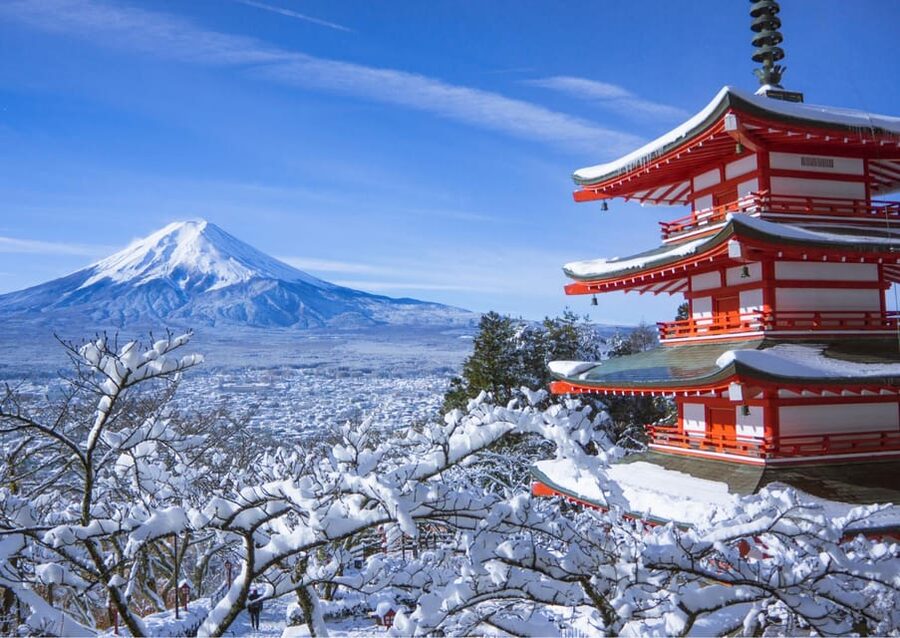
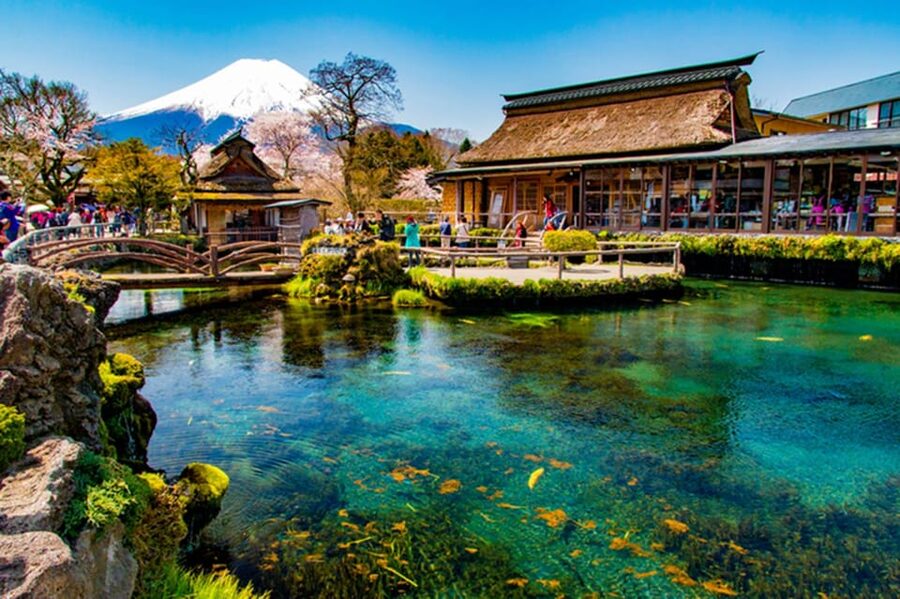
Oshino Hakkai is the kind of place that feels like Japan at ground level. You’ll spend about 1.5 hours there, including a photo stop, a guided tour, shopping time, and a walk through the village.
This is where you learn the meaning behind the scenery. The springs are described as crystal-clear and connected to melting snow and water from Mount Fuji, and the site is treated as a cultural heritage destination. That matters because it changes how you look. You’re not just taking photos of water, you’re understanding why those ponds exist and how the area was built around them.
What I like about the pace here is that it’s not only sightseeing. The time includes guided context, plus shopping. If you want snacks, local souvenirs, or just a break after walking, Oshino Hakkai gives you that natural pause.
Potential downside: because it combines walks, viewing, and village time, you’ll want comfortable shoes. If your group hates walking on uneven surfaces, this may feel like more effort than expected.
Fujiyoshida scenic stops: the in-between views you shouldn’t ignore
After Oshino Hakkai, you’ll head to Fujiyoshida, but it’s not a long “extra” stop. You’ll have about 1 hour for photo stops, sightseeing, scenic views on the way, and walking.
This part is often where travelers either rush past the view or accidentally miss it. Here, the tour structure gives you a little breathing room to stop and look. Even if you already saw Mount Fuji earlier, the road angles in this area can give new compositions, especially as you shift toward the Chureito Pagoda viewpoint zone.
Because it’s timed and includes scenic stops, it also reduces decision fatigue. You don’t have to constantly ask if the next roadside view is worth the effort. The tour keeps you moving while still allowing brief moments to take it in.
Chureito Pagoda at sunset: the iconic view with room to play
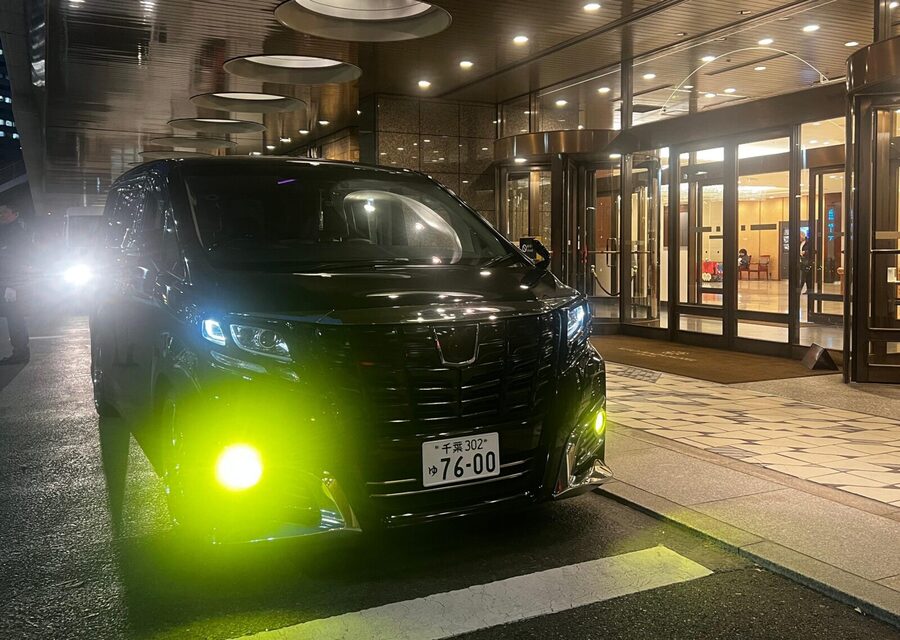
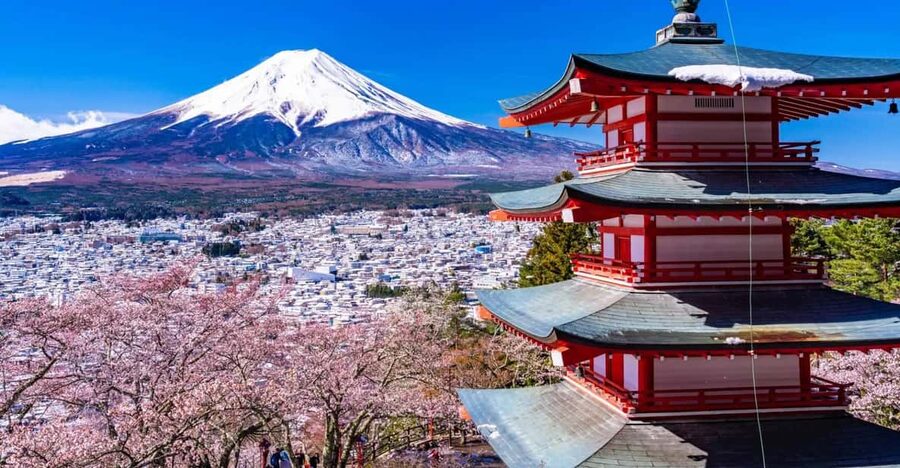
The day ends with one of Japan’s most recognizable Mount Fuji photo scenes: the Chureito Pagoda. You’ll get about 1.5 hours here for photo opportunities, sightseeing, walking, and a self-guided tour, with sunset built into the stop.
This is the best kind of finale. Earlier stops focus on wide angles and nature views. Here, you get the architectural foreground, the pagoda lines, and the mountain aligned behind it, which makes the photo feel complete even if you take only one or two.
Self-guided time is key. A guided stop can sometimes make you move at someone else’s pace. With self-guided walking, you can choose your own approach, hang back if you’re waiting for light, and find the spots that match how you like to photograph.
One practical consideration: sunset means you should be ready to stand and look for a bit. If your group has limited patience, you may want to rotate roles. One person scopes angles, another rests, then you swap.
Guides and drivers: the human detail that shows up on a long day
A Mount Fuji day trip is mostly a logistics game. Long drive, changing viewpoints, and the need to stay calm when conditions are imperfect. That’s where the tour’s staffing choices can make a big difference.
You’ll see this reflected in the names that come up as standouts. Marcelo is praised for handling unexpected issues effectively, including situations where snow affected the region, and for keeping people comfortable while sorting solutions. Cami is repeatedly described as an excellent guide with a great attitude, explaining doubts and staying attentive. Anderson stands out for kindness and for showing people nice places in an easy, talkable way. Hiroshi is noted as punctual and informative, navigating busy roads smoothly, and even bringing small helpful extras like water and a phone charger.
So what does that mean for you? It means you’re less likely to feel rushed. It also means safer driving in busy traffic. And if you care about photos, it helps when someone understands good photo timing and gives you room to take pictures without panic.
If you want a relaxed day, prioritize guides who are known for patience and clear explanations. That’s not a luxury. It’s what turns a long ride into an enjoyable one.
Price and value: why $292 can make sense for a private day
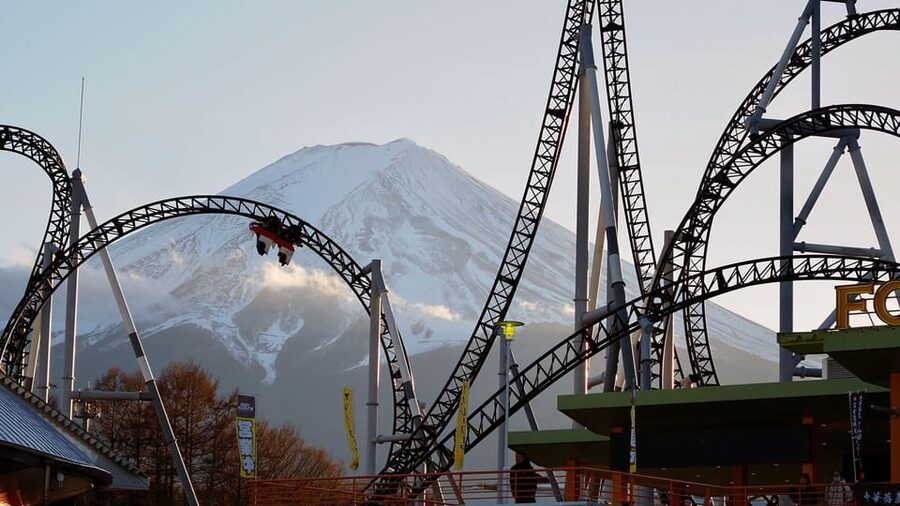
At $292 per person, this is not the cheapest way to do Mount Fuji from Tokyo. But it also isn’t trying to be. You’re paying for private transportation, hotel or Airbnb pickup, and drop-off back in the Tokyo 23 wards area, plus the comfort add-ons like Wi-Fi and snacks.
Private transport is the hidden value. It cuts out the hassle of coordinating trains and buses, and it reduces the chance your group gets separated or loses time. The black Toyota Alphard also signals a higher comfort level than a basic van, which matters after hours in motion.
You should also look at what’s not included. Entrance fees and attraction tickets are not part of the price. If you want the TELEPHONE ride or the APPARE boat trip, expect to pay those separately if they require tickets. That means your total cost can rise depending on what you add.
Still, the structure is designed to maximize the sights that most people want from a day around Fuji. If your goal is multiple iconic photo moments plus a real walk through the springs area, a guided private day can be strong value compared to piecing together everything solo.
Who should book this, and how to customize without breaking the day
This tour fits best if you want a smooth day with a real plan, not a stressful day of transit hopping. It’s also ideal for people who prefer comfort and privacy, since you’ll travel in a private vehicle.
It works especially well for mixed groups and families because the pace includes walks and viewing time, plus seating time on the drive segments. If you have younger travelers, there’s an option to include FujiQ Highland for adrenaline, with the idea that the group can split briefly and then regroup for the ride back.
If you’d rather keep it simple, you can focus on the main stops and skip the optional activities at Lake Kawaguchiko. If you want more control, the tour notes you can adapt your itinerary within the schedule, which is helpful if you have a must-see photo angle or a preference for shorter walking.
Should you book this Fuji day trip from Tokyo?
Yes, if your top priority is getting to the Fuji area efficiently and seeing the major hits without turning the day into a commute marathon. The combination of Oishi Park, Lake Kawaguchiko, Oshino Hakkai, and then Chureito Pagoda at sunset is a smart way to get variety in one go.
Book it if you value private comfort, want hotel pickup and drop-off, and like the idea of having a guide who can keep things moving calmly. Skip or adjust it if your budget is tight because tickets and add-ons are not included, or if your group hates any walking at all.
If the mountain is your dream photo goal, this tour gives you multiple chances in different styles. That alone is a strong reason to choose it.
FAQ
How long is the tour?
The tour is listed as 7 hours, which is about 450 minutes.
Is hotel pickup included, and where does the tour end?
Yes, pickup is included from your hotel or Airbnb in Tokyo. The tour includes return drop-off safely back to your place of stay, with drop-off described as within the Tokyo 23 wards.
What vehicle is used for pickup and transport?
Pickup is included with a black Toyota Alphard, and you travel in high-quality fully insured transportation.
Are the group and guide private?
This is a private group experience, with a live tour guide. The guide languages include English, Portuguese, Spanish, and Japanese.
Is there Wi-Fi and snacks during the drive?
Yes. The car is equipped with free Wi-Fi and includes water, cookies, and special Japanese sweets.
What stops are included in the day?
The main stops are Mount Fuji, Oishi Park, Lake Kawaguchiko, Oshino Hakkai, Fujiyoshida, and Chureito Pagoda.
Can I choose activities at Lake Kawaguchiko?
The tour offers choices at Lake Kawaguchiko, including a TELEPHONE ride or an APPARE boat trip around the lake.
Are tickets and entrance fees included?
No. Tickets and entrance fees to attractions are not included.
Can the itinerary be customized?
Yes. The tour says it can adapt to your itinerary and places you want to visit within the tour schedule, and FujiQ Highland is also available for groups with younger people who want adrenaline.
Mount Fuji, Three More Ways
Newest Tokyo write-ups from the Loving Japan desk

Mount Fuji Day Trips, side by side.
 ★ 5.0Mt Fuji and Hakone 1-Day Bus Tour Return by Bullet TrainFrom $16326,383 reviews
 ★ 4.0Mt Fuji & Hakone Cruise, Drum Show Bullet Train 1 Day from TokyoFrom $1497,413 reviews
 ★ 4.4Tokyo Mt Fuji 5th St & Hakone Cruise Bus Tour w/Bullet TrainFrom $1545,024 reviews
 ★ 4.5From Tokyo: Mount Fuji Full-Day Sightseeing TripFrom $684,970 reviews
 ★ 4.7Mt. Fuji Tour, Hakone Ropeway, Owakudani, Lake AshiFrom $544,002 reviews
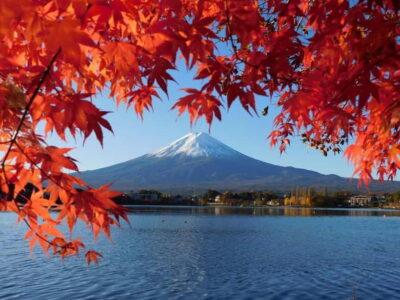 ★ 4.4Mt.Fuji,Kawaguchiko Oishi Park,Arakurayama Sengen ParkFrom $542,682 reviews
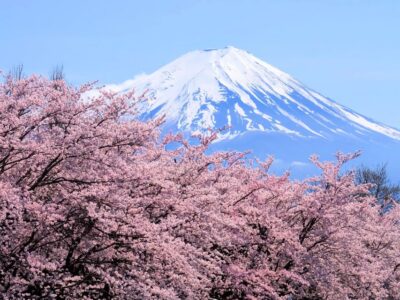 ★ 4.2Mt. Fuji 5th Station & Hakone Cruise 1-Day Bus TourFrom $1292,381 reviews
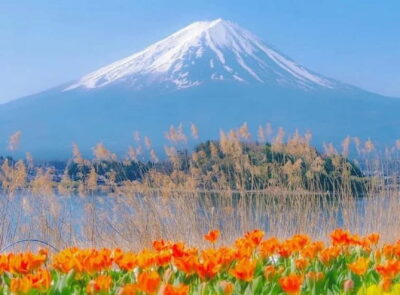 ★ 4.7Mt Fuji Top 5 Spots Day Tour: Arakurayama Park,Oshino HakkaiFrom $532,066 reviews
Filed on these lists too