
REVIEW · MOUNT FUJI DAY TRIPS
From Tokyo: Mount Fuji Sightseeing One Day Trip
Fuji day trips feel busy for a reason. This one cuts the planning and strings together the big sights with scheduled stops and round-trip transport. I like that you can focus on photos and viewpoints instead of figuring out transit, plus the guide commentary adds context at each village stop. The main downside is simple: the route is tight, and if clouds roll in, Mount Fuji can hide.
You start in Tokyo or Shinjuku and spend about 10 hours on the go, riding an air-conditioned vehicle through the countryside. The payoff is a classic day around Fujisan, from the Arakurayama Sengen Park photo scene to the eight spring ponds at Oshino Hakkai. Along the way, guides such as Augustine, Keiko, Joey, Jay, and Jimmy Lee are repeatedly praised for keeping things organized and turning the drive into something more than a transfer.
In This Review
- Key Points You Should Know Before You Go
- Getting to Fuji Without Wrestling Tokyo Transit
- Chureito Pagoda and Arakura Shrine: The Classic Postcard Start
- Lake Kawaguchiko and Oishi Park: Where You’ll Hunt the Best Fuji Angle
- Oshino Hakkai: The Eight Ponds Stop Worth Slowing Down For
- Hikawa Clock Shop and Fuji-Backdrop Street Scenes
- The Lawson Fujikawaguchiko Photo Moment (Yes, It’s Real)
- Time, Pace, and When the Day Feels Rushed
- Price and Value: What $58.90 Buys You
- Who This Tour Suits Best (And Who Should Think Twice)
- Practical Tips for a Smoother Fuji Day
- Should You Book This Mount Fuji One-Day Trip?
- FAQ
- How long is the Mount Fuji one-day trip?
- Where do you get picked up in Tokyo?
- What is the price per person?
- Is the ticket mobile?
- Does the tour include air-conditioned transportation?
- Are admission fees included for the stops?
- Is lunch included?
- How large is the group?
- Is it cancelable for a full refund?
- What should I do if I have a stroller or large luggage?
Key Points You Should Know Before You Go
- A lot of famous Fuji stops in one day: You hit the highlights around Lake Kawaguchi and Fujiyoshida without building an itinerary.
- Short, timed photo windows: Some stops are 15 to 20 minutes, so come ready to move.
- Free entry at most sights on the list: The tour includes fees and taxes, and several stops are marked free.
- Weather controls your odds: Clear days can make Fuji look crisp all day, while fog can limit what you see.
- Guide quality can make or break the vibe: Many guides are praised for storytelling and organization, but English clarity can vary.
- Group size stays manageable: The tour caps at 45 people, which helps keep the day from feeling chaotic.
Fuji from Tokyo: the other approaches
- Mt Fuji and Hakone 1-Day Bus Tour Return by Bullet Train
★ 5.0 · 26,383 reviews - Mt Fuji & Hakone Cruise, Drum Show Bullet Train 1 Day from Tokyo
★ 4.0 · 7,413 reviews - Tokyo Mt Fuji 5th St & Hakone Cruise Bus Tour w/Bullet Train
★ 4.4 · 5,024 reviews - From Tokyo: Mount Fuji Full-Day Sightseeing Trip
★ 4.5 · 4,970 reviews
Getting to Fuji Without Wrestling Tokyo Transit
This trip is built for people who want less stress and more time looking at the view. You get round-trip transportation from Tokyo or Shinjuku, plus an air-conditioned vehicle for the ride out and back. The day runs about 10 hours, so you should plan it like a full outing, not a quick excursion.
You’ll also get a mobile ticket, which is handy when you’re switching between train lines and bus platforms. The tour caps at 45 travelers, so you’re not packed into a tiny van, and you’re not riding a massive moving crowd either.
A practical tip: be ready early at your pickup point. The strongest theme in the feedback is that guides keep the schedule tight and want everyone back on time. If you’re the type who hates rushing, this is the one place you should trust the timetable and set your own expectations accordingly.
Chureito Pagoda and Arakura Shrine: The Classic Postcard Start
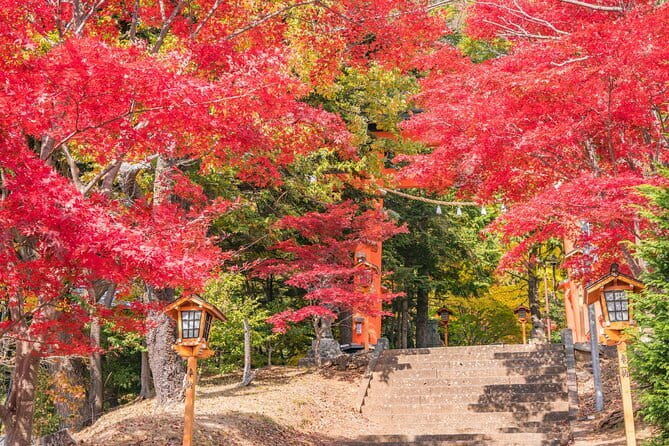
The day begins in Arakurayama Sengen Park with the Chureito Pagoda. It’s the kind of view you recognize instantly, and that’s the point. You’re given about 1 hour here, long enough to climb in, find a spot for photos, and still take a breath before moving on. The park is known for sweeping panoramas that include Chureito Pagoda, Mount Fuji, and Fujiyoshida City in the background.
Right next door, you get a quick stop at Arakura Fuji Sengen Shrine, about 15 minutes. The shrine dates back to 705 and has served as a guardian site for over 1,300 years. This is not just a quick photo break, either. With the right guide, those few minutes turn into a little lesson on why these places matter to local worship and community life.
What I like most about this pairing is that it gives you two sides of the same area: the dramatic visual pull of the pagoda scene, then a short grounding moment with a long historical connection. If you’re traveling with kids or you’re short on stamina, just remember that the pagoda area can involve walking and stairs.
Lake Kawaguchiko and Oishi Park: Where You’ll Hunt the Best Fuji Angle
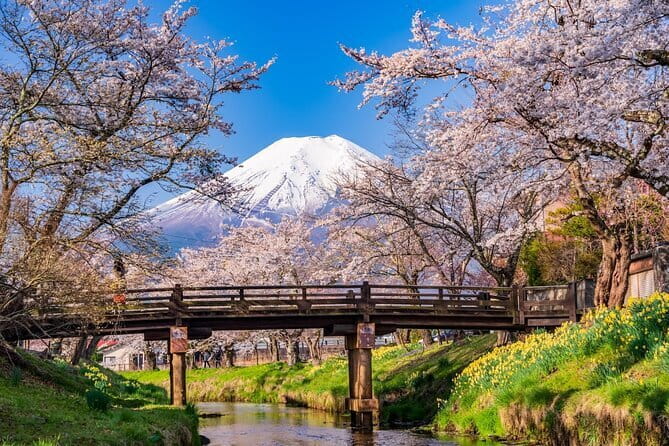
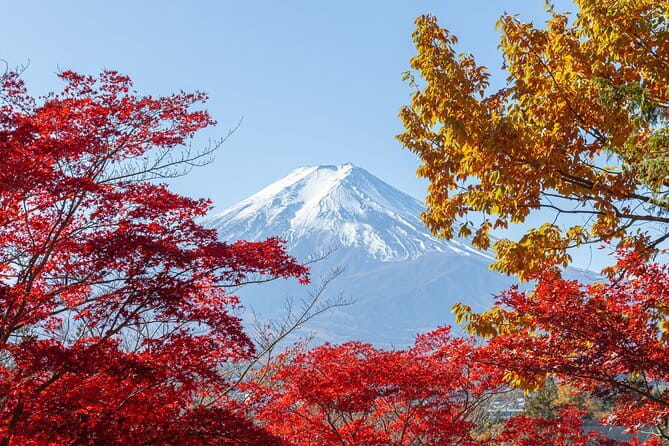
After the shrine and pagoda, you head to Lake Kawaguchiko for about 20 minutes. Lake Kawaguchi is the most popular of the Fuji Five Lakes, and it’s famous for views of Mount Fuji from the shoreline. It also has the longest shoreline among the five lakes, which means there are multiple angles to try in a short window.
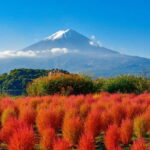
Then you continue to Oishi Park for about 30 minutes. Oishi is a classic “look up, look sideways” kind of stop. You get a viewpoint that combines flowers, Lake Kawaguchi, and Mount Fuji, plus a lakeside promenade where you can shift position for different framing. The flowers bloom by season, so the look changes throughout the year, and in full clarity you can get a clean composition that feels very Japan.
Here’s the realistic part. Fuji visibility is weather-dependent. Some days you’ll get Mount Fuji sharp and framed the way postcards do it, and other days the clouds can soften the top. You can still enjoy the lake scenery, but if your goal is a full unobstructed Fuji silhouette, you’re taking a calculated gamble with the sky.
If you want a simple strategy, treat Lake Kawaguchiko and Oishi Park like your main photo mission. Focus there first, and don’t get distracted by scrolling for an hour. The schedule is designed for momentum.
- Mt Fuji and Hakone 1-Day Bus Tour Return by Bullet Train★ 5.0 · 26,383 reviews
- 1-Day Tokyo Bus Tour★ 5.0 · 14,250 reviews
- Tokyo: teamLab Planets TOKYO Digital Art Museum Entry Ticket★ 4.6 · 9,779 reviews
- Mt Fuji & Hakone Cruise, Drum Show Bullet Train 1 Day from Tokyo★ 4.0 · 7,413 reviews
- Tokyo: Shinjuku Food Tour (13 Dishes at 4 Local Eateries)★ 5.0 · 6,603 reviews
Oshino Hakkai: The Eight Ponds Stop Worth Slowing Down For
Oshino Hakkai is a different kind of Fuji experience. Instead of chasing one iconic photo spot, you get a network of spring-fed ponds known as Oshino Hakkai. You’ll have about 1 hour here, which is enough time to walk through the area and compare the water views without feeling like you’re being herded.
It’s famous for eight clear spring water ponds, recognized as one of the Top 100 Famous Waters of Japan. It’s also classified as a Natural Monument and is part of the Mount Fuji World Heritage zone. Even without getting too technical, you can feel what people love about it: the water looks clean, the air feels cool near the ponds, and the setting gives you a break from the earlier “stairs and skyline” energy.
This stop also helps diversify your day. The first half has strong cultural and viewpoint elements. Oshino Hakkai brings something more grounded, like a nature and water moment tied to the mountain.
The only caution is timing. If it’s crowded, you may find yourself moving slower through the lanes, so keep an eye on the group call time.
Hikawa Clock Shop and Fuji-Backdrop Street Scenes
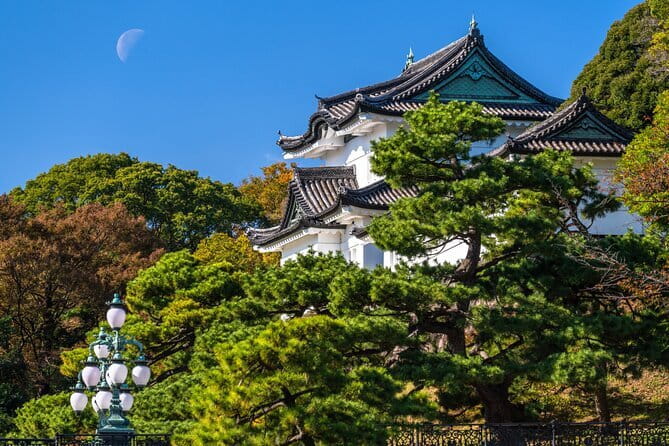
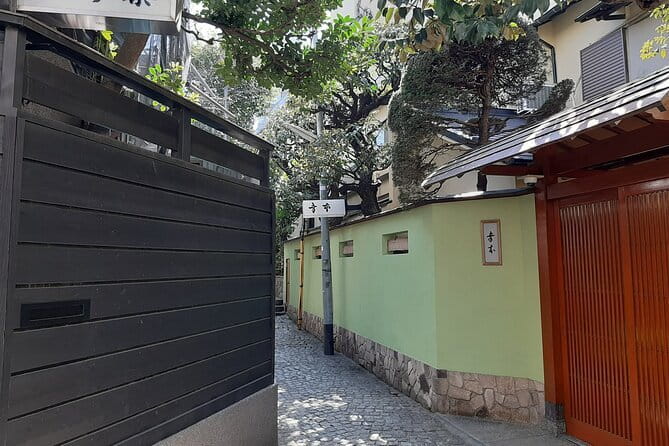
Next is Hikawa Clock Shop, about 20 minutes. The big draw here is the contrast between a quiet town feel and a Fuji backdrop. There’s a serene path that leads to the iconic mountain view, and it’s set up perfectly for street-style photos that include everyday Japanese details.
This is a great stop if you’re tired of only “Fuji centered in the frame” pictures. You can shoot Japanese street scenes with Mount Fuji in the background and capture a more lived-in vibe.
Because the stop is short, don’t plan to browse forever. Go for your best angles quickly, and then enjoy the moment rather than trying to maximize every corner.
The Lawson Fujikawaguchiko Photo Moment (Yes, It’s Real)
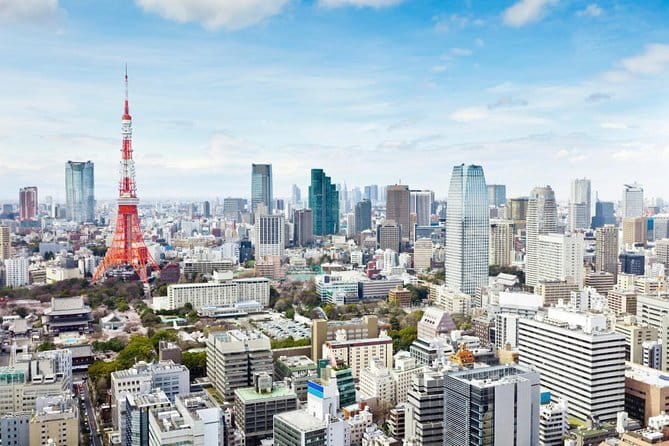
One of the most memorable small stops is at a Lawson in Fujikawaguchiko Town Hall area, around 15 minutes. It’s known as an Instagram location because the modern blue facade of the convenience store creates a striking contrast with Mount Fuji.
This is the kind of stop that feels slightly strange until you see the framing. Then it makes sense, and it’s also quick. If you’re organized, you can get what you need in one short photo burst and still have time to move on without stress.
Keep it simple here. If you show up prepared, you’ll treat this as a fun bonus, not a hassle. If you arrive unready, lines and crowding can eat up the entire 15 minutes.
Time, Pace, and When the Day Feels Rushed
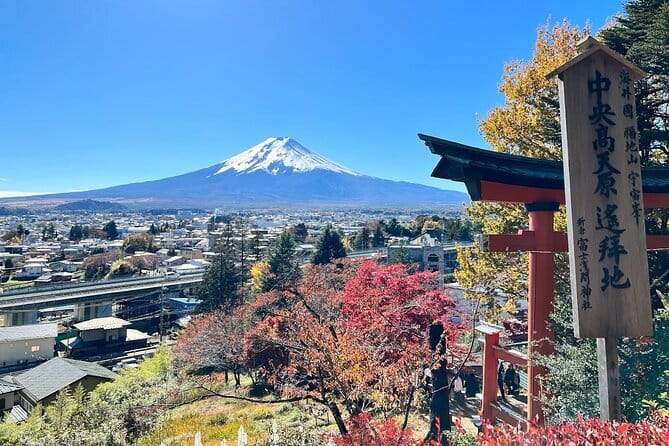
This tour is designed to hit many highlights in a single day, and that comes with tradeoffs. Most stops are brief, with multiple windows at 15 to 30 minutes. If you like lingering, browsing souvenirs, or buying snacks while chatting, you might feel the schedule is moving fast.
Punctuality is a big deal on this route. Guides are repeatedly described as staying on time, and that matters because the bus needs to work around traffic. In fact, on busier days and weekends, traffic jams can affect your timing, which makes being early to the pickup point even more important.
One helpful detail: the best guides can adjust in response to what they see in the sky. Several guides are praised for managing the day so you can catch Mount Fuji later when it’s cloudy earlier. That kind of flexibility is a morale boost, but it’s not something you should count on every day.
Also, English clarity can vary by guide. Many guides are praised for being clear and engaging, while one unhappy experience points out that a guide’s English can be hard to follow. If language matters a lot to you, consider traveling with a backup plan in case you’re not getting the story you hoped for.
Price and Value: What $58.90 Buys You
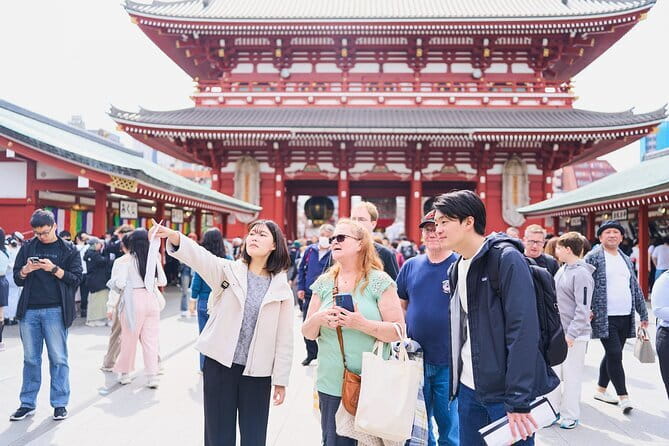
At $58.90 per person, this isn’t a splurge, but it also isn’t a “do it yourself for almost free” deal. The value is mostly in two areas.
First, you’re paying for the ride and logistics. Round-trip transport from Tokyo or Shinjuku is the big time saver, especially if you’d otherwise be juggling trains, local buses, and tight connections.
Second, you’re paying for the structure. The tour strings together free or included-fee stops like Chureito Pagoda, Arakura Shrine, Lake Kawaguchiko, Oishi Park, Oshino Hakkai, Hikawa Clock Shop, and the Lawson photo spot. You’re not paying a long list of separate admissions, and you also have air-conditioned transportation and all fees and taxes covered.
What’s not included is lunch and other personal expenses. That’s the one hole in the value picture. You’ll want a snack strategy, either packing something in advance or planning to grab food during stop times. Because the stops can be brief, don’t treat lunch like a leisurely sit-down.
Who This Tour Suits Best (And Who Should Think Twice)
I think this tour is ideal if you:
- Want a Mount Fuji day without planning routes and transfers
- Have limited time in Tokyo and still want the highlights around Lake Kawaguchi
- Prefer guided logistics with photo stops and clear timing
- Like a social group vibe on a day trip, especially with a guide who keeps things lively and informative
You might think twice if you:
- Hate crowds and want long quiet time in one place
- Want a slower, independent exploration where you control pacing minute by minute
- Need guaranteed unobstructed Mount Fuji views, because weather can shift fast
Season matters too. One experience in January was described as less pretty, with Mount Fuji hidden by clouds or fog. Autumn and spring sound like the safer bets for a classic look, but the sky can always surprise you.
Practical Tips for a Smoother Fuji Day
A few things make this kind of day trip feel much better.
Bring comfortable shoes. The pagoda area and pond lanes can involve walking, and you’ll be on your feet more than you expect from a “bus day.”
Pack for weather changes. Even if you start with sun, fog and clouds happen, and temperatures can feel different near the lakes.
Show up on time at pickup and be ready to move quickly at each stop. The schedule works best when you treat it like a sequence, not a suggestion.
If you’re traveling with stroller or large luggage, indicate that when booking so you don’t end up stuck in a bad spot on the day.
Finally, set your expectations around visibility. Sometimes Fuji is clear all day. Other times you’ll only catch it for parts of the afternoon or not at all. That’s not the tour failing, that’s mountain weather.
Should You Book This Mount Fuji One-Day Trip?
If you want the big Fuji sights from Tokyo with minimal navigation stress, this is a strong pick. The best part is the combination of organized photo stops, guided context, and round-trip transportation that gets you out to Lake Kawaguchi and Oshino Hakkai without extra headaches.
Book it if your priorities are logistics plus highlights, and you’re okay with a fast pace. Skip it or plan carefully if you’re chasing a guaranteed perfect, unobstructed Mount Fuji view or if you want lots of free time to wander without a schedule.
My bottom line: for most first-time Tokyo visitors, this is a practical way to see Mount Fuji’s most famous faces in one day, while spending your brain power on where to stand for the best shot, not on how to get there.
FAQ
How long is the Mount Fuji one-day trip?
The duration is about 10 hours.
Where do you get picked up in Tokyo?
Pickup is available from Tokyo or Shinjuku.
What is the price per person?
The price is $58.90 per person.
Is the ticket mobile?
Yes, it’s a mobile ticket.
Does the tour include air-conditioned transportation?
Yes, an air-conditioned vehicle is included.
Are admission fees included for the stops?
Yes. All fees and taxes are included. The listed stops show free admission.
Is lunch included?
No. Lunch is not included.
How large is the group?
The tour has a maximum of 45 travelers.
Is it cancelable for a full refund?
Yes. You can cancel up to 24 hours in advance for a full refund.
What should I do if I have a stroller or large luggage?
You should indicate this when booking.
Mount Fuji, Three More Ways
Newest Tokyo write-ups from the Loving Japan desk

Mount Fuji Day Trips, side by side.
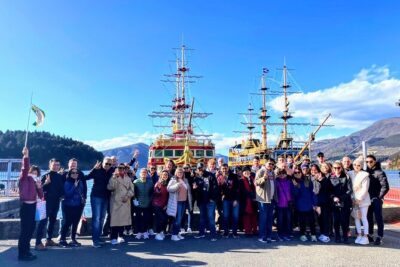 ★ 5.0Mt Fuji and Hakone 1-Day Bus Tour Return by Bullet TrainFrom $16326,383 reviews
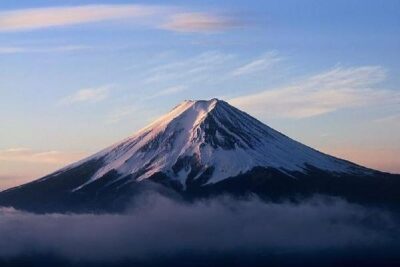 ★ 4.0Mt Fuji & Hakone Cruise, Drum Show Bullet Train 1 Day from TokyoFrom $1497,413 reviews
 ★ 4.4Tokyo Mt Fuji 5th St & Hakone Cruise Bus Tour w/Bullet TrainFrom $1545,024 reviews
 ★ 4.5From Tokyo: Mount Fuji Full-Day Sightseeing TripFrom $684,970 reviews
 ★ 4.7Mt. Fuji Tour, Hakone Ropeway, Owakudani, Lake AshiFrom $544,002 reviews
 ★ 4.4Mt.Fuji,Kawaguchiko Oishi Park,Arakurayama Sengen ParkFrom $542,682 reviews
 ★ 4.2Mt. Fuji 5th Station & Hakone Cruise 1-Day Bus TourFrom $1292,381 reviews
 ★ 4.7Mt Fuji Top 5 Spots Day Tour: Arakurayama Park,Oshino HakkaiFrom $532,066 reviews
Filed on these lists too