
REVIEW · KANAZAWA AND KENROKU-EN GARDEN
Full-Day Tour from Kanazawa: Samurai, Matcha, Gardens and Geisha
Kanazawa changes fast when you walk. This full-day route strings together samurai districts, serene gardens, and geisha neighborhoods, with a matcha break built in. I especially like the small-group size (max 15), which makes it easier to ask questions and keep a good pace. I also love how the day hands you a real Kanazawa feel through places most bus routes skip. The one drawback: it is a serious walking day, so wear shoes you trust and plan for downtime if the heat or rain hits.
The start point is convenient, right at Kanazawa Station (9:00 am), and the plan moves on foot through the city’s main layers, from Ashigaru-era homes to Kenrokuen Garden and the chaya streets. You’ll also get a guided matcha and sweets stop, plus entry to key sites inside the day’s cultural highlight zones. Most people can do it, but seniors and anyone with stamina limits should go in knowing it can run about 10 to 12 km depending on the pace and breaks.
In This Review
- Key Things I’d Watch For Before Booking
- A One-Day Route That Links Samurai, Matcha, and Geisha
- How the 9-Hour Plan Really Feels on Foot
- Ashigaru Museum: Two Homes, One Look at a Lower Samurai World
- Nagamachi Bukeyashiki Ruins: Street Views That Still Feel Samurai
- Oyama Shrine’s Brick Gate: A Small Detail With Big Personality
- Castle Grounds to Kenrokuen Garden: From Power to Perfect
- Gyokusen-an Tea House Matcha: The Garden View Break You Actually Remember
- Higashi Chaya District: Tea-House Streets and Old-Style Charm
- Ochaya Shima: Inside a Preserved Geisha Chaya House
- Kazuemachi Chayagai on the Way Back: A Quieter Contrast
- Price and Value: What $151.30 Covers, and What You Still Need
- Guides, Pacing, and Why Group Size Matters
- Who Should Book This Tour (and Who Might Want a Plan B)
- Should You Book This Full-Day Kanazawa Walking Tour?
- FAQ
- What is the tour duration?
- Where does the tour start?
- How big is the group?
- What is included in the price?
- Is lunch included?
- What sites do you visit?
- Is the tour mostly walking?
- Do I need good weather?
- How does it end?
Key Things I’d Watch For Before Booking
- Max 15 guests keeps the tour personal and lets the guide adjust pacing for the group
- Matcha and wagashi at a tea house is scheduled at Gyokusen-an for garden views
- Kenrokuen Garden entry included so you can slow down without ticket hassle
- Geisha tea-house access includes Ochaya Shima, a preserved preserved chaya house
- Lots of walking is the tradeoff for seeing the neighborhoods up close, not from a bus window
Evening walks through the old quarters, compared
- Full-Day Tour from Kanazawa: Samurai, Matcha, Gardens and Geisha
★ 5.0 · 68 reviews
A One-Day Route That Links Samurai, Matcha, and Geisha
This is the kind of Kanazawa day that makes the city feel like one story, not a pile of checkpoints. You start with Ashigaru life and the Nagamachi district, then shift toward castle grounds and Kenrokuen Garden, and finish in the older tea-house streets where geisha culture is part of the architecture and atmosphere.
What makes it work well is the sequencing. The tour doesn’t dump you into one big museum, then rush off. Instead, it uses short walking segments to connect the dots between social class, power, and the refined garden-and-tea world that Kanazawa became known for.
And because you’re moving on foot, you notice details that buses never bother with, like older street layouts in the samurai district and the way the chaya neighborhoods feel like separate little worlds once you’re inside them.
How the 9-Hour Plan Really Feels on Foot
On paper, it’s listed as about 9 hours, starting at 9:00 am from Kanazawa Station. In practice, you’ll likely experience about 1 hour less sightseeing time because a full lunch break is included, and you can choose your own place to eat based on guide recommendations.
Expect a full walking day. The tour is designed as a true walking route, and people report about 10 to 12 km total depending on how the day flows. There are stops where you can sit down, especially at the garden and at tea-house breaks, but you should still treat this as active travel.
Practical move: bring water, plan for sun or sudden weather changes, and wear comfortable shoes. Even if the route is mostly shaded at times, Kanazawa can still feel tiring in long stretches, especially in hot weather.
Ashigaru Museum: Two Homes, One Look at a Lower Samurai World
The day starts at the Ashigaru Museum, focused on Ashigaru, a term for lower-ranking samurai. You spend about an hour here and can enter two homes that once belonged to Ashigaru families. That house time is the value, because it turns a broad historical label into something you can picture.
This opening stop also sets the tone for the rest of the day. You’re not only seeing power and prestige, you’re learning what life looked like at different levels of the samurai system.
One more practical bonus: this is a good early start. You arrive before fatigue sets in, which makes the indoor home visits feel easier to enjoy.
Sit down somewhere quieter. Other tea rooms we booked
- Kanazawa: Kenrokuen Tea Ceremony Experience★ 4.8 · 1,139 reviews
Nagamachi Bukeyashiki Ruins: Street Views That Still Feel Samurai
Next comes the Nagamachi area, the former samurai district, where the ruins and street shapes remain. You spend about an hour walking through the neighborhood, and the streets are preserved in a way that can make you briefly forget it’s a modern city.
This is where you’ll start noticing the small urban planning choices that made samurai districts work, from street width and alignment to how the neighborhood reads as organized and intentional.
The main drawback here is also simple: this section is part of the walking grind. If you’re someone who needs frequent seating, you may want to use the natural shade points and any stop moments to regroup.
Oyama Shrine’s Brick Gate: A Small Detail With Big Personality
From the samurai district, the guide leads you to Oyama Shrine. It’s about 40 minutes, and the entry is free.
What makes this stop memorable is the brick gate, which stands out because it’s not the typical style you might expect at many Japanese shrines. It’s the kind of detail that makes your guide’s narration feel worth it, since they can explain why this kind of feature exists and what it signals in local context.
If you’re short on energy, this stop is a good one. It’s not long, and it offers a mental reset between the heavier walking segments.
Castle Grounds to Kenrokuen Garden: From Power to Perfect
After Oyama Shrine, you pass through Kanazawa Castle grounds on the way to Kenrokuen Garden. The castle time is shorter, about 20 minutes, and focuses on restored buildings set over open lawns.
This quick castle segment matters because it explains why Kenrokuen Garden is so important in the Kanazawa story. It’s easier to understand the garden as more than pretty scenery once you see where the ruling presence sat and how the city’s planning connected to power.
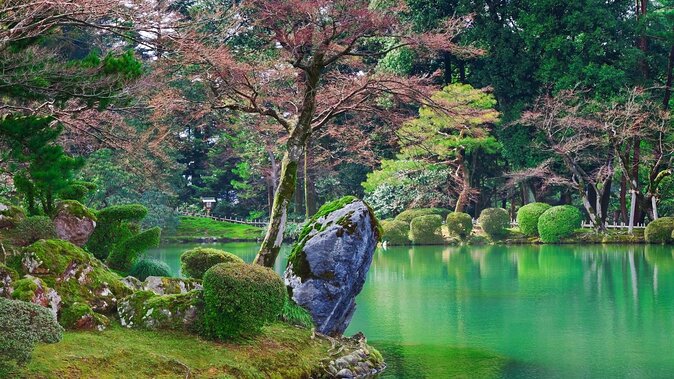
Then you move into Kenrokuen Garden, where the tour includes admission and about 1 hour 30 minutes inside. This is the major slow-down moment of the day: ponds, paths, tea-house-style architecture, and views that make it feel like the city is unfolding around you.
Tip for enjoying it: don’t rush to cover every corner. Let the garden work like it’s meant to, with short pauses. If you find yourself walking ahead, take a moment, circle back, and let your eyes adjust to the water and tree lines.
Gyokusen-an Tea House Matcha: The Garden View Break You Actually Remember
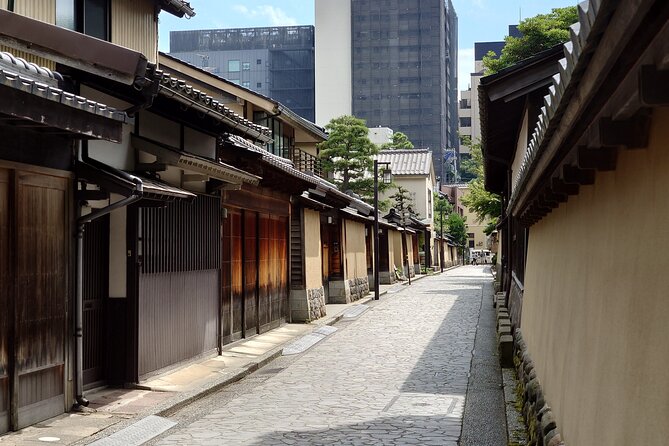
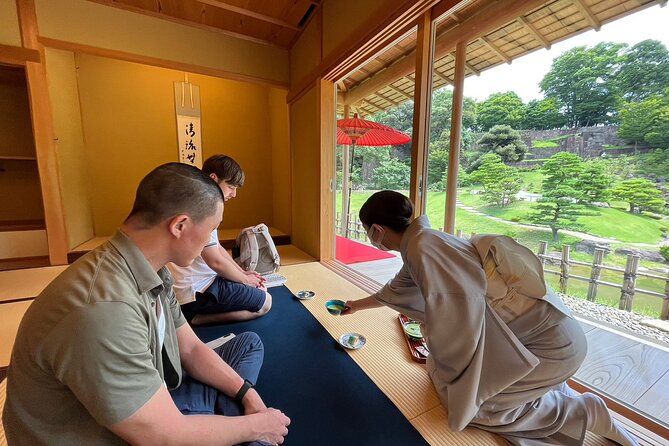
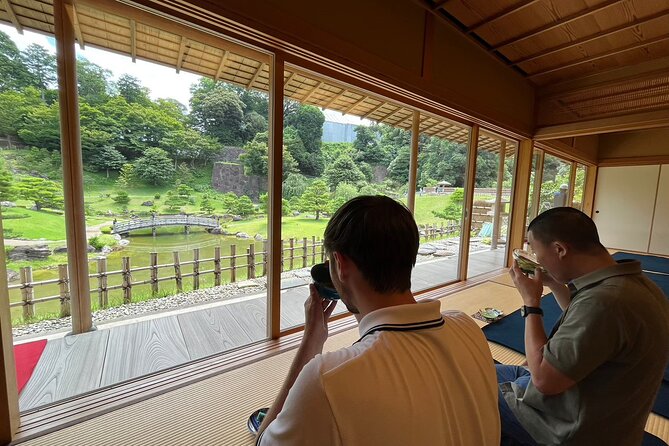
One of the best stops on the schedule is the matcha experience at Gyokusen-an. It’s about 1 hour total, and it’s included, along with matcha and sweets (wagashi).
The location is the hook: you get matcha while looking out over a centuries-old garden. That combination makes the taste part feel more meaningful, because the setting is not just background.
This is also where the day’s pace becomes more human. Instead of marching from one site to the next, you get a real break with something local in hand, and you can reset before the geisha districts later in the day.
I’d plan to take your time here. If you sip quickly and stand back up, you miss half the point. Let the guide’s explanations land, then enjoy the flavor without rushing.
Higashi Chaya District: Tea-House Streets and Old-Style Charm
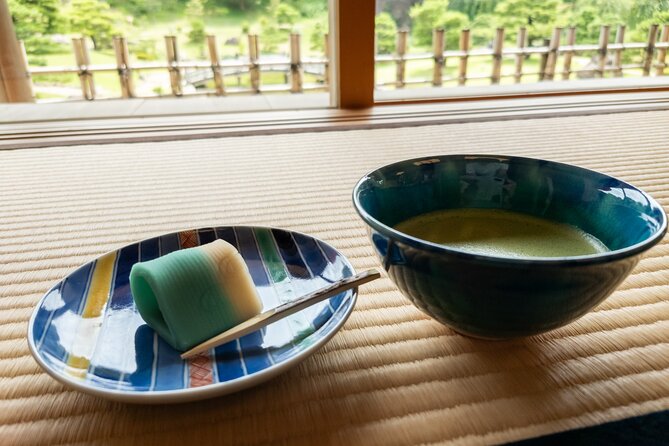
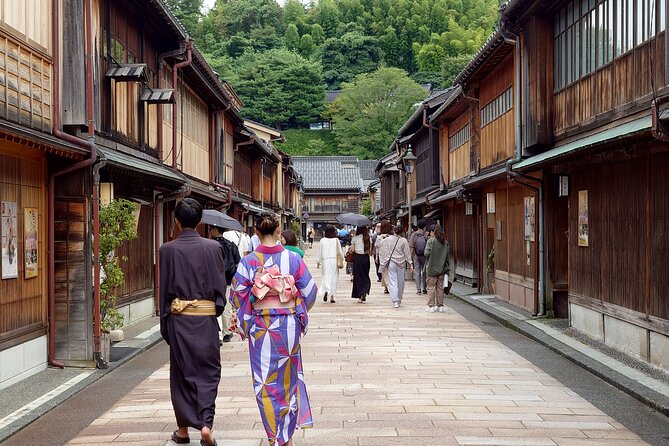
After the garden, you head to Higashi Chaya District. This part is about 1 hour and includes free time, with the option to browse and snack. The streets here are lined with traditional tea houses, plus eateries and craft shops.
This is a great place to get your bearings because the district has a different rhythm than the castle and garden areas. Instead of wide grounds, you’re back on narrow streets where old building fronts shape the whole experience.
If you’re shopping, keep it simple. Focus on small items you can carry easily, and don’t let shopping turn this into a frantic sprint. A calm wander in the chaya streets does more for your memory than trying to see everything.
Ochaya Shima: Inside a Preserved Geisha Chaya House
Next is Ochaya Shima, where you get entry to a preserved chaya house that once had geisha residents and wealthy patrons. This stop is about 30 minutes and is included.
You’ll see colorful walls and musical instruments that hint at what these spaces were built for. It’s one of the clearest “culture-in-a-room” moments on the day, because you’re not only seeing the district from the outside.
Short timing is an advantage here. Thirty minutes keeps it from becoming a lecture, and it lets you move back outside with a better understanding of what you just walked past.
Kazuemachi Chayagai on the Way Back: A Quieter Contrast
The tour then passes through Kazuemachi Chayagai before ending back at the starting point near Kanazawa Station. This is about 30 minutes and is mostly a transition through another tea-house area.
Kazuemachi is described as less crowded than Higashi Chaya, and the tour notes that if you’re lucky, geisha may entertain customers there. Even if you don’t catch any performances, it’s still a helpful contrast because the neighborhood feels more laid-back.
Use this final stretch to soak up the differences in street feel. It’s an easy way to end the day on a calmer note, rather than finishing right after a big museum-style stop.
Price and Value: What $151.30 Covers, and What You Still Need
At $151.30 per person, this tour feels like good value if you’re the type who wants a guided route plus multiple paid entries without constantly pulling out a ticket wallet. Here’s what you’re covered for:
- Matcha and wagashi sweets at the tea house
- Entry to Kenrokuen Garden
- Entry to Ochaya Shima (the preserved geisha house)
- English-speaking guide
- Several key stops with free admission
Lunch is not included, and you choose your own restaurant during the included lunch break. That is actually a plus for many people, because it lets you adapt to your preferences and energy level. If you’re hungry and tired, follow the guide recommendations and eat somewhere convenient, then get back out before your legs decide to quit.
One caution on value: if you already plan to spend a long time in Kenrokuen and the tea districts on your own, the guide can still be worth it, but only if you’re interested in the connections between samurai-era life, shrine-castle context, and the chaya culture you see in the streets.
Guides, Pacing, and Why Group Size Matters
A big theme in the positive experiences is how guides bring the story alive through clear explanations and good humor. You may be guided by instructors such as Mike, Akari, Fadir, Garrett, Daniel, Mohammed, or Lee, and the common thread is adapting the day to the group.
Pacing comes up again and again. Some groups report being ahead of schedule if they walk fast, and the guide adjusts rather than bulldozing the plan. Other groups highlight that the pace feels ideal, with enough time to enjoy each stop without being trapped in a rushed conveyor belt.
Group size also affects your comfort. With a maximum of 15 travelers, it’s easier to ask questions, hear the guide in outdoor spaces, and take photos without constant shoulder-to-shoulder navigation.
Who Should Book This Tour (and Who Might Want a Plan B)
I think this tour is best for you if:
- You want a guided introduction to Kanazawa that covers samurai, gardens, and geisha districts in one day
- You enjoy walking tours where the route matters as much as the destinations
- You’re excited about matcha and want a tea-house setting, not just a quick drink
Consider a different approach if:
- You have trouble with long walking days and stamina limits
- You prefer a slower, less structured schedule with fewer transfers between neighborhoods
If you do book, come ready with a simple checklist: comfortable shoes, water, and a flexible mindset about weather. The experience requires good weather, so if conditions are poor, it will be adjusted or refunded in the ways the operator offers.
Should You Book This Full-Day Kanazawa Walking Tour?
Yes, if you want one day to seriously orient you in Kanazawa without losing time buying tickets or trying to connect neighborhoods on your own. The mix of Ashigaru-era context, Kenrokuen Garden time, and included tea-house and chaya access gives the day more depth than a simple sightseeing loop.
I’d book it especially if you like guided explanations and you’re happy to trade comfort for access. The best part is that the tour doesn’t only show you famous places. It shows you how Kanazawa connects those places through streets, gardens, and the tea-house culture that frames daily life and history.
FAQ
What is the tour duration?
The tour runs about 9 hours (approx.). The schedule includes an included lunch break, and the effective sightseeing time is about 1 hour shorter than the posted total because of that break.
Where does the tour start?
It starts at Kanazawa Station (Japan, 920-0858, 石川県金沢市木ノ新保町1番1号) at 9:00 am.
How big is the group?
The tour has a maximum of 15 travelers.
What is included in the price?
Matcha tea and wagashi sweets at a tea house, entry to Kenrokuen Garden, entry to the Shima Chaya preserved geisha house (Ochaya Shima), and an English speaking guide.
Is lunch included?
No. Lunch is not included, but during the included lunch break you can choose your own restaurant with recommendations from the guide.
What sites do you visit?
You’ll visit Ashigaru Museum, the Nagamachi Bukeyashiki area, Oyama Shrine, Gyokusen-an for matcha, Kanazawa Castle grounds, Kenrokuen Garden, Higashi Chaya District, Ochaya Shima, and pass through Kazuemachi Chayagai on the way back.
Is the tour mostly walking?
Yes. It is a walking tour, and it can involve a lot of walking over the full day.
Do I need good weather?
The experience requires good weather. If it’s canceled due to poor weather, you’ll be offered another date or a full refund.
How does it end?
The activity ends back at the meeting point (Kanazawa Station).
Kyoto by the Bowl
Evenings in the Old Quarters
Newest Kanazawa write-ups from the Loving Japan desk



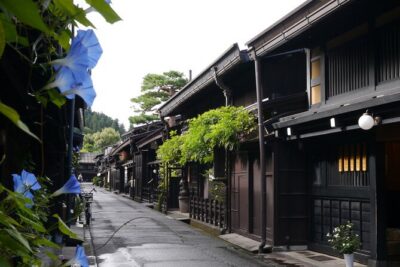
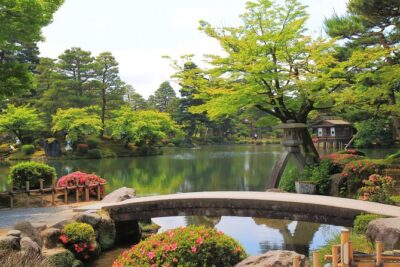

Kanazawa and Kenroku-en Garden, side by side.
 ★ 5.0World Heritage Shirakawa-go and Experience Tours from KanazawaFrom $1224,049 reviews
 ★ 4.8Kenrokuen Tea Ceremony ExperienceFrom $351,139 reviews
 ★ 4.9World Heritage Shirakawa-go Morning Guided TourFrom $77988 reviews
 ★ 5.0Kanazawa Half Day Tour (Private Guide)From $134361 reviews
 ★ 5.0Kanazawa Full Day Tour (Private Guide)From $183323 reviews
 ★ 4.9World Heritage Shirakawa-go & Two Local ExperienceFrom $116274 reviews
 ★ 5.0[One-day bus tour departing from Kanazawa Station] Shirakawa-go and Gokayama – Two World Heritage Villages Enjoyable Bus TourFrom $88253 reviews
 ★ 5.0World Heritage Shirakawa-go Perfect Guided Tour from KanazawaFrom $81220 reviews