
REVIEW · SAPPORO, OTARU AND HOKKAIDO
Hakodate 6hr Private Tour with Government-Licensed Guide
Hakodate can feel like a puzzle box, and this private guide route is the quick cheat code. In about 6 hours you’ll hit standout viewpoints like Mount Hakodate, then move through Hakodate’s European-flavored port history with a local who can explain what you’re seeing. It’s also built to be adjustable, so your day can bend around your interests and the weather.
Two things I really like: you get a government-licensed, English-speaking guide who can connect the dots fast, and the itinerary is designed around places that give you different “Hakodate moments” in a compact loop. Plus, many key stops have free admission, which helps your money go toward the fun parts, like market snacks and whatever looks good for lunch.
One thing to consider is the pace and format: it’s a walking tour, and even with pickup offered, the pickup is on foot within a designated area. If you need lots of seated time or have mobility limits, you’ll want to plan around that reality.
In This Review
- Key Points You Should Know Before You Go
- Why This Hakodate Private Guide Route Feels Like a Smart First Day
- Your 6 Hours: How the Tour Gets Customizable Without Getting Chaotic
- Entering Mount Hakodate: The View Stop That Sets the Tone
- Onuma Quasi-National Park: Lakes, Islands, and a Volcano Presence
- Goryokaku Park: Star Fort Shapes and Real Historical Context
- Hakodate Morning Market: Food, Photos, and the Local Rhythm
- Motomachi and the European-Style Streets: Where the Port Story Shows Up
- Kanemori Red Brick Warehouse and Bay Hakodate: Old Port Meets Modern Shopping
- Northern Peoples Museum: Culture Stop, One Paid Admission, Big Payoff for Curious Minds
- Price and Value: When $269.32 Feels Fair (and When It Doesn’t)
- Who This Tour Is Best For (And Who Should Choose Something Else)
- Practical Tips: Get Better Views and Fewer Frustrations
- Should You Book This Hakodate 6-Hour Private Tour?
- FAQ
- What does this tour include?
- Is it a private tour or a shared group?
- Is transportation by car included?
- Are entrance fees included?
- Where does the tour meet the guide?
- How long is the tour?
- Can the itinerary be customized?
- What if the weather changes the plan?
- What is the cancellation window?
Key Points You Should Know Before You Go
- Government-licensed English guide: you’ll get clear commentary on Hakodate’s history and architecture, not just directions.
- Customizable 3 to 4 stops: you can choose what matters most, whether it’s views, fort history, or port shopping.
- Many free admissions: most of the listed sights are free, with the Northern Peoples Museum being the main exception.
- Morning Market is right in the action: it’s held daily near JR Hakodate Station, perfect for a first-day food and photo hit.
- Good guide handling for weather: past outings mention windy, rainy, and snowy conditions, with plans adjusted on the fly.
- No private vehicle: you’re doing this as a walk-and-public-transport style tour, so comfortable shoes are not optional.
Why This Hakodate Private Guide Route Feels Like a Smart First Day
Hakodate has a mix that can confuse even eager travelers. You’ve got a port city with international trade roots, red-brick warehouses, and European-style streets, yet it still lives inside Japanese history and seasons. What makes this tour useful is that your guide translates the “why” behind the sights. You won’t just see star shapes in a park and old buildings by the water, you’ll understand what they were for.
Another big plus is how private time works in your favor. With only your group, the guide can change the order of stops, slow down when you want photos, or spend extra minutes explaining a detail you keep asking about. In past experiences, guides such as Kazuo Sumi, Keiko, Akira Matsumoto, Fumi, and Heiji were praised for being organized, energetic, and full of local context.
If you like efficient travel days that still feel human, this hits the sweet spot. You get highlights without the chaos of a large group schedule, and you get enough structure that you do not waste time guessing.
Your 6 Hours: How the Tour Gets Customizable Without Getting Chaotic
This is a 6-hour private tour built around picking 3 to 4 sites from the set of top Hakodate locations. The guide can tailor the plan to your interests, and that matters because Hakodate isn’t one single theme. Some people want scenery and skyline views. Others want history, architecture, and food.
Your meeting point is within a designated area, and pickup is offered, but it’s not a car pickup. It’s described as a walking tour with pickup on foot. That means you should treat this like a guided walking loop through the central Hakodate area, with the guide handling transit choices as needed.
Two practical implications:
- You will likely spend most of the day outdoors at least part of the time, so layer up for Hakodate’s weather.
- Entrance fees are not included across the board, so if you choose the museum stop, budget for that separately.
Most tours run without drama, but weather can affect what you can comfortably do. One past outing noted the Goryokaku Tower being closed, and another had trouble walking Motomachi due to bad weather. A private guide helps here because you can adjust in the moment instead of sticking to a rigid script.
Entering Mount Hakodate: The View Stop That Sets the Tone
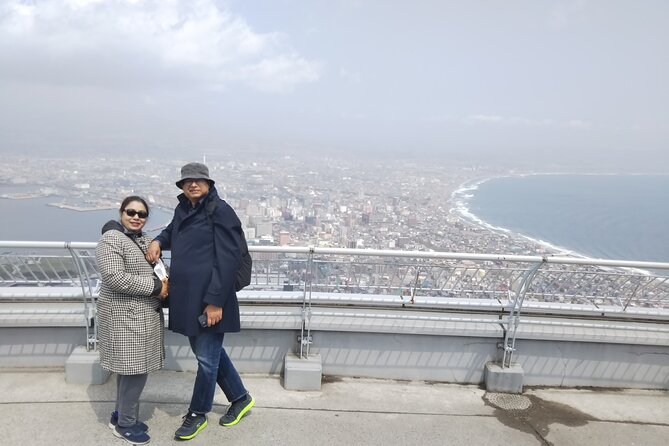
Mount Hakodate is a small mountain with a big job: it gives Hakodate its “wow, I get it now” perspective. The mountain is about 334 meters high, wooded, and positioned at the southern end of the peninsula. On clear nights and evenings the views can be especially strong, and even in daylight, it’s a great orientation point.
In a 30-minute slot, you’re not trying to hike. You’re trying to get your bearings. The guide’s value here is practical: they help you time what you can see, where to stand for the best overlook, and what parts of the city match the story behind Hakodate’s development.
If you’re the type who loves skyline photos, this is the stop you should prioritize. If clouds roll in, the guide can pivot to other stops while keeping your day moving.
What to watch for:
- Bring a light layer even if the rest of the day feels mild.
- If you’re traveling with seniors or anyone with limited stamina, this is still usually manageable, but the comfort factor depends on weather and how long you want to linger at viewpoints.
Onuma Quasi-National Park: Lakes, Islands, and a Volcano Presence
Onuma Quasi-National Park is only about 20 kilometers north of Hakodate, which makes it a smart nature add-on rather than a whole-day detour. You’ll be looking at island-dotted lakes and a dramatic backdrop, with Mount Komagatake mentioned as part of the view system.
The “quasi national park” label matters because it hints at how the area is protected and managed while still feeling close to daily life. In a short visit, your job is not to see everything. Your job is to pick up the main visual idea: quiet water, scattered islands, and a mountain presence that makes the region feel bigger than the city.
This stop works especially well if:
- You’re doing Hakodate in a few days and want variety beyond urban port sights.
- You want a break from architecture and history, even briefly.
- You enjoy nature scenes without committing to a long hike.
Because the time here is about 30 minutes, plan for quick looking and quick photos. If you have your heart set on longer walks, you might prefer choosing this stop plus a calmer follow-up, rather than trying to stack multiple “maximum photo” stops.
Goryokaku Park: Star Fort Shapes and Real Historical Context
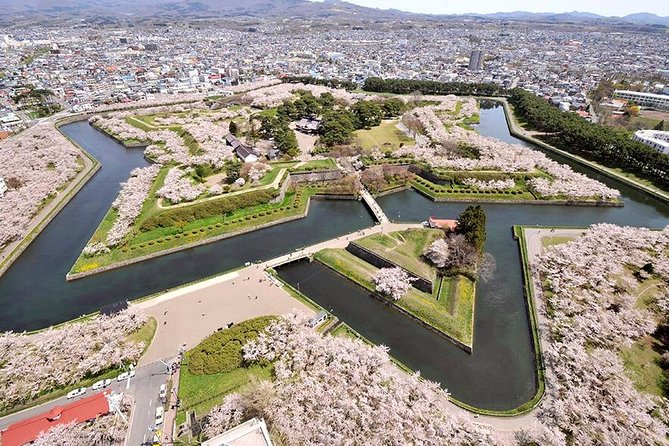
Goryokaku Park is one of Hakodate’s signature historical sites. It’s a historic star-shaped fort, built in the late Edo period as a Western-style fortress, and it later became connected to the final battle of the Tokugawa era. Now it’s a popular public park, and it’s easy to see why: the fort geometry is visually satisfying, and the park gives you space to slow down.
This is a great choice for people who like architecture and military history, but it’s also valuable for anyone who thinks history is just dates. A private guide can explain the “why” behind the design, what Western-style influence looked like in Japan at the time, and how the fort fits into Hakodate’s role as a port.
You’ll typically pair Goryokaku with the nearby tower area when it’s open. One past tour mentioned the Goryokaku Tower being closed, but the fort walk and the overall star-fort experience still landed well. So even if the tower is unavailable, you’re not losing everything. The park itself gives you the shape and the setting.
Practical notes:
- Wear shoes you’re happy to walk in, because park paths can be uneven.
- If visibility is limited by rain or snow, use the time for the fort view points that still work from covered or sheltered spots.
Hakodate Morning Market: Food, Photos, and the Local Rhythm
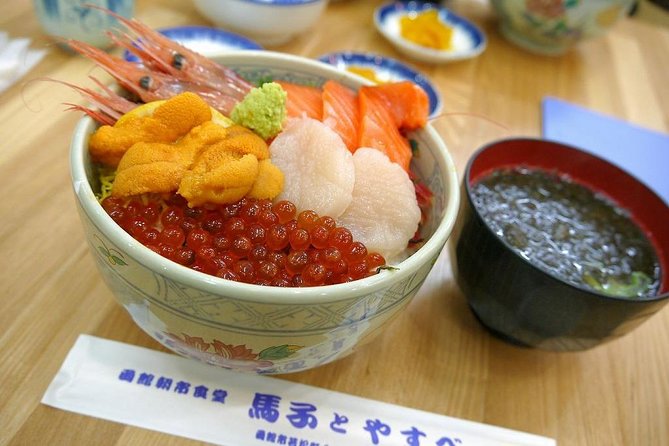
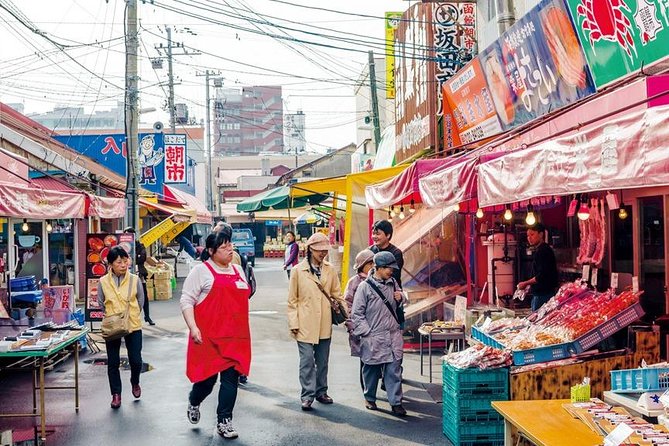
Hakodate Morning Market (函館朝市, Hakodate Asaichi) runs daily from early morning until noon. The standard schedule is described as starting at 5am, and 6am during winter, so it’s timed for early-day energy. It’s also right near JR Hakodate Station, which makes it an easy anchor for your day.
This is the stop where you start feeling like you’re inside Hakodate’s routine. Even if you don’t plan a full meal there, you can sample and snack. Think of it as a photo-friendly, taste-driven orientation spot.
Why it’s a top pick on a guided day:
- Your guide can point you to what to look for without you doing guesswork.
- You can move efficiently, instead of spending time scanning menus you cannot read.
- It’s a natural place to learn small details about what seafood and local ingredients are prized.
Time is limited, so decide in advance how you want to use it. If you want to taste many small bites, come hungry and keep your shopping list short. If you want a calmer browse, grab a drink or one simple snack and take your time with photos of the stalls.
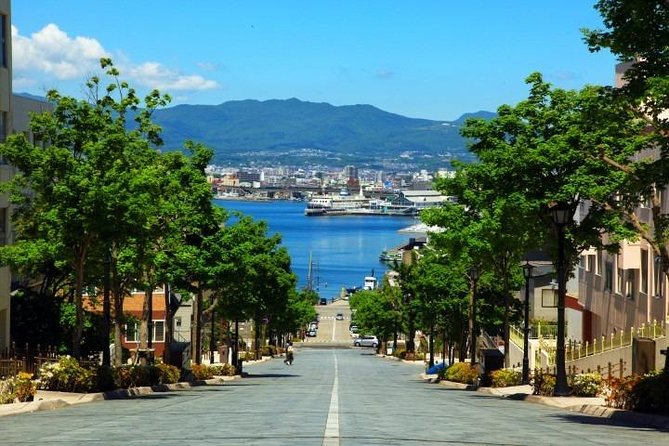
Motomachi and the European-Style Streets: Where the Port Story Shows Up
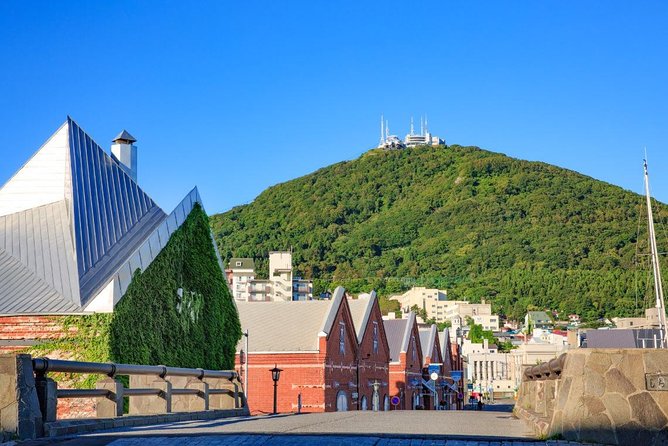
Motomachi is tied directly to Hakodate’s international past. After Japan’s era of isolation ended, the port opened in the mid-1800s, and foreign traders from Russia, China, and Western countries moved through the area. That international contact is why you’ll see European-inspired architecture and streetscapes.
This is exactly where a guide earns their keep. Without context, Motomachi can feel like a random collection of old buildings. With context, it becomes a timeline you can walk.
In some cases, weather changes plans. One earlier outing couldn’t fully walk Motomachi because of bad conditions, which is a reminder that the exterior streetscape experience depends on the day. If your trip is during a rainy or snowy window, build a little flexibility into your expectations.
If Motomachi is on your wish list, this is one of the best stops for:
- First-time Hakodate visitors who want the story behind the look.
- Anyone interested in how trade and geography reshape cities.
Kanemori Red Brick Warehouse and Bay Hakodate: Old Port Meets Modern Shopping
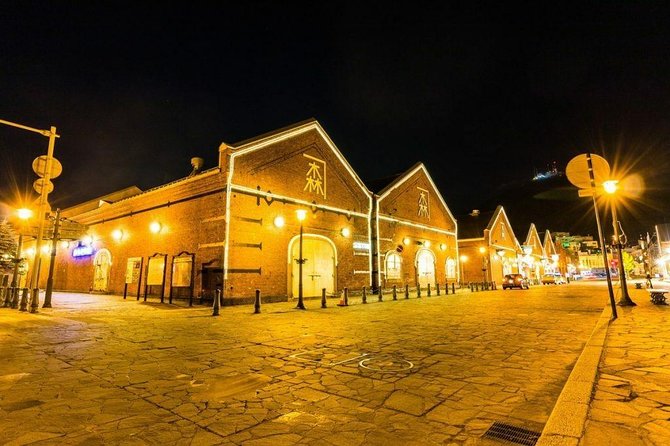
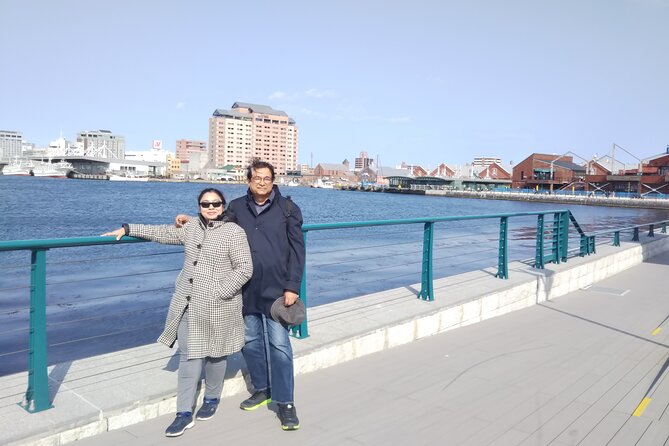
The Kanemori Red Brick Warehouse area is tied to Hakodate Port’s early international trade role. Several red brick warehouses from the trading days still exist along the waterfront, and many have been repurposed into shops and experiences. This is the kind of place that’s easy to photograph, but the real value is understanding what you’re looking at.
Bay Hakodate expands the view. This facing-harbor area gives you an expansive perspective, and the row of old red-brick buildings turned into a shopping mall gives the port area a layered feel.
What you’ll like here:
- You get architecture and water views in the same walk.
- It’s a good “rest your feet while still sightseeing” zone, because you can pause in storefront areas.
- You can shop for souvenirs that feel tied to place, not just generic Japan items.
Because the tour times stops around 30 minutes each, treat these as browsing blocks rather than full shopping marathons. If you find something you love, you can buy it and then keep moving so you don’t miss the next viewpoint.
Northern Peoples Museum: Culture Stop, One Paid Admission, Big Payoff for Curious Minds
One of the listed options is the Hakodate Museum of Northern Peoples. It’s inside a building that once served as the Japan Bank, built in 1926, which adds an extra layer before you even reach the exhibits.
This museum is specifically described as an ode to the Ainu culture. Admission is stated as not included for this stop, so you’ll want to budget for it if it’s part of your chosen set.
In a short guided day, a museum can feel like a gamble. Will it fit? Will you have enough time? That’s where you should be honest with yourself. If you enjoy structured cultural time and want something beyond the outdoors, it’s a great addition. If you prefer pure sightseeing and food, you might skip it in favor of another exterior stop.
Either way, your guide can help you decide what to prioritize inside, since you only have a limited time window.
Price and Value: When $269.32 Feels Fair (and When It Doesn’t)
At $269.32 per person for a 6-hour private tour, you’re paying mainly for three things: a licensed local guide, focused time in a compact route, and the flexibility to customize your chosen 3 to 4 sites.
That price can feel very fair if:
- You’re a small group and you want individual attention rather than a bus-and-brochure day.
- You care about context, not just pictures.
- You value having someone plan the day with you, especially in winter or bad weather.
It might feel less ideal if:
- You only want casual sightseeing and you’re confident navigating Hakodate on your own.
- You plan to skip most guided commentary and just follow the route.
- You expect a vehicle-based private tour. This is described as a walking tour format, and transportation fees are not included.
One small planning hint: the tour is often booked well ahead, with an average booking time of 144 days. If your dates are fixed, it’s smart to reserve earlier rather than waiting.
Who This Tour Is Best For (And Who Should Choose Something Else)
This private guide setup tends to fit travelers who want a smooth first introduction to Hakodate. Based on how guides are praised, it’s especially strong for:
- First-time Japan visitors who want history explained in plain language.
- Travelers who benefit from a steady pace and clear direction, including seniors.
- People who like a mix of nature, architecture, and food rather than only one theme.
- Anyone traveling in mixed weather, since the guide can adjust what you can do comfortably.
If you hate walking, this might be a mismatch unless your group can handle a walking-based approach. If you want deep, slow museum time and long nature trails, you’d likely need a longer tour format than this 6-hour version.
Practical Tips: Get Better Views and Fewer Frustrations
Here are the small things that make a big difference with this style of day:
- Wear comfortable shoes. The tour is described as walking, and several stops are outdoors.
- Layer for weather. Hakodate can be windy and rainy, and some past outings dealt with snow too. Bring a shell and something warm.
- Pick your 3 to 4 priority stops early. If Mount Hakodate and Morning Market are “musts,” choose them first.
- Be ready to swap plans. If a tower or exterior walkway is affected by conditions, your guide can shift time to other stops.
- Plan for the Northern Peoples Museum admission. It’s the main stated paid admission item.
- Use the guide’s language and local know-how. Names from past guides you might run into include Kazuo Sumi, Keiko, Akira Matsumoto, Fumi, and Heiji. Regardless of who you get, the standard being praised is clarity and local context.
Should You Book This Hakodate 6-Hour Private Tour?
I think this is a strong booking if you want a structured, friendly introduction to Hakodate without spending your time figuring everything out. The biggest reason to book is the licensed English-speaking guide who can explain the city’s port history, European-style influences, and why places like Goryokaku and Motomachi matter.
Book it if:
- You want Mount Hakodate views, Goryokaku star-fort history, and a food-and-stroll morning market.
- You like the idea of choosing 3 to 4 sites instead of being forced into a rigid checklist.
- You’re traveling with seniors or anyone who benefits from a careful, guided pace.
Skip it if:
- You want a car-based private tour with lots of driving.
- You prefer to wander independently with minimal guided explanation.
- You cannot do much walking.
If you’re aiming for an efficient, high-context day in Hakodate, this one makes a lot of sense.
FAQ
What does this tour include?
You get a licensed local English-speaking guide and a customizable plan choosing 3 to 4 sites. You also meet the guide within a designated area of Hakodate.
Is it a private tour or a shared group?
It’s private, so only your group participates.
Is transportation by car included?
No. It’s described as a walking tour with pickup on foot, and transportation fees are not included. A private vehicle is not included.
Are entrance fees included?
Most stops listed have admission ticket free, but the Hakodate Museum of Northern Peoples is stated as not included. Entrance fees are generally not included unless specifically covered for listed sights.
Where does the tour meet the guide?
You meet on foot within a designated area in Hakodate. The exact meeting point depends on the tour’s plan, but it’s handled by the provider.
How long is the tour?
The duration is about 6 hours.
Can the itinerary be customized?
Yes. The tour is customizable so you choose 3 to 4 sites from the set of available highlights.
What if the weather changes the plan?
It’s possible to adjust what you can do, since some places may be closed or uncomfortable to walk in certain conditions.
What is the cancellation window?
Free cancellation is available up to 24 hours before the experience start time for a full refund.
Sapporo, Otaru and Hokkaido, side by side.
 ★ 5.0Sapporo Bar Hopping Food TourFrom $108232 reviews
 ★ 4.7Hokkaido Seasonal: Lake Toya & Noboribetsu Jigokudani ValleyFrom $55173 reviews
 ★ 5.0Sapporo Private Tour with a Local – Highlights & Hidden GemsFrom $10991 reviews
 ★ 4.1Hokkaido, Noboribetsu and Lake Toya Day TourFrom $6688 reviews
 ★ 4.9Sumo Show Experience with Japanese food & PhotoFrom $7781 reviews
 ★ 5.0Mondo’s most popular plan! Experience making soba noodles and the king of Japanese cuisine, tempura, in Sapporo!From $8571 reviews
 ★ 5.0【Private Car】Asahiyama Zoo, Blue Pond, Shirahige Falls, Ningle Terrace (from Sapporo)From $46560 reviews
 ★ 5.0Sapporo 6hr Private Tour with Government Licensed GuideFrom $15557 reviews
Filed on these lists too