
REVIEW · MOUNT FUJI DAY TRIPS
Mount Fuji Sightseeing Private tour w English speaking chauffeur
Fuji views start with one simple decision, go private. This private Mount Fuji day trip runs 8 to 10 hours from Tokyo with hotel pickup and an English-speaking chauffeur, plus flexibility to adjust timing. I especially love the photo help from the driver, including John, who actively helps you line up shots as you move between top viewpoints. The one real consideration is that the tour needs good weather to run well, and conditions can change fast around Mount Fuji.
For groups, the value math is often better than you’d expect: it’s priced per group (up to 4), and you can choose a car size that fits up to 6 people. You’ll start around 8:00 am, use a mobile ticket, and spend the day hopping between the Fuji Five Lakes area and classic shrine spots without worrying about trains, transfers, or timetables.
In This Review
- Key takeaways before you book
- A private Fuji day from Tokyo: 8 to 10 hours that actually feels manageable
- Pickup, mobile ticket, and car size: how the morning sets the tone
- Oshino Hakkai: eight ponds, quiet water, and easy first Fuji vibes
- Arakura Fuji Sengen Shrine and the Chureito Pagoda: a must for classic framing
- Lake Saiko traditions at Saiko Iyashi no Sato Nenba
- Narusawa Ice Cave in Aokigahara: cold, quiet, and different
- Kitaguchi Hongu Fuji Sengen Jinja Shrine: an older Mount Fuji gateway
- Shiraito Falls, Oishi Park, and why the drive between matters
- Lake Yamanaka: finishing with the biggest payoff views
- Price and value for a group up to 4 (and why private can still make sense)
- Photo and weather tips that keep your Fuji day on track
- Should you book this Mount Fuji private tour?
- FAQ
- Is this tour private?
- How long is the Mount Fuji sightseeing day trip?
- What time does the tour start?
- Is hotel pickup offered?
- Is the chauffeur English-speaking?
- Are admission tickets included for all stops?
- Can the itinerary be customized?
- What happens if weather is poor?
- What is the cancellation window?
Key takeaways before you book
- English-speaking chauffeur who helps you take photos and explains what you’re seeing along the drive
- Private, customizable timing so you can slow down for photos (or move faster when skies are clear)
- A classic Fuji route including Oshino Hakkai, Arakura Fuji Sengen Shrine, and a finish at Lake Yamanaka
- Mind the paid stops: Saiko Iyashi no Sato Nenba and Narusawa Ice Cave are listed as not included
- Group-friendly cars that can accommodate up to 6, even though the per-group price is up to 4
Fuji from Tokyo: the other approaches
- Mt Fuji and Hakone 1-Day Bus Tour Return by Bullet Train
★ 5.0 · 26,383 reviews - Mt Fuji & Hakone Cruise, Drum Show Bullet Train 1 Day from Tokyo
★ 4.0 · 7,413 reviews - Tokyo Mt Fuji 5th St & Hakone Cruise Bus Tour w/Bullet Train
★ 4.4 · 5,024 reviews - From Tokyo: Mount Fuji Full-Day Sightseeing Trip
★ 4.5 · 4,970 reviews
A private Fuji day from Tokyo: 8 to 10 hours that actually feels manageable
A Mount Fuji day trip can be either wonderful or exhausting, and the difference is usually logistics. This one is built to take the heavy lifting off your shoulders, with a chauffeur-driven ride between Tokyo and the Fuji Five Lakes region. The stated duration is 8 to 10 hours, which is long enough to see multiple viewpoints but not so long that you feel like your whole vacation day evaporated.
The private format is the big deal. You’re not sharing time slots with strangers, so if you want extra minutes at a viewpoint, you can usually ask. If clouds roll in, you can also adjust the order on the fly, using the driver’s local sense of where to go next for the best odds of clear views.
The pace is also shaped by what this itinerary targets: ponds, shrine views, traditional villages, and cool caves. That mix keeps the day from becoming one long traffic jam with only one good photo at the end. And if you’re traveling with a family, older relatives, or anyone who gets tired of constant walking, the chauffeur format can make the trip feel way more “vacation” and less “tour bus endurance test.”
Pickup, mobile ticket, and car size: how the morning sets the tone
The tour starts at 8:00 am, which matters because Fuji is often a visibility game. Earlier departures can mean better lighting and fewer crowds at popular photo spots. Your day begins either with pickup offered or with a meeting point that’s near public transportation, so you should be able to position yourself without a long commute beforehand.
One practical perk: you’ll get a mobile ticket, so you’re not hunting for paper confirmations on a busy morning. That sounds small, but when you’re trying to be punctual at 8:00 am, small stuff counts.
Car size is also worth paying attention to. The tour is priced per group up to 4, but the experience notes you can choose car sizes to fit groups of up to 6 people. In real terms, that flexibility can be huge if your group is five or six and you want everyone together instead of splitting into separate cars.
In the reviews, the chauffeur side comes through strongly. John is mentioned specifically, with people describing how he collected them from the hotel and made the day feel comfortable and personal rather than stiff. That “regular person, not a robot” vibe is often what decides whether the day feels rushed or genuinely enjoyable.
Oshino Hakkai: eight ponds, quiet water, and easy first Fuji vibes
Your day begins at Oshino Hakkai, a calm cluster of eight ponds in the village of Oshino, set in the Fuji Five Lakes area between Lake Kawaguchiko and Lake Yamanakako. This is a smart opening stop because it’s not just about a single postcard view. You get a slower, more atmospheric taste of how the area works, with water features that feel local and lived-in rather than purely touristy.
This is also a good place to get your bearings. If you’re hoping to photograph Mount Fuji, early stops can help you understand the angles and how the light behaves before the day gets busy. The itinerary gives about 1 hour here, and with eight ponds, that hour can stretch nicely if you like walking at a relaxed pace.
Admission is listed as free, so you’re not pressured to “do it fast” to justify a ticket price. The main limitation is simply time and weather. If clouds cover the mountain, you’ll still enjoy the ponds, but your Fuji photos may be less dramatic.
One more subtle benefit: arriving early reduces stress. You’re fresh, not yet stuck in a half-day rhythm of “get to the next place.” Oshino Hakkai helps you start the day in the right mood.
Build the day yourself. Other private options
- Mount Fuji Full-Day Private Tour from Tokyo (Customizable)★ 4.9 · 1,470 reviews
- Tokyo Customized Private Tour: See Top Attractions in 1 Day★ 5.0 · 1,351 reviews
- Tokyo Private Sightseeing Tour by Car- English speaking chauffeur★ 5.0 · 1,004 reviews
- Tokyo Private Tour by Vehicle with English-Speaking Chauffeur★ 5.0 · 504 reviews
- From Tokyo: Mount Fuji Full-Day Customizable Private Tour★ 4.8 · 451 reviews
Arakura Fuji Sengen Shrine and the Chureito Pagoda: a must for classic framing

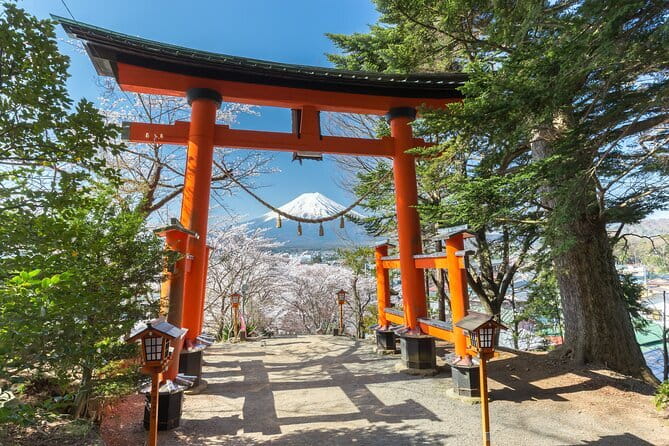
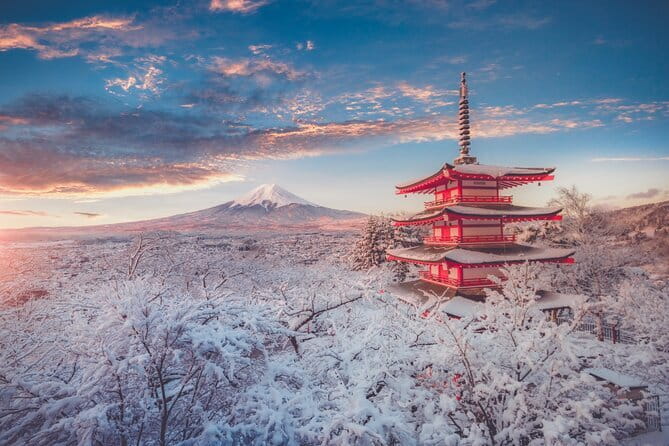
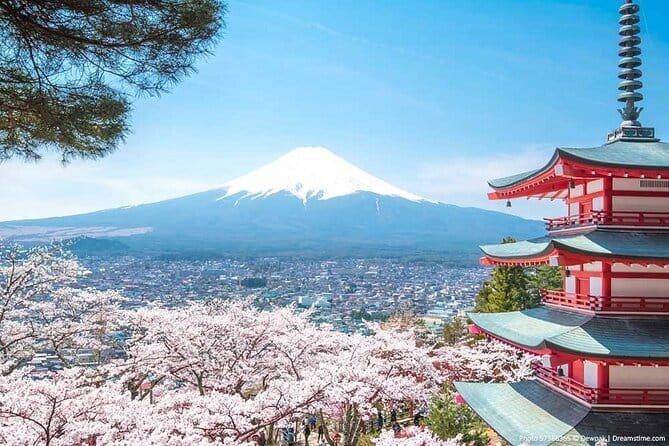
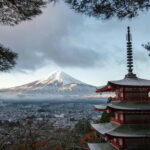
Next comes Arakura Fuji Sengen Shrine, famous for the Chureito Pagoda, a five-story structure perched on a mountainside with Mount Fuji as the backdrop. The listing notes the pagoda was built in 1963 as a peace memorial, which adds meaning beyond the view.
This stop is where the day becomes iconic. The pagoda viewpoint is one of those places where many people take photos from very similar angles, but a private tour gives you flexibility that group tours often can’t. If the first angle is crowded, your chauffeur can help you reposition, wait a few minutes, or adjust where you stand for a cleaner shot.
You’ll get about 1 hour here, and admission is listed as free. That helps keep the cost predictable, and it also means you can spend time on photos rather than ticking off a paid attraction.
The only real drawback is practical: it’s a shrine area on a hillside, so you may do some walking on uneven ground. If you’re sensitive to stairs or slippery paths, plan to take it slow.
Lake Saiko traditions at Saiko Iyashi no Sato Nenba
After shrine views and the pagoda, the itinerary shifts to Saiko Iyashi-no-Sato Nenba, a traditional village on the shores of Lake Saiko. The highlight here is seasonal character and the way the village setting frames Mount Fuji in the distance.
You’re allotted about 1 hour at this stop, and admission is listed as not included. So you should expect to pay for entry on your own. For value-minded visitors, it’s still a fair trade, because it’s one of the ways this day trip goes beyond “views only” and gives you a more cultural pause.
The listing emphasizes that each season changes the mood, with cherry blossoms mentioned for spring and other seasonal charm for other times of the year. Even if you only notice one season-specific feature, you’ll probably appreciate the overall concept: traditional buildings and a lake setting that feel like they belong to the region, not like a theme park.
The main consideration is Fuji visibility. If clouds sit low, the village still offers atmosphere, but the Mount Fuji in-frame moment may be weaker. This is where your private timing can help, by letting your chauffeur adjust the order if the sky clears later.
Narusawa Ice Cave in Aokigahara: cold, quiet, and different
Next is Narusawa Ice Cave, a natural lava cave near Lake Saiko. The listing says it formed from Mount Fuji’s eruption over a thousand years ago, and that it stays icy cold year-round even in summer. That alone makes it a nice contrast to warm Tokyo and sunny viewpoint stops.
You’re given about 1 hour here, and again admission is listed as not included. If you care about value, think of this as the day’s “paid nature moment,” the one that gives you a distinct experience even if Fuji visibility isn’t perfect.
The cave is inside the Aokigahara Forest, which is another reason this stop feels like more than just a photo stop. You get a break from the drive, plus a setting that naturally changes your senses: cooler air, darker interiors, and a sense that you’re seeing something shaped over centuries.
The drawback is simple: it’s a cave. If you hate confined, cool spaces, you might want to spend less time inside once you enter. If you do go in, bring a light layer, because cool inside a cave can feel colder than you expect.
Kitaguchi Hongu Fuji Sengen Jinja Shrine: an older Mount Fuji gateway
The next stop is Kitaguchi Hongu Fuji Sengen Jinja Shrine, located in Fujiyoshida. This one is described as a historic Shinto shrine, dating back over 1,000 years, and presented as a spiritual gateway to Mount Fuji.
What I like about adding a shrine stop mid-day is it balances the day. You’ve already seen water and views, plus the village and cave. The shrine gives you a slower kind of attention, something you can stand in and observe rather than rush through for a quick photo.
This stop is listed for 1 hour, with admission free. Free entry is nice, but more important is the tone. In many Fuji itineraries, people only chase the big mountain photo. Here, you’re asked to spend time with the way locals traditionally approach the mountain as something sacred.
The consideration is that shrine timing can depend on your pace. If you’re someone who reads every sign and wants time for reflection, the hour will feel good. If you prefer constant motion, you might want to ask your chauffeur for photo points so you still get value from your time.
Shiraito Falls, Oishi Park, and why the drive between matters
Two of the most scenic nature stops follow: Shiraito Falls and Oishi Park.
Shiraito Falls is near Fujinomiya in Shizuoka Prefecture. The listing calls it one of Japan’s most beautiful, and it’s described as a natural cascade. You’ll have about 1 hour, and admission is free. This is the kind of stop that works well with a private format because waterfalls are timing sensitive. When the water is running strong and light hits cleanly, photos look better fast. A chauffeur who knows when to pause and how long to stay can make a difference.
Then comes Oishi Park, on the northern shore of Lake Kawaguchi in Yamanashi Prefecture. The listing highlights landscaped gardens and Mount Fuji views. Expect about 1 hour here and free entry.
This pairing makes sense because it alternates textures. Waterfall sound and mist, then manicured garden paths and classic lake-view compositions. If you’re photographing, you’ll also get variety: vertical falls versus wide Fuji framed through garden design.
The only drawback here is that both are outdoors. If fog or rain drops in, you’ll still experience the environment, but your “big Fuji in frame” photos may be less dramatic. The good news is you’re not stuck doing only one type of stop. If it’s misty at one, you can gain visual impact at the next.
Lake Yamanaka: finishing with the biggest payoff views
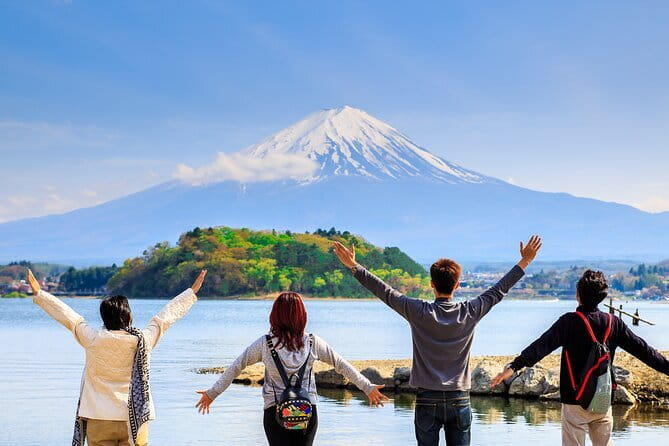
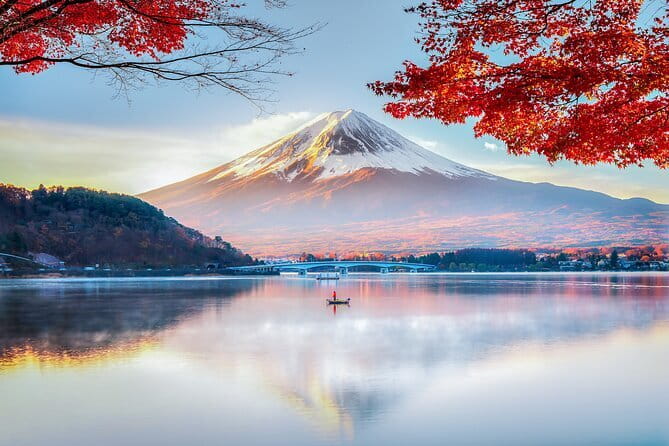
The day closes at Lake Yamanakako (often called Lake Yamanaka in casual conversation). The listing describes it as the largest of the Fuji Five Lakes and gives a specific geographic point: it’s at the third-highest elevation of any lake in Japan. It also notes it’s one of the closest lakes to Mount Fuji and offers some of the most promising views in the region.
You’ll spend about 1 hour, and admission is free. This is where the day’s planning pays off, because a lake setting tends to show the mountain clearly when conditions cooperate. When you’re lucky with weather, you can get that iconic Fuji shape framed by water and open sky.
If weather is less cooperative, this is still a great finishing point because it’s expansive. Even without a perfect photo, the lake gives you a sense of scale and a calmer ending.
The practical thing to remember: Fuji is weather-dependent. Your chauffeur can’t control clouds, but they can choose when you go and how you move between stops. That’s the real value of private timing. It turns uncertainty into a strategy.
Price and value for a group up to 4 (and why private can still make sense)
The tour price is $428.28 per group, for up to 4 people, and it’s often booked around 36 days in advance. On paper, that can sound steep, especially if you’re comparing it to public transport. But the value question is really about what you buy with private.
You’re paying for:
- Door-to-door convenience from your Tokyo area (pickup offered)
- A driver who does the work of navigating between multiple stops
- Flexibility to adjust timing without the pressure of sharing space with other groups
- Photo help, including active assistance for better framing
If you divide the group price by four, it’s about $107 per person for an 8 to 10 hour day that includes several major sightseeing areas. If your group is smaller, your per-person cost rises, and the value depends more on whether you’ll actually use the private benefits.
This tour also avoids a common frustration: squeezing everything into fixed tour bus schedules. Here, the itinerary is structured, but the experience is described as customizable. That’s the difference between a “see everything quickly” day and a “get the photos you came for, without stress” day.
If you’re traveling as a couple, or with kids, or with friends who want to move together, private often becomes one of the best bargains in Japan. Not because it’s cheap, but because it stops you from spending your limited vacation time solving logistics.
Photo and weather tips that keep your Fuji day on track
Fuji days can flip quickly, so I treat them like weather days, not sightseeing days.
Here are the practical habits that match how this tour is set up:
- Start early: the 8:00 am start is there for a reason. Clearer air and better light often happen earlier.
- Bring a layer for the cave stop. Narusawa Ice Cave is described as icy cold year-round.
- Plan for paid stops: Saiko Iyashi no Sato Nenba and Narusawa Ice Cave list admission as not included, so have some cash or cards ready.
- Use the driver for photo strategy: the reviews specifically highlight John helping with photos, and the tour itself notes the chauffeur can help you take photos during the day trip. Ask where to stand, then adjust based on where people are and where the light hits.
- Keep expectations flexible: the tour is described as requiring good weather. If conditions are bad, the experience may be offered on another date or you might receive a full refund.
One more small note that matters: reviews mention the chauffeurs being polite, fun, informative, and accommodating. That’s useful on a Fuji day because good explanations help you understand what you’re looking at, and being relaxed makes you more likely to actually notice the details.
Should you book this Mount Fuji private tour?
Book it if you want:
- A private day trip with an English-speaking chauffeur
- Time at multiple top Fuji spots without rail transfers or timetable stress
- A driver who can help with photos and keep the day running smoothly
- A route that includes both scenic viewpoints and culture, not just one lake photo
Skip it or reconsider if:
- Your group is extremely sensitive to walking on uneven shrine grounds
- You know your weather window is tight and you dislike plan changes when clouds roll in
- You prefer only free attractions and don’t want to pay for the two listed paid stops
If your goal is a Fuji day that feels personal, comfortable, and photo-focused, this is a strong match. The biggest reason is simple: you’re not just going to places, you’re getting someone local behind the wheel who helps you get the most from your time.
FAQ
Is this tour private?
Yes. It’s a private tour/activity, and only your group will participate.
How long is the Mount Fuji sightseeing day trip?
The duration is listed as approximately 8 to 10 hours.
What time does the tour start?
The start time is 8:00 am.
Is hotel pickup offered?
Pickup is offered, and the start point is also noted as near public transportation.
Is the chauffeur English-speaking?
Yes. The tour is described as having an English-speaking chauffeur.
Are admission tickets included for all stops?
Some stops are listed as free admissions, while Saiko Iyashi no Sato Nenba and Narusawa Ice Cave are listed as not included.
Can the itinerary be customized?
Yes. The tour is described as private and customizable, and you can tailor the destinations and timing.
What happens if weather is poor?
The experience requires good weather. If it’s canceled due to poor weather, you’ll be offered a different date or a full refund.
What is the cancellation window?
Free cancellation is available if you cancel up to 24 hours in advance for a full refund. If you cancel less than 24 hours before the start time, the amount paid is not refunded.
Your Driver, Your Route Through Tokyo
Mount Fuji, Three More Ways
Newest Tokyo write-ups from the Loving Japan desk
Mount Fuji Day Trips, side by side.
 ★ 5.0Mt Fuji and Hakone 1-Day Bus Tour Return by Bullet TrainFrom $16326,383 reviews
 ★ 4.0Mt Fuji & Hakone Cruise, Drum Show Bullet Train 1 Day from TokyoFrom $1497,413 reviews
 ★ 4.4Tokyo Mt Fuji 5th St & Hakone Cruise Bus Tour w/Bullet TrainFrom $1545,024 reviews
 ★ 4.5From Tokyo: Mount Fuji Full-Day Sightseeing TripFrom $684,970 reviews
 ★ 4.7Mt. Fuji Tour, Hakone Ropeway, Owakudani, Lake AshiFrom $544,002 reviews
 ★ 4.4Mt.Fuji,Kawaguchiko Oishi Park,Arakurayama Sengen ParkFrom $542,682 reviews
 ★ 4.2Mt. Fuji 5th Station & Hakone Cruise 1-Day Bus TourFrom $1292,381 reviews
 ★ 4.7Mt Fuji Top 5 Spots Day Tour: Arakurayama Park,Oshino HakkaiFrom $532,066 reviews
Filed on these lists too