
REVIEW · MOUNT FUJI DAY TRIPS
Mt. Fuji Heritage Tour: Traditional Villages, Lakes & Shrine
Fuji days are all about timing. This Mt. Fuji Heritage Tour strings together Saiko Iyashi no Sato Nenba, Lake Kawaguchi viewpoints, Arakurayama Sengen Park, and Oshino Hakkai in one long but well-managed day, with pickup in central Tokyo and a live guide (I’ve seen guides like Sia and Kazi praised for keeping things smooth). The whole point is simple: stack the most iconic Fuji settings while someone else handles the logistics.
I love the traditional thatched-village stop, because it gives you that rare mix of culture and mountain backdrop. I also love the way the itinerary hits multiple famous photo spots, from Lake Kawaguchi parks to the Chureito-style pagoda views at Arakurayama, so you have more than one chance at a clear Fuji moment.
One possible drawback: Mt. Fuji weather can change everything, and this is a 10-hour shared group day where lunch is not included, so you’ll want a plan before you go.
In This Review
- Quick hits before you go
- How This 10-Hour Fuji Loop Works (and Why It’s Good Value)
- Tokyo Pickup and the Coach Ride: When the Day Starts Moving
- Saiko Iyashi-no-Sato Nenba: Thatch Roofs, Fuji Framing, and Snack Breaks
- Lake Kawaguchi Area: A Scenic Buffer Between Classic Stops
- Oishi Park vs. Maple Corridor: Plan for Seasonal Switching
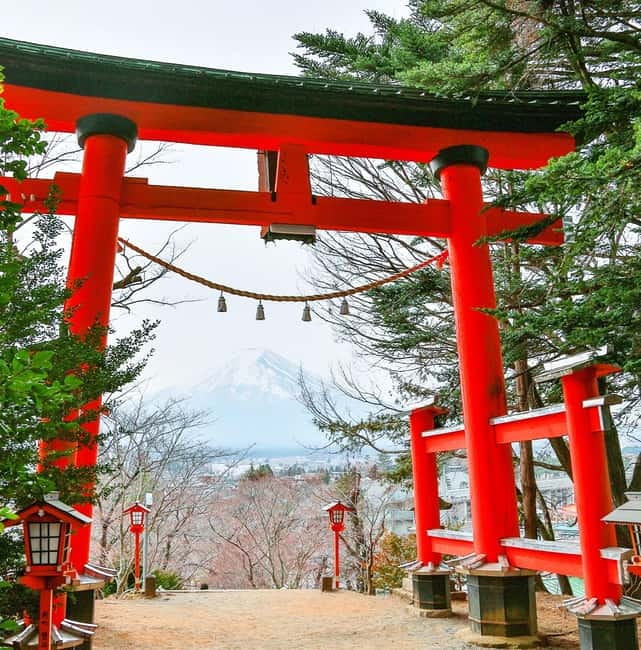
- Arakurayama Sengen Park and the Five-Story Pagoda View
- Local Break Time and Restaurant Stop: Plan for Lunch You Control
- Oshino Hakkai: Eight Ponds, Clear Reflections, and a Calm Ending
- How Much Time You Really Get at Each Stop
- Photo Advice That Actually Helps in Real Life
- Guides, Group Pace, and What People Seem to Love Most
- Price and Value: Is $50 Worth It?
- Who Should Book This Tour (and Who Might Want Something Else)
- Should You Book This Mt. Fuji Heritage Tour?
- FAQ
- How long is the Mt. Fuji Heritage Tour?
- What is the price per person?
- Is lunch included in the tour?
- Where are the pickup and drop-off locations?
- What languages are available for the live tour guide?
- Do I need to bring cash?
- What if Mt. Fuji is cloudy on the day of the tour?
- Is the tour suitable for wheelchair users?
- What is the cancellation policy?
Quick hits before you go

- Thatched village photo stop at Saiko Iyashi no Sato Nenba, plus quick snack browsing at the entrance
- Lake Kawaguchi classics with Oishi Park and seasonal color views depending on the date
- Arakurayama Sengen Park for the iconic pagoda-and-Fuji framing, plus a short shrine visit
- Oshino Hakkai with eight spring-fed ponds and a slow, calm finish
- English, Japanese, and Traditional Chinese guide support in a shared group format
Fuji from Tokyo: the other approaches
- Mt Fuji and Hakone 1-Day Bus Tour Return by Bullet Train
★ 5.0 · 26,383 reviews - Mt Fuji & Hakone Cruise, Drum Show Bullet Train 1 Day from Tokyo
★ 4.0 · 7,413 reviews - Tokyo Mt Fuji 5th St & Hakone Cruise Bus Tour w/Bullet Train
★ 4.4 · 5,024 reviews - From Tokyo: Mount Fuji Full-Day Sightseeing Trip
★ 4.5 · 4,970 reviews
How This 10-Hour Fuji Loop Works (and Why It’s Good Value)
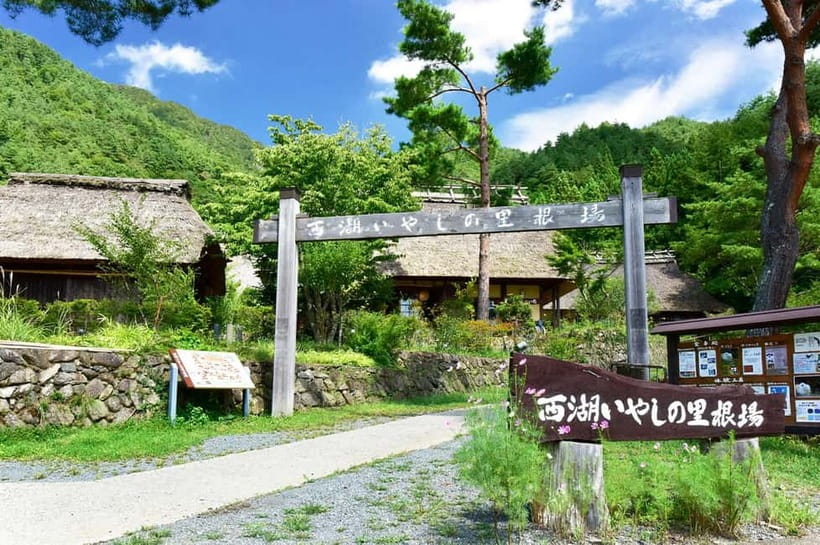
This tour is built for one thing: seeing Mt. Fuji and the surrounding sights in a single day without stress. You pay about $50 per person, and in exchange you get a guided day, coach transportation, and admission to Saiko Iyashi no Sato Nenba. For a region where individual tickets and shuttles add up fast, that bundled structure is the real value.
The timing is also smart. You leave Tokyo on a bus, work through the Mt. Fuji area step-by-step, then return. Yes, it is a full day, but the stops are chosen for maximum “what am I looking at?” payoff. Most guides on this route are praised for staying organized, keeping the group together, and giving clear instructions for where to stand and when to meet.
A key factor for your expectations: Mt. Fuji visibility is weather-dependent. Even when the mountain is partly hidden, you can still enjoy the villages, shrines, and pond views. But if you want a crisp Fuji photo, you should treat “clear skies” as part of the gamble, not a guarantee.
Tokyo Pickup and the Coach Ride: When the Day Starts Moving
The tour includes pickup and drop-off at two designated meeting points in Tokyo. One listed option is Tokyo MODE Gakuen in Marunouchi (and another drop-off point uses the same area). You’ll want to arrive about 15 minutes early because late arrivals can lose you your seat with no refund.
The day begins with a long bus segment. Expect roughly 2.5 hours by coach getting to the Mt. Fuji region, and you’ll have another 2.5 hours back at the end. During the ride, the guide typically sets expectations and gives context on what you’ll see next. In many real departures, guides like Sia, Kazi, Wanting, and others are singled out for keeping the group on schedule and for making sure everyone returns to the bus on time.
What I like for your planning: the structure is predictable. You know when the day starts, and you know there are specific timed photo windows. That means you can dress for comfort, pack water, and focus on enjoying each stop rather than negotiating local transportation.
Saiko Iyashi-no-Sato Nenba: Thatch Roofs, Fuji Framing, and Snack Breaks
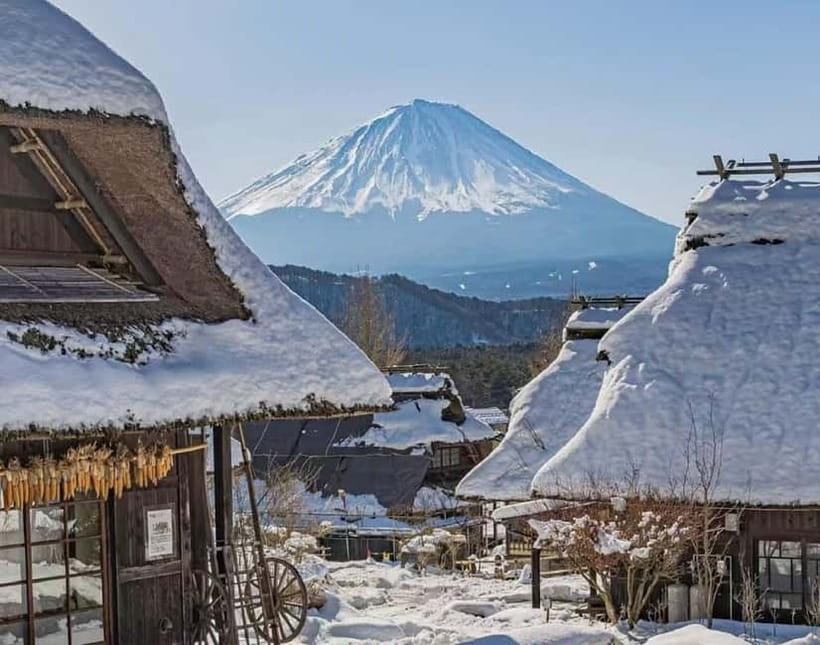
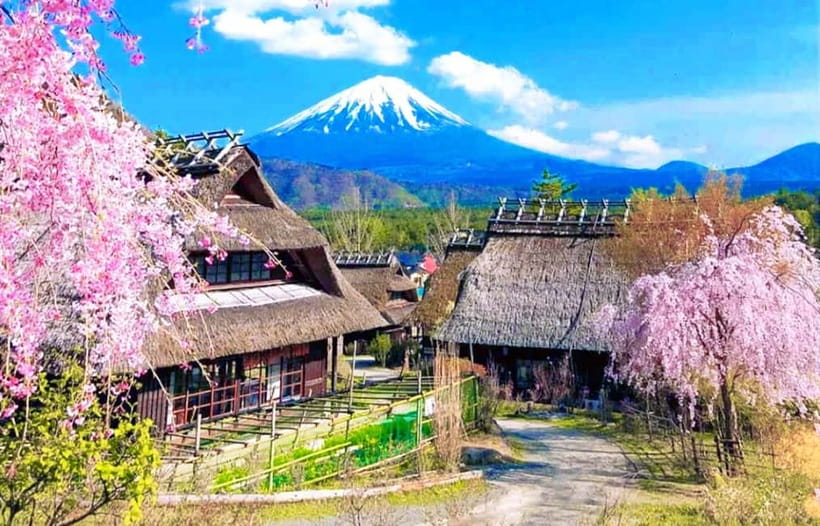
You start the sightseeing at Saiko Iyashi no Sato Nenba, a traditional village known for its thatched-roof houses with Mt. Fuji in the background on clear days. The stop includes a guided tour and photo time (about 1 hour), plus entry is included in your price.
This is one of those rare places where the setting is both atmospheric and practical for photography. You get front-facing angles of the village, and you’re not stuck indoors while waiting for views. If you’re traveling with kids, this is often an easy win because it feels like a real-time “storybook Japan” moment without needing long hikes.
A couple of small details matter here. At the village entrance, you can grab Japanese street snacks. Also, if you want fun photos, you can rent a ninja costume for an extra cost. Some guides actively point you toward the best spots before you start wandering, which helps if you only have an hour.
Time note: this stop is long enough to look around, but short enough that you should move with purpose. I’d treat it like a “capture, wander, then capture again” kind of hour.
- Mt Fuji and Hakone 1-Day Bus Tour Return by Bullet Train★ 5.0 · 26,383 reviews
- 1-Day Tokyo Bus Tour★ 5.0 · 14,250 reviews
- Tokyo: teamLab Planets TOKYO Digital Art Museum Entry Ticket★ 4.6 · 9,779 reviews
- Mt Fuji & Hakone Cruise, Drum Show Bullet Train 1 Day from Tokyo★ 4.0 · 7,413 reviews
- Tokyo: Shinjuku Food Tour (13 Dishes at 4 Local Eateries)★ 5.0 · 6,603 reviews
Lake Kawaguchi Area: A Scenic Buffer Between Classic Stops
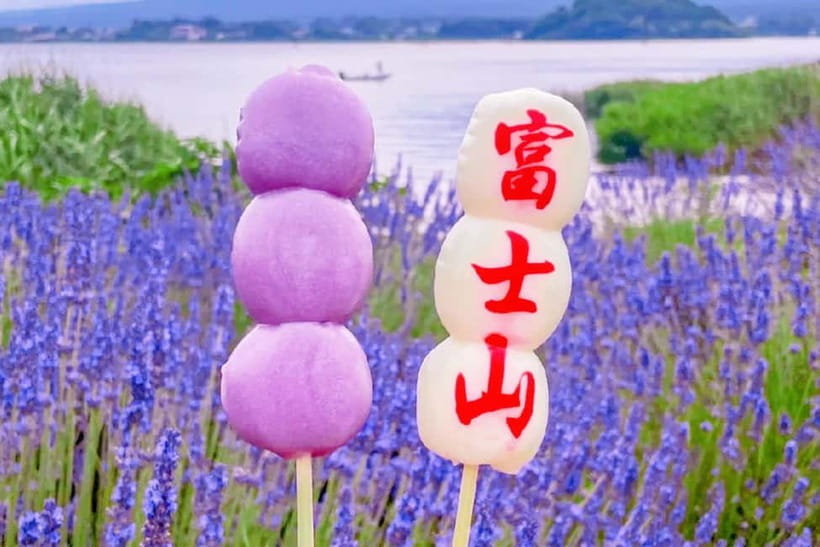
After the village, you’ll ride again. There’s a short coach transfer, then the itinerary moves you into the Lake Kawaguchi area for sightseeing and photos. Lake Kawaguchi is where the Mt. Fuji viewing tends to be most doable during a day trip, because you’re positioned around the lake’s viewpoints.
In practice, this part of the day is your visual warm-up. Even if Fuji is partly obscured, the lake setting and the park grounds still give you scenic variety. And when Fuji does show up, you often get it framed cleanly in the background, which is exactly what you want when you’re moving fast and sharing a bus with other people.
Also, keep in mind the seasonal swap that affects your plan.
Oishi Park vs. Maple Corridor: Plan for Seasonal Switching
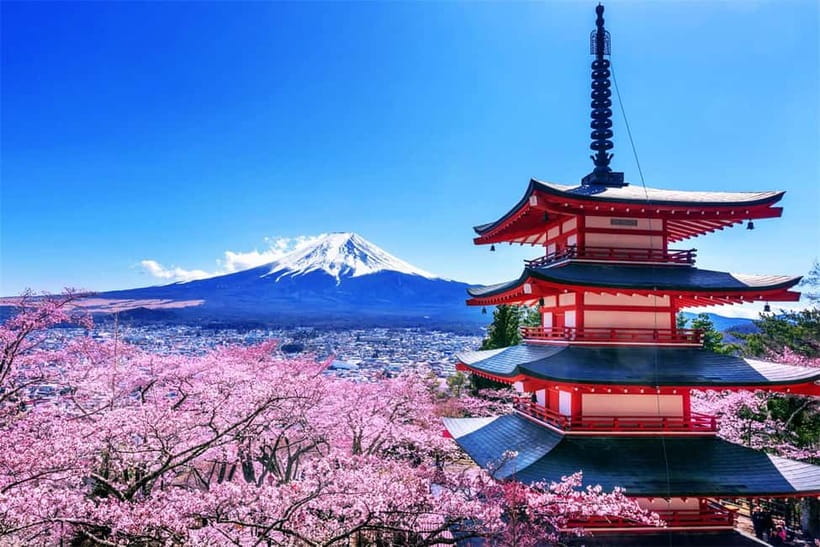
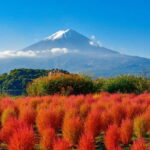
This tour targets seasonal color, but it does it with a scheduling rule you should know early. Oishi Park at Lake Kawaguchi is where you’ll see different seasonal themes. In summer, fields can show lavender, and in autumn the park can shift into red tones like broom grass.
Then there’s the Maple Corridor, famous for fiery fall foliage and classic Fuji framing. The key date rule is: peak maple timing runs Oct 26 to Nov 20, and during that time the tour doesn’t go to Oishi Park. Instead, you focus on the Maple Corridor stop (still about 40 minutes).
So what should you do with this information? Match your expectations to your travel dates.
- If you’re traveling outside late October to mid-November, Oishi Park is the seasonal draw.
- If you’re traveling between Oct 26 and Nov 20, your color moment is much more likely at the Maple Corridor.
Either way, give yourself the same mindset: Fuji photos depend on clear sightlines, so aim to arrive ready to shoot. Your guide will usually help with the best locations, and some guides are praised for pointing out exact photo spots on the ground, not just general directions.
Arakurayama Sengen Park and the Five-Story Pagoda View
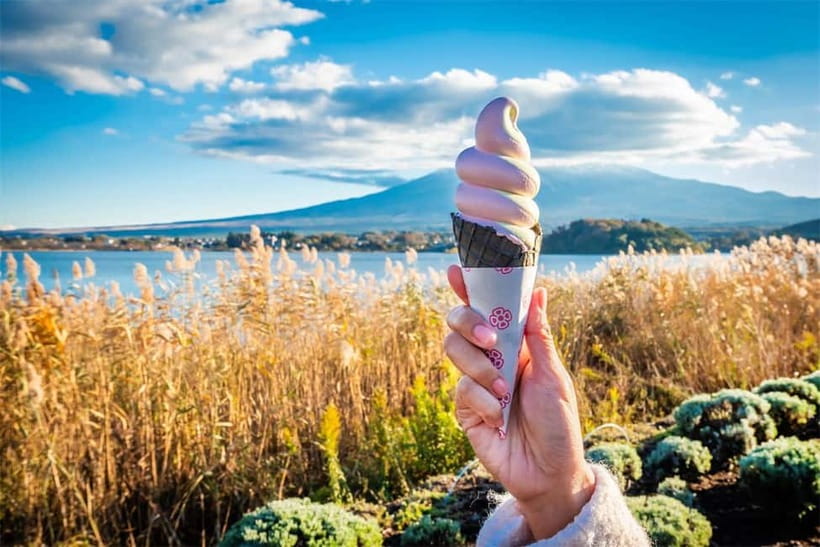
Next up is Arakurayama Sengen Park, where the famous view happens. The itinerary includes multiple connected moments:
- a photo stop at Arakurayama Sengen Park (about 40 minutes)
- visiting Arakura Sengen Shrine (about 15 minutes)
- then additional Chureito pagoda viewing time (about 15 minutes), often with a quick photo window around the iconic viewpoint
This is the stop that many people list as their “must-see” for Fuji. You’re going for that specific composition: the pagoda viewpoint with Mt. Fuji behind it. The park layout also means you’ll climb steps. In most seasons you’re not doing an all-day hike, but you should wear comfortable shoes and expect some stairs.
If you’re interested in shrine collecting, pay attention to a practical tip that came up in feedback. If you want a goshuin (a shrine stamp or calligraphy souvenir), consider handing in your book before you start climbing the stairs. That approach can help you avoid extra waiting later.
One more reality check: this is a popular photo area. Even with a guide keeping things moving, you should expect crowds at peak times. Your best advantage is the guide’s timing and meeting instructions.
Local Break Time and Restaurant Stop: Plan for Lunch You Control
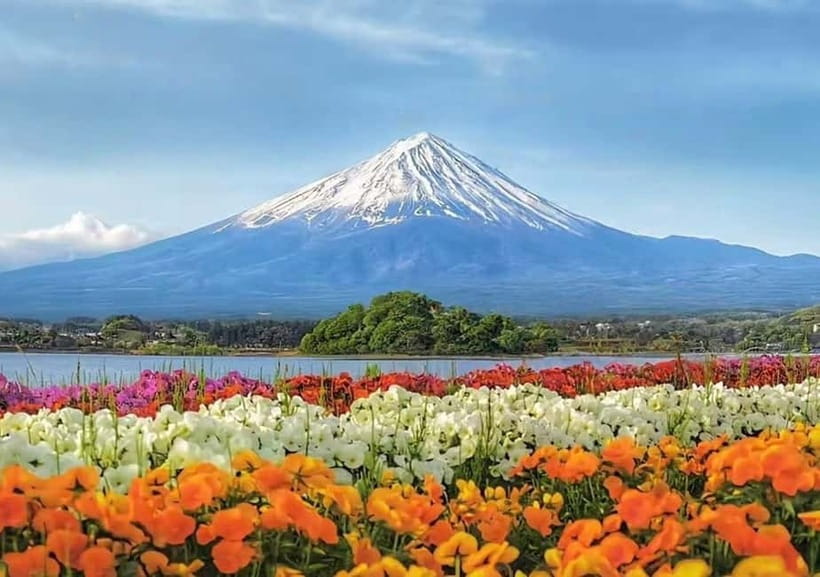
Lunch is not included on this tour. You’ll get a break time at a local restaurant stop (about 40 minutes), but you’ll be paying for what you eat. Some guides are noted for helping with order timing, which can keep things from turning into a scramble.
Because lunch isn’t included, you have three good strategies:
- Bring something simple if you’d rather control your own timing.
- Buy lunch on-site at one of the attractions.
- If you prefer a sit-down meal, follow the guide’s suggested restaurant options during the scheduled break.
I like having a strategy because your time at each stop is limited, and the day includes multiple photo moments. If you wait too long to eat, you can end up rushing through the next viewpoint.
Oshino Hakkai: Eight Ponds, Clear Reflections, and a Calm Ending
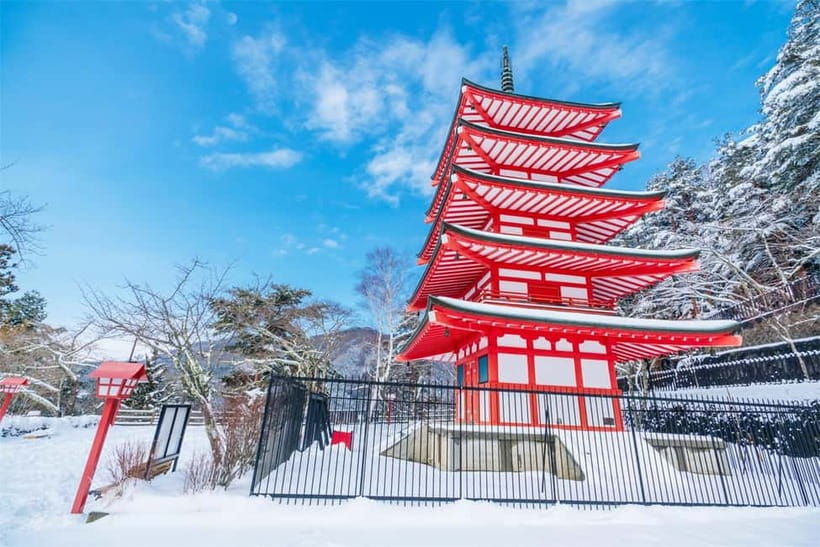
You finish at Oshino Hakkai, a set of eight spring-fed ponds fed by melted snow from Mt. Fuji. This stop is about 70 minutes, which is a big deal late in a long day. It gives you time to slow down, walk the pond area, and enjoy reflections without feeling like you’re always racing the clock.
The ponds are known for their clarity. Even when Fuji is partially hidden, the water reflections and the peaceful atmosphere can still make this a satisfying final stop. It’s also where the tour shifts from high-energy photo points to a calmer, local-feeling scene.
This stop also includes the kind of local tasting that feels worth the trip: near the ponds you can find rice crackers and even items like wasabi ice cream (availability depends on what’s on offer nearby). If you like small, regional snacks, this is a good place to end the day with something memorable.
How Much Time You Really Get at Each Stop
Here’s the practical rhythm of the day, based on the schedule you should expect:
- Saiko Iyashi no Sato Nenba: about 1 hour with guided tour and photo time
- Oishi Park: about 40 minutes (unless you’re in the peak maple date window)
- Maple Corridor: about 40 minutes
- Arakurayama Sengen Park: about 40 minutes
- Arakura Sengen Shrine: about 15 minutes
- Chureito pagoda: about 15 minutes
- Restaurant break: about 40 minutes (lunch not included)
- Oshino Hakkai: about 70 minutes
You’ll notice the pattern: the iconic points are short, photo-first moments. That’s not a flaw, it’s the trade. A day trip can only do so much, so the tour focuses on high-impact places. If you’re the type who wants long, unhurried wandering at only one or two locations, you might feel a little rushed.
But if you’re a “see a lot, then pick favorites” kind of traveler, this format is exactly the right fit.
Photo Advice That Actually Helps in Real Life
You can prepare for Fuji photos better than you might think. Here are grounded tips that align with what the itinerary is set up for.
First, wear shoes that handle stairs and uneven park paths. The pagoda area includes steps, and your best photo angles often come from moving around, not staying planted in one spot.
Second, bring cash. The tour notes that credit cards may not work at certain locations. That matters if you want snacks at Saiko, souvenirs, or quick treats around Oshino Hakkai.
Third, don’t bet your entire day on one “perfect” Fuji frame. The tour gives you multiple Fuji viewing chances across the village, parks, and shrine area. If one stop is cloudy, another might still have gaps in the clouds.
Finally, listen closely when your guide gives meeting instructions. Many guides are praised for being clear about bathroom locations and exact times to return. That kind of coordination is what prevents a photo stop from turning into a lost-group problem.
Guides, Group Pace, and What People Seem to Love Most
The feedback pattern is consistent: people love the guide-led organization. Names like Sia, Kazi, Wanting, Rachel, Alex, and Feng show up often, with praise focused on clear explanations, smooth timing, and a friendly, helpful attitude. You can also feel how much the group size affects comfort, since this is a shared tour. Even when the day is busy, a good guide helps you feel like the schedule is working, not fighting you.
Another highly praised element is the chance to see Mt. Fuji from multiple points in the day. Some departures are described as successful enough that Fuji was visible at several stops. Even when the weather is less cooperative, the itinerary still feels worthwhile because each location has its own payoff.
That’s the key: this tour doesn’t rely only on one view. The thatched village gives you culture and visuals. The parks give you seasonal color. The shrine area gives you the iconic postcard composition. Oshino Hakkai provides the calm finish.
Price and Value: Is $50 Worth It?
For many visitors, $50 for a guided 10-hour day is a strong value, mainly because you get several included components that would cost money if you did them on your own: coach transportation, a tour guide, parking fees, and admission to Saiko Iyashi no Sato Nenba. You’re also getting pickup and drop-off in Tokyo, which is often the hardest part to replicate efficiently.
Where value can shift for you is lunch. Lunch is not included, so you’ll need to budget separately. Also, if you prefer total freedom to linger for an extra hour at your favorite viewpoint, a fixed schedule can feel limiting.
Still, for first-timers, this is a solid deal: you get the region’s best-known sites, organized into a day that makes sense.
Who Should Book This Tour (and Who Might Want Something Else)
This tour fits best if you:
- want a one-day Mt. Fuji highlights circuit
- like photo stops but also want cultural stops (village, shrine, local ponds)
- appreciate having a guide help you find the right spots quickly
It may feel less ideal if you:
- need mobility support, since it’s not suitable for wheelchair users (the pagoda area includes stairs)
- want a slow travel style with long time in fewer places
- plan to rely on one single perfect Mt. Fuji photo, since clouds can change results
If you’re traveling with kids, the itinerary tends to work well because the key stops are mostly walkable with defined time windows. Many guides are also praised for patience with families.
Should You Book This Mt. Fuji Heritage Tour?
If your goal is to see the classics around Mt. Fuji in one structured day, I think this is a good booking. The combination of Saiko Iyashi no Sato Nenba, Lake Kawaguchi viewpoints, Arakurayama’s iconic pagoda scene, and Oshino Hakkai gives you variety that stays interesting even when the weather is mixed.
Book it if you like having a plan and you’re okay with short, photo-focused windows. Consider not booking, or be extra flexible, if you’re traveling for the kind of day where nothing but the perfect Fuji view matters.
My practical advice: check the weather before you go, bring cash and water, and wear shoes for stairs. If you do that, you’re set up for an enjoyable Fuji day that feels efficient, scenic, and very easy to follow.
FAQ
How long is the Mt. Fuji Heritage Tour?
The tour duration is listed as 10 hours.
What is the price per person?
The price is listed as $50 per person.
Is lunch included in the tour?
No. Lunch is not included. You can bring something to eat, purchase lunch at attractions, or eat at a restaurant suggested by the guide during the break time.
Where are the pickup and drop-off locations?
Pickup and drop-off are at two designated meeting points in Tokyo. One option listed is Tokyo MODE Gakuen in Marunouchi (1-chōme-5-1).
What languages are available for the live tour guide?
The tour guide is available in English, Japanese, and Traditional Chinese.
Do I need to bring cash?
Yes. The tour notes that credit cards may not be accepted at certain locations, so bring some cash.
What if Mt. Fuji is cloudy on the day of the tour?
Weather can prevent clear views of Mt. Fuji, so you should check the forecast. The itinerary still includes cultural and scenic stops if Fuji is not fully visible.
Is the tour suitable for wheelchair users?
No. The tour is not suitable for wheelchair users.
What is the cancellation policy?
Free cancellation is available up to 24 hours in advance for a full refund.
Mount Fuji, Three More Ways
Newest Tokyo write-ups from the Loving Japan desk


Mount Fuji Day Trips, side by side.
 ★ 5.0Mt Fuji and Hakone 1-Day Bus Tour Return by Bullet TrainFrom $16326,383 reviews
 ★ 4.0Mt Fuji & Hakone Cruise, Drum Show Bullet Train 1 Day from TokyoFrom $1497,413 reviews
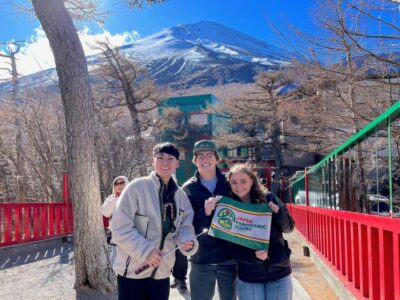 ★ 4.4Tokyo Mt Fuji 5th St & Hakone Cruise Bus Tour w/Bullet TrainFrom $1545,024 reviews
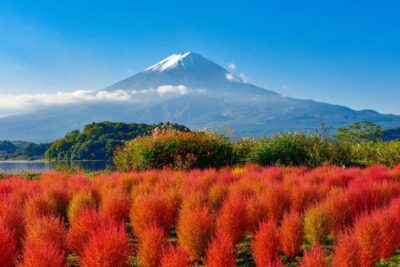 ★ 4.5From Tokyo: Mount Fuji Full-Day Sightseeing TripFrom $684,970 reviews
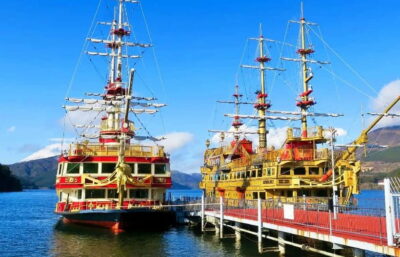 ★ 4.7Mt. Fuji Tour, Hakone Ropeway, Owakudani, Lake AshiFrom $544,002 reviews
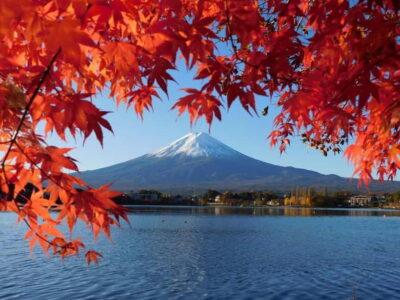 ★ 4.4Mt.Fuji,Kawaguchiko Oishi Park,Arakurayama Sengen ParkFrom $542,682 reviews
 ★ 4.2Mt. Fuji 5th Station & Hakone Cruise 1-Day Bus TourFrom $1292,381 reviews
 ★ 4.7Mt Fuji Top 5 Spots Day Tour: Arakurayama Park,Oshino HakkaiFrom $532,066 reviews
Filed on these lists too