
REVIEW · OKINAWA ISLANDS AND BEACHES
Okinawa Whale Watching From Naha
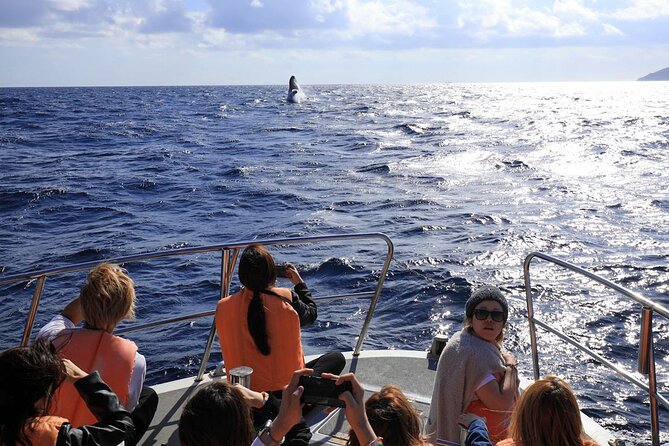
You’ll hear the spray before you see them. This Okinawa winter cruise has that rare combo of serious search tools and a crew that keeps the day fun even when seas get bumpy. You’re set up with safety gear, warm and cold drinks, and a guide who explains what you’re looking for.
What I like most is the focus on getting you on the right animal, fast: the team uses sonar and radar with a naturalist on board, and they run this season year after year. Second, I like the practical onboard comfort for a day on the water, including a large high-speed double-deck yacht with two toilets and both hot and cold drinks.
One drawback to weigh: sightings are never a sure thing. Even with a strong track record, the rules say the refund depends on who spots whales or dolphins and what dates you’re traveling.
In This Review
- Key things to know before you go
- Price and value, about $38 for a whale-filled half day
- Getting from Naha to Kerama Islands without friction
- What the 2-deck fast yacht feels like in real life
- The whale-watching action: what to expect once the search starts
- Kerama Islands stop: why it’s the heart of the day
- The guide and onboard education: turning a sighting into understanding
- Drinks, rain gear, and the small comfort details that matter offshore
- Who this trip fits best
- The refund window: how to think about risk without ruining the fun
- Reviews highlight: what repeatedly earns top marks
- A balanced word about things that can go sideways
- Should you book Okinawa Whale Watching From Naha?
- FAQ
- How long is the whale-watching tour?
- Where is the meeting point in Naha?
- Is pickup available, and is parking included?
- What is included on the boat?
- What happens if no whales are spotted?
- Who cannot join this tour?
- How many people are on the tour, and is there a restroom onboard?
Key things to know before you go
- Kerama Islands as the main target zone: this is where the boat goes to look for whales during the winter season.
- Sonar and radar used at sea: a naturalist on board supports the search, not just guesswork.
- Warmth matters: it can be windy on the boat, so bring a wind breaker and hat.
- Short, exciting surface time: when whales are active, you can see them surface roughly every 5 to 7 minutes.
- Small-ish group size: the tour caps at 35 travelers, which helps with crowding on a two-deck boat.
- Refund rules are specific: the full refund window applies between Feb 1 and Mar 31, with conditions about sightings.
Island hopping from Naha, reviewed
- Official Street Go-Kart Tour – Okinawa Shop
★ 5.0 · 699 reviews - Naha: North Okinawa Sightseeing Tour & Churaumi Aquarium
★ 4.4 · 472 reviews - Okinawa: From Naha: Kerama Islands 1-day snorkeling tour
★ 4.4 · 423 reviews - From Naha: Tokashiki Island Day Trip by Boat
★ 4.3 · 385 reviews
Price and value, about $38 for a whale-filled half day
At about $38.22 per person for roughly 4 hours, this is one of those Okinawa “spend the money, get the story” activities. You’re not paying just for time on a boat. You’re also paying for safety gear, drinks, a guide orientation, and the company’s years of running winter whale searches.
The included stuff adds real value on a day when weather can swing. You get life jacket rental, hot and cold drinks, and a rain coat rental if you need it. There’s also a whale-watching booklet and downloadable photos, so you’re not left with just blurry memories.
Getting from Naha to Kerama Islands without friction
Your day starts at Marine Club Berry in Naha, at 2-chōme-3-13 Minatomachi, Naha, Okinawa 900-0001. The tour description also offers a free shuttle bus for designated hotels, but you need advance booking for pickup.
If you’re driving, the tour includes free parking, which I think is a big deal in Naha. It means you can focus on arriving early, getting suited up, and not rushing through the “where do I park?” stress.
Then the cruise heads out toward Kerama Islands, the main hunting ground for this winter whale season. For many people, that first change from city to open water is when the mood clicks into vacation mode.
What the 2-deck fast yacht feels like in real life
This isn’t a slow sightseeing ferry. It’s a large high-speed double-deck yacht with two toilet rooms, plus a crew that clearly works as a team. The two decks help because you can choose a spot: more sheltered if it’s windy, more open if visibility is good.
The most practical tip from people who’ve done this is simple: dress for wind, not just temperature. One review calls out sunny weather but wind on the boat, and another strongly suggests dressing warm. I’d treat this as a winter offshore trip first, then a sightseeing trip second.
Also, sea sickness is real. Some participants didn’t get sick, but others did. If you’re even slightly prone to motion sickness, I’d plan ahead with your own medication and keep it simple.
Back in the water. Other trips off Naha
- Naha, Okinawa: Keramas Island Snorkeling Day Trip with Lunch★ 4.7 · 370 reviews
- Naha, Okinawa: Kerama Islands Half-Day Whale Watching Tour★ 4.4 · 241 reviews
- Naha, Okinawa: Kerama Islands Full-Day Intro-Diving Trip★ 4.6 · 203 reviews
- From Naha: Snorkeling Tour to Kerama by Ferry★ 4.3 · 151 reviews
- Naha: Full-Day Snorkeling Experience in the Kerama Islands, Okinawa★ 5.0 · 128 reviews
The whale-watching action: what to expect once the search starts
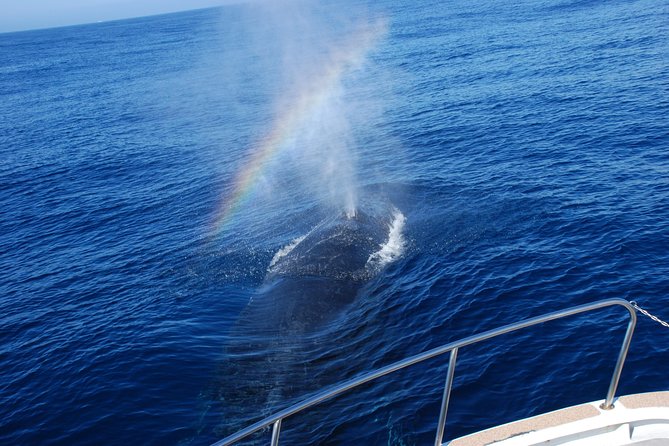
During winter in Okinawa, this tour is designed around an offshore whale-hunting window from January through the end of March. The routine is built to keep energy high, because when whales appear, you want to be in position to see them clearly.
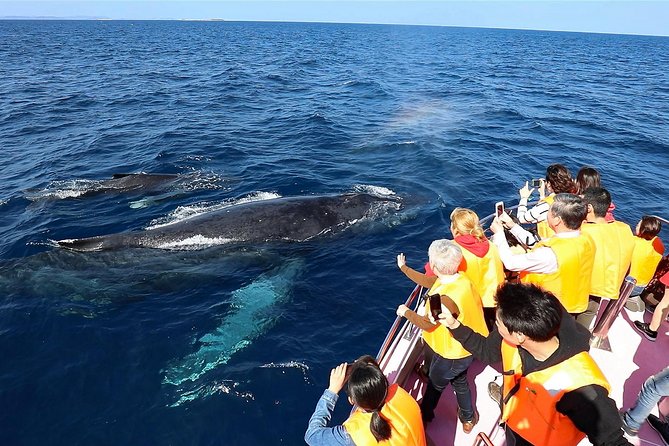
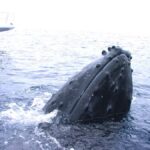
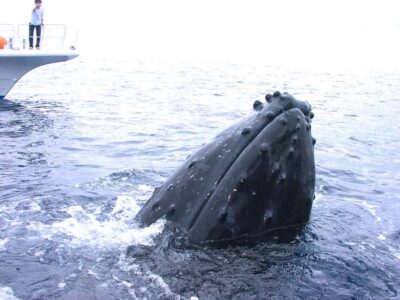
Onboard, the search uses more than human eyes. The naturalist team brings sonar and radar, which means you’re not only waiting and hoping. When the whales are active, sightings can be frequent, with one account describing surface time about every 5 to 7 minutes. That kind of rhythm turns the trip from “maybe we’ll see something” into a real watching session.
One more reality check that helps you manage expectations: the boat can’t just motor right up to whales. The tour follows distance rules, and the whales decide whether they swim closer. That can be disappointing if you imagine a near-touch encounter, but it’s also part of keeping the animals safe and undisturbed.
Kerama Islands stop: why it’s the heart of the day
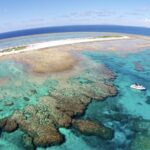
Kerama Islands is the named destination point where you spend your whale-watching focus. This matters because offshore search is time-sensitive. The longer you stay in the right zone, the more likely you are to catch whales while they’re surfacing.
The upside is that the Kerama area gives you the best shot at winter whale activity during this season window. The downside is the ocean can still be unpredictable. Wind, waves, and whale movement are out of everyone’s control, which is why the tour’s value includes not only the search tools, but also how they handle refunds if whales do not appear in the specified date range.
The guide and onboard education: turning a sighting into understanding
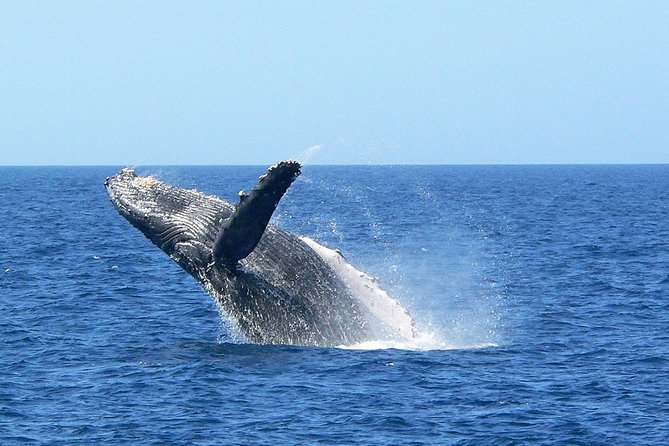
A lot of whale cruises tell you, “Look over there.” This one adds context. The tour includes a veteran English-speaking guide, plus a short orientation on the world of whales. That turns your time watching from random sightings into something you can actually recognize and talk about later.
One highlight from the reviews is a guide named Rita, described as having very understandable English and strong whale knowledge. Another review mentions the guide type being both professional and friendly, with multiple people appreciating the explanations and the overall organization.
I also like that the tour doesn’t only focus on spotting. It supports the experience with a whale-watching booklet you can download and read on your phone or later at home.
If you’re the kind of traveler who likes to understand behavior, not just biology facts, you’ll likely feel the difference here. Even a quick explanation helps you notice things like surface behavior patterns and what different whale moments might mean.
Drinks, rain gear, and the small comfort details that matter offshore
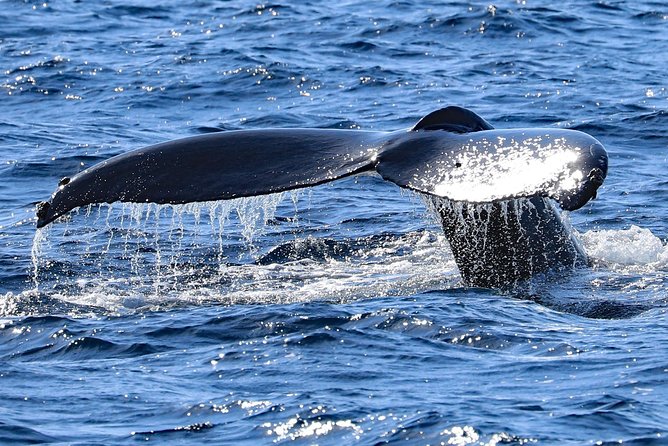
For a midwinter cruise, included comfort is not a luxury. It’s part of whether you can actually enjoy the ride.
You’ll have hot and cold drinks onboard, plus rain coat rental if you need it. That’s useful because offshore weather in Okinawa can shift fast, and getting wet while out on the open water can drain your energy quickly.
Photographs are another underrated inclusion. The tour offers downloadable photos, and that can save you from the usual “I spent the whole time trying to get the perfect shot” problem. You can watch more and worry less.
Who this trip fits best
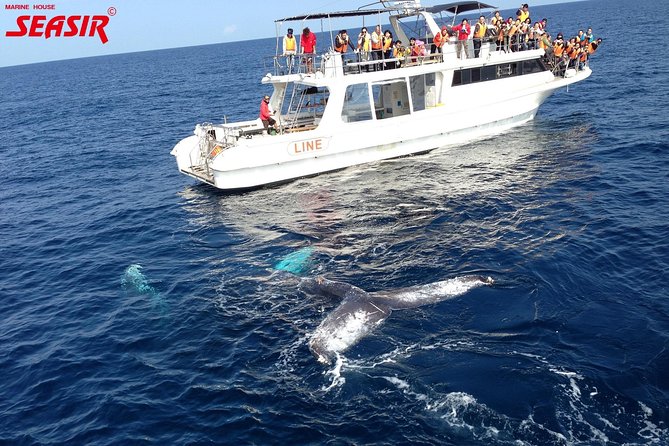
This is a good pick if you want a focused half-day adventure and you’re traveling with at least one person who’ll be just as excited to look out over the water.
It’s also a nice fit for solo travelers. The tour description explicitly welcomes solo travelers, and the capped group size at 35 travelers makes it less chaotic than big, open-deck cattle-call tours.
If you’re traveling with kids, bring a baby carrier for any child who can’t stand on their own. That tells me the boat is not set up like a stroller-friendly vessel for infants, so you’ll want to plan for how your youngest will stay secure.
The refund window: how to think about risk without ruining the fun
This tour has a “refund guaranteed” style promise, but with specific conditions. Here’s the honest way to read it:
- From Feb 1 to Mar 31, you can get a full refund if no whale is spotted during your tour dates.
- But the policy states that no refund is given if someone on board, including staff, spots a whale, a dolphin or their blows.
So the guarantee is not a casual “if we don’t see anything, everyone gets refunded” rule. It’s tied to actual recorded sightings during your specific timeframe, and the crew’s perspective counts.
There’s also a separate safety net for earlier in the season. If no whales or dolphins are spotted on tours between Dec 22 and Jan 31, you get a re-trial voucher to use on another day.
My practical advice: treat the refund rules as backup, not a plan. Go in expecting a great chance to see whales, but keep your schedule flexible during that winter window.
Reviews highlight: what repeatedly earns top marks
The strongest praise centers on two things: the feeling that the crew genuinely knows what they’re doing, and the quality of the guidance once you’re out there.
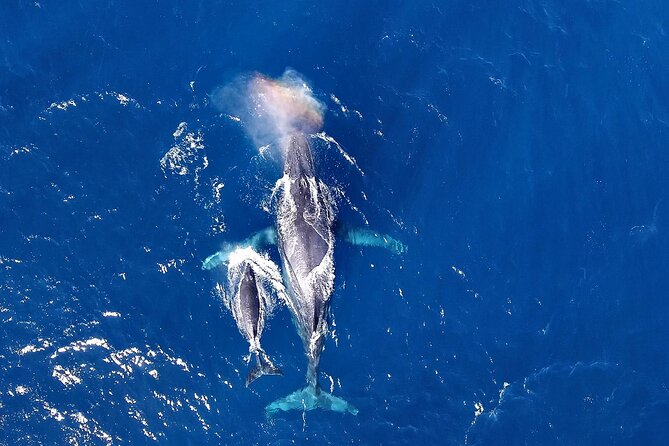
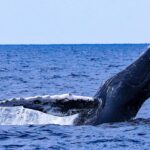
Many people call out seeing whales as promised, including accounts of a family group, with one mention of a mother and calf, and another of multiple whales including a male. People also repeatedly describe the crew as friendly and professional, with excellent organization and good communication.
A common practical tip shows up too. One review specifically recommends bringing a wind breaker and hat because even on a sunny day it can get windy on the boat. Another mentions sea sickness for some people, reinforcing that you should prepare even if you hope you’ll be fine.
Put together, the pattern is clear: the best part is the combination of organized searching and good explanation, not just the raw luck of finding whales.
A balanced word about things that can go sideways
No tour can control nature. Wind can rise. Waves can make viewing harder. And even with sonar and radar, whales still choose where to be and when to surface.
One review mentions a departure that felt uncertain until close to the day, with communication taking time. I can’t predict if that happens on your date, but I’d make your own plan: double-check updates as your departure day approaches, especially if you’re relying on pickup.
Also, if your heart is set on getting extremely close to whales, plan to be satisfied by good viewing from an appropriate distance instead. The boat follows rules, and that’s part of respecting the animals.
Should you book Okinawa Whale Watching From Naha?
I’d book it if you’re traveling in the winter season window and you want a half-day activity with real search effort behind the scenes. The value is strong because you’re getting a guided experience, included drinks and safety gear, and onboard sonar and radar support.
You should think twice if you can’t handle open water or you’re sensitive to motion. The tour is not for everyone, with restrictions including pregnancy and certain medical conditions like epilepsy or loss of consciousness for unknown reasons. If that applies, skip this and find a land-based Okinawa experience instead.
If you want my simplest rule: dress for wind, take motion sickness precautions seriously, and go in ready to watch. When the whales show up, this kind of winter offshore outing becomes one of those “I can’t believe that was real” days.
FAQ
How long is the whale-watching tour?
The duration is about 4 hours.
Where is the meeting point in Naha?
The meeting point is Marine Club Berry at 2-chōme-3-13 Minatomachi, Naha, Okinawa 900-0001, Japan. The tour ends back at the meeting point.
Is pickup available, and is parking included?
Yes. There’s a free shuttle bus for designated hotels, but you need advance booking. Free parking is also included.
What is included on the boat?
Included items are life jacket rental, hot and cold drinks, rain coat rental if needed, downloadable photos, a whale-watching booklet (download), and a guide.
What happens if no whales are spotted?
From Feb 1 to Mar 31, you get a full refund if no whale is spotted. The rules specify that no refund is given if someone on board including staff spots a whale, a dolphin, or their blows. If no whales or dolphins are spotted between Dec 22 and Jan 31, you receive a re-trial voucher.
Who cannot join this tour?
People with a history of epileptic seizure or loss of consciousness for unknown reasons, and people who have hyperventilation syndrome cannot join. Pregnant or possibly pregnant people also cannot participate.
How many people are on the tour, and is there a restroom onboard?
The tour has a maximum of 35 travelers. The boat has two toilet rooms.
Back in the Water
Okinawa, Island by Island

Newest Naha write-ups from the Loving Japan desk



Okinawa Islands and Beaches, side by side.
 ★ 5.0Official Street Go-Kart Tour – Okinawa ShopFrom $36699 reviews
 ★ 4.4Naha: North Okinawa Sightseeing Tour & Churaumi AquariumFrom $50472 reviews
 ★ 4.4From Naha: Kerama Islands 1-day snorkeling tourFrom $81423 reviews
 ★ 4.3From Naha: Tokashiki Island Day Trip by BoatFrom $58385 reviews
 ★ 4.7Naha, Okinawa: Keramas Island Snorkeling Day Trip with LunchFrom $70370 reviews
 ★ 5.0[Miyako Island/Half Day] Sea Turtle SnorkelingFrom $45337 reviews
 ★ 5.0Okinawa Ishigaki Blue Cave Snorkeling TourFrom $45332 reviews
 ★ 4.5Snorkeling in the Blue Cave area【Okinawa Prefecture: Free feeding & photo images!English and Chinese speaking guide available!From $19249 reviews
Filed on these lists too