
REVIEW · FOOD & DRINK
Osaka Delights: Traditional Japanese Food Tour
Street food tours can feel like a food stampede. This one is a tidy 3-hour route with real Osaka flavors, plus the neon-walk payoff in Dotonbori. You start in Kuromon Market for classic snacks, then move through dinner staples like okonomiyaki and kushikatsu, and finish with an iconic photo at Ebisu Bridge under the Glico sign.
I really like the straightforward food plan. You get tastings of multiple dishes that actually cover Osaka’s street-food map, from Wanaka takoyaki to Mitoya three-color dango to a warm egg tart. Another big plus is the human factor, the guides I saw highlighted, like Paula and Angeles, are credited with making hard-to-find spots feel easy and friendly.
One consideration: language mix can matter. This tour is described as bilingual (Spanish and English), and that usually helps, but there’s at least one reported mismatch where the group ended up feeling split by language, which hurt the experience. If you care about comfort and pacing, it’s worth being clear about your language preference when you book.
In This Review
- Key things to know before you go
- A 5:30 pm Osaka food run that makes sense
- Meeting at Hotel Royal Classic and the walk to your first snack
- Kuromon Market: Wanaka takoyaki and Mitoya three-color dango
- Stop 1 and 2: Wanaka takoyaki for crispy-octopus crunch
- Stop 3: Mitoya dango in three colors
- Dinner classics at Kushikatsu Yokozuna Hozenji
- Okonomiyaki: the savory pancake you build with flavor
- Kushikatsu: crispy skewers and a dunking habit
- The egg tart stop that finishes the meal nicely
- Dotonbori neon walk and the Ebisu Bridge Glico photo
- Guides, group size, and why language can make or break it
- Price and value: what $84 buys you in Osaka
- What to do before you go (so the evening stays fun)
- Should you book Osaka Delights?
- FAQ
- Where does the Osaka Delights tour start and end?
- What time does the tour begin?
- How long is the tour?
- What food tastings are included?
- Are there guides who speak English and Spanish?
- What is the maximum group size?
- How do I get my ticket?
- What is the cancellation policy?
- Can everyone participate, including people with mobility issues?
Key things to know before you go
- Kuromon Market start means you’re eating while the market vibe is at full volume
- Multiple Osaka classics in one loop, not just one or two items
- Named stalls and shops like Wanaka, Mitoya, and Kushikatsu Yokozuna Hozenji help you know what you’re actually getting
- Dotonbori + Ebisu Bridge photo stop gives you the famous Osaka look without needing to plan
- Small-to-medium group cap at 30 travelers keeps the walk manageable
- Mobile ticket and a 5:30 pm start make it simple to slot into an evening
Still weighing up options in Namba? These are the ones our reviewers rated highest.
- Osaka Bar Hopping Night Walking Tour in Namba (3 bars, 6 tastes)
★ 5.0 · 958 reviews - Osaka 4hr Private Tour with Government-Licensed Guide
★ 5.0 · 359 reviews - Osaka 6hr Private Walking Tour with Government Licensed Guide
★ 5.0 · 174 reviews - From Osaka or Kyoto: Kyoto and Nara 1-Day Bus Tour
★ 3.5 · 141 reviews
A 5:30 pm Osaka food run that makes sense
This tour is built for evening energy. You start at 5:30 pm, and the route is paced like a quick dinner plus sightseeing loop, not a long all-day marathon. In about three hours, you’ll move from Kuromon Market into Namba and finish with the lights around Dotonbori and Ebisu Bridge.
I like that the timing lines up with Osaka being in full street-food mode. You’re not eating late-night leftovers. You’re tasting things while you can still feel the city moving.
The walk is part of the fun. You’re not just handed plates and told good luck. You also get short neighborhood context as you go, which helps the food feel tied to a place, not random shopping-bag snacks.
Meeting at Hotel Royal Classic and the walk to your first snack
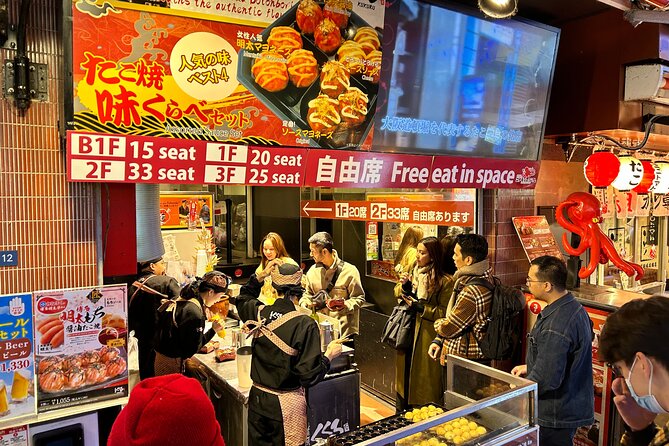
The meeting point is Hotel Royal Classic Osaka, at 4-chōme-3-3 Namba, Chuo Ward, Osaka 542-0076. The tour ends back at the meeting point, so you don’t have to worry about being dropped somewhere far from where you started.
Expect a walk right away. The first segment includes a short 10-minute walk toward Kuromon Market, so comfortable shoes matter even if you are not a “hard-core walking” person. This is also a walking tour, so if you have mobility limitations, this one may not work. The tour explicitly says it cannot accommodate travelers with mobility issues.
Group size is capped at 30 travelers, which usually helps keep the pace from turning chaotic. In the better experiences, the guides also seem to manage lines and timing well, so you’re not standing around waiting for everyone to catch up.
Kuromon Market: Wanaka takoyaki and Mitoya three-color dango
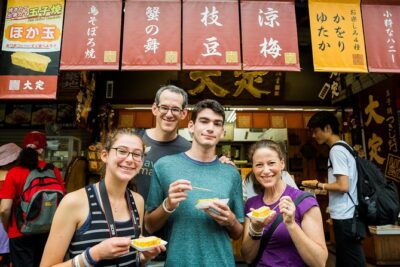
Kuromon Market is often the place people point to for Osaka food. What makes this start work is that you eat early, while the market is still doing its thing. You’ll head there in a short walk, and then your first tastings begin.
- From Osaka/Kyoto: Kyoto & Nara Day Trip with Optional Lunch★ 4.5 · 79 reviews
- Airport Transfer from Osaka city to Kansai airport★ 4.5 · 73 reviews
- Osaka Private Tour with a Local Guide (Must See Places in 1 Day)★ 5.0 · 57 reviews
- Osaka Delights: Traditional Japanese Food Tour★ 4.5 · 33 reviews
Stop 1 and 2: Wanaka takoyaki for crispy-octopus crunch
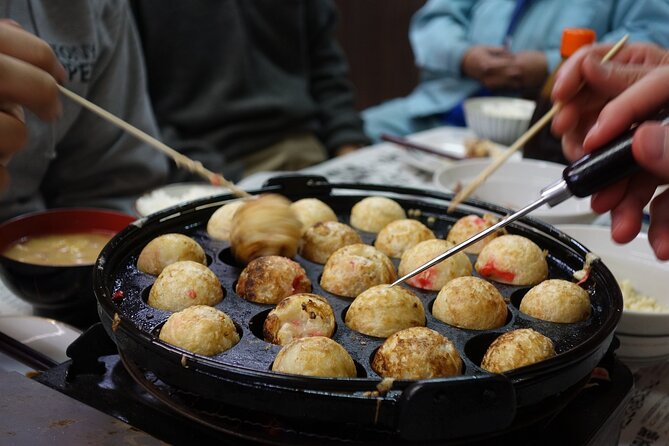
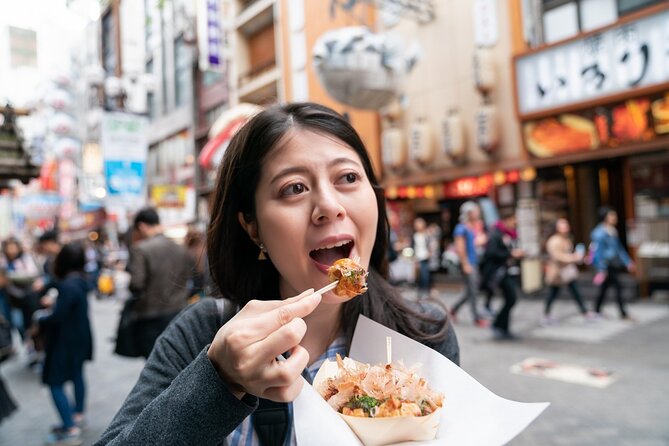
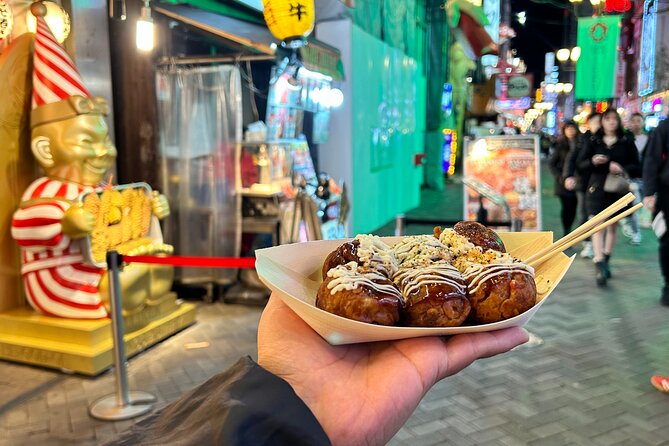
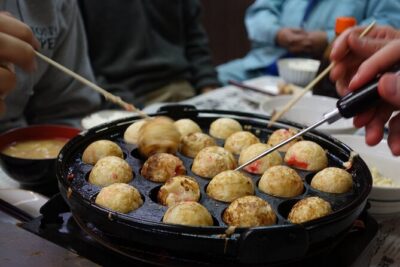
Your takoyaki stop is at Wanaka inside Kuromon Market. Takoyaki are those round, pan-fried dough balls, crispy on the outside, tender inside, and typically stuffed with octopus. They come with toppings like sauces and bonito flakes, and the flavors are very Osaka, very street, very go-with-your-hands.
This is one of those foods where timing matters. Eat it while it’s hot and you get the full contrast of crisp and soft. If you want a practical tip: try to take bites between sauce and flakes, so you don’t just get sauce-heavy mouthfuls.
Stop 3: Mitoya dango in three colors
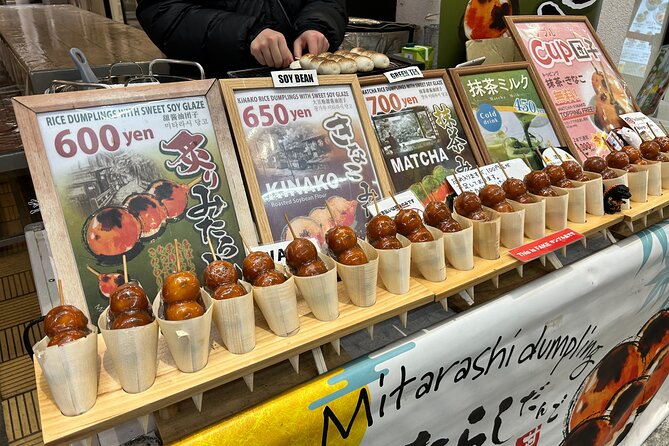
Next comes Mitoya, where you’ll try three-color dango. Dango are sweet rice dumplings served on skewers, and the three colors are traditionally tied to cultural symbolism. This is a nice change from savory fried snacks. It cools the palate and resets your sweetness level before dinner.
I appreciate that the tour mixes textures and temperatures instead of stacking five savory stops in a row. It’s easier on your stomach, and it also makes each stop feel like it has a job.
The full Kuromon section is short. You spend about 10 minutes on the takoyaki stop and around 30 minutes on the dango shop segment, so it’s not a long shopping detour. You stay focused on food and quick orientation.
Dinner classics at Kushikatsu Yokozuna Hozenji
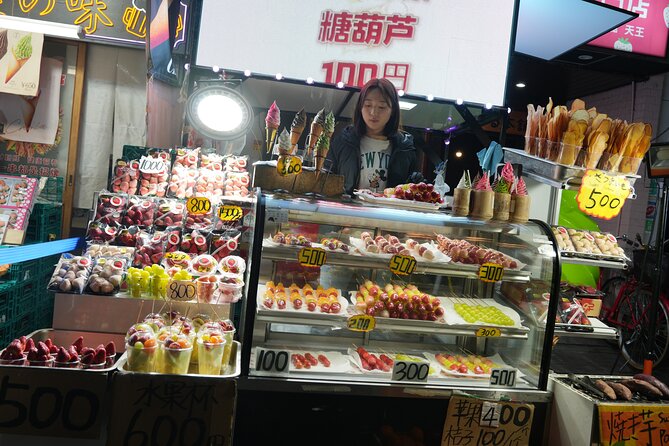
The dinner anchor is Kushikatsu Yokozuna Hozenji. This is where Osaka fans get serious. You’ll try two big comfort foods here: okonomiyaki and kushikatsu.
Okonomiyaki: the savory pancake you build with flavor
Okonomiyaki is often described as a savory pancake, but it’s really more like a griddled base loaded with ingredients. In Osaka style, it’s thick, filling, and sauce-forward. For a first-time visitor, it’s a solid way to understand how Osaka treats everyday ingredients like main characters.
Kushikatsu: crispy skewers and a dunking habit
Then comes kushikatsu, which are crispy fried skewers. The key detail is the crunch. You get that golden shell and a warm, tender interior, all packed into bite-size pieces.
One practical point: go slow with fried foods if you’re sensitive to spicy sauces or heavy tastes. Most of the comfort-food vibe is mellow, but sauce profiles can vary by shop.
This stop runs about 50 minutes, so you’re not rushing. It’s long enough to actually enjoy dinner rather than just collect bites.
The egg tart stop that finishes the meal nicely
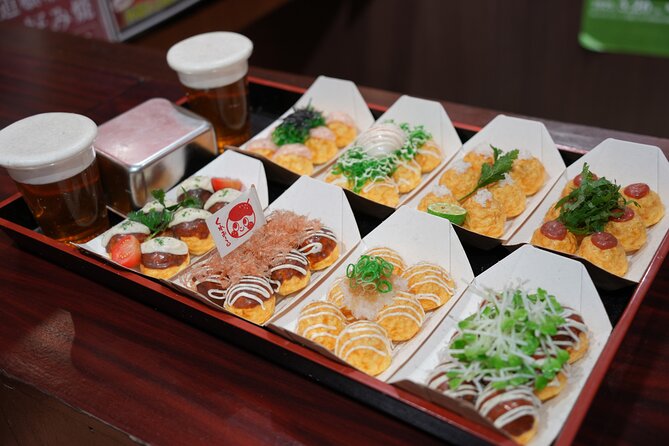
After savoring savory favorites, the tour switches gears with dessert. Your sweet stop is an egg tart from a popular bakery, described as freshly baked with a creamy custard center and a crisp pastry shell.
This is a smart choice because it’s not the same sweetness as dango. The custard tart feels smoother and more baked, while dango feels chewy and light. Together, they create a simple sweet arc across the tour.
The dessert segment is about 20 minutes. That’s enough time to eat without feeling rushed, but not so long that you start wondering when you’ll reach the lights.
A note based on guide-and-dessert expectations: one review suggested that the dessert on the tour felt different than what they had seen online, like a cheesecake mentioned elsewhere. That doesn’t mean the tour is worse. It just means dessert is the area most likely to vary by location or timing, so keep your expectations flexible.
Dotonbori neon walk and the Ebisu Bridge Glico photo
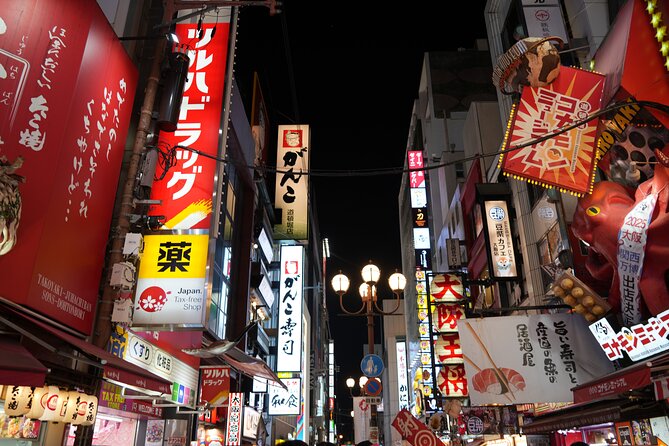
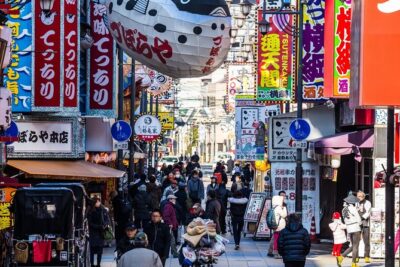
Once the food part settles, you move into Osaka’s photo zone. You’ll head to Dotonbori, about 30 minutes in the itinerary, known for neon signs, street energy, and the famous Glico Man branding.
This section matters because it turns your dinner into a scene. You’re tasting Osaka flavors, then walking through the Osaka everyone recognizes. Even if you’re not a big nightlife person, it’s still one of the easiest places to understand the city’s attitude.
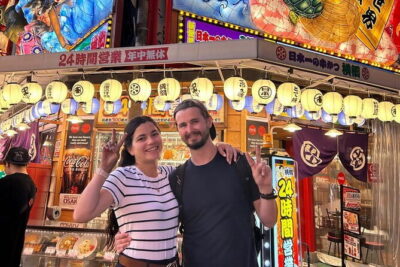
You’ll also stop at Ebisu Bridge, around 20 minutes, for a photo at the canal with the glowing Glico sign in view. If you’re trying to capture that iconic Osaka look, this is the most efficient way to do it without wandering for an hour.
Guides, group size, and why language can make or break it
The tour includes a bilingual guide in Spanish and English. In practice, the guide can shape your whole experience. People highlighted guides like Paula and Angeles for clear explanations and for guiding them to spots they wouldn’t find alone. Others mentioned Heli, Helimar, and Eli for friendly, dish-specific guidance.
One reason the tour seems to score well is that the guides help you connect dish to place. You’re not only eating, you’re learning what makes each item Osaka, and what to pay attention to while you’re chewing.
Now the balancing note: language matters. There’s one negative report where an English request didn’t feel respected, and the group felt split by language. If you’re booking in English or Spanish, do it with full clarity and consider messaging the operator with your preference. In most cases, you’ll be fine, but this is the one risk that shows up in the feedback.
Price and value: what $84 buys you in Osaka
At $84 per person, this is not the cheapest snack walk. But it’s also not overpriced for what you get. You’re paying for a guided evening route, translation support, and, most importantly, multiple tastings packed into a tight three-hour window.
Let’s look at what’s included, based on the tour plan:
- Tastings at Kuromon Market (including Wanaka takoyaki)
- Three-color dango at Mitoya
- Dinner tastings at Kushikatsu Yokozuna Hozenji (both okonomiyaki and kushikatsu)
- A warm egg tart from a bakery stop
- The walk through Dotonbori and the Ebisu Bridge photo point
Also, the tour is described as a local expert-led neighborhood walk, so you’re not paying just for food. You’re paying for someone to handle the sequence and keep you from guessing where to go next.
In several positive reports, guides like Paula were credited with making reservations in advance. That’s not listed as a guarantee in the basic tour description, but it shows up as a practical advantage. If your goal is to eat at popular, authentic spots without stressing, that value is real.
If you’re the kind of traveler who wants total freedom to wander and order exactly what you feel like, you might skip this and DIY. But if you want to leave the “what should I eat” question to someone else for one evening, the price starts to look fair.
What to do before you go (so the evening stays fun)
This tour is food-forward. You’ll be eating multiple items across savory and sweet stops, then walking through neon streets. Come prepared.
A few smart moves:
- Arrive hungry enough to enjoy everything, but not so hungry that you sprint at stop one. The mid-tour dessert helps reset you.
- Wear shoes you’re comfortable with on uneven market streets and canal-side areas.
- If you have a language preference, book with it in mind. The tour is bilingual, and that’s a plus when it’s handled well.
Also, plan your evening around this stop. Since you start at 5:30 pm and end back at the same meeting point, it’s easiest to treat it as your dinner anchor.
Should you book Osaka Delights?
I’d book this tour if you want a focused, high-success evening. The combination of Kuromon Market, named snack stops like Wanaka and Mitoya, and a real dinner stop at Kushikatsu Yokozuna Hozenji gives you a strong “Osaka in one walk” outcome. Then you get the easy sightseeing payoff of Dotonbori and the Glico sign photo at Ebisu Bridge.
I’d think twice if you’re very sensitive to group dynamics or language handling. There’s one clear negative experience tied to feeling excluded by language. If you know you’ll struggle with that, message ahead about your preferred language and keep a close eye on how the tour is assigned.
If you go in with the right expectation, you’ll end the night with more than photos. You’ll have a working mental map of Osaka snacks and dinner classics, and you’ll know what you liked enough to hunt down again later on your own.
FAQ
Where does the Osaka Delights tour start and end?
The tour starts at Hotel Royal Classic Osaka and ends back at the same meeting point.
What time does the tour begin?
The scheduled start time is 5:30 pm.
How long is the tour?
The duration is about 3 hours.
What food tastings are included?
You’ll taste items from the planned stops, including takoyaki, three-color dango, okonomiyaki, kushikatsu, and an egg tart.
Are there guides who speak English and Spanish?
Yes. The tour includes a bilingual guide in Spanish and English.
What is the maximum group size?
The tour has a maximum of 30 travelers.
How do I get my ticket?
The tour uses a mobile ticket.
What is the cancellation policy?
You can cancel for a full refund if you cancel at least 24 hours before the experience starts.
Can everyone participate, including people with mobility issues?
The tour says it cannot accommodate travelers with mobility issues.
Newest Namba write-ups from the Loving Japan desk

Food & Drink, side by side.
 ★ 5.0Shinjuku Food Tour (13 Dishes at 4 Local Eateries)From $866,603 reviews
 ★ 5.0Tokyo Tsukiji Fish Market Food and Culture Walking TourFrom $993,184 reviews
 ★ 4.8Shinsekai Food Tour with 13-15 Dishes at 5 EateriesFrom $532,204 reviews
 ★ 5.0Osaka Food Tour: 13 Dishes at 5 Local EateriesFrom $732,149 reviews
 ★ 4.9Shinjuku Food Tour (15 Dishes and 4 Eateries)From $852,033 reviews
 ★ 5.0Kyoto Night Foodie Tour in Gion (9+ dishes + 6 Sake tastings)From $1631,762 reviews
 ★ 5.0Hungry Osaka Street Food Tour:15 Tastings & 3 Drinks with a LocalFrom $731,727 reviews
 ★ 5.0Tsukiji Fish Market Food and Walking tourFrom $301,724 reviews
Filed on these lists too