
REVIEW · PRIVATE
Private sightseeing tour from Shimizu Port / Van Taxi
Some days, you just need a plan that works.
This private Shimizu Port tour strings together the best Fuji-view viewpoints with a real guide, not a rushed bus stop. I love the air-conditioned jumbo van setup with room for luggage, and I love how the route mixes iconic views with meaningful places like Kunozan Toshogu Shrine tied to Tokugawa Ieyasu. One thing to think about first is that Mt Fuji visibility depends on weather, and the shrine stop includes stairs after the ropeway.
You also get real flexibility. Morning or early afternoon starts let you match the day you have docked, and an English-speaking guide steers the timing so you’re not stuck in the worst of the crowds.
In This Review
- Key highlights at a glance
- Private van comfort from Shimizu Port (and why it matters)
- Price and value for a group up to 8
- The Mt Fuji viewing circuit: how you’ll actually see it
- Stop 1: Shimizu Port to Nihondaira base (getting positioned fast)
- Stop 2: Nihondaira Ropeway, Suruga Bay views, and the timing advantage
- Stop 3: Kunozan Toshogu Shrine and Tokugawa Ieyasu’s mausoleum
- Stop 4: Nihondaira Travel Observatory, Fuji, and the big-sky moment
- Stop 5: Nihondaira Ochakaikan tea fields and Fuji photos
- Stop 6: Ride toward Miho, pine and coast territory
- Stop 7: Miho no Matsubara beach, black sand, and Fuji’s special angle
- Stop 8: Miho no Matsubara Culture & Creativity Center Mihoshirube
- Stop 9: Return to Shimizu Port
- What you get from the English-speaking guide, besides facts
- Logistics that can save you stress at the ropeway and shrine
- Who this tour fits best
- Should you book this Shimizu Port private tour?
- FAQ
- Where is the meeting point for the tour?
- How long is the tour?
- Is this a private tour or shared group?
- What is included and what is not included?
- What separate payment do I need for the ropeway and shrine?
- Is lunch provided?
- Will I have to walk or climb stairs?
Key highlights at a glance
- Private jumbo taxi (up to 8) so your group can move together with luggage space and comfort.
- Ropeway round trip plus a shrine visit that connects directly to Tokugawa Ieyasu’s story.
- Multiple Mt Fuji viewing stops: observatory, tea fields, and Miho no Matsubara beach and pines.
- English-speaking guide who adapts to your pace and the group’s needs. Guides you may see include Kiyo, Miyuki, Nobuko, Motoko, Kyla, and Yoko.
- Good photo help at viewpoints, including guides who take group photos and offer directions for shots.
- Short port-to-port day: return to the same Shimizu Port meeting point at the end.
Still weighing up options in Shizuoka? These are the ones our reviewers rated highest.
- Private sightseeing tour from Shimizu Port / Van Taxi
★ 5.0 · 114 reviews - Shizuoka/Shimizu Mt Fuji View 6 hr Private Tour: Guide Only
★ 5.0 · 80 reviews - Fuji Highlights Group Car Tour by Shimizu Port with Local Guide
★ 5.0 · 57 reviews - Mt.Fuji area Tour from Shimizu Port / Van Taxi
★ 5.0 · 41 reviews
Private van comfort from Shimizu Port (and why it matters)
Starting from Shimizu Port is a big deal if you’re on a cruise, because timing and walking can be a trap. This tour is built around convenient roundtrip transport, so you can get out to the viewpoints without worrying about buses, transfers, or squeezing your luggage onto trains.
I also like the comfort factor. The vehicle is a jumbo taxi that fits up to 8, and the setup is designed so you’re not doing a lot of unnecessary walking between stops. That matters when you add ropeways, steps, and photo breaks into a tight 4-hour window.
Price and value for a group up to 8
The total price is $713.53 per group (up to 8) for about 4 hours. For a private experience, that’s the real value story: you’re paying for the vehicle, the English-speaking guide, and the door-to-port logistics that typically cost more when you stitch things together yourself.
What is separate is important to understand. You’ll pay a set ticket of ¥1,950 per person covering the roundtrip ropeway and admission to Kunozan Toshogu Shrine and the museum. Lunch is not included either, so it helps to plan a simple meal before or after your tour.
If you come with a small group, the per-person math tends to work well because everyone shares the same private van and guide time. And if you’re chasing Mt Fuji views on a schedule that’s already tight, paying for a guided route that hits the best spots beats spending half the day figuring out where to go.
The Mt Fuji viewing circuit: how you’ll actually see it
This is a tour designed for people who want Mt Fuji to be part of their day, even if the mountain is shy. You stop at multiple points where Fuji can appear, including an observatory, tea fields, and the Miho coast.
Here’s the practical reality. You can be in the right places and still have clouds. The good news is that the itinerary doesn’t collapse if Fuji is hidden. You’ll still visit a major shrine, enjoy tea and viewpoints, and spend meaningful time at Miho no Matsubara’s pine grove and beach area, plus the culture center.
Stop 1: Shimizu Port to Nihondaira base (getting positioned fast)
You begin at Shimizu Port, Hinodechō 10-80 (Espars Dream Ferry FT) and ride by car to the Nihondaira area. This first leg is about 30 minutes, and it’s timed to get you into position for the ropeway and viewpoints.
The value here is that you start strong. Instead of wandering around the port area, you’re already moving toward the dramatic coastline and the mountain outlooks.
Stop 2: Nihondaira Ropeway, Suruga Bay views, and the timing advantage
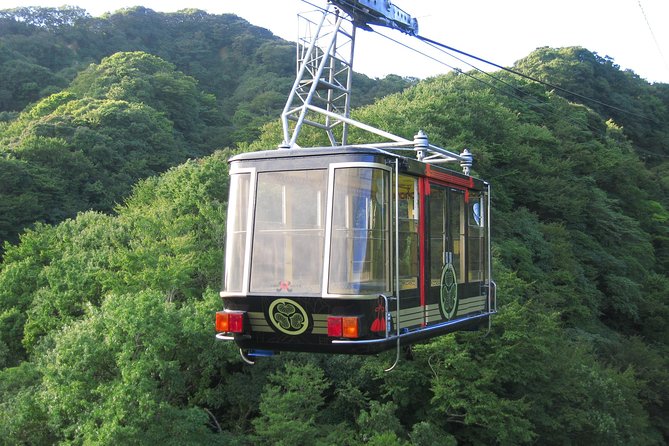
Next comes the Nihondaira Ropeway, which connects Nihondaira and Kunozan Toshogu Shrine. The ride itself is quick, around 5 minutes, but the schedule also accounts for roundtrip time with waiting, roughly 20 minutes total.
Why this stop is worth it, even if you’re not a ropeway person: you get a high-level look over Suruga Bay, plus a smoother path to the shrine than hiking up on foot. It also helps that guides on this tour often manage timing so you’re not immediately in the worst crush at the ropeway station.
Good to know: the ropeway experience is part of the separate ¥1,950 set ticket.
Stop 3: Kunozan Toshogu Shrine and Tokugawa Ieyasu’s mausoleum
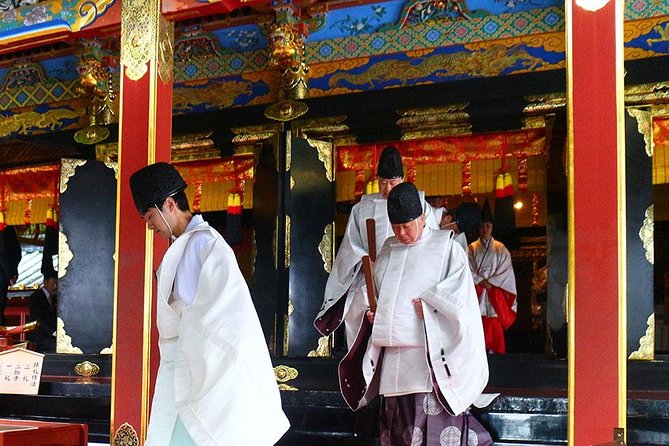
Kunozan Toshogu Shrine is the main cultural anchor of the day. It’s a brilliant shrine and it’s registered as a national treasure, with a connection to the most famous Shogun, Tokugawa Ieyasu, including the presence of his mausoleum.
This stop takes about 50 minutes, and it includes a key physical detail. After you get off the ropeway, you need to climb stone steps to reach the shrine area. The tour is listed for travelers with moderate physical fitness, so if stairs are a concern, pack a realistic plan.
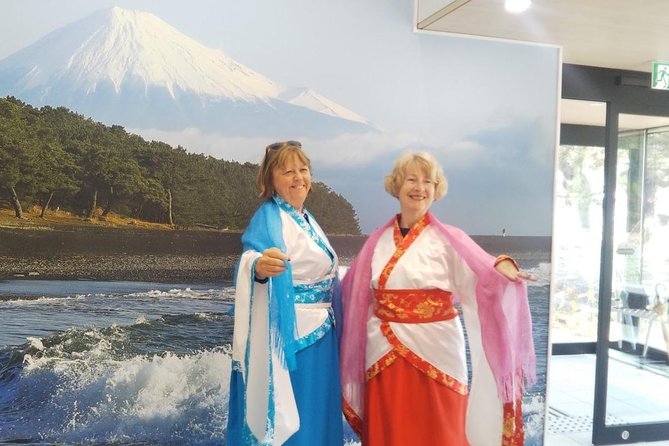
What makes this shrine stop extra satisfying is how guides bring it to life. In past tours, guides like Kiyo, Nobuko, Motoko, Miyuki, and Yoko have explained the shrine’s meaning with storytelling, and some guides have used visual flip-chart style materials to make the symbolism easier to follow. If you like adding context to the monuments you see, this is where your guide time pays off.
Stop 4: Nihondaira Travel Observatory, Fuji, and the big-sky moment
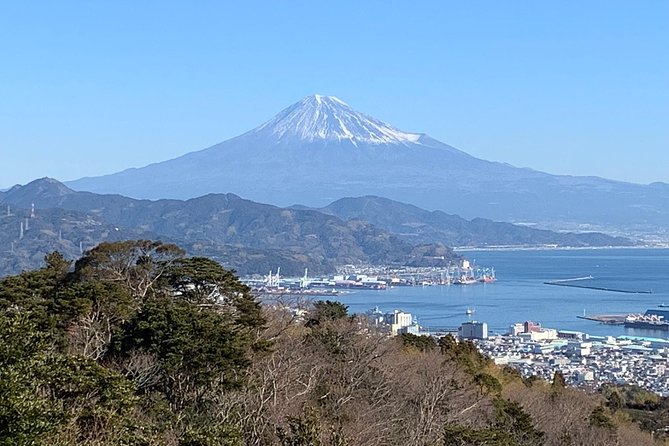
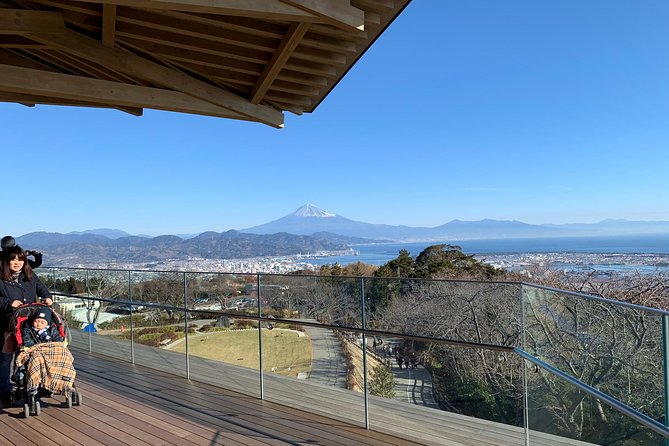
After the shrine, you head to the 日本平観光天文センター (Nihondaira Travel Observatory), a newer observatory that opened in November 2018. You’ll have about 20 minutes here.
The payoff is the wide view. The observatory is set up for spectacular sights that can include Mount Fuji, Shimizu Port, the Izu Peninsula, and the Southern Alps, assuming the sky cooperates.
If you’re lucky with weather, this is one of the best photo chances of the day because you’re positioned high and open to the horizon. If Fuji is not visible, you still get a sense of how Shizuoka’s geography stretches across the bay and coastline.
Stop 5: Nihondaira Ochakaikan tea fields and Fuji photos
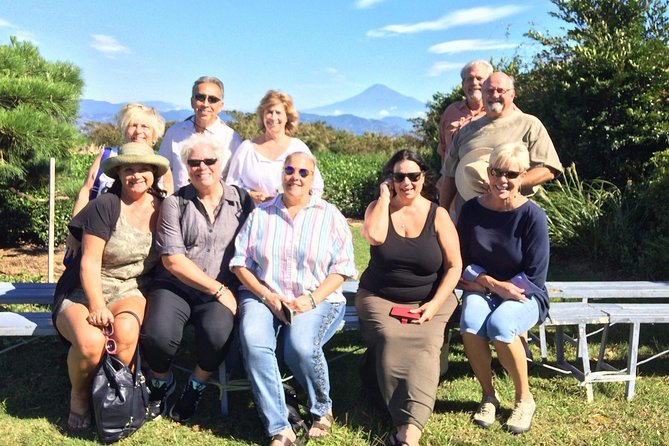
Then you move into the tea world at Nihondaira Ochakaikan, where you can enjoy a tea shop experience and visit green tea fields. This stop is about 20 minutes.
This is the most “Japan postcard” part of the route, because there’s a specific setup for Mt Fuji photos over the tea greenery, but it depends on weather conditions. If skies are clear, you can line up pictures with Fuji in the background. If not, it’s still a peaceful break with a sense of place you won’t get from a quick photo stop.
The best approach here is simple: take your time for one good Fuji attempt, then switch to enjoying the tea and field atmosphere. Some guides also point you to the best angles for pictures, so it helps to ask right at the start of the stop where to stand.
Stop 6: Ride toward Miho, pine and coast territory
From the tea area, the tour transfers by car toward the Miho region. The driving time listed here is about 20 minutes, and it sets you up for the classic seaside view next.
This short transport leg is part of what keeps the tour feeling doable. Instead of adding extra walking, the route keeps you moving by van while the guide manages the next photo and cultural stops.
Stop 7: Miho no Matsubara beach, black sand, and Fuji’s special angle
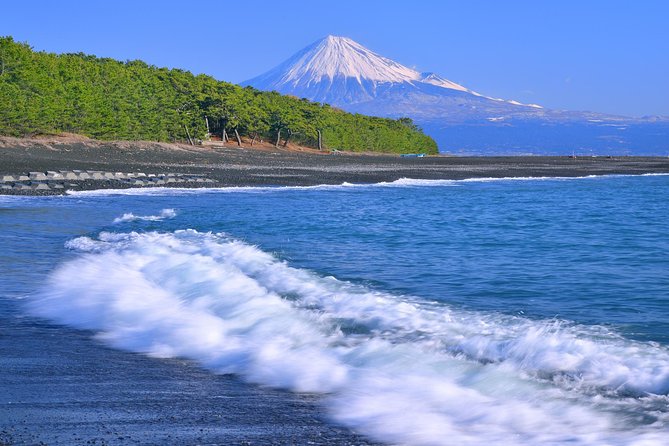
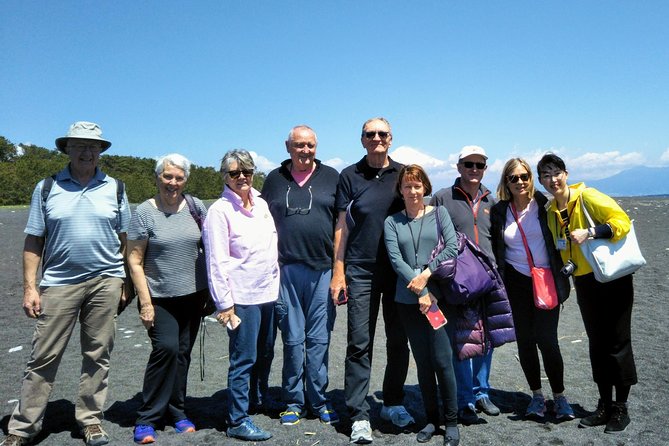
Next is Miho Seacoast, also known as Miho no Matsubara. This part of the area is tied to the Mt Fuji World Heritage context, and it’s famous for framing Fuji with pines and coastal drama.
You’ll have about 40 minutes here, with time to enjoy:
- the pine grove setting
- the black sand beach
- waves, blue sky when it’s there
- and the chance to see Fuji from a composition that many people describe as uniquely Japanese
This is also the stop where cloud cover can swing the experience. On clear days, the view can feel almost too perfect. On grey days, I’d treat this as a coast walk, not a Fuji test. You’ll still get the historic shoreline vibe and a strong sense of why Miho became a symbol.
Stop 8: Miho no Matsubara Culture & Creativity Center Mihoshirube
After the coast, you head to the Shizuoka City Miho no Matsubara Culture & Creativity Center Mihoshirube, which opened in March 2019. You’ll spend about 20 minutes here.
This stop is valuable when weather doesn’t cooperate. The center helps you understand Miho through history and stories, including the Hagoromo legend, and it also includes a short movie about Miho no Matsubara. That means your day isn’t just “see it, shoot it, leave.” You learn why the pines, beach, and mountain view matter in local storytelling.
Stop 9: Return to Shimizu Port
Finally, you ride back to Shimizu Port, with about 20 minutes for the transfer. The tour ends back at the same meeting point where you started.
That matters a lot if you’re on a cruise, because “back to the ship” logistics can make or break your day. Here, the plan is built to end where you began.
What you get from the English-speaking guide, besides facts
The guide is the real multiplier on this tour. Since it’s private, you can ask questions and shift pace without feeling like you’re slowing down a bus load of strangers.
In the best examples from past tours, guides such as Kiyo, Miyuki, Nobuko, Motoko, Kyla, Michiko, and Hero handled the day with a mix of culture, geography, and humor. Some used visual aids for shrine explanations and told folk tales so the places felt like part of a connected story, not isolated stops.
I also like the way photo moments are handled. Several guides have been praised for taking group photos and stepping in with direction so you’re not just pointing your camera at a view and hoping for the best.
One practical comfort detail from reviews: some groups appreciated small extras like cooling wipes or hydration tablets, and some guides also adapted walking levels for elderly parents by minimizing steps where possible. Even if you’re very mobile, that flexibility is a big plus.
Logistics that can save you stress at the ropeway and shrine
If you’ve ever been at a viewpoint where the crowd hits all at once, you know how quickly time disappears. This tour is designed to manage those bottlenecks by using timing and coordination so you’re less likely to get trapped.
There are strong signals that guides often get groups to the ropeway and shrine before the heaviest waves arrive. That doesn’t mean you’ll have the whole place to yourself, but it does mean you can breathe, take photos, and enjoy the stops without a constant squeeze.
The one physical consideration to plan around is the stone steps after the ropeway at Kunozan Toshogu Shrine. It’s not described as an optional extra. If you’re worried, it’s worth going into the day with good shoes and an honest assessment of your step tolerance.
Who this tour fits best
This is a strong match for:
- Cruise passengers who need a smooth port-based plan and hate transfer hassles
- Small families and groups up to 8 who want private guiding
- People who want both Mt Fuji viewpoints and a major cultural site linked to Tokugawa history
- Visitors who prefer learning through a guide’s stories and explanations, not just reading plaques
It may be less ideal if you want a full free-roam day on your own. This is tightly structured toward specific highlights, and the charm is that you follow the route efficiently.
Should you book this Shimizu Port private tour?
Book it if you want a day where transportation, timing, and interpretation are handled for you. The combination of a private jumbo taxi, an English-speaking guide, and multiple Fuji-focused stops makes it one of the more efficient ways to experience Shimizu around the port.
If you’re booking specifically for Mt Fuji, accept that clouds happen. My advice is to show up ready to enjoy the shrine, tea fields, and the Miho coastal area even if Fuji plays hide-and-seek.
One more tip: if you can request a guide, consider options like Kiyo, Miyuki, Nobuko, or Yoko based on past guest experiences. You’ll still get the same route, but the storytelling and pacing can make the day feel lighter and more personal.
FAQ
Where is the meeting point for the tour?
You meet at Shimizu Port, Hinodechō 10-80 (Espars Dream Ferry FT). The tour returns to the same meeting point at the end.
How long is the tour?
The tour lasts about 4 hours.
Is this a private tour or shared group?
This is a private tour, meaning only your group participates.
What is included and what is not included?
Included are private transportation and an English-speaking guide. Not included are lunch, and the set ticket for the ropeway and Kunozan Toshogu Shrine areas.
What separate payment do I need for the ropeway and shrine?
You need a set ticket of ¥1,950 per person for the round trip ropeway, admission fee to Kunozan Toshogu Shrine, and the museum.
Is lunch provided?
No. Lunch is not included, and lunch time is not part of the tour.
Will I have to walk or climb stairs?
Yes. To reach Kunozan Toshogu Shrine, you need to climb stone steps after getting off the ropeway. The tour is listed for travelers with moderate physical fitness.
Newest Shizuoka write-ups from the Loving Japan desk
Private, side by side.
 ★ 5.0Tokyo 6hr Private Tour with Government-Licensed GuideFrom $1553,902 reviews
 ★ 5.0Private Tour to Mt. Fuji and Hakone (Fully Licenced Operator)From $4971,910 reviews
 ★ 4.9Mount Fuji Full-Day Private Tour from Tokyo (Customizable)From $3931,470 reviews
 ★ 4.8Private City Highlights Tour with Local GuideFrom $1061,433 reviews
 ★ 5.0Private Custom Tour: Tokyo in a DayFrom $1591,432 reviews
 ★ 5.0Kyoto 6hr Private Tour with Government-Licensed GuideFrom $1551,369 reviews
 ★ 5.0Tokyo Customized Private Tour: See Top Attractions in 1 DayFrom $1451,351 reviews
 ★ 4.9Hotspots & Hidden Gems Walking Tour Private or GroupFrom $331,300 reviews