
REVIEW · TOURS WITH GOVERNMENT-LICENSED GUIDES
Kyoto 6hr Private Tour with Government-Licensed Guide
Kyoto gets easier with a local guide. I like the private government-licensed guide who keeps the day moving, and I also love the Q&A time that helps you understand what you are seeing, not just where to stand. The main consideration is simple: this is a walking tour and lunch is not included.
What makes this one work is the structure. You plan a route that makes sense by public transportation, then spend the rest of the day learning, asking questions, and getting your bearings fast for your remaining Kyoto time.
In practice, I see why it scores so high. Guides like Yuji and Joy Etsuko are praised for staying flexible to the day’s pace, while Noriko, Yuka, and Yasu get credit for helping people feel comfortable with trains and subways.
In This Review
- Key things I’d focus on before you go
- A government-licensed English guide makes Kyoto make sense
- Picking 3 to 4 stops turns a huge city into a doable day
- Price and value: what $155.86 covers, and what to budget
- Entering Kyoto by public transport, with the right kind of walking
- Fushimi Inari torii tunnels to Gion alleyways: a classic Kyoto arc
- Higashiyama and the “old Kyoto” feeling: choosing the right temple depth
- Nijo Castle and Kyoto Imperial Palace: power, design, and ceremony
- The Eastern Temple Circuit: Zen, gardens, and Kyoto’s famous names
- Ninna-ji, Shugakuin Imperial Villa, and other temple choices for quieter variety
- Sanjusangendo and Kennin-ji: statues, corridors, and street-level Kyoto
- Arashiyama: bamboo paths, Tenryu-ji, and the Togetsukyo Bridge moment
- Katsura Imperial Villa, Daikakuji, and Yoshimine-dera for garden and villa lovers
- Northern Kyoto: Kibune River and Kurama-dera
- A note on Byodoin in Uji: extra travel time for the Phoenix Hall
- Real-world guide strengths that show up in reviews
- Tips to make your 6 hours feel smooth
- Should you book this Kyoto private tour?
- FAQ
- How long is the Kyoto private tour?
- Is this tour private or shared with other travelers?
- Can I choose which places to visit?
- Do I need to meet the guide somewhere specific?
- Is lunch included in the price?
- Are temple and castle admission tickets included?
- Is a mobile ticket provided?
- Can I cancel for a full refund?
Key things I’d focus on before you go
- Private guide, not a group stampede: it is just your group, with time for questions.
- You choose 3 to 4 sites: the long Kyoto wish list gets narrowed into a doable plan.
- Public transportation plus walking: you get shown how to move around, not just escorted.
- Plenty of free stop options: several highlights are free, which helps value.
- Some sights have admission fees: many temples and palaces are not included, so budget for tickets.
Licensed guides working the same ground
- Kyoto 4hr Private Tour with Government-Licensed Guide
★ 5.0 · 629 reviews - Kyoto: Private Tour with Local Licensed Guide
★ 4.8 · 463 reviews - Private Kyoto Tour with Licensed Guide & Vehicle (Max 15 persons)
★ 5.0 · 417 reviews - Nara 8hr Private Tour – Kyoto DEP. with Licensed Guide
★ 5.0 · 115 reviews
A government-licensed English guide makes Kyoto make sense
This tour is built around one big advantage: a licensed local English-speaking guide who talks you through what you are looking at as you move. Kyoto is full of similar looking temple gates, shrine buildings, and pathways. The guide helps you tell the difference, and that changes the day from sightseeing into understanding.
I also like how the guide uses the day for real conversation. Reviews mention people peppering their guides with questions and getting patient answers. That is especially helpful if you are new to Japanese religion, the history of the shogun period, or why certain temple designs exist.
One more plus, based on feedback: guides pay attention to pace. Emi is praised for making sure a multi-generation group had a great day, and Akira is praised for keeping a senior-friendly speed. If you tell your guide your walking tolerance up front, you are more likely to get a day that feels enjoyable instead of exhausting.
Picking 3 to 4 stops turns a huge city into a doable day
The tour offers a customizable plan where you choose 3 to 4 sites from a wide list. That is crucial for Kyoto. Even the most famous places can eat time with queues and getting oriented, so a focused route is the smart move.
In the real world, you will see many good pairings, especially when you keep to one side of the city. For example, one Yuji-led itinerary highlighted Fushimi Inari with the famous torii tunnels, then added Sanjusangendo (the temple of many statues), Kiyomizu-dera, and Gion-style streets. That kind of pairing gives you variety without doubling back all day.
If you are trying to cover everything, this will not be your tool. But if you want your “best of Kyoto” day to actually feel like a day, this format is strong.
Price and value: what $155.86 covers, and what to budget
At $155.86 per person, you are paying mainly for a private guide and route guidance. You are not paying for a private vehicle, and you are not paying for lunch. You also should assume that many of the temple and castle admissions are not included, since the tour notes that admissions are not part of the package.
That said, the value can swing in a favorable direction if you choose more free sights. The listed options include several free highlights such as Fushimi Inari-taisha Shrine, Gion, Nishiki Market, Pontocho, and Toji. Those free stops help your money go farther, because your guide time is the constant part of the price.
So I would treat this as a “pay for the thinking and logistics” experience. If you use the guide well, asking questions and letting them shape the route, you tend to get more out of each hour.
- PERFECT KYOTO 1-Day Bus Tour★ 5.0 · 13,518 reviews
- Kyoto: Fushimi Inari, Kinkakuji, Bamboo Grove 1 Day Bus Tour★ 4.8 · 4,316 reviews
- Kyoto: Tea Ceremony in a Traditional Tea House in Kiyomizu★ 4.9 · 3,519 reviews
- Kyoto Geisha Walking Tour: Gion District & Hidden Gems★ 4.7 · 3,273 reviews
- Kyoto: Tea Ceremony Ju-An at Jotokuji Temple★ 4.9 · 3,207 reviews
Entering Kyoto by public transport, with the right kind of walking
This is not a bus tour. It is a walking tour with public transportation nearby, plus pickup and drop-off on foot within a designated area. That matters because Kyoto’s best areas are often the places where you do the most walking.
I like the practicality here. When a guide helps you understand how to use trains and subways, you earn freedom for the rest of your trip. Noriko is specifically praised for guiding people through the train systems, and Louis is praised for packing the day with meaningful stops.
The main drawback to watch is energy. Some temple days in Kyoto feel easy on paper and harder in reality, because you climb stairs, walk uneven paths, and switch between tram-style corridors and shrine lanes. If you have mobility limits, tell your guide early and pick fewer, closer stops.
Fushimi Inari torii tunnels to Gion alleyways: a classic Kyoto arc
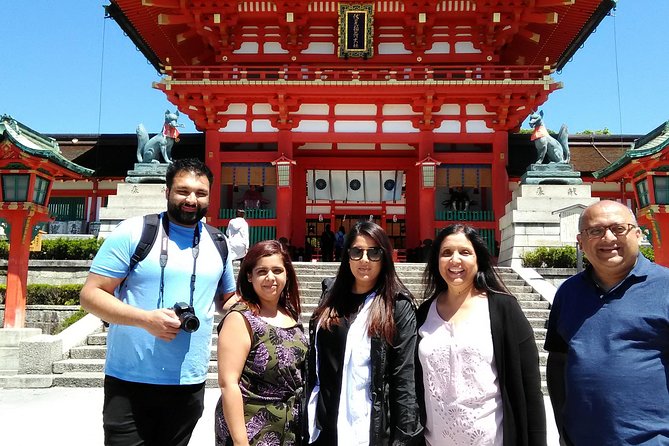
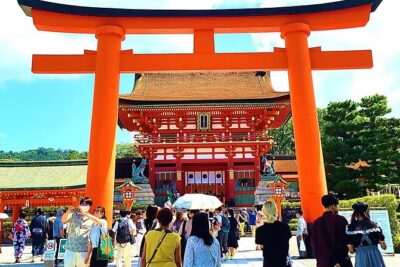
If you want one day that feels like Kyoto, you usually start with Fushimi Inari. The shrine is famous for vermillion-red torii gates forming tunnels. It is a striking photo moment, but the better part is learning how the place functions and why it is so iconic in Japanese culture. Admission for this stop is listed as free, which makes it an easy win.
Next, Kiyomizu-dera is one of Kyoto’s most famous temple stops. It is listed with a guided tour option for about an hour. This is the kind of place where you will want your guide’s explanations, because the main structures and viewpoints can feel overwhelming if you do not know what you are looking at. Admission is listed as not included here.
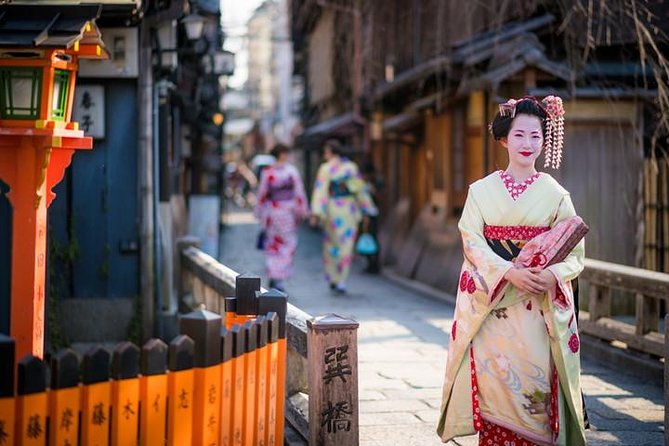
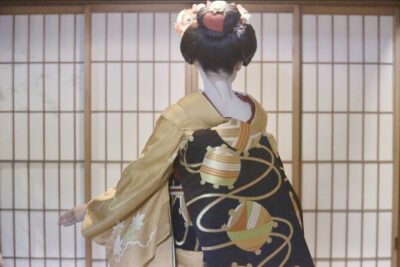
Then you can move into Gion, Kyoto’s geisha district. The guide route matters because Gion’s narrow lanes can feel intimidating if you are trying to find your way on your own. The listing notes admission as free for this area, which helps you keep your day flexible.
Two nearby-style atmosphere add-ons from the list: Nishiki Market and Pontocho. Nishiki is known as Kyoto’s Kitchen, a narrow shopping street with lots of food and snack options. Pontocho is a narrow dining alley running between Shijo-dori and Sanjo-dori, one block west of the Kamogawa River. Both are listed as free, and both are great for a first-timer to learn how locals eat, shop, and stroll.
Higashiyama and the “old Kyoto” feeling: choosing the right temple depth
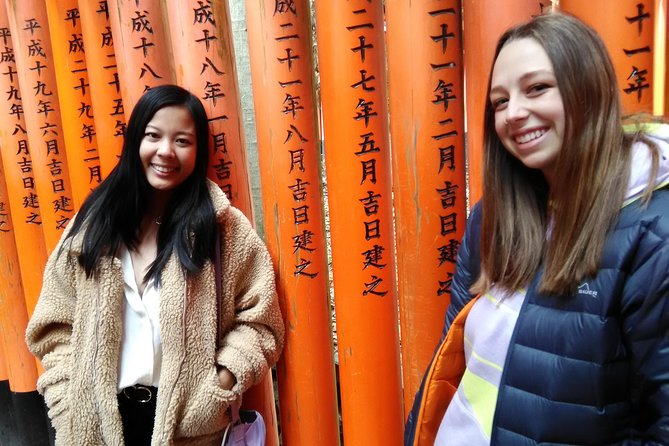
Higashiyama Ward is one of the best preserved historic districts along the lower slopes of Kyoto’s eastern mountains. This is where Kyoto starts to feel like a neighborhood, not an attraction map.
If your goal is classic scenery and walking, this stop is ideal. The watch-out is crowding in peak hours. A guide can help you time your movement and choose the right side streets.
For a temple add-on in this zone, you have options like Ginkakuji, also called the Silver Pavilion. It is a Zen temple in the Higashiyama area, and the retirement villa story is part of why it matters. Admission is listed as not included, so budget for tickets when you build your 3 to 4 stop plan.
Nijo Castle and Kyoto Imperial Palace: power, design, and ceremony
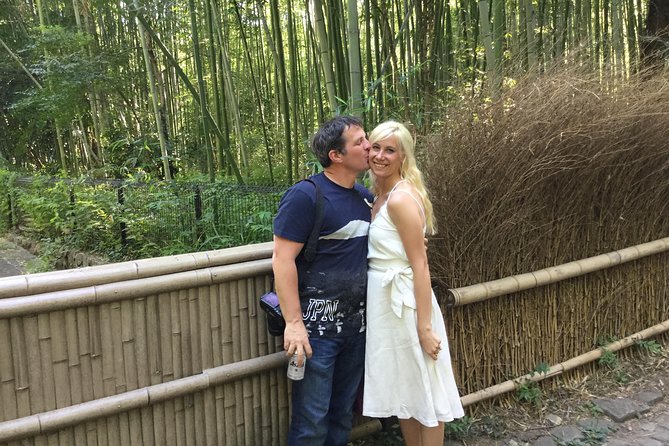
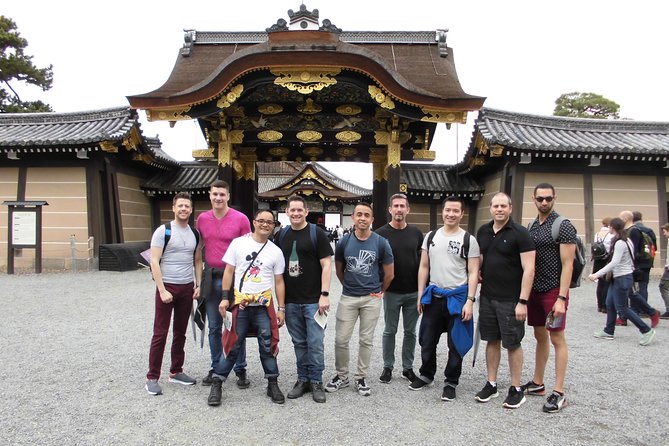
Nijo Castle is a highlight tied to the Tokugawa shogun period. The listing specifically connects the castle’s gorgeous style to Tokugawa Ieyasu and the idea of his presence and power. Admission is listed as not included.
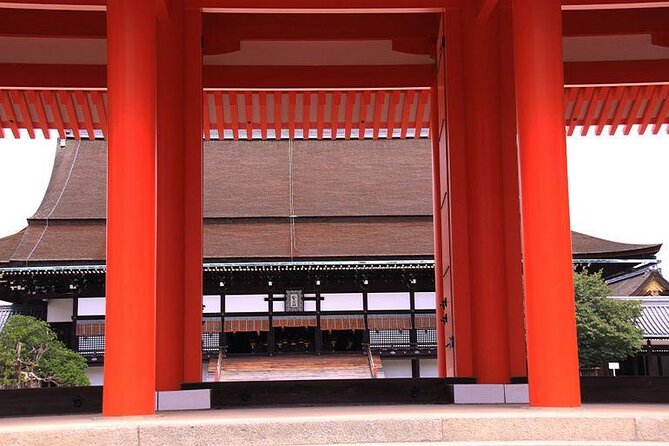
Kyoto Imperial Palace is another “big history” option. The listing says it was the imperial residence until 1868, when the emperor and capital moved to Tokyo. It is located in the spacious Kyoto grounds, so it can feel like a calmer break from the densest shrine lanes. Admission is listed as not included here as well.
If you are short on time, I would pick either Nijo Castle or the Imperial Palace based on your interest. Both are meaningful, but cramming both plus other heavy walking can make the day feel rushed.
The Eastern Temple Circuit: Zen, gardens, and Kyoto’s famous names
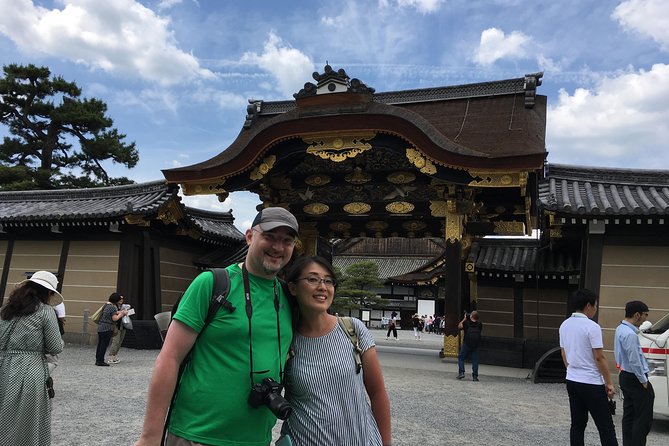
Kyoto’s eastern and central zones give you several high-value choices that fit well into a 3 to 4 stop day.
- Nanzenji Suirokaku is listed as a key Zen temple with spacious grounds at the base of Higashiyama.
- Tofuku-ji is a Zen temple in southeastern Kyoto, noted for spectacular autumn colors (seasonal, but it still matters for design and layout year-round).
- Toji is a major temple founded around the Heian Period, and admission is listed as free in the tour outline.
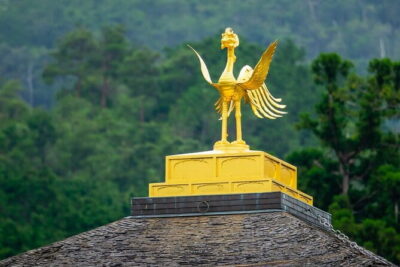
- Kinkakuji is the Golden Pavilion, a Zen temple with top floors covered in gold leaf. That visual effect is the whole point, and it is a classic Kyoto moment. Admission is listed as not included.
Then there are two more Zen-style anchors worth considering if they match your interests. Ryoan-ji is famous for Japan’s most well-known rock garden. And Eikando Zenrinji is famous for autumn colors and evening illumination, which means the experience can be season-dependent, but it is still a strong name on the Kyoto list. Admission is listed as not included for both.
My practical advice: if you already saw “a lot of gold and rock gardens” in another city, choose one signature Zen stop and let the rest of your time go to shrines and neighborhood atmosphere like Gion, Nishiki, and Pontocho.
Ninna-ji, Shugakuin Imperial Villa, and other temple choices for quieter variety
If you want variety away from the biggest daily crowd magnets, Ninna-ji can work. It is listed as a World Heritage Site and as the head temple of the Omuro School of Shingon Buddhism, founded in 888. Admission is not included.
Shugakuin Imperial Villa is another option that feels different from typical temple touring. The listing says it was built in the 17th century by Emperor Gomizuno and is managed by the Imperial Household Agency. It is split into Upper, Middle, and Lower Villa areas, which means it can be a good “change of pace” stop if you have been walking shrine lanes. Admission is listed as not included.
Other north and Zen-focused options on the list include Daitoku-ji (a large walled temple complex with many subtemples) and Myoshinji (a large complex with about 50 subtemples). Both are listed with admissions not included. These can be a great match if you like the quiet feel of temple grounds and want to reduce the “maximum crowds” factor.
Sanjusangendo and Kennin-ji: statues, corridors, and street-level Kyoto
Sanjusangendo, also called Rengeo-in, is known for its 1001 statues of Kannon, the goddess of mercy. It is one of those places where a guide’s explanations help you understand why so many figures exist and how people experience the space.
Kennin-ji is closer to the city’s street life, located very near Hanamikoji and Shijo streets. The listing highlights that the grounds are expansive and pleasant to walk, plus it includes dry landscape gardens. Admission is listed as not included, but it can be a strong option if you want a temple that still feels easy to connect to a neighborhood setting.
Arashiyama: bamboo paths, Tenryu-ji, and the Togetsukyo Bridge moment
Arashiyama is a full-on experience zone, and it is perfect for a 3 to 4 stop plan. The listing includes the bamboo groves with walking paths where the stalks sway in a light wind. That is the kind of sensory detail that makes a guide route worthwhile, because timing and pacing affect how good it feels.
The listing also includes Tenryu-ji, described as the most important temple in Arashiyama, a head temple among Kyoto’s great Zen temples, and registered as a World Heritage Site. Admission is listed as not included.
Then there is the famous Togetsukyo Bridge, called Moon Crossing Bridge. It is Arashiyama’s iconic landmark, originally built during the Heian Period and reconstructed in the 1930s. If you include this area, it makes sense to add nearby sites so you are not treating it as a quick photo stop and then leaving.
Additional Arashiyama-style options on the list can add texture:
- Okochi Sanso Garden, a former villa behind the bamboo groves associated with actor Okochi Denjiro.
- Jojakkoji, Nisonin, and Gio-ji, hillside temples known for maple trees, moss, and quiet atmosphere.
- Adashino Nenbutsuji and Otagi Nenbutsuji, famous for stone statues of rakan, with the Otagi option listed as having 1200 statues.
Admission for these is listed as not included.
One practical consideration: the Arashiyama list is big. If you choose too many hills and stairs, you can end up spending more energy walking between “quiet corners” than actually enjoying them. Pick the one that matches your mood.
Katsura Imperial Villa, Daikakuji, and Yoshimine-dera for garden and villa lovers
If your group loves garden design and formal spaces, Katsura Imperial Villa is one of the standout names on the list. The listing describes it as one of the finest examples of Japanese architecture and garden design, with the villa and garden completed in 1645.
Daikakuji is included as a large temple in the Sagano district that began as an early 800s detached palace of Emperor Saga. Yoshimine-dera is another option described as a Tendai sect temple in the western mountains.
These stops can be a smart choice if you want “beauty with context,” since a guide can explain why the design matters, rather than just letting you roam.
Northern Kyoto: Kibune River and Kurama-dera
For a change of scenery, the list includes Kibune and Kurama, both in the northern mountains area.
Kibune is described as a small town in a forested valley developed around Kifune Shrine, with a legend about a goddess traveling by boat from Osaka. It is listed as free.
Kurama is described as a rural town less than one hour from the city center, known for Kurama-dera and a hot spring. Admission is listed as not included for Kurama-dera.
If you feel tired of temple density, this can be a great way to break the day with a more natural setting.
A note on Byodoin in Uji: extra travel time for the Phoenix Hall
Byodoin in Uji is in the wider Kyoto prefecture area, and the listing warns of extra travel time. It is known for the Phoenix Hall, described as a National Treasure and UNESCO World Heritage Site.
If your 3 to 4 stop plan includes it, I suggest treating Byodoin as a centerpiece stop, not a quick add-on. The guide will help you decide if it fits your energy and timing.
Real-world guide strengths that show up in reviews
When a tour like this works, it is not the sights alone. It is how the guide runs the day.
Yuji gets praised for friendliness and knowledge, plus for using a mix of public transportation and well-chosen sightseeing flow on the eastern side. Joy Etsuko gets praised for being patient and for molding the day to the natural flow of the day, not just a strict clock. Andy (Atsushi) and Noriko get credit for making the navigation feel manageable, including comfort with subways and trains. Kaeko gets credit for food and shopping recommendations, which is useful because lunch is not included.
On pace and planning, I especially like the pattern: many guides do early communication. Reviews mention Kazuo communicating via WhatsApp to agree on an itinerary. Others tailor the pace for seniors and match walking speed to the group.
The one caution comes from a rare negative review. It mentions a guide losing track and English being hard to understand, plus a lack of time for lunch. That is not the norm implied by the overall ratings, but it is still a good reminder: set expectations early, ask about your preferred pace, and if lunch time matters, tell the guide during planning.
Tips to make your 6 hours feel smooth
- Wear shoes built for walking and stairs. Kyoto is beautiful and also vertical.
- Pick a theme for the day: shrines and neighborhoods (Fushimi Inari, Kiyomizu, Gion), Zen and gardens (Ginkakuji, Kinkakuji, Ryoan-ji), or Arashiyama scenery (bamboo, Tenryu-ji, bridge).
- Plan for lunch on your own, since lunch is not included.
- Expect that some of your top choices will have admission fees, while some areas are free.
- If you care about train timing and transfers, say so. Many guides are praised for helping people get comfortable with the systems.
Should you book this Kyoto private tour?
Book it if you want a guided Kyoto day that stays flexible and you value someone helping you connect the dots while you ride trains and walk between stops. The customization to 3 to 4 sites is the right size for a 6-hour experience, especially for first-timers who do not want to feel lost.
Skip it or adjust your plan if you want a fully transportation-heavy, car-based tour with built-in lunch time. Also be honest about walking tolerance. This is a walking tour, and the best Kyoto moments often sit behind a few stairways and detours.
If you match the route to your pace and pick the stops that fit your mood, this is a strong way to start your Kyoto trip and make the rest of your days easier.
FAQ
How long is the Kyoto private tour?
It runs for about 6 hours.
Is this tour private or shared with other travelers?
It is private. Only your group participates.
Can I choose which places to visit?
Yes. You can customize the tour by choosing 3 to 4 sites from the available options.
Do I need to meet the guide somewhere specific?
Yes. Pickup and drop-off are on foot, and you meet the guide within a designated Kyoto area. The tour is near public transportation.
Is lunch included in the price?
No. Lunch is not included.
Are temple and castle admission tickets included?
Not in general. The tour lists admissions as not included for many stops, while some locations are listed as free.
Is a mobile ticket provided?
Yes. The tour includes a mobile ticket.
Can I cancel for a full refund?
Yes. Free cancellation is available up to 24 hours in advance of the experience start time for a full refund.
If you tell me your travel dates and the 3 to 4 stops you are leaning toward, I can help you narrow it into a route that fits a comfortable pace.
Licensed Guides on the Same Ground

Newest Kyoto write-ups from the Loving Japan desk

Tours with Government-Licensed Guides, side by side.
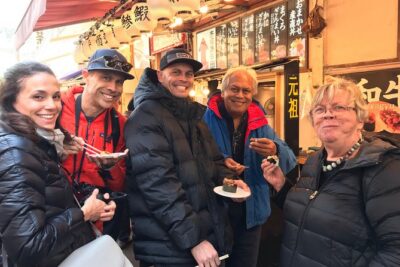 ★ 5.0Tokyo 6hr Private Tour with Government-Licensed GuideFrom $1553,902 reviews
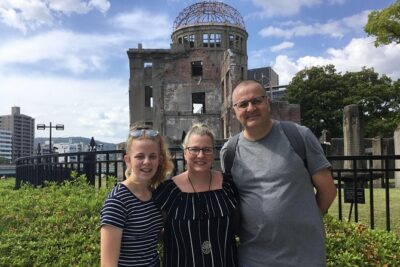 ★ 5.0Hiroshima / Miyajima Full-day Private Tour with Government Licensed GuideFrom $2021,298 reviews
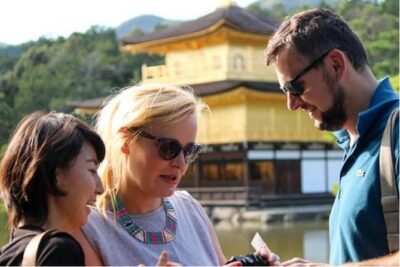 ★ 5.0Kyoto 4hr Private Tour with Government-Licensed GuideFrom $109629 reviews
 ★ 4.8Private Tour with Local Licensed GuideFrom $106463 reviews
 ★ 5.0Hiroshima City 4hr Private Walking Tour with Licensed GuideFrom $122437 reviews
 ★ 5.0Private Kyoto Tour with Licensed Guide & Vehicle (Max 15 persons)From $634417 reviews
 ★ 5.0Osaka 4hr Private Tour with Government-Licensed GuideFrom $109359 reviews
 ★ 5.0Nikko Full-Day Private Tour with Government-Licensed GuideFrom $155259 reviews
Filed on these lists too