
REVIEW · FOOD & DRINK
Tokyo: 3-Hour Food Tour of Shinbashi at Night
Shinbashi night food turns Tokyo into a human place. I really like the small-group feel (max 10) and the way the evening is built around real after-work hangouts, not just set menus. I also like the sake-tasting portion, where guides explain what you are tasting and why it changes from one glass to the next, like Ray and Francois are known for doing with extra clarity.
One thing to think about: you must be on time. Your guide can wait only about 5 minutes after start, and once the tour begins, they cannot give directions by phone, so late arrivals can miss the departure.
In This Review
- Key points before you go
- Shinbashi After Dark: the Working-Class Tokyo You Actually Want
- Meeting at Shinbashi Station (Hibiya Exit) and the On-Time Rule
- The Food Stops: Ramen, Wagyu, and Dessert in a Real-World Order
- The ramen moment you can feel in your hands
- Wagyu that lands with a smoky finish
- Desserts to end the night the traditional way
- Why the Sake Tasting Feels Different Than a Sip-and-Go
- Eating Alongside Workers: the After-Work Culture Lesson
- Backstreets, Not Big Boulevards: What You Notice When the Streets Get Smaller
- Courtesy Moves That Make Your Meal Go Smoothly
- Price and Value: Is $170 Worth a 3-Hour Night Out?
- Timing, Walking Pace, and Group Size Comfort
- Who This Tour Fits Best (and Who Might Want Something Else)
- Should You Book This Shinbashi Night Food Tour?
- FAQ
- Where is the meeting point?
- How long is the tour?
- How many people are in the group?
- Is the tour led by an English-speaking guide?
- What does the price include?
- What is not included?
- Is hotel pick-up available?
- What is the age requirement?
- What should I bring and wear?
- Is there anything I should know about smoking?
Key points before you go
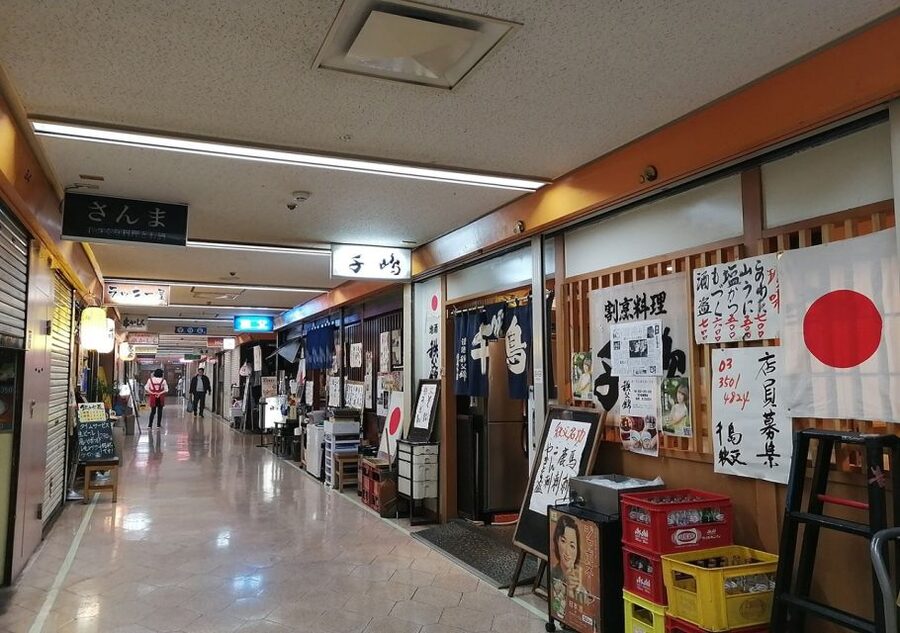
- Shinbashi backstreets at night, with that retro-local after-work energy you only find away from the main drags
- Ramen to finish-that-work-day style, plus other local dishes and desserts at multiple food stops
- Regional sake tasting with an experience that focuses on complexity, not just drinking
- Eat alongside working locals, so you see how people unwind after a long day
- English-speaking guide who also shares practical etiquette, like how to properly thank staff when you leave
Still weighing up options in Tokyo? These are the ones our reviewers rated highest.
- Mt Fuji and Hakone 1-Day Bus Tour Return by Bullet Train
★ 5.0 · 26,383 reviews - 1-Day Tokyo Bus Tour
★ 5.0 · 14,250 reviews - Tokyo: teamLab Planets TOKYO Digital Art Museum Entry Ticket
★ 4.6 · 9,779 reviews - Mt Fuji & Hakone Cruise, Drum Show Bullet Train 1 Day from Tokyo
★ 4.0 · 7,413 reviews
Shinbashi After Dark: the Working-Class Tokyo You Actually Want
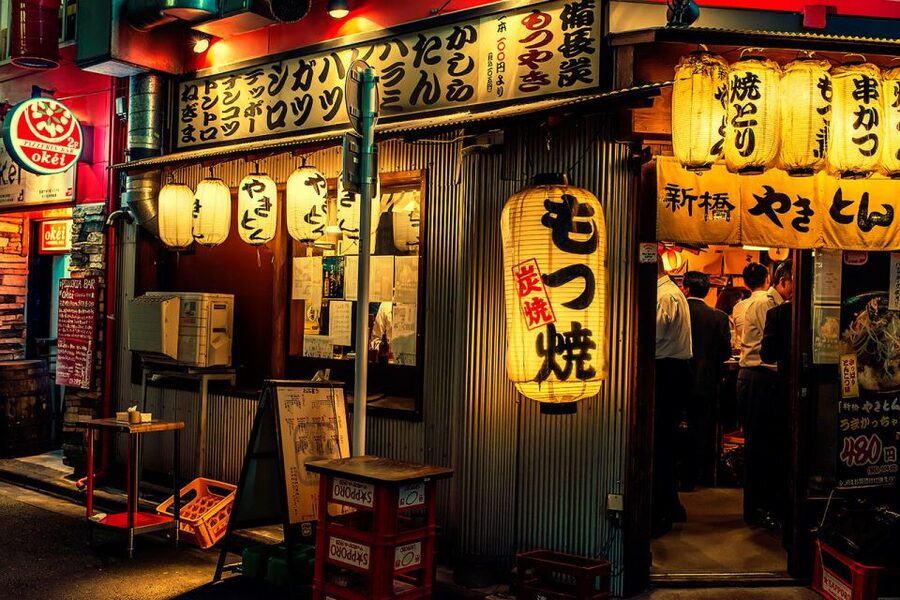
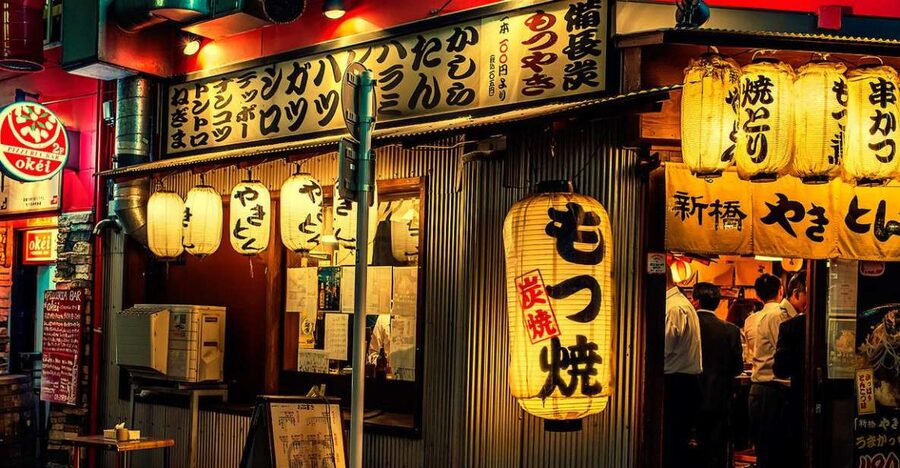
Shinbashi is one of those Tokyo areas that feels like it never fully switched off after office hours. The sidewalks get louder, the lights get warmer, and you start seeing groups in uniforms and casual workwear heading toward small places where dinner happens fast and feels familiar. This tour leans directly into that vibe, so you are not just eating, you are watching the rhythms of the neighborhood.
In about 3 hours, you move through several food stops, so the evening has variety without turning into an all-night sprint. You typically start with savory comfort food, then shift into richer flavors like wagyu, and end with a traditional dessert. The result is a “full meal” experience in walking form, with the guide acting like your translator for both the menu and the moment.
What makes this more than a food sampler is the social side. You get to eat around the kind of people who actually come here after work. That means you learn what Japanese pub culture feels like in practice, the pacing, the ordering style, and the general expectation that you are there to enjoy the food and respect the place.
Meeting at Shinbashi Station (Hibiya Exit) and the On-Time Rule
You meet in front of the decommissioned steam engine at the Hibiya exit of Shinbashi Station. It is a clear landmark, which matters in Tokyo because crowds and side streets can scramble your sense of direction.
Here is the part you should plan for: your guide can wait only an additional 5 minutes after the starting time. After that, the tour departs, and the guide cannot provide directions by phone once the tour begins. So if you think you might be delayed, build in buffer time before you even reach the station exit.
Also, bring an ID or passport, because the tour is for adults 20 and over. Comfortable walking shoes are a must. Even though it is only 3 hours, Shinbashi at night is a lot of “step, stop, eat, repeat,” and you will feel it if your shoes are not supportive.
The Food Stops: Ramen, Wagyu, and Dessert in a Real-World Order
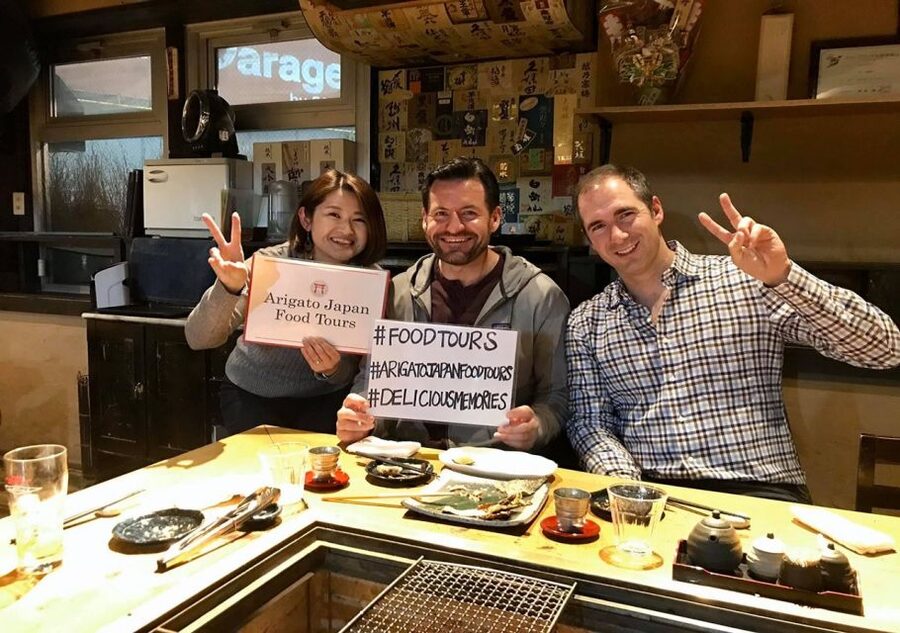
This tour is built around multiple places, so each stop gives you a different angle on Japanese comfort and regional flavor. You are not just sampling the same style of food over and over. You are likely to see a mix of local dishes and desserts, anchored by the kinds of favorites people actually chase after work.
- Mt Fuji and Hakone 1-Day Bus Tour Return by Bullet Train★ 5.0 · 26,383 reviews
- 1-Day Tokyo Bus Tour★ 5.0 · 14,250 reviews
- Tokyo: teamLab Planets TOKYO Digital Art Museum Entry Ticket★ 4.6 · 9,779 reviews
- Mt Fuji & Hakone Cruise, Drum Show Bullet Train 1 Day from Tokyo★ 4.0 · 7,413 reviews
- Tokyo: Shinjuku Food Tour (13 Dishes at 4 Local Eateries)★ 5.0 · 6,603 reviews
The ramen moment you can feel in your hands
Expect a steaming bowl of ramen early on. Ramen is the perfect first step for a night food walk because it is both warming and filling, and it travels well as a shared starting point. I like how guides frame it too, because ramen in Tokyo is not just noodles. It is about broth depth, seasoning balance, and the overall “why this place works” factor.
Wagyu that lands with a smoky finish
Then comes the richer part: wagyu, served seared with a careful smoky char. If you have only had wagyu at high-end restaurants before, this is a chance to experience it in a more casual, neighborhood setting. The comparison is often surprising, because what you care about most is the technique and the fat behavior, not the plating drama.
Desserts to end the night the traditional way
Finally, the tour closes with a traditional dessert. Dessert on a food tour is where a lot of experiences either go generic or go missing. Here, it is positioned as a proper finish, so the evening feels complete, not like you just stopped because you ran out of stomach space.
One more practical note: the exact menu can vary, since these are local spots. But the structure stays the same: savory first, richer middle, sweet ending. And if a guide points out a specific item as a must-try, it is usually tied to the local specialty of that stop, not just what looks good for photos.
Why the Sake Tasting Feels Different Than a Sip-and-Go
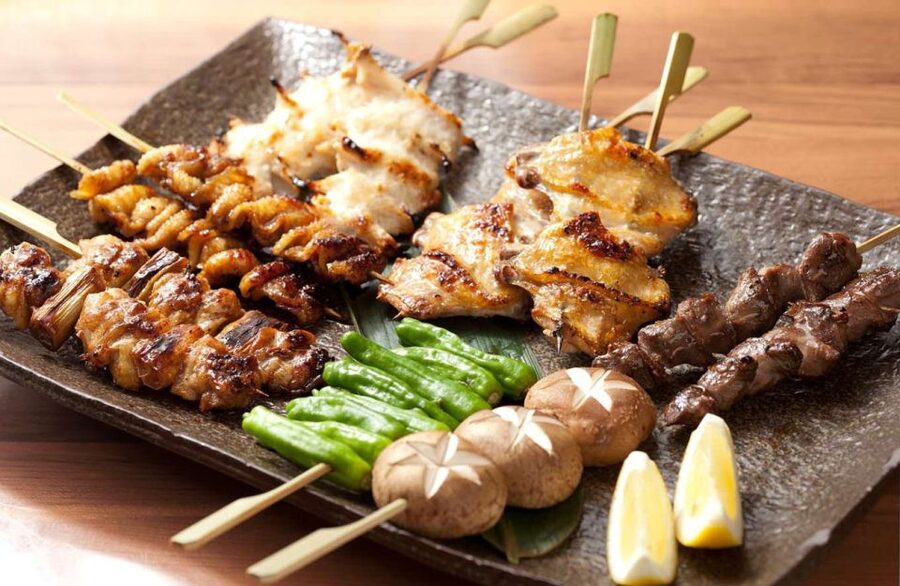
Tokyo is famous for sake, but many visitors end up treating it like a side quest. This tour does something smarter: it makes the tasting part the center of the evening’s flavor education.
You get regional sake during a tasting experience, with enough guidance to notice how the drink changes as you move through it. Guides typically talk you through what you are tasting, then you taste again, and suddenly the differences feel real in your mouth, not just academic.
I like that the tour describes the tasting as evolving with each sip. That is the key. Sake is not only about sweetness or strength. It is about aroma, texture, and how it interacts with what you just ate. When this is done right, you start noticing pairings naturally, because the sake either lifts the food or smooths the edges of it.
If you have been unsure about sake before, this is a good setting to give it another chance, especially with an English-speaking guide who can explain without making it sound like a textbook.
Eating Alongside Workers: the After-Work Culture Lesson
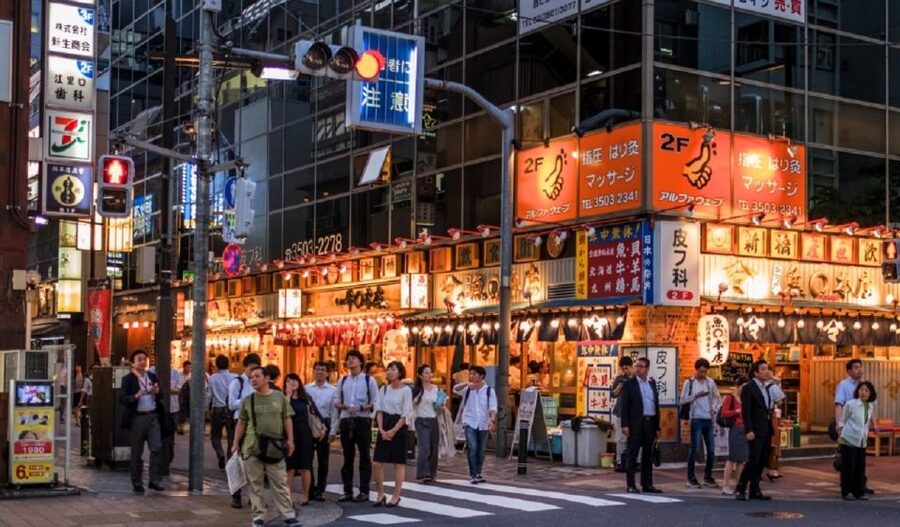
The best part of this tour, for me, is the social realism. The tour is designed so you eat alongside the real workers of Japan as they unwind after a long day. That means your food is not floating in a staged tourist bubble. You are sharing the atmosphere of small restaurants where people come to relax, talk, and eat something satisfying without turning it into a big production.
You also get to see how people handle the flow of a night meal. Orders can be quick. Conversation can be lively but not performative. Staff and customers often have an easy rhythm. It is a lesson in how Japanese hospitality works in everyday settings.
This is also why the route through Shinbashi backstreets matters. Shinbashi has a retro-local scene, and the whole point is to walk the side streets most visitors never find. You get the sense that the neighborhood has its own map, one locals use without thinking about it.
Backstreets, Not Big Boulevards: What You Notice When the Streets Get Smaller
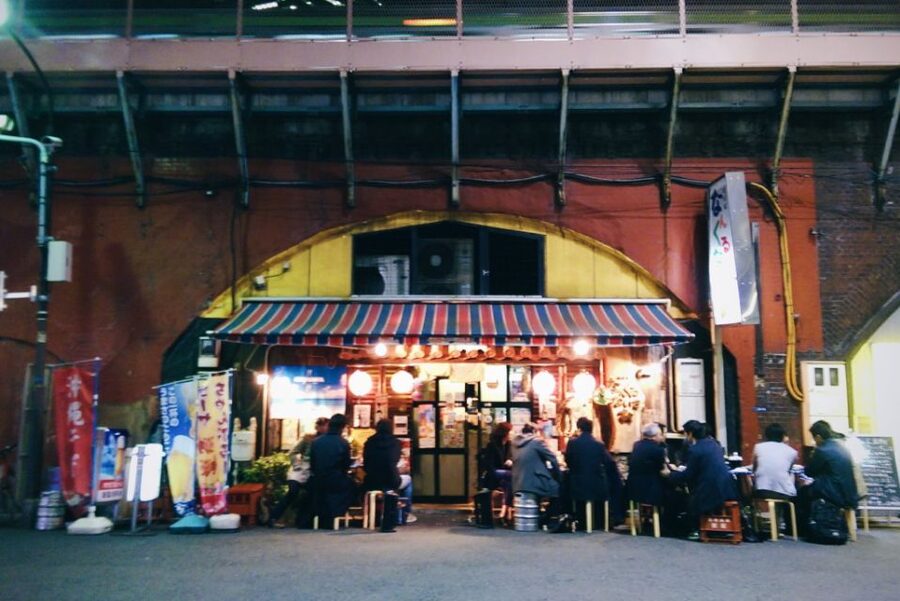
Tokyo’s major streets can feel like a constant stream of the same things: crowds, chain stores, and photo stops. Shinbashi feels different because the streets narrow and the storefronts get more human in scale. A lot of the fun here is noticing small details, like how places group together, how alleys connect, and how the lighting changes when you go from a main strip into a side lane.
On this tour, you walk those lanes with a guide who knows where the good dinner energy actually happens. You are still moving at a comfortable pace, but you are not stuck in one location. That mix is great because you get variety without exhausting yourself.
Courtesy Moves That Make Your Meal Go Smoothly
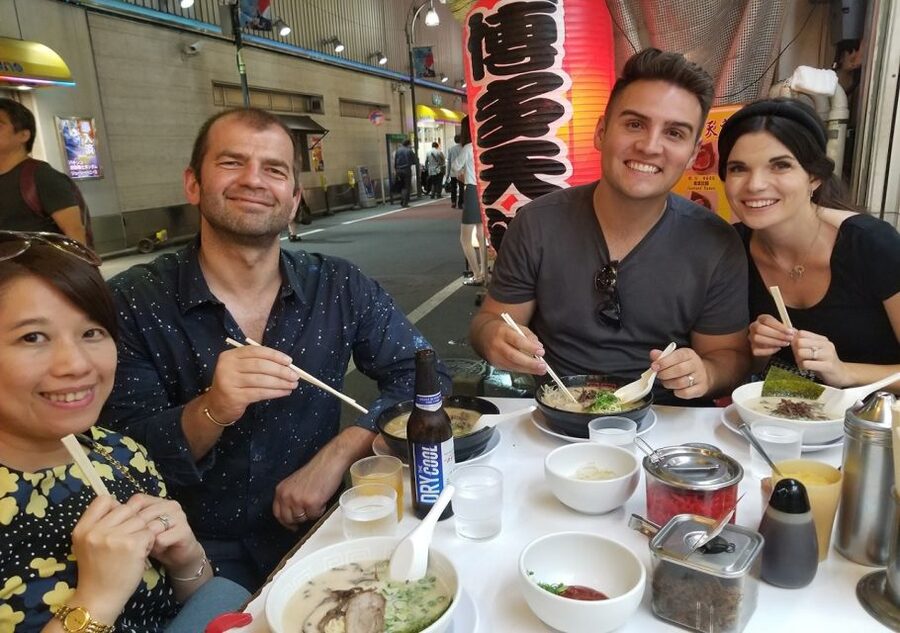
One of the most practical parts is the etiquette side. Some guides include visual aids and teach you how to properly bless your meal and how to thank the staff when you are leaving. The words matter, but the bigger point is respect. When you show that you understand the flow, the experience feels better for everyone.
Even if you only remember a few phrases, this kind of training helps you avoid awkward moments. It also makes the meal more meaningful, because you stop seeing the staff as actors and start seeing them as people doing their job with pride.
This is the kind of detail that can turn a good night out into a great one.
Price and Value: Is $170 Worth a 3-Hour Night Out?
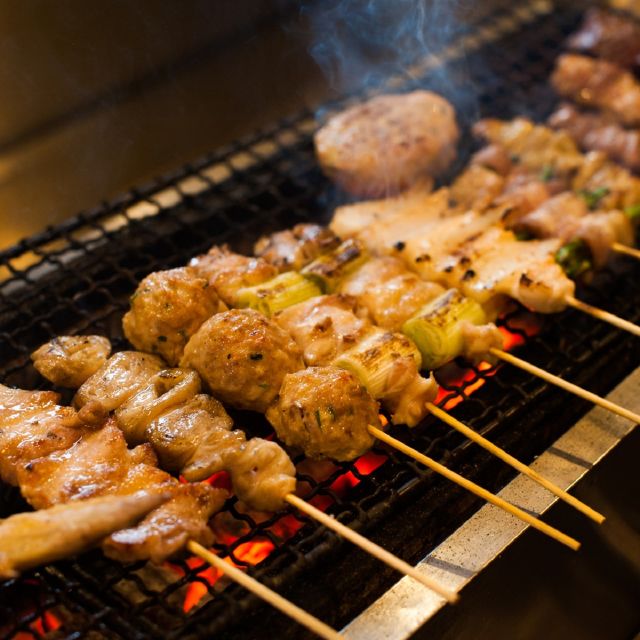
At $170 per person for 3 hours, this is not a budget snack tour. But it also is not just “three tiny bites.” You get several food stops, a sake-tasting experience, and an English-speaking local guide who helps you order and understand what you are eating.
So the value question is really this: are you paying for convenience and context, not just food volume?
I think it is better value if you want the guided element. If you just want to eat independently, you could search around Shinbashi yourself. But you would miss:
- the backstreet routing that gets you to the right places fast
- the translation and ordering support
- the tasting guidance that turns sake into an experience
Where the price can feel high is if you do not drink sake, or if you already feel confident ordering Japanese food solo. In that case, the tour still delivers good food, but you might not get as much added value from the tasting and context.
Also note what is not included. Hotel pick-up is not included, and transportation costs are not included either. Gratuity and any extra drinks or food beyond what is planned are also not included, though you can usually purchase at your expense if you want more.
Timing, Walking Pace, and Group Size Comfort
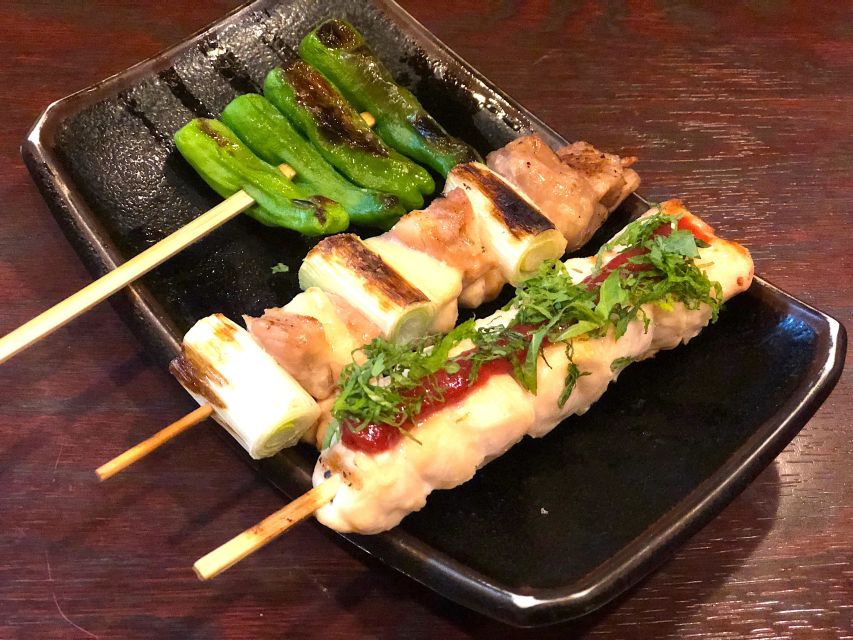
This is a small group experience, limited to 10 participants. That matters more than you might expect. In groups that large, guides can still keep an eye on everyone, answer questions, and move you between stops without losing half the group behind you.
The tour is 3 hours total, which is long enough for a real dinner arc, but short enough that it does not become a full evening commitment. It also makes it easier to slot into your Tokyo schedule. Add it to your day as your night anchor near Shinbashi, then plan something low-key afterward.
One caution that is specific to the area: in most areas of Shinbashi, you are free to smoke. That does not mean everyone smokes in every restaurant, but it does mean you should be ready for some smoke exposure while walking or standing near entrances. If you are sensitive, plan around it by wearing a mask if that helps you, and do not hesitate to step away briefly if needed.
Who This Tour Fits Best (and Who Might Want Something Else)
This tour is a great match if you:
- want a local-feeling night in Tokyo, not just a highlight checklist
- like walking and sampling multiple places in one evening
- enjoy learning how food and drinks work together, especially with sake
- want to eat in an authentic pub-and-dinner atmosphere alongside locals
It may not be ideal if you:
- dislike walking at night or hate crowds near train exits
- want a fully private meal experience
- have limited tolerance for smoke exposure in the neighborhood
And it is only for adults 20 and over, so if anyone in your group is younger, you will need a different plan.
Should You Book This Shinbashi Night Food Tour?
If your goal is to taste Tokyo the way locals unwind, this is a strong pick. The combination of multiple food stops, a guided regional sake tasting, and the chance to walk Shinbashi backstreets makes it feel like a complete evening, not a quick snack run.
Book it if you will enjoy:
- learning how to order and how to handle simple etiquette in Japanese restaurants
- tasting sake with context
- spending time in a working-class after-work atmosphere
Skip or consider alternatives if:
- you need hotel pick-up or you want door-to-door transport included
- you are very price-sensitive and prefer to self-guide
- smoke exposure would be a dealbreaker for you
Overall, I think it is one of the better ways to spend a night near Shinbashi, because you are paying for both the food and the local translation of the whole experience.
FAQ
Where is the meeting point?
Meet in front of the decommissioned steam engine at the Hibiya exit of Shinbashi Station.
How long is the tour?
The tour lasts 3 hours.
How many people are in the group?
It is a small group limited to 10 participants.
Is the tour led by an English-speaking guide?
Yes, the tour includes a live English-speaking guide.
What does the price include?
The price includes local dishes at several food stops, a sake-tasting experience, and the local English-speaking guide.
What is not included?
Hotel pick-up is not included, transportation costs are not included, and gratuity is not included. Additional drinks or food are not included, though you can purchase at your expense.
Is hotel pick-up available?
Hotel pick-up is not included, but it can be arranged for an additional charge.
What is the age requirement?
Only adults aged 20 and over are permitted.
What should I bring and wear?
Bring your passport or ID card and wear comfortable walking shoes.
Is there anything I should know about smoking?
You are free to smoke in most areas of Shinbashi, so plan for possible smoke exposure while you are out at night.
Newest Tokyo write-ups from the Loving Japan desk


Food & Drink, side by side.
 ★ 5.0Shinjuku Food Tour (13 Dishes at 4 Local Eateries)From $866,603 reviews
 ★ 5.0Tokyo Tsukiji Fish Market Food and Culture Walking TourFrom $993,184 reviews
 ★ 4.8Shinsekai Food Tour with 13-15 Dishes at 5 EateriesFrom $532,204 reviews
 ★ 5.0Osaka Food Tour: 13 Dishes at 5 Local EateriesFrom $732,149 reviews
 ★ 4.9Shinjuku Food Tour (15 Dishes and 4 Eateries)From $852,033 reviews
 ★ 5.0Kyoto Night Foodie Tour in Gion (9+ dishes + 6 Sake tastings)From $1631,762 reviews
 ★ 5.0Hungry Osaka Street Food Tour:15 Tastings & 3 Drinks with a LocalFrom $731,727 reviews
 ★ 5.0Tsukiji Fish Market Food and Walking tourFrom $301,724 reviews
Filed on these lists too