
REVIEW · FOOD & DRINK
Tokyo: Pre Japan Planning Kit: Itineraries, Food & Survival
Tokyo feels simpler with prep. This kit is interesting because it gives you a clear PDF itinerary plus a Japanese survival card so you can travel without constantly guessing. The only real drawback is that it is fully self-guided, so you have to be okay reading your plan and handling your own directions.
I like the way the materials are set up for real trip use, not just inspiration. After booking, you get a private Google Drive link within 3 days, with downloadable PDFs you can keep on your phone. That means you can keep moving even if your signal is weak, because you do not have to hunt for Wi-Fi every time.
For where to start, the kit anchors you around Shinjuku City, using Shinjuku Station as a reference point (coordinates: 35.6938253, 139.7033559). At $20 per group up to 15, it is a low-cost option if you want help planning without paying for a live guide.
In This Review
- Key points that make this kit worth a look
- A digital Tokyo game plan you can use offline
- Shinjuku as your smart starting point
- How the itinerary PDFs keep your day structure simple
- Restaurant recommendations that focus on real budgets and variety
- The survival card: small tool, big calm
- What your day looks like on the ground
- Using the kit at your own pace, without feeling lost
- Who this planning kit is best for
- Price, value, and how to stretch your time in Tokyo
- Practical tips to get the most out of the kit
- Should you book this Tokyo planning kit?
- FAQ
- What is included in the Tokyo planning kit?
- How do I receive the kit after booking?
- Is there a meeting point or live guide?
- Where does the itinerary start?
- How much does it cost and is it per person?
- Can I get a refund if I cancel?
Key points that make this kit worth a look
- PDF-first planning so you can follow a day route without fiddling with apps
- Restaurant recommendations focused on practical picks, including affordable options
- A printable survival card for everyday Japan moments like basic phrases
- Google Drive access with offline-friendly downloads
- No meeting point, no live guide so you set the pace
- Shinjuku-based starting point to get your Tokyo day plan off the ground
Still weighing up options in Tokyo? These are the ones our reviewers rated highest.
- Mt Fuji and Hakone 1-Day Bus Tour Return by Bullet Train
★ 5.0 · 26,383 reviews - 1-Day Tokyo Bus Tour
★ 5.0 · 14,250 reviews - Tokyo: teamLab Planets TOKYO Digital Art Museum Entry Ticket
★ 4.6 · 9,779 reviews - Mt Fuji & Hakone Cruise, Drum Show Bullet Train 1 Day from Tokyo
★ 4.0 · 7,413 reviews
A digital Tokyo game plan you can use offline

This is not a tour you join. It is a self-guided planning kit that you carry with you. What makes it feel useful right away is the format: downloadable PDFs plus a restaurant guide you can reference while you are hungry.
I also like that the materials are designed for flexibility. You can follow the routes closely, or you can swap in your own detours when you see something interesting. Tokyo is huge, so having a plan that adapts to real life helps more than a rigid checklist.
There is also a practical advantage to getting everything by e-mail into Google Drive. You do not need to memorize anything before you go, because you can reopen your files anytime. And if your phone battery has issues, PDFs you saved offline are a lifesaver.
Shinjuku as your smart starting point
The kit uses Shinjuku Station as the starting reference point because accommodation varies. That detail matters, because it removes one common headache: you do not need to find a specific meeting place with someone waiting.
Using Shinjuku also makes sense for planning. It is a major Tokyo area people end up in naturally, whether you are exploring on day one or reorganizing on the fly. Even if you start in another neighborhood, you can aim your first day route toward Shinjuku Station as your anchor.
The kit also gives the exact coordinates for Shinjuku Station. If you rely on maps, that makes it faster to orient yourself. For self-guided travel, that kind of specificity helps you get your bearings fast.
How the itinerary PDFs keep your day structure simple
You get itinerary PDFs for 1 to 4 days, built as whole-day routes. That is a big deal because Tokyo planning often collapses into chaos, especially if you are also trying to pick food and figure out transit. Here, the day has blocks: sightseeing, walks, photo stops, shopping, and breaks.
What I like is the balance in the schedule. The day is not only “go, go, go.” It includes break time and free time, which is where you can absorb delays or just wander without guilt. Tokyo travel rewards curiosity, so it helps when the plan explicitly gives you space to breathe.
The itinerary structure also repeatedly includes food moments. It lists breakfast, lunch, dinner, and street food, plus local snacks. That tells me the kit expects you to eat during your day plan, not treat meals like an afterthought you squeeze in later.
One small consideration: because the kit is self-guided, the PDF is doing the heavy lifting. If you prefer a person to steer you, you may miss having that real-time correction. But if you are comfortable traveling on your own, the clear day flow is exactly what you need.
- Mt Fuji and Hakone 1-Day Bus Tour Return by Bullet Train★ 5.0 · 26,383 reviews
- 1-Day Tokyo Bus Tour★ 5.0 · 14,250 reviews
- Tokyo: teamLab Planets TOKYO Digital Art Museum Entry Ticket★ 4.6 · 9,779 reviews
- Mt Fuji & Hakone Cruise, Drum Show Bullet Train 1 Day from Tokyo★ 4.0 · 7,413 reviews
- Tokyo Mt Fuji 5th St & Hakone Cruise Bus Tour w/Bullet Train★ 4.4 · 5,024 reviews
Restaurant recommendations that focus on real budgets and variety
The kit includes a Tokyo restaurant recommendation guide, with picks across different areas of Tokyo. It is also described as mostly affordable, which is huge value for first-time visitors who do not yet know where the “tourist price” trap hides.
I like that the guide is not only one style of food. The kit signals variety, and the itinerary itself includes both meals and snacks. That gives you options when your mood changes, like wanting something quick after a photo stop or wanting a more settled sit-down meal later.
Another practical benefit is how you can use the restaurant guide without breaking your day. Since you have food blocks already built into your route, you can treat restaurant decisions as part of the plan rather than a separate research mission every time you get hungry.
Keep in mind the guide is personal, based on the couple behind the kit and their favorites. That is not a bad thing, but it does mean you should expect “their Tokyo” rather than a neutral, every-place list.
The survival card: small tool, big calm
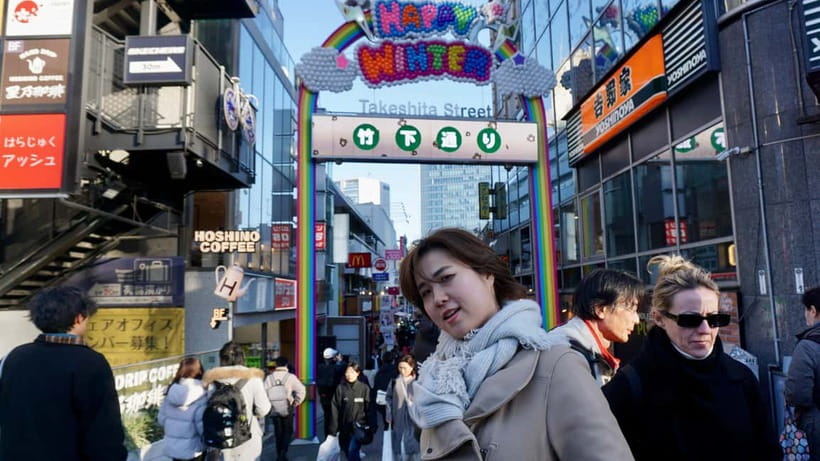
The Japanese survival card is one of those things that sounds minor until you need it. The kit describes it as printable and mobile-friendly, with useful phrases and words for everyday travel situations.
Even if your Japanese is basic, having a compact card changes how you handle those moments: ordering, asking simple questions, or communicating needs without long explanations. It is also the kind of tool you can keep on you during the whole trip, instead of digging through notes.
I also like the design idea. A small business-card format is easy to carry, and a mobile-friendly version covers the situation where you forgot the printout. For self-guided travel, redundancy equals less stress.
One more thought: the survival card is listed as including phrases and words that are absolutely necessary for travel. That phrasing suggests the goal is utility, not trivia. You want tools that reduce friction, and this aims to do exactly that.
What your day looks like on the ground
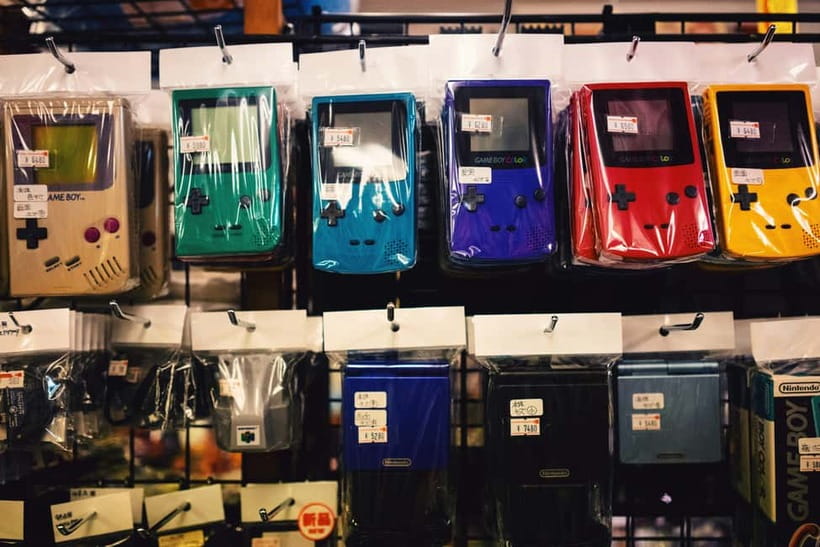
The itinerary you follow has a clear rhythm. Starting from Shinjuku City, your day includes a mix of sightseeing and walking, with frequent pauses built in. Here is how that typically helps you, practically.
First, there is usually a “break time” moment. Tokyo days can feel long because walking is constant and the city is visually loud. A scheduled break gives you a reset so you do not burn out early.
Next comes photo stops and visits. Even without naming specific sights in the information you see ahead of time, the kit is designed around the idea of short blocks. You do not need to spend hours in one place if you are trying to cover more of Tokyo in a short trip.
Then the day anchors around meals. The itinerary explicitly includes breakfast, lunch, and dinner, plus street food and local snacks. That helps you plan around hunger instead of waiting until you are desperate. If you have ever tried to eat in a hurry in a foreign city, you know why that matters.
Shopping and free time are also built in. In other words, the plan does not force you into only “must-see” mode. It gives you permission to follow your interests, whether that is browsing stores or just grabbing something small to carry you through the afternoon.
Finally, there is scenic views on the way, listed as 24 hours. I read that as reassurance that you can enjoy view moments as part of travel time, not only at a specific time window. Even if the details vary by route, the planning idea is solid: build in reasons to look up while you move.
Using the kit at your own pace, without feeling lost
This is a self-guided kit, so there is no meeting point and no in-person activity. That might sound like a downgrade if you want human help, but it is also what makes it efficient.
You can use it like training wheels. If you are new to Tokyo, you can follow it closely. If you already know the city a bit, you can treat it like a flexible roadmap. Either way, the PDFs give you a structure you can trust.
I also like the “offline-ready” workflow. You get downloadable files you can save to your phone or device, so you do not need to keep streaming content. For Tokyo, where you are constantly on the move, that is the difference between a plan and a plan you abandon.
One caution: because there is no live guide, your best results come when you read your PDF before heading out. Spend a few minutes the night before. Highlight your meal times and keep your key stops in mind. That turns the kit into a smooth experience instead of homework.
Who this planning kit is best for
This is made for first-time visitors and for travelers who want to prepare before arrival. If you like flexibility more than organized tours, the self-guided format fits your style.
It is also a good fit if you travel with family or friends who do not want one fixed group pace. Since the price is per group up to 15, it is the kind of product that can work for small groups who want structure but still want freedom.
I think it is especially useful if you feel overwhelmed by route planning. The kit explicitly exists because spending hours planning routes and food spots can be hard. If you want a shortcut to a well-thought-out day flow, this delivers.
If, however, you need step-by-step help in real time, this might not satisfy you. The kit is digital, and information is provided in English. If you require a local person to answer questions on the spot, you would likely want a live tour instead of a print-and-go system.
Price, value, and how to stretch your time in Tokyo
The price is $20 per group, up to 15 people. Because this is a digital product, you are essentially paying for planning work: the day structure PDFs, the restaurant recommendation guide, and the survival card.
Value depends on how you use it. If you read it the night before and follow the meal and sightseeing blocks, you reduce wasted time and indecision. That alone can save money, because you avoid spending on convenience meals, last-minute detours, or getting too tired to explore.
The low cost also makes it easy to share within a group. A group of a few people can split the cost, and everyone benefits from the same PDFs. Even if you travel solo, the kit can still make a short trip feel more organized.
Duration is listed as 4 days, and the kit includes itinerary PDFs for 1 to 4 days. That means you can scale your usage based on your actual Tokyo time. If you are only there for a weekend, you can still use the 1 or 2 day versions. If you have a longer stay, the additional day routes help you keep consistency.
Also, the kit is delivered within 3 days after booking, and you get a Google Drive link. If you are planning in advance, this fits well. If your timing is last-minute, you can request a faster send by e-mail, according to the provider’s note.
Practical tips to get the most out of the kit
Here are the small habits that make a self-guided plan work better in Tokyo.
Save your offline files right away. As soon as you receive the Google Drive link, download the PDFs to your phone. Then you can keep moving without worrying about connectivity.
Plan your food using the day blocks. Breakfast, lunch, dinner, street food, and snacks are already part of the route logic. Use that, instead of treating food as something to solve only when you are hungry.
Carry the survival card. Even if you think you will not need it, keep it accessible. Japan travel can be smooth, but everyday moments always happen, and a card reduces friction fast.
Start with Shinjuku and then adapt. If you see something you want to do, swap it in and let the rest of the day breathe. The kit is meant to be followed exactly or adjusted, so use that freedom.
Use the breaks and free time on purpose. Do not turn every moment into another stop. The kit includes free time and break time for a reason, because it keeps your day enjoyable instead of exhausting.
Should you book this Tokyo planning kit?
Book it if you want a low-cost, self-guided way to structure your Tokyo days. It is a smart choice for first-time visitors, budget travelers, and anyone who prefers flexibility over guided tours. I especially recommend it if you struggle with route planning and want a clear PDF day flow plus a practical Japanese survival card.
Skip it if you need a live guide to handle questions in real time, or if you want specific attraction names and guided commentary. This kit is built around planning and independence, not on-the-street coaching.
If you are comfortable navigating on your own, you will probably love how quickly it helps you get oriented and how easy it is to use offline. For $20 per group, it is one of the easiest ways to start your Tokyo trip feeling ready.
FAQ
What is included in the Tokyo planning kit?
You get 1 to 4 day Tokyo itinerary PDFs, a Tokyo restaurant recommendation guide, a Japanese survival card that is printable and mobile-friendly, and Google Drive access to all materials.
How do I receive the kit after booking?
After booking, you receive a private Google Drive link by e-mail within 3 days. The files are downloadable PDFs you can access anytime.
Is there a meeting point or live guide?
No. This is a digital product only, with no meeting point and no live guide or in-person activity.
Where does the itinerary start?
The itinerary uses Shinjuku Station as the reference starting point, with coordinates listed as 35.6938253, 139.7033559.
How much does it cost and is it per person?
It costs $20 per group, up to 15 people.
Can I get a refund if I cancel?
Yes, free cancellation is available up to 24 hours in advance for a full refund.
Newest Tokyo write-ups from the Loving Japan desk






Food & Drink, side by side.
 ★ 5.0Shinjuku Food Tour (13 Dishes at 4 Local Eateries)From $866,603 reviews
 ★ 5.0Tokyo Tsukiji Fish Market Food and Culture Walking TourFrom $993,184 reviews
 ★ 4.8Shinsekai Food Tour with 13-15 Dishes at 5 EateriesFrom $532,204 reviews
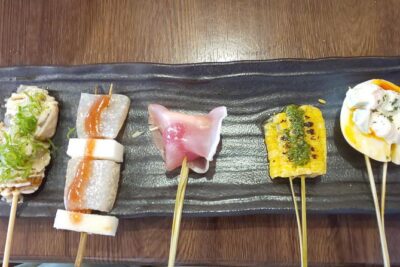 ★ 5.0Osaka Food Tour: 13 Dishes at 5 Local EateriesFrom $732,149 reviews
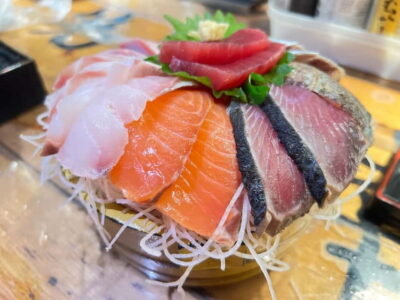 ★ 4.9Shinjuku Food Tour (15 Dishes and 4 Eateries)From $852,033 reviews
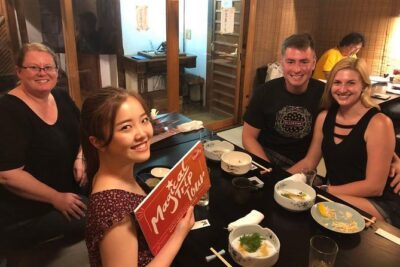 ★ 5.0Kyoto Night Foodie Tour in Gion (9+ dishes + 6 Sake tastings)From $1631,762 reviews
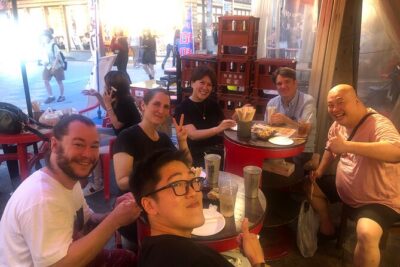 ★ 5.0Hungry Osaka Street Food Tour:15 Tastings & 3 Drinks with a LocalFrom $731,727 reviews
 ★ 5.0Tsukiji Fish Market Food and Walking tourFrom $301,724 reviews
Filed on these lists too