
REVIEW · CRUISES & BOAT TOURS
Tokyo Spectacular View Day-Cruise in 90 Minutes
Tokyo looks different from the water. In a 90-minute cruise, I love the photo-friendly top deck and the onboard crew narration that connects what you see to landmarks like Rainbow Bridge and Tokyo Tower.
One thing to consider: this experience needs good weather, and you may have to change dates if conditions are poor.
In This Review
- Key Takeaways Before You Go
- Tokyo Bay Views: Why This Feels Like a Real Tokyo Upgrade
- Price and Value: What About $65.89 Gets You
- Boarding at Tennozu Yamatsu Pier: The Simple Start-to-Finish Format
- The Route in Real Life: From Rainbow Bridge to Odaiba
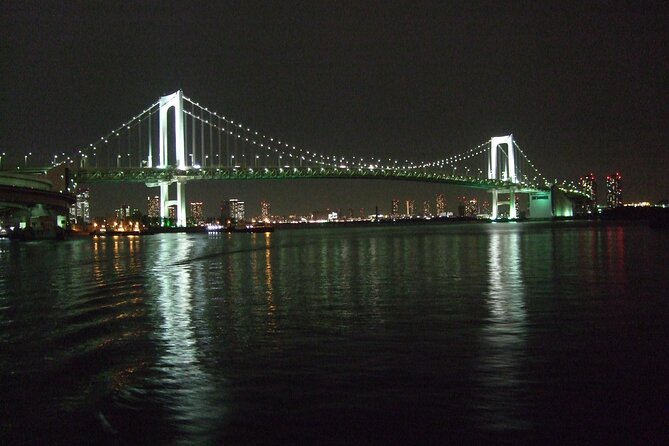
- Rainbow Bridge: A Bay Landmark With Serious Scale
- Tokyo Tower: The Night Landmark You Can Actually See
- Kachidoki Bridge: When a Bridge Is the Attraction
- Tsukiji and the Market Shift: Old Name, New Reality
- Eitai Bridge and the Wholesale Core Near You
- Odaiba Seaside Park: A Military Word With a Harbor View
- Making the Most of the Top Deck and the Downstairs Tables
- What You Can Eat and Drink On Board (and What You Should Expect to Pay For)
- Crew Commentary: Why It Helps More Than You’d Think
- Who Should Book This Cruise, and Who Might Skip It
- Practical Booking Advice for 90 Minutes in Tokyo
- Should You Book This Tokyo Spectacular View Day-Cruise?
- FAQ
- How long is the Tokyo Spectacular View day-cruise?
- Where does the cruise start and end?
- Is this tour ticketed by mobile?
- Are alcoholic beverages and snacks included in the price?
- Is the cruise dependent on weather?
- What is the group size limit?
Key Takeaways Before You Go
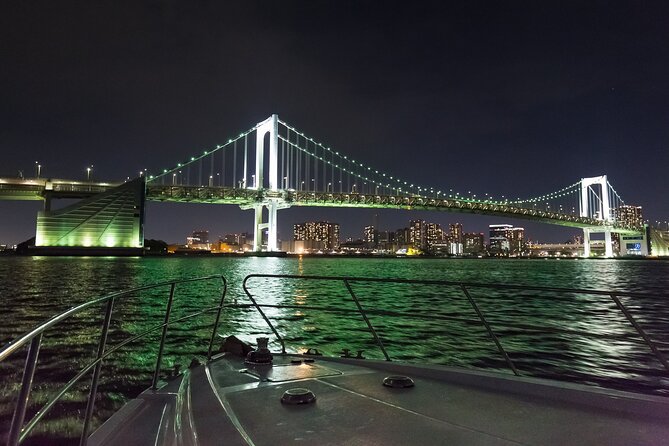
- Top deck views for photos, with the option to relax below at tables when you want a break
- Bridge pass thrills, including Rainbow Bridge and Kachidoki Bridge, plus Tokyo Tower’s night presence
- Spotlight on what you’re seeing, with crew explanations about architecture and landmark meaning
- Tokyo Bay without the crowds, so you can look and shoot without elbow-to-elbow stress
- Short but satisfying timing, designed to fit a busy day or your trip’s end
Still weighing up options in Tokyo? These are the ones our reviewers rated highest.
- Mt Fuji and Hakone 1-Day Bus Tour Return by Bullet Train
★ 5.0 · 26,383 reviews - 1-Day Tokyo Bus Tour
★ 5.0 · 14,250 reviews - Tokyo: teamLab Planets TOKYO Digital Art Museum Entry Ticket
★ 4.6 · 9,779 reviews - Mt Fuji & Hakone Cruise, Drum Show Bullet Train 1 Day from Tokyo
★ 4.0 · 7,413 reviews
Tokyo Bay Views: Why This Feels Like a Real Tokyo Upgrade
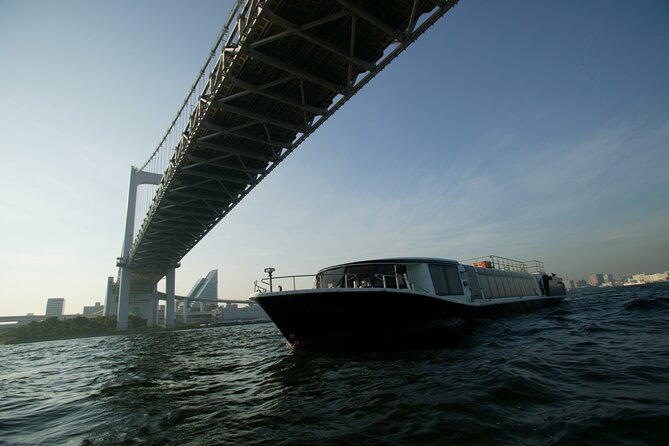
Tokyo has plenty of viewpoints, but the best ones often come with a price tag in time. You stand in line, you squeeze for angles, and you spend energy just getting your turn. This cruise swaps that for a simple idea: watch the city slide past from the water, with views that would be hard to replicate on foot.
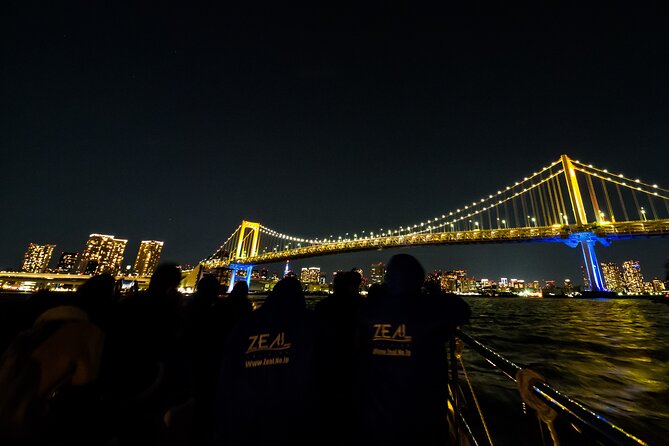
I like that the experience is built around movement. You are not parked at a single spot where the skyline looks the same for the whole ride. Instead, you get a sequence of recognizable sights, including Tokyo Tower and the bridges that define Tokyo Bay. At night, the skyline lights also reflect across the water, which makes the whole scene feel more cinematic than just looking at buildings.
And because the boat is small enough to keep the atmosphere relaxed, you can focus on your own pace. If you want photos, you can head upstairs and work your angles. If you want comfort, you can stay downstairs at the tables and watch from there. In other words, it is sightseeing with less friction.
Price and Value: What About $65.89 Gets You
At $65.89 per person for about 1 hour 30 minutes, this is not the cheapest thing you can do in Tokyo. But it is a fair price for what you are buying: a timed skyline photo opportunity, a crew-led commentary, and a guided route that focuses on the most photogenic stretches of Tokyo Bay.
Here is what is included: boarding fee, a restroom on board, and an air-conditioned vehicle as part of the experience flow. You also get a mobile ticket, so you are not stuck printing or tracking paper confirmations. The boat is capped at 57 travelers, which helps keep it from feeling like a floating bus tour.
What is not included is also worth knowing. Alcoholic beverages and snacks are sold onboard, not included in the base price. That matters if you were hoping the ticket price would cover drinks. Still, the onboard sales model is common for this kind of short cruise, and it means you can decide what you want without feeling like you must buy something to get your money’s worth.
Bottom line: if your goal is “Tokyo skyline, but with less hassle,” the value feels strong.
Boarding at Tennozu Yamatsu Pier: The Simple Start-to-Finish Format
This cruise starts at Tennozu Yamatsu Pier (1-chōme-39-21 Higashishinagawa, Shinagawa City, Tokyo) and ends back at the same meeting point. That round-trip setup is practical. You do not have to plan your next commute from some far-flung dock.
The meeting point is described as being near public transportation, and you are also provided an air-conditioned vehicle as part of the overall experience. That combination makes it easier for you to slot into a day that already has trains, walking, and other plans.
Also, the time length matters. At about 1 hour 30 minutes, you get a real chunk of Tokyo Bay views without losing half a day. It is a good fit if you have a tight itinerary, if you are trying to avoid a packed evening schedule, or if you want a calm activity that ends before you feel exhausted.
Finally, the boat offers restroom access. That seems like a small detail until you are on a cruise, in the cool evening air, thinking you might need one more thing before the ride ends. This is one of those “I’m glad it’s included” points.
- Mt Fuji and Hakone 1-Day Bus Tour Return by Bullet Train★ 5.0 · 26,383 reviews
- 1-Day Tokyo Bus Tour★ 5.0 · 14,250 reviews
- Tokyo: teamLab Planets TOKYO Digital Art Museum Entry Ticket★ 4.6 · 9,779 reviews
- Mt Fuji & Hakone Cruise, Drum Show Bullet Train 1 Day from Tokyo★ 4.0 · 7,413 reviews
- Tokyo Mt Fuji 5th St & Hakone Cruise Bus Tour w/Bullet Train★ 4.4 · 5,024 reviews
The Route in Real Life: From Rainbow Bridge to Odaiba
The experience is built around passing major Tokyo landmarks from the water. You will not be reading a map for long stretches because the route itself is the story.
Rainbow Bridge: A Bay Landmark With Serious Scale
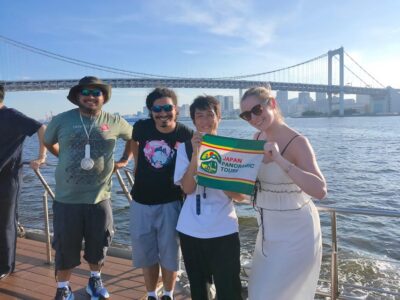
You pass under Rainbow Bridge, one of the iconic bridges connecting Shibaura and Odaiba. The details matter here: the height between the bridge and sea level is about 50 meters. When you are on the water, that size clicks in a different way than it does from a highway viewpoint.
Rainbow Bridge is also a great “before and after” landmark. If you are on an afternoon or evening sailing, you can see how the look of the city shifts as light changes. Even if you are not chasing photos like a pro, it is the kind of moment that makes you pause and look up.
Tokyo Tower: The Night Landmark You Can Actually See
Next, you pass a place where Tokyo Tower is visible. Tokyo Tower was Japan’s largest television tower from 1958 to 2011, and today it remains one of Tokyo’s signature landmarks. It is especially striking at night because it is lit up, so you can see the tower’s presence against the bay sky.
From the water, Tokyo Tower feels more grounded than it does from faraway angles. It looks closer to your “stage,” not just a distant symbol.
Kachidoki Bridge: When a Bridge Is the Attraction
You also pass Kachidoki Bridge, and this one is interesting even if you do not usually care about bridge engineering. It is described as one of the few bascule bridges in Japan. That means the structure has a moving-bridge element, which ties directly to water traffic history.
The route explanation also points to older shipping activity on the Sumida River. It adds context so you can look at the bridge and think, not just “pretty,” but “this was built for a relationship between ships and the city.”
Tsukiji and the Market Shift: Old Name, New Reality
At another stop, you get to view Tsukiji from the sea side. Tsukiji was once Japan’s largest central market. Now, because the building aged, the wholesale functions moved to Toyosu.
This matters because Tokyo is always changing, and you can see that shift with your eyes even during a short cruise. You are not just getting famous names, you are understanding why some famous names feel like nostalgia even as the city keeps functioning.
Eitai Bridge and the Wholesale Core Near You
You pass Eitai Bridge, built in 1926. The details given are specific, including the early use of iron for a road bridge in 1897, and the fact that the wooden floor part led to fire destruction. Again, you are not expected to become an engineering student, but the crew’s explanation gives you a hook to notice structure and design.
From there, the route focuses on the wholesale market area that replaced Tsukiji, described as the core of the central wholesale market. The new building has an original shape, and from the water you can take in the whole scene in a way that standing on land often cannot match.
Odaiba Seaside Park: A Military Word With a Harbor View
Finally, you pass through Odaiba Seaside Park. The word “Daiba” is connected to a cannon placement during the Edo period. The explanation ties it to the Tokugawa shogunate feeling threatened by potential foreign invasion, which makes Odaiba’s modern tourist vibe feel more layered.
You get an “old reason, new use” kind of view. Even if you do not plan to explore Odaiba after the cruise, this stop helps you see why the area exists in the first place.
Making the Most of the Top Deck and the Downstairs Tables
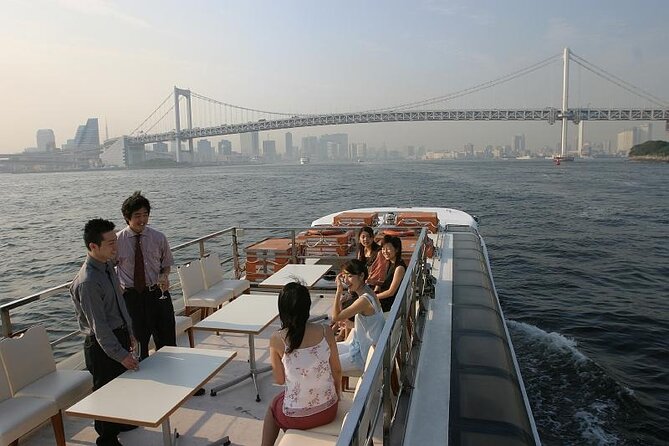
This cruise gives you a useful choice, not just one viewing mode. There is an open-air part where you can get great angles for photos, and there are also tables on the downstairs level if you prefer comfort.
If you are photographing at night, I recommend you treat the top deck like your photo workspace. Move up when the skyline looks best, then come down when you want to relax. That back-and-forth prevents the common problem of freezing your way through the whole ride.
If you are with family or anyone who does not want to stay outside long, the downstairs tables are a big deal. You still see the city, and you can keep the experience conversational and easy. The cruise also notes chairs for children are available, so it is not only an adult-only outing.
One more practical tip: dress for the water. Even when Tokyo feels warm on land, evenings can feel cooler outside on a deck.
What You Can Eat and Drink On Board (and What You Should Expect to Pay For)
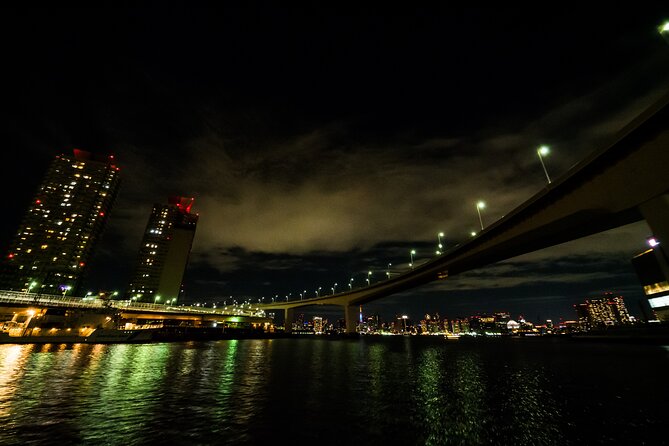
The highlights mention enjoying Japanese alcoholic beverages and light snacks on board, but the important detail is that they are onboard sales, not included in the ticket price. So if you want a drink, plan on paying separately during the cruise.
This is also where your 90-minute schedule helps. You can enjoy a small snack or a drink without worrying about committing to a full meal plan. You are there for views first, and food and drinks support the experience, rather than replacing it.
If you are traveling with people who prefer non-alcoholic options, you might want to check onboard offerings at the time of sailing since the data only clearly mentions alcoholic beverages and snacks being sold.
Crew Commentary: Why It Helps More Than You’d Think
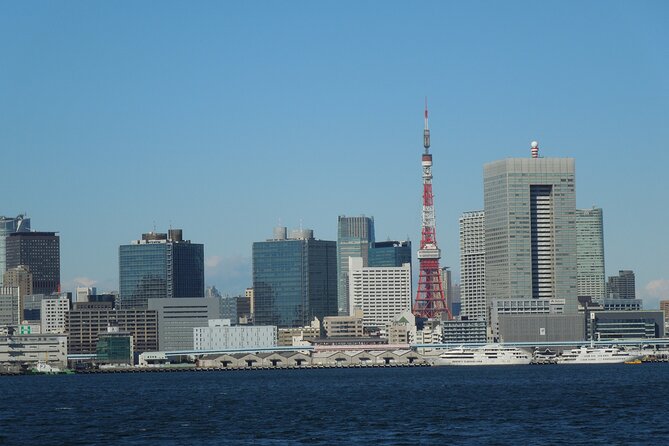
A lot of skyline tours leave you with photos and vague memories. This one is structured to do more. The crew provides explanations about monuments’ architecture and history, using the route to teach what you are looking at.
I like commentary like this because it gives you something to do besides stare. When you know why Rainbow Bridge matters, or why Tokyo Tower’s role changed over time, you notice more. You stop treating the sights like stickers and start treating them like parts of a living city.
Also, the tour is short enough that you are not overwhelmed. You do not need to absorb a textbook. The narration is simply a way to make each pass feel intentional.
Who Should Book This Cruise, and Who Might Skip It
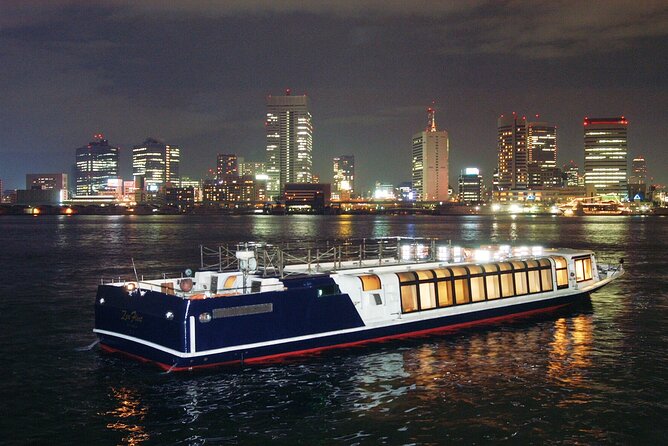
This experience is a strong match if you:
- want Tokyo skyline views from the water without spending hours walking and waiting
- are short on time but still want a “Tokyo at night” moment
- prefer a smaller group setting (maximum 57 travelers) with a relaxed vibe
- want an activity that works for mixed ages, since chairs for children and a restroom on board are available
You might consider a different option if:
- you are traveling when weather is unpredictable, because this experience requires good weather
- you expect alcohol and snacks to be included, since those are sold onboard
- you only want the absolute most famous landmark photo, because the value here comes from the sequence of bridges, skyline passes, and bay perspectives
Practical Booking Advice for 90 Minutes in Tokyo
This cruise is commonly booked about 22 days in advance on average. If your schedule includes a specific day and time you really want, it is smart to lock it in earlier rather than hoping for last-minute availability.
Also, because the route is built around seeing things like Rainbow Bridge and Tokyo Tower, you will probably get the best “wow” from an evening sailing. That said, the experience is described as a day-cruise option too, so if you are an afternoon person, you are not locked out.
If you plan to do multiple activities in one day, treat this as your “easy win.” You arrive, ride, take photos from the deck, and return to the same meeting point without heavy transit planning at the end.
Should You Book This Tokyo Spectacular View Day-Cruise?
If your goal is an efficient, good-value way to see Tokyo from the water, I think you should book it. The included structure is solid for the price: route-based sightseeing, a crew narrative, a photo-friendly top deck, and comfort options below with tables and restroom access. The small group size also helps the whole thing feel more personal and less hectic.
The main reason to hesitate is weather. If your trip timing is tight and forecasts are unstable, you might still book, but keep flexibility in your mind because cancellations due to poor weather are handled by offering another date or a full refund.
If you want one clean add-on to make Tokyo feel more cinematic, this short Tokyo Bay cruise is exactly that.
FAQ
How long is the Tokyo Spectacular View day-cruise?
It lasts about 1 hour 30 minutes.
Where does the cruise start and end?
It starts at Tennozu Yamatsu Pier in Shinagawa (1-chōme-39-21 Higashishinagawa) and ends back at the same meeting point.
Is this tour ticketed by mobile?
Yes, the tour uses a mobile ticket.
Are alcoholic beverages and snacks included in the price?
No. Alcoholic beverages and snacks are available for purchase onboard (onboard sales).
Is the cruise dependent on weather?
Yes. This experience requires good weather.
What is the group size limit?
The cruise has a maximum of 57 travelers.
Newest Tokyo write-ups from the Loving Japan desk






Cruises & Boat Tours, side by side.
 ★ 4.0Mt Fuji & Hakone Cruise, Drum Show Bullet Train 1 Day from TokyoFrom $1497,413 reviews
 ★ 4.4Tokyo Mt Fuji 5th St & Hakone Cruise Bus Tour w/Bullet TrainFrom $1545,024 reviews
 ★ 4.2Mt. Fuji 5th Station & Hakone Cruise 1-Day Bus TourFrom $1292,381 reviews
 ★ 4.7Meiji Shrine, Asakusa, Skytree Bus Tour and CruiseFrom $1221,986 reviews
 ★ 4.0Mt Fuji & Hakone Cruise, Drum Show Bus 1 Day from TokyoFrom $1221,287 reviews
 ★ 4.2Dotonbori District River Cruise with Drink DiscountFrom $12876 reviews
 ★ 4.6Sumida River: Japanese Traditional Yakatabune Dinner CruiseFrom $103779 reviews
 ★ 4.2Hakone Fuji Day Tour w/ Cruise, Cable Car, VolcanoFrom $98724 reviews
Filed on these lists too