
REVIEW · MOUNT FUJI DAY TRIPS
4 Day Tour – Mount. Fuji, Tokyo, Hakone, Kamakura and Yokohama
Tokyo can feel like a puzzle. This tour makes it solvable.
You start with a comfortable air-conditioned private car and an itinerary that covers the big hits, plus the kind of stops that make the trip feel personal rather than rushed. I also like that you get personalized attention from an English-speaking driver, so you can ask questions and adjust timing when something runs long. One thing to consider: accommodation is not included, so you will need to plan where you sleep each night, and some days can be long.
What I really like is the logic of doing Tokyo first, then Kamakura and Yokohama, then the Fuji loop, and finishing in Hakone. You get the variety without the stress of trains and transfers. You also get some flexibility because it is described as customizable, and a few attractions are explicitly “if time permits,” which matters when weather or crowds shift. The other practical drawback: some major viewpoints and experiences have admission tickets listed as not included, so your final cost will depend on what you choose.
In This Review
- Key highlights that make this tour feel efficient
- A private car plan for Tokyo, Fuji, Hakone, Kamakura, Yokohama
- Price and logistics, and when this feels like value
- Day 1 in Tokyo: markets, shrines, skyline views, and neon-free stress
- Tsukiji Fish Market, then Asakusa’s classic temple mood
- Skytree, the Imperial Palace East Garden, and a quick slice of old-meets-new
- Akihabara and the youth-pop energy of Harajuku and Shibuya
- Tokyo Tower and optional modern experiences in Odaiba
- Day 2: Kamakura temple classics, bamboo calm, then Yokohama’s two moods
- Bamboo Temple calm at Hokoku-ji
- Big wooden Kannon at Hase-dera, then the Great Buddha at Kotoku-in
- Tsurugaoka Hachimangu, then Komachidori’s shopping lane
- Yokohama Chinatown for flavor, Sankeien Gardens for slow beauty
- Minato Mirai if you have time
- Day 3: Fuji icons from Oshino Hakkai to the 5th station
- Oshino Hakkai, the Fuji-fed springs
- Chureito Pagoda for that postcard perspective
- Lake Kawaguchiko, a practical base with hot spring town vibes
- Mt. Fuji 5th station for the atmosphere
- Gotemba Premium Outlets as the end-of-day reset
- Day 4: Hakone Shrine, Lake Ashinoko, Ropeway, and volcanic Owakudani
- Hakone Shrine by Lake Ashinoko
- Lake Ashinoko crater-lake views
- Hakone Ropeway for mountain-lake transit views
- Owakudani volcanic valley and the black eggs
- Gora Park and the Open-Air Museum if you still have energy
- What you should know about tickets, time, and weather
- Accommodation planning, so your nights match your sights
- Will you enjoy this tour? A quick decision guide
- FAQ
- How many people are included in the group?
- What is the meeting time?
- Is pickup offered?
- Is accommodation included?
- Is this a guided tour?
- Do I need tickets for all attractions?
- Is the driver English-speaking?
- How long is the tour each day?
- Is good weather required?
- What happens if the tour is canceled due to weather?
- Can I cancel for a full refund?
Key highlights that make this tour feel efficient
- Private car comfort across long intercity days, not squeezed onto trains
- English-speaking driver explanations to connect the dots between stops
- A big Tokyo day with temples, tech shopping, and skyline viewpoints
- Fuji-focused route with photo spots plus the 5th station time window
- Hakone’s volcanic core with Owakudani and a lake-and-views finish
- Two guide names you may see, Armad and David, known for care and pacing
Fuji from Tokyo: the other approaches
- Mt Fuji and Hakone 1-Day Bus Tour Return by Bullet Train
★ 5.0 · 26,383 reviews - Mt Fuji & Hakone Cruise, Drum Show Bullet Train 1 Day from Tokyo
★ 4.0 · 7,413 reviews - Tokyo Mt Fuji 5th St & Hakone Cruise Bus Tour w/Bullet Train
★ 4.4 · 5,024 reviews - From Tokyo: Mount Fuji Full-Day Sightseeing Trip
★ 4.5 · 4,970 reviews
A private car plan for Tokyo, Fuji, Hakone, Kamakura, Yokohama
If you have only a few days in Japan, the biggest risk is wasting time on logistics. This is built around the idea that you should spend your energy sightseeing, not figuring out platforms and transfers. The tour runs as a private tour for only your group, with pickup offered and a mobile ticket for convenience.
The car part matters more than you might think. Tokyo alone can eat hours. Add the drive from Tokyo to Hakone and the Fuji area, and suddenly train hopping becomes exhausting fast. With a driver handling the route, you can keep your day moving and still see a lot.
You also get a realistic rhythm: the stops are spaced so you are not constantly sprinting. Day 1 is packed with iconic places, but it is paced with shorter visits to help you absorb the city without burning out. Each day is listed as about 10 hours including commuting, so plan for a steady, not sleepy, pace.
Finally, there is a useful balance between structure and choice. Some attractions are free-admission stops, while others require tickets you may pay separately. A couple of experiences are labeled as possible “if you have time,” which is exactly the kind of flexibility you want on a multi-day plan.
Price and logistics, and when this feels like value
The price is $3,000 per group (up to 5 people) for the 4-day experience. That is not cheap on a per-person basis if you travel solo, but it changes quickly when you split it across a group. If you are a small family or a close group of friends, paying for one private vehicle plus an English-speaking driver can be competitive with piecing together multiple day trips and costly last-minute arrangements.
Here is the value logic I would use if I were deciding:
- If you hate train transfers, the private car saves mental energy and time.
- If you want Fuji and Hakone in a short window, a tightly planned route reduces wasted motion.
- If your group wants more control, you get that because it is customizable and private.
Where it can feel less “value” is when your group prefers slower days, or you want mostly free, on-your-own exploring. Also, some attractions listed as admission not included mean you will still spend extra on tickets if you choose everything.
So the question is simple: do you want efficiency and a driver, or do you want to travel like a cartographer with a rail map? This tour clearly aims for the first choice.
Day 1 in Tokyo: markets, shrines, skyline views, and neon-free stress
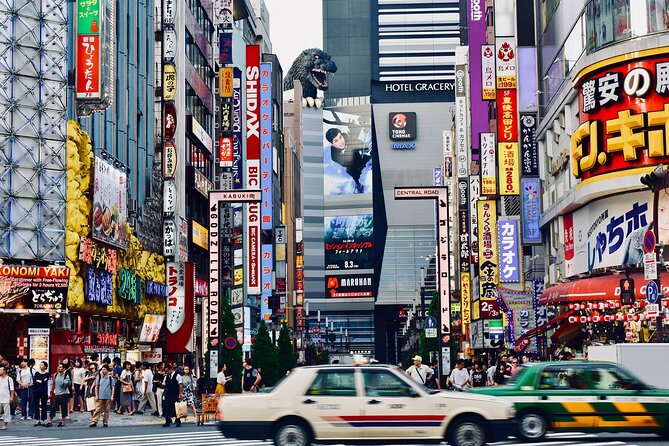
Your Tokyo day is basically a greatest-hits tour, but it is arranged in a way that feels watchable rather than chaotic.
The Hakone loop runs several ways. Here are the rest
- Tokyo: Mt. Fuji Tour, Hakone Ropeway, Owakudani, Lake Ashi★ 4.7 · 4,002 reviews
- Private Tour to Mt. Fuji and Hakone (Fully Licenced Operator)★ 5.0 · 1,910 reviews
- Mt Fuji & Hakone Cruise, Drum Show Bus 1 Day from Tokyo★ 4.0 · 1,287 reviews
- From Tokyo: Mt. Fuji & Hakone Tour w/ Return by Bullet Train★ 4.2 · 1,278 reviews
- Mt Fuji and Hakone 1-Day Bus Tour Return by Bus★ 4.5 · 929 reviews
Tsukiji Fish Market, then Asakusa’s classic temple mood
You start at Tsukiji Fish Market, described as the largest fish market in the world and now a special tourist draw. Even if you are not a hardcore seafood person, it is one of those places that shows Tokyo’s energy fast. The stop is 45 minutes, which is long enough to walk, look at the action, and get your bearings.
Next comes Senso-ji Temple in Asakusa, also known as Asakusa Kannon. This is the city’s oldest religious building and one of Tokyo’s most colorful, popular sites, with massive annual visitor numbers. The visit is about 1 hour, and since admission is free, it is an easy win for your first day.
Skytree, the Imperial Palace East Garden, and a quick slice of old-meets-new
After Asakusa, you head for Tokyo Skytree for skyline views. Observation decks are on the 45th floor and give a wide look across Tokyo, with views toward places like Meiji Jingu, Tokyo Tower, and Tokyo Skytree itself. Admission is not included, so decide if the height matters to your group.
Then you visit the Imperial Palace, specifically the East Garden. It is free, and it gives you a calmer change of pace from the street crowds. One practical note: it says prior booking is required, which is exactly why having a planned driver helps.
Akihabara and the youth-pop energy of Harajuku and Shibuya
You then shift into Tokyo’s fun side with Akihabara for electronics and anime culture. It is a short 30-minute stop, so use it as a quick scan for shops and photo opportunities rather than a deep shopping mission.
Next up are two Harajuku icons:
- Meiji Jingu Shrine, in a forest setting in Shibuya, dedicated to Emperor Meiji and Empress Shōken.
- Takeshita Street, known for wacky youth fashion and sweets, like fluffy crepes.
Finally, you hit Shibuya Crossing, described as the world’s busiest pedestrian crossing, with as many as 3,000 people crossing at a time. It is a 20-minute hit, but it is enough to feel the spectacle without losing your whole afternoon.
Tokyo Tower and optional modern experiences in Odaiba
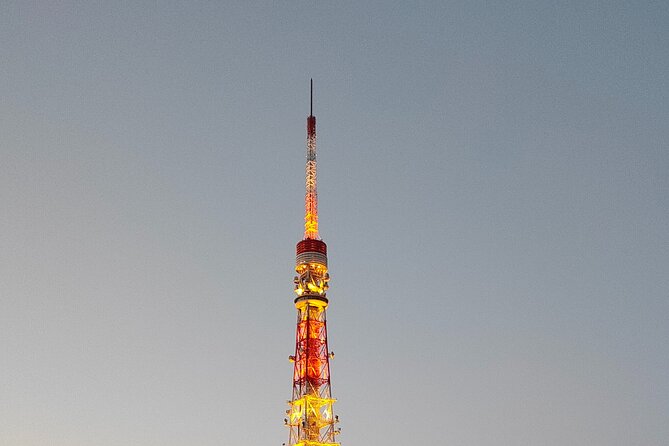
You end with Tokyo Tower, a communications and observation tower completed in 1958, designed in the Eiffel Tower style.
After that, there are optional “if time” moments:
- teamLab Planets TOKYO where you walk through water and flower-like spaces. Admission is not included.
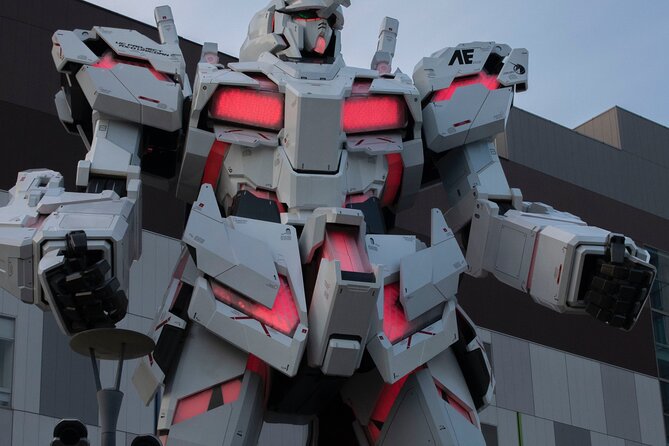
- Statue of Liberty replica in Odaiba, an 11-meter photo-op with Rainbow Bridge in the background.
If your group wants modern art and interactive visuals, keep teamLab on the list. If your legs are done, prioritize one last photo spot and save your energy.
Day 2: Kamakura temple classics, bamboo calm, then Yokohama’s two moods
Day 2 starts in Kamakura with temple sightseeing and ends with Yokohama, which gives you a nice change in atmosphere.
Bamboo Temple calm at Hokoku-ji
You begin at Hōkoku-ji, also called the Bamboo Temple. The highlight is the bamboo garden and a Zen-Buddhist setting, typically quiet and cool compared to Tokyo street life. It is about 1 hour, and it is one of the best “exhale” moments on the itinerary.
Big wooden Kannon at Hase-dera, then the Great Buddha at Kotoku-in
Next is Hasedera (Hase-kannon), famous for a massive wooden statue of Kannon. It is listed at 45 minutes, so it is enough time to take in the main hall and gardens without rushing.
Then you go to Kotoku-in (Great Buddha of Kamakura), a well-known Buddhist temple centered on the Great Buddha. Admission is not included here, but the time is short at 30 minutes, which keeps the day moving.
Tsurugaoka Hachimangu, then Komachidori’s shopping lane
You visit Tsurugaoka Hachimangu Shrine, a cultural center that hosts important festivals and includes two ponds representing the Taira and Minamoto clans. It is about 1 hour.
Then you walk Kamakura Komachidori, a busy pedestrian walkway of shops and sweets. It is 1.5 hours. This is where your tour becomes a real travel day, because you can browse and snack without planning your own route.
Yokohama Chinatown for flavor, Sankeien Gardens for slow beauty
After Kamakura, you head to Yokohama Chinatown, described as about 160 years old with a population historically around 3,000 to 4,000, though today most residents are from Guangzhou. It is about 1 hour, and it works even if you just want to wander and grab something small.
Then you visit Sankeien Gardens, a traditional Japanese garden opened in 1906 and designed by Tomitaro Hara. Admission is listed as not included, and the visit is about 1 hour. This is your decompression space.
Minato Mirai if you have time
There is an optional stop at Minatomirai, a futuristic waterfront with places like the Landmark Tower and Plaza. It is short, 30 minutes, and admission is free. This is a good place to end the day if you want skyline energy without another temple circuit.
Day 3: Fuji icons from Oshino Hakkai to the 5th station
Day 3 is the heart of the trip if Fuji is your reason for coming. The itinerary balances classic photo viewpoints with time near the mountain itself.
Oshino Hakkai, the Fuji-fed springs
You start at Oshino Hakkai, described as eight springs formed when Fuji’s aquifer water comes to the surface. It is noted as a Natural monument of Japan. Admission is free and time is about 30 minutes. You will see calm pools and a very “Fuji region” mood. The stop is short on purpose, so you can keep moving toward bigger vistas.
Chureito Pagoda for that postcard perspective
Next is Chureito Pagoda, famous for views of the five-storied pagoda with Mount Fuji in the background. It is about 30 minutes and admission is free. This is one of those places where weather matters a lot. If the sky is clear, it is a win. If visibility is poor, it is still worth seeing, but manage expectations.
Lake Kawaguchiko, a practical base with hot spring town vibes
Then comes Lake Kawaguchiko, described as the most easily accessible of the Fuji Five Lakes. It includes direct bus access to Tokyo and has a hot spring resort town feel. Time is about 30 minutes and admission is free.
From there, you have a view-focused stretch:
- Mt. Fuji Panoramic Ropeway, ascending 400 meters from the eastern shore to an observation deck near Mount Tenjo. Admission is not included, time is about 1 hour.
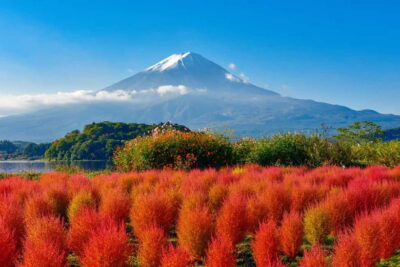
- Oishi Park, a well-known Fuji viewpoint with Fuji in the background and lake in the mid-ground, with lavender in the foreground. It is a 30-minute stop and free.
- Saiko Iyashi no Sato Nemba, a replica old village with thatched roofs. Admission not included, 30 minutes.
- Arakura Fuji Sengen Shrine, a scenic hillside park with panoramic views. Free admission, 30 minutes.
Mt. Fuji 5th station for the atmosphere
Your biggest payoff is Mt. Fuji 5th station, halfway up for most hikers. Time is about 2 hours, but admission is not included. This is where the tour earns its name. Even if you are not climbing to the summit, being that close changes how you understand the mountain, the weather, and the scale.
Gotemba Premium Outlets as the end-of-day reset
To close the day, you go to Gotemba Premium Outlets. The area is described as a green tea growing region and also known for horseradish. Time is about 2 hours and admission is free. This works as a practical finish when you still want something to do but you are ready to return to simpler logistics.
Day 4: Hakone Shrine, Lake Ashinoko, Ropeway, and volcanic Owakudani
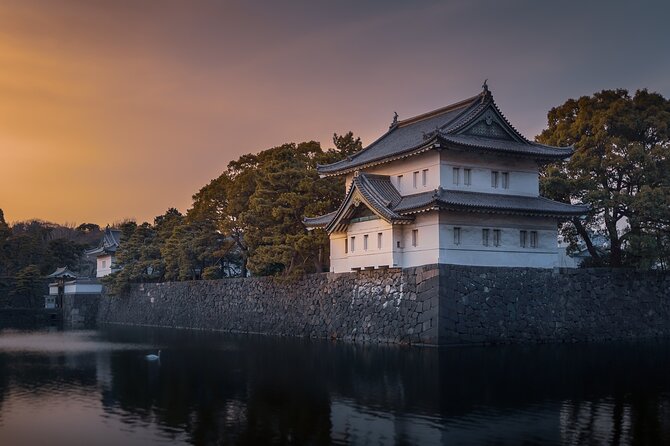
Day 4 shifts from Fuji imagery to Hakone’s volcanic, lake, and nature mix. It is structured so you get variety without jumping between distant neighborhoods.
Hakone Shrine by Lake Ashinoko
You start at Hakone Shrine (listed as Hakone Shrine / Kuzuryu Shrine Jingū). It is at the foot of Mount Hakone along Lake Ashi and tucked into dense forest. Time is about 1 hour, admission not included.
Lake Ashinoko crater-lake views
Next is Lake Ashinoko, described as a scenic crater lake formed in Mount Hakone’s caldera after the last eruption around 3,000 years ago. Time is about 1 hour, admission not included. Expect viewpoints and shoreline scenery that make Hakone feel different from Tokyo and the Fuji lakes.
Hakone Ropeway for mountain-lake transit views
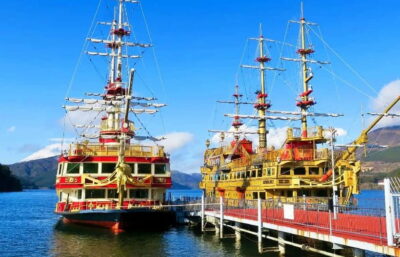
Then you ride the Hakone Ropeway. It is listed as connecting Sōunzan and Tōgendai via Ōwakudani. The line is described as becoming funitel in 2002. Admission not included, time about 1 hour. This is a very “Hakone” experience, because it turns the transit into a viewpoint.
Owakudani volcanic valley and the black eggs
Your star moment is Owaku-dani Valley, and it is called out as a top recommendation. This is the volcanic area known for sulfur springs and Kuro Tamago (Black Eggs). Admission is free, time about 1 hour.
This stop is not about quiet gardens. It is about being in an active landscape, smelling that volcanic character, and seeing the strange egg tradition tied to it. If you like natural drama, this is one of the reasons to pick this route.
Gora Park and the Open-Air Museum if you still have energy
After Owakudani, the itinerary cools down with:
- Gora Park, a western-style hillside botanical garden with a tea house, greenhouses, and a central fountain. Admission not included, 30 minutes.
- The Hakone Open-Air Museum, a big outdoor sculpture gallery across 70,000 square meters, with views of the surrounding mountains. Admission not included, about 1 hour.
If your day is running long, you can treat the museum as a highlight walk, not a marathon.
What you should know about tickets, time, and weather
This tour uses a mix of free and paid admissions, and the tour data lists which stops have admission not included. Common ones include Tokyo Skytree, teamLab Planets TOKYO, and several in Kamakura, Hakone, and the Fuji route like ropeways and the 5th station.
So plan for two scenarios:
- You keep admissions selective and spend only on the experiences that truly matter to your group.
- You add more ticketed attractions if weather looks good and you still have energy.
Also, weather matters, especially for Fuji. The experience is described as requiring good weather, and if canceled due to poor weather you will be offered a different date or a full refund. That is important because you can do the full route and still end up under clouds. The good news is that a private car plan helps you react to the day as conditions change.
Accommodation planning, so your nights match your sights
Accommodation is not included, so you are in charge of choosing where to sleep each night. That can actually be a plus, because you can pick the style you want, from business-simple to more scenic.
Here is the practical approach I recommend:
- Choose locations that reduce backtracking. This keeps morning starts smooth, especially since the meeting time is 8:00 am.
- Match your hotel choice to the day’s route so you are not fighting traffic or transit right before you need to be on the move.
Because the itinerary cycles Tokyo, then Kamakura and Yokohama, then Fuji, then Hakone, you will want hotels that keep your first hours painless.
Will you enjoy this tour? A quick decision guide
I think this is a smart booking if you want a high-effort, high-efficiency route without train transfers, and if your group includes people with different interests. Tokyo gives you tradition and modern culture. Kamakura adds temples and history-style walking. Fuji delivers mountain-focused sightseeing, and Hakone brings volcanic landscapes and lakes.
You should consider passing if you want to travel very slowly, if your group is comfortable planning public transit day by day, or if your budget is tight enough that paying for a private car would be hard to justify.
Based on what stands out, the biggest strengths are the personal care from English-speaking drivers and the way the schedule keeps you moving while still giving each stop a real chance. When guides like Armad or David are on your route, the day is easier, because someone else is doing the thinking for directions, timing, and photo moments.
If your top priority is seeing Tokyo, Fuji, Hakone, Kamakura, and Yokohama in 4 days without turning your trip into a transport project, this tour is a strong yes.
FAQ
How many people are included in the group?
The tour is priced for a group of up to 5 people.
What is the meeting time?
The meeting start time is 8:00 am.
Is pickup offered?
Yes, pickup is offered.
Is accommodation included?
No, accommodation is not included, so you choose where to stay each night.
Is this a guided tour?
It is not described as a guided tour by default, but an additional guide can be arranged on request.
Do I need tickets for all attractions?
Not all admissions are included. Some stops list admission ticket free, and other stops list admission not included.
Is the driver English-speaking?
Yes, you learn about the region from an English-speaking driver.
How long is the tour each day?
The duration is listed as approx 10 hours including commuting time across the 4 days.
Is good weather required?
Yes, the experience requires good weather.
What happens if the tour is canceled due to weather?
If canceled due to poor weather, you will be offered a different date or a full refund.
Can I cancel for a full refund?
Yes, free cancellation is offered up to 24 hours in advance of the experience’s start time for a full refund.
The Hakone Loop, Reviewed
Mount Fuji, Three More Ways
Newest Tokyo write-ups from the Loving Japan desk






Mount Fuji Day Trips, side by side.
 ★ 5.0Mt Fuji and Hakone 1-Day Bus Tour Return by Bullet TrainFrom $16326,383 reviews
 ★ 4.0Mt Fuji & Hakone Cruise, Drum Show Bullet Train 1 Day from TokyoFrom $1497,413 reviews
 ★ 4.4Tokyo Mt Fuji 5th St & Hakone Cruise Bus Tour w/Bullet TrainFrom $1545,024 reviews
 ★ 4.5From Tokyo: Mount Fuji Full-Day Sightseeing TripFrom $684,970 reviews
 ★ 4.7Mt. Fuji Tour, Hakone Ropeway, Owakudani, Lake AshiFrom $544,002 reviews
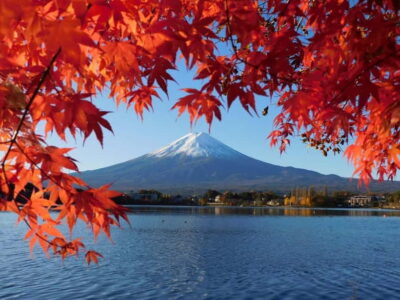 ★ 4.4Mt.Fuji,Kawaguchiko Oishi Park,Arakurayama Sengen ParkFrom $542,682 reviews
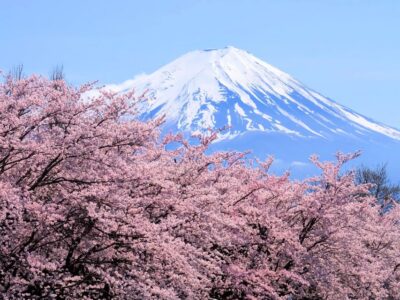 ★ 4.2Mt. Fuji 5th Station & Hakone Cruise 1-Day Bus TourFrom $1292,381 reviews
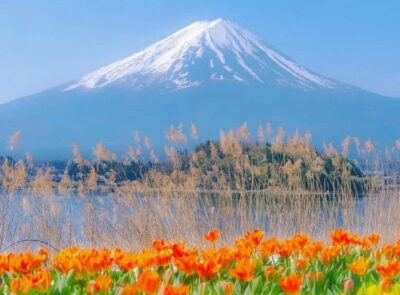 ★ 4.7Mt Fuji Top 5 Spots Day Tour: Arakurayama Park,Oshino HakkaiFrom $532,066 reviews