
REVIEW · TOURS WITH GOVERNMENT-LICENSED GUIDES
Aizu 4hr Private Tour with Government-Licensed Guide
Aizu feels like time travel. This 4-hour private walk with a government-licensed English guide helps you connect Aizuwakamatsu’s samurai past to calmer, everyday Japan, using customizable 2-3 sites for a focused visit. I love the government-licensed guide who explains the why behind what you see, and I love the efficient pace that keeps the experience relaxed instead of rushed. The one catch: most entrance fees and lunch are not included, so budget a bit extra.
I also like that the guides put real effort into planning. I’ve seen praise for guides such as Masa, Yumi, Mitzuko, Suji, and Nobuko for being friendly, well prepared, and patient, with English that actually feels natural as you walk. In a place where the story moves from Edo-era samurai life into the turmoil of the Meiji restoration, having someone connect the dots helps everything click.
Logistics are simple, but there’s a walking component. Pickup is offered, yet you meet the guide on foot within a designated area, and it’s a private tour for only your group. If you’re visiting in colder months, I’d bring grippy shoes, since paths can get slick after snow, and you’ll be moving between stops.
In This Review
- Key highlights you’ll feel in real life
- Why 4 hours works in Aizuwakamatsu
- The government-licensed guide angle, and why it matters
- Price and value: what you’re paying for, and what you still cover
- Walking tour logistics: pickup on foot, easy meet-up, and comfort tips
- Stop-by-stop: how each site fits your Aizu story
- Tsuruga Castle Gymnasium, the shock of history
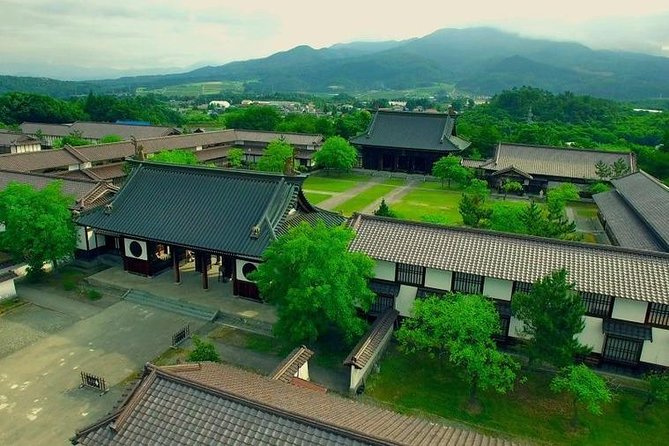
- Aizu Old Samurai Residences, seeing rank as a lived space
- Higashiyama Onsen, a quiet valley break
- Suehiro Sake Brewery, how tradition becomes a business
- Fukushima Museum, a big-picture anchor
- Iimoriyama, the war memory you can feel
- Oyakuen Garden, a calm reset with meaning
- Smart 2- and 3-stop combinations that make sense
- What I like about the pacing, especially for short visits
- Timing tips: book ahead, and plan for weather
- Who should book this private Aizu 4-hour tour
- Should you book it?
- FAQ
- How long is the Aizu 4-hour private tour?
- How much does the tour cost?
- Can I customize which places we visit?
- Is this tour private or shared?
- What language will the guide speak?
- Is pickup included?
- Is transportation included?
- Are entrance fees included?
- Can I bring a service animal?
- Is there free cancellation?
Key highlights you’ll feel in real life
- Government-licensed English guidance focused on Japanese culture and history, not just dates
- Pick 2 to 3 must-see stops so your 4 hours stays meaningful
- Castle to samurai residences to quiet garden gives you a full emotional arc of Aizu
- Higashiyama Onsen adds a local hot spring setting beyond temples and museums
- Suehiro Sake Brewery brings in a food and tradition angle from a producer founded in 1850
- Know the costs up front since admission tickets are generally not included, except one listed free stop
Why 4 hours works in Aizuwakamatsu
Aizuwakamatsu is a former feudal capital, and it has that slower rhythm that makes it feel different from the big-city sprint. In a short visit, you don’t want to cram. You want to see a few places well, then have your guide explain the bigger picture while you’re still standing there looking at it.
This tour is built for exactly that. You’re out for about 4 hours, and the format encourages you to select 2 to 3 stops from the available options. That structure helps you spend time on the parts that match your trip style, whether that’s samurai life, a memorial mood, or a break in an onsen valley.
Another smart part of the timing: some stops are 30 minutes and one is an hour, so it’s easy to balance viewpoints and walking. If you pick one heavier site (like the castle area or the museum), you can pair it with something lighter afterward.
The government-licensed guide angle, and why it matters
This isn’t just a person who speaks English. The guide interpreter certification is issued by the Japanese government and requires strong knowledge of Japanese culture and history. Practically, that means you can ask questions and get answers that connect the local details to the larger story.
In reviews tied to this kind of experience, people keep praising preparation and pacing, and they name specific guides like Masa, Yumi, Mitzuko, Suji, Chas Yokoi, Sachi, and Nobuko. The common thread is that the guides don’t just recite facts. They explain context while walking, and that’s what makes a castle site or samurai residence stop feel more alive.
You’ll also benefit from the guide adjusting to your group. One family-style review praised a guide for checking in often and tailoring the day, which is exactly what you want if you’re traveling with kids or you like time for photos and questions.
Price and value: what you’re paying for, and what you still cover
The price is $107.78 per person for a private 4-hour tour. That sounds straightforward until you compare it to the real costs of a licensed guide plus a tightly timed experience with personalization.
Here’s what you get included:
- A licensed local English speaking guide
- A customizable tour where you choose 2-3 sites
- A meet-up plan within a designated Aizuwakamatsu area
- A mobile ticket
- Pickup offered (still on foot for the actual meeting)
Here’s what you’ll likely pay separately:
- Transportation fees and private transportation are not included
- Entrance fees are generally not included
- Lunch and other personal expenses are not included
One notable detail that helps your budget: Aizu Old Samurai Residences is listed as free. For the other major stops, the tour info specifically flags admission tickets as not included (including Tsuruga Castle Gymnasium, Higashiyama Onsen, Suehiro Sake Brewery, Fukushima Museum, Iimoriyama, and Oyakuen Garden). So you’ll want to keep some cash or a card ready for site fees.
If you’re trying to get the best value, choose your 2-3 stops so you’re paying entrance fees only where the experience will matter most to you.
Walking tour logistics: pickup on foot, easy meet-up, and comfort tips
This is a walking tour. Pickup is offered, but you meet the guide on foot within the designated area of Aizuwakamatsu. The good news is that it’s near public transportation, and the private setup means you’re not sharing your route with strangers.
What to plan for:
- Comfortable shoes are a must, because castle grounds and gardens can involve steps and uneven walking.
- Keep a light layer handy. Even when the weather is pleasant, you can feel a temperature shift when you move from downtown streets to valley areas like Higashiyama Onsen.
Also, the tour is private, so it’s just your group. That matters if you want a steady pace or if someone in your party needs slower breaks.
Stop-by-stop: how each site fits your Aizu story
Your schedule depends on the 2-3 stops you select from the options. But the list gives you a great menu, because it covers the arc from power and war to everyday local life.
Tsuruga Castle Gymnasium, the shock of history
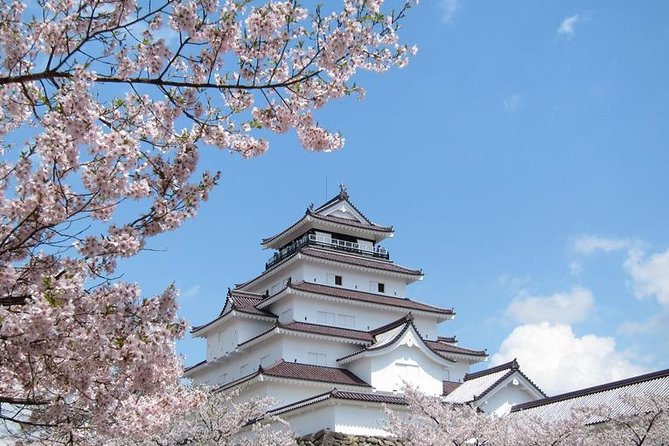
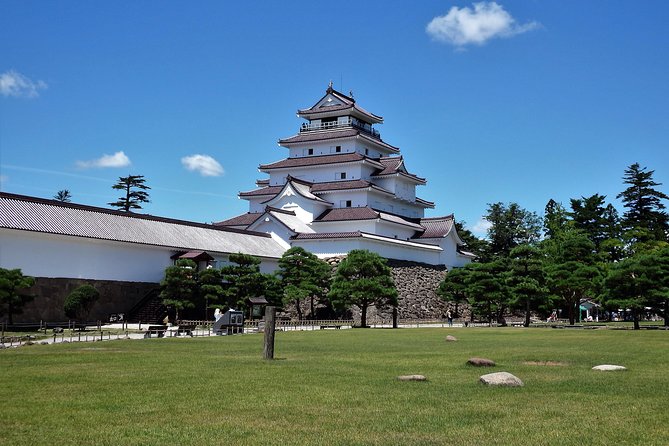
Tsuruga Castle (Tsurugajo) is the big anchor of Aizu’s historical identity. It was built in 1384, and control shifted among regional rulers over time. The site carries a heavy memory because it was destroyed after the Boshin War of 1868, a rebellion against the new government.
Even though the itinerary calls it Tsuruga Castle Gymnasium, you’re still going to the castle-centered story. That makes this a smart first stop if you want your guide to frame everything else around the Aizu experience of that turbulent era.
Consideration: castle areas often involve more walking and a bit more exposure to wind. If your group hates open-air time, pair the castle with a more sheltered next stop.
Aizu Old Samurai Residences, seeing rank as a lived space
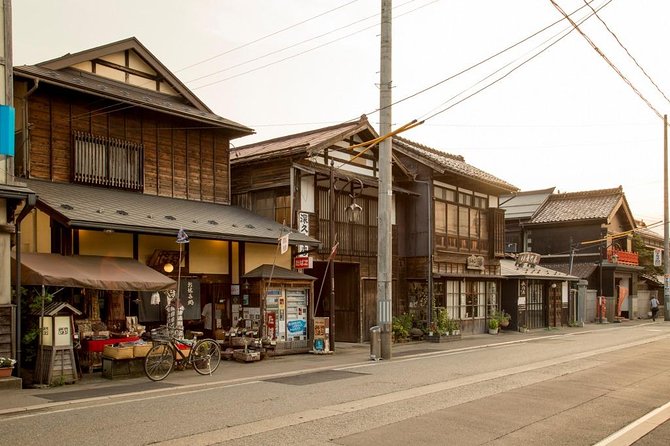
This is where you get out of the big battle narrative and into daily structure. The Aizu samurai residence served as quarters for the region’s most important and highest-ranked samurai, including family, employees, and servants.
The key point for you: this stop turns history from abstract into a physical layout. You can often understand social order better when you’re standing inside the spaces where people worked and lived.
The other practical bonus is that this stop is free. So it’s a high-value pick if you’re trying to reduce out-of-pocket entrance fees.
Higashiyama Onsen, a quiet valley break
Higashiyama Onsen is a hot spring resort east of downtown Aizuwakamatsu, in a valley setting. The area has hotels and shops for visitors, and the onsen vibe makes the tour feel less like a museum run and more like a real place where locals and guests decompress.
This stop is listed as 1 hour, so it’s your chance to slow down. If you’re picking only two stops, onsen can be a great counterbalance to a heavier history site like the castle.
Consideration: the itinerary lists admission ticket not included here. Depending on what you want to do once you’re in the onsen area, your costs could vary. Plan for that in your budget.
Suehiro Sake Brewery, how tradition becomes a business
Suehiro Sake Brewery is one of the larger and well-known producers in the Tohoku region. It was founded in 1850, and it’s family-owned for eight generations.
This is a great stop if you like when your historical tour connects to something you can taste or take home. Even without assuming a specific tasting experience, you can expect to learn how a long-running family business kept traditions alive through major social changes.
Consideration: admission tickets are not included, so treat it like a paid attraction. If you’re a strict light-budget traveler, you might choose the free samurai residences plus a garden instead.
Fukushima Museum, a big-picture anchor
The Fukushima Prefectural Museum has an extensive permanent exhibition that illustrates Japan’s entire history, stretching from archaeological finds onward. In a few decades of traveling, I’ve learned that one good museum stop can prevent a trip from feeling like scattered snapshots.
Here, the value is context. After you’ve seen castle or samurai spaces, the museum can explain how the wider sweep of Japanese history affected regions like Aizu.
It’s listed as 30 minutes, which is short for a museum. So don’t expect a full encyclopedia walkthrough. Instead, aim to focus on what your guide highlights, then use that to connect the dots to the other stops.
Iimoriyama, the war memory you can feel
Iimoriyama comes with a very specific historical framing. After the shogunate fell in 1867, loyal forces concentrated in northern Tohoku tried to resist the new government. They were defeated decisively at Tsuruga Castle, and Iimoriyama ties to that aftermath.
This stop is 30 minutes and it’s emotionally different from onsen and shopping streets. It’s more reflective, and it helps explain why Aizu’s samurai story isn’t just about etiquette and armor. It’s about a real political clash.
If you’re sensitive to heavy historical themes, you can balance Iimoriyama with a calming site afterward, like the garden.
Oyakuen Garden, a calm reset with meaning
Oyakuen (御薬園) is a Japanese garden with a pond that invites slow strolling. The name connects to an 18th-century use as a medicinal herb garden, so it’s not only pretty. It’s also tied to how people valued plants and healing in earlier Japan.
It’s listed as 30 minutes, which is a good sweet spot. After castles and war stories, your body and mind will appreciate the break.
Practical note: garden walks are gentler than castle ramps, but you still want comfortable shoes, since paths can be uneven.
Smart 2- and 3-stop combinations that make sense
Because you’re selecting 2-3 stops, your choices should create a story arc. Here are practical pairings based on how the sites differ.
If you want the samurai story front and center:
- Tsuruga Castle + Aizu Old Samurai Residences
Add Oyakuen Garden for a calmer ending.
If you want history plus local culture:
- Tsuruga Castle + Fukushima Museum
Add Suehiro Sake Brewery if you want tradition through everyday industry.
If you want a lighter day with one heavy anchor:
- Higashiyama Onsen + Oyakuen Garden
Add Iimoriyama only if you still want the political backstory.
If you want to understand conflict from multiple angles:
- Tsuruga Castle + Iimoriyama
Then decide if you want a reflective quiet finish at Oyakuen or a practical reset at the onsen area.
My advice: pick one place that feels emotional (castle or Iimoriyama), one place that’s practical (samurai residences or brewery), and only one “rest” stop (onsen or garden) unless you truly want a slower day.
What I like about the pacing, especially for short visits
The structure is built to avoid the typical half-day travel problem: running from one site to the next with no time to process what you’re seeing. With options that are often 30 minutes (and one 1 hour stop), the 4-hour format encourages realistic pacing.
You can also get a better experience from guides who check in and adjust the tempo. One family-focused review praised a guide for tailoring the day, and that’s exactly what you’ll want if your group includes kids, older adults, or anyone who gets tired from walking.
And because it’s private, your guide can focus on what your party cares about. That might mean more discussion at a samurai residence, or more time outdoors at a garden.
Timing tips: book ahead, and plan for weather
This tour is often booked about 59 days in advance on average. That suggests you should reserve early if you have specific dates, especially during busy travel weeks.
Weather can matter. One Aizu-focused experience included mention of cold and slippery conditions after snow the week before. You may not get snow every time, but you should assume your walking surfaces could be slick in colder seasons. Pack grippy footwear, not just pretty shoes.
Who should book this private Aizu 4-hour tour
This tour is a strong fit if:
- You want a government-licensed English guide and you value cultural context
- You like history but want a manageable pace
- You want to customize, selecting 2-3 sites that match your interests
- You’re okay with a walking tour and comfortable shoes
- You’re traveling as a couple, friends, or family and want your own private flow
It may be less ideal if:
- You want a hands-off day with minimal walking and no planning
- You’re trying to minimize all extra costs, since entrance fees and meals are not included for most stops
- You prefer using public transit to hop between many separate areas in a longer itinerary
Should you book it?
Yes, if your goal is to understand Aizuwakamatsu fast, in a way that feels grounded and personal. The private guide format plus the flexibility to pick 2-3 stops makes the 4 hours feel like a real outing, not a checkbox tour.
Book it if you’re drawn to specific places like Tsurugajo and want someone to connect the Boshin War story to what you’re standing in front of. Also book it if you want that contrast between samurai spaces, onsen valley calm, and a garden that gives you a quiet reset.
If you hate paying extra for admissions and meals, then budget ahead and choose wisely. Use the free Aizu Old Samurai Residences as an anchor, then spend your entrance fees on only one or two paid attractions.
FAQ
How long is the Aizu 4-hour private tour?
The tour is approximately 4 hours.
How much does the tour cost?
The price is $107.78 per person.
Can I customize which places we visit?
Yes. You create a customized itinerary by selecting your must-see spots, and the tour is designed around 2-3 sites from the available options.
Is this tour private or shared?
It’s private. Only your group participates, and you cannot combine multiple tour groups.
What language will the guide speak?
You get a licensed local English speaking guide, with a government-issued guide interpreter certification.
Is pickup included?
Pickup is offered, but the guide meeting happens on foot within a designated Aizuwakamatsu area.
Is transportation included?
Transportation fees are not included, and private transportation is not included.
Are entrance fees included?
Entrance fees are not included for the listed stops. One stop, Aizu Old Samurai Residences, is listed as free.
Can I bring a service animal?
Yes, service animals are allowed.
Is there free cancellation?
Yes. You can cancel for a full refund up to 24 hours in advance of the experience start time.
Tours with Government-Licensed Guides, side by side.
 ★ 5.0Tokyo 6hr Private Tour with Government-Licensed GuideFrom $1553,902 reviews
 ★ 5.0Kyoto 6hr Private Tour with Government-Licensed GuideFrom $1551,369 reviews
 ★ 5.0Hiroshima / Miyajima Full-day Private Tour with Government Licensed GuideFrom $2021,298 reviews
 ★ 5.0Kyoto 4hr Private Tour with Government-Licensed GuideFrom $109629 reviews
 ★ 4.8Private Tour with Local Licensed GuideFrom $106463 reviews
 ★ 5.0Hiroshima City 4hr Private Walking Tour with Licensed GuideFrom $122437 reviews
 ★ 5.0Private Kyoto Tour with Licensed Guide & Vehicle (Max 15 persons)From $634417 reviews
 ★ 5.0Osaka 4hr Private Tour with Government-Licensed GuideFrom $109359 reviews
Filed on these lists too