
REVIEW · TOURS WITH GOVERNMENT-LICENSED GUIDES
Kyoto 4hr Private Tour with Government-Licensed Guide
Kyoto in 4 hours, with zero guesswork. This private tour puts a nationally licensed guide by your side and lets you build a custom itinerary around the sights you actually care about. It is a smart way to see Kyoto without getting stuck with confusing directions, wrong turns, or long waits.
I especially like the focus on 2 to 3 chosen stops, not a frantic checklist. Guides such as Yuri and Tomy have been praised for making transit easier and for tightening the day so you do not waste it wandering in the wrong neighborhood.
One thing to consider: it is a walking tour with pickup on foot, and entrance fees plus transport costs are not included (unless you add a private vehicle upgrade). That can add up if you pick multiple far-apart ticketed sights.
In This Review
- Key things that make this Kyoto private tour work
- Kyoto in 4 hours, built around your pace
- Price and value: what $109.43 really buys you
- How to choose your best 2 to 3 stops
- Fushimi Inari Taisha: torii gates, plus the stories behind them
- Nijo Castle and the Edo-era connection
- Gion, Gion streets, and how to enjoy the geisha district without stress
- Nishiki Market: Kyoto’s kitchen, for snacks and real local energy
- Kiyomizu-dera and the Higashiyama story arc
- Ginkakuji and Nanzenji: Zen aesthetics and calm pacing
- Toji and the city’s temple variety
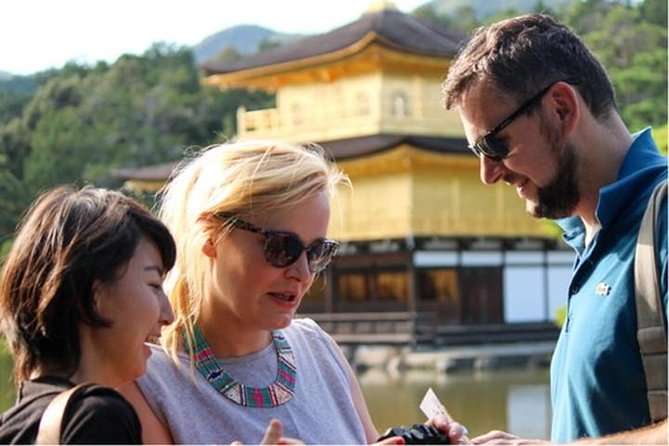
- Kinkakuji and golden-pavilion drama
- Kyoto Imperial Palace and the feeling of former power
- Shugakuin and Katsura Imperial Villas: architecture lovers, take note
- Arashiyama, bamboo, and Tenryu-ji: the western Kyoto highlight zone
- Hillside temples around Arashiyama: quieter, slower, and very photogenic
- Kibune and Kurama: northern mountain time
- Rock garden focus: Ryoan-ji and the art of patience
- Getting around like a local, without turning your day into transit math
- Who should book this Kyoto private tour
- Should you book this Kyoto private tour?
Key things that make this Kyoto private tour work
- Nationally licensed local guide who helps you understand what you are seeing, not just where to stand
- Pick-your-own 2 to 3 sites from Kyoto’s top heritage spots, so you are not doing everything everywhere
- Pickup on foot at/near your hotel area, then onward by public transit or taxi
- Mobile ticket for smoother day-of checking
- Flexibility mid-day when you want to swap the order or match your energy level
- Many guides are strong at transit flow, so you spend less time stuck in stations
Licensed guides working the same ground
- Kyoto 4hr Private Tour with Government-Licensed Guide
★ 5.0 · 629 reviews - Kyoto: Private Tour with Local Licensed Guide
★ 4.8 · 463 reviews - Private Kyoto Tour with Licensed Guide & Vehicle (Max 15 persons)
★ 5.0 · 417 reviews - Nara 8hr Private Tour – Kyoto DEP. with Licensed Guide
★ 5.0 · 115 reviews
Kyoto in 4 hours, built around your pace
This is a half-day private format, designed for travelers who want a first-rate Kyoto experience without spending the day figuring everything out. You choose 2 to 3 stops from a menu that includes shrines, castles, temple districts, markets, and even imperial sites.
The day runs best when you treat it like a guided route, not a sprint. Your guide meets you within a designated area and often coordinates an easy start from the hotel zone, then you move around using public transportation or taxi if needed. That approach matters in Kyoto because some areas feel close on a map, but not on foot.
Price and value: what $109.43 really buys you
At about $109.43 per person, you are mainly paying for three things: a licensed guide, custom routing, and time saved. The tour includes your guide, and it is built around the idea that you will pick the sites that fit your interests and schedule.
What is not included is also important. Transportation fees, entrance fees, lunch, and personal expenses are on you. Some sights in the list are marked as admission free, while others are not included, so the final total depends on your stop choices.
In practice, the value shows up most on the day itself. Kyoto can be crowded at the obvious spots, and it can be confusing to move between neighborhoods. A guide who handles subway and bus directions, like Yuri and Tomy did for their groups, can turn an ordinary afternoon into a day that flows.
How to choose your best 2 to 3 stops
Think in neighborhoods and energy level. If you pick two places that require lots of stair climbing and cross-town travel, you will feel it in a 4-hour window.
Here are practical ways to choose from the options:
- Go East for classic Kyoto walking zones: Fushimi Inari, Higashiyama, and major temple highlights
- Go West for scenery and gardens: Arashiyama, bamboo paths, and temple grounds nearby
- Pick one big landmark plus one atmosphere stop: for example a shrine plus a market, or a temple plus a dining alley
- If you want quiet, plan for slower pacing: areas like Kibune and Kurama are more of a mountain reset than a quick photo stop
If you are traveling with kids or multi-generational family members, you will often get the best day by picking fewer stops and sticking to a compact area. That is where a private guide pays off, because they can shape timing and transit choices around your group.
- PERFECT KYOTO 1-Day Bus Tour★ 5.0 · 13,518 reviews
- Kyoto: Fushimi Inari, Kinkakuji, Bamboo Grove 1 Day Bus Tour★ 4.8 · 4,316 reviews
- Kyoto: Tea Ceremony in a Traditional Tea House in Kiyomizu★ 4.9 · 3,519 reviews
- Kyoto Geisha Walking Tour: Gion District & Hidden Gems★ 4.7 · 3,273 reviews
- Kyoto: Tea Ceremony Ju-An at Jotokuji Temple★ 4.9 · 3,207 reviews
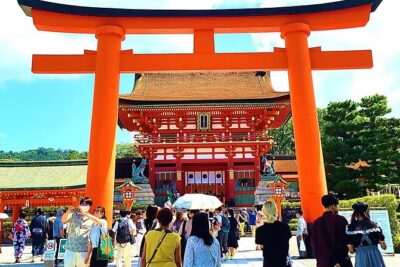
Fushimi Inari Taisha: torii gates, plus the stories behind them
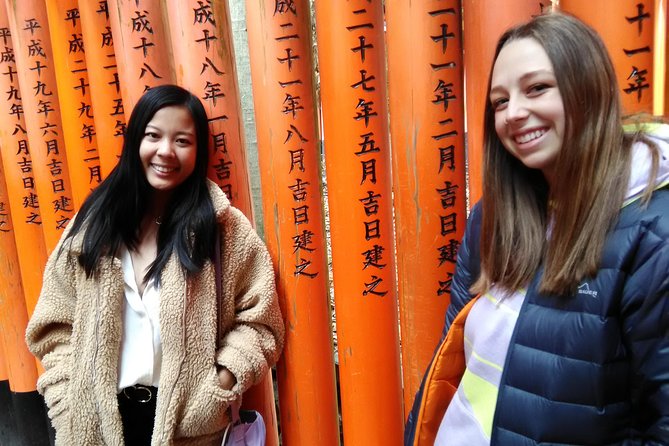
Fushimi Inari-taisha is the obvious starting point for many Kyoto days, and for good reason. The place is famous for vermillion-red torii gates, and even if you have seen photos, it feels different in person when you are walking the paths.
What makes a guided start worthwhile is what most people miss when they only aim for the tunnel shots. Your guide can point out the shrine’s layered meaning and explain why this shrine matters beyond the visuals. Even reviewers who focused on “getting the highlights” often came away saying the guide brought extra context to what they were seeing.
If crowds are a concern, ask your guide about timing. One group specifically mentioned starting early at Fushimi Inari to make the visit easier, and that is a smart move if your schedule allows it.
Nijo Castle and the Edo-era connection
Nijo Castle is one of the best “Kyoto history with structure” stops you can choose. It is a UNESCO site built in 1603 as the Kyoto residence of Tokugawa Ieyasu, the first shogun of the Edo Period.
A private guide helps here because castles are easy to look at and harder to read. You will get help connecting the spaces to the people and period, so the buildings do not feel like generic walls and courtyards. This is also a good match if you want more royal and political history, not only religion and gardens.
One practical note: admission is not listed as included for this stop, so build a little time and budgeting for tickets on the day.
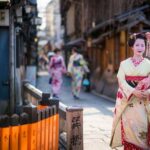
Gion, Gion streets, and how to enjoy the geisha district without stress
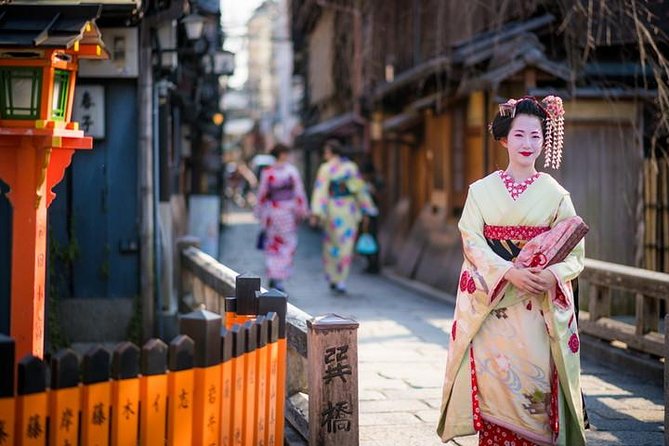
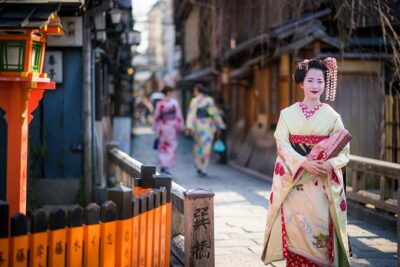
Gion is one of those Kyoto places that can overwhelm a first-time visitor. The streets are narrow, the lanes can feel confusing, and you can accidentally drift into tourist bottlenecks with no clear route out.
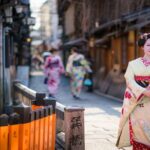
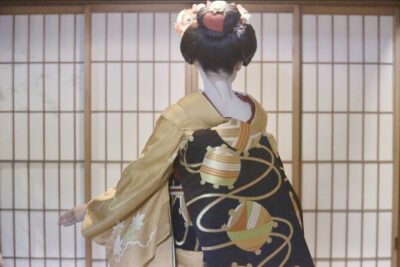
A guide makes the difference because they help you walk the right streets at the right moments. Your route can be paired with other nearby stops, and that makes the whole day feel easier. One group highlighted how their guide helped them navigate Gion-style streets with confidence and also shared ritual and cultural explanations.
Another nice bonus: Gion is often close to opportunities for photos and small side streets. Your guide can point you toward spots where you get the atmosphere without turning your day into a constant queue.
Nishiki Market: Kyoto’s kitchen, for snacks and real local energy
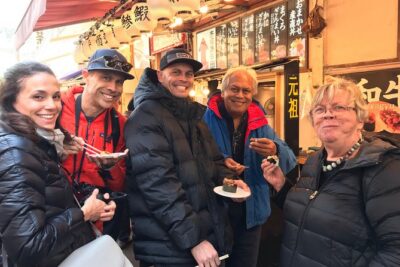
Nishiki Market is narrow and about five blocks long, lined with lots of shops and food stops. It is often described as Kyoto’s kitchen, and that phrase is accurate, because this is where you taste your way through ingredients, kitchen styles, and quick bites.
The best way to do a market with a guide is not just to eat everything. It is to get help selecting what fits your taste and avoiding the traps where you end up with the same snack over and over.
If you like food tourism, this is a high-return stop that usually does not require long ticket lines. Admission is listed as free, which helps keep your day from turning into a constant add-on cost.
Kiyomizu-dera and the Higashiyama story arc
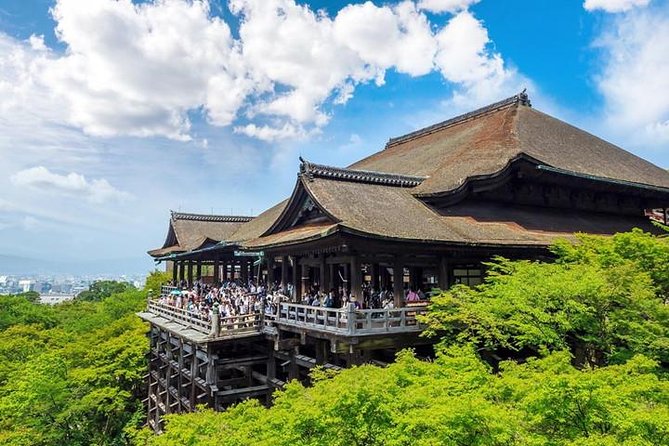
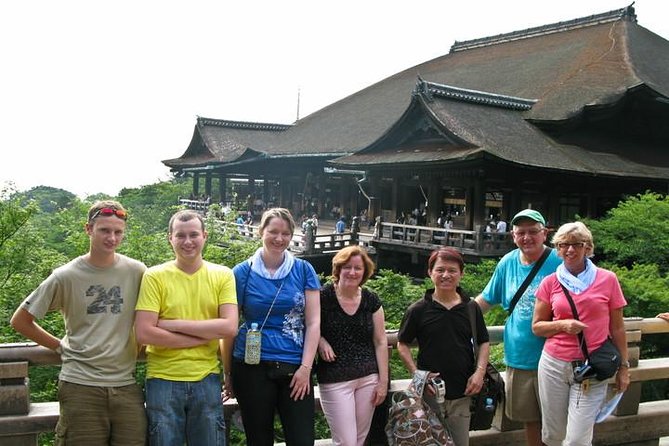
Kiyomizu-dera is a major Kyoto temple people travel across the world to see. It is one of the city’s most popular temples, and it is the kind of landmark where a guided hour can add real meaning.
A guide can help you understand what you are looking at on the grounds and why the temple is culturally important, not only visually famous. This can be especially useful in Higashiyama, where the streets and viewpoints are part of the experience, not just the building.
From there, Higashiyama ward is a strong follow-up choice. It is one of Kyoto’s best preserved historic districts along the eastern mountains, and it is a great area for traditional Kyoto strolling. With a guide, you can move between points without accidentally losing time.
Ginkakuji and Nanzenji: Zen aesthetics and calm pacing
Ginkakuji, the Silver Pavilion, is a Zen temple on Kyoto’s eastern mountains side. It traces back to 1482, when Ashikaga Yoshimasa built his retirement villa on the grounds of today’s temple.
This stop tends to work well in a private half-day because it rewards slow looking. A guide helps you pace the visit so you see the key views and details without rushing through photo angles.
Nanzenji and Suirokaku come next in the menu of options. Nanzenji is described as a major Zen temple with spacious grounds at the base of Higashiyama mountains. Even if you only pick one or two of these temple stops in your day, the combination gives you a better sense of Kyoto’s spiritual map.
Toji and the city’s temple variety
Toji temple is another strong Kyoto option because it shows the city’s temple range. It dates back to the early Heian Period and is closely linked to the moment the capital moved to Kyoto in the late 700s.
Unlike some temple areas that feel like only a viewpoint circuit, Toji is often a good choice when you want something that feels grounded and historically anchored. Admission is listed as free for this stop in the provided details, which helps with budget planning.
Kinkakuji and golden-pavilion drama
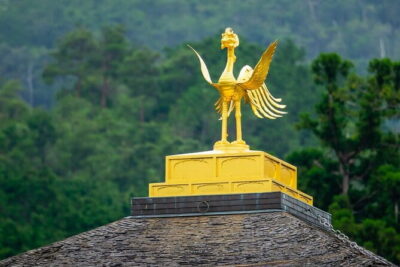
Kinkakuji, the Golden Pavilion, is the Zen temple option everyone recognizes instantly. Its top two floors are covered in gold leaf, and it is connected to Ashikaga Yoshimasa as a retirement villa.
A private guide helps you avoid the common problem of just taking photos and leaving. You should come away understanding why this place became so culturally famous and how it fits the Kyoto temple scene as a whole.
As with many major landmarks, admission is not included, so build the cost into your plan. If your goal is maximum impact per yen, you might pair Kinkakuji with a more budget-friendly stop like a free market or a free temple district.
Kyoto Imperial Palace and the feeling of former power
Kyoto Imperial Palace is a different kind of “Kyoto impressive.” It used to be the residence of Japan’s Imperial Family until 1868, when the emperor and the capital moved to Tokyo.
This stop is worth it if you like how history changes a city. In a private format, your guide can connect the palace setting to the shift in political gravity and explain why Kyoto still carries an imperial atmosphere even after the move.
Admission is listed as not included for this stop, so factor in tickets when you choose it.
Shugakuin and Katsura Imperial Villas: architecture lovers, take note
If you are drawn to garden design and refined architecture, these imperial villa options can be excellent picks. Shugakuin Imperial Villa was built in the 17th century by Emperor Gomizuno and is managed by the Imperial Household Agency, and it includes Upper, Middle, and Lower Villa areas.
Katsura Imperial Villa is also in the menu. It is listed as one of the finest examples of Japanese architecture and garden design, and its current form was completed in 1645 as an imperial residence.
These kinds of stops are a good match for people who want Kyoto beyond shrines. They also tend to work better when you pair them with one extra “atmosphere” stop nearby, so you are not bouncing between far zones.
In the provided details, these villas are marked as not including admission, so you will likely pay tickets on the day.
Arashiyama, bamboo, and Tenryu-ji: the western Kyoto highlight zone
Arashiyama is one of Kyoto’s most popular western areas, with a history that goes back to the Heian Period when nobles enjoyed its natural setting. This is where you should come if you want scenery and a slower walking pace.
Your menu includes:
- Togetsukyo Bridge, Arashiyama’s most iconic landmark, originally built during the Heian Period and reconstructed in the 1930s
- Bamboo groves walking paths, which are especially enjoyable when bamboo stalks sway with a light wind
- Tenryu-ji Temple, ranked among Kyoto’s five great Zen temples and registered as a world heritage site
One practical plus for this zone is that it is easy to build a cohesive day. You can choose a bridge moment, a bamboo walk, and one temple, and your day still feels full without becoming a transit maze.
If you want something a little off the main track, Okochi Sanso Garden is in the options too. It is the former villa of actor Okochi Denjiro and sits at the back of Arashiyama bamboo groves.
Hillside temples around Arashiyama: quieter, slower, and very photogenic
The menu also includes a set of hillside temple options that can create a calmer feel in your half-day. Jojakkoji, Nisonin, and Gioji are described as being tucked into forests and hillside settings, with moss gardens and maple trees.
These stops are not the big-ticket, instantly-recognized names, but that can be the appeal. In a private tour, you can pick one hillside stop to balance the more famous sights so your day feels varied.
Admission is listed as not included for these temples in the provided details, so budget accordingly.
Kibune and Kurama: northern mountain time
If you want to step away from the center’s constant foot traffic, Kibune is an option. It is described as a small town in a forested valley in northern Kyoto, developed around Kifune Shrine, and it includes a legend about a goddess traveling by boat from Osaka.
Kurama is another mountain-area choice, less than an hour from the city center. It is best known for Kurama-dera and a hot spring option.
These are good picks for people who want a different Kyoto mood, not just the standard shrine and market circuit. The tradeoff is you will likely spend more of your 4 hours getting there and walking within the area, so choose carefully.
Rock garden focus: Ryoan-ji and the art of patience
Ryoan-ji is in the options, and it is famous for Japan’s most well-known rock garden. It attracts hundreds of visitors every day, and the spot works best when you slow down and let the design do its job.
A guide can help you understand how to look, because the garden is not something you can fully “decode” in a rush. This is a strong choice if you like Zen aesthetics and want a stop that feels mental, not just visual.
As with other major temples, admission is listed as not included.
Getting around like a local, without turning your day into transit math
This tour is built as a walking-and-transit experience. Pickup is on foot, and then you move via public transportation or taxi. Some groups have also used taxis between certain sites, which is normal if your route mixes uphill areas or longer hops.
Do yourself a favor and pack for walking:
- Wear comfy shoes, because you will hit hills and uneven paths.
- Bring cash and use transit cards. One helpful tip was getting a Suica card ahead of time, and also bringing yen because not everywhere is set up for easy card payment.
- Hydrate and snack smart, especially if you are touring during warmer months. A guide can help you time breaks so you do not lose momentum.
The big value is that your licensed guide handles route flow. Review examples like Yuri translating signage and getting groups through transit confusion are exactly the kind of thing you will feel during your day.
Who should book this Kyoto private tour
Book it if:
- You are in Kyoto for a short time and want to hit key sights with context
- You want a custom itinerary instead of a fixed loop
- You prefer walking and transit, as long as someone helps you navigate it
- You care about how each place fits into Japanese culture and local history, not just the photo
Consider a different approach if:
- You hate walking and hills and want a fully car-based day (private vehicle is an upgrade, but base tour is walking)
- You plan to select multiple far-apart regions that will strain the 4-hour limit
- You want entrance fees fully handled, since the tour does not include them
This tour format shines when you pick a tight set of priorities and trust your guide to keep the flow.
Should you book this Kyoto private tour?
If you want Kyoto highlights with less stress, this is a strong choice. The combination of a nationally licensed guide plus the ability to choose 2 to 3 stops is where the value lands, especially if it is your first time in the city.
My quick decision checklist:
- Pick stops that cluster by area (East, West, or mountain north).
- Expect to pay entrance fees for many major sites, and keep snacks and water handy.
- If you are sensitive to walking, discuss a taxi-heavy plan or consider the private vehicle upgrade.
If you want Kyoto to feel guided, not chaotic, this half-day private setup is built for you.
Licensed Guides on the Same Ground
Newest Kyoto write-ups from the Loving Japan desk

Tours with Government-Licensed Guides, side by side.
 ★ 5.0Tokyo 6hr Private Tour with Government-Licensed GuideFrom $1553,902 reviews
 ★ 5.0Kyoto 6hr Private Tour with Government-Licensed GuideFrom $1551,369 reviews
 ★ 5.0Hiroshima / Miyajima Full-day Private Tour with Government Licensed GuideFrom $2021,298 reviews
 ★ 4.8Private Tour with Local Licensed GuideFrom $106463 reviews
 ★ 5.0Hiroshima City 4hr Private Walking Tour with Licensed GuideFrom $122437 reviews
 ★ 5.0Private Kyoto Tour with Licensed Guide & Vehicle (Max 15 persons)From $634417 reviews
 ★ 5.0Osaka 4hr Private Tour with Government-Licensed GuideFrom $109359 reviews
 ★ 5.0Nikko Full-Day Private Tour with Government-Licensed GuideFrom $155259 reviews
Filed on these lists too