
REVIEW · FOOD & DRINK
Deep Dive: Osaka Food Markets from Local to Luxurious!
Turning markets into a map you can use. This 4-hour Osaka tour strings together four to seven food-focused stops that range from polished department-store counters to real wet-market shopping. You’ll get an insider’s read on how Osaka eats, how markets work, and how to order without feeling lost, with a guide who can explain in your language.
What I like most is the mix: Takashimaya’s depachika style shopping alongside Pulala Tenma’s wet-market feel, plus a run through neighborhoods most people skip. The second big win is the practical angle. You don’t just look, you learn how to navigate, spot specialties, and shop like the locals do. One consideration: this is not a fixed “all food tastings included” tour, so you should plan to buy snacks you want.
In This Review
- Key things I’d flag before you go
- Osaka markets in four hours, from depachika to Namba
- Price and logistics: what $91 covers, and what it does not
- Your starting point at Temma Station, then a smart end in Dotonbori
- Stop 1: Takashimaya Osaka and the depachika style of buying
- Stop 2: Pulala Tenma for wet market shopping without the crush
- Stop 3: Tenjinbashi-suji arcade and the Osaka supermarket mindset
- Stop 4: Osaka Tsuruhashi Ichiba and Korea Town, more than just food
- Stop 5: Kuromon Market, famous for a reason, with prices to watch
- Stop 6: Sennichimae Doguyasuji for kitchenware, knives, and ceramics
- Stop 7: Namba and Dotonbori, a smart wrap-up
- Guides and pacing: why the experience feels tailored
- What you should bring so this tour feels effortless
- Value check: is this tour worth it compared to wandering?
- Who this Osaka food markets tour suits best
- Should you book this tour?
- FAQ
- How long is the Osaka food markets tour?
- Is pickup offered?
- Do I need to pay for transportation during the tour?
- Are food samples or tastings included in the price?
- What food places do we visit?
- Do tours run in the morning and afternoon?
- Is this a private tour?
- Where do I meet and where does the tour end?
- What language is the guide?
- Can I cancel for a full refund?
Key things I’d flag before you go
- Depachika first, wet market second: you get contrast fast, from shiny “gift-ready” food to everyday ingredients.
- Your guide’s job is ordering and context: expect tips on what you’re looking at and how to ask for what you want.
- Private group format: it’s only your group, so pacing and questions stay yours.
- Snacks are on you: samples and refreshments are not included, so go hungry with a budget.
- Walking adds up: you’ll cover multiple areas, so wear shoes that don’t hate you back.
Still weighing up options in Osaka? These are the ones our reviewers rated highest.
- Osaka Go Karting Tour with Funny Costume
★ 5.0 · 2,658 reviews - Osaka Castle: Museum and Tower Entry Ticket
★ 4.5 · 2,380 reviews - Osaka: Shinsekai Food Tour with 13-15 Dishes at 5 Eateries
★ 4.8 · 2,204 reviews - Osaka Food Tour: 13 Dishes at 5 Local Eateries
★ 5.0 · 2,149 reviews
Osaka markets in four hours, from depachika to Namba
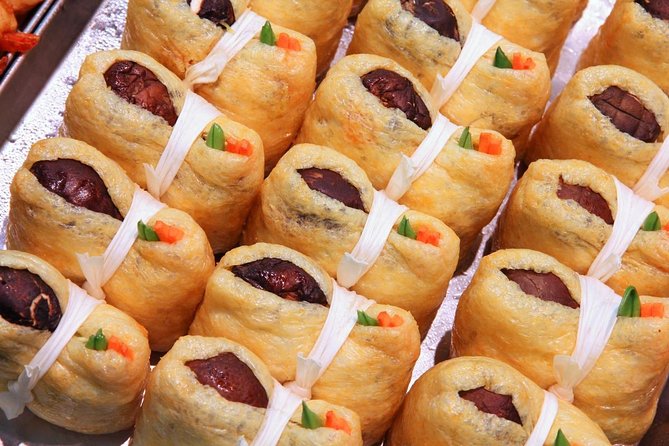
If you’ve ever landed in Osaka and thought, I want to eat, but I don’t know what to buy, this tour’s structure helps. It’s built around how the city shops for food, not just where the famous spots are. The route moves through different “market worlds” so you learn what to expect and how to choose.
You start near Temma Station and end at Ebisu Bridge in the Dotonbori area. That matters because it sets you up to keep exploring after the tour, armed with a sense of what’s worth your time and what’s mostly for photos.
Price and logistics: what $91 covers, and what it does not
The price is $91 per person for about 4 hours, and it’s booked well in advance. You’ll usually want to book early if your dates are tight, since the tour is popular and planning is simple.
Included highlights are practical: a guide who speaks native or close-to-native in your chosen language, plus a mobile ticket and options like pickup offered and group discounts. The tour is also private, meaning only your group participates, not a mixed crowd.
Here’s the part that can change your expectations: samples and food items are not included, and snacks are your responsibility to purchase. Some descriptions emphasize tastings, but the actual approach is more like guided shopping and choosing. If you want a steady stream of bites, you’ll need to budget for what you buy along the way.
Transportation while on tour is not included either, listed as 330 yen per adult. There’s also a note that it can run around 400 yen for the whole tour depending on coverage. If you use a JR Pass, you may be able to handle parts of transport that way.
Your starting point at Temma Station, then a smart end in Dotonbori
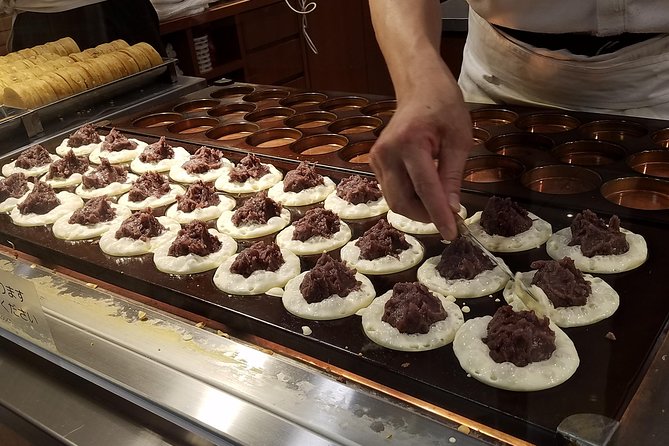
The meetup is at McDonald’s in front of Temma Station (Tenjinbashi area). That’s an easy landmark, and it keeps the start simple before you head into the food zones.
The finish is at Ebisu Bridge in Dotonbori. I like this as a landing spot because it’s central, lively, and full of places to grab whatever you decided you missed earlier. You’ll also have more context for what you see, since the tour introduces you to market logic and ingredients along the way.
- Osaka Go Karting Tour with Funny Costume★ 5.0 · 2,658 reviews
- Osaka Castle: Museum and Tower Entry Ticket★ 4.5 · 2,380 reviews
- Osaka: Shinsekai Food Tour with 13-15 Dishes at 5 Eateries★ 4.8 · 2,204 reviews
- Osaka Food Tour: 13 Dishes at 5 Local Eateries★ 5.0 · 2,149 reviews
- Hungry Osaka Street Food Tour:15 Tastings & 3 Drinks with a Local★ 5.0 · 1,727 reviews
Stop 1: Takashimaya Osaka and the depachika style of buying
Your first stop is Takashimaya Osaka and its underground food hall, often called a depachika. This is where Osaka shows a different side of food culture, more polished and gift-friendly. Think raw ingredients, prepared items, and a clean, curated layout where you can understand choices quickly.
What makes this stop valuable is the contrast. Even if you plan to eat more “everyday market” food later, depachika gives you a baseline for quality. It’s also a good place to practice buying skills: asking what something is, how it’s used, and how it compares to other options nearby.
A possible drawback here is time feel. Depachika can be visually intense, so if you don’t like browsing under pressure, you’ll want to decide your target early. Your guide can help, especially when they point out which displays are meant for specific dishes and how sellers expect you to choose.
Stop 2: Pulala Tenma for wet market shopping without the crush
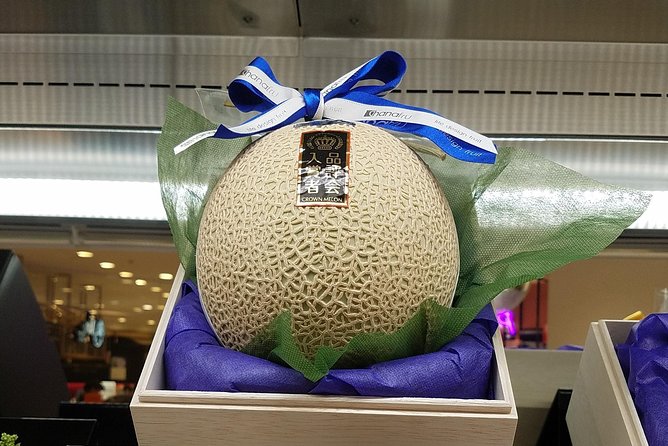
Next you head to Pulala Tenma, described as a local wet market where you can see seafood, meat, vegetables, and more up close. The big appeal is shopping realism. You see how products are handled and presented for daily use, not just as a tourist exhibit.
This is the stop that helps you learn what “fresh” means in practice. Your guide can explain how the ingredients fit together into Osaka cooking, and that translation matters later when you’re ordering on your own.
One practical note: wet markets can be lively and sensory. If you’re sensitive to smells or crowds, go slow and use your guide’s lead. Also, take your time looking at labels and cut styles. Small differences in how something is prepared can change how it tastes in a finished meal.
Stop 3: Tenjinbashi-suji arcade and the Osaka supermarket mindset
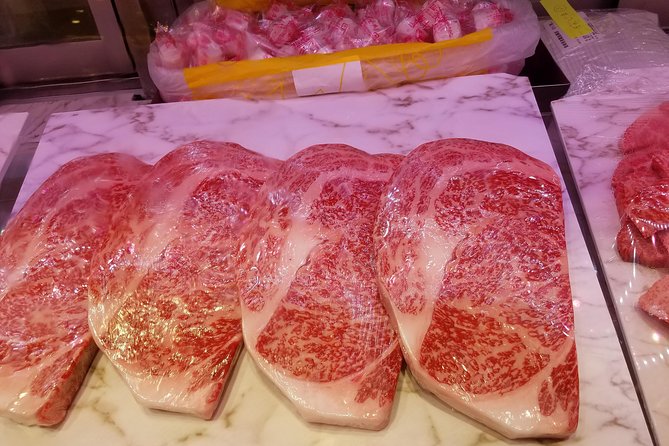
Then comes Tenjinbashi-suji, the longest covered shopping street in Japan. You’ll learn the history and the modern role of an arcade like this, but the real value is what it teaches about day-to-day buying habits.
You’ll also pop into an Osaka-style supermarket as part of this segment. That’s a smart move. Markets can be a little intimidating when you don’t know the everyday routines, and supermarkets show the bridge between raw ingredients and ready-to-eat meals.
When you’re on this kind of street, I suggest you watch for patterns: where locals stop for quick items, what’s sold in bulk, and which foods are meant for snacking versus cooking. Your guide’s job here is to connect the visual to the food logic.
Stop 4: Osaka Tsuruhashi Ichiba and Korea Town, more than just food
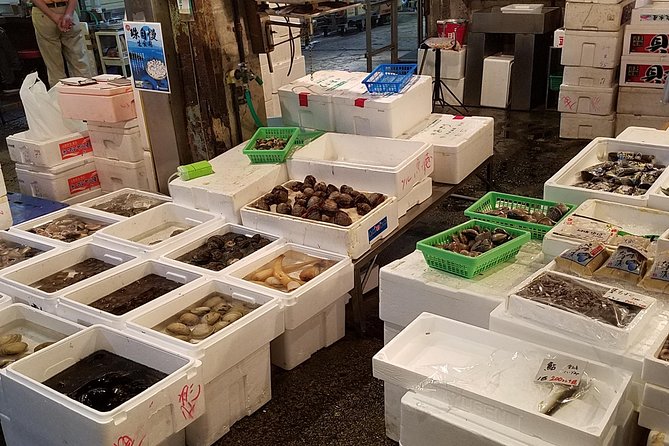
At Osaka Tsuruhashi Ichiba, you explore Korea Town. This stop is interesting because it’s not only food. You’ll also see culturally indicative goods like clothing and other items, which gives the area a fuller sense than a pure “grab-and-go” route.
This is a good place to shop for snacks. A market like this often carries both familiar and surprising flavor styles, and you’ll have a guide to help you pick things that match your comfort level. If you want to take home edible souvenirs, this segment is one of the easiest to use because it’s built around everyday browsing.
A caution: items can vary widely in price and packaging style. If you’re watching your spending, set a mini budget for this stop. Your guide can help you choose options that feel worth it, even if some choices look tempting at first glance.
Stop 5: Kuromon Market, famous for a reason, with prices to watch
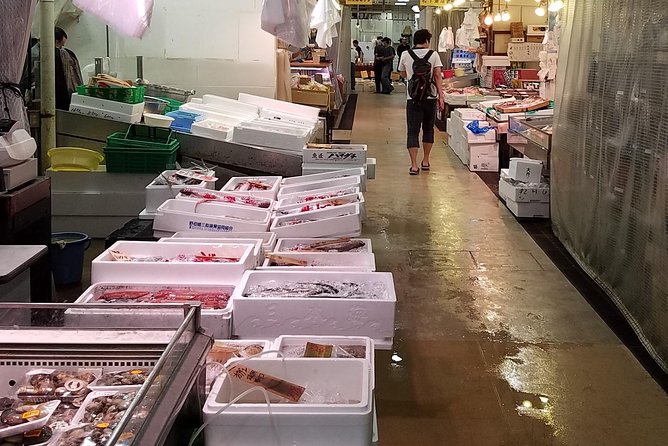
Kuromon Market is the stop many people recognize, and it’s still worth seeing. You’ll experience an open market scene, with plenty of sights and a strong sense of activity. Quality is described as excellent, but pricing can run higher than you might expect.
Here’s how to make Kuromon work for you. Don’t try to buy everything in one pass. Instead, treat it like a menu scouting mission. Figure out what looks fresh and what matches Osaka specialties, then decide whether you want to pay the premium right now or save your budget for another stop.
If you’re expecting street-eating style grazing, temper that. It’s not a common daily habit across Japan, and this tour focuses more on authentic market shopping than walk-and-graze. You may have opportunities to purchase food along the way, but plan to actively choose what you buy.
Stop 6: Sennichimae Doguyasuji for kitchenware, knives, and ceramics
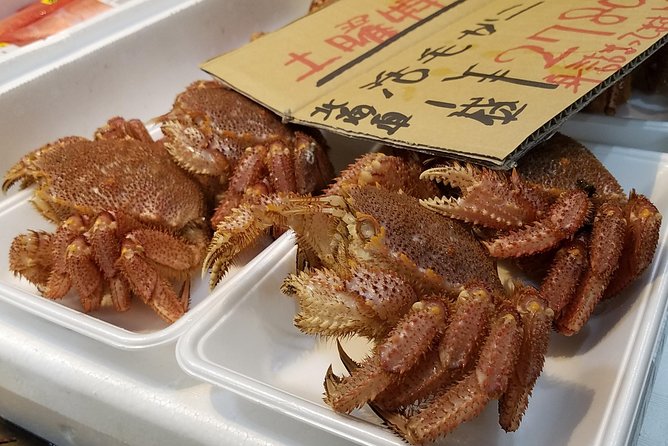
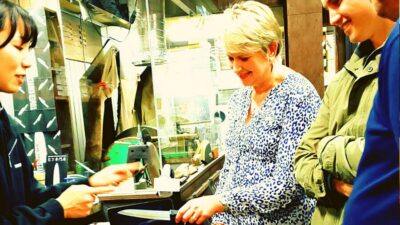
This stop shifts from food to tools, and I think that’s smart. Sennichimae Doguyasuji is known for kitchenware, and you can find things like Japanese cooking knives, serving dishes, Japanese ceramics, lacquer chopsticks, and even playful kitchen items.
Even if you don’t plan to buy anything heavy, this area gives you a new lens on why Japanese cooking culture values specific tools. Watching how shops present knives and tableware can help you understand the care that goes into everyday meals.
A practical downside is carrying. If you buy knives or fragile ceramics, you’ll need to manage luggage space and transport. But if you keep it to smaller items like chopsticks, cups, or themed kitchen accessories, you can enjoy the experience without turning your trip into a logistics project.
Stop 7: Namba and Dotonbori, a smart wrap-up
With remaining time, you explore Minami (Namba) and the Dotonbori area. This is where the tour becomes a launchpad. You’ll see the top sights, and now you’ll recognize how market ingredients and specialty choices connect to what you can order for dinner nearby.
If you’re the type who likes to keep the momentum going, this is the moment to plan your next meal before you get pulled into random menus. The best use of the last segment is to map what you want to try, then walk in with clearer instincts.
Guides and pacing: why the experience feels tailored
The reviews point to a consistent strength: guides who keep things engaging while staying practical. Names that come up include Ferdinand, Kevin, Thomas, Lito, Alejandro, Damian, and Oshi. People highlight guides who answer questions well, explain the history behind the markets, and adjust for the group.
That flexibility shows up in how you move through places. For example, one family-focused experience involved tailoring the adventure toward kids interests like mochi and games. Another emphasis was guides helping with translation when it mattered, so ordering doesn’t turn into guesswork.
I also like that the stops are time-boxed. You get enough time at each place to see options, not just rush through photo stops. The trade-off is that the overall route is still moderate walking, so plan your energy.
What you should bring so this tour feels effortless
Because snacks are on you, treat this tour like a guided shopping route, not an all-inclusive buffet. Bring a realistic hunger level and money for purchases at the stops you choose.
Comfort matters too. The itinerary involves multiple areas and street segments, so wear shoes that handle city walking. If you bring kids, the tour notes children must be accompanied by an adult, and the walking should be considered.
If you’re using a phone for navigation, the mobile ticket helps keep the meeting flow smooth. Also, keep water on hand for the times you’re moving between segments.
Value check: is this tour worth it compared to wandering?
If your goal is to stroll markets on your own, you can do it. But the value of this tour is speed plus context. In a few hours, you’ll see a clean cross-section of Osaka food shopping, from high-end displays to local wet-market browsing to specialty neighborhoods.
At $91, you’re paying for guided interpretation, language support, and a route that saves you from learning everything the hard way. You’re not paying for included tastings or transportation, so your total cost depends on what you buy.
My practical recommendation is this: decide your budget for snacks and one “shopping item” you’ll actually take home. When you treat it like that, the tour feels like a strong buy, not an expensive tour of places you could have seen alone.
Who this Osaka food markets tour suits best
This tour is a great fit if you want to:
- Learn how Osaka market shopping works, not just where to take photos
- Order with more confidence using a guide’s explanations
- Enjoy both local ingredient shopping and a bit of higher-end food presentation
- Like neighborhoods with food plus culture, like Korea Town
It might be less ideal if you want a guaranteed string of tastings at no extra cost. The tour is market-focused, and you should expect to purchase snacks yourself along the way.
Should you book this tour?
Book it if you want a structured way to understand Osaka’s food culture fast, and you’re ready to buy the specific things you want to try. It’s especially good when you like markets and want help turning what you see into what you can order later.
Skip or rethink it if your main expectation is included food samples and a no-thinking tasting format. Since snacks are not included, you’ll want to budget and actively choose bites rather than assuming everything is provided.
If you do book, show up with comfortable shoes, a snack budget, and a short list of what you want to eat or shop for. This tour rewards that mindset.
FAQ
How long is the Osaka food markets tour?
It runs for about 4 hours.
Is pickup offered?
Pickup is offered.
Do I need to pay for transportation during the tour?
Yes. Transportation while on tour is listed as 330 yen per adult, and there is also a note that it can run around 400 yen for the entire tour.
Are food samples or tastings included in the price?
No. Samples, food items, refreshments, and souvenirs are not included, and snacks are the guest’s responsibility to purchase.
What food places do we visit?
You visit multiple food-focused locations including Takashimaya Osaka’s depachika, Pulala Tenma, Tenjinbashi-suji shopping street, Osaka Tsuruhashi Ichiba in Korea Town, Kuromon Market, Sennichimae Doguyasuji shopping street, and then time in the Minami (Namba) area.
Do tours run in the morning and afternoon?
Yes. You can choose either a morning or afternoon tour.
Is this a private tour?
Yes. It’s a private tour, so only your group participates.
Where do I meet and where does the tour end?
Meet at McDonald’s in front of Temma Station. The tour ends at Ebisu Bridge in Dotonbori.
What language is the guide?
You get a native (or close to) speaker of your chosen language.
Can I cancel for a full refund?
Yes. Free cancellation is available up to 24 hours in advance for a full refund.
Newest Osaka write-ups from the Loving Japan desk


Food & Drink, side by side.
 ★ 5.0Shinjuku Food Tour (13 Dishes at 4 Local Eateries)From $866,603 reviews
 ★ 5.0Tokyo Tsukiji Fish Market Food and Culture Walking TourFrom $993,184 reviews
 ★ 4.8Shinsekai Food Tour with 13-15 Dishes at 5 EateriesFrom $532,204 reviews
 ★ 5.0Osaka Food Tour: 13 Dishes at 5 Local EateriesFrom $732,149 reviews
 ★ 4.9Shinjuku Food Tour (15 Dishes and 4 Eateries)From $852,033 reviews
 ★ 5.0Kyoto Night Foodie Tour in Gion (9+ dishes + 6 Sake tastings)From $1631,762 reviews
 ★ 5.0Hungry Osaka Street Food Tour:15 Tastings & 3 Drinks with a LocalFrom $731,727 reviews
 ★ 5.0Tsukiji Fish Market Food and Walking tourFrom $301,724 reviews
Filed on these lists too