
REVIEW · MOUNT FUJI DAY TRIPS
Hakone and Mt Fuji Private Custom Tour with English Guide
Hakone and Fuji in one calm day? That is the pitch. You get a private custom tour with Tokyo pickup, an English-speaking driver-guide, and a comfy car, so you can hit the big sights without playing transit roulette. The real win is flexibility, because you can pace the day around what you actually care about, not a rigid bus schedule.
What I like most is how the itinerary balances big photo stops with “slow down” moments. You get time at Hakone’s volcano highlights like Owakudani Valley for the black egg and views, then you shift to lakes and shrines for Mount Fuji-focused scenery.
One consideration: this is a long day, about 10 hours, and Mount Fuji visibility is weather-dependent. If clouds roll in, you may need to accept partial views or swap priorities on the fly.
In This Review
- Key things that make this tour work
- Private pickup plus a car that actually changes your day
- Hakone’s volcanic heart: black eggs and the ropeway views
- Lake Ashi cruise: where the day slows down on purpose
- Fuji countryside shrines and the iconic Chureito Pagoda photo loop
- Oshino Hakkai and the eight ponds that make Fuji feel real
- Shiraito Falls plus Lake Saiko: reflections and classic scenery
- Kawaguchi Lake Ishikoro: the easiest Fuji-lake base
- Optional traditional village and optional caves, if you want variety
- Gotemba Premium Outlets and the glass museum option for down time
- Optional Mishima Skywalk for a stretch with big views
- What $430 gets you, and how to judge the value
- How to plan your day for Fuji weather and long travel hours
- Who this tour fits best
- Should you book this Hakone and Mt Fuji private custom tour?
- FAQ
- How long is the Hakone and Mt Fuji private custom tour?
- How many people are included in one tour group?
- Is pickup offered in Tokyo?
- Does the tour include an English-speaking guide?
- What is included in the price?
- Are entrance fees included?
- Is food included?
- Is Mount Fuji dependent on weather?
- What is the cancellation policy?
- Is this tour private?
Key things that make this tour work
- Tokyo pickup in the 23 wards, so you start without a morning scramble
- Private car plus English driver-guide, which keeps you moving but not rushing
- Hakone volcanic sights with classic add-ons, like ropeway views and a Lake Ashi cruise
- Fuji Five Lakes area highlights, including iconic shrines and reflective ponds
- Optional caves and skywalk-style viewpoints, if you want more variety
- Comfort details included, like bottled water, WiFi on board, and maps with explanations
Fuji from Tokyo: the other approaches
- Mt Fuji and Hakone 1-Day Bus Tour Return by Bullet Train
★ 5.0 · 26,383 reviews - Mt Fuji & Hakone Cruise, Drum Show Bullet Train 1 Day from Tokyo
★ 4.0 · 7,413 reviews - Tokyo Mt Fuji 5th St & Hakone Cruise Bus Tour w/Bullet Train
★ 4.4 · 5,024 reviews - From Tokyo: Mount Fuji Full-Day Sightseeing Trip
★ 4.5 · 4,970 reviews
Private pickup plus a car that actually changes your day
This is a private tour for up to three people, and that matters more than it sounds. With a licensed driver-guide and a comfortable, air-conditioned vehicle, you are not stuck with fixed timing. You can ask for a slower start, more time at a lake, or an earlier turnaround if the weather turns.
I also like the “you steer, they help” approach. The day is built around a set of major stops, but it is described as customizable and flexible. That means you can likely trade a shopping stop for more shrine time, or swap optional caves for an easier scenic loop depending on your energy level.
There is also a practical advantage to getting picked up within Tokyo’s 23 wards. You save transit transfers, and you avoid the “how do we get there, again?” stress that can kill a sightseeing day.
Hakone’s volcanic heart: black eggs and the ropeway views
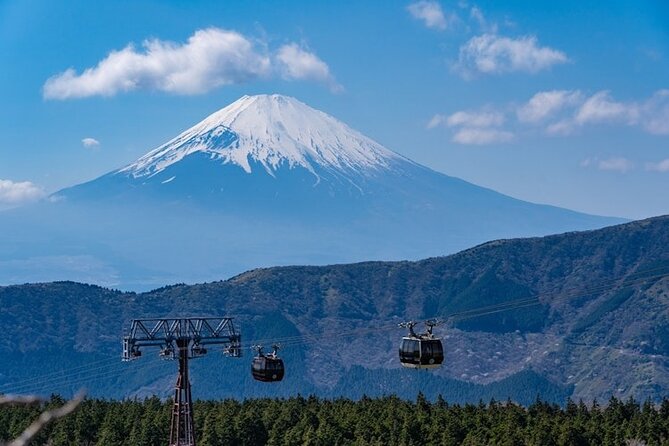
Hakone starts in the volcanic zone area of Owakudani Valley. The highlight here is the Hakone Black Egg, a hard-boiled egg cooked in natural hot springs. The egg turns black from volcanic sulfur, and it is one of those foods that is simple, iconic, and fun to do once.
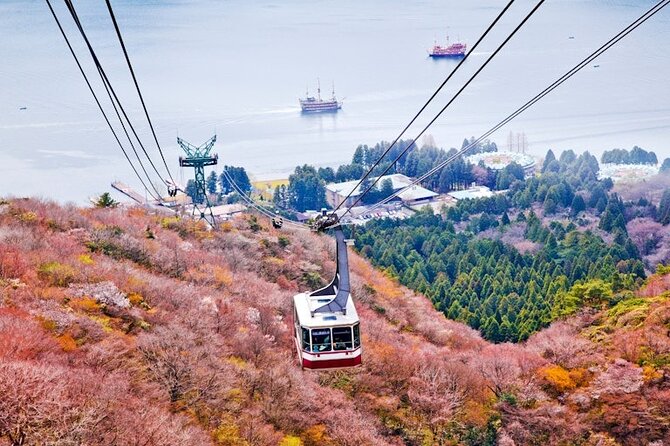
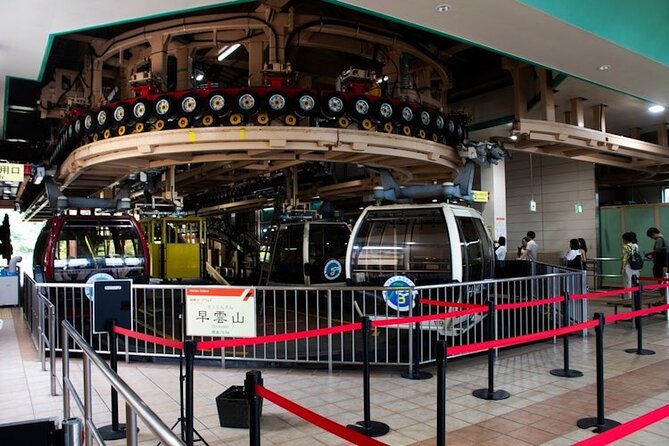
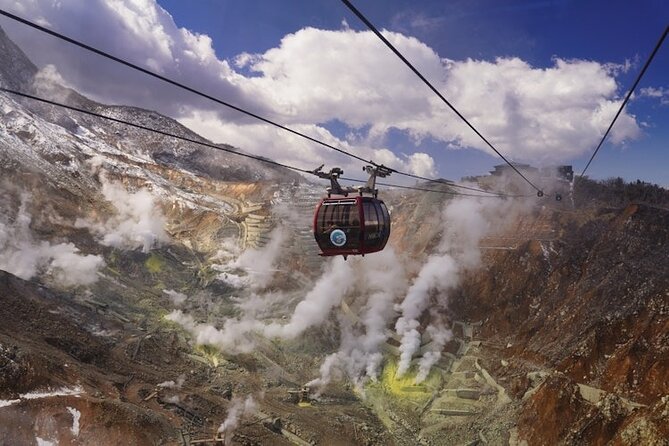
Right after, you can take the Hakone Ropeway. This is not just a ride, it is a viewpoint. From the cable car, you get panoramic views over the steaming sulfur vents below, plus sightlines toward Lake Ashi.
Here is the catch: this area is all about the atmosphere, steam, and volcanic terrain. If it is foggy, you might lose some distance views. Still, even on weaker weather days, the volcanic landscape feel usually comes through, and you get that “Hakone is its own thing” moment.
Lake Ashi cruise: where the day slows down on purpose
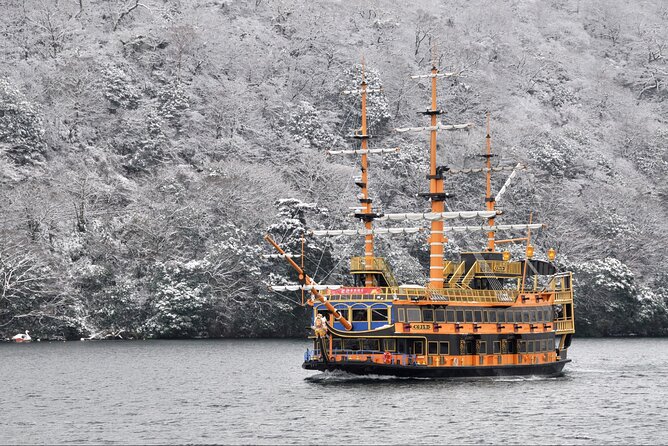
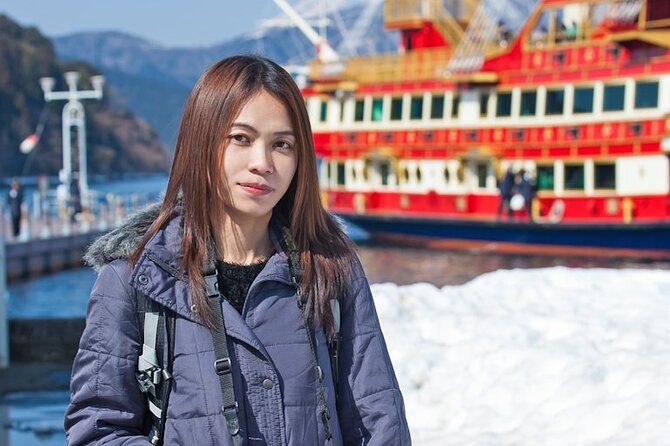
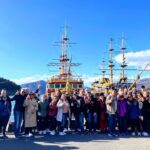
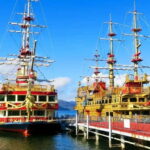
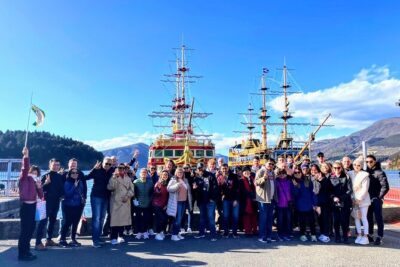
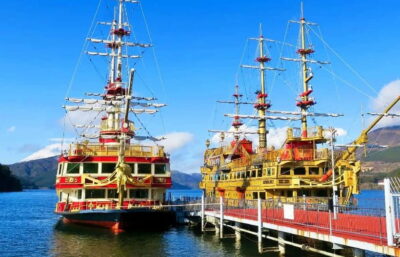
After the volcano, the tone shifts nicely with a Lake Ashinoko cruise aboard the famous Pirate Ship. The cruise is a relaxed, about-30-minute break, which is smart when you have a full day ahead.
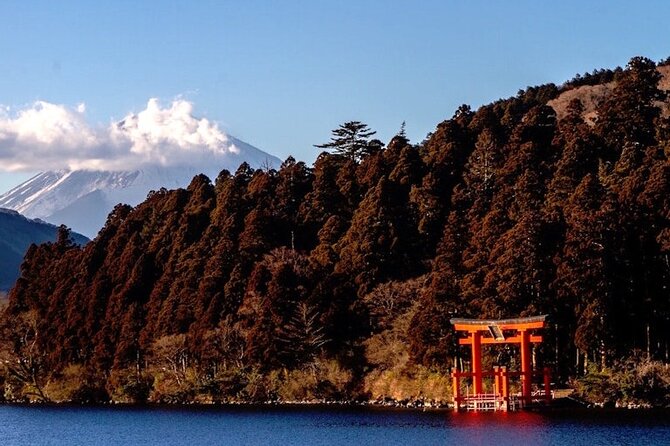
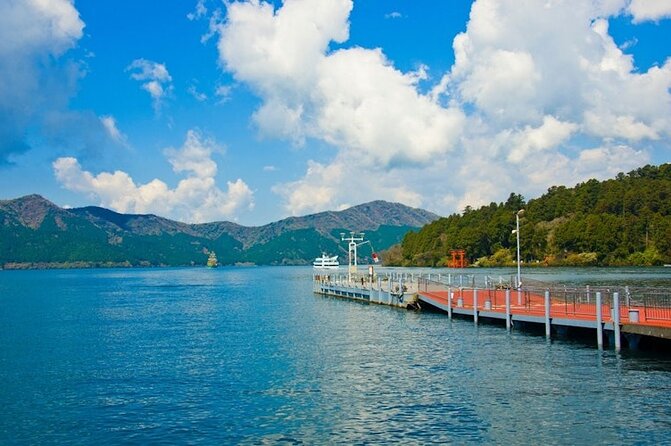
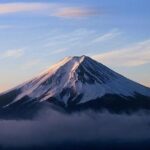
You board from Motohakone Port, so you are not cramming one viewpoint after another. Instead, you get moving scenery: water, surrounding hills, and a chance to spot Mount Fuji if the sky plays nice.
This stop is also a good strategy stop. If you have been taking photos nonstop, the cruise gives you breathing room. And if the wind is strong around the open areas, the boat time is a comfortable reset.
The Hakone loop runs several ways. Here are the rest
- Private Tour to Mt. Fuji and Hakone (Fully Licenced Operator)★ 5.0 · 1,910 reviews
- Mt Fuji & Hakone Cruise, Drum Show Bus 1 Day from Tokyo★ 4.0 · 1,287 reviews
- From Tokyo: Mt. Fuji & Hakone Tour w/ Return by Bullet Train★ 4.2 · 1,278 reviews
- Mt Fuji and Hakone 1-Day Bus Tour Return by Bus★ 4.5 · 929 reviews
- Tokyo: Mt. Fuji, Kamakura, Big Buddha, & Lake Ashi Day Trip★ 4.5 · 867 reviews
Fuji countryside shrines and the iconic Chureito Pagoda photo loop
Once you leave Hakone mode, the day pivots toward Mount Fuji’s most famous shrine-and-viewpoint scenes.
A major photo stop is Arakura Fuji Sengen Shrine, home to the Chureito Pagoda. This is one of those places where the “why is everyone here?” question answers itself. From the hillside, you look for that clean Fuji framing with the pagoda below.
Another important shrine stop is Kitaguchi Hongu Fuji Sengen Jinja in Fujiyoshida. This one leans more historic and forested, and it is a nice contrast to the super-famous pagoda viewpoint. Think atmosphere, trees, and a sense of place at the base of Fuji.
The practical tip here is timing. These places can get busy, so letting your driver-guide influence your order and pacing can help. If you care about photos, you will want to use the calm parts of the day well. If you care about the vibe and not the perfect shot, you can spend more time reading the area and less time hunting angles.
Oshino Hakkai and the eight ponds that make Fuji feel real
Next up is Oshino Hakkai, a traditional village known for eight crystal-clear ponds fed by Mount Fuji’s snowmelt. The ponds reflect the surrounding scenery, and the thatched-roof look makes it feel like a living postcard.
This stop is great because it is not just one view. You can walk and compare pond reflections, and you can see how the water changes with angles and time of day.
The potential drawback is simple: you may not get dramatic Fuji visibility every time. But Oshino Hakkai still works as a calm nature-and-culture stop, even when Fuji is partially hidden.
Shiraito Falls plus Lake Saiko: reflections and classic scenery
Two more nature-focused stops can fit well between shrine and pond time: Shiraito Falls, and the quieter Fuji-lake area around Saiko.
At Shiraito Falls, you are looking at delicate white streams spilling over a wide cliff face. It is one of those waterfalls where the width matters, not just the height.
Then there is Saiko, sometimes called the Lake of Reflections. You get forest scenery and the feeling of a lake town that is not trying to be a theme park.
If you want a “Fuji reflected in water” type experience without driving yourself crazy across multiple lakes, this pairing helps you cover that mood in a reasonable slice of time.
Kawaguchi Lake Ishikoro: the easiest Fuji-lake base
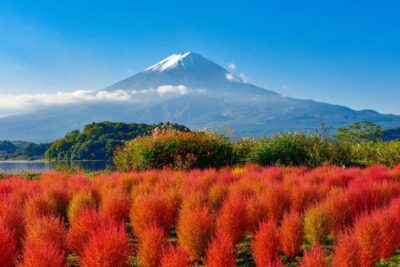
A short hop from the Saiko area brings you to Lake Kawaguchi and the Ishikoro kan viewpoint area. This lake is known for being one of the most scenic and also one of the most visitor-friendly parts of the Fuji Five Lakes.
The value here is access and payoff. You can usually get a strong Fuji-lake experience without needing an all-day detour. If your goal is simple: see Fuji from a lake angle, this is one of the most direct ways to do it in this region.
Optional traditional village and optional caves, if you want variety
This tour includes some additional options that can add variety, especially if you feel like your day needs texture beyond views.
Saiko Iyashi no Sato Nemba is an open-air traditional village on Lake Saiko’s shores. It was rebuilt after a landslide, and today it functions as a living museum vibe. If you like walking through restored old buildings and want something cultural to balance the volcanic and shrine stops, this is a strong choice.
On the more unusual side, you may have optional cave stops:
- Narusawa Ice Cave, formed by ancient lava flows. It is naturally cooled and known for ice pillars and frozen walls.
- Fugaku Wind Cave, a lava cave near the Aokigahara Forest area, with a cool temperature that stays around 3°C.
A reality check: if you dislike tight or chilly indoor spaces, skip the caves. Also, cave time can eat into photo time outside, so decide based on how you like to spend your hours.
Gotemba Premium Outlets and the glass museum option for down time
If you want a softer stop, Gotemba Premium Outlets can be included. It is positioned as an optional foothill break after the Hakone volcano and lake time. You can use this as a chance to stretch, snack, and shop without another long travel leg.
Another optional cultural detour is the Hakone Venetian Glass Museum, described as Japan’s first art museum dedicated to Venetian glass. If you like slow, indoor viewing, it can be a nice mid-day choice, especially when outdoor weather is not great.
If your group is more focused on scenery than shopping or museums, you can keep the day lean by swapping these for extra time at the lakes or shrines.
Optional Mishima Skywalk for a stretch with big views
One more optional stop is Mishima with the Mishima Skywalk, described as Japan’s longest pedestrian suspension bridge. It stretches 400 meters across a deep valley, so it is the type of stop that adds adrenaline and a different angle on the region.
This is best if you want one “wow” moment that is not purely shrine or landscape-based. If you are tired after a long day, it is also the easiest optional item to skip, because you still get plenty of Fuji and Hakone highlights elsewhere.
What $430 gets you, and how to judge the value
The price is $430 per group for up to three people, and the duration is about 10 hours. That is an important pricing frame. If you are traveling as two or three people, the cost per person can be reasonable compared with paying separate tickets for guide time plus private transport.
More importantly, value here comes from what is already handled:
- Private transportation in an air-conditioned vehicle
- Pickup and drop-off within Tokyo’s 23 wards
- Highway, fuel, and parking fees
- Bottled water
- WiFi on board
- Maps with explanations
- A mobile ticket
The only stuff you should plan to pay separately is food and any entrance fees for optional add-ons. That matters because some of the optional experiences, like caves, may have ticket costs. If you choose mostly free outdoor viewpoints, your day stays easier on the budget.
How to plan your day for Fuji weather and long travel hours
This tour requires good weather, and that is not a tiny footnote. Mount Fuji views can vanish fast with cloud cover. If the forecast looks uncertain, you can use your guide’s flexibility to prioritize indoor or guaranteed-interest stops first, then move toward photo spots later if visibility improves.
Because you are spending a full day, you will also want to think about energy management:
- Start early to protect your best photo window.
- Use the Lake Ashi cruise as a planned “sit and reset” moment.
- Keep one or two optional stops as swap options, not mandatory items.
And here is a real-world point from the way people describe these private days: the strongest impact is how the driver keeps the day calm. There are mentions of a driver named Mike who handled the day with patience, avoided wasting time on the wrong stops, and kept the pace relaxed. That kind of pacing is what turns a long drive day into something you actually enjoy.
Who this tour fits best
This is a good match if you:
- Want a private, English-speaking guide and car from Tokyo
- Prefer an itinerary you can adjust mid-day
- Like classic Hakone volcano scenery plus Fuji-lake and shrine highlights
- Are traveling as a pair or small group, so the “per group” pricing makes sense
It may be less ideal if you want a hands-on, independent day with lots of public transit DIY. Private transport is the whole point here. You are paying to reduce friction.
Should you book this Hakone and Mt Fuji private custom tour?
Book it if you want a stress-light day that still covers the major Hakone and Fuji hits, and you care about having time to breathe between viewpoints. The mix of volcano stops, Lake Ashi cruising, shrine icons like Chureito Pagoda, and pond-and-lake scenery gives you variety without turning it into a chaotic checklist.
I would skip or rethink it if you only want one single highlight and you are fine traveling independently for lower cost. Also consider your weather tolerance. If Fuji visibility is your absolute must, you will be happier booking with the expectation that the day may pivot based on clouds.
If you like organized but not rigid sightseeing, this one is built for you.
FAQ
How long is the Hakone and Mt Fuji private custom tour?
The tour is approximately 10 hours.
How many people are included in one tour group?
The price is listed per group, for up to 3 people.
Is pickup offered in Tokyo?
Yes, pickup and drop-off are offered within Tokyo’s 23 wards.
Does the tour include an English-speaking guide?
Yes. The tour includes a driver-guide who speaks English.
What is included in the price?
Included items are bottled water, highway and fuel and parking fees, WiFi on board, private transportation, an air-conditioned vehicle, and maps with explanations.
Are entrance fees included?
Entrance fees are free for the listed items, but entrance fees for optional options are not included.
Is food included?
Food is not included.
Is Mount Fuji dependent on weather?
Yes. The experience requires good weather, and if it is canceled due to poor weather, you can choose a different date or get a full refund.
What is the cancellation policy?
Free cancellation is available up to 24 hours in advance for a full refund.
Is this tour private?
Yes. It is a private tour, and only your group will participate.
The Hakone Loop, Reviewed
Mount Fuji, Three More Ways
Newest Tokyo write-ups from the Loving Japan desk
Mount Fuji Day Trips, side by side.
 ★ 5.0Mt Fuji and Hakone 1-Day Bus Tour Return by Bullet TrainFrom $16326,383 reviews
 ★ 4.0Mt Fuji & Hakone Cruise, Drum Show Bullet Train 1 Day from TokyoFrom $1497,413 reviews
 ★ 4.4Tokyo Mt Fuji 5th St & Hakone Cruise Bus Tour w/Bullet TrainFrom $1545,024 reviews
 ★ 4.5From Tokyo: Mount Fuji Full-Day Sightseeing TripFrom $684,970 reviews
 ★ 4.7Mt. Fuji Tour, Hakone Ropeway, Owakudani, Lake AshiFrom $544,002 reviews
 ★ 4.4Mt.Fuji,Kawaguchiko Oishi Park,Arakurayama Sengen ParkFrom $542,682 reviews
 ★ 4.2Mt. Fuji 5th Station & Hakone Cruise 1-Day Bus TourFrom $1292,381 reviews
 ★ 4.7Mt Fuji Top 5 Spots Day Tour: Arakurayama Park,Oshino HakkaiFrom $532,066 reviews
Filed on these lists too