
REVIEW · TOURS WITH GOVERNMENT-LICENSED GUIDES
Mt. Koya Sacred Full-Day Private Tour (Osaka departure) with Licensed Guide
Mt. Koya feels like another world. This private walking tour from Osaka puts you on the grounds of Shingon Buddhism with a licensed guide who helps you understand what you are seeing at places like Kongobu-ji and Okunoin. The tradeoff is simple: it is a long day with serious walking and some costs (like transit and a couple of site tickets) that are not in the base price.
I like that the day is flexible. Your guide meets you at your Osaka-area hotel, then you choose 3 to 4 stops from the sacred list, so you can aim for more temple art, more cemetery atmosphere, or more “how did Buddhism get here?” context. It runs about 9 hours (approx.), so you’ll be moving, not just touring with minimal effort.
In This Review
- Key things that make this tour work
- Mount Koya, the long way from Osaka, and why that’s the point
- The private guide advantage: custom stops, clear explanations, and less guessing
- Kongobu-ji Temple: where Shingon Buddhism shows its institutional face
- Okunoin Cemetery: Kobo Daishi’s resting place and the walk that slows you down
- Danjo Garan: sacred founding ground, with big symbolism in fewer stops
- Reihokan Museum and Daishi Kyokai: context you can actually use
- Reihokan Museum (about 30 minutes)
- Daishi Kyokai (about 1 hour)
- Tokugawa Mausoleum: a different kind of sacred, and why it changes your budget
- Transport, walking stamina, and how to plan your day like a grown-up
- Price and value: what $224.02 buys, and where extra costs show up
- Who should book this Mount Koya sacred private tour
- Should you book it?
- FAQ
- What does the tour include?
- How long is the Mount Koya tour?
- Is transportation included in the price?
- Are temple or museum entrance fees included?
- Is there lunch included?
- Is this a private tour?
Key things that make this tour work
- A licensed local English guide who helps you navigate trains and the temple complex at a human pace
- Private for your group so you can ask questions and adjust stops based on your interests
- Kongobu-ji + Okunoin as the core spiritual hits, not random sightseeing
- Museum and administrative sites (Reihokan and Daishi Kyokai) for context beyond the main halls
- Custom 3 to 4 site selection, so the day fits history-first people and atmosphere-first people differently
- A walking-day rhythm, which is part of why Mount Koya feels real, not just photographed
Mount Koya, the long way from Osaka, and why that’s the point
Mount Koya is far enough from Osaka that it stops feeling like a day-trip sprawl and starts feeling like a pilgrimage-style outing. That distance shows up in the schedule: expect a full day, about 9 hours, with time spent traveling before you even start walking the sacred grounds. It is not a quick hit. You are going to a place that was designed for slower thinking.
Where the private guide helps is in smoothing out the practical friction. You start with a meet-up on foot within a designated Osaka area, then you travel onward with your guide. The day stays organized even when the route involves multiple public-transport steps and a vertical climb to Koyasan. One small thing can save a lot of stress here, like getting on the right train and getting the ticketing right without guessing.
If you’re hoping for a leisurely, minimal-walking stroll, this is still doable for many people, but plan for hills, stairs, and uneven temple paths. Comfortable shoes are not optional. They are the price of admission to the real atmosphere.
The private guide advantage: custom stops, clear explanations, and less guessing
This tour is not just “see these places.” The whole structure is built for you to shape the day. You pick 3 to 4 sites from the core sacred list, and your licensed English-speaking guide adjusts the route based on what you care about most.
I especially like how this kind of guide-led day changes what you notice. At Kongobu-ji, you are not only looking at halls, you’re seeing religious art and icon details in a way that makes sense. At Okunoin, the walk becomes more than a cemetery loop. It connects you to why Kobo Daishi (Kukai) is central to Shingon Buddhism and why the graves of prominent figures matter in the landscape of belief.
Your guide can also use travel time smartly. Multiple guides associated with this experience have explained culture and Japanese history while you are moving between points, so you’re not stuck with dead time. That matters on a 9-hour outing, because long transit plus no context can feel like wasted energy.
If you want names, you may encounter guides such as Yuki, Naka, Hiro, Yuka, Emi, Bell, Miyuki, Shun, Noriko, Okazaki, or Kyozo Suga. The common thread is strong English and a steady, patient way of guiding questions.
Kongobu-ji Temple: where Shingon Buddhism shows its institutional face
Kongobu-ji is one of the best first stops on Mount Koya because it gives you the “headquarters” view of Shingon Buddhism. It is tied to the main center for the Shingon sect, and the scale behind it is huge, with thousands of temples in Japan and millions of followers worldwide.
This is where temple life becomes more than scenery. You’ll spend about 1 hour here, and the visit is built around what visitors can actually observe inside the temple setting, including religious artifacts and painted sliding doors (fusuma). If you have an eye for visual storytelling, this stop is especially rewarding. Even if you don’t know the symbolism yet, your guide can point out what you’re looking at and why it is important to the sect’s identity.
A practical note: plan for calm concentration. Kongobu-ji is spiritual, but it also feels like a working religious center. You’ll get more from the day if you treat this as a “pay attention” stop, not a quick photo sprint.
Okunoin Cemetery: Kobo Daishi’s resting place and the walk that slows you down
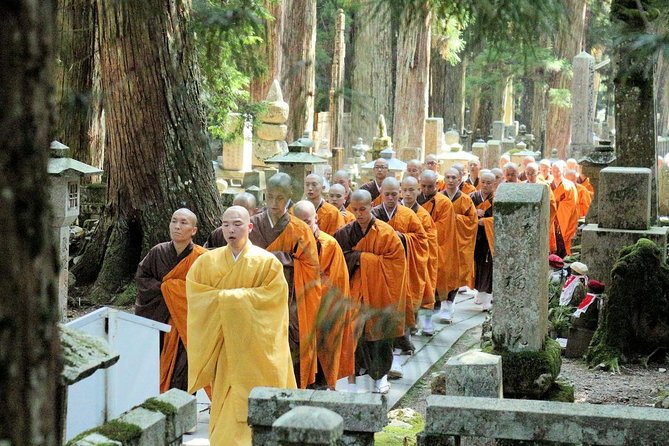
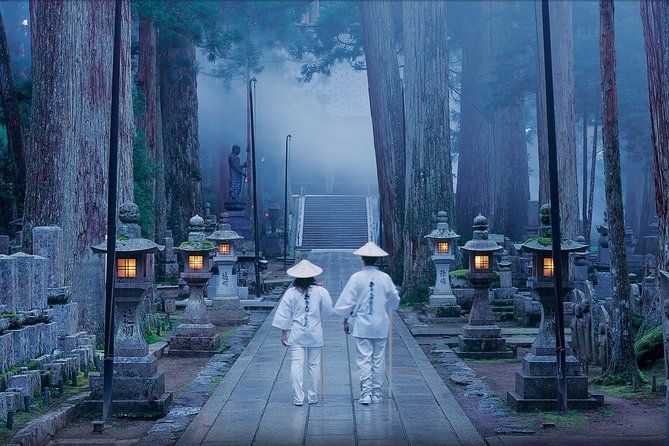
Okunoin is the spiritual heart of Mount Koya. It’s where Kobo Daishi (Kukai), the founder of Shingon Buddhism, is honored, and where many prominent figures are laid to rest. This is not just history. It’s atmosphere you can feel in your pace.
You’ll typically spend about 1.5 hours in the Okunoin area. The time here can change your whole memory of the day, because the mood shifts from temple buildings to a long, reverent walk through a cemetery setting. The sheer quiet, and the way the grounds funnel your attention forward, makes it hard to treat this like ordinary sightseeing.
One key consideration: the Okunoin stop has an admission that is marked as not included, so budget for it separately. Also, if the weather is cold or wet, you’ll want layers and non-slip shoes. Several people in this experience have described icy or rainy conditions, and Mount Koya does not soften the ground because you’re on a tour.
If you want one word for Okunoin, I’d say gravity. It pulls your thoughts toward why people make the trip in the first place.
Danjo Garan: sacred founding ground, with big symbolism in fewer stops
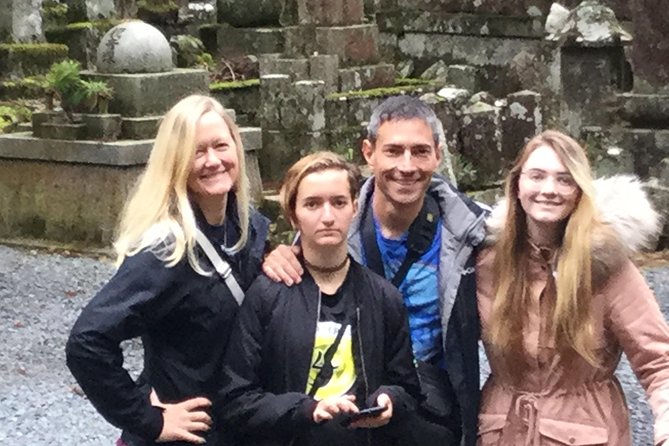
Danjo Garan is one of the main sacred areas on Mount Koya, and it connects directly to the founding era. This is where Mount Koya’s story begins in a more official, ceremonial way, including references to Kobo Daishi’s groundbreaking dedication and the early construction period.
You’ll spend about 1 hour here. The experience is centered on key temple structures and the sense that this is not random beauty. It’s sacred ground that carries meaning through time. It pairs nicely with Kongobu-ji and Okunoin because it gives you a “how did it get established” bridge between religious headquarters and the cemetery heart.
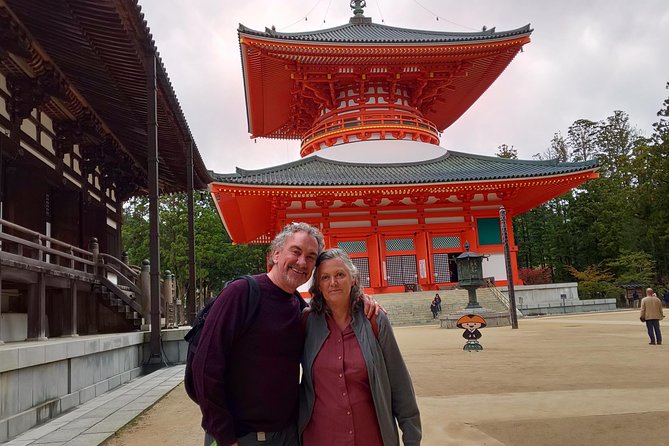
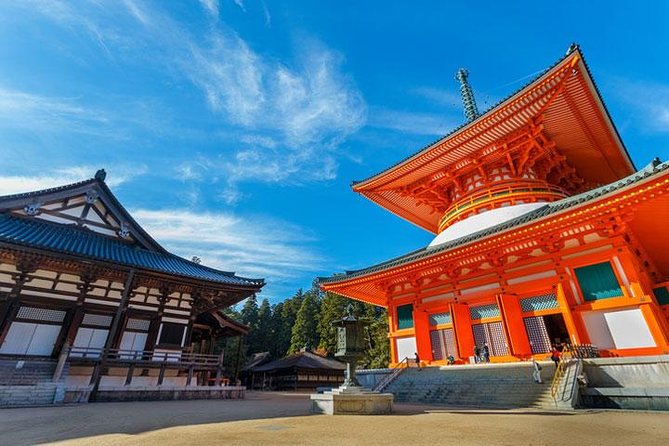
Also, guides may emphasize major landmarks in this area, including Konpon-Daito, and you’ll likely hear why these structures represent spiritual principles rather than just architectural style. If you like when a day-trip explains ideas, Danjo Garan gives you that.
What I’d watch for: even if the time is shorter than Okunoin, you’ll still be walking and moving through sacred spaces. Keep your energy for the return too.
Reihokan Museum and Daishi Kyokai: context you can actually use
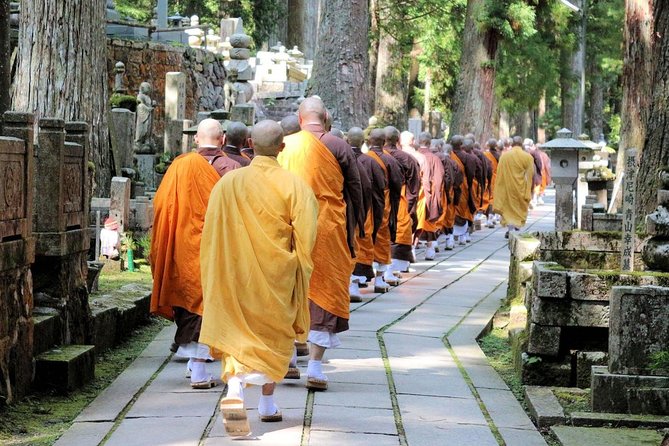
If the main temples give you emotion, Reihokan and Daishi Kyokai give you context you can hold onto later.
Reihokan Museum (about 30 minutes)
The Reihokan Museum exists to preserve religious and cultural treasures of Koyasan. The entrance hall is styled after Byodoin Temple in Uji, which adds a layer of architectural storytelling: you’re seeing how Buddhism expresses itself through design choices. The museum visit is typically about 30 minutes, with admission listed as free.
This is a good stop for people who get museum fatigue easily. It isn’t a huge complex outing. It’s more like a focused “here’s what we’re protecting, here’s why it matters” pause before you continue into other sacred spaces.
Daishi Kyokai (about 1 hour)
Daishi Kyokai is the administrative center of Shingon Buddhism on Mount Koya. Think of it as the organizational side of spiritual practice: responsible for spreading the teachings of Kobo Daishi. The complex includes two buildings, and it’s another place where your guide’s explanation can turn unfamiliar structures into something you understand.
Both stops are on the list as free admissions, which makes them a nice way to add depth without adding ticket costs.
Tokugawa Mausoleum: a different kind of sacred, and why it changes your budget
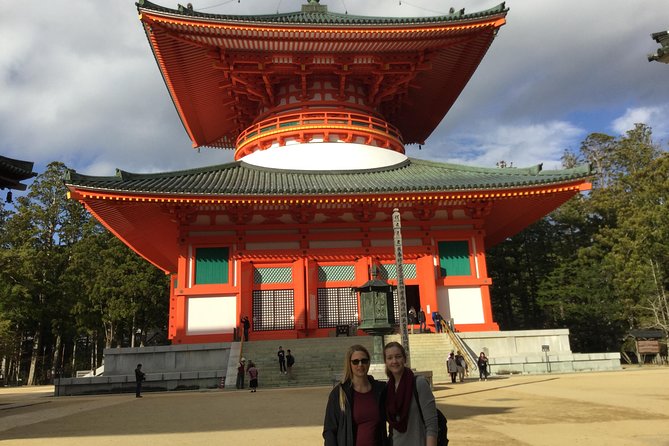
Tokugawa’s Mausoleum is tied to political power and proximity. It was built in 1643 by the third Tokugawa shogun, Iemitsu, so the Tokugawa family would have a mausoleum near Kobo Daishi’s revered site.
The connection matters because it shows how religious and political worlds intersected. Even if you’re not a Japan history specialist, the layout and placement can make the relationship easier to picture than a textbook paragraph.
Time-wise, expect about 1 hour, and the admission is marked as not included. That’s the type of “hidden” cost people tend to forget when planning a day like this. If you are working with a tight travel budget, factor it in now so it doesn’t surprise you later.
Transport, walking stamina, and how to plan your day like a grown-up
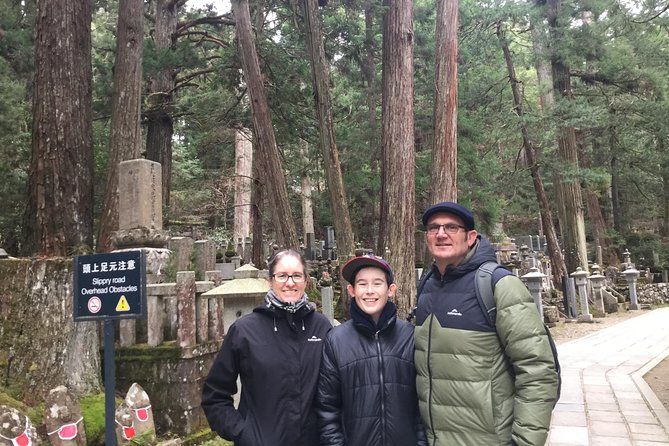
This is a walking tour, and the pace will reflect that. The guides here are used to helping visitors navigate trains and station transfers, but you still need the basics: stamina, shoe grip, and a willingness to climb.
From Osaka, you should expect roughly 2.5 hours each way based on common experience with this route. Add the time spent at multiple sacred locations, plus the climb to Koyasan, and you get the full 9 hours day. In cold months, or with rain, your trip will feel longer because every step takes more effort.
A couple practical tips that make a noticeable difference:
- Wear shoes you trust on slopes and steps.
- Bring layers. Temple air can feel different than city air.
- Keep your schedule flexible for the day before and after. This tour can be energizing, but it is still a full-body day.
Your guide can help you manage the route, including ticketing and the cable car segment that many travelers face on this approach to Koyasan. Just don’t plan to treat it like a sit-and-chat day.
Price and value: what $224.02 buys, and where extra costs show up
At $224.02 per person, the biggest value is not the sightseeing list. It’s the human factor: a licensed English-speaking guide plus a private, customizable walking route.
Here’s what the price typically covers:
- Licensed local English-speaking guide
- Customizable tour where you choose 3 to 4 sites
- Meet-up with the guide on foot within a designated Osaka area
- Mobile ticket support
What is not included:
- Transportation fees
- Entrance fees (and some sites are specifically listed as not included, like Okunoin and Tokugawa’s Mausoleum)
- Lunch and personal expenses
- A private vehicle
So is it worth it? For me, yes, if you care about understanding what you’re seeing and you want to reduce the stress of getting yourself around a far-off sacred area. DIY travel to Mount Koya is doable, but it can be confusing for first-timers, and the time cost can eat your day. Paying for a guide is buying back attention, not just convenience.
Also, you do get the benefit of group discounts, which can make the price feel more reasonable if you’re traveling with others.
If you are traveling solo, very budget-focused, and comfortable navigating train transfers, you might save money DIY. But you’ll trade away the built-in context and the smooth flow of a private guide day.
Who should book this Mount Koya sacred private tour
This tour is a strong fit if:
- You’re interested in Shingon Buddhism and want clear explanations, not just photos.
- You want the core sacred stops, especially Kongobu-ji and Okunoin, without planning every step.
- You like a private format where you can set the priorities, choose the sites, and ask questions.
- You want a break from city touring, in favor of a quieter rhythm.
It may be less ideal if:
- You have limited mobility or cannot handle hills and stairs on a walking day.
- You strongly prefer to keep every yen and ticket cost fully inside the package price, since some admissions and transit fees are not included.
Should you book it?
Book this if you want Mount Koya to feel guided and meaningful, not just navigated. The private format and English support matter on a far route from Osaka, and the stop choices let you shape the day around what you personally care about, whether that is Kobo Daishi, temple art, or the atmosphere of Okunoin.
Don’t book it if you want a light, minimal-walking day or if you need everything bundled with zero extra ticket and transit costs. In that case, you’d likely get better value from simpler sightseeing plans.
If you do book: pack for walking comfort, budget for transit and the two listed paid admissions, and go in with a mindset of slower attention. That’s when Mount Koya pays you back.
FAQ
What does the tour include?
It includes a licensed local English speaking guide, a customizable tour where you choose 3-4 sites, and meet up with your guide on foot within a designated Osaka area. You also get a mobile ticket.
How long is the Mount Koya tour?
The tour is listed as about 9 hours.
Is transportation included in the price?
No. Transportation fees are not included, so you’ll need to pay for your own transit as you travel between Osaka and Koyasan and within the area.
Are temple or museum entrance fees included?
Many stops are listed with free admission, but some are specifically marked as not included, such as Koyasan Okunoin and Tokugawa’s Mausoleum. Other entrance fees are also not included.
Is there lunch included?
No. Lunch and other personal expenses are not included.
Is this a private tour?
Yes. It’s a private tour/activity, exclusively for your group, and you cannot combine multiple tour groups. Service animals are allowed.
Tours with Government-Licensed Guides, side by side.
 ★ 5.0Tokyo 6hr Private Tour with Government-Licensed GuideFrom $1553,902 reviews
 ★ 5.0Kyoto 6hr Private Tour with Government-Licensed GuideFrom $1551,369 reviews
 ★ 5.0Hiroshima / Miyajima Full-day Private Tour with Government Licensed GuideFrom $2021,298 reviews
 ★ 5.0Kyoto 4hr Private Tour with Government-Licensed GuideFrom $109629 reviews
 ★ 4.8Private Tour with Local Licensed GuideFrom $106463 reviews
 ★ 5.0Hiroshima City 4hr Private Walking Tour with Licensed GuideFrom $122437 reviews
 ★ 5.0Private Kyoto Tour with Licensed Guide & Vehicle (Max 15 persons)From $634417 reviews
 ★ 5.0Osaka 4hr Private Tour with Government-Licensed GuideFrom $109359 reviews
Filed on these lists too