
REVIEW · IZAKAYA AND NIGHTLIFE TOURS
Osaka: 2-Hour Nightlife District Walking & Local Food Culture
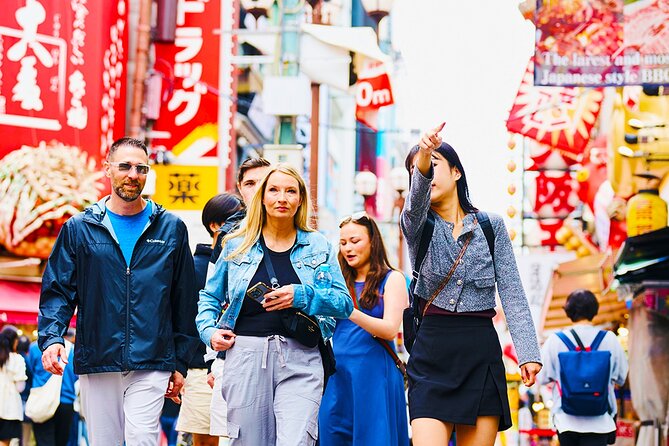
Osaka at night is pure food energy. This 2-hour walk threads together Namba-area landmarks and local food culture so you know where to go and what to try. I especially like the street-food focus, with stops that set you up for classic Osaka bites like takoyaki and gyoza. I also like the small group size, which makes it easier to ask questions and get restaurant ideas for the rest of your trip. One possible drawback: street snacks are not included in the price, so you will likely spend extra once you get to the markets.
You will cover four standout areas in a tight loop, guided by an English-speaking local. From the bright photo spot at the Dotonbori Glico Sign to the calm Hozenji Temple area and then into Kuromon Market, the route keeps changing pace in a good way. Guides named Kaz, Nako, and Sayaka get praised for friendly, fun guidance and for steering people toward the spots that fit Osaka’s food scene.
In This Review
- Key points before you go
- Why Osaka’s Night Walking Food Plan Works
- The 2-Hour Route: How the Stops Fit Together
- Start at Dotonbori Glico Sign, Then Let the Street Food Pull You In
- Hozenji Yokocho and Hozenji Temple: Temple Calm in the Middle of the City
- Sennichimae Doguyasuji: The Kitchen-Tools Street Most Food Fans Love
- Kuromon Market, Osaka’s Kitchen: Your Main Food and Seafood Payoff
- Small-Group Magic: Why Up to 15 People Matters
- What to Expect to Try, and How to Plan Your Snack Strategy
- Value for $31.84: What You Really Get
- Who Should Book This Tour (and Who Should Skip It)
- Should You Book This Osaka Nightlife Food Walk?
- FAQ
- How long is the Osaka nightlife district walking and local food culture tour?
- Where does the tour start and end?
- Is food included in the tour price?
- What is included with the tour?
- How big is the group for this tour?
- Can I get a refund if I cancel?
Key points before you go
- Two hours, four major food stops across Namba and Osaka’s market world
- Street-food culture gets the spotlight, including takoyaki and gyoza style snacking
- Kuromon Market is your seafood payoff, often called Osaka’s kitchen
- Hozenji Temple area adds a quiet pause, with the mossy Fudo Myo-o statue and wish-water tradition
- Doguyasuji is a kitchen-tools street, where you see equipment used by professionals
- Small group up to 15 people makes it feel personal and question-friendly
The red lanterns stay lit later. More Osaka crawls
- Osaka: Namba Pub Bar Crawl with a Local Guide
★ 4.9 · 424 reviews - Osaka Pub Crawl and Nightlife Tour
★ 5.0 · 293 reviews - Osaka After Dark: Small-Group Night Food Tour (Max 6)
★ 4.5 · 245 reviews - Osaka Local Bar Crawl in Dotombori & Uranamba Area
★ 5.0 · 199 reviews
Why Osaka’s Night Walking Food Plan Works
Osaka is one of the best cities in Japan to eat while walking. The vibe at night is a big part of that. Lights, side streets, and little vendor windows turn food hunting into an easy, low-stress game.
This tour is smart because it does not force a sit-down meal. Instead, it uses a classic nighttime route in the Namba area and builds in short stops where you can look, smell, and decide what you want to buy. You get a guided path, but you still get to choose your own snack pace.
I also like that the tour is built for people who are short on time. At about two hours, you can get your bearings fast and still feel like you ate your way through a meaningful slice of Osaka.
The 2-Hour Route: How the Stops Fit Together
The total time is about two hours, and the pacing is built around brief, high-impact moments rather than long museum-style time. You will spend around:
- 30 minutes at the Dotonbori Glico Sign area
- 20 minutes at Hozenji Yokocho and Hozenji Temple
- 20 minutes on Sennichimae Doguyasuji
- 30 minutes at Kuromon Market
That structure matters. It keeps you moving while giving you enough time at the market to actually make choices. It also helps if you do not want a heavy itinerary on your first evening, because you can still see more after the tour.
Because it is a walking tour with a mobile ticket, you will simply show up at the meeting point and follow your guide. You end back at the same place, which is convenient when you want to hop on transit or continue exploring nearby.
Start at Dotonbori Glico Sign, Then Let the Street Food Pull You In
Your tour begins at Don Quijote Dotonbori Midosuji, right in the Namba area. This is a good starting choice because it is easy to find, and it puts you in the thick of Osaka’s neon restaurant energy.
At the Dotonbori Glico Sign stop, your guide sets the tone with street-food context. This is where the tour starts nudging you toward what to look for and how Osaka people typically snack while out. You will also get the chance to spot a few things you might otherwise miss if you were wandering without a plan.
This stop also works as a warm-up. You are not yet at the densest market section, so you can decide how hungry you are before you move into the more food-focused areas. It is a short, photo-friendly moment that helps you understand the neighborhood quickly.
One practical tip for you: wear shoes you can walk in for the whole two hours. Namba streets can be busy and you will be moving continuously between sights.
- Osaka Go Karting Tour with Funny Costume★ 5.0 · 2,658 reviews
- Osaka Castle: Museum and Tower Entry Ticket★ 4.5 · 2,380 reviews
- Osaka: Shinsekai Food Tour with 13-15 Dishes at 5 Eateries★ 4.8 · 2,204 reviews
- Osaka Food Tour: 13 Dishes at 5 Local Eateries★ 5.0 · 2,149 reviews
- Hungry Osaka Street Food Tour:15 Tastings & 3 Drinks with a Local★ 5.0 · 1,727 reviews
Hozenji Yokocho and Hozenji Temple: Temple Calm in the Middle of the City
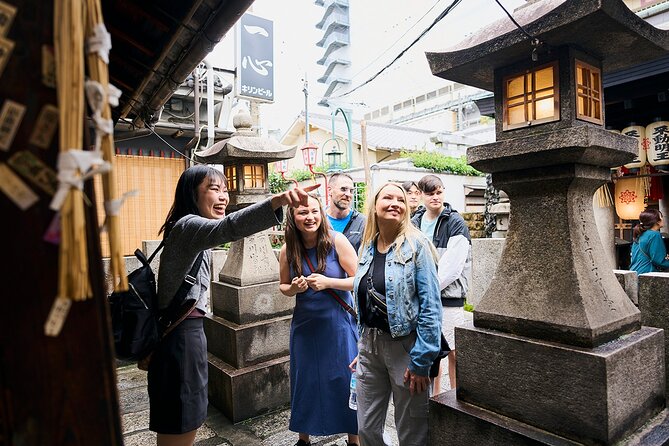
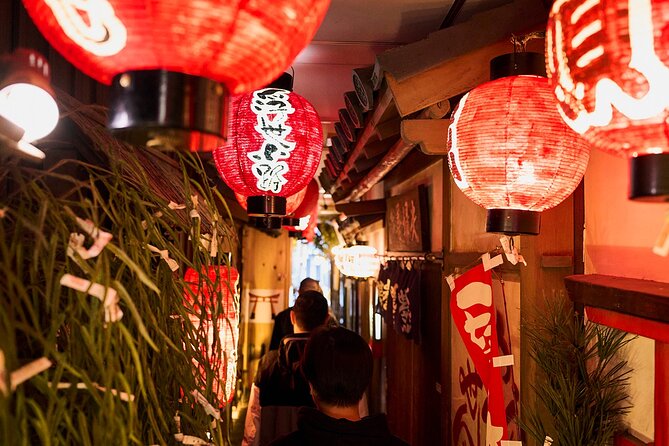
Next comes Hozenji Yokocho and Hozenji Temple, a small, atmospheric pocket tucked into the city. The contrast here is the payoff. You go from bright street energy to a calmer lane atmosphere where the details matter more.
The highlight is the moss-covered statue of Fudo Myo-o. You will see it described as famous, and visitors often splash water on it while making a wish. That little ritual is the kind of cultural moment that makes a nightlife food tour feel more than just eating.
This stop is also useful for practical travelers. It gives your senses a reset. After walking around crowded streets, you will appreciate the slower tempo here, and it is a great moment to ask your guide how to pace your snack buying later at the market.
Possible drawback to consider: this is still inside the city, so it is not silent. If you are expecting a remote shrine experience, set your expectations for a small urban temple space rather than countryside peace.
Sennichimae Doguyasuji: The Kitchen-Tools Street Most Food Fans Love
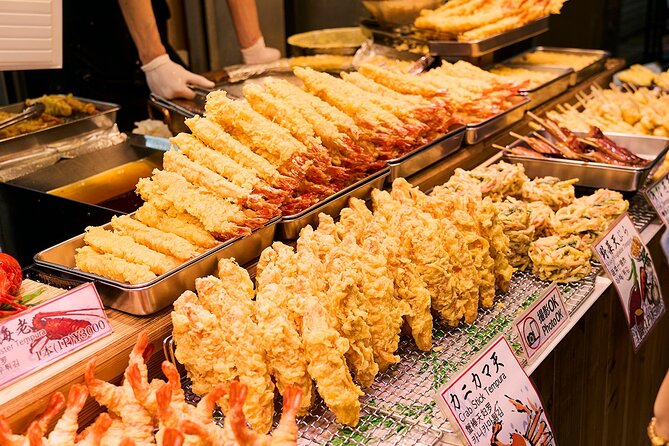
Then you head to Sennichimae Doguyasuji, a shopping street known for professional kitchen tools. This is a clever stop for food lovers because it shifts your attention from what people eat to what people cook with.
You learn what makes Osaka’s food culture practical. Good cooking depends on tools, and this street is where you can see that in storefront form. Even if you do not buy anything, it is a fun way to understand how seriously Japanese cooks think about gear.
This part of the tour is shorter, about 20 minutes, so it is not a shopping marathon. It is more like a guided peek into a craft-focused side of town. If you like food documentaries and cooking gadgets, you will probably enjoy this stop more than you expect.
One consideration: if you are not interested in kitchen items, focus on the guidance instead of shopping. Ask your guide what tools are commonly used locally, and treat the street as food-culture context rather than a sales pitch.
Kuromon Market, Osaka’s Kitchen: Your Main Food and Seafood Payoff
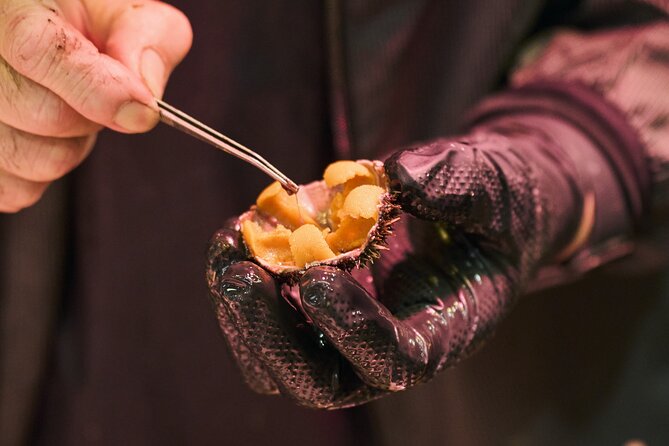
The final food-heavy stop is Kuromon Market, often called Osaka’s Kitchen. This is where the tour makes its case for why it is worth doing with a guide.
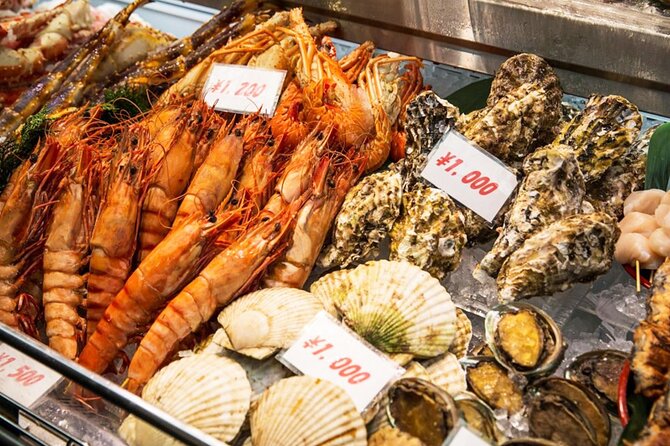
Kuromon Market is described as lively, and it is full of things you can look for right away: fresh seafood, wagyu beef, fruits, sushi, and more. Your guide helps you navigate the area so you do not end up stuck at the first stall or wasting time figuring out what looks best.
This is also where you get the strongest sense of Osaka food variety. The market layout can be a bit overwhelming on your own, especially when you are hungry. With a guide, you get pointed toward what to prioritize based on what you like.
Here is the key budgeting reality: the tour cost does not include meals or food and drinks from street vendors. That means you will likely want to set aside money for snacks at Kuromon Market and possibly along the earlier street-food stops. The guide is not holding you back, but you should go in with the expectation that buying is part of the fun.
Practical tip: bring cash if you can, and plan for small purchases. Market snacks are usually easier to share and sample than one big plate.
Small-Group Magic: Why Up to 15 People Matters
This is a small-group tour, with a maximum of 15 travelers. That size changes the feel. You are not fighting a crowd to hear instructions. You can ask about what to try, what to skip, or where else to go after the tour without feeling like you are interrupting a conveyor belt.
The reviews you shared also strongly point to the guide impact. People mention guides like Kaz, Nako, and Sayaka for being friendly, interesting, and good at steering the group to classic and off-the-beat spots. For you, that translates into a more helpful experience than just following a fixed route.
Another benefit: you will leave with ideas. The tour specifically encourages you to ask your guide for more restaurants to try during your stay in Osaka. That is a big deal if this is your first time in the city or if you want a second day plan that goes beyond the most famous names.
What to Expect to Try, and How to Plan Your Snack Strategy

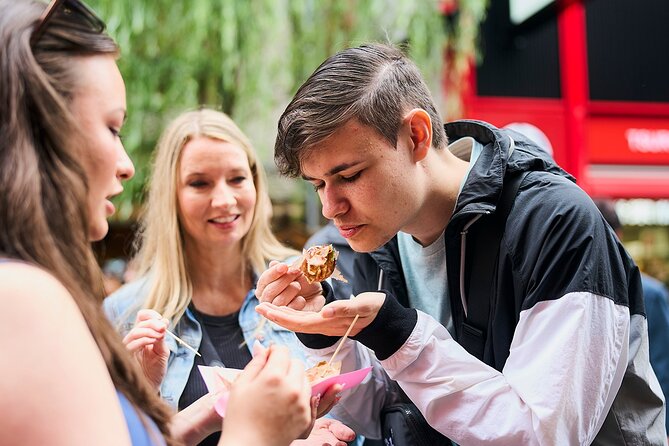
The tour highlights street foods like takoyaki and gyoza. That is the heart of Osaka street-snacking culture, and your route is designed so you can try those styles along the way.
Because meals are not included, your best approach is to treat the tour as a map plus a menu. You decide what you want to purchase. Some people want one big snack stop at the market. Others prefer smaller bites as they go.
If you have dietary restrictions, this matters. The information provided does not list specific options, so you will want to ask your guide as you arrive at each food area. The small group makes those questions easier to get answered in real time.
Value for $31.84: What You Really Get
At $31.84 per person, this is not a cheap tour in pure snack-cost terms, especially since food and drinks are not included. But it can still be good value if you think about what the price buys.
You are paying for:
- An English-speaking local guide to help you move through key areas
- A structured route across Namba and market territory
- Time at four meaningful locations, including Kuromon Market
- Small-group attention so you can ask questions and get recommendations
If you were to try this on your own, you might spend money anyway on snacks, but you would likely waste time figuring out where to go first and what to prioritize in the market. For short stays, that guidance can be worth a lot.
Also, the tour is noted as being booked on average 21 days in advance, which suggests it is popular. If your trip dates are set, I would not wait until the last minute.
Who Should Book This Tour (and Who Should Skip It)
This tour fits best if you:
- Want an easy introduction to Osaka nightlife food areas without planning every detail
- Like street food and want guidance on what to buy
- Are curious about Osaka’s market culture and seafood variety
- Prefer a small group, not a bus-style crowd
You might skip it if:
- You expect all food to be included in the price
- You dislike walking and markets
- You want a deep, long-form experience at one location rather than a fast loop of several stops
Should You Book This Osaka Nightlife Food Walk?
Yes, if you want a simple, guided way to taste Osaka without turning your first night into a planning headache. The combination of street-food stops, a calm temple pocket at Hozenji, a kitchen-tools street at Sennichimae Doguyasuji, and the main payoff at Kuromon Market makes the two hours feel efficient and varied.
Book it if it matches your schedule, because it sells enough that planning ahead pays off. The biggest reason to say yes is that the guide helps you make smart choices in places where you can easily get overwhelmed on your own.
FAQ
How long is the Osaka nightlife district walking and local food culture tour?
It lasts about 2 hours.
Where does the tour start and end?
It starts at Don Quijote Dotonbori Midosuji2-chōme-5-9 Nishishinsaibashi, Chuo Ward, Osaka, 542-0086, Japan, and ends back at the meeting point.
Is food included in the tour price?
No. Food and drinks from street vendors are not included in the tour cost.
What is included with the tour?
An English-speaking guided tour is included.
How big is the group for this tour?
The tour has a maximum of 15 travelers.
Can I get a refund if I cancel?
Yes, you can cancel for a full refund up to 24 hours in advance. If you cancel less than 24 hours before the experience starts, the amount paid is not refunded.
Lantern Light and Late Counters



Newest Osaka write-ups from the Loving Japan desk

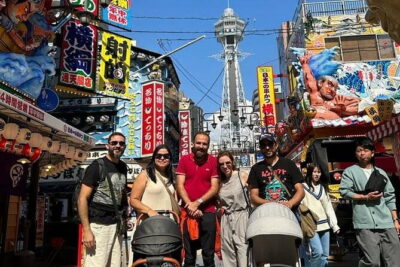

Izakaya and Nightlife Tours, side by side.
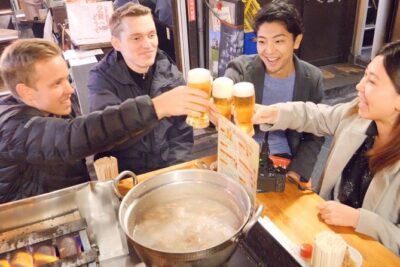 ★ 5.0Tokyo Bar Hopping Tour in Shinjuku (All-You-Can-Drink + Dinner)From $1063,587 reviews
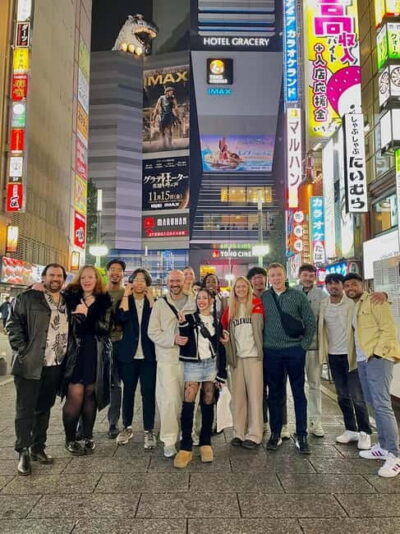 ★ 4.9Shinjuku Local Bar and Izakaya Guided Walking TourFrom $341,794 reviews
 ★ 5.0Shibuya Meltdown Nightlife Tour: All-You-Can-Drink Bar HoppingFrom $1061,058 reviews
 ★ 5.0Osaka Bar Hopping Night Walking Tour in Namba (3 bars, 6 tastes)From $98958 reviews
 ★ 4.5Pub Crawl and Bar TourFrom $27951 reviews
 ★ 5.0Shinjuku Local Bar & Izakaya Crawl TourFrom $39890 reviews
 ★ 4.9Izakaya Bars Guided Walking TourFrom $25815 reviews
 ★ 5.0Kyoto Bar Hopping Night TourFrom $105613 reviews
Filed on these lists too