
REVIEW · IZAKAYA AND NIGHTLIFE TOURS
Osaka After Dark: Small-Group Night Food Tour (Max 6)
Night in Osaka is its own food show. This small-group outing, capped at six (with the listing showing up to eight), keeps you moving through Tenma and Kyobashi instead of circling the usual tourist zones. Two things I really like about it: you get dinner plus three drinks included, and you also learn the why behind the food, not just the what.
One possible drawback to plan for: it’s part restaurant time and part walking neighborhoods, so you’ll want comfortable shoes and a steady pace. If you only want a nonstop sequence of gourmet bites, this may feel more like a food and culture night than a pure tasting marathon.
In This Review
- Key things to know before you go
- Osaka After Dark works because it follows real neighborhood logic
- Price and value: what $116.93 buys you (and what it doesn’t)
- Where you meet and how the route sets up your evening
- Stop 1, Pulala Tenma: local streets first, food context second
- Ogimachi Park: a short break that actually refreshes your night
- Tenjimbashisuji Shopping Street: the longest covered street, minus the shopping rush
- Kyobashi Station and the Tokaido Road story: why the guide’s context matters
- What you eat and drink: three restaurant stops that feel like a paced night out
- The guide makes the difference, and names like Hugo and Ferdinand keep showing up
- Walk comfort and pacing: how to prepare so the tour stays fun
- Who should book this Osaka night food tour, and who should skip it
- Should you book Osaka After Dark? My practical take
- FAQ
- How long is the Osaka After Dark night food tour?
- What’s included in the price?
- Where does the tour start and end?
- How does the alcohol work?
- Is the tour a lot of walking?
- What if the weather is bad or I need to cancel?
Key things to know before you go
- Small-group pace (max 6) that makes it easier to ask questions and move as a unit
- Dinner and three drinks included, with alcohol dependent on your age in Japan
- Tenma and Kyobashi at night, a practical way to skip the most crowded Osaka circuits
- Multiple sit-down stops, not just grabbing a snack and running
- One train ride included between neighborhoods, so you’re not stuck figuring transit mid-tour
- Moderate walking, plus short breaks like Ogimachi Park
The red lanterns stay lit later. More Osaka crawls
- Osaka: Namba Pub Bar Crawl with a Local Guide
★ 4.9 · 424 reviews - Osaka Pub Crawl and Nightlife Tour
★ 5.0 · 293 reviews - Osaka After Dark: Small-Group Night Food Tour (Max 6)
★ 4.5 · 245 reviews - Osaka Local Bar Crawl in Dotombori & Uranamba Area
★ 5.0 · 199 reviews
Osaka After Dark works because it follows real neighborhood logic
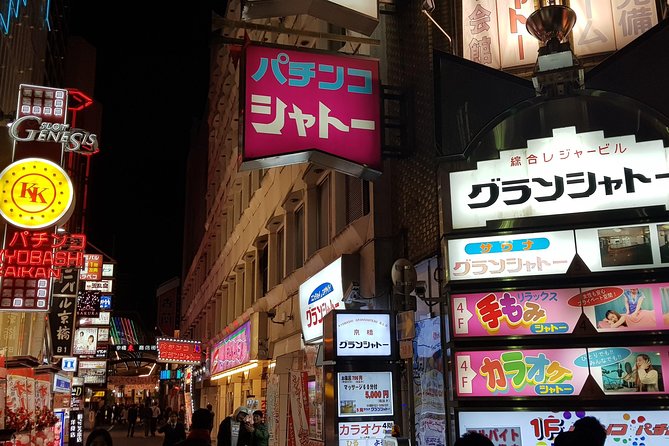
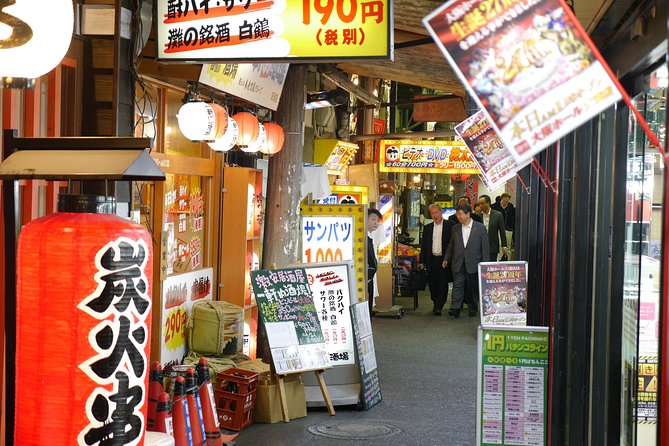
Osaka after dark feels different from daytime, and this tour uses that fact well. Instead of starting with a landmark, it starts with ordinary streets where people are actually eating and drinking. Tenma and Kyobashi have their own rhythm, and you get to see it without spending the whole night in the loudest, most photographed areas.
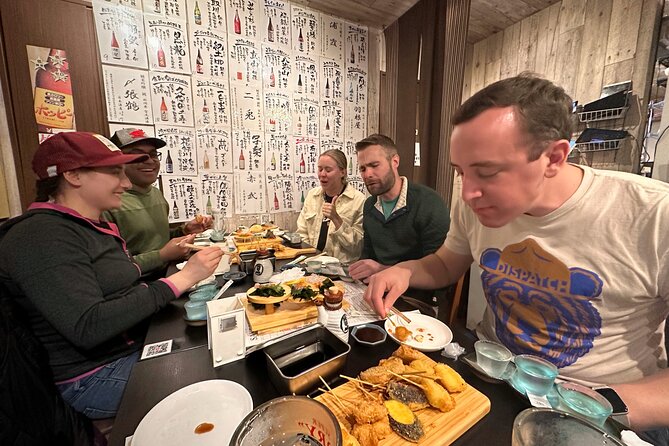
I also like that the format is built for conversation. A group this size means you’re not just chasing plates. Your guide can explain what you’re eating, what locals look for, and how the neighborhood shapes the food scene.
Price and value: what $116.93 buys you (and what it doesn’t)
At $116.93 per person for about 3 hours, this isn’t a cheap “grab-and-go” activity. The value comes from what’s bundled in: dinner, three alcoholic or non-alcoholic drinks, and the guide’s time. Public transportation costs during the tour are included too, including the transit between neighborhoods.
That added value matters because Osaka nights can get expensive fast if you piece everything together yourself: dinner plus a couple drinks plus transit plus a guide’s local knowledge. Here, you pay one price and you’re guided from stop to stop.
What isn’t included is also straightforward. Extra drinks beyond the included three are on you, and there’s no hotel pickup. If you want a one-way arranged pickup/drop-off, that’s an extra cost that depends on your train fare and the group size.
Where you meet and how the route sets up your evening
The start point is easy to find if you like clear landmarks: McDonald’s in front of Temma Station (Tenjinbashi area, Kita Ward) with a 6:00 pm start time. The tour ends at Kyobashi Station, which is useful because it has multiple train connections, including JR, subway, and the Keihan line.
Why this matters for you: ending at Kyobashi makes it simpler to keep your night going toward other areas or to head back without awkward transfers. It also means you’re not stuck in a dead-end neighborhood at the end of a three-hour walk.
Also note the practical side: this tour uses a mobile ticket, so have it ready on your phone when you meet.
- Osaka Go Karting Tour with Funny Costume★ 5.0 · 2,658 reviews
- Osaka Castle: Museum and Tower Entry Ticket★ 4.5 · 2,380 reviews
- Osaka: Shinsekai Food Tour with 13-15 Dishes at 5 Eateries★ 4.8 · 2,204 reviews
- Osaka Food Tour: 13 Dishes at 5 Local Eateries★ 5.0 · 2,149 reviews
- Hungry Osaka Street Food Tour:15 Tastings & 3 Drinks with a Local★ 5.0 · 1,727 reviews
Stop 1, Pulala Tenma: local streets first, food context second
Pulala Tenma is where the tour starts to feel like Osaka, not Osaka for tourists. This portion of the night includes a guided stroll of about 35 minutes focused on the neighborhood’s history and how it looks today. It’s not history talk for history’s sake. The point is to connect street life, local gathering spots, and the kind of food you’ll be eating next.
You’ll likely spend roughly an hour and a half at this first stop area, with more than just a simple walk. The best part is that you’re moving through the neighborhood’s texture, so when you sit down to eat, it feels earned.
A small consideration: because you’re starting with a walk, you’ll be happier if you arrive a few minutes early and don’t make your first task “catch up with the group.”
Ogimachi Park: a short break that actually refreshes your night
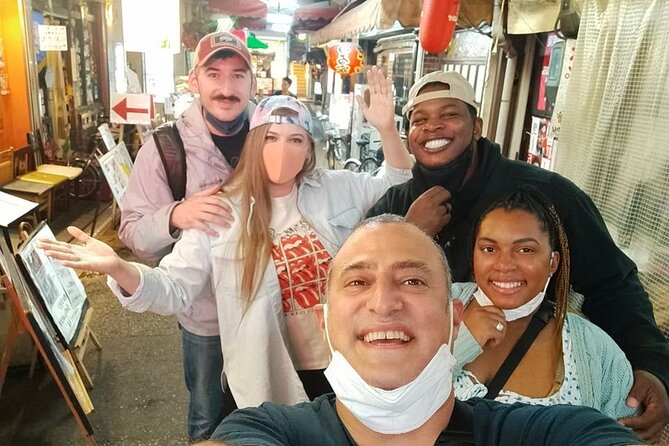
Ogimachi Park is a quick 15-minute reset. It’s a small pause between food stops, and you can feel the value of that when the evening includes multiple sit-down meals. You also get a taste of seasonal Osaka here, because it can be especially pretty during spring for cherry blossoms.
This isn’t the kind of park stop that’s meant to replace dinner. It’s more like a breath of air so you can handle the next neighborhood and the next meal without feeling like you’re being pushed along.
If you’re the type who hates stopping early, this part is still brief, and it gives you a visual break from alley after alley.
Tenjimbashisuji Shopping Street: the longest covered street, minus the shopping rush
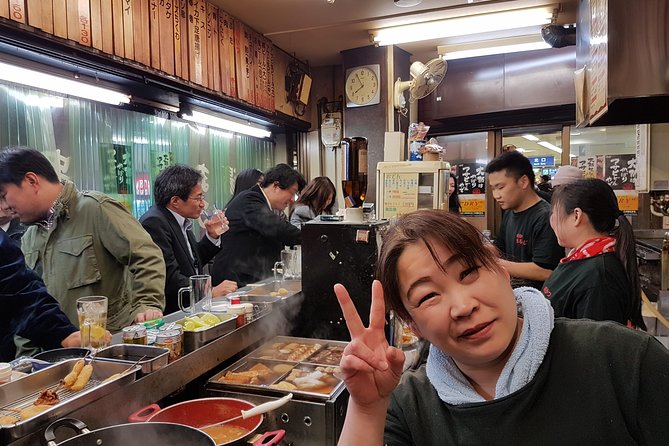
Tenjimbashisuji is known for being the longest covered shopping street in Japan, and the tour uses that fact in a smart way. You’re not doing a shopping spree. Instead, you’ll walk down a short portion so you can get the feel of daily life in an area where people move through on errands and evening routines.
This stop is valuable because Osaka food culture is tied to everyday movement: what’s open, what’s convenient, and what people can grab after a shift. Seeing the covered street helps you understand why certain kinds of small eateries stay busy.
Time-wise, it’s another 15-minute interlude, so you get the vibe without losing the whole evening to wandering.
Kyobashi Station and the Tokaido Road story: why the guide’s context matters
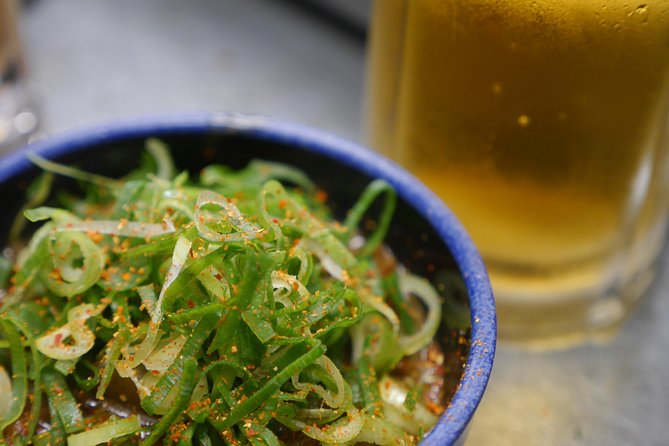
After thoroughly exploring Tenma, you’ll hop on a train for the short ride to Kyobashi. The transit fare is included, which is a quiet convenience that saves time and stress when you’re busy with food and directions.
Kyobashi is the second half of the story. Here, the guide frames the area with a link to the Tokaido road, the historic route connecting Tokyo and Osaka. Even if you’re not a history buff, the connection helps you see neighborhoods as more than restaurant rows. Osaka grew by routes and movement, and that shows in how people gather.
This section is listed as about an hour, and it’s where the evening’s food stops feel most grounded in place, not in a scripted checklist.
What you eat and drink: three restaurant stops that feel like a paced night out
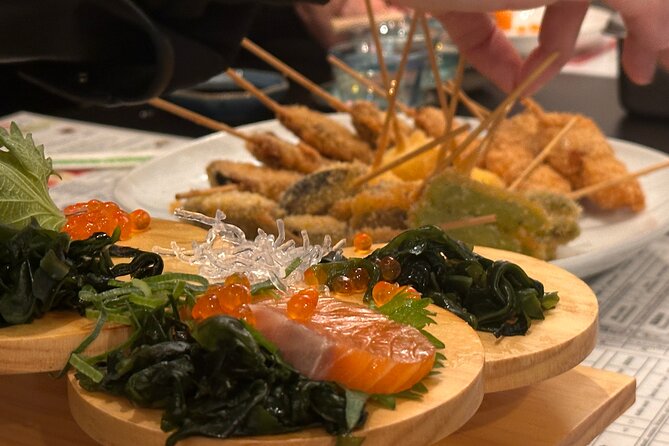
This is billed as a night food tour, and the structure supports that. You have a mix of neighborhood walking and sit-down or semi-sit-down meals, so you’re not constantly standing in line.
You’ll get dinner plus three alcoholic or non-alcoholic drinks. That “or” part is important, because the tour follows Japan’s legal drinking age: 20 years old. If you book as an adult who is 20 and over, alcohol can be served. If not, you’ll still get drinks, just non-alcoholic.
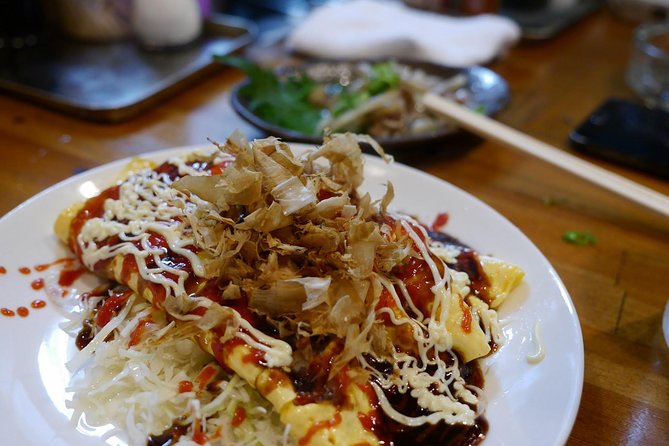
From the overall tone of the experience, the food approach is broader than a single category like sashimi-only. One guest even mentioned sashimi being very good early on, with other stops shifting to fried and other styles. Another report described standing-style servings at one point, which can be part of local alleyway dining.
Two more practical notes:
- Expect variety, not one “signature dish” repeated three times.
- You can leave full, because multiple people specifically said they ended up stuffed.
If you’re a picky eater, you’ll want to be honest about what you won’t eat. While dietary accommodations aren’t promised in the basic details, there are reports that guides can arrange substitutions for certain foods when needed.
The guide makes the difference, and names like Hugo and Ferdinand keep showing up
A lot of the highest praise centers on the guide’s personality and the way they connect food to local life. Names that appear often include Hugo, Kevin, Levy, Ferdinand, Alejandro, Damien, Lito, Joshua, Bryan, and Matthew.
Even without focusing on any one name, the pattern is clear: the best tours are the ones where the guide keeps things moving, answers your questions, and makes the night feel social. People highlighted banter, humor, and a good pace that avoids dragging the group.
So if you care about more than taste, choose this with confidence. It’s not only plates. It’s also how the guide tells the story of why these neighborhoods eat the way they do.
Walk comfort and pacing: how to prepare so the tour stays fun
The walking is described as moderate, but at night in Osaka, “moderate” still means you’ll want to think about your body. Comfortable shoes matter. If you tend to get tired easily at home, you’ll feel it more after multiple stops and a 6:00 pm start time.
The schedule also isn’t built for people who want to minimize walking. The tour includes neighborhood exploration, a park break, a shopping-street section, and then transit between neighborhoods.
Timing can shift slightly due to local conditions, and that’s normal for walking tours. If you have a strict dinner reservation right after 9:00 pm, build in a buffer.
Who should book this Osaka night food tour, and who should skip it
This is a great fit if you want:
- A local Osaka route focused on Tenma and Kyobashi rather than the most crowded areas
- Dinner plus drinks included, so you can focus on sampling
- A guided story about food culture, not just a list of items to try
- A small group where you can actually talk to the guide
It may be a weaker fit if:
- You want a pure gourmet tasting menu where every bite is the star and walking is minimal
- You’re uncomfortable with standing-style service, or you dislike the unpredictability of what a neighborhood restaurant might feel like on a given night
- You’re looking for a tour that is food-only with almost zero context
A good way to think about it: this tour is for people who like food plus atmosphere, not people who want only the fanciest plates.
Should you book Osaka After Dark? My practical take
If you want an evening that feels like Osaka locals live it, this is easy to recommend. The strongest reason to book is the value stack: dinner, three drinks, a guide, and transit, all while staying in two neighborhoods that are less about tourist theater.
I’d book it if you’re traveling with curiosity, you like asking questions, and you want a night plan that doesn’t require logistics hunting. I would skip it if your top priority is a strict gourmet-food checklist with minimal walking and maximal predictability.
If you’re on the fence, do this quick decision check:
- If you’re happy with a mix of food and neighborhood storytelling, book.
- If you only want constant “wow” bites and hate walking segments, consider a different style of food tour.
FAQ
How long is the Osaka After Dark night food tour?
The tour runs for about 3 hours.
What’s included in the price?
Dinner, a native (or equivalent) English-speaking guide, three alcoholic or non-alcoholic drinks, and public transportation fees during the tour are included.
Where does the tour start and end?
It starts at McDonald’s in front of Temma Station (Tenjinbashi area) and ends at Kyobashi Station.
How does the alcohol work?
Japan’s legal drinking age is 20. If you booked as an adult 20 and over, you will be served alcohol. Customers booked under that age will not be served alcohol.
Is the tour a lot of walking?
There is a moderate amount of walking, so comfortable shoes are recommended.
What if the weather is bad or I need to cancel?
The experience requires good weather. If it is canceled due to poor weather, you’ll be offered a different date or a full refund. You can cancel up to 24 hours in advance for a full refund.
Lantern Light and Late Counters




Newest Osaka write-ups from the Loving Japan desk
Izakaya and Nightlife Tours, side by side.
 ★ 5.0Tokyo Bar Hopping Tour in Shinjuku (All-You-Can-Drink + Dinner)From $1063,587 reviews
 ★ 4.9Shinjuku Local Bar and Izakaya Guided Walking TourFrom $341,794 reviews
 ★ 5.0Shibuya Meltdown Nightlife Tour: All-You-Can-Drink Bar HoppingFrom $1061,058 reviews
 ★ 5.0Osaka Bar Hopping Night Walking Tour in Namba (3 bars, 6 tastes)From $98958 reviews
 ★ 4.5Pub Crawl and Bar TourFrom $27951 reviews
 ★ 5.0Shinjuku Local Bar & Izakaya Crawl TourFrom $39890 reviews
 ★ 4.9Izakaya Bars Guided Walking TourFrom $25815 reviews
 ★ 5.0Kyoto Bar Hopping Night TourFrom $105613 reviews
Filed on these lists too