
REVIEW · DOTONBORI AND OSAKA STREET FOOD
Osaka Castle & Dotonbori Lively One-Day Walking Tour
Osaka in one day, with a guide. You get a small-group walking day that mixes Osaka Castle, old-time neighborhood life, and the neon energy of Dotonbori, with a hotel pickup option that keeps your morning low-stress. It is built for people who want the big sights, but also want to know what they are looking at.
I like the way the route teaches you Osaka in layers. The Osaka Museum of History sets the stage right by the castle, then the Osaka Museum of Housing and Living shows everyday life from about 180 years ago, not just famous landmarks.
The main catch is the walking. Bring comfy walking shoes, because this is not a sit-and-watch loop, and food is not included, so you will pay for your own meals.
In This Review
- Key things that make this tour work
- The small-group format, and why it matters in Osaka
- Timing and meeting point: starting at 9:00 am by Osaka Station
- Osaka Museum of History: setting the scene before you see the castle
- Osaka Castle: 17th-century defenses, plus guided walkthrough time
- Tenjinbashi-suji shopping arcade: 600 shops and one long stroll
- Osaka Museum of Housing and Living: walk through about 180 years ago
- Kuromon Market: where Osaka food culture turns into your snack plan
- Dotonbori: the nightlife district with theaters-to-neon origins
- Pacing, walking, and what to pack for a 7-hour day
- Guides and the reason people rate this 5 stars
- Price and value: what $141.23 buys you in real terms
- Who this Osaka Castle and Dotonbori tour fits best
- Should you book it? My take
- FAQ
- How long is the Osaka Castle & Dotonbori walking tour?
- What time does the tour start?
- Where does the tour meet?
- Is the group limited in size?
- Is hotel pickup included?
- What is included in the price?
- Are meals included?
- Which places do we visit?
- Do you need to pay for admission at each stop?
- What happens if the weather is bad?
Key things that make this tour work
- Max 5 people means your guide can slow down or speed up when needed
- Hotel pickup option saves time versus hunting a meeting spot
- Admissions are included for Osaka Museum of History, Osaka Castle, and Osaka Museum of Housing and Living
- A mix of old and new Osaka: museum stops plus Tenjinbashi-suji and Kuromon Market
- Public transportation is part of the plan, so you learn the city rhythm instead of cramming taxis
- Guide-led pace with frequent Q and A, including tips on getting around the subway
Still hungry on Dotonbori? A few more crawls
- Osaka: Shinsekai Food Tour with 13-15 Dishes at 5 Eateries
★ 4.8 · 2,204 reviews - Osaka Local Foodie Walking Tour in Dotonbori and Shinsekai
★ 5.0 · 985 reviews - Osaka: Dotonbori District River Cruise with Drink Discount
★ 4.2 · 876 reviews - Ultimate Osaka Walking Tour: Castle, Dotonbori & Hidden Gems
★ 5.0 · 862 reviews
The small-group format, and why it matters in Osaka
This is a maximum five guests setup, and that changes the whole feel of the day. In a small group, your guide can actually notice if you are confused, tired, or just curious about something specific. That shows up in the guide praise, where names like Chuji, Tomoko, Noriko, and Taka Sakai were singled out for being easy to follow and not rushing people through the stops.
You also get a better chance to ask questions without feeling like you are holding up a huge group. One review even called out how the guide taught the subway system, which is exactly the kind of practical know-how that pays off long after the tour ends.
Two more practical perks: public transportation is used as part of the experience, and the tour includes transportation fare. You are not just dropped at each site. You are guided between them, which helps you keep momentum on a day that is already packed.
Timing and meeting point: starting at 9:00 am by Osaka Station
The tour starts at 9:00 am, and it begins near Osaka Station in Umeda, then ends back at the same starting meeting point. The meeting area is listed as Osaka Station3-chōme-1-1 Umeda, Kita Ward, Osaka, 530-0001, Japan.
If you are staying near a major rail hub, that is convenient. If not, the hotel pickup option can be a lifesaver, especially when you are trying to make sense of morning crowds and station signage. One review specifically praised how the guide picked them up at the hotel lobby, which removed a lot of stress.
You will also want to keep in mind that the tour uses public transportation. That is good value because transport is included, but it also means you will be walking from train to sidewalk and from platform to platform.
Osaka Museum of History: setting the scene before you see the castle
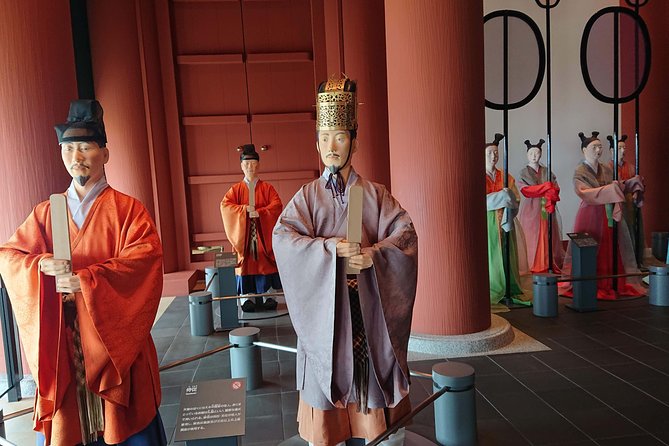
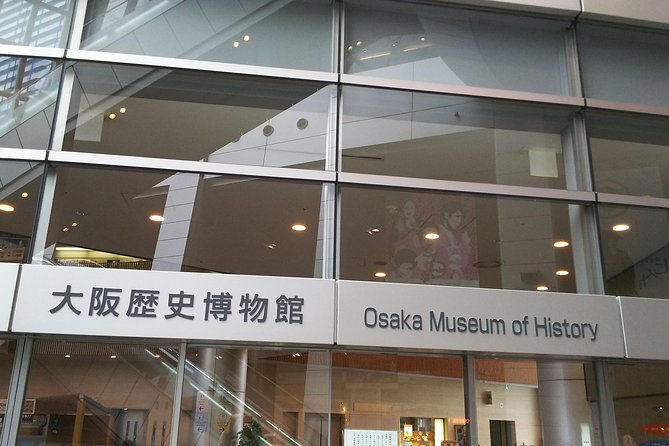
Stop 1 is the Osaka Museum of History, located in front of Osaka Castle. The museum sits on the site of an ancient palace, and the top floor (the 10th floor) is described as a great spot to overlook Osaka Castle.
Why this stop is smart: it gives you context before you go into the main photo-op. Without that background, castles can feel like just stone walls and views. With it, you start noticing details like why defenses mattered and how the city’s power shifts shaped the buildings you see today.
Plan for about 1 hour here, with time to look around at your own speed between guided points. If you like visual explanations, museums are often where the light bulb moments happen.
The rest of central Osaka, ticket by ticket
- Osaka Castle: Museum and Tower Entry Ticket★ 4.5 · 2,380 reviews
- Osaka: Umeda Sky Building Official E-Ticket★ 4.6 · 1,131 reviews
- Osaka Castle Walking Tour and Castle Tower Admission★ 5.0 · 561 reviews
- 5-Hour Osaka Bike Tour to the Neighborhood of Osaka Castle★ 5.0 · 319 reviews
- Osaka Castle Guided Tour★ 4.7 · 249 reviews
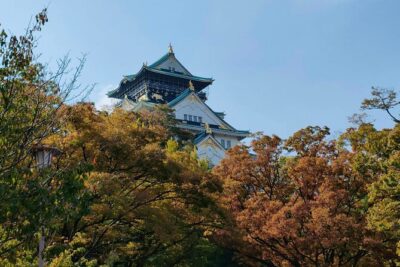
Osaka Castle: 17th-century defenses, plus guided walkthrough time
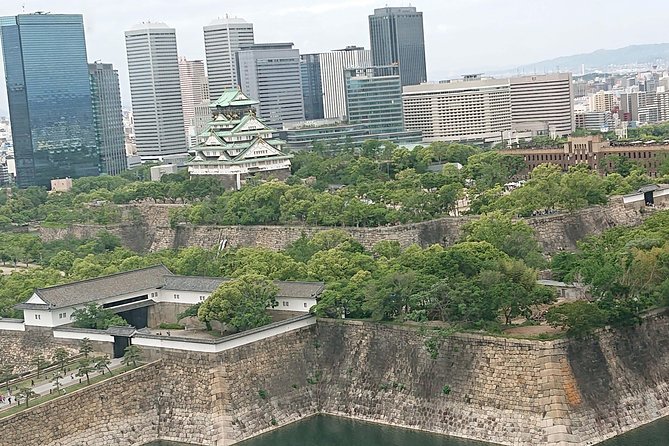
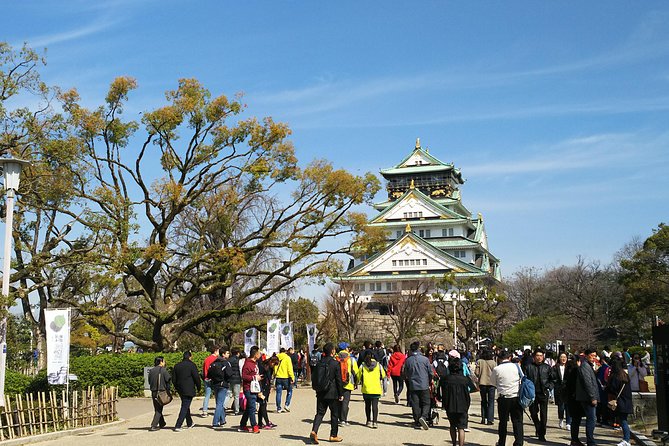
Stop 2 is Osaka Castle, scheduled for about 1 hour 30 minutes, with admission included. The castle was built in the 17th century by the Tokugawa Shogunate, and the description highlights the fortress-style approach: solid construction, tall stone walls, and double moats.
Here is what I think you should pay attention to while you are there. First, look at the defensive logic. A moat is not just for drama, it is part of a system. Second, watch how the layout supports visibility and movement. When a guide explains the structure, you stop seeing it as a single monument and start seeing it as a designed stronghold.
Multiple reviews praise the castle time and mention guides answering questions while walking around the grounds. One person even emphasized that the guide had good English and guided at the group’s pace, and another mentioned being able to go directly into the castle.
Practical note: this is a place where good shoes matter. Even if the walking is not extreme, you will be on paths and stairs in an area designed for foot traffic.
Tenjinbashi-suji shopping arcade: 600 shops and one long stroll
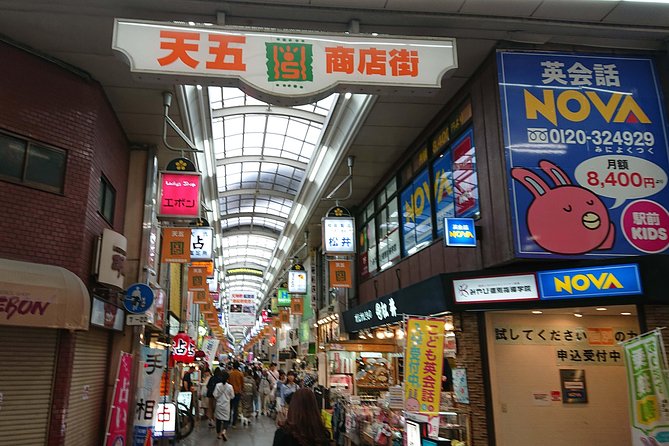
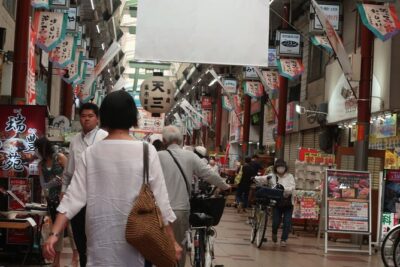
Stop 3 is Tenjinbashi-suji Shopping Street, billed as Japan’s longest shopping arcade at 2.6 km with about 600 shops. The tour allots about 1 hour, and admission is free.
This is a “walk and look” stop, and it is great for two reasons. One, it shows everyday commerce, not just tourist souvenir stalls. Two, it gives you a break between heavier sites, where you can browse at a human pace.
I like treating this kind of stretch as orientation for the city. You start to notice how shops cluster, how people move through covered arcades, and what kinds of goods Osaka people actually buy.
Because this stop is long, you can also use it to reset. If you are thirsty, this is when you would normally pick something up on your own. Food and drink are not included on the tour, so you will be spending money here anyway if you want snacks.
Osaka Museum of Housing and Living: walk through about 180 years ago
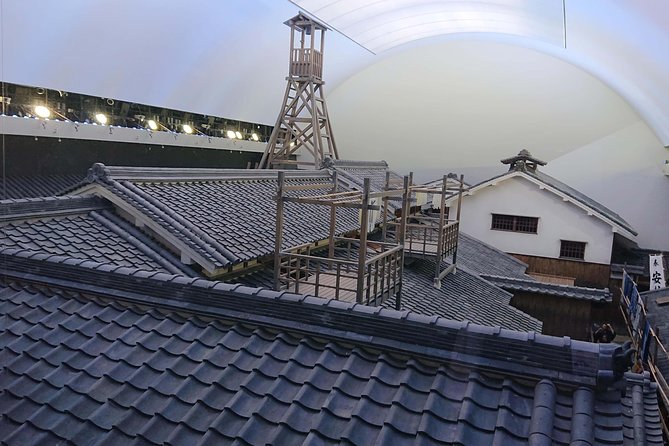
Stop 4 is the Osaka Museum of Housing and Living, with about 40 minutes scheduled and admission included. The townscape is reproduced full size, and the description says you can walk in it, see the structure of houses, and experience what was sold at that time, with opportunities to see and touch.
This stop is different from many history museums because it is not only behind glass. It is more like a time-travel walk. If you care about how ordinary people lived, this is the best payoff stop on the day.
What to expect: you will likely move through rooms and street-like spaces that feel scaled to real life. The guide helps connect what you see to the story of Osaka as a working city, not just a place of famous sites.
A downside to keep in mind: 40 minutes can feel short if you are a slow reader or you like taking your time. So keep your pace steady, or you may feel rushed when the group moves on.
Kuromon Market: where Osaka food culture turns into your snack plan
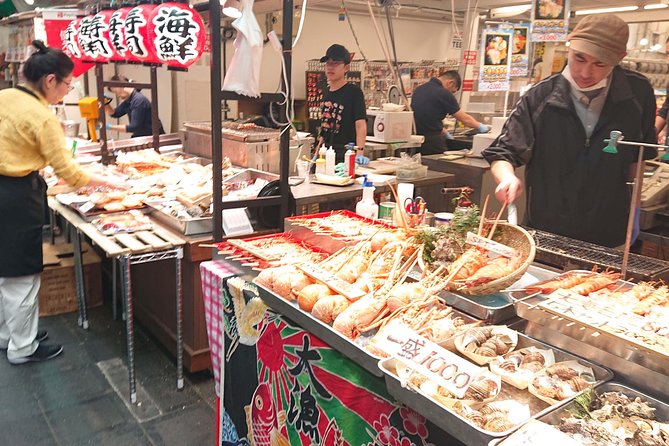
Stop 5 is Kuromon Market, about 30 minutes, with admission free. This is the food stop of the day, and it is where Osaka’s reputation as the Food Capital of Japan shows up in real life.
The description links Osaka’s food culture to locals who have long loved delicious things, and the market is known for a wide range of stalls. Even if you do not buy anything, it is worth going just to see how food gets displayed and how people choose what to eat.
Because food and drink are not included, you have two good options:
- Browse and pick one or two things that look best to you
- Save your bigger appetite for Dotonbori, where dinner and drinks become the main event
Either way, keep your expectations realistic. A market stop is short. Think of it as a tasting tour of visuals and aromas, not a full meal.
Dotonbori: the nightlife district with theaters-to-neon origins
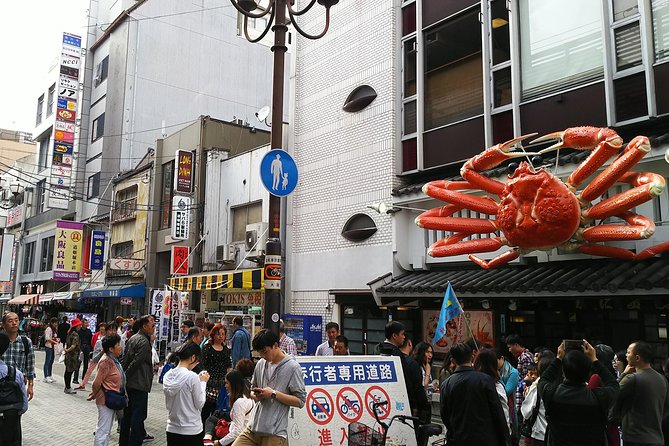
Stop 6 is Dotonbori District, also about 30 minutes, with admission free. The tour notes that this area was originally an entertainment spot with theaters along the canal, and now it is a major attraction known for colorful billboards and restaurant life.
This is the best place to go if you want Osaka’s modern personality. You will see a lot of energy, and it is the sort of area where photos almost take care of themselves, but the real value is learning the contrast between past entertainment and modern restaurant culture.
If you are tired by this point, do not fight it. Dotonbori works even at a slower pace. You can spend time looking, then step back from the densest streets to regroup before heading out.
Pacing, walking, and what to pack for a 7-hour day

The tour lasts about 7 hours total. That includes museum time, walking between stops, and public transit.
Here is how to set yourself up for success:
- Wear comfortable shoes, not fashion boots. One review called this out directly when someone showed up in boots and learned the hard way.
- Bring layers. Weather in Osaka can shift fast, and you will be outside at several points.
- Keep a water plan. The tour does not include food and drink, and you will likely want water between stops.
Good weather matters because the experience is described as requiring it. That said, one review said even with rain it was still a must do, so you should expect some flexibility, but also plan for the possibility of damp streets.
Guides and the reason people rate this 5 stars
The ratings are consistently high, and the reviews focus on a few repeat themes.
First, guides are praised for clear communication and a steady pace. Names that came up include Chuji, Tomoko, Noriko, Taka Sakai, Yoko-san, Mizuho, Leo, Satomi, Nick, Toshi, and Saori. While you cannot choose who leads your day, you can choose how you book and prepare. If you want a guide who is known for humor and comfort, one review specifically said to ask for Taka.
Second, the guides help people feel organized. One review mentioned a guide ensured the group was happy and effective. Another mentioned no one felt rushed. That matters because this itinerary is packed, and a rushed pace can turn a great day into a blur.
Third, practical assistance shows up. You will see mentions of help with souvenirs and even guidance on the subway system, which is a real skill, not trivia.
Price and value: what $141.23 buys you in real terms
At $141.23 per person, this is not a bargain-basement tour. But the value logic is pretty clear when you look at what is included.
Your ticket covers:
- Professional guide time
- Public transportation fare
- Admission fees for key stops
Those include paid entry for the Osaka Museum of History, Osaka Castle, and the Osaka Museum of Housing and Living. Meanwhile, the long shopping arcade, Kuromon Market, and Dotonbori are free to enter. So you are paying for guided access and included entries, not just someone walking with you.
The big cost to remember is that meals are not included. If you budget for snacks during Tenjinbashi-suji and potentially a full meal later in Dotonbori, the day can still be cost-controlled. If you show up with a flexible appetite, the food parts will feel like extra value instead of extra expense.
Who this Osaka Castle and Dotonbori tour fits best
This tour is a strong match if you:
- Are short on time and want major Osaka sights in one day
- Like a history-to-food-to-nightlife flow
- Prefer a guided plan when using public transit
- Enjoy asking questions and getting explanations at each stop
It also seems to fit multi-generation groups. One review mentioned a three-generation family and how the guide adjusted the pace for different needs. If your group has mixed energy levels, a small-group tour is usually the better bet.
If you hate walking or you want a completely self-paced day with lots of free roaming, you might find the schedule tight. In that case, consider using the tour for the museum and castle portions, then exploring Dotonbori on your own later.
Should you book it? My take
Book it if you want an organized, guided day that links Osaka’s past and present without requiring you to figure everything out on your own. The small group size, included admissions, and public transit planning are what make this worth your time.
Skip it or think twice if you have very limited mobility or if you hate being on a timetable. This is a 7-hour walking day, and you will be outside enough that shoes and basic weather readiness matter.
If your goal is to see Osaka Castle, understand the city’s storyline, then end in Dotonbori with food and lights, this one-day route is a practical way to do it.
FAQ
How long is the Osaka Castle & Dotonbori walking tour?
The tour is about 7 hours.
What time does the tour start?
The start time is 9:00 am.
Where does the tour meet?
The meeting point is Osaka Station3-chōme-1-1 Umeda, Kita Ward, Osaka, 530-0001, Japan.
Is the group limited in size?
Yes. The maximum is 5 travelers.
Is hotel pickup included?
The tour description mentions hassle-free pickup from your Osaka hotel. The tour also lists a meeting point near Osaka Station.
What is included in the price?
Included items are the professional guide fare, public transportation fare, and admission fees.
Are meals included?
No. Food and drink are not included.
Which places do we visit?
The stops are Osaka Museum of History, Osaka Castle, Tenjinbashi-suji Shopping Street, Osaka Museum of Housing and Living, Kuromon Market, and the Dotonbori District.
Do you need to pay for admission at each stop?
Admission tickets are included for Osaka Museum of History, Osaka Castle, and Osaka Museum of Housing and Living. Tenjinbashi-suji Shopping Street, Kuromon Market, and Dotonbori are listed as free.
What happens if the weather is bad?
The experience requires good weather. If it is canceled due to poor weather, you will be offered a different date or a full refund. Free cancellation is available up to 24 hours in advance for a full refund.
Central Osaka, Ticket by Ticket


Dotonbori, Still Hungry


Newest Osaka write-ups from the Loving Japan desk



Dotonbori and Osaka Street Food, side by side.
 ★ 4.8Shinsekai Food Tour with 13-15 Dishes at 5 EateriesFrom $532,204 reviews
 ★ 5.0Osaka Local Foodie Walking Tour in Dotonbori and ShinsekaiFrom $111985 reviews
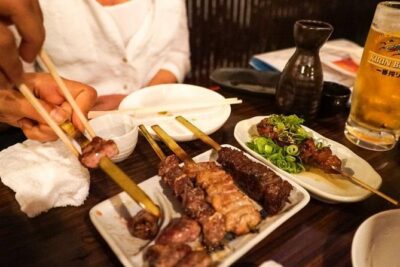 ★ 5.0Osaka Bar Hopping Night Walking Tour in Namba (3 bars, 6 tastes)From $98958 reviews
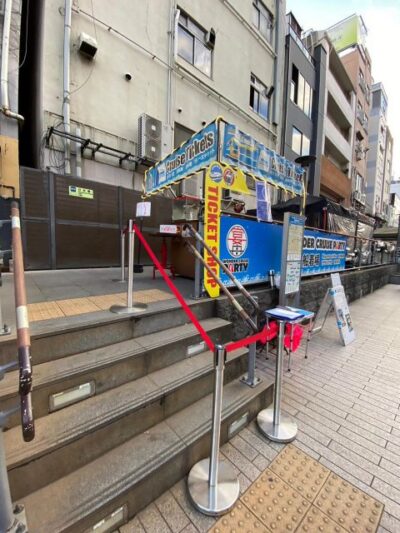 ★ 4.2Dotonbori District River Cruise with Drink DiscountFrom $12876 reviews
 ★ 5.0Ultimate Osaka Walking Tour: Castle, Dotonbori & Hidden GemsFrom $73862 reviews
 ★ 5.0Kuromon Market Food Walking Tour in Osaka (6 stops, 6 tastes)From $50550 reviews
 ★ 4.9Namba Pub Bar Crawl with a Local GuideFrom $30424 reviews
 ★ 5.0Ramen and Gyoza Cooking Class in DotonboriFrom $70378 reviews
Filed on these lists too