
REVIEW · DOTONBORI AND OSAKA STREET FOOD
Osaka: Ramen and Gyoza Cooking Class in Dotonbori
Ramen gets serious when you make it with your own hands. This Osaka class has you knead wheat into ramen noodles and shape gyoza from scratch, then sit down and eat what you cooked. You also get real guidance in English, with instructors mentioned in past classes like Miki and June, plus teachers like Kasa and Yoshi.
I especially love the craft side of it. You learn noodle technique, including using a noodle machine to cut ramen like you mean it. Second, I like that the meal at the end is not a show, it is the payoff, and the timing is set so you are not stuck waiting around.
One consideration: you are responsible for getting to the meeting spot yourself, since hotel pickup and drop-off are not included.
In This Review
- Key Points You’ll Actually Care About
- Arriving at Cooking Sun Osaka, Room 807
- Kneading Wheat Into Ramen Noodles, Then Cutting Like a Pro
- Building a Soy Sauce Ramen Broth, Then Customizing Your Bowl
- Gyoza From Scratch: Chicken Filling and Dumpling Wrapping Skills
- The Small-Group Advantage, English Coaching, and On-Time Flow
- What You Eat at the End, and Why It Matters
- Take-Home Recipes: Your Second Meal Starts at Home
- Price and Value: Is $70 Worth It in Osaka?
- Who Should Book This Class (and Who Might Skip It)
- Should You Book This Osaka Ramen and Gyoza Class?
- FAQ
- Where is the meeting point?
- Is hotel pickup or drop-off included?
- What dishes will I make in the class?
- How long is the class?
- Is the class taught in English?
- Can the class accommodate vegan or vegetarian needs?
- Are recipes and ingredients included?
Key Points You’ll Actually Care About
- Knead ramen dough yourself, then cut it with a noodle machine
- Soy sauce ramen base, with options like adding miso for miso ramen
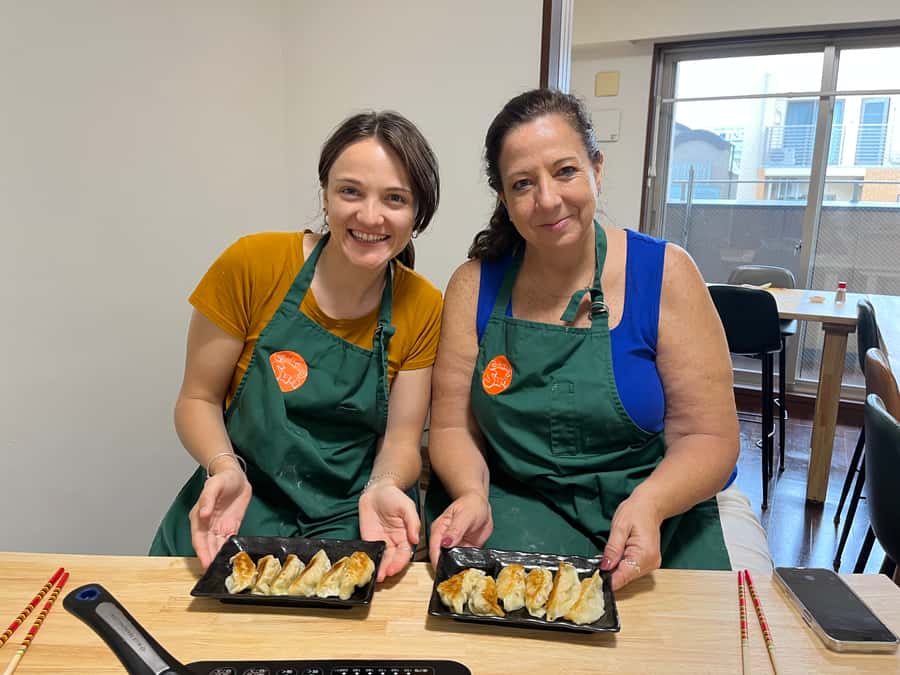
- Gyoza made from scratch, including a minced chicken filling
- Small group sizes (often around 7 to 8), so you get real help
- English instruction and step-by-step support, with adjustments if someone falls behind
- Recipe take-home notes, so you can try again at home
Still hungry on Dotonbori? A few more crawls
- Osaka: Shinsekai Food Tour with 13-15 Dishes at 5 Eateries
★ 4.8 · 2,204 reviews - Osaka Local Foodie Walking Tour in Dotonbori and Shinsekai
★ 5.0 · 985 reviews - Osaka: Dotonbori District River Cruise with Drink Discount
★ 4.2 · 876 reviews - Ultimate Osaka Walking Tour: Castle, Dotonbori & Hidden Gems
★ 5.0 · 862 reviews
Arriving at Cooking Sun Osaka, Room 807
The class starts at Cooking Sun Osaka, room 807. When you arrive, press 807 and the 呼出 button at the entrance. It is not hard, but it is also not the kind of place you stumble into without a plan, so give yourself a little buffer time.
Plan to come on your own. Hotel pickup and drop-off are not part of the deal, so you will need to handle transit and get there when you arrive. If you are staying in central areas, you can treat this as an early evening or late afternoon food mission, then head out for Osaka eating.
Inside, you will be in a kitchen built for cooking, not a tiny demo setup. That matters because you are actively working, kneading dough, using tools like a noodle machine, and assembling dumplings with your own hands. No one gets stuck watching from the sidelines.
Kneading Wheat Into Ramen Noodles, Then Cutting Like a Pro
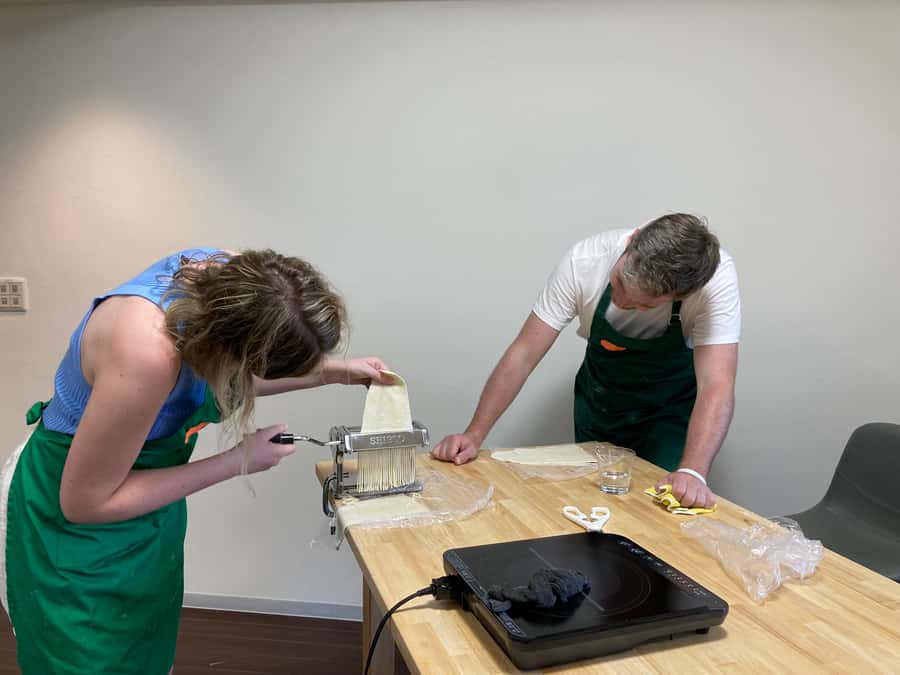
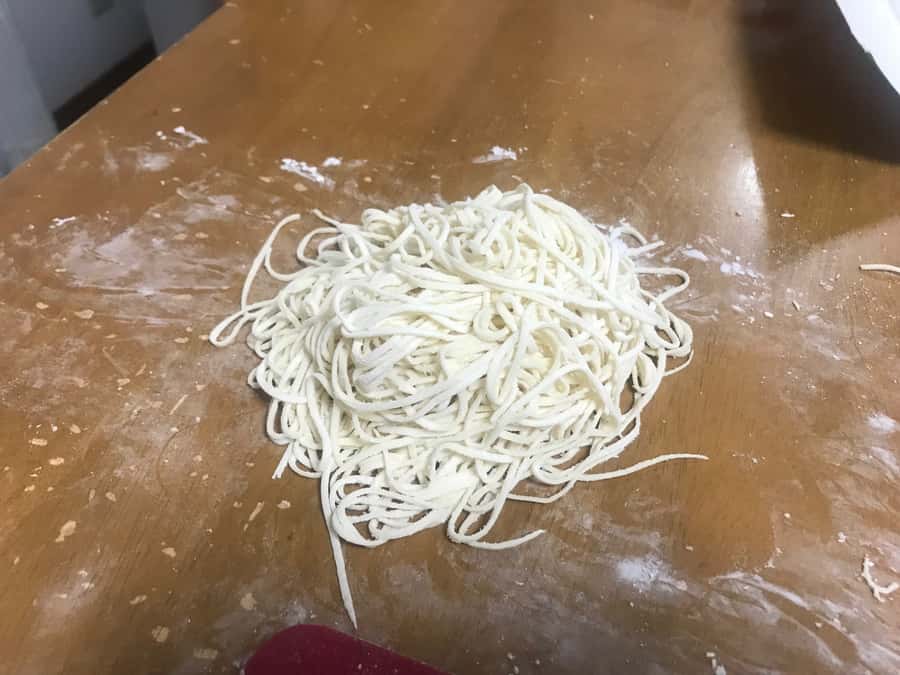
Ramen starts with noodles, and this class takes that seriously. You make wheat-based ramen noodles from scratch, which means you are not just cooking, you are learning the texture. Kneading is the first big skill, and it is where the class gets real. Expect the teachers to guide you through how the dough should feel as it comes together.
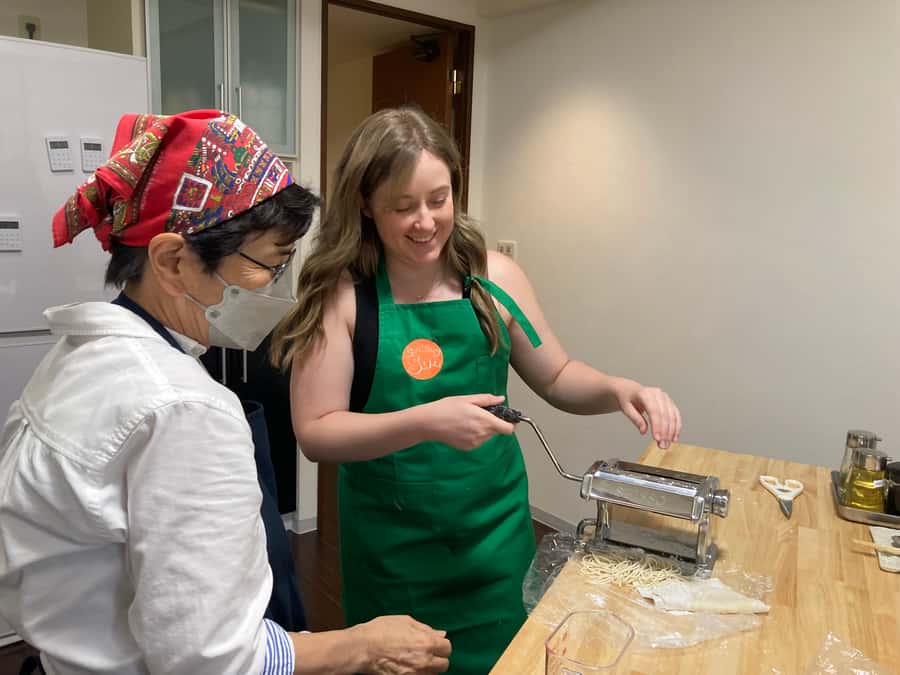
Then comes the part that feels oddly satisfying: cutting ramen noodles with a noodle machine. The class highlights this exact skill, and you will see why. Even thickness matters when you cook ramen, because it affects how noodles cook through. You also get a sense of rhythm, not just a recipe.
One thing I like about this approach is that it turns ramen from a menu item into a process you understand. Once you have kneaded and cut noodles yourself, you start noticing details you used to ignore, like why some noodles feel springy and others feel too soft.
Also, you will not be left alone with the flour. Multiple instructors are referenced as stepping in when people fall behind. If you are worried you will mess it up, do not. The point is learning, and they keep the pace moving without leaving you behind.
Building a Soy Sauce Ramen Broth, Then Customizing Your Bowl
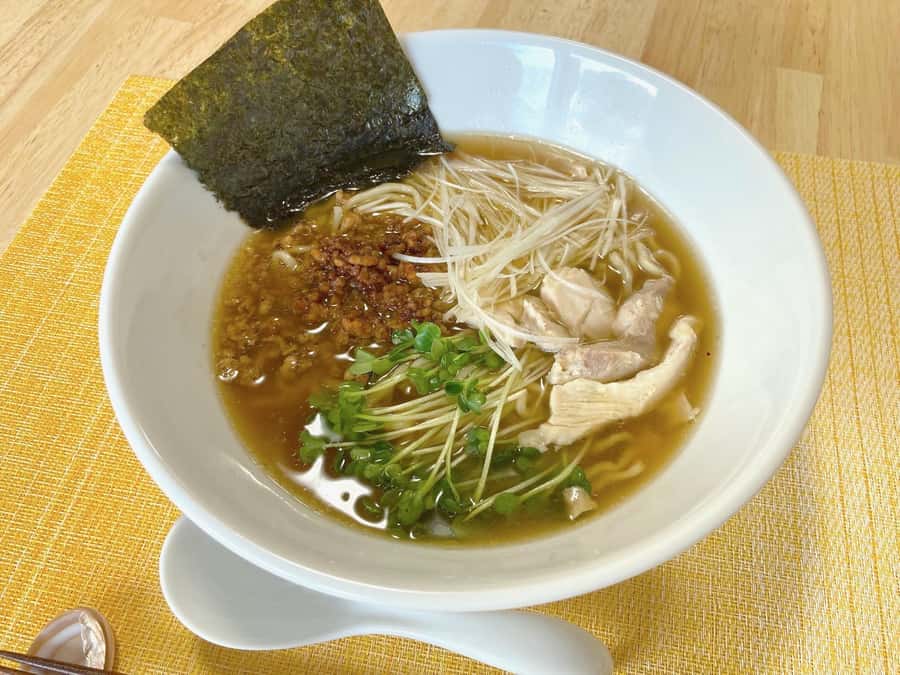
After the noodles, you move into ramen soup basics. The class uses a traditional setup for dashi-style flavor, with chicken bones and dried sardines. That combination creates a savory base you can recognize even before it is fully explained. It is also the kind of flavor that makes ramen taste like ramen, not just noodle soup.
The ramen the class focuses on is a soy sauce ramen style. This is a good choice for most people because it is the most standard reference point. You learn how the base works, then you can build from there.
Here is where it gets flexible. You can add toppings as you like, and the class also mentions you can switch the soup to miso ramen by adding miso. In other words, you are not trapped in one lane. You learn the core bowl, then you understand how changing one element changes the whole direction of flavor.
The best part is that you do not just taste a finished broth. You cook the ramen you made from scratch, so you get a real sense of cause and effect. When your bowl tastes stronger or lighter, you know it is linked to the choices you made.
Pro tip: come hungry. A lot of the learning is hands-on, and by the time you sit down to eat, you will be ready for the full experience, not just a few bites.
Cook it yourself instead. Other kitchens in Osaka
- Sushi Making Osaka Roll and Authentic Japanese Sushi Class★ 5.0 · 1,220 reviews
- Osaka Sushi Making Experience★ 5.0 · 400 reviews
- Osaka: Ramen and Gyoza Cooking Class in Dotonbori★ 5.0 · 378 reviews
- Osaka: Sumo Stage Show with Bento or Snack + Fight & Photo★ 4.3 · 364 reviews
- Osaka Cooking Class: Okonomiyaki &Japanese cuisines experience★ 5.0 · 261 reviews
Gyoza From Scratch: Chicken Filling and Dumpling Wrapping Skills
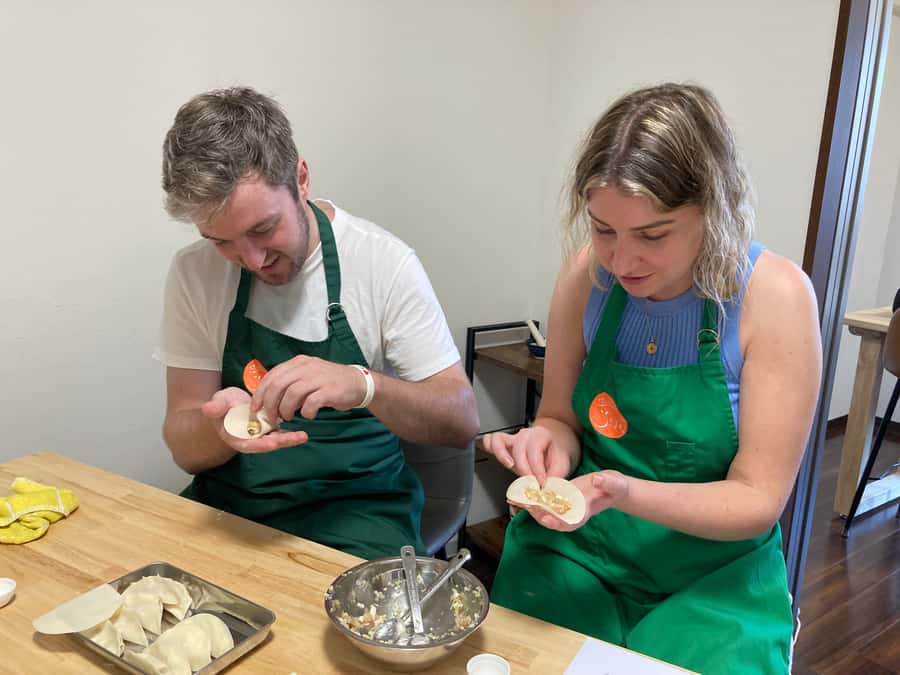
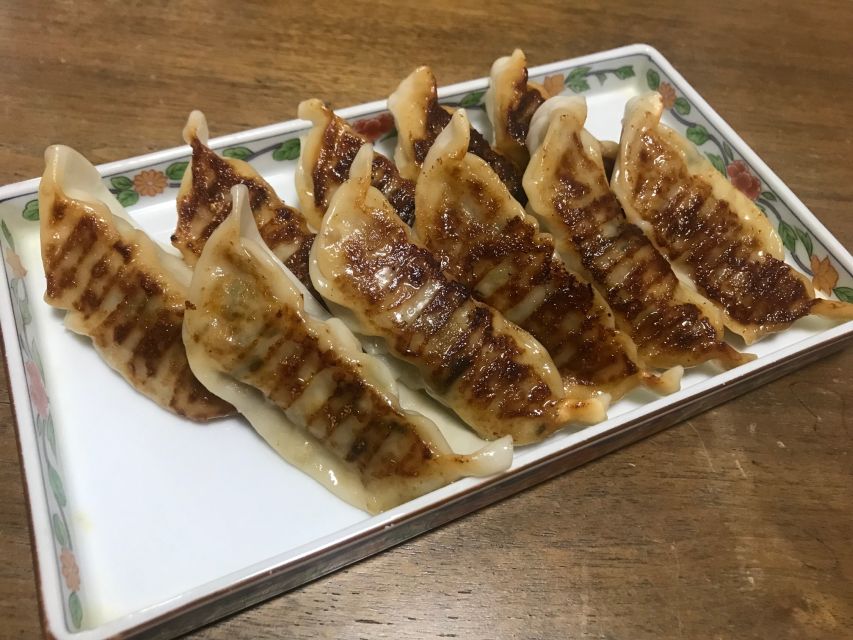
Gyoza is the class partner dish, and it is where your knife work and shaping skills show up. You make original dumplings using a minced chicken filling. That is a classic direction for gyoza, and the process forces you to pay attention to ratios and texture.
In practical terms, you will be doing the core steps: prep the filling, then assemble the dumplings. The class emphasis is on making them yourself, not just folding store-bought wrappers. That is how you learn what good gyoza feels like before it hits the pan.
One reason this section gets high marks is that it builds confidence. A few instructors are noted in guest feedback, including Miki and June, who were praised for clear English and for keeping people on schedule. You can also see support mentioned, like checking in, helping with technique, and making sure everyone finishes on time.
And yes, there is adaptation. One review specifically notes the class accommodated someone vegan right after arrival, with a plant-based option. If you are vegetarian or vegan, it is worth mentioning your needs ahead of time. Based on that real example, the class is used to making adjustments rather than giving a flat no.
The Small-Group Advantage, English Coaching, and On-Time Flow
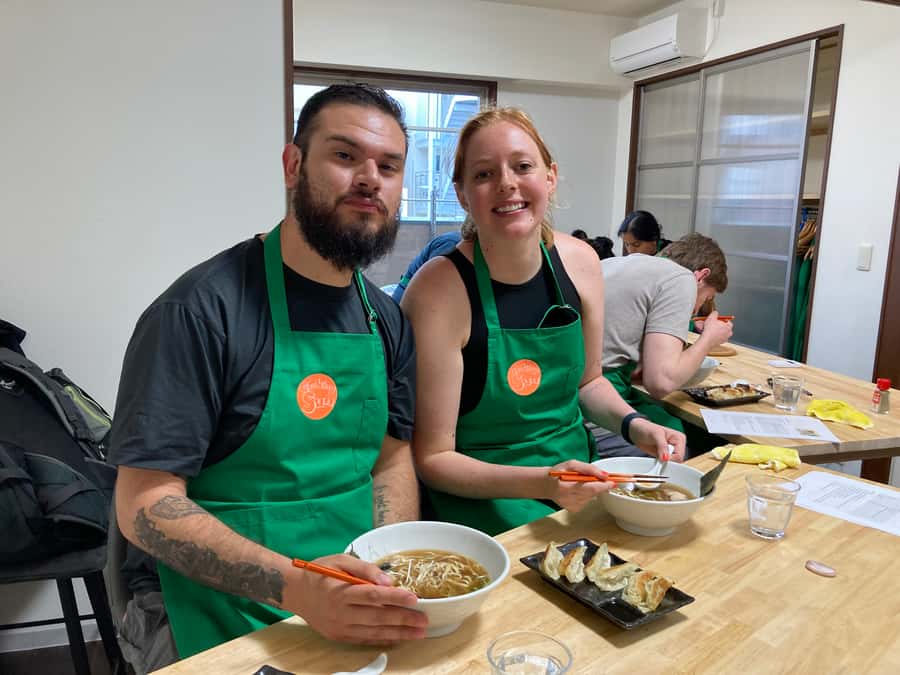
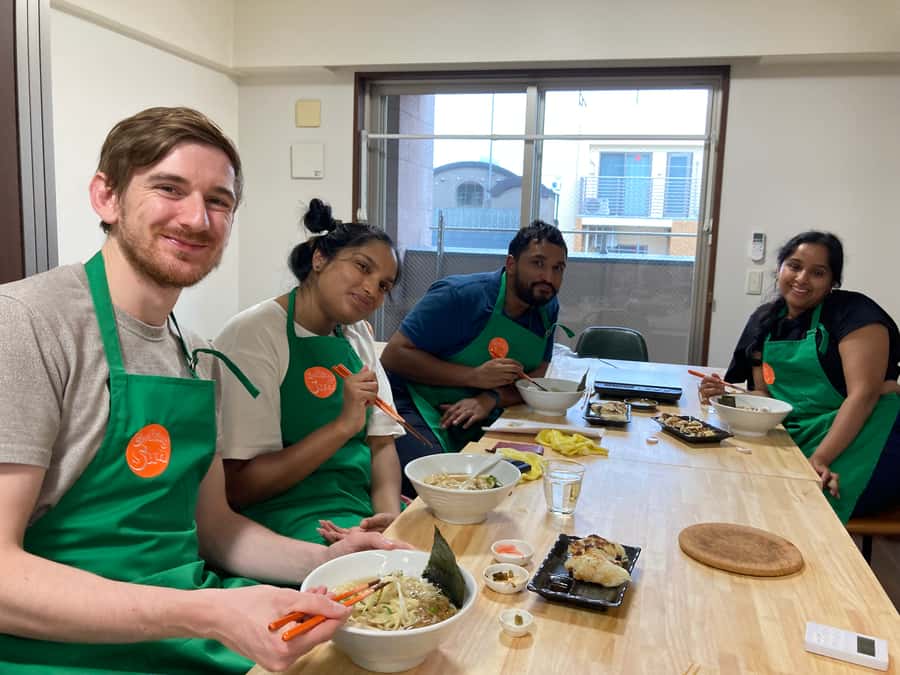
This class is run as a small group. Past guests mention intimate group sizes, including classes of about 7 people and max around 8. That size is a big deal in a ramen and gyoza class, because noodle dough, dumpling assembly, and timing all require attention.
You also get English instruction. Guests praise how clearly instructors explain each step, and how well the kitchen flow stays organized. One person noted that the process was timed so nobody felt rushed. That is what you want in a cooking class. You should feel busy, not chaotic.
The other thing I like is the “fix-it fast” support. Several reviews mention instructors stepping in if someone falls behind, with patience and detailed explanations. That means you can relax even if you are slower with dough or unfamiliar with dumpling folds.
The kitchen setup also matters. Reviews mention a big kitchen with enough space for everyone to cook. That reduces the usual cramped cooking class problem, where you bump elbows and worry you will drop something.
What You Eat at the End, and Why It Matters
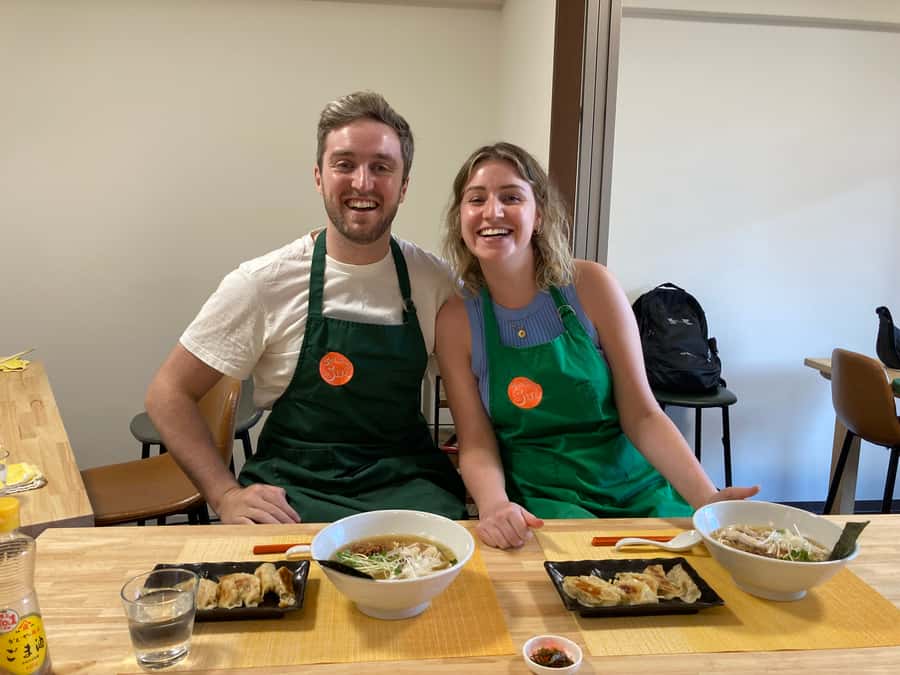
Eating is the point, and this class treats it like the finish line you earned. You get to sit down and enjoy your ramen and gyoza after cooking them. That meal is not just food, it is your feedback loop. You taste your broth, feel your noodles, and evaluate your dumplings based on what you made.
A nice bonus: the class meal is also consistently praised. People call the finished gyoza and ramen delicious, and several note that they ended up learning more than they expected, then ate it happily because it was truly good.
Also, the timing is meant to protect your experience. If you only have a short visit window in Osaka, you will appreciate that it runs as a complete experience, not a stop-start workshop that spills into your dinner plans.
Take-Home Recipes: Your Second Meal Starts at Home
One of the most practical parts of this class is that you can take recipes home. That is huge value if you want repeat results, not just a one-time cooking adrenaline rush.
Instructors provide written recipe notes, which means you can recreate the ramen and gyoza later. Reviews highlight this take-home element, and it is exactly what makes the class worth more than a fancy tasting.
If you are cooking at home, ramen can feel intimidating at first. But with noodle technique and broth steps broken down, you get a realistic path forward. You will remember what the dough should feel like, how the noodle machine behaves, and what you need for a dumpling filling.
It also helps you shop smarter. Even if the ingredients vary by country, you can follow the logic they teach around soup base and miso options, then adapt toppings to what you can find.
Price and Value: Is $70 Worth It in Osaka?
At $70 per person, you are paying for three things: hands-on instruction, quality ingredients, and a full meal you made yourself. You are not paying for a tour bus or a bunch of extra stops. The money stays focused on the cooking.
The big value signal is included ingredients. The class provides all ingredients in the cooking class, which removes a common pain point. You show up, cook, then eat. That saves you time and helps you avoid figuring out what to buy for a dish you might not make again.
Small group size is another value driver. When max group size is around 7 to 8, you get more attention per person. That usually leads to better noodles and dumplings, and fewer moments where you feel lost.
If you are the type of traveler who likes lessons, this price makes sense. If you only want to eat ramen, you can find it cheaper. But if you want skills you can reproduce at home, this class is priced like a workshop, not a meal.
Who Should Book This Class (and Who Might Skip It)
This fits best if you:
- love ramen and want to understand the process, not just the flavor
- want a hands-on food activity in Osaka that is not rushed
- like learning from English-speaking instructors with step-by-step support
- travel with family, since a review mentions an 11-year-old enjoying it
You might consider skipping if:
- you really dislike cooking tasks involving dough and kneading
- you only want a quick snack, because this is a full class experience
- you need hotel pickup, since you will handle your own transit
Should You Book This Osaka Ramen and Gyoza Class?
I think you should book it if you want a cooking lesson that ends with a satisfying meal and leaves you with recipes you can use again. The repeated theme in feedback is clear English, patient help, small-group attention, and a process that stays on schedule.
The only real “watch out” is logistics. No pickup means you must get to Cooking Sun Osaka, room 807, and press the call button on arrival. If you can handle that, you are set.
If you want Osaka in one practical bite, this is it: noodles you cut yourself, dumplings you shape yourself, and a bowl you built from the ground up.
FAQ
Where is the meeting point?
The meeting point is Cooking Sun Osaka, room 807. When you arrive, press 807 and the 呼出 button at the entrance.
Is hotel pickup or drop-off included?
No. Hotel pickup and drop-off are not included, so you will need to make your own way to the meeting point.
What dishes will I make in the class?
You will make ramen and gyoza from scratch. The ramen is soy sauce ramen style, and you can also add miso for miso ramen. The gyoza includes a minced chicken filling.
How long is the class?
The class is described as taking about 2 hours to 3 hours, depending on the pace of the group.
Is the class taught in English?
Yes. The class language is English.
Can the class accommodate vegan or vegetarian needs?
Yes. The class reportedly adapted the recipe for a vegan participant after arrival, and it notes they will look after vegetarians or vegans.
Are recipes and ingredients included?
Yes. All ingredients are included, and you receive recipes written to take home.
Kitchens You Can Book Into

Dotonbori, Still Hungry



Newest Osaka write-ups from the Loving Japan desk



Dotonbori and Osaka Street Food, side by side.
 ★ 4.8Shinsekai Food Tour with 13-15 Dishes at 5 EateriesFrom $532,204 reviews
 ★ 5.0Osaka Local Foodie Walking Tour in Dotonbori and ShinsekaiFrom $111985 reviews
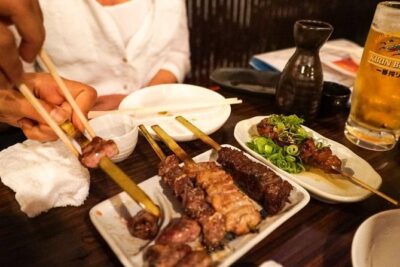 ★ 5.0Osaka Bar Hopping Night Walking Tour in Namba (3 bars, 6 tastes)From $98958 reviews
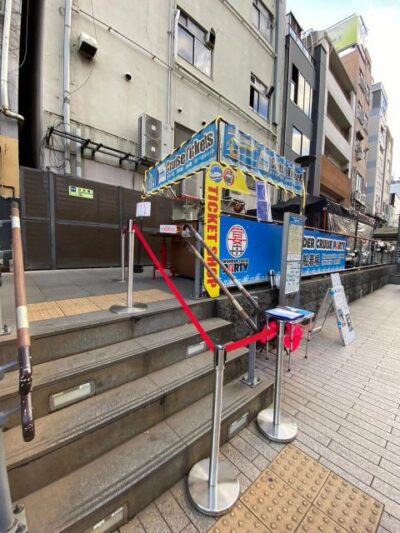 ★ 4.2Dotonbori District River Cruise with Drink DiscountFrom $12876 reviews
 ★ 5.0Ultimate Osaka Walking Tour: Castle, Dotonbori & Hidden GemsFrom $73862 reviews
 ★ 5.0Kuromon Market Food Walking Tour in Osaka (6 stops, 6 tastes)From $50550 reviews
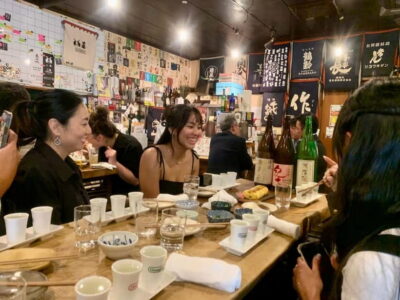 ★ 4.9Namba Pub Bar Crawl with a Local GuideFrom $30424 reviews
 ★ 3.9Dotonbori’s Bridges 20-Minute CruiseFrom $12303 reviews