
REVIEW · DOTONBORI AND OSAKA STREET FOOD
Osaka Local Foodie Walking Tour in Dotonbori and Shinsekai
Fried skewers and neon streets, in one walk. This 3-hour small-group Osaka tour moves between Shinsekai and Dotonbori, with stops like Tsutenkaku, Hozen-ji Temple, and the Glico sign, plus multiple local tastings guided by a MagicalTrip Certified Guide (often praised for people like Aika and Yuma). It is also set up to include time for backstreet wandering and a bit of shopping culture along the way.
I especially like two things: the variety of Osaka classics you try back to back, and the tight group size that makes it easier to ask questions and get real local context. In the feedback I saw, guides such as Aika, Yuma, Mich, Kent, Justin, Emi, and Naru were repeatedly praised for connecting food choices to daily life and nearby sights, not just dropping people at restaurants.
One consideration before you book, if you need gluten-free or vegan options, this tour cannot accommodate them. Also, a small number of people felt the value depended a lot on the guide’s pacing and consistency of stops, so it is worth showing up hungry and on time.
In This Review
- Key things to know before you go
- Shinsekai Meets Dotonbori, Two Osaka Neighborhoods in One Route
- Tsutenkaku and Jan-Jan Yokocho: Kushikatsu Under a Famous Tower
- Shinsaibashi-suji Shopping Street: Old Osaka Energy and the Billiken Statue
- Dotonbori Doguya-suji: Knife Shops, Night Lights, and Souvenir Time
- Hozen-ji Temple and Ukiyo-koji: Takoyaki, Sweets, and a Temple Photo Break
- Glico Sign Photos and the Okonomiyaki Finish in Sennichimae
- Value, Drinks, and the Food Math That Matters
- Guide Style and Pace: Why People Love It, and Where It Can Miss
- Should You Book This Osaka Food Tour?
- FAQ
- What food is included on the Osaka Local Foodie Walking Tour?
- How long is the tour, and how big is the group?
- Where does the tour start and end?
- Are gluten-free or vegan options available?
- Can vegetarians join, and is dashi used?
- Is transportation included in the price?
Key things to know before you go
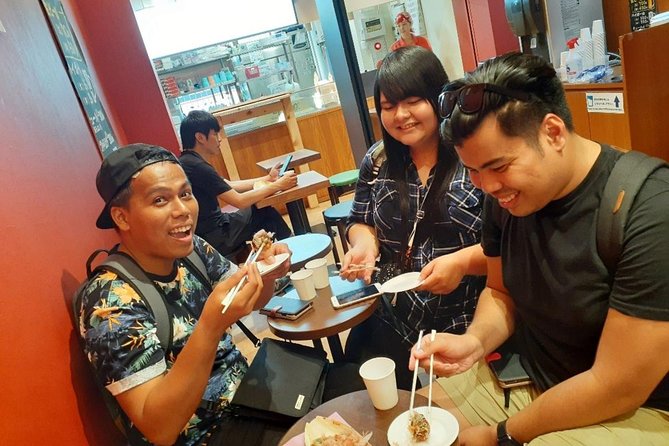
- Max 7 travelers means you get more personalized attention and photo time.
- Kushikatsu, okonomiyaki, and takoyaki are all included, along with 3 drinks (alcohol or non-alcohol).
- Shinsekai and Dotonbori feel like two Osaka moods: gritty, local, and neon-heavy, plus a temple stop.
- Shopping streets are part of the route, including Doguya-su ji and a knife shop stop.
- Weather matters since Osaka can swing from winter lows to very hot summers.
- Diet requests have limits: vegetarian can be requested, but vegetarian kushikatsu may still include dashi (pork broth).
Still hungry on Dotonbori? A few more crawls
- Osaka: Shinsekai Food Tour with 13-15 Dishes at 5 Eateries
★ 4.8 · 2,204 reviews - Osaka Local Foodie Walking Tour in Dotonbori and Shinsekai
★ 5.0 · 985 reviews - Osaka: Dotonbori District River Cruise with Drink Discount
★ 4.2 · 876 reviews - Ultimate Osaka Walking Tour: Castle, Dotonbori & Hidden Gems
★ 5.0 · 862 reviews
Shinsekai Meets Dotonbori, Two Osaka Neighborhoods in One Route
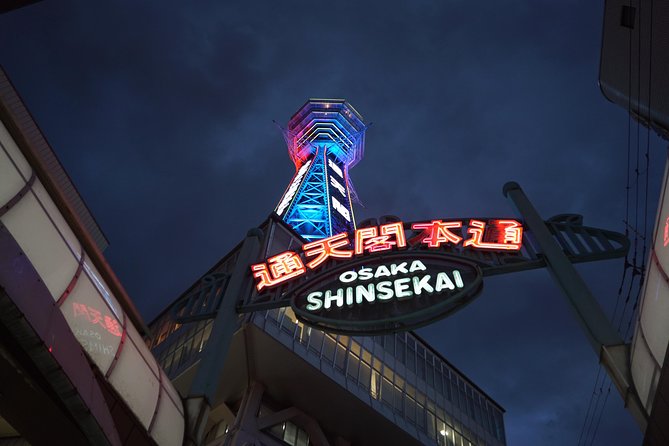
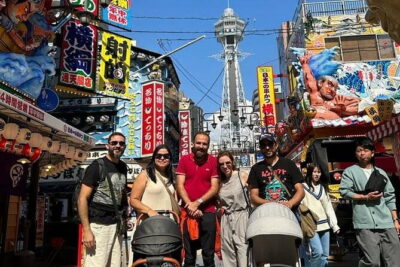
Osaka’s food scene does not feel the same everywhere, and this tour leans into that. You start in Shinsekai, where Tsutenkaku and older alleys set the tone, then you shift into Dotonbori, where the lights, signs, and restaurant density make everything feel louder and more immediate.
If your goal is to understand Osaka rather than only sample bites, you get a mix of street context plus temple and shrine atmosphere. That combination is a big reason this tour scores well, especially for people who want history and culture alongside food.
The downside is also part of the deal: it is a walk-and-eat format, not a sit-down food crawl. If you like long restaurant breaks and lots of tiny samples across many venues, you may find the pace and stop count either perfect or slightly restrictive, depending on your appetite and the day’s flow.
Tsutenkaku and Jan-Jan Yokocho: Kushikatsu Under a Famous Tower
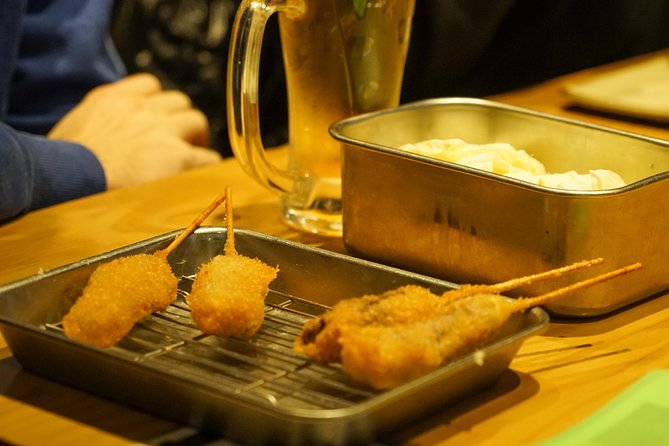
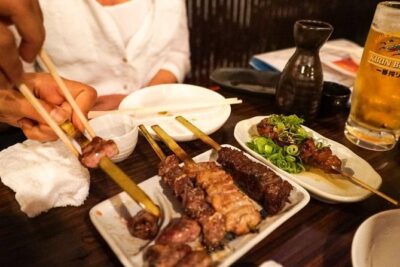
The first stop sets the flavor direction fast. You walk through the Jan-Jan Yokocho alley near Tsutenkaku and start with kushikatsu, deep-fried skewers of meat and vegetables (this tour includes 6 pieces).
Why this opener works: kushikatsu is one of those Osaka foods that you can recognize instantly, but it is also easy to learn how locals treat it as a snack-with-a-street-vibe kind of meal. You are also still settling into the neighborhood, so starting here helps you connect the taste to the setting right away.
Practical note: this is an alley area, so wear shoes that handle tight lanes and uneven pavement. If you are sensitive to cigarette smoke in nightlife areas, keep in mind the tour may pass locations where smoking is allowed.
Shinsaibashi-suji Shopping Street: Old Osaka Energy and the Billiken Statue
Next you head into the Shinsekai-to-Dotonbori transition zone, using Shinsaibashi-suji Shopping Street as a visual bridge. This stop is positioned like a time capsule walk, with the “museum-like” feel of older Osaka centered around what you see along the alley.
You also get a structured visit that includes key waypoints such as the Tsutenkaku area view line and the Billiken statue connection. Even if shopping is not your main reason for traveling, this is a useful segment because it changes your pace from food-first to sightseeing-first, without dropping the local-food theme.
If you go at night, expect crowds and bright signage. It can be harder to take clear photos when people surge around you, so bring a phone strap or keep your camera tucked until you reach the calmer photo spots.
- Osaka Go Karting Tour with Funny Costume★ 5.0 · 2,658 reviews
- Osaka Castle: Museum and Tower Entry Ticket★ 4.5 · 2,380 reviews
- Osaka: Shinsekai Food Tour with 13-15 Dishes at 5 Eateries★ 4.8 · 2,204 reviews
- Osaka Food Tour: 13 Dishes at 5 Local Eateries★ 5.0 · 2,149 reviews
- Hungry Osaka Street Food Tour:15 Tastings & 3 Drinks with a Local★ 5.0 · 1,727 reviews
Dotonbori Doguya-suji: Knife Shops, Night Lights, and Souvenir Time
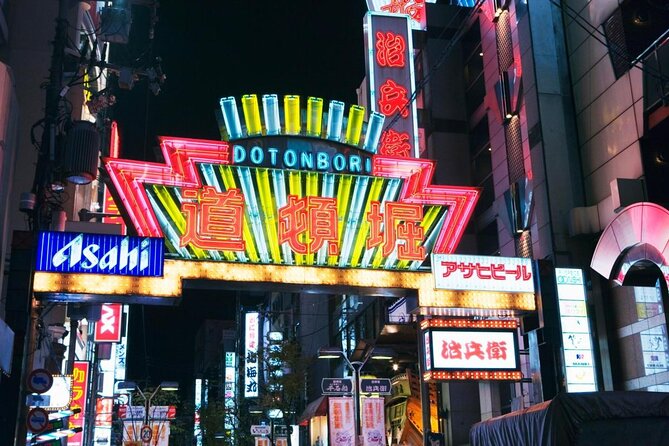
Dotonbori is where Osaka stops pretending it is subtle. Your route includes Dōgu-ya-suji, with time framed around souvenir shopping and a knife shop stop (including a Hōchō-ya location).
This part is not just retail. It helps you understand why Dotonbori feels like an Osaka postcard but still functions like a lived-in business district. The tour’s built-in shopping time is also a real convenience, because you are usually not sure which streets are worth walking in this area.
One caution: if you hate crowds, Dotonbori can feel intense. You may want to arrive with a game plan for what you want to buy, since there is a set window for this segment and you will be moving with the group.
Hozen-ji Temple and Ukiyo-koji: Takoyaki, Sweets, and a Temple Photo Break
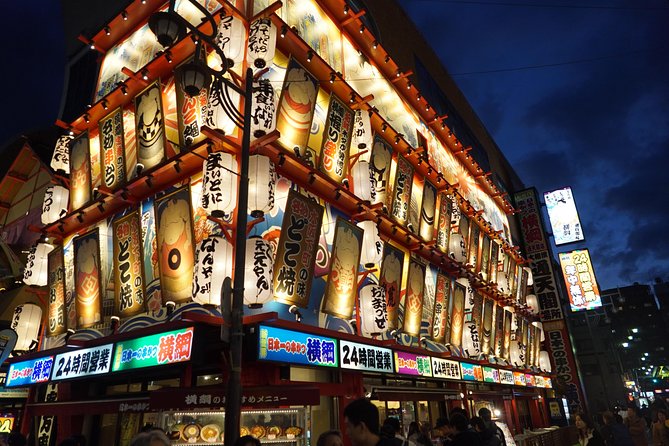
After the shopping-heavy stretch, you get a breather at Hozen-ji Temple. The route includes a walk and then a move through Ukiyo-koji (Ukiyo Alley), where the tour leans into sweet and snack sampling.
You should expect more than just one bite here. The tour includes a box of takoyaki, and it also notes approximately ¥500 in snacks and sweets as part of this temple segment. Takoyaki is described in the tour outline as round fried batter with tender octopus and other ingredients, which fits the Osaka street-food vibe perfectly.
Why this stop matters: the Glico sign and neon streets are fun, but a temple pause gives you a different Osaka rhythm. It also makes the tour feel more balanced, especially if you are spending most of your first day in high-energy nightlife zones.
The only real drawback to plan for is lighting and comfort. One theme that pops up in feedback is that temple/shrine areas can feel dim, especially in the evening. If you rely on good visibility for photos, consider using your phone’s night mode or keeping your flash off to avoid annoying others.
Glico Sign Photos and the Okonomiyaki Finish in Sennichimae
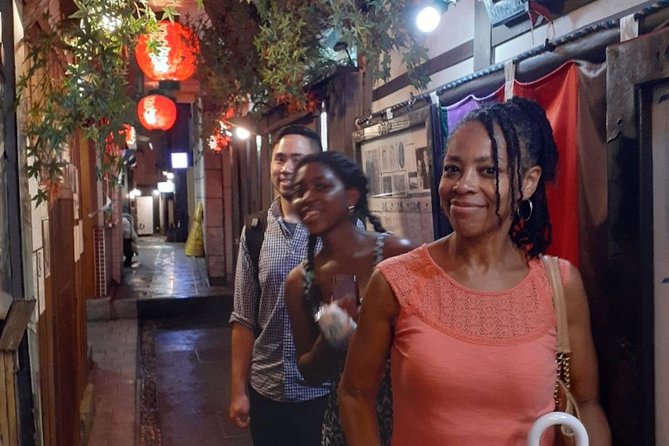
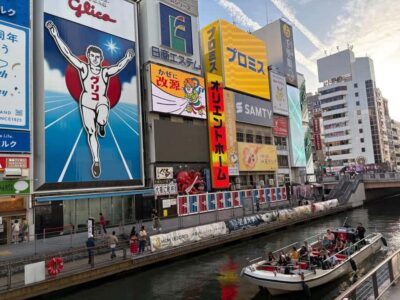
The tour ends in classic Dotonbori fashion with a photo stop at the Glico sign. Even if you have seen it in pictures already, being there in person helps you understand why this area is such a magnet for both locals and visitors.
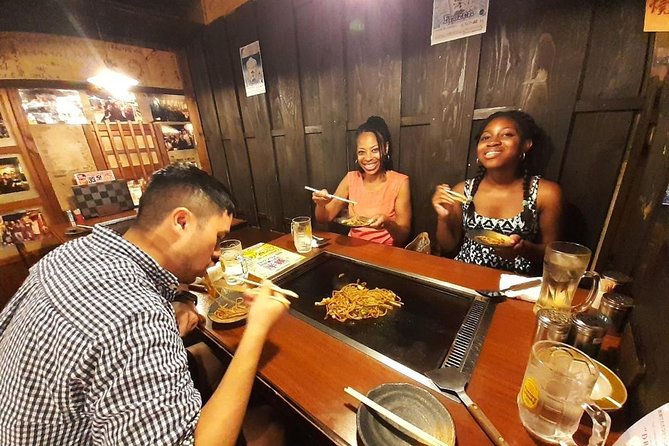
Then you move into the final food stop on Sennichimae Doguyasuji shopping street, where the tour includes okonomiyaki. The tour outline specifies 1 piece of okonomiyaki, and feedback also shows some groups may get a hands-on element, like cooking or grilling during the okonomiyaki portion.
This ending style is practical. You are not rushing to a train right after you eat, and you finish in the middle of the Dotonbori scene, which makes it easier to continue your night on your own. Still, since this is part of the walking schedule, keep expectations realistic about how full you will be at the end.
Value, Drinks, and the Food Math That Matters
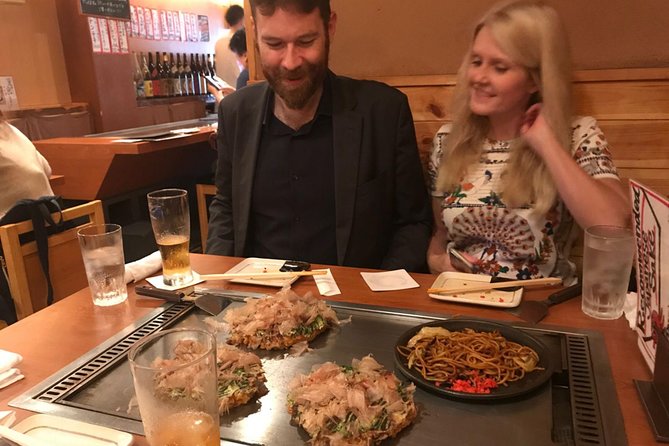
The price is $111.42 per person for roughly 3 hours. For many people, the value works because the tour does not only hand you one signature snack and call it a day. It includes 6 pieces of kushikatsu, 1 piece of okonomiyaki, and a box of takoyaki, plus 3 drinks that can be alcoholic or non-alcoholic.
That said, value is personal. A few people felt the food felt limited for the price, and another theme was that some days felt more like a light city walk with snacks rather than a heavier foodie-focused sampling marathon. If you are the type who likes to taste lots of tiny variations, you might wish for more stops or more frequent dish swaps.
Where you can protect yourself: show up ready to eat, and treat the included dishes as the main event. If you want a drink every stop, this tour has 3 drinks included, but it may not automatically feel like a heavy-drinker deal. If you are trying to stay non-alcohol, you still get those drink inclusions, so plan based on your preferences rather than assuming the alcohol pace.
Also factor in the transportation fee of 190 JPY, which is not included. Even if most of the day is walkable, you may still need to cover that local transport component.
Guide Style and Pace: Why People Love It, and Where It Can Miss
This tour’s biggest driver is the guide. In the praise I saw, guides such as Aika, Yuma, Mich, Kent, Justin, Emi, and Naru were repeatedly credited for explaining how Osaka food fits into daily life, plus helping with photo moments and directions after the tour.
When it works, you get more than menu descriptions. You get street-level context that makes Dotonbori and Shinsekai feel like neighborhoods with habits, not just scenes you pass through.
When it misses, it often comes down to two things: pacing and consistency of the experience. Some people found the walk fast, with less narration during the in-between travel segments, while others found the overall rhythm a bit slow. There is also a rare risk of inconsistency in dish delivery, since a few people reported missing one of the listed foods.
You can handle most of this with simple choices:
- Arrive early so you do not start stressed.
- Bring water and snacks if you are very sensitive to pacing.
- Tell your guide what you care about, like photos, more food explanation, or specific cultural context.
Finally, dietary needs should be planned carefully. This tour cannot accommodate gluten-free or vegan. Vegetarian may be available if you request it when booking or by at least the day before, but the tour specifically warns that dashi (pork broth) can still be used even in vegetarian kushikatsu. If you avoid pork broth completely, flag it in advance.
Should You Book This Osaka Food Tour?
Book it if you want a tight, efficient Osaka overview that mixes food and atmosphere in two of the city’s most recognizable zones. It is a strong fit for first-timers who want kushikatsu, okonomiyaki, and takoyaki handled in a structured order, plus temple time and photo moments at iconic spots like the Glico sign.
Skip or rethink if you need gluten-free or vegan meals, since this tour cannot adapt for those diets. Also reconsider if your personal definition of a foodie tour means many tiny tastings across lots of stops, because this one has a clear set of included bites and a fixed route.
If you do book, do one smart thing: plan for cold weather or heat, wear comfortable shoes, and keep your energy up at the start. This tour flows through lively streets and alleys, and you will enjoy it most when you treat it like an Osaka night starter, not a slow meal.
FAQ
What food is included on the Osaka Local Foodie Walking Tour?
The tour includes 6 pieces of kushikatsu, 1 piece of okonomiyaki, 1 box of takoyaki, and 3 drinks (alcohol and non-alcohol options are available). It also notes an approx. ¥500 snack component during the Hozen-ji Temple and Ukiyo-koji portion.
How long is the tour, and how big is the group?
The duration is about 3 hours, and the tour has a maximum of 7 travelers, which supports small-group attention.
Where does the tour start and end?
It starts at FamilyMart Japan, 557-0001 Osaka, Nishinari Ward, Sannō, 1-chōme176 ザ・ウエストサイド. It ends at the Glico Sign Dotonbori (1-chome-10-3 Dōtonbori, Chuo Ward, Osaka, 542-0071, Japan).
Are gluten-free or vegan options available?
No. The tour data states gluten-free and vegan cannot be accommodated.
Can vegetarians join, and is dashi used?
Vegetarian may be available if you choose the vegetarian option upon booking or request it in advance (by at least the day before). The tour data also states that dashi (pork broth) is still used even in the vegetarian kushikatsu, so you should mention any restrictions ahead of time.
Is transportation included in the price?
No. Transportation fees (190 JPY) are not included.
Dotonbori, Still Hungry

Newest Osaka write-ups from the Loving Japan desk


Dotonbori and Osaka Street Food, side by side.
 ★ 4.8Shinsekai Food Tour with 13-15 Dishes at 5 EateriesFrom $532,204 reviews
 ★ 5.0Osaka Bar Hopping Night Walking Tour in Namba (3 bars, 6 tastes)From $98958 reviews
 ★ 4.2Dotonbori District River Cruise with Drink DiscountFrom $12876 reviews
 ★ 5.0Ultimate Osaka Walking Tour: Castle, Dotonbori & Hidden GemsFrom $73862 reviews
 ★ 5.0Kuromon Market Food Walking Tour in Osaka (6 stops, 6 tastes)From $50550 reviews
 ★ 4.9Namba Pub Bar Crawl with a Local GuideFrom $30424 reviews
 ★ 5.0Ramen and Gyoza Cooking Class in DotonboriFrom $70378 reviews
 ★ 3.9Dotonbori’s Bridges 20-Minute CruiseFrom $12303 reviews
Filed on these lists too