
REVIEW · PRIVATE
Private homevisit for whole cultual experience, 20min from Tokyo
A home visit beats the usual tour circuit. This private Japanese home experience runs about 5 hours, with a real-feeling day that mixes dress-up, cooking, tea, and music. I especially like the hands-on lunch (you choose either Hiroshima-style okonomiyaki or norimaki sushi rolls) and the way Noriko guides you step by step, from ingredients to finishing touches. One thing to plan for: your whole group has to choose the same lunch option, so there is no mixing and matching.
Getting there is refreshingly simple. You meet at Shin-Urayasu Station, and then it is a short walk to the home, about 20 minutes from Tokyo Station. On the way, you stop at a supermarket where you learn what makes Japanese pantry items worth paying attention to.
This is the kind of experience you book when you want something personal, not packaged. It works especially well for families and anyone who likes architecture, food, and small cultural details you would otherwise miss.
In This Review
- Key things I’d focus on before you book
- Why This Private Home Visit Feels More Real Than Any Show
- Getting There From Tokyo Station: Shin-Urayasu and the Meet-Up That Won’t Stress You Out
- Yukata Photos in a Real Home Setting: Why Dress-Up Works Here
- The Supermarket Stop: Turning Japanese Ingredients Into Real Learning
- Lunch You Can Actually Eat Later: Okonomiyaki or Norimaki, One Choice for the Group
- Matcha Tea Twice: First Served With Ceremony, Then Made by You
- Koto Music With Noriko: Listening, Then Playing
- Japanese Home Life, Wooden Architecture, and the Details You Start Noticing
- Price and Value: Why $165.53 Can Be Worth It for the Right Trip
- Should You Book Japan at Home With Noriko?
- FAQ
- How long is the Japan at Home experience?
- Where do you meet, and how do you get there from Tokyo Station?
- Is this experience private?
- What lunch options can I choose?
- What happens during the tea ceremony?
- Do I get to play the koto or just watch?
- Is there free cancellation, and how late can I cancel?
Key things I’d focus on before you book

- A private home base 20 minutes from Tokyo Station that feels like a real day, not a show
- Yukata and dress-up photos where you have time to slow down and get good pictures
- One shared lunch choice (Hiroshima-style okonomiyaki or norimaki sushi rolls) for the whole group
- Two matcha bowls: first hosted in a simple ceremony, then made by you
- Koto music with Noriko, including guided playing time, not just watching
- Supermarket stop to learn ingredients you can recognize later when you shop or eat
Still weighing up options in Tokyo? These are the ones our reviewers rated highest.
- Mt Fuji and Hakone 1-Day Bus Tour Return by Bullet Train
★ 5.0 · 26,383 reviews - 1-Day Tokyo Bus Tour
★ 5.0 · 14,250 reviews - Tokyo: teamLab Planets TOKYO Digital Art Museum Entry Ticket
★ 4.6 · 9,779 reviews - Mt Fuji & Hakone Cruise, Drum Show Bullet Train 1 Day from Tokyo
★ 4.0 · 7,413 reviews
Why This Private Home Visit Feels More Real Than Any Show
The best part of this experience is the setting. Instead of moving through a checklist of landmarks, you spend the day in a Japanese home, guided by Noriko, who pays attention to how you experience each step. You can ask questions in plain language rhythm, and if you miss something the first time, you can catch it the second time.
The day is also built around participation. You do not just look at a kimono, you change into a cotton yukata and use it for photos. You do not just taste matcha, you get a first bowl served with a small tea ceremony feel, and then you make a second bowl yourself. And with the koto, you listen to pieces, then you try playing, with guidance.
I also like that the program stays practical. The cooking lesson is real, the music lesson is structured, and the cultural bits connect instead of feeling like separate mini-lessons. It is a full cultural day, without the pressure to be formal all the time.
Getting There From Tokyo Station: Shin-Urayasu and the Meet-Up That Won’t Stress You Out
This is one of those plans that makes Tokyo feel less overwhelming. You start at Shin-Urayasu Station, and the home is only about a 3-minute walk from the meeting point. From Tokyo Station to Shin-Urayasu, you are looking at roughly 20 minutes.
That matters because a “half-day” cultural tour can still eat your whole day with transit. Here, you spend your limited energy on the experience, not on figuring out directions. You also have a host waiting at the station to guide you, so you are not standing around guessing.
There is a supermarket stop on the way to the home. This is not filler. It is where you start learning how Japanese ingredients are chosen and why they taste the way they do once you start cooking.
If you are coming with kids, this setup helps a lot. The day starts close to transit, and the walk is short, so you are not dragging anyone across town.
Yukata Photos in a Real Home Setting: Why Dress-Up Works Here
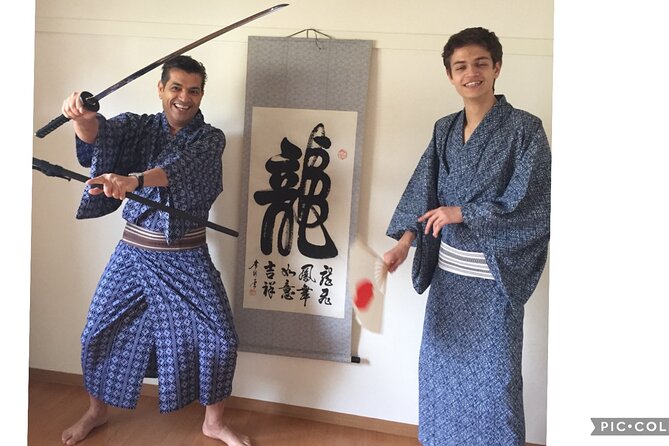
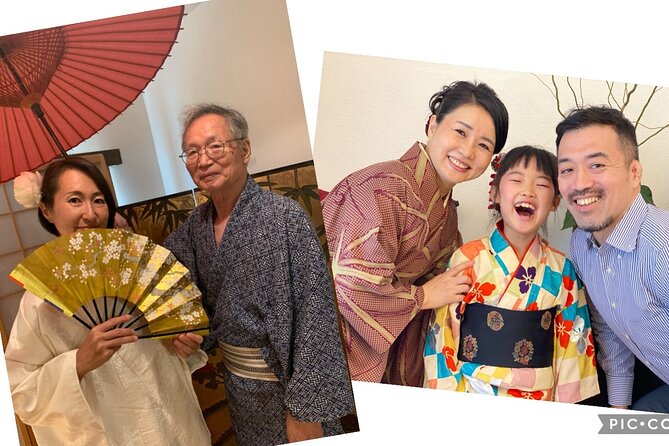
You begin by changing into a cotton kimono called yukata. This is one of those moments that can feel staged on tours, but here it reads more like a personal welcome into the day. The yukata is photogenic, and you are set up to take great photos as you go.
What makes this more valuable than a quick photo stop is pacing. You get time for the look, and then you move on to activities that make the outfit feel connected to the culture lesson. By the time you are cooking or making matcha, the dress-up is not just costume, it is part of the flow.
For best results, treat the yukata photo time like any good portrait session. Pause for a couple angles, wear your sleeves comfortably, and take a few calm shots before you speed up. If you like ninja vibes or traditional kimono styling, this is the moment you can lean into it.
Also, remember it is a real home setting, not a studio. Being respectful and following Noriko’s cues helps everyone, and it usually means you get more relaxed, natural photos.
- Mt Fuji and Hakone 1-Day Bus Tour Return by Bullet Train★ 5.0 · 26,383 reviews
- 1-Day Tokyo Bus Tour★ 5.0 · 14,250 reviews
- Tokyo: teamLab Planets TOKYO Digital Art Museum Entry Ticket★ 4.6 · 9,779 reviews
- Mt Fuji & Hakone Cruise, Drum Show Bullet Train 1 Day from Tokyo★ 4.0 · 7,413 reviews
- Tokyo Mt Fuji 5th St & Hakone Cruise Bus Tour w/Bullet Train★ 4.4 · 5,024 reviews
The Supermarket Stop: Turning Japanese Ingredients Into Real Learning
Before you reach the home, Noriko takes you to a supermarket. You learn about unique Japanese ingredients, and you can see how those items fit into everyday cooking.
This is where the experience gets smart. It is easy to think you are learning food culture by watching someone cook. But when you first identify ingredients in a normal shopping setting, you start connecting flavors to choices. Later, when you handle the ingredients for your lunch, it clicks faster.
You do not need to memorize brand lists. The real value is understanding categories and how Japanese cooking relies on specific basics. That way, even if you do not cook at home every day, you leave with better instincts when you eat in Japan after this day.
If you like food souvenirs, this stop also sets you up to recognize what is worth buying once you are back in Tokyo or on your next day trip.
Lunch You Can Actually Eat Later: Okonomiyaki or Norimaki, One Choice for the Group
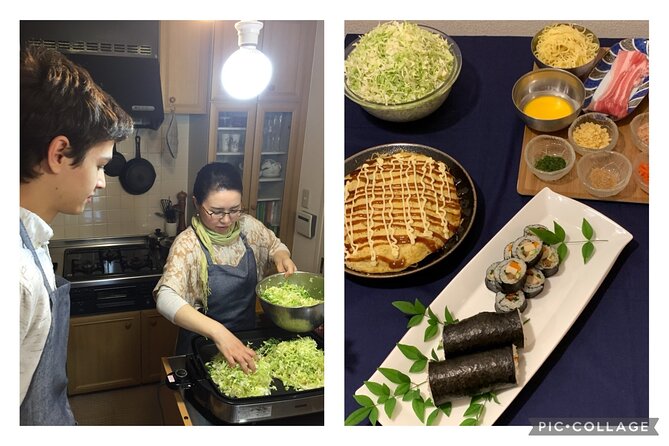
You get to choose in advance between two lunch styles. The options are Hiroshima-style okonomiyaki, a savory pancake, or norimaki sushi rolls. You will make it yourself and then eat what you make.
One important consideration: one menu choice is for the whole group. So if you are traveling with friends who cannot agree, you will need to coordinate before you arrive. It is not a deal-breaker, but it is the kind of detail that keeps groups happy when planned early.
Why this lunch is worth the time: you get the full hands-on loop. You learn the ingredients, prepare the food, and then eat the results while the whole day is still fresh. It is hard to beat a cooking activity where the payoff is literally on your plate.
Also, the lunch format is a nice middle ground for families. Kids can help with easier steps, and adults get enough structure to feel like they did something real, not just assembled parts.
If you have food restrictions, the data here does not specify handling. So the best move is to ask Noriko before you commit, especially since there is only one shared lunch option for the group.
Matcha Tea Twice: First Served With Ceremony, Then Made by You
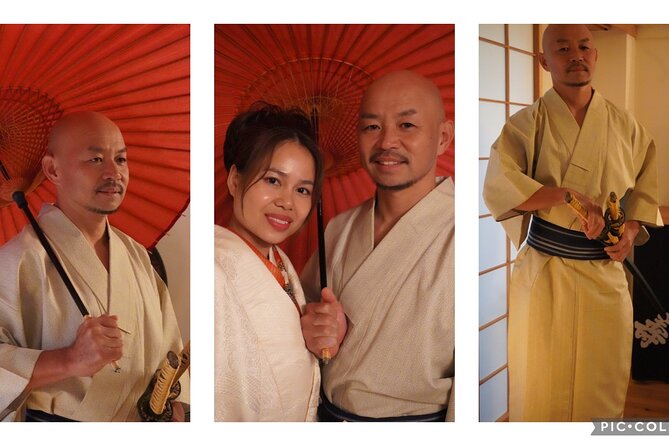
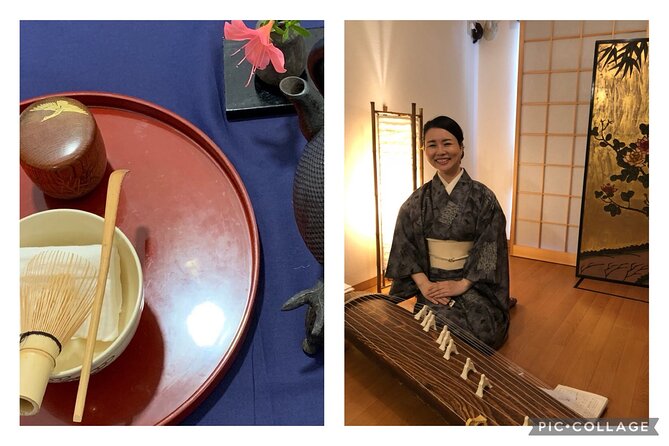
You enjoy two bowls of matcha. The first bowl is served with a beautiful ceremony style, and it sets the mood for the day. The second bowl is prepared by you.
This is a casual tea ceremony, so it is not about being stiff or perfect. It is about understanding what makes matcha feel different from regular tea. You learn the rhythm and the care, but you do it in a way that keeps the day fun.
The big value here is repetition with context. You experience matcha in a hosted moment, then you do it yourself. That combination tends to stick in your memory longer than watching someone perform once.
When you leave, you can try to recreate the feeling, even if you keep it simple. And because you are already in the mindset from the cooking lesson and the clothing moment, the tea step does not feel like a random detour.
If you like taking photos, this is also a great time for calm, respectful shots. Keep it gentle, follow Noriko’s guidance, and you will get memorable images without rushing the moment.
Koto Music With Noriko: Listening, Then Playing
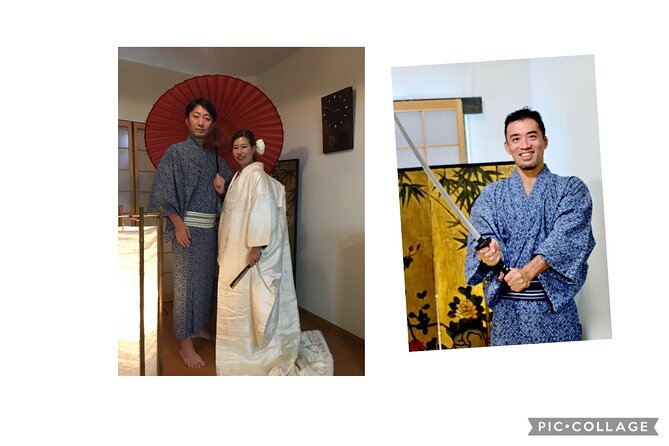
After tea, you enjoy live koto music. A koto is a traditional Japanese string instrument, and Noriko plays pieces for you first. Then it is your turn.
This is where the experience earns its high ratings. It is not limited to watching and clapping. You get guided help to create elegant sounds, which is a big difference from many music-focused cultural stops that keep you in the audience.
In the reviews, people highlighted Noriko’s attention and passion for traditional culture. That shows up here as instruction that feels friendly and clear. Even if you have never touched an instrument in your life, you are not stuck figuring it out alone.
Practical tip: treat the koto moment like a short lesson, not a performance. Your goal is to follow the guidance and make sound, not to judge yourself. You will walk away with a real sense of accomplishment, and your photos or videos will look better because you will be actively participating.
Japanese Home Life, Wooden Architecture, and the Details You Start Noticing
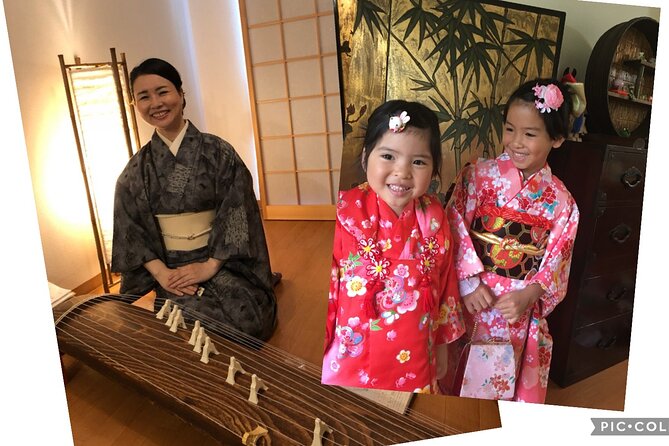
One extra plus is the home environment itself. From what people described, the day includes attention to architecture and the way older Japanese wooden houses were built and lived in. You are not just touring rooms like a museum. You are experiencing a living space where the cultural context is obvious.
This matters because architecture is a cultural language. When you see how space works, it changes how you picture Japan beyond the headlines. You begin noticing things like how rooms connect, what feels practical, and why certain choices made sense for everyday life.
Noriko’s approach also helps here. People mention she answers lots of questions and makes it easier to appreciate details you might otherwise overlook. That kind of guidance can turn a normal home visit into a memory you keep.
If you like photos, this is also where the background matters. Your yukata photos and your food shots look better when they are set in an authentic environment.
Price and Value: Why $165.53 Can Be Worth It for the Right Trip
At $165.53 per person for about 5 hours, this is not a cheap casual activity. But it is closer to a private workshop day than a standard group tour.
Here is what you are paying for, in practical terms:
- Private time in a real Japanese home with your own group
- Hands-on instruction for cooking, matcha, and koto
- A host who guides the whole flow, including a supermarket ingredient stop
- Cost-effective cultural learning in one stop, instead of splitting time across multiple paid experiences
Value depends on your travel style. If you love doing one big, personal activity that ties together food, music, and daily life, this works well. If you want lots of separate attractions or landmark hopping, you might find this too focused.
Booking tends to be done about 46 days in advance on average, so plan ahead if your dates are set. Also, the mobile ticket format is meant to make entry easier on the day, which is a small thing but helpful when you are juggling Tokyo transit.
Should You Book Japan at Home With Noriko?
Book this if you want a genuinely personal cultural day close to Tokyo, with real participation. It is especially a good fit if you care about hands-on food, matcha, and trying a koto, not just watching from the sidelines. Families often do well here because the day is structured, friendly, and active.
I would think twice if your group cannot coordinate on the shared lunch choice. The okonomiyaki versus norimaki decision affects everyone. Also, if you are the type who wants constant sightseeing stops, this home-based format may feel a bit slower than you prefer.
If you like authentic details and you want to learn Japanese culture in a way that sticks, this is the kind of experience that makes Tokyo feel human.
FAQ
How long is the Japan at Home experience?
It runs for about 5 hours.
Where do you meet, and how do you get there from Tokyo Station?
The meeting point is Shin-Urayasu Station, and the home is about a 3-minute walk from there. Tokyo Station to Shin-Urayasu is about 20 minutes.
Is this experience private?
Yes. It is a private experience, so only your group participates.
What lunch options can I choose?
You can choose either Hiroshima-style okonomiyaki or norimaki sushi rolls. One menu choice is for the whole group.
What happens during the tea ceremony?
You will enjoy two bowls of matcha. The first is served with a ceremony feel, and the second is prepared by you. It is described as casual.
Do I get to play the koto or just watch?
You will listen to koto performances first, then it becomes your turn to play with guidance.
Is there free cancellation, and how late can I cancel?
You can cancel for a full refund up to 24 hours before the experience’s start time.
Newest Tokyo write-ups from the Loving Japan desk






Private, side by side.
 ★ 5.0Tokyo 6hr Private Tour with Government-Licensed GuideFrom $1553,902 reviews
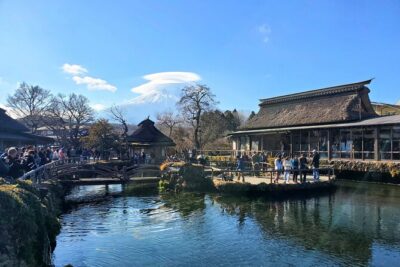
 ★ 5.0Private Tour to Mt. Fuji and Hakone (Fully Licenced Operator)From $4971,910 reviews
 ★ 4.9Mount Fuji Full-Day Private Tour from Tokyo (Customizable)From $3931,470 reviews
 ★ 4.8Private City Highlights Tour with Local GuideFrom $1061,433 reviews
 ★ 5.0Private Custom Tour: Tokyo in a DayFrom $1591,432 reviews
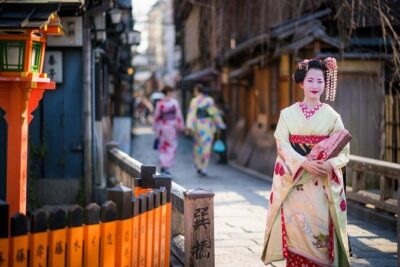 ★ 5.0Kyoto 6hr Private Tour with Government-Licensed GuideFrom $1551,369 reviews
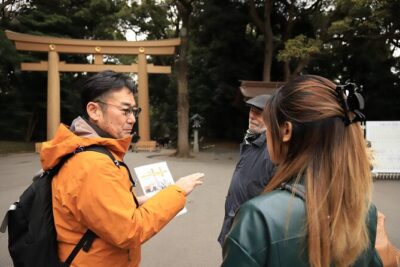 ★ 5.0Tokyo Customized Private Tour: See Top Attractions in 1 DayFrom $1451,351 reviews
 ★ 4.9Hotspots & Hidden Gems Walking Tour Private or GroupFrom $331,300 reviews