
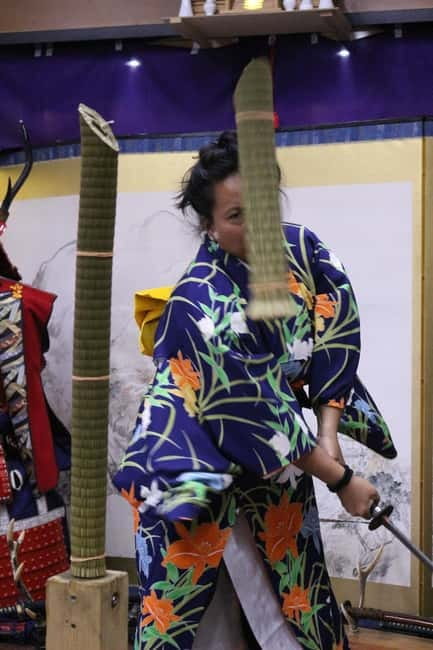
REVIEW · OSAKA CASTLE, UMEDA AND THE CITY CENTRE
Samurai Armor & Sword experience with phot near Osaka Castle
Swordwork in Osaka feels startlingly real. This 90-minute private session at Samurai Honor lets you wear samurai armor and then learn real-sword cutting basics with clear, safety-minded instruction.
I especially like how the training goes beyond posing, you practice sword etiquette, basic iai moves, and kata stances in a structured order. One catch to plan for, you change into a samurai outfit first and you should arrive early to get instructions and time to dress.
You also get English support and a photo handoff after the shoot, so the experience doesn’t end when the training does. If you want an Osaka Castle pairing, this adds an active, memorable contrast to sightseeing, without needing special travel planning.
In This Review
- Key points to know before you go
- Samurai Honor near Osaka Castle: what you really do in 90 minutes
- Before you step in: meeting point and what to bring
- Getting dressed as a Samurai, dogi to armor
- Bow to the shrine and Samurai manners you practice, not just hear
- Iai training sequence: Battou, Chiburui, and Nottou
- Cutting with a real Samurai sword: what to focus on
- Armor and helmet photo moment: dignity, beauty, and the spear-ready look
- Why the $106 price feels fair for an Osaka-area private session
- Who this Samurai Armor and Sword experience fits best
- Should you book Samurai Honor near Osaka Castle?
- FAQ
- Where is the meeting point?
- What is the address of Samurai Honor?
- What time should I arrive?
- What should I bring?
- Is this a private experience?
- What languages are available?
- What is included, and is transportation included?
Key points to know before you go
- Samurai Honor is set up for an up-close experience, you wear dogi and hakama and go into armor indoors
- Bow-to-the-shrine training frames the whole session, and it starts and ends the same way
- Samurai manners are practiced, including how to carry your sword belt and walk so sheaths don’t bump
- Iai basics with named moves, like Battou, Chiburui, and Nottou, plus kata stances
- Real sword cutting practice guided by a master, with focus on correct weight and form
- Armor and helmet photo moment, with images sent to your email afterward
The rest of central Osaka, ticket by ticket
- Osaka Castle: Museum and Tower Entry Ticket
★ 4.5 · 2,380 reviews - Osaka: Umeda Sky Building Official E-Ticket
★ 4.6 · 1,131 reviews - Osaka Castle Walking Tour and Castle Tower Admission
★ 5.0 · 561 reviews - 5-Hour Osaka Bike Tour to the Neighborhood of Osaka Castle
★ 5.0 · 319 reviews
Samurai Honor near Osaka Castle: what you really do in 90 minutes
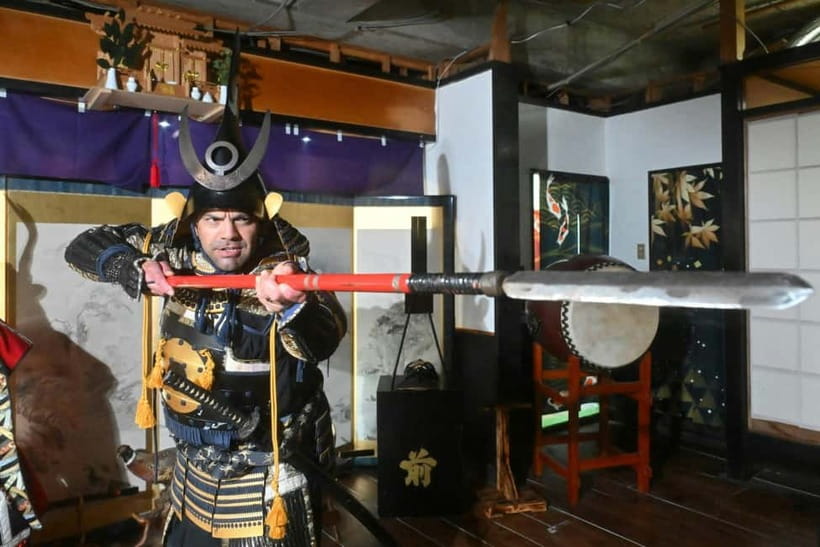
This experience is built as a tight, immersive 90-minute session where you go hands-on with samurai style training right near Osaka Castle. It positions itself as one of the only places in the Osaka Castle area where you can genuinely wear the gear and do the swordwork. For me, the value is that you are not just watching a demo. You learn a sequence, you practice the basics, and then you try the cutting part with proper guidance.
What makes the session feel real is the order of operations. You start with preparation and respectful routine, then you move into sword manners and controlled practice. After that comes the part most people come for, trying your hand at cutting with a real Japanese sword while dressed for the role. The final segment, wearing armor and taking commemorative photos, ties the whole thing together.
Because it’s a private group, you get to follow the instructor’s pace more closely than you would in a larger class. That matters for learning. When sword techniques are being corrected in real time, small timing and posture fixes can make the difference between feeling awkward and feeling confident.
Before you step in: meeting point and what to bring
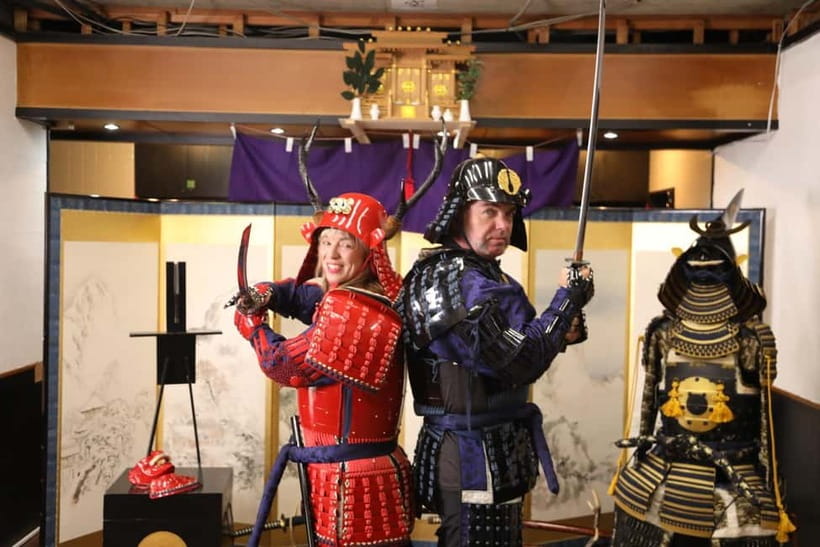
Your meeting landmark is a wooden sign that reads Honor of the Samurai. It’s described as a rack out front with activity pamphlets, and there are kimonos and hakama hanging nearby, so it should be fairly easy to spot when you arrive.
The address for Samurai Honor is Excellence Takayama 1F, 2-3-19 Shiginonishi, Joto-ku, Osaka-shi, Osaka 536-0014. One important note, Apple Maps has been reported as incorrect for this address, so use the Google Maps link instead to avoid wandering.
Plan to arrive 30 minutes before your reserved time. That buffer is for instructions and changing clothes, and it makes the session feel organized instead of rushed. What to bring is simple: a t-shirt. They also say food and alcohol are not allowed.
Also check group fit. Pets are not allowed, and the session is not suitable for children under 10, people with altitude sickness, and people over 80. If any of those apply, it’s best to skip this one and choose an easier Osaka Castle area activity.
Getting dressed as a Samurai, dogi to armor
The training begins with you changing into a samurai outfit. First you step into the dogi and hakama look, and then you move into the full role as part of the learning process. The way it’s framed is that the Japanese sword is treated as something that only belongs to the samurai, so your costume is not just for photos, it sets the mindset for the rules and etiquette you practice next.
Once you’re prepared, the instructor guides you through how a samurai carries the sword belt at the waist. The sequence described is specific: you insert the sword into the belt with the blade side facing up. That little detail matters, because the goal is readiness without chaos.
Later in the session you also try on samurai armor and helmet. The experience notes that the armor and gear are worn indoors, and it also mentions the spear (naginata) concept as being ready. Even if you are not doing full spear drills, the overall effect is that you leave with a physical understanding of what warriors trained in.
The biggest practical plus here is that the gear work is included. You don’t need to hunt for costume rentals or figure out clothing logistics on your own.
Blade work and stagecraft, other sessions
- Samurai Training Experience KENDO in Osaka★ 5.0 · 515 reviews
- OSAKA NIGHT FUSION Japanese Taiko Kabuki Samurai Dance Show★ 4.8 · 155 reviews
- Osaka: Samurai Training Experience KENDO in Osaka★ 5.0 · 111 reviews
- Osaka: A Modern Samurai, Kabuki, Taiko, & Dance Show★ 4.5 · 66 reviews
- Osaka 2-Hour Genuine Kendo / Samurai Experience In Japan★ 5.0 · 65 reviews
Bow to the shrine and Samurai manners you practice, not just hear
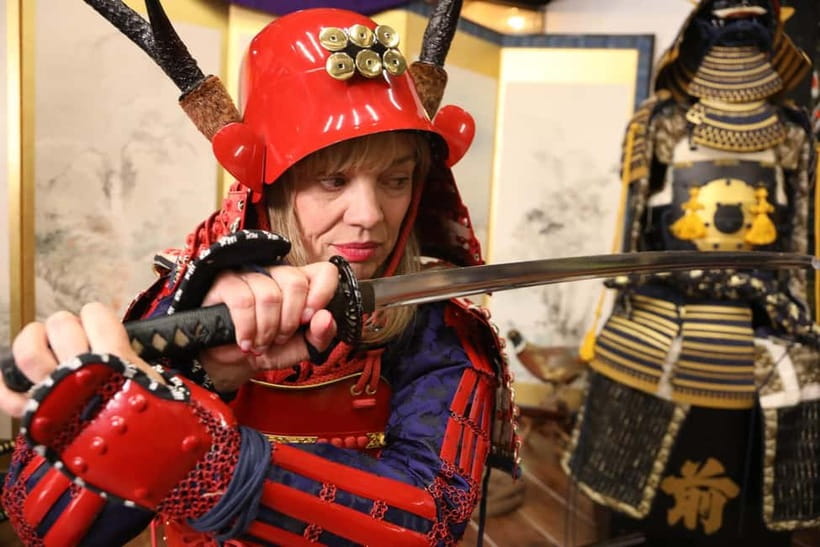
This is a dojo-style experience, and it starts with a bow. A shrine is enshrined in the training space, and the routine begins and ends with a bow before the shrine. The session frames this as training that draws on the power of an ancient god of war. Whether you interpret that spiritually or culturally, the practical result is the same: everyone resets their focus.
Then you get instruction on swords and Samurai manners. One lesson centers on the samurai responsibility of carrying a deadly weapon in public. You hear how samurai were taught from a young age, using a wooden sword, and that wearing a serious sword was tied to growing responsibility. The point for you is not to become a historian, it’s to understand why the movements later are taught with control.
Another teaching theme is how close the sword lived to daily life, even in peaceful times. The session explains the idea of never letting the sword feel distant, including sleeping in a position where drawing immediately would be possible. It also explains the way the sword is carried and kept ready, rather than stored away.
You even practice a walking concept connected to etiquette. When walking, samurai walked on the left side of the road so the sheaths of their swords would not contact each other. The bushido element connects this to keeping the koiguchi cut, ready to draw at any time. For me, this is one of the coolest details because it turns a vague idea of discipline into a concrete rule you can try.
Iai training sequence: Battou, Chiburui, and Nottou
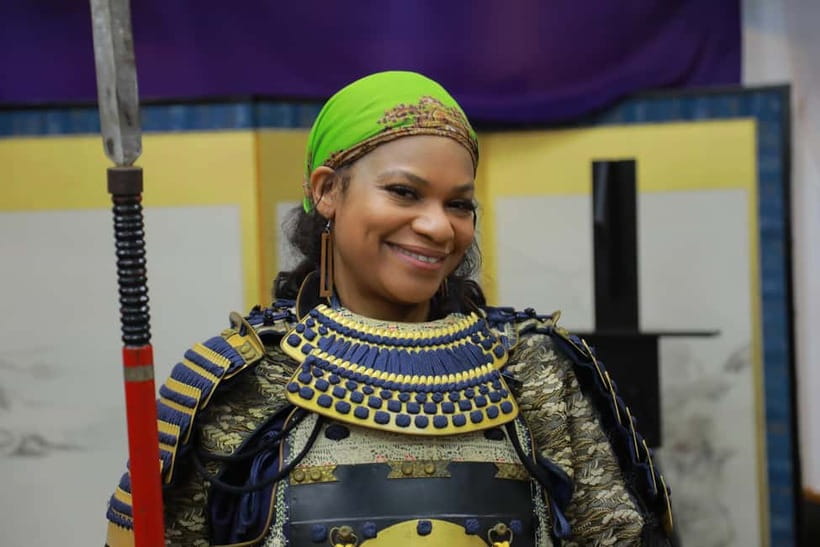
After your costume prep and etiquette foundations, you move into basic iaido-style training using an iai practice sword. The session includes core stance work and controlled swings from the starting position.
The drill names are given clearly, and they help you keep the sequence straight:
- Battou, pulling the sword out of the scabbard to cut
- Chiburui, symbolically removing blood from the blade after a cut
- Nottou, returning the sword to the sheath after the blood-burui action
Even if you have never heard these terms before, the naming helps you remember what comes next. It also makes the training feel structured, not random arm waving. The emphasis is on doing the movement correctly, in the right order, with the right intent.
The session also teaches you about swing mechanics. When you swing down, you are meant to swing with the weight of the sword, not muscle strength from your arm. If your form is right, you can hear a high sound from the sword called hi-nari. That’s a great feedback cue because it gives you something objective to notice during practice.
And because the instruction is given by a certified professional instructor with English-speaking staff, you’re not stuck guessing. You can ask questions and adjust instead of just copying.
Cutting with a real Samurai sword: what to focus on
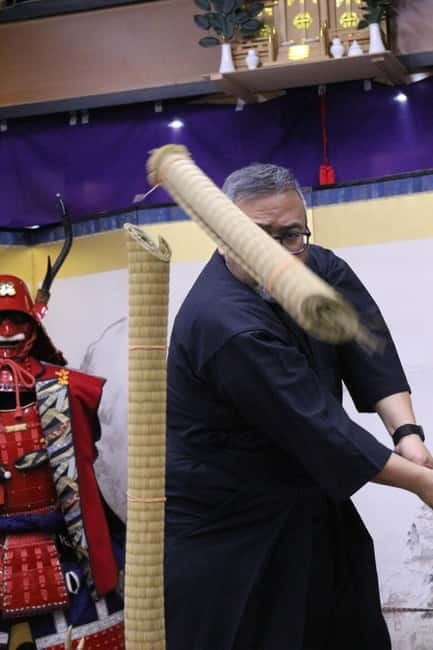
The main experience moment is trying your hand at sword cutting with a real Samurai sword while dressed in Bushido spirit. This is the part people talk about because it’s rare in an Osaka Castle trip. You are doing sword technique under instruction, not just getting a costume and a souvenir photo.
The session is set up so that you do the basics before the cutting attempt. You practice stance and swinging, then you work through named iai steps, and only afterward do you try the cutting. That ordering is important for your confidence. If you jump straight to cutting without earlier movement drills, you usually end up feeling lost.
For the actual cutting attempt, focus on three things the training emphasizes:
- Correct sequence from pull to action to return
- Form over force, letting sword weight do the work
- Controlled intent, staying in the Bushido mindset the instructor frames for the dojo
Also expect that you are being coached live. Recent participants specifically praised instruction and safety, which is exactly what you want here. Sword practice isn’t a place to wing it, and this structure keeps it grounded.
No matter your experience level, give yourself permission to learn slowly. This experience is not about performing for speed. It’s about doing the technique properly, then building up.
Armor and helmet photo moment: dignity, beauty, and the spear-ready look
Trying on samurai armor and helmet is not just a costume change. It’s one of the ways the session teaches why warriors valued their look and the responsibility of the gear. Before going to war, the samurai would wear armor and draw their swords to show dignity and beauty. You don’t need war context to appreciate the lesson. You just need to understand what wearing the gear does to posture, weight distribution, and presence.
Once you’re in the armor, you get a photo taken to commemorate the experience. The experience description highlights photographing the armor, and the included photo shooting sends your data to a designated email address afterward. That last detail matters because it reduces the awkward moment of rushing for photos while you’re still in training mode.
The photo moment also gives you a concrete memory of the session’s transformation arc, from dogi and hakama, to swordwork practice, to full armor with helmet. It’s a satisfying ending.
If you like souvenirs that don’t feel like clutter, the armor photo is a good choice. It’s visually dramatic, and it’s tied to something you learned and practiced, not just wore for a minute.
Why the $106 price feels fair for an Osaka-area private session
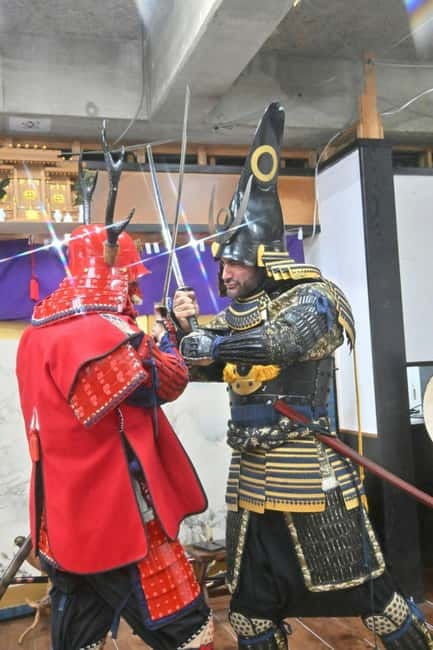
At $106 per person for about 90 minutes, this is priced like an instruction-heavy activity, not like a quick performance. The value makes sense when you look at what’s included.
You get:
- Samurai clothing (dogi and hakama)
- Armor wear indoors
- English-speaking staff, plus instruction by a certified professional instructor
- A photo shoot with images sent by email
- Tax and tips included
- A private group format
The private format can be a big deal. Sword training depends on correction and timing. Even if you are comfortable with the basics, you still need feedback. A private setup reduces the chance that you’re just standing around while others move ahead.
One thing that is not included is transportation, plus no pick up or drop off. So you do need to handle getting yourself to the meeting spot in Osaka. If you are already in the Osaka Castle area, that’s manageable, but it is still something to plan.
In short, you are paying for real instruction with real equipment, plus the photo proof. That’s why the cost feels reasonable for the time and intensity.
Who this Samurai Armor and Sword experience fits best
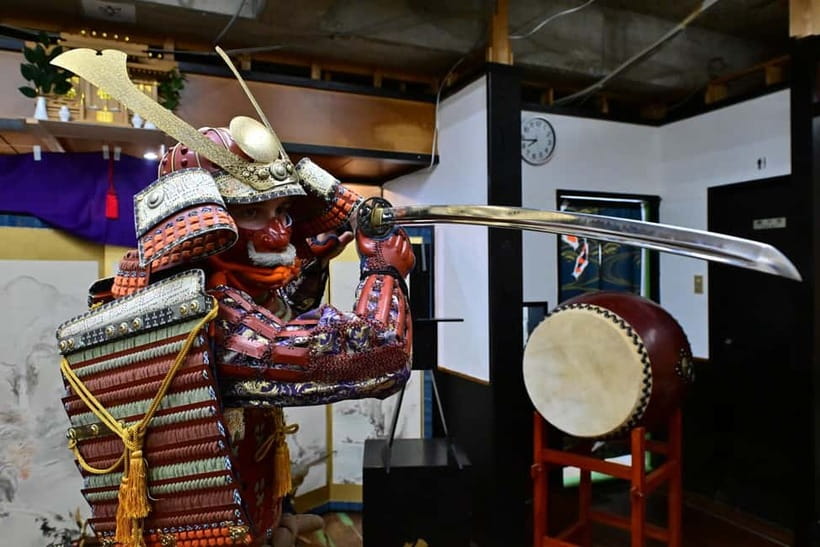
This experience fits best if you want hands-on learning, not just a themed outing. You should be comfortable following dojo-style instructions, practicing basic stances, and handling the movements involved in iai training with guidance.
It also fits well for people pairing it with Osaka Castle sightseeing. After you’ve done the normal walk-and-photo portion of Osaka, this gives you a very different kind of memory: a skill-based activity where you learn etiquette, practice controlled movements, and then wear armor at the end.
It’s not a fit if you need low physical effort or if any of the listed restrictions apply, especially age limits and altitude sickness concerns. Since you are changing clothes and practicing with swords, it’s also not ideal if you want to snack constantly or if you are sensitive to the time spent in outfit gear. Food is not allowed during the activity.
Language is another practical factor. The instructor is listed as English and Japanese, and the interpreters’ default language is English. If you need another language, you have to inquire about interpreter schedules because availability for languages other than the default is not guaranteed.
One more real-world note for your planning: one recent booking was reported as canceled due to overbooking. That doesn’t mean it will happen to you, but it is a reminder to confirm your final schedule close to the start time.
Should you book Samurai Honor near Osaka Castle?
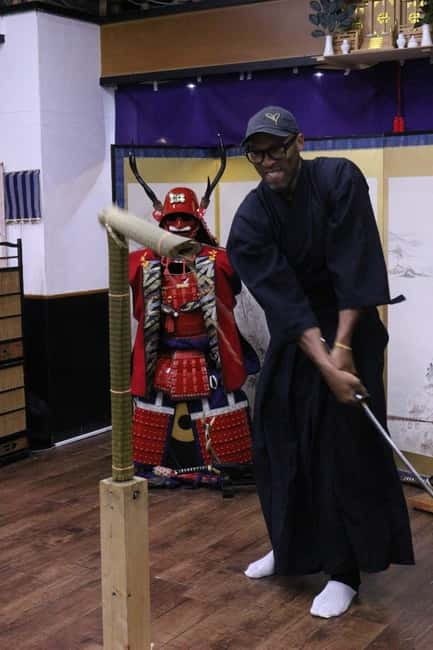
I think you should book if you want a rare chance near Osaka Castle to do more than look at samurai culture. Wearing the armor indoors, practicing iai basics with clear steps, and then trying a real-sword cutting attempt gives you a full arc of learning and performance under instruction.
Skip it if you’re hoping for a passive cultural show. This is training. If you don’t like doing physical drills or you want an activity with minimal rules and setup, you may find the dojo-style routine and outfit changes less enjoyable.
Best reasons to go:
- You want real equipment plus instruction, not just a costume visit
- You like learning structured sequences like Battou, Chiburui, and Nottou
- You want an Osaka Castle day that ends with armor + photos
If you book, do the simple prep: bring a t-shirt, arrive 30 minutes early, and follow instructions closely. Do that, and you’ll likely walk away with both a story and a stronger sense of what samurai training looked like in practice.
FAQ
Where is the meeting point?
The meeting point is at a wooden sign that reads Honor of the Samurai. It’s described as a rack with activity pamphlets in front of the store.
What is the address of Samurai Honor?
Excellence Takayama 1F, 2-3-19 Shiginonishi, Joto-ku, Osaka-shi, Osaka 536-0014. The guidance says the Apple Maps address is incorrect, so use Google Maps instead.
What time should I arrive?
You should arrive 30 minutes before your reserved experience time for instructions and changing clothes.
What should I bring?
They ask you to bring a t-shirt.
Is this a private experience?
Yes. The group type is private group.
What languages are available?
English and Japanese are listed. The default language for interpreters is English, and other languages can be requested by asking about the staff schedule.
What is included, and is transportation included?
Included items are samurai clothing, wearing samurai armor indoors, English speaking staff, a certified professional instructor, tax and tips, and photo shooting with the data sent by email. Pick up and drop off at train station or hotel is not included, and transportation is not included.
Blade Work and Stagecraft


Central Osaka, Ticket by Ticket




Newest Osaka write-ups from the Loving Japan desk




Osaka Castle, Umeda and the City Centre, side by side.
 ★ 4.5Osaka Castle: Museum and Tower Entry TicketFrom $72,380 reviews
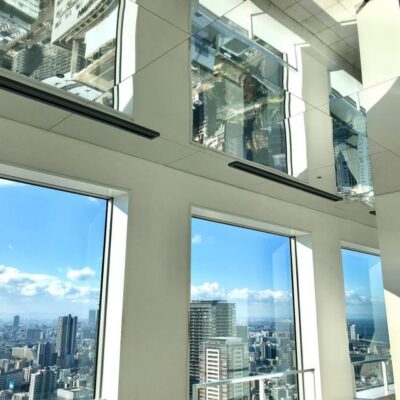 ★ 4.6Umeda Sky Building Official E-TicketFrom $121,131 reviews
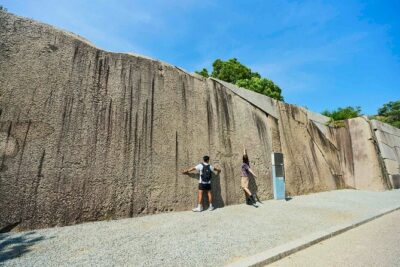 ★ 5.0Osaka Castle Walking Tour and Castle Tower AdmissionFrom $23561 reviews
 ★ 5.05-Hour Osaka Bike Tour to the Neighborhood of Osaka CastleFrom $87319 reviews
 ★ 4.7Osaka Castle Guided TourFrom $43249 reviews
 ★ 4.2Abeno Harukas 300 Observatory E-TicketFrom $3169 reviews
 ★ 4.7Osaka Castle Guided Tour with Local GuideFrom $4878 reviews
 ★ 5.0PRIVATE 6hr, Food tour from Osaka Castle, Kuromon, Dotonbori.From $15568 reviews
Filed on these lists too