
REVIEW · TOURS
Tokyo Toilet Tour
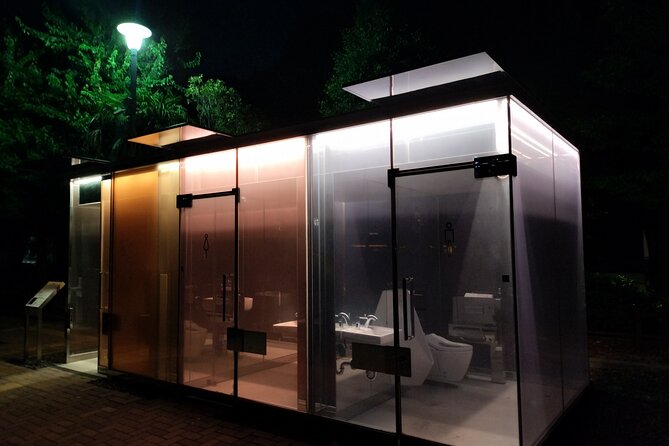
Tokyo has a surprisingly smart toilet tour. This private walk is all about architect-designed toilets plus neighborhood time with a private guide, not a crowded bus-and-briefcase day. I especially liked how you trade the usual tourist route for small parks and side streets, and how the famous design details turn ordinary stops into memorable wayfinding. The one possible drawback is that the theme is specific, so if you want a classic highlights checklist all day, this route may feel too narrow.
I also love that it feels like a guided orientation to Shibuya and Ebisu, with breaks that keep the pace human. And if you are a fan of the Wim Wenders film Perfect Days, the Yoyogi Hachimangu stop lands with extra meaning. Ken, from Tanaka’s Tokyo Tours, was friendly and informative, and he brought extra context to what you are seeing, especially around the Shibuya city project.
One more practical note: it is about 3 hours 30 minutes of walking with a moderate fitness level, and lunch is not included. If you get hungry easily, plan a snack before you start or schedule food after the final stop at Ebisu Station.
In This Review
- Key points to know before you go
- What this Tokyo Toilet Tour is really about
- A smooth 3.5-hour route from Yoyogi to Ebisu
- Stop 1: Yoyogi Hachimangu Shrine and the transparent cubicle detail
- Stop 2: Miyashita Park toilets by Tadao Ando in a redeveloped pocket
- Stop 3: Shibuya Crossing, a quick iconic moment between stops
- Stop 4: Nabeshima Shoto Park in a quieter residential area
- Stop 5: Ebisu neighborhood toilets and an easy finish at the station
- How the private guide and customization shape your day
- Price and value for a $223.34 private group day
- What to do before, during, and after the walk
- Should you book the Tokyo Toilet Tour?
- FAQ
- How long is the Tokyo Toilet Tour?
- What does the tour cost?
- Is this a private tour?
- What is included in the price?
- What is not included?
- Where does the tour start and end?
- Are the stops free to enter?
- Will I receive a mobile ticket?
- What fitness level do I need?
- What is the cancellation policy?
Key points to know before you go
- Private guide, just your group: no mixing with strangers, and you can shape the day with your guide.
- Architect-designed toilets as the hook: stops are built around specific restroom designs by major Japanese architects.
- Shibuya orientation without the full-on tourist crush: you walk through parks and districts that feel more local.
- Perfect Days connection at Yoyogi Hachimangu: a film-fan detail that adds personality to the shrine visit.
- Quick, efficient route with short stop times: each location is brief, so you cover more Tokyo in less time.
- Ends at Ebisu Station for an easy finish: convenient to continue on your own after the tour.
Still weighing up options in Tokyo? These are the ones our reviewers rated highest.
- Mt Fuji and Hakone 1-Day Bus Tour Return by Bullet Train
★ 5.0 · 26,383 reviews - 1-Day Tokyo Bus Tour
★ 5.0 · 14,250 reviews - Tokyo: teamLab Planets TOKYO Digital Art Museum Entry Ticket
★ 4.6 · 9,779 reviews - Mt Fuji & Hakone Cruise, Drum Show Bullet Train 1 Day from Tokyo
★ 4.0 · 7,413 reviews
What this Tokyo Toilet Tour is really about
On paper, the Tokyo Toilet Tour sounds like a joke. On the ground, it is a different kind of Tokyo introduction, one where design and city life are the main storyline.
You are not just walking from landmark to landmark. You are moving through neighborhoods where public space, redevelopment, and everyday culture all show up in plain sight. The toilets are the entry point, but the real payoff is how your guide connects the dots as you go.
This is also a nice fit for first-time visitors who want confidence fast. With Ken, I like the way the tour helps you understand where you are in Shibuya and how the city sections connect. Later, when you wander on your own, you are not starting from zero.
A smooth 3.5-hour route from Yoyogi to Ebisu
This tour runs about 3 hours 30 minutes, and it is structured so you keep moving without feeling rushed. The stops are spread across Shibuya and Ebisu, with park time mixed in between.
You start at Yoyogi Fukamachi Mini Park (1-chōme-54-1 Tomigaya, Shibuya). The tour ends at Ebisu Station (1 Chome-5 Ebisuminami, Shibuya), with easy access to the JR Yamanote Line and the Tokyo Metro Hibiya Line.
Because the route includes walking and some time outdoors, comfortable shoes matter. Also, admission is free at the listed stops, so your time is spent on actually seeing and learning, not lining up for tickets.
Stop 1: Yoyogi Hachimangu Shrine and the transparent cubicle detail
Your tour begins at Yoyogi Hachimangu Shrine, where the main focus is toilets designed by Shigeru Ban and Toyo Ito. The standout detail here is the transparent cubicle style associated with the design.
You also get the shrine setting, which keeps the stop from feeling purely technical. It is a small Shinto shrine area, so you get a calm pause before you head back into busier city zones.
If you are a fan of the Wim Wenders film Perfect Days, this is the stop that carries the extra layer. The tour ties in the idea of the main character having a lunch break at this kind of spot, so the place lands differently than it would on a typical shrine visit. It is a simple connection, but it makes the experience feel personal.
Plan for about 30 minutes here. Admission is free, and the time window is long enough to look closely and still move on.
- Mt Fuji and Hakone 1-Day Bus Tour Return by Bullet Train★ 5.0 · 26,383 reviews
- 1-Day Tokyo Bus Tour★ 5.0 · 14,250 reviews
- Tokyo: teamLab Planets TOKYO Digital Art Museum Entry Ticket★ 4.6 · 9,779 reviews
- Mt Fuji & Hakone Cruise, Drum Show Bullet Train 1 Day from Tokyo★ 4.0 · 7,413 reviews
- Tokyo Mt Fuji 5th St & Hakone Cruise Bus Tour w/Bullet Train★ 4.4 · 5,024 reviews
Stop 2: Miyashita Park toilets by Tadao Ando in a redeveloped pocket
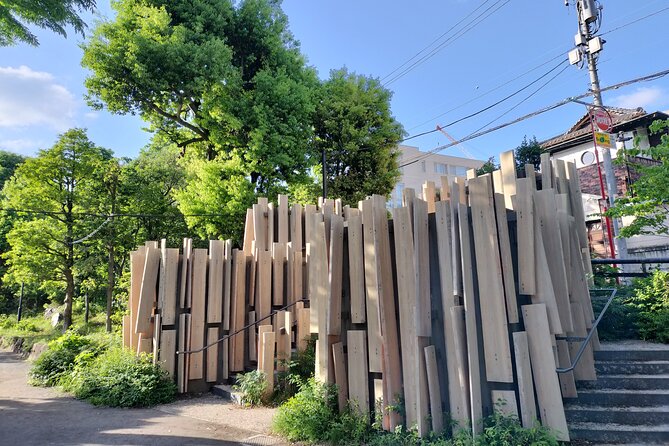
Next up is Miyashita Park, right between Shibuya and Harajuku. This matters because it is a good example of how Tokyo changes while still keeping everyday rhythms.
The restroom highlight at this stop is the toilet design by Tadao Ando. The tour places you in a redevelopment-heavy area, where you can sense the modern Tokyo planning that has been happening over the last five years.
I like this stop because it shifts the mood. You go from shrine calm to a more modern public-space vibe. And if you enjoy architecture and city planning themes, this is where your guide’s explanations can add a lot.
You also get about 30 minutes at Miyashita Park. Admission is free, so you can use the time for a slower look and not feel like you must speed-run.
Stop 3: Shibuya Crossing, a quick iconic moment between stops
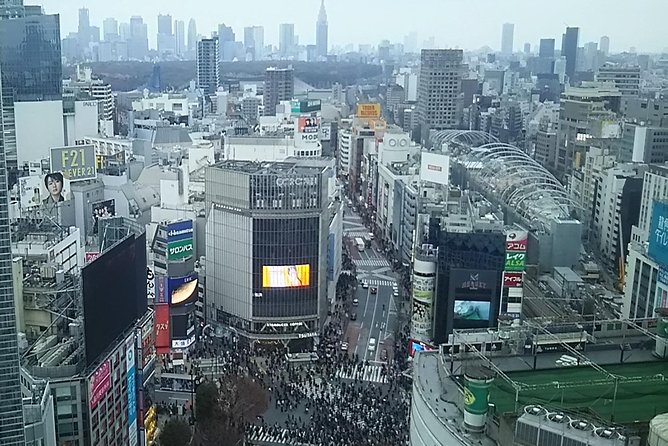
You do not spend long at Shibuya Crossing, but it is a smart move. The tour includes a short crossing, about 5 minutes, as you head to the next location.
Even for people who have already seen Shibuya Crossing on photos, the value is in timing and context. You see it as part of a route, not as a one-off photo mission. That helps you understand how you will actually move through the area later.
This segment is short, so if you hate crowds, you are unlikely to feel stuck here for too long. On the other hand, if you love street spectacle and want more time in the intersection area, you may wish the schedule gave you longer. For most first-time visitors, though, it is a good bite-sized taste.
Stop 4: Nabeshima Shoto Park in a quieter residential area
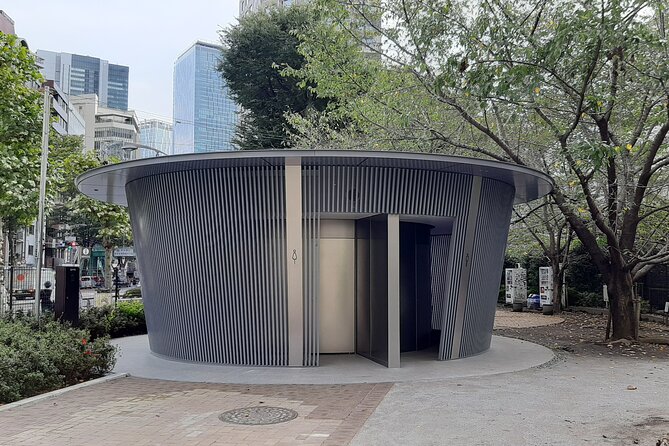
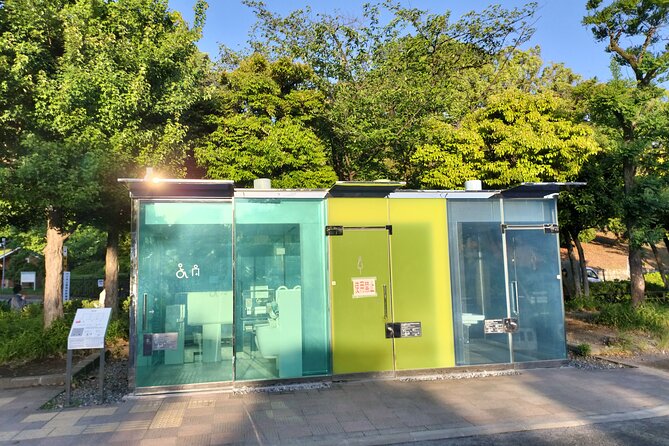
After the big-energy crossing, you shift into something calmer at Nabeshima Shoto Park. Here, the restroom highlight is a toilet designed by Kengo Kuma.
What I like is the contrast. The park sits in a quiet residential area, about a kilometer away from the main station. That distance is small enough to handle on foot, but big enough to feel the neighborhood change.
This stop is only about 15 minutes. It is not meant to be a long sit-and-stare park break, more like a chance to reset your eyes and notice how the city varies within a short walk.
Admission is free at this stop too, so the value is in how your guide frames the location. It helps you see that the Tokyo you remember is not just the loud areas. It is also the in-between ones, the places people live.
Stop 5: Ebisu neighborhood toilets and an easy finish at the station
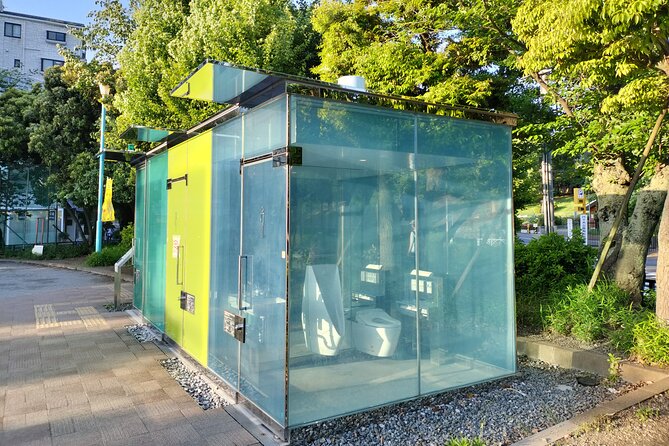
The final stretch brings you to Ebisu, one station south of Shibuya. This neighborhood change is one of the tour’s quiet advantages, because it gives your feet and your mind a break from the most crowded zones.
The restroom highlights here include designs by Fumihiko Maki, Kashiwa Sato, and Nao Tamura. The tour includes about 30 minutes in this area, which is a solid amount of time for a last stop.
I like that this ending feels practical. You are finishing at Ebisu Station, so you can easily keep going afterward without needing a complicated return trip. It is also an area many visitors enjoy for restaurants and evening plans, though lunch is not included on this tour.
If you are a film fan, architecture fan, or just a “show me Tokyo in a smarter way” person, this end point feels like a rewarding close. You have covered a themed route, and then you land in a transit hub.
How the private guide and customization shape your day
This is a private tour, so you and your group are the only participants. That means the guide can slow down for questions, adjust pacing, and focus on what you care about.
The overall concept is customized. You can collaborate with your local guide to design the day tour around your interests and abilities, rather than accepting a rigid group schedule.
From what I found most useful, Ken does not treat the toilets like trivia only. He was friendly and informative, and he explained the Shibuya city project history and the architects involved. That kind of context changes the tour from just looking to understanding, even if you are not an architecture specialist.
For families, couples, or solo travelers, this format also helps you control the stress level. You do not have to match someone else’s pace, and you do not have to fight a tour crowd for attention.
Price and value for a $223.34 private group day
The price is $223.34 per group, up to 4 people. For a private tour, that pricing can be a real value if you are splitting it with others, because you get a guide and a themed route that covers multiple neighborhoods in one session.
If you are solo, it is more of a splurge. But you might still feel it is worth it because the tour is built around a narrow theme that would otherwise be hard to find on your own, and the guide helps you connect the details quickly.
Here is the basic math to help you decide: if you bring two people, you are effectively paying about half per person compared to solo. With four, it gets even more reasonable for a guided 3.5-hour walk.
Also, admission at each listed stop is free, so you are not hit with extra ticket costs. Lunch and private transportation are not included, so you will want to budget for those separately.
What to do before, during, and after the walk
Because the tour is mostly walking, plan with that in mind. You are dealing with a moderate physical fitness level requirement, and the stop times are short enough that you will want to move efficiently between locations.
Bring comfortable shoes and dress for typical Tokyo walking weather. Since lunch is not included, I recommend having a plan for food after you finish at Ebisu Station. A snack during the day can also help if you tend to get hungry.
If you like photography, bring a camera or phone. You are going to see specific designed elements at each stop, and the whole point is noticing details, not just passing through.
After the tour, you are positioned well. You end at Ebisu Station, so you can head to dinner plans or keep exploring nearby areas without wasting time backtracking.
Should you book the Tokyo Toilet Tour?
If you want a first-time Tokyo intro that feels personal, you should seriously consider booking this. The private format with Ken, the walking route across Shibuya and Ebisu, and the film-connected Yoyogi Hachimangu stop make it more than a gimmick.
It is also a smart choice if you like design and city planning themes. Seeing toilets designed by named architects, then hearing context about projects in the Shibuya area, turns your day into something you can remember clearly.
Skip it if your idea of Tokyo is mainly famous sights and you do not want a themed route. This tour is short stop-by-stop, so it will not replace a full day of major temples or markets.
My rule of thumb: book it when you want Tokyo with a point of view, and you are happy spending 3.5 hours walking neighborhood to neighborhood. If that sounds like your style, this is a fun, thoughtful way to get your bearings fast.
FAQ
How long is the Tokyo Toilet Tour?
The tour lasts about 3 hours 30 minutes.
What does the tour cost?
It is priced at $223.34 per group, up to 4 people.
Is this a private tour?
Yes. It is private, and only your group participates.
What is included in the price?
A private tour guide is included.
What is not included?
Lunch and private transportation are not included.
Where does the tour start and end?
It starts at Yoyogi Fukamachi Mini Park (1-chōme-54-1 Tomigaya, Shibuya, Tokyo) and ends at Ebisu Station (JR Yamanote Line and Tokyo Metro Hibiya Line area).
Are the stops free to enter?
The listed stops have free admission.
Will I receive a mobile ticket?
Yes, the tour uses a mobile ticket.
What fitness level do I need?
The tour calls for a moderate physical fitness level.
What is the cancellation policy?
You can cancel for free up to 24 hours before the start time for a full refund. If you cancel less than 24 hours before, the amount paid is not refunded.
Newest Tokyo write-ups from the Loving Japan desk






Tours, side by side.
 ★ 5.0Mt Fuji and Hakone 1-Day Bus Tour Return by Bullet TrainFrom $16326,383 reviews
 ★ 5.01-Day Tokyo Bus TourFrom $12914,250 reviews
 ★ 5.0PERFECT KYOTO 1-Day Bus TourFrom $12913,518 reviews
 ★ 5.0Shinjuku Food Tour (13 Dishes at 4 Local Eateries)From $866,603 reviews
 ★ 5.0Peaceful Hiroshima & Miyajima UNESCO 1 Day Bus TourFrom $1295,309 reviews
 ★ 4.4Tokyo Mt Fuji 5th St & Hakone Cruise Bus Tour w/Bullet TrainFrom $1545,024 reviews
 ★ 5.0Flagship 2-Hours Official Street Go-Kart Tour – Tokyo Bay ShopFrom $644,974 reviews
 ★ 4.8Fushimi Inari, Kinkakuji, Bamboo Grove 1 Day Bus TourFrom $1224,316 reviews