
REVIEW · ASAKUSA, SENSO-JI AND TOKYO SKYTREE
Asakusa: 1400-year history exploration
Asakusa feels older than time. This 3.5-hour walk turns Sensō-ji from a photo into a story you can trace gate by gate, with tasty stops on Nakamise-dori. I also like the small group size because it makes questions feel normal, not rushed. The main catch is that Asakusa can be loud and packed, and you will want your headset to hear the guide.
I like that the route starts by the Sumida River, then moves in the direction your feet naturally want to go, toward the temple grounds. You’ll get practical local context too, including where to eat, drink, and shop later around Rokku. One possible drawback to plan for, especially at peak hours, is that the crowd noise can make it harder to focus if you drift away from the group.
If you enjoy Japan with your senses turned on, you’ll like this format. The tour blends landmark stops with street-level wandering and a bit of “how to experience this neighborhood” guidance, not just photo ops.
In This Review
- Key highlights worth your time
- Following the Sumida River to Asakusa’s 1400-year pulse
- Value check: what you actually get for $91.17
- Stop 1: Sumida River and Azumabashi, modern Tokyo looking back
- Stop 2: Asakusa Culture Tourist Information Center, your orientation shortcut
- Stop 3 and 4: Kaminarimon Thunder Gate and Nakamise-dori
- Stop 5 and 6: Hōzōmon and Sensō-ji, where the gates do the storytelling
- Stop 7: Asakusa Shrine, Buddhism and Shinto in one place
- Stop 8: Denboin Street and Rokku, Meiji era to today
- Snack tastings and the real reason this route beats self-guided walking
- Crowds, headset audio, and how not to miss the good parts
- Guide quality: why it matters here more than you might expect
- Who should book this Asakusa 1400-year history tour
- Quick decision: should you book
- FAQ
- What is the tour duration and start time?
- Where do I meet for the tour?
- Does the tour include admission fees?
- What snacks are included?
- Is food and drink included?
- How big is the group?
- Will I be able to hear the guide in crowded areas?
- Can I cancel and get a refund?
- Is hotel pickup included?
Key highlights worth your time
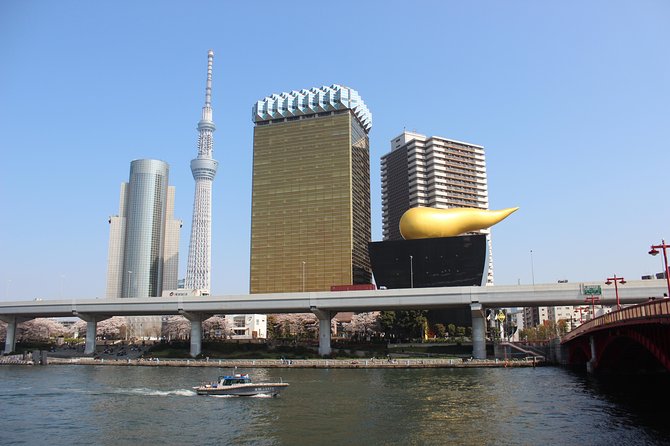
- Sumida River start with Tokyo Sky Tree views and an Asahi Breweries landmark across Azumabashi
- Asakusa Culture Tourist Information Center included, a good way to orient before temples and shopping
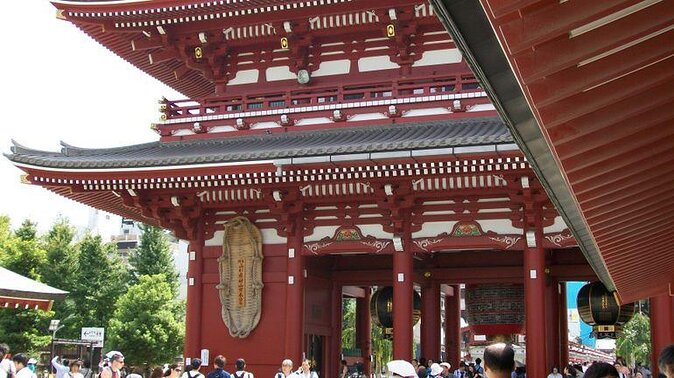
- Gate-to-gate temple route through Kaminarimon, Hōzōmon, and into Sensō-ji
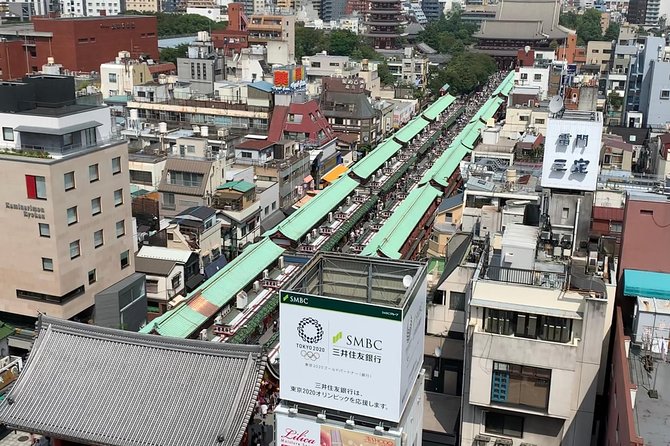
- Nakamise-dori snacks and shopping guidance along the 250 m approach
- Rokku (Denboin Street) style district walk for a Meiji-to-modern feel
- Earphone headset system so you can keep up even in busy streets
Still on the Sumida side? A few more Asakusa options
- Tokyo: Japanese Dance Cabaret Theater Asakusa-Kaguwa Ticket
★ 4.8 · 2,270 reviews - Tokyo: Meiji Shrine, Asakusa, Skytree Bus Tour and Cruise
★ 4.7 · 1,986 reviews - Tokyo: Roll and Authentic Sushi Making Class in Asakusa
★ 4.9 · 1,957 reviews - Tokyo: Asakusa Walking Tour with Sensoji Temple Visit
★ 4.8 · 1,583 reviews
Following the Sumida River to Asakusa’s 1400-year pulse
This tour works because it starts with the geography, not with a lecture. The Sumida River is where Asakusa’s story begins, and your first stop keeps that idea in view. You’ll stand near Azumabashi and look across toward major modern Tokyo markers like Tokyo Sky Tree and the Asahi Breweries headquarters with its golden flame object. It is a quick, clever contrast: the modern skyline is right there, but the route is about where people have gathered for centuries.
You do a bit of sightseeing by foot right away, then you shift into “OK, now I understand why this neighborhood looks the way it looks.” That matters because Asakusa can feel like a theme park if you rush it. Starting with river history gives you a better frame for everything that follows.
Practical tip: wear comfortable shoes from the first minute. Even though the tour is only about 3.5 hours, you’ll be walking between gates and through shopping streets where stopping is part of the plan.
Value check: what you actually get for $91.17
At $91.17 per person for roughly 3 hours 30 minutes, this is not the cheapest way to see Asakusa. What makes it feel like good value is what is bundled in:
- An English-speaking guide
- An earphone guide system, so the guide’s voice reaches you even at a distance
- Snack tastings on the route (examples include melon pan, rice dumpling, rice cracker, and sweet puffed rice)
- Admission included for the Asakusa Culture Tourist Information Center
- A maximum group size of 8, which usually means you can ask follow-up questions without being steamrolled by the schedule
You are also paying for “how to experience the area,” not just “where the buildings are.” That shows up later when you get advice on where to eat, drink, and shop in Rokku.
Consideration: most of the time is spent walking and standing in real public spaces. If your goal is a fast checklist, this format may feel like too much. If your goal is context, it is a good match.
Stop 1: Sumida River and Azumabashi, modern Tokyo looking back
Your tour begins at Burger King Asakusa Azumabashi, a handy meeting point that makes it easy to locate. From there, you’ll go to the Sumida River area, about 15 minutes, with Azumabashi bridge in the mix.
What I like here is that you get a quick sense of scale. Asakusa is famous for tradition, but it sits inside a fully functioning mega-city. Seeing Tokyo Sky Tree and the Asahi flame feature at the start gives you a reality check and sets up the rest of the walk.
If you’re photo-minded: this is a good moment to grab your first wide shot. Later, you’ll be deeper into the crowd flow where photos take longer.
- Mt Fuji and Hakone 1-Day Bus Tour Return by Bullet Train★ 5.0 · 26,383 reviews
- 1-Day Tokyo Bus Tour★ 5.0 · 14,250 reviews
- Tokyo: teamLab Planets TOKYO Digital Art Museum Entry Ticket★ 4.6 · 9,779 reviews
- Mt Fuji & Hakone Cruise, Drum Show Bullet Train 1 Day from Tokyo★ 4.0 · 7,413 reviews
- Tokyo: Shinjuku Food Tour (13 Dishes at 4 Local Eateries)★ 5.0 · 6,603 reviews
Stop 2: Asakusa Culture Tourist Information Center, your orientation shortcut
Next comes the Asakusa Culture Tourist Information Center, about 30 minutes, with admission included. This is more than a brochure station. It’s a practical pause where the area clicks into place, especially if you are wondering how Buddhism and Shinto fit together in the same neighborhood, or why specific streets matter.
The center is relatively new compared with the places you’ll visit after. That gives it a useful role: you start with the old, but you also learn from a modern hub designed to help visitors understand what they are about to see.
Drawback to consider: this is a sit-and-watch-your-step moment inside a busy area. If you dislike indoor stops on walking tours, plan to treat it as your “reset button” before the gates and crowds.
Stop 3 and 4: Kaminarimon Thunder Gate and Nakamise-dori
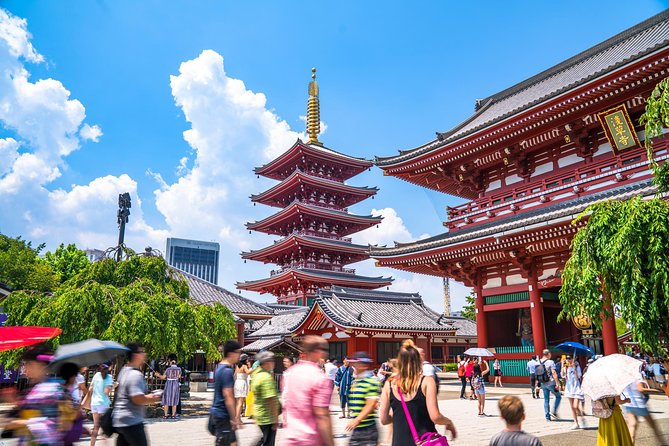
Kaminarimon, the Thunder Gate, is one of those Asakusa sights that stops you even if you came for something else. You’ll spend about 15 minutes here, and the guide will set the scene with details around how it leads into the temple approach.
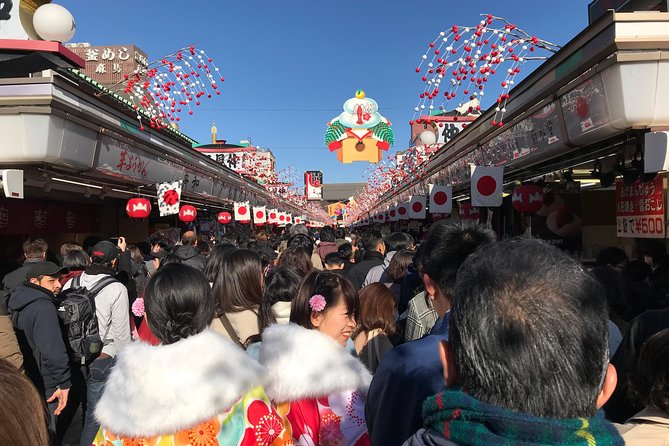
Expect the big red lantern and statues to dominate your view. It is busy, but it’s also iconic for a reason. Then you move into Nakamise-dori, about 30 minutes on the shopping street that connects Kaminarimon and the main entrance.
Nakamise-dori matters because it is not just shopping. It’s a concentrated look at what people buy when they want a bite to eat and a small piece of Japan to take home. The route is lined with souvenir shops and food stalls, and the guide helps you find things without turning this into a scavenger hunt.
Snack idea you’ll see on this kind of street: you can expect traditional-style sweets and crunchy treats. In this tour, you get a selection as part of the experience, with examples like melon pan and sweet puffed rice.
Crowd reality: Nakamise-dori can get loud. If you rely on hearing every word, keep the headset on and stay closer to the guide. The crowd can swallow sound if you wander away.
Stop 5 and 6: Hōzōmon and Sensō-ji, where the gates do the storytelling
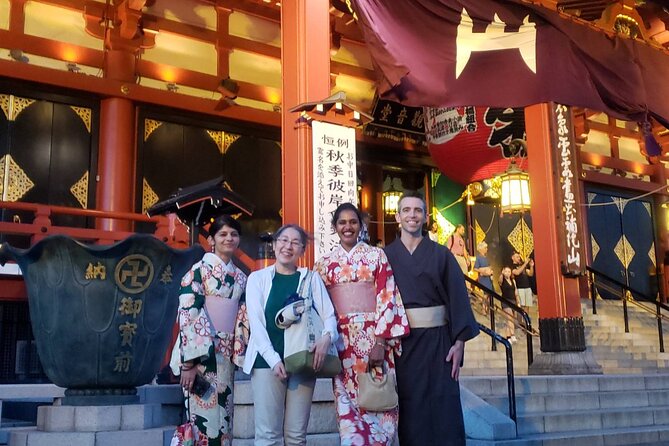
After Nakamise-dori, you reach Hōzōmon, the Treasure-House Gate, about 15 minutes. It is the inner gate that leads you into the main temple complex. Gates are not just decoration here. They create a sequence, a feeling of crossing from street life into ritual space.
Then comes the biggest stop: Sensō-ji Temple, around 45 minutes. This is where the tour pays off for anyone who wants more than a quick glance.
A couple of specific highlights you should notice during your time there:
- The Five-storied Pagoda on the left, about 53 meters high, built in 942 (it also holds Buddha’s ashes)
- The space between Hōzōmon and the main hall, where there is a lot to see and the guide helps you pace your attention
Even if the grounds look familiar from images, the scale and details are harder to absorb when you are in the middle of it. The guide’s job is to help you look at the same place in a different way: not just what you see, but why it ended up there and what it means in Japan’s cultural mix.
Tip for focusing: pick one area to linger at for a minute or two, then let the guide pull you to the next focal point. Otherwise, the crowd flow can push you along too fast.
Stop 7: Asakusa Shrine, Buddhism and Shinto in one place
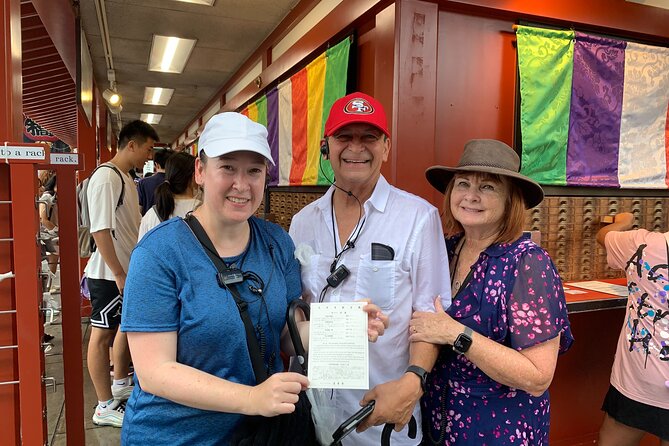
Next is Asakusa Shrine, about 15 minutes. This stop is valuable because it explains something visitors often find surprising: it is not uncommon to see a Buddhist temple and a Shinto shrine coexist on the same premises in Asakusa.
The tour frame here is about origin and worshipers, and it helps you understand the practical reality of religious life in Japan, where people may move between traditions without feeling like they are breaking rules.
This is a shorter stop, but it can be one of the most memorable ones if you are the type who likes to understand the cultural logic behind what looks unusual on the street.
Stop 8: Denboin Street and Rokku, Meiji era to today
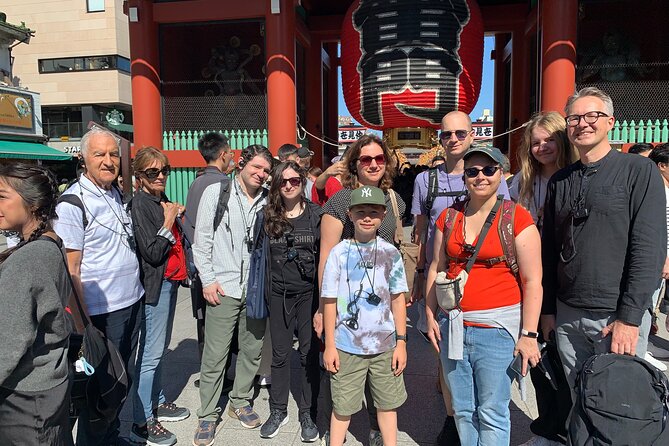
After Sensō-ji, you shift away from the main temple crowds and head into the Rokku area via Denboin Street, about 45 minutes.
This is where Asakusa turns into something more like everyday Tokyo. The Rokku district is described as Asakusa’s traditional entertainment area, lively and active, but not as hectic as the temple core. The walk is framed as a route through the Meiji period into the present, with stops along the way.
What makes this part appealing is that it broadens the story. Sensō-ji gives you the long timeline. Rokku gives you the human scale: what people did around the temple district, how the neighborhood kept reinventing itself, and how today’s visitors still experience the area as a place to eat, wander, and shop.
Practical angle: you should pay attention to the guide’s advice on where to eat and drink after the tour. Rokku is the kind of area where a local recommendation can save you time and disappointment.
Snack tastings and the real reason this route beats self-guided walking
This tour includes a selection of Japanese sweets and street snacks. Examples listed include melon pan, rice dumpling, rice cracker, and sweet puffed rice.
That may sound small, but it is a good strategy. Nakamise-dori can be overwhelming because every stall looks like the one you want. Having the guide point you to a selection turns food into context, not stress.
Also, you get more than food. You get guidance on where to eat, drink, and shop in Rokku. That is the kind of information that matters after the last gate closes and you want dinner without guessing.
One extra note: on at least one documented run, the guide also treated participants to Ningyo-yaki and yuzu drinks. That suggests some flexibility by guide, so keep your mindset open if you want a slightly more special snack moment.
Crowds, headset audio, and how not to miss the good parts
This is a walking tour in a high-traffic zone. Even with an earphone guide system, you still need to cooperate with the environment.
Here’s how to help it work:
- Keep your headset on most of the time, not just at the temple gates
- Try not to step far away when the guide is explaining details
- If you need to rest, do it close enough that audio still reaches you
Some feedback around the experience points to moments when sound was hard to hear in crowded conditions, especially when people moved away from the group or when the guide spoke too quietly for the environment. The fix is simple: stay in the guide’s general radius and adjust volume if you can.
Also, plan for noise. Nakamise-dori and the temple approach can be loud. If you get frustrated by that, you will likely have a harder time enjoying the historical explanations.
Guide quality: why it matters here more than you might expect
With a 3.5-hour schedule and tight walking corridors, your guide’s pacing affects everything. When the guide is strong, you get clear context at each stop. When the guide’s English delivery is harder to follow, the same sights can feel like just stopping for photos.
You can see both sides reflected in the experience patterns. Most guides are praised for friendliness, patience, and answering lots of questions, with names like Amy, Emiko, Sachi, Aki, Yasu, and Yoko standing out in customer feedback. In one documented case, the guide Taka is described as using a conversational style, answering questions across topics like differences between Buddhism and Shinto and practical daily-life questions like garbage disposal.
My advice: if you care about history and cultural meaning, give your guide your best listening effort from the start. Show up ready to ask questions, and you’ll likely get more out of the route.
Who should book this Asakusa 1400-year history tour
This tour is a strong fit if you:
- Want more than a casual visit to Sensō-ji and want the stories connected to the gates and grounds
- Like street-level Tokyo, including shopping and snacks, not just monuments
- Prefer a small group (max 8), so questions are manageable
- Appreciate an English guide plus a headset system for busy areas
You might skip it if:
- You want a quick hit in under two hours
- You get easily annoyed by crowds and loud streets
- You do not want any shopping time, even if it is guided and tied to the cultural route
It is also a good choice for adults, and families are welcome. Children under 6 can join without charge, though they would not be entitled to the included items.
Quick decision: should you book
Book it if you want Asakusa explained gate to gate, with snack breaks and a path into Rokku that helps you spend the rest of your afternoon well. The small group size, the headset audio system, and the snack tastings make the price feel justified when you compare it to wandering around alone with no direction.
Skip it if your top priority is speed or quiet. This is a popular temple-and-market corridor, so you trade comfort for atmosphere and depth. If that trade works for you, this is one of the more practical ways to experience Asakusa without feeling lost.
FAQ
What is the tour duration and start time?
The tour runs for about 3 hours 30 minutes and starts at 1:30 pm.
Where do I meet for the tour?
You meet at Burger King Asakusa Azumabashi, Japan, 111-0034 Tokyo, Taito City, Kaminarimon, 2-chōme (Cross Building Royal Palace).
Does the tour include admission fees?
Most major temple areas and gates are free to enter on this route. Admission to the Asakusa Culture Tourist Information Center is included.
What snacks are included?
The tour includes a selection of Japanese sweet snacks such as melon pan, rice dumpling, rice cracker, and sweet puffed rice.
Is food and drink included?
Food and drinks are not included except for the specified items on the tour. Bottled water is recommended, and vending machines are available.
How big is the group?
The maximum group size is 8 people.
Will I be able to hear the guide in crowded areas?
Yes. The tour uses an earphone guide system so the guide’s voice can be delivered to each participant from a distance.
Can I cancel and get a refund?
Yes. Free cancellation is available if you cancel up to 24 hours in advance of the experience start time for a full refund.
Is hotel pickup included?
No, hotel pickup and drop-off are not included. The tour starts and ends back at the meeting point.
Asakusa and the Skytree, Keep Going


Newest Tokyo write-ups from the Loving Japan desk
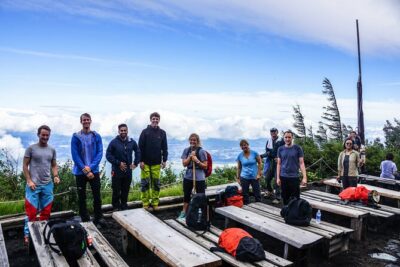
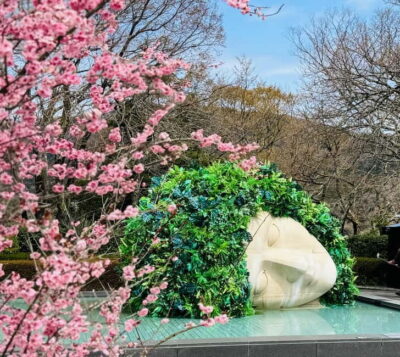
Asakusa, Senso-ji and Tokyo Skytree, side by side.
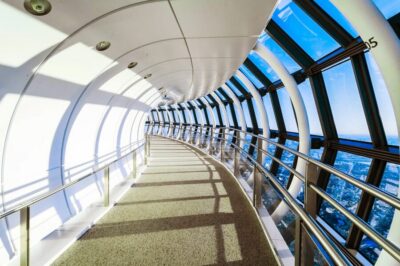 ★ 4.5TOKYO SKYTREE® Admission ticketFrom $1311,192 reviews
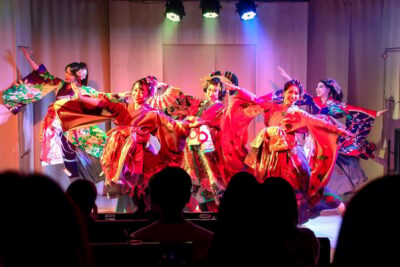 ★ 4.8Japanese Dance Cabaret Theater Asakusa-Kaguwa TicketFrom $492,270 reviews
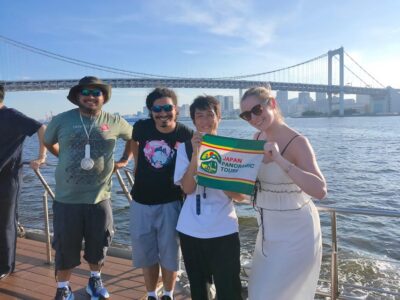 ★ 4.7Meiji Shrine, Asakusa, Skytree Bus Tour and CruiseFrom $1221,986 reviews
 ★ 4.9Roll and Authentic Sushi Making Class in AsakusaFrom $581,957 reviews
 ★ 4.8Asakusa Walking Tour with Sensoji Temple VisitFrom $221,583 reviews
 ★ 5.0Tokyo Asakusa Rickshaw TourFrom $421,375 reviews
 ★ 4.5Tokyo Panoramic 1 Day: Meiji Shrine, Asakusa, Odaiba and SKYTREE®From $851,222 reviews
 ★ 5.0Tokyo Go Kart: Asakusa, Skytree, and Akihabara **IDP MUST**From $99988 reviews
Filed on these lists too