
REVIEW · ASAKUSA, SENSO-JI AND TOKYO SKYTREE
Asakusa: 3.5-hour Big-picture History Walk
Asakusa explains Japan fast. In just 3.5 hours, this guided walk connects 300 years of isolation, the dramatic reopening, and the beliefs that shape everyday life.
I especially like the big-picture framing. At each stop, the guide ties what you’re seeing to why it matters, so the neighborhood becomes a timeline you can actually hold in your head. I also appreciate the small-group pace capped at 8, plus English headsets for groups of 3 or more, which keeps you from straining to hear.
One drawback: it’s a moderate walk in all weather, and it is not suitable for people with mobility impairments. Comfortable shoes and a water plan matter.
In This Review
- Key highlights worth your attention
- Why Asakusa Can Explain Japan’s Isolation, Beliefs, and Global Impact
- Meeting at Asakusa Station Exit 4, Then Getting Your Bearings
- Tokyo Cruise Pier and the Culture Center: Starting With Context, Not Confetti
- Kaminarimon and Nakamise: Gate Power and Crowd Reality
- Hōzōmon Gate and Sensō-ji: Sacred Space With Explanations That Stick
- Asakusa Shrine and the Yōgō-dō Pavilion: More Meaning in Less Time
- Shopping Streets and Back-Lane Stops: Why the Tour Goes Beyond the Big Names
- Price, Group Size, and Value for $88 in 210 Minutes
- What You Learn: Isolation, Reopening, Religion, and the West Connection
- Who This Tour Fits Best (and Who Should Think Twice)
- Should You Book This Asakusa Big-Picture History Walk?
Key highlights worth your attention
- 300-year isolation to reopening, including why the Netherlands mattered as a trading partner and how a simple sign marks a turning point
- Two religions, one shared reality, how Buddhism and Shinto coexist peacefully while sharing worshippers
- Sacred and secular side by side, the area around the temple used to be a major entertainment zone long before today’s hot spots
- East meets West parallels, including surprising discussion around dragons and the mindset of people 1,000 years ago
- Edo-era nostalgia on foot, with quiet shopping lanes that feel like stepping into an old movie set
Still on the Sumida side? A few more Asakusa options
- Tokyo: Japanese Dance Cabaret Theater Asakusa-Kaguwa Ticket
★ 4.8 · 2,270 reviews - Tokyo: Meiji Shrine, Asakusa, Skytree Bus Tour and Cruise
★ 4.7 · 1,986 reviews - Tokyo: Roll and Authentic Sushi Making Class in Asakusa
★ 4.9 · 1,957 reviews - Tokyo: Asakusa Walking Tour with Sensoji Temple Visit
★ 4.8 · 1,583 reviews
Why Asakusa Can Explain Japan’s Isolation, Beliefs, and Global Impact
Asakusa is the kind of place that looks simple until you start asking why things are where they are. This tour works because it doesn’t treat the neighborhood as a checklist. It uses landmarks as chapters in a single story.
The focus is Japan’s transformation. You get the arc from a closed, feudal society that limited contact, to the 19th-century reopening that sent Japanese art outward and influenced the French Impressionists. It is a neat way to understand how Japan went from “mostly offstage” to globally noticed.
Then the tour brings you back to human scale with religion. You’ll learn how Japan’s two major traditions, Buddhism and Shinto, complement each other and have coexisted peacefully for over a millennium, including sharing the same worshippers. The goal is not just names and dates. It’s how people actually practice, day after day.
There’s also a lighter side to the learning. The guide connects cultural contrasts and similarities between Japan and the West, including how dragons show up with parallel roles. You’ll hear it as a mindset story, not a trivia game.
Meeting at Asakusa Station Exit 4, Then Getting Your Bearings
Logistics here are straightforward, which matters when you’re starting a half-day walk. Meet in front of a Burger King next to Exit 4 of Asakusa subway station on the Ginza line (G19). When you arrive at Exit 4, step outside to find the meeting point.
You’ll want to arrive a bit early. Once the group size is set, the tour runs on a steady rhythm of short stops and guided segments. With a maximum of 8 participants, you can actually hear the guide and keep up without feeling swept along.
The tour includes English-speaking certified guidance and headsets for groups of 3 or more. That combination is practical in Asakusa, where crowds and street noise can make “just follow the guide” frustrating.
Before you set out, think about comfort. Wear comfortable shoes and bring water. Vending machines are available, but having your own bottle is easier when you need a quick reset.
Tokyo Cruise Pier and the Culture Center: Starting With Context, Not Confetti
The first on-the-ground moments happen near the river, at the Tokyo Cruise Asakusa Pier. You get a guided segment there, about 15 minutes, and it works like an opening scene. The guide uses this start to help you understand how the area fits into the broader historical pattern of Tokyo and old Edo-era life.
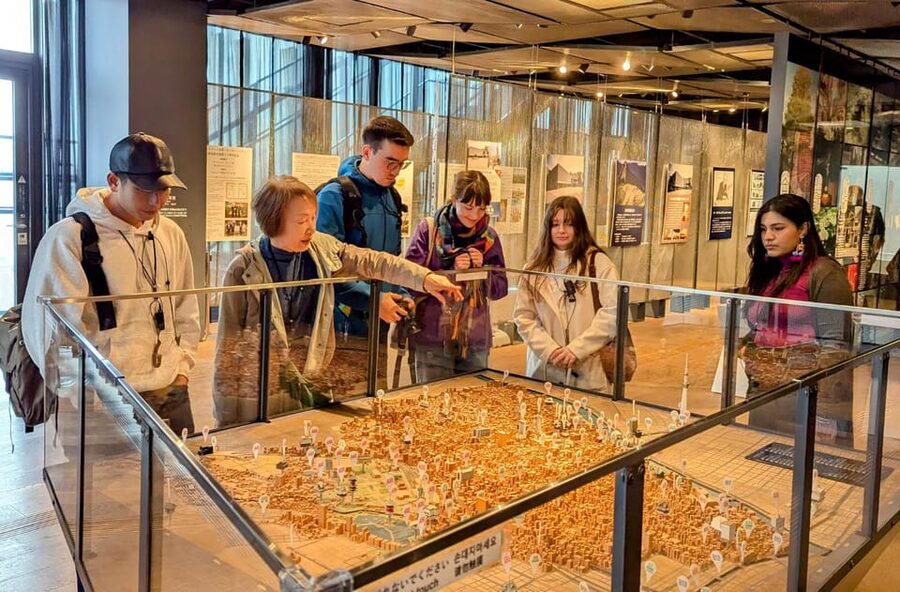
From there, you head to the Asakusa Culture Tourist Information Center for about 30 minutes. This is the “set your mental compass” stop. The guide uses it to frame what you’ll see next and why people have kept coming to these places for centuries.
If you’re the kind of person who likes history to make sense, this structure helps. Instead of walking into Sensō-ji (and the surrounding streets) already overloaded, you start with the big themes: isolation and reopening, religion, and the sacred-secular mix that makes Asakusa feel both reverent and everyday.
- Mt Fuji and Hakone 1-Day Bus Tour Return by Bullet Train★ 5.0 · 26,383 reviews
- 1-Day Tokyo Bus Tour★ 5.0 · 14,250 reviews
- Tokyo: teamLab Planets TOKYO Digital Art Museum Entry Ticket★ 4.6 · 9,779 reviews
- Mt Fuji & Hakone Cruise, Drum Show Bullet Train 1 Day from Tokyo★ 4.0 · 7,413 reviews
- Tokyo: Shinjuku Food Tour (13 Dishes at 4 Local Eateries)★ 5.0 · 6,603 reviews
Kaminarimon and Nakamise: Gate Power and Crowd Reality
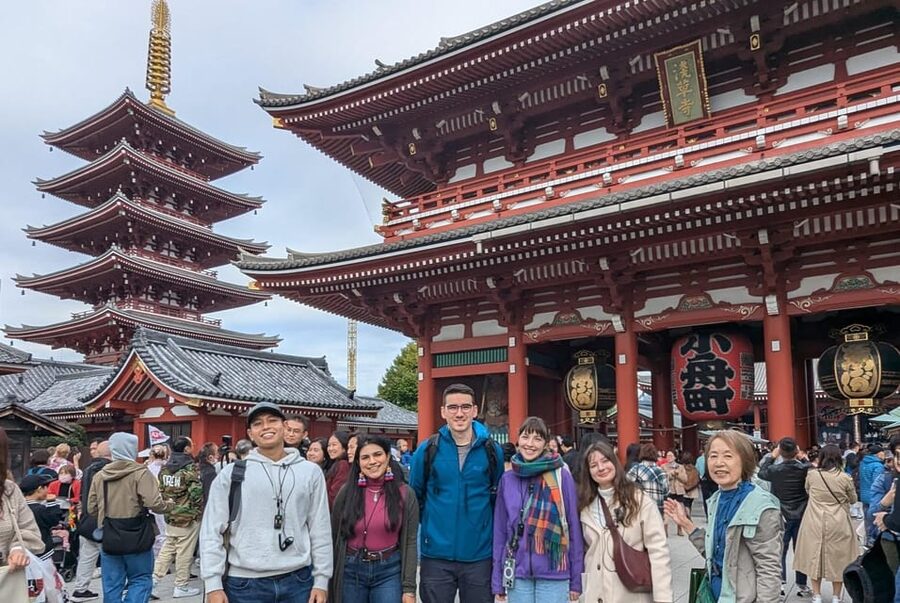
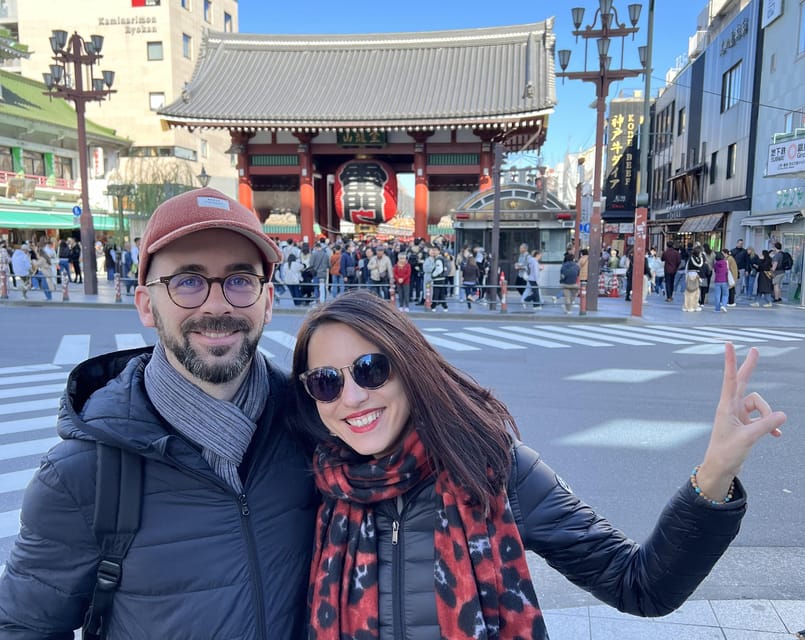
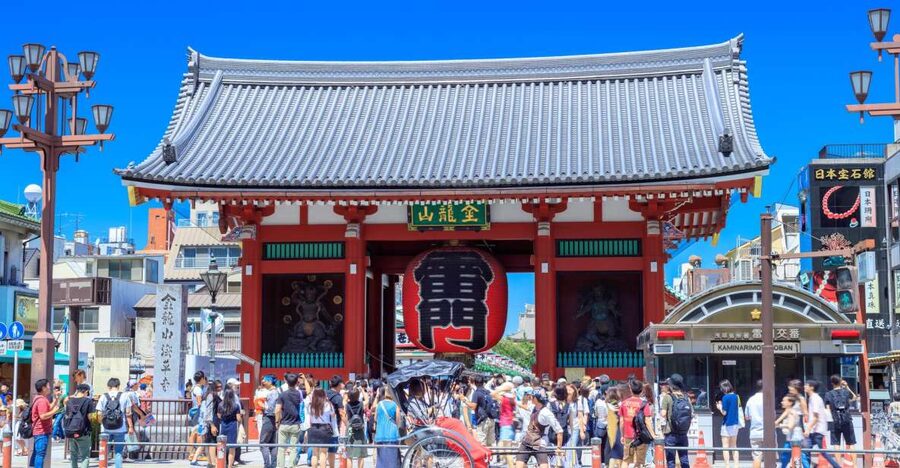
Next comes Kaminarimon, the famous thunder gate. It’s guided for about 15 minutes, which is the right length. You don’t get dragged into a lecture with no payoff. You get enough background to understand what the gate represents in the flow of religious space.
Then you move into Nakamise Shopping Street for about 30 minutes. This is where Asakusa’s texture shows up. Think of it as a corridor that funnels you toward the temple complex, while giving you a taste of old-style shopping street energy.
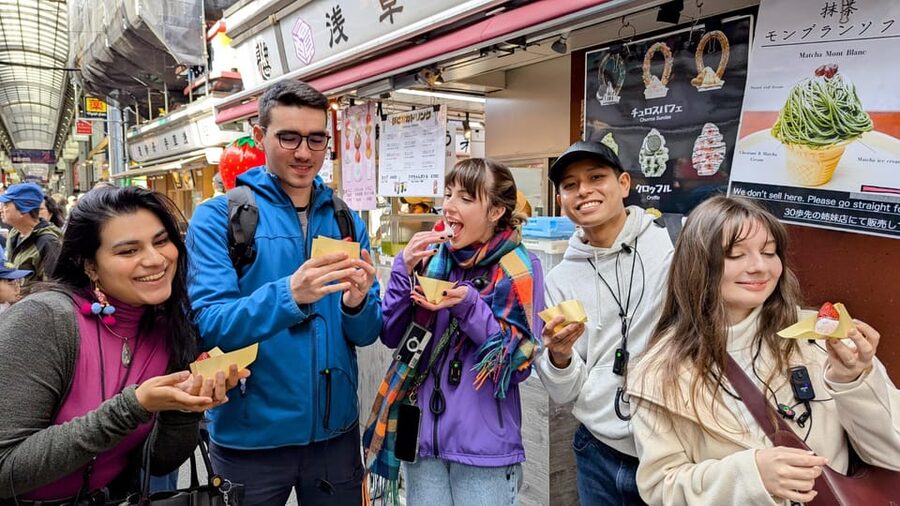
You’ll also benefit from the snack portion. The tour includes a selection of freshly made Japanese traditional snacks and sweets. It’s not just a “cute extra.” It’s a way to break up the walking, and it makes the tour feel like a real morning or afternoon out, not a museum tour with shoes.
A small caution: Nakamise is busy. Even with a small group, you’ll be walking through a popular area. The headset helps, but you should also expect a bit of stop-and-go.
Hōzōmon Gate and Sensō-ji: Sacred Space With Explanations That Stick
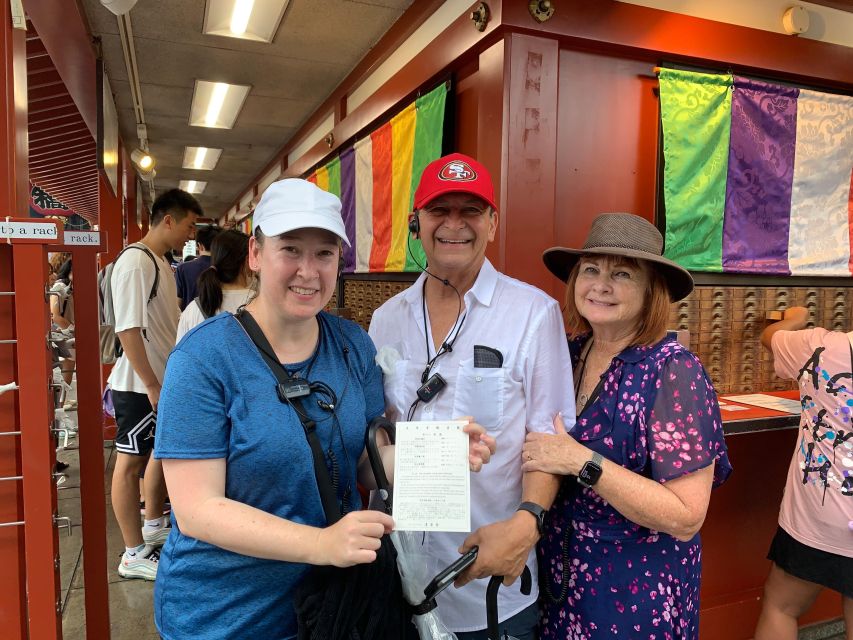
At Hōzōmon Gate, you get another short, guided stop (about 15 minutes). The guide’s job here is to make you notice the details instead of only taking photos. Gates like this are not just decoration. They help organize movement and symbolize transitions, and the guide uses that idea to talk about how religious spaces function.
Sensō-ji is the heavy hitter, with about 45 minutes of guided time. This is where the tour’s two-religions theme becomes real. You’ll learn how Japan’s spiritual traditions have shared worshippers and how they complement each other over time.
If you want an easy test for whether the tour will “click” for you, watch how the guide talks about day-to-day practice. The best moments are when the explanation connects belief to behavior, rather than treating religion as a distant academic topic.
You’ll also get a sense of the sacred and the secular rubbing shoulders. The area right next to the temple has been tied to entertainment for a long time, before Shinjuku and Shibuya became the famous magnets. That contrast is one of the tour’s strongest ideas, because Japan often holds these modes together instead of separating them.
Asakusa Shrine and the Yōgō-dō Pavilion: More Meaning in Less Time
After Sensō-ji, you continue to Asakusa Shrine for about 15 minutes. This stop supports the tour’s religion lesson. You see how sacred life isn’t locked into one building type. It spreads through spaces that feel part of daily city life.
Then there’s the Yōgō-dō Pavilion, with about 15 minutes of guided visit. This is one of those “small stop, big payoff” moments, because the guide uses it to extend the timeline logic. You’re not just moving between attractions. You’re collecting links in the chain of how beliefs and history shaped this neighborhood.
One practical tip: go in with your curiosity hat on, not your completionist hat. With multiple short religious stops, you’ll remember more if you pick up one idea per location. The guide’s explanations are designed for that style of learning.
Shopping Streets and Back-Lane Stops: Why the Tour Goes Beyond the Big Names
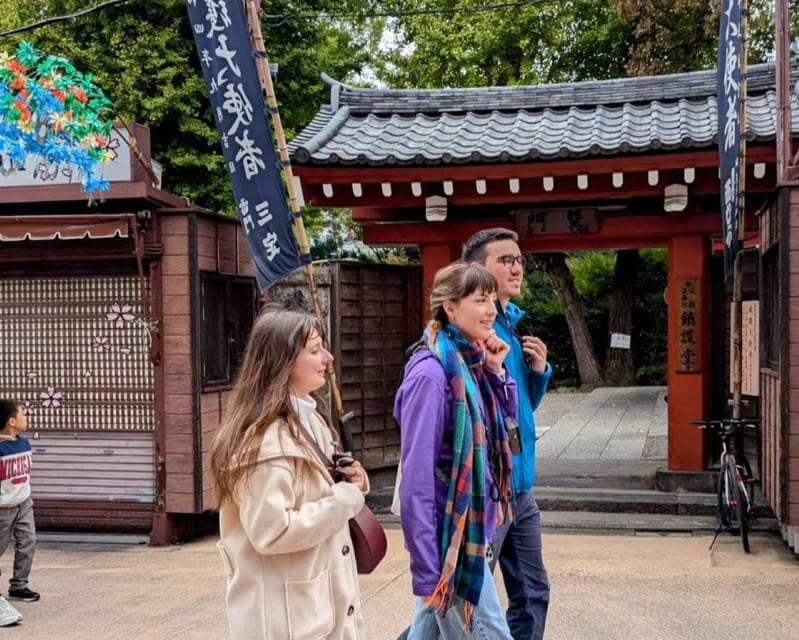
The itinerary then shifts into smaller lanes and specialized stops, which is where the tour starts to feel more like a local stroll. Asakusa Nishi-sandō Shopping Street is visited for about 15 minutes, and the vibe is intentionally different. The tour frames it as nostalgic, quieter, and more like stepping into an old movie set than marching through the loudest tourist corridors.
Next is Asakusa Mokubakan for about 15 minutes. The tour keeps these stops guided and short, so you’re not waiting around. The value here is context: the guide uses this kind of place to connect everyday Asakusa details to older patterns of life, not just to “branding.”
Then you move to Hoppy Street for another 15 minutes, guided. The tour uses this area to talk about postwar working-class vigor and resilience, and about old-style pub lanes that carry the flavor of an earlier entertainment hub. It’s a useful counterpoint to the temple complex. You get the sense that the neighborhood always had both roles: spiritual center and social stage.
If you’re worried about the tour feeling like “too many stops,” don’t. The format is tight: each segment is long enough for the guide to land the big idea, but short enough to keep your energy.
Price, Group Size, and Value for $88 in 210 Minutes
At $88 per person for 210 minutes, you’re paying for something more than walking with a guide. You’re buying a guided narrative that stitches together history, beliefs, and global connections in one route.
Here’s what makes the value make sense. The tour includes English-certified guidance, headsets for groups of 3 or more, and freshly made traditional snacks. For many self-guided days in Tokyo, you end up spending on multiple small things, then still missing context. This tour packages the context.
The small group cap of 8 is also a big deal in a place like Asakusa. You’re less likely to get lost in a crowd scrum. And because the guide can manage the group size, the explanations stay connected to where you’re standing.
Yes, it’s not the cheapest way to see Asakusa. But if your goal is understanding, not just photos, the structure is designed for clarity. You should feel like you leave with “the big picture,” not a pile of names.
What You Learn: Isolation, Reopening, Religion, and the West Connection
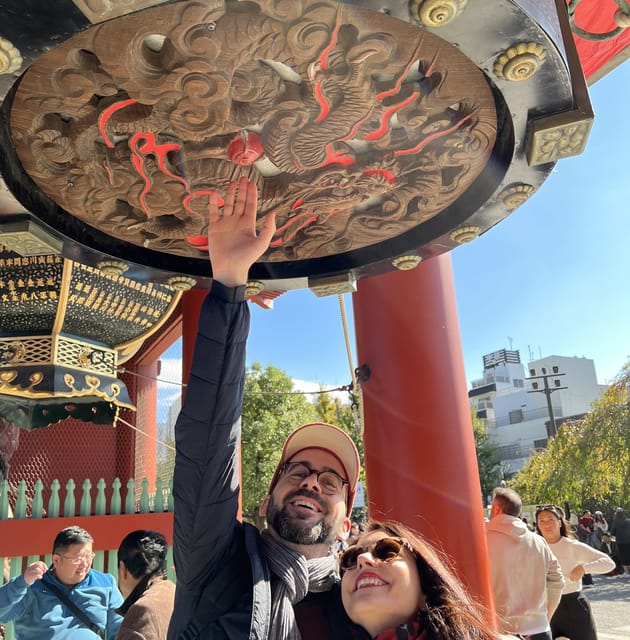
This is where the tour earns its theme promise. The guide isn’t just pointing. The guide explains why Japan closed itself, and why it picked the Netherlands as its only trading partner during isolation. You also see a sign that symbolizes the transition from isolation to opening, which is exactly the kind of visual anchor that helps history stick.
You’ll also learn how Japan’s 19th-century art influenced the world, especially the French Impressionist painters. That part matters because it reframes the story from “Japan changed” to “Japan shaped others too.”
Then comes the belief lesson. For over a millennium, Japan’s two major religions have complemented each other while sharing the same worshippers. The guide makes this feel practical, showing how people’s daily spiritual habits can fit multiple traditions without turning it into a conflict.
Finally, you get those cultural parallels with the West. Dragons are used as an example of how symbols can carry different surface meanings but similar human patterns. Add the discussion about the mindset of people 1,000 years ago, and you get a sense that cultures often share underlying concerns, even when the details look different.
Who This Tour Fits Best (and Who Should Think Twice)
This tour is a strong match if you want a focused, half-day plan with meaning built in. It’s recommended for adults due to the historical focus, but families are welcome. Children younger than 6 can join without charge.
Choose this if you like your travel with structure, like a walking lecture that doesn’t ignore the fun parts. It also works well if you’re already overwhelmed by Tokyo and want one neighborhood to explain bigger themes.
Avoid it if you have mobility issues. The tour involves moderate walking and is explicitly not suitable for people with mobility impairments. Also, it runs in all weather conditions, so plan for rain or cold.
Should You Book This Asakusa Big-Picture History Walk?
If you want to understand Japan instead of just sampling it, book it. The format is built around turning each landmark into a “why it matters” lesson, and that is exactly how you get value out of a limited time window.
Book this also if you care about religion and history, and you like seeing how sacred sites connect to everyday streets. The sacred-secular contrast, the Edo-era nostalgia, and the isolation to reopening story all feed the same goal: you leave with a coherent mental model.
Pass if you want a free-roam day with no explanations and lots of lingering time. This is guided, scheduled, and meant to cover a lot in 3.5 hours. If that sounds like your style, you’ll probably love how quickly Asakusa starts making sense.
Asakusa and the Skytree, Keep Going


Newest Tokyo write-ups from the Loving Japan desk
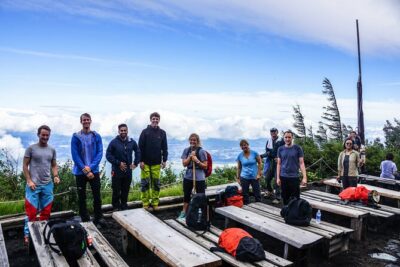
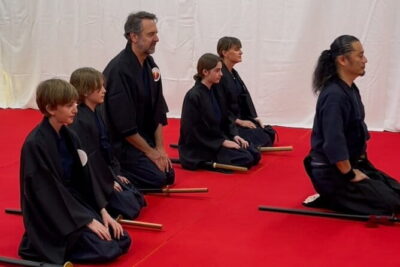
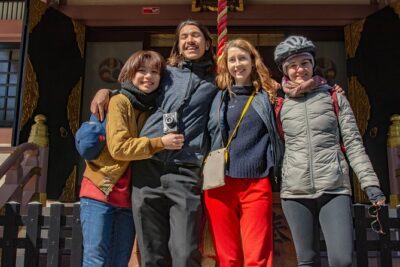
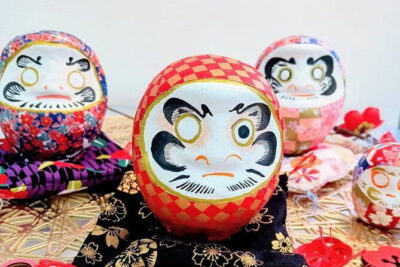
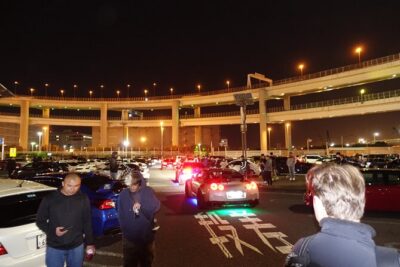
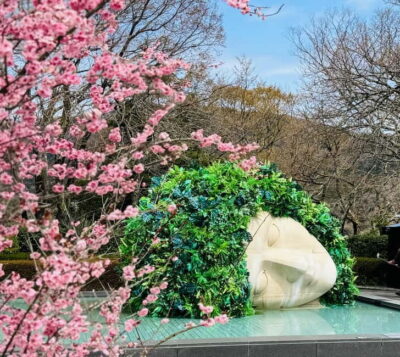
Asakusa, Senso-ji and Tokyo Skytree, side by side.
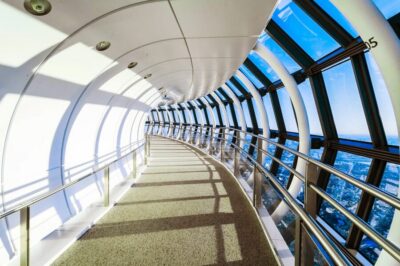 ★ 4.5TOKYO SKYTREE® Admission ticketFrom $1311,192 reviews
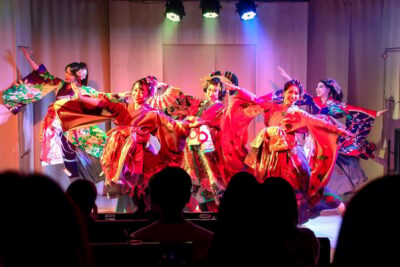 ★ 4.8Japanese Dance Cabaret Theater Asakusa-Kaguwa TicketFrom $492,270 reviews
 ★ 4.7Meiji Shrine, Asakusa, Skytree Bus Tour and CruiseFrom $1221,986 reviews
 ★ 4.9Roll and Authentic Sushi Making Class in AsakusaFrom $581,957 reviews
 ★ 4.8Asakusa Walking Tour with Sensoji Temple VisitFrom $221,583 reviews
 ★ 5.0Tokyo Asakusa Rickshaw TourFrom $421,375 reviews
 ★ 4.5Tokyo Panoramic 1 Day: Meiji Shrine, Asakusa, Odaiba and SKYTREE®From $851,222 reviews
 ★ 5.0Tokyo Go Kart: Asakusa, Skytree, and Akihabara **IDP MUST**From $99988 reviews
Filed on these lists too