REVIEW · JAPAN
Early Half Day to Kyoto Highlights
Kyoto is famous for lines, so this plan starts early. In just about 5 hours, you’ll hit three of the biggest names on the map, using public transport with a local guide who can explain what you’re looking at without turning the morning into a lecture. I like that the route is built for crowd control, and I also like that the group stays small, so you can ask questions as you go.
Two things stand out to me right away: the small size (up to 8 people) and the pace. Some groups are led by Indra, and the way he keeps everything moving with calm efficiency makes a real difference when you’re trying to see a lot in a short window. One consideration, though, is that Kinkakuji entrance and public transport are extra costs you’ll want to budget for.
In This Review
- Key Highlights You’ll Notice Fast
- Why This Early Kyoto Highlights Route Works
- Getting Oriented at Starbucks Kyoto Tower Sando (Before You Step Out)
- Fushimi Inari-taisha: Red Gates Without the Crowd Crush
- Arashiyama Bamboo Forest: Nature, Then Japanese Society Context
- Kinkakuji Golden Pavilion: Buddhism and the One Entrance Fee
- Kyoto Station Finish: Keeping the Morning Efficient
- Price and Value: What Your Money Actually Covers
- The Group Size and Guide Style That Makes It Feel Easy
- What This Tour Best Fits (And Who Should Skip It)
- Weather and Timing Reality Check
- Should You Book This Early Half-Day Kyoto Highlights Tour?
- FAQ
- How long is the Early Half Day to Kyoto Highlights tour?
- Where does the tour start?
- What time does the tour start?
- Is the Golden Pavilion (Kinkakuji) entrance fee included?
- How much is public transportation during the tour?
- How big is the group?
- Do I receive a mobile ticket?
- What is the cancellation policy if weather is bad?
Key Highlights You’ll Notice Fast
- Early start for calmer Fushimi Inari viewpoints before the biggest wave arrives
- Small group of up to 8 with lots of chances to ask questions
- Public transport routing that helps you learn how to move around Kyoto efficiently
- Fushimi Inari, Arashiyama bamboo, and Kinkakuji in one tight half-day plan
- Indra-style organization, with smooth timing so you still have an afternoon afterward
Still weighing up options in Kyoto? These are the ones our reviewers rated highest.
- PERFECT KYOTO 1-Day Bus Tour
★ 5.0 · 13,518 reviews - Kyoto: Fushimi Inari, Kinkakuji, Bamboo Grove 1 Day Bus Tour
★ 4.8 · 4,316 reviews - Kyoto: Tea Ceremony in a Traditional Tea House in Kiyomizu
★ 4.9 · 3,519 reviews - Kyoto Geisha Walking Tour: Gion District & Hidden Gems
★ 4.7 · 3,273 reviews
Why This Early Kyoto Highlights Route Works
Kyoto can feel like a choose-your-own-adventure, but most people waste time figuring out logistics. This half-day format fixes that. You start at 8:00 am and go early, which matters because the top spots you’ll visit attract huge crowds later.
The other smart piece is that the tour is structured like a story. You go from shrine culture at Fushimi Inari, to nature and everyday Japan at Arashiyama, to temple life and Buddhism at Kinkakuji. It turns three famous sights into something that feels connected, not just a checklist.
Getting Oriented at Starbucks Kyoto Tower Sando (Before You Step Out)
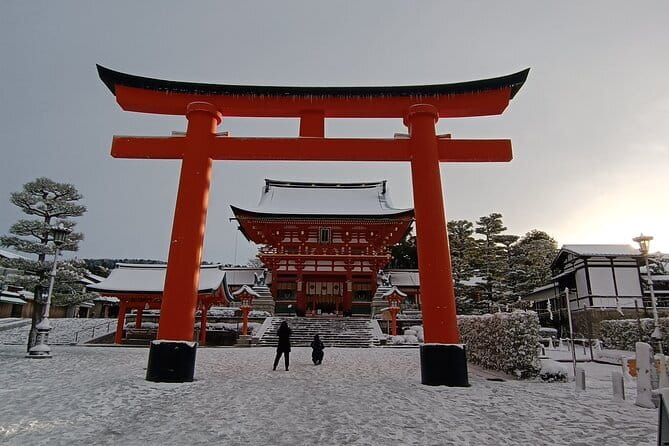
Your meet-up is at Starbucks Coffee – Kyoto Tower Sando, in front of Kyoto Station. The address listed for the start point is 600-8216 Kyoto, Shimogyo Ward, Higashishiokōjichō, 7211 Kyoto Tower Building.
I like this meeting choice because it’s hard to get lost. Kyoto Station is a natural hub, so you can arrive, confirm you’re in the right place, and get your bearings fast before the walk and rides begin.
Also, this first stop is short. You get a moment to settle in, then the tour shifts into motion. It’s a small thing, but it helps the whole morning feel organized instead of scattered.
Fushimi Inari-taisha: Red Gates Without the Crowd Crush
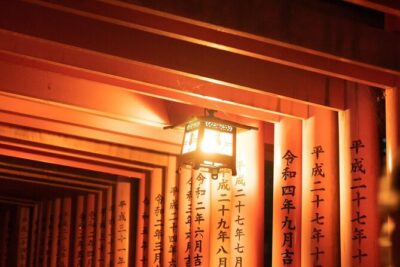
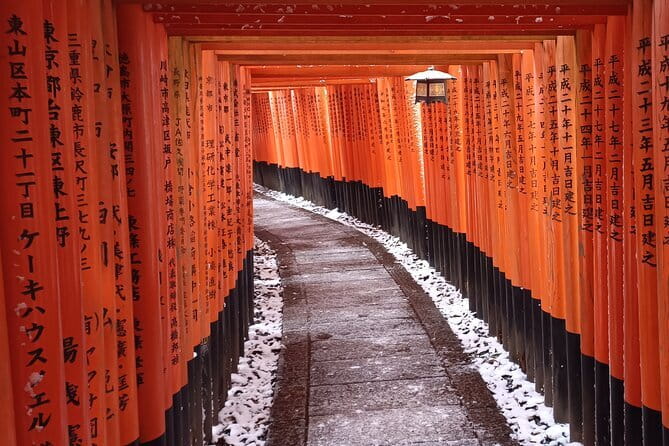
Fushimi Inari-taisha is the shrine people talk about as soon as you mention Kyoto. You’ll spend about 1 hour 30 minutes here, with the big focus on the thousand red gates and the Shinto ideas behind them.
The practical win of the early timing is simple. The later you arrive, the more your photos turn into a game of avoiding shoulders. Going early helps you enjoy the views while there’s less crowd pressure moving through the same narrow paths.
The cultural win is also worth it. The tour is designed to explain Shintoism as a living part of Japanese society, not just a name to memorize. Even if you’ve read a bit before coming, a guide can connect what you see in front of you to the meaning of shrines and the rituals that keep them relevant.
One caution: Fushimi Inari is famous for a reason, and you’ll still be in a very popular place. So if you’re the type who wants total quiet and wide-open space, you might not get that here. But you do get the best shot at relief by starting early.
- PERFECT KYOTO 1-Day Bus Tour★ 5.0 · 13,518 reviews
- Kyoto: Fushimi Inari, Kinkakuji, Bamboo Grove 1 Day Bus Tour★ 4.8 · 4,316 reviews
- Kyoto: Tea Ceremony in a Traditional Tea House in Kiyomizu★ 4.9 · 3,519 reviews
- Kyoto Geisha Walking Tour: Gion District & Hidden Gems★ 4.7 · 3,273 reviews
- Kyoto: Tea Ceremony Ju-An at Jotokuji Temple★ 4.9 · 3,207 reviews
Arashiyama Bamboo Forest: Nature, Then Japanese Society Context
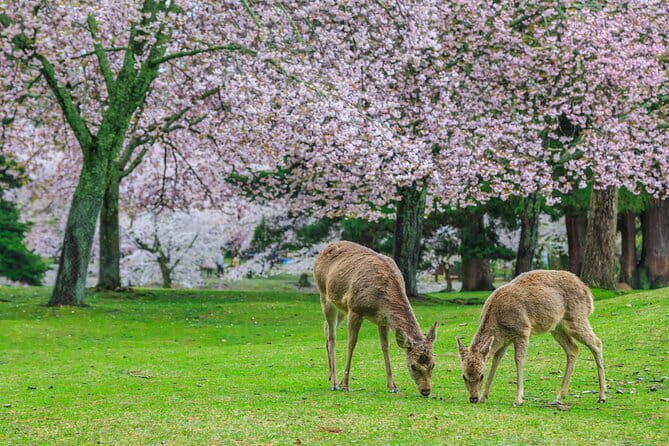
After Fushimi Inari, you head to Arashiyama Bamboo Forest for another 1 hour 30 minutes. This is the part that changes the mood quickly. The walk under bamboo gives you that iconic Kyoto feeling, with light, shade, and a sense that you’ve stepped into a quieter pocket of the city.
What I like about this stop is that it’s not only about taking pictures. The tour includes explanation of Japanese society around what you’re seeing in nature and the way people interact with these spaces. It helps the bamboo forest feel more like a real place locals and visitors share, rather than a film set you speed through.
Could there be a drawback? Yes. Bamboo forests are popular, and even early timing doesn’t erase crowds completely. If the bamboo forest is your absolute top priority and you’re hoping for a near-empty experience, set your expectations accordingly. Still, your morning schedule is built to keep you moving, and that matters more than arriving at every place at the perfect second.
Practical tip for your energy: plan to stay flexible. You’ll be walking and riding between stops, and the tour is about using time well, not dragging your feet. If you keep a steady pace, the whole half day feels smooth.
Kinkakuji Golden Pavilion: Buddhism and the One Entrance Fee
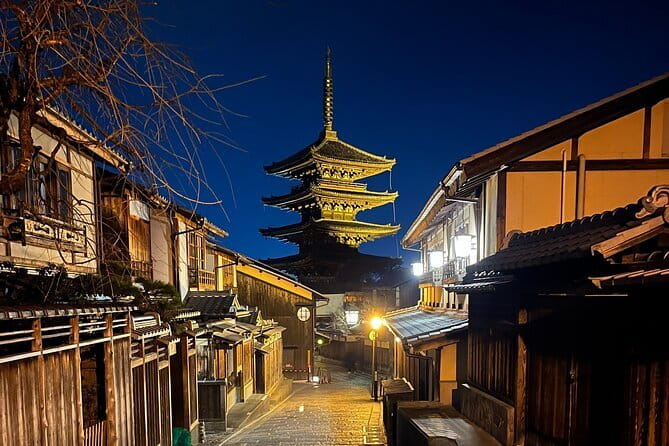
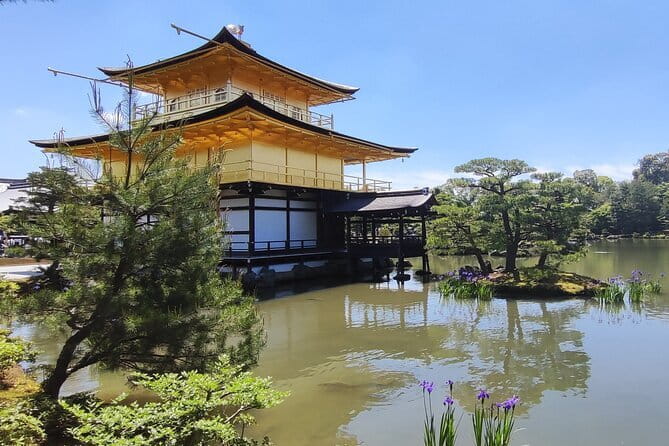
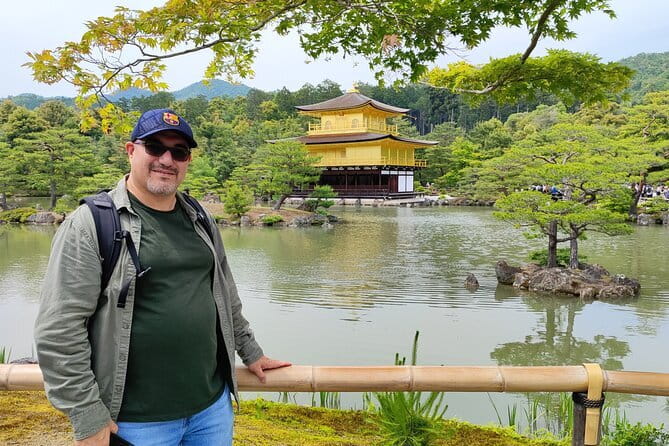
Your final big sightseeing stop is Kinkakuji, the Golden Pavilion. You’ll have about 1 hour 30 minutes here, and this is the only major attraction on the schedule with an entrance fee.
The cost is listed as ¥500 per person, not included in the price. That’s actually pretty reasonable compared to many “top name” attractions, but you should still budget for it so you’re not surprised when you arrive.
Kinkakuji also gets treated with context. The tour is set up to explain Buddhism in Japan and the history of the temple while you look at the pavilion and its surroundings. This is where a guided morning can pay off, because the same golden structure hits differently when you understand what a temple represents and why it’s maintained.
A good way to think about the time here: it’s long enough to enjoy the views and still feel like you didn’t rush. But it’s not long enough to turn into a slow, lingering museum day. If you want extra time for photos or slower exploration, you can do that after the tour, since the half-day format leaves room.
Kyoto Station Finish: Keeping the Morning Efficient
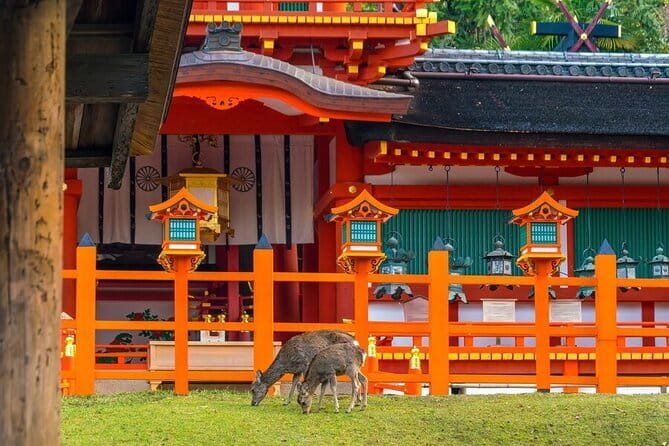
You wrap up back at the starting area, spending about 15 minutes at the Kyoto Station building area. This is useful if you want to keep the day flexible.
Because you’re returning to Kyoto Station, you’re not stuck trying to figure out transport from a far-off neighborhood. You can head to lunch, explore nearby streets, or build an afternoon plan around whatever energy you have left.
It’s also a mental reset. When you finish at a hub, it’s easier to transition from sightseeing mode to explore mode without stress.
Price and Value: What Your Money Actually Covers
The tour price is $94.71 per person for a half-day experience. Here’s how I’d judge the value based on what’s included.
What you get included:
- An experienced local guide with good English
- A small group experience (up to 8 travelers)
- Time built around major Kyoto highlights
- Admission tickets for the early stops, including Fushimi Inari and Arashiyama
What costs extra:
- Kinkakuji entrance fee: ¥500 per person
- Public transportation: listed as ¥1,300 per person
- Gratuity is not included
Here’s why this can still be a good deal. You’re paying for more than the sights. You’re paying for somebody to map your morning, move you efficiently between big spots, and give you cultural context so the time feels meaningful. In Kyoto, where transit can be confusing when you’re tired, that “efficiency tax” matters.
If you’re trying to go completely DIY, you could, in theory, piece it together. But the hidden cost is your time and the risk of losing momentum, especially when crowd levels change and you’re trying to hit three icons in one day.
The Group Size and Guide Style That Makes It Feel Easy
This tour caps at 8 travelers, which changes the vibe fast. With a small group, you’re not one of dozens being moved like a herd. You can ask questions and still stay on schedule.
The reviews you’d see for this kind of route almost always stress efficiency, and this one clearly has that handled. Some groups are described as feeling almost private, because the guide can respond to the group in real time. That shows up most when timing matters, like getting through Fushimi Inari smoothly and not burning your Kinkakuji time on logistics.
Guide name you might encounter: Indra. He’s singled out for being friendly, informative, and for planning the day so the schedule stays intact. That planning is what helps you keep the morning moving without making every stop feel rushed.
What This Tour Best Fits (And Who Should Skip It)
This works best if you want a hit list, but not a drive-by. You’ll see the big Kyoto names early, and you’ll get explanations about Shinto and Buddhism in the context of what you’re standing in front of.
It also suits people who like structure. If you’re the type who enjoys having a route and timing laid out, you’ll appreciate how this half-day flows. You still get your afternoon free, unlike full-day tours that swallow the whole day.
Consider skipping or adjusting if:
- You’re only interested in one attraction and don’t want to split your time
- You hate walking and are sensitive to how active a walking tour can be
- You don’t want to pay separate costs for Kinkakuji and transport
Weather and Timing Reality Check
This experience requires good weather. If the tour is canceled due to poor weather, you’ll be offered a different date or a full refund. That’s a fair policy for a walking route, and it’s especially relevant in seasons when conditions can shift quickly.
If you book, keep an eye on forecasts close to the date. And have a flexible attitude, because Kyoto weather can change your comfort more than you’d expect.
Should You Book This Early Half-Day Kyoto Highlights Tour?
If your priority is seeing Fushimi Inari, Arashiyama bamboo forest, and Kinkakuji in one smart morning, this is a strong option. The early start is the biggest advantage, and the small group size makes the whole experience feel manageable.
I’d book it if you want value from a guide, not just a ticket. The added context about Shinto and Buddhism, plus the route efficiency, is what turns three famous stops into a Kyoto morning that makes sense.
I’d think twice if you’re trying to do everything for free and you dislike extra fees. Between the Kinkakuji entrance (¥500) and transport (¥1,300), you do have add-ons. But if you’re okay with that trade for a smooth half-day plan, this tour delivers.
FAQ
How long is the Early Half Day to Kyoto Highlights tour?
It runs for about 5 hours.
Where does the tour start?
You meet at Starbucks Coffee – Kyoto Tower Sando, in front of Kyoto Station (address provided in the booking details).
What time does the tour start?
The start time is 8:00 am.
Is the Golden Pavilion (Kinkakuji) entrance fee included?
No. The Kinkakuji entrance fee is ¥500 per person and is not included.
How much is public transportation during the tour?
Public transportation is listed as ¥1,300 per person, and it is not included in the price.
How big is the group?
The tour has a maximum of 8 travelers.
Do I receive a mobile ticket?
Yes. The tour includes a mobile ticket.
What is the cancellation policy if weather is bad?
You can cancel for a full refund up to 24 hours in advance of the experience start time. The tour requires good weather, and if it’s canceled due to poor weather, you’ll be offered a different date or a full refund.