
REVIEW · KYOTO TEA CEREMONIES AND MATCHA
Kyoto Private Tea Ceremony at a Japanese Inns
Candlelight turns matcha into a moment. This private Kyoto tea ceremony happens after dark in a long-established ryokan, set in a candlelit room where the atmosphere does half the work for you. I also love that translator devices are provided, so you can understand the steps and ask questions without guessing.
What really makes this feel special is that you are not just watching a performance. You get kimono dressing with a photo shoot, plus access to a 20-tatami banquet hall that is normally closed to the public. The evening stays personal too, with a small group and lots of help from the hosts Matsuda and Mayumi.
One possible drawback: it is a short experience, about 59 minutes, so you get the highlights rather than a full, slow education. Also, expect a dark, candlelit room, so photos look moody, not bright and crisp.
In This Review
- Key things I’d mark on your Kyoto map
- Kyoto After Dark in a 20-Tatami Ryokan Room
- Meeting at ZEN: Where the Evening Starts
- Kimono Dressing and Photo Shoot, Including Bridal Uchikake or Haori
- A Short Zen Reset Before the Tea
- Tea Ceremony Demonstration, Matcha, Sweets, and the Actual Flow
- Your Matcha Whisking Turn, So You Take Part
- Hosts Matsuda and Mayumi, plus Translation That Actually Helps
- Price and Value for a Private Kyoto Cultural Evening
- Who This Tea Ceremony Fits Best
- Should You Book This Kyoto Private Tea Ceremony at a Japanese Inn?
- FAQ
- How long is the Kyoto private tea ceremony experience?
- What group size is this private tea ceremony for?
- What’s included in the ceremony?
- Do I need to speak Japanese?
- Can I take photos during the activity?
- Where do I meet for the activity?
- What is the price?
- Can I cancel and get a refund?
Key things I’d mark on your Kyoto map
- After-dark ryokan setting: Candlelight, a quiet hall, and a different side of Kyoto than temples by day.
- Kimono dressing plus props: Bridal uchikake or a men’s haori, with photo-friendly items like folding fans and swords.
- Zen meditation in the flow: A brief reset that helps the tea part land better.
- Hands-on matcha whisking: You make matcha yourself, not just taste it.
- Small private group, real language support: Translator devices keep the experience interactive.
- Photos are welcome: You can document the moment throughout.
Sit down somewhere quieter. Other tea rooms we booked
- Kyoto: Tea Ceremony in a Traditional Tea House in Kiyomizu
★ 4.9 · 3,519 reviews - Kyoto: Tea Ceremony Ju-An at Jotokuji Temple
★ 4.9 · 3,207 reviews - Kyoto: 45-Minute Tea Ceremony Lesson Experience
★ 4.3 · 2,378 reviews - Kyoto: Table-Style Tea Ceremony at a Kyo-Machiya
★ 4.9 · 1,211 reviews
Kyoto After Dark in a 20-Tatami Ryokan Room
Kyoto at night can feel like two different cities. Daytime is for temples and neighborhoods. Nighttime is for rhythm, quiet, and the kind of cultural activities you usually only see in daylight photos.
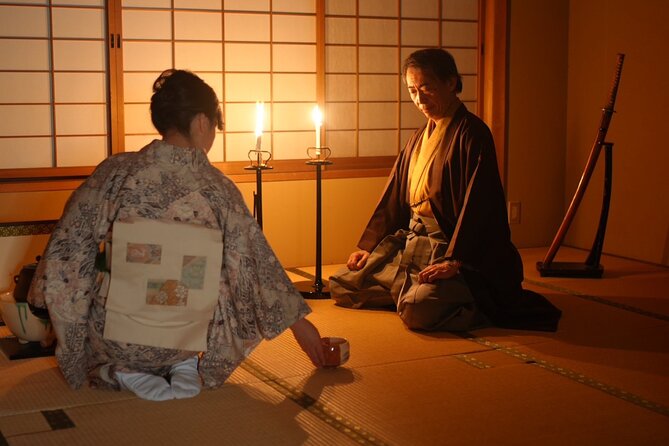
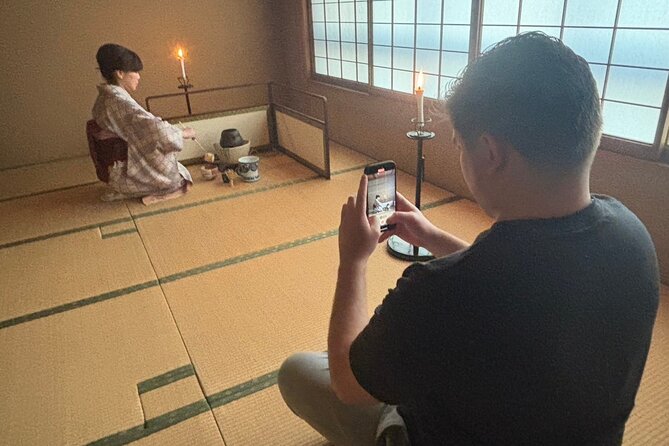
This tea ceremony leans hard into that after-dark mood. The venue uses candlelight in a darker room, and you experience the ritual in a space that feels intentionally hushed. That is a big part of why I think this works so well, especially if your Kyoto days have been packed with big sights.
Even better, the room is a 20-tatami banquet hall normally closed to the public. That detail matters. You are not stuck in a small corner studio. You are in a real, traditional-style space where the ceremony fits the architecture instead of fighting it.
Meeting at ZEN: Where the Evening Starts
Your tour starts at 茶道体験所 禅 (ZEN: Tea Ceremony Experience in Kyoto). The address is 600-8323 Kyoto, Shimogyo Ward, Kanayachō, 490 緑風荘 4階. It ends back at the same place, so you do not have to plan a second stop or worry about transportation home at the end.
It is also listed as near public transportation, which is practical. Kyoto can chew up time if you keep bouncing between far-apart areas. Here, the meeting point is set, and the experience is self-contained.
You will get a mobile ticket, and you will receive confirmation at the time of booking. That is useful if you like a smooth check-in without lots of back-and-forth.
Kimono Dressing and Photo Shoot, Including Bridal Uchikake or Haori
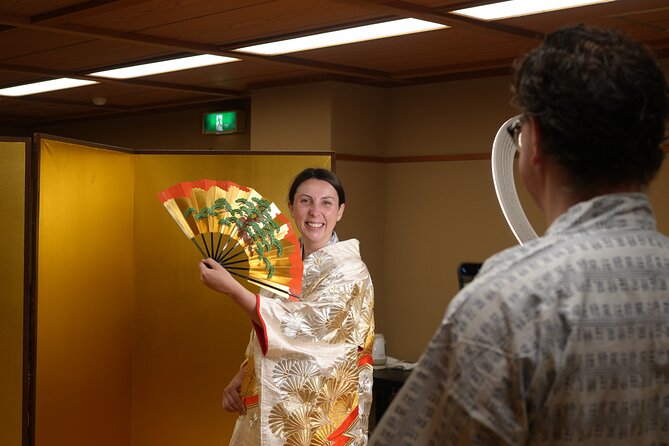
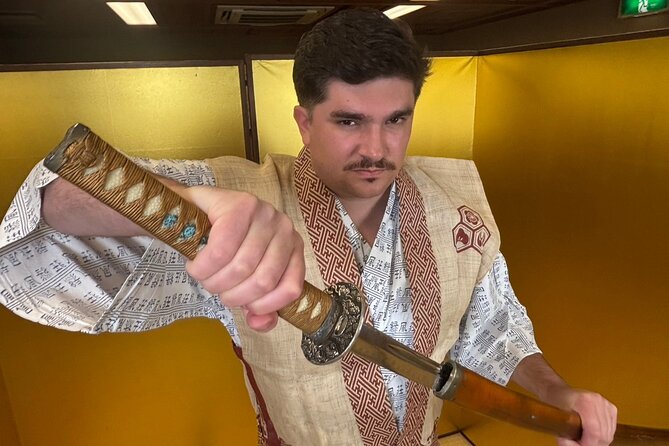
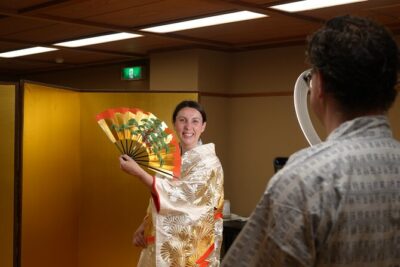
The first major block is kimono dressing and a photo shoot, about 15 minutes. You are dressed in either a bridal uchikake or a men’s haori, and you use photo props like folding fans and swords. It is very staged, in the best way, because the goal is to make you look and feel like part of the scene.
One reason this works for me is that it gives you an instant visual change. Kyoto photos are often about buildings, streets, or gardens. Here, you are the foreground. If you’ve ever wondered what it feels like to wear traditional clothing in a respectful, guided setting, this is the simplest way to try it.
You also get professional lighting for the shoot. That is important because candlelit spaces can otherwise make photos look grainy or dim. The lighting helps you get shots that look intentional instead of accidental.
A quick note on timing: this portion is short. If you want a lot of slow photo time, you might need to adjust expectations. Still, you can take photos throughout the experience, so you are not limited to the initial session.
- PERFECT KYOTO 1-Day Bus Tour★ 5.0 · 13,518 reviews
- Kyoto: Fushimi Inari, Kinkakuji, Bamboo Grove 1 Day Bus Tour★ 4.8 · 4,316 reviews
- Kyoto: Tea Ceremony in a Traditional Tea House in Kiyomizu★ 4.9 · 3,519 reviews
- Kyoto: Tea Ceremony Ju-An at Jotokuji Temple★ 4.9 · 3,207 reviews
- Kyoto: 45-Minute Tea Ceremony Lesson Experience★ 4.3 · 2,378 reviews
A Short Zen Reset Before the Tea
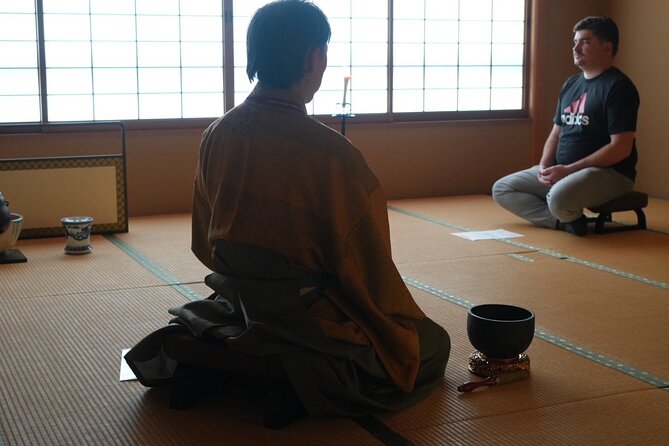
After the kimono and photos, the program includes Zen meditation for about 4 minutes. It is brief, which makes it more doable for people who think meditation might be intimidating or boring.
In practice, that short pause helps you switch gears. Tea ceremony is partly technique, partly mindset. Even if you do not fully “get” Zen, having a guided moment before matcha makes the later steps feel less like a show and more like a ritual.
The room’s quiet tone helps here too. Candlelight and calm instruction naturally lower the volume in your body. For jet-lagged days or busy sightseeing days, this tiny reset can feel like a relief.
Tea Ceremony Demonstration, Matcha, Sweets, and the Actual Flow
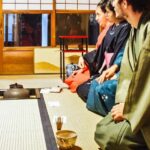
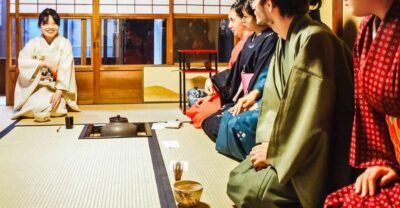
Next comes the tea ceremony demonstration, about 20 minutes. You are welcomed as a guest, receive a bowl of matcha, and watch the flow of a traditional tea gathering.
This is where I think the translation support becomes more than a convenience. The tea ceremony has steps, gestures, and etiquette details. If you only understand one or two points, it can still be pleasant, but it becomes easy to miss why the ritual is structured the way it is.
With translator devices available, you can follow along and ask questions. That means you can learn what each moment is for, not just sit through it. And yes, the ceremony includes matcha green tea and sweets, so you are tasting as you learn.
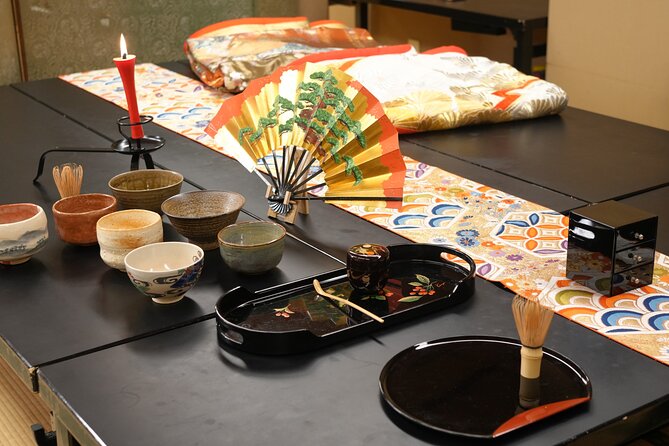
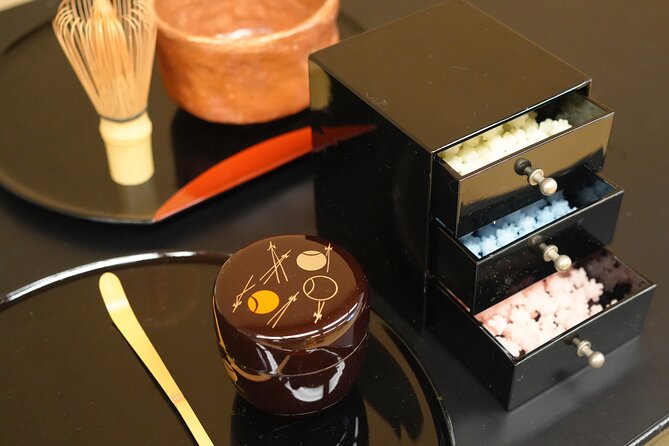
The set also includes the tea ceremony utensils, so the demonstration stays practical and grounded. You are not watching an abstract explanation. You see what the tools are and how they get handled.
Your Matcha Whisking Turn, So You Take Part
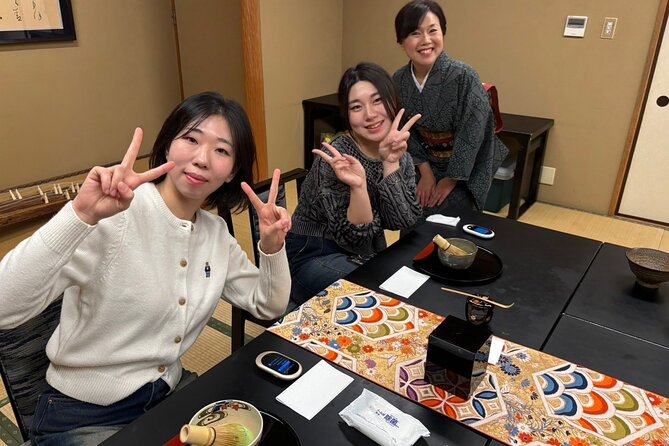
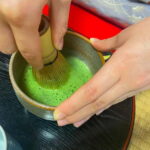
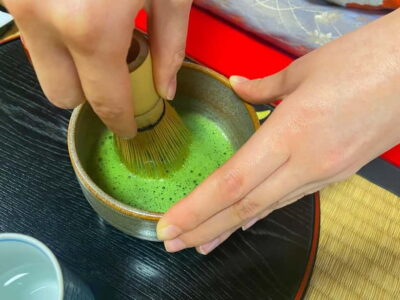
Then it is your turn for matcha whisking, about 20 minutes. This is one of the best values in the whole experience, because it turns you from spectator to participant.
Whisking matcha is a skill with feel, and it does not need to be perfect to be rewarding. You learn the motions, the pacing, and how to respond when the texture changes. Even if your first bowl is not Instagram-perfect, you still get the satisfaction of making it yourself.
The fact that coffee and/or tea are included as well is a nice touch. It rounds out the evening and makes the sweets portion feel more complete.
This is also the part where the small group matters. With a group size of 2 to 6, you are more likely to get individual attention as you practice, rather than getting rushed through.
Hosts Matsuda and Mayumi, plus Translation That Actually Helps
The tone you hope for in a cultural activity is warm and patient. This experience hits that, especially thanks to the hosts Matsuda and Mayumi. In the reviews, people repeatedly mention how friendly, joyful, and helpful they are.
More importantly, the translation devices make the evening interactive. It’s not just a headset that quietly narrates. You can ask questions, and kids can even use their own language to communicate. That detail matters if you are traveling with children, or if your group has mixed language comfort levels.
Photography help is also built in. Staff assist with photography during the kimono photo shoot, which solves a common problem. Many travelers arrive with a camera full of wrong-angle selfies. Here, someone is actively guiding the photos.
The experience is private for your group. That means you get a calmer pace, and you are not sharing your room with strangers who might have different expectations of the evening.
Price and Value for a Private Kyoto Cultural Evening
The price is listed as ¥15,000 for adults and ¥3,000 for children under 15. There is also a per-person price shown as $97.98, which lines up with the adult cost in typical terms.
Is it worth it? For me, it comes down to what you get bundled into roughly an hour. You are getting:
- Kimono dressing and a photo shoot (with props and professional lighting)
- Zen meditation
- A tea ceremony demonstration with matcha and sweets
- Your own matcha whisking practice
- Utensils and costume-related items included
- A licensed guide
- Translator devices
- Photo assistance throughout
A lot of Kyoto experiences charge separately for food, culture instruction, and photos. Here, those pieces are combined. You are paying for a whole evening where the setting, the teaching, and the participation are built together.
One practical consideration: because it is short, the value is highest if you want a concentrated cultural experience with real hands-on time. If you want a long, multi-hour tour story with extra stops around Kyoto, you may feel like you want more. But if you want a thoughtful hour after a day of sightseeing, the structure fits perfectly.
Who This Tea Ceremony Fits Best
This is a strong choice for couples and small families who want something quiet and meaningful that does not require advanced planning or Japanese language skills.
You should also consider this if you care about aesthetics. The candlelit setting, kimono wardrobe, and professional photo lighting make it one of those activities that gives you images you will actually want to keep. Photos are welcome throughout, so you are not stuck waiting for permission.
Because the group size is limited to 2 to 6, it also suits people who hate crowded tours. Private time in Kyoto, especially at night, is a luxury you can feel.
If you are very sensitive to dim lighting, keep that in mind. This is intentionally candlelit and darker than bright indoor settings. The vibe is part of the point, but it may affect how clearly you see details.
Should You Book This Kyoto Private Tea Ceremony at a Japanese Inn?
I’d book this if you want an evening in Kyoto that feels like you’re doing something, not just seeing something. The combination of kimono dressing, Zen meditation, a guided tea ceremony, and your own matcha whisking is a lot packed into 59 minutes, and translation support makes it truly accessible.
I would skip it if you are already confident doing tea ceremonies on your own and want a longer, deeper, multi-stop cultural itinerary. Also, if your priority is bright, high-visibility photography, the candlelit setting may not match your style.
But if your goal is a calm, respectful, well-guided Kyoto moment after dark, this is one of the easiest cultural wins you can book.
FAQ
How long is the Kyoto private tea ceremony experience?
The experience lasts about 59 minutes.
What group size is this private tea ceremony for?
It is a private activity with group sizes of 2 to 6 people.
What’s included in the ceremony?
You get matcha green tea and sweets. You also get kimono dressing and a photo shoot, Zen meditation, a tea ceremony demonstration, and a matcha whisking experience. Katana, costumes, tea ceremony utensils, and a licensed guide are also included, along with staff assistance with photography.
Do I need to speak Japanese?
No. Translator devices are available so you can communicate regardless of language.
Can I take photos during the activity?
Yes. Photos are welcome throughout, and staff will assist with photography.
Where do I meet for the activity?
You meet at 茶道体験所 禅 (ZEN: Tea Ceremony Experience in Kyoto), 600-8323 Kyoto, Shimogyo Ward, Kanayachō, 490 緑風荘 4階. The activity ends back at the same meeting point.
What is the price?
The adult price is ¥15,000. Children under 15 are ¥3,000.
Can I cancel and get a refund?
Yes, you can cancel for free up to 24 hours in advance for a full refund. If you cancel less than 24 hours before the start time, the amount paid is not refunded. The experience requires good weather, and if it is canceled due to poor weather, you will be offered a different date or a full refund.
Kyoto by the Bowl
Newest Kyoto write-ups from the Loving Japan desk
Kyoto Tea Ceremonies and Matcha, side by side.
 ★ 4.9Tea Ceremony in a Traditional Tea House in KiyomizuFrom $493,519 reviews
 ★ 4.9Tea Ceremony Ju-An at Jotokuji TempleFrom $293,207 reviews
 ★ 4.345-Minute Tea Ceremony Lesson ExperienceFrom $222,378 reviews
 ★ 5.0World Heritage Kyoto & Nara Uji Authentic Matcha ExperienceFrom $1291,573 reviews
 ★ 4.9Tea Ceremony ExperienceFrom $251,426 reviews
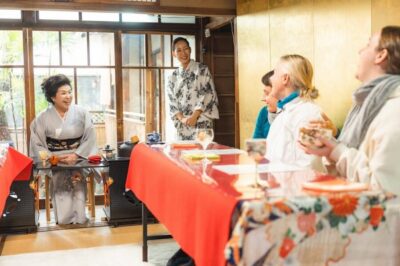 ★ 4.9Table-Style Tea Ceremony at a Kyo-MachiyaFrom $451,211 reviews
 ★ 4.8Kenrokuen Tea Ceremony ExperienceFrom $351,139 reviews
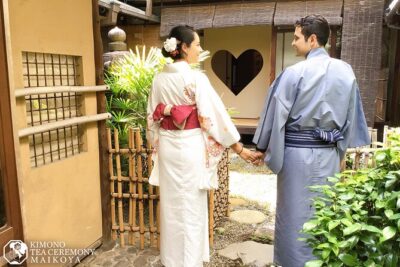 ★ 5.0Kimono Tea Ceremony at Kyoto Maikoya, NISHIKIFrom $65911 reviews
Filed on these lists too