
REVIEW · 1-DAY TOURS
Kyoto 1 Day Tour from Osaka
Kyoto gets crammed into one big day. This Osaka to Kyoto day trip strings together the big-hitters, including three UNESCO sites, plus Sanjusangendo Hall and Fushimi Inari, with a guide and built-in transport. I like how the day is structured, so you are not spending your short Kyoto time figuring out trains and meeting points. I also like the lineup, because you see both grand imperial sights and the iconic red torii path. The main drawback is that the group can feel very full, and if you are stuck mid-pack you may miss some of the guide talk while you are walking.
You start at 7:15am at Hotel Granvia Osaka, ride to Kyoto, tour by air-conditioned coach, and then head back to Osaka Station around 6:30pm. It is a mobile ticket experience, and the max group size is 40, which is great for scale but still means you should plan to move with the flow.
In This Review
- Key things to know before you go
- Kyoto in One Long Day From Osaka: What This Tour Really Delivers
- Price and Logistics: Transport, Seats, and the Real Cost Check
- Nijo Castle and Kinkaku-ji: Morning UNESCO Stops That Set the Tone
- Kyoto Imperial Palace, Fushimi Inari, and the Walk You Should Plan For
- Sanjusangendo Hall and Kiyomizu-dera: The Two Stops That Often Feel Like the Payoff
- Lunch Choices and How to Pick the Right Option
- Guide Style and Group Size: How to Make the Most of the Talking Part
- Weather, Temple Closures, and the Backup Plan That Keeps the Day Moving
- Who This Tour Fits Best, and Who Might Prefer a Different Plan
- Should You Book This Kyoto Day Trip?
- FAQ
- What time does the Kyoto 1 Day Tour from Osaka start?
- About how long is the tour?
- Where do I meet the tour in Osaka?
- Where does the tour end?
- Which UNESCO World Heritage sites are included?
- Is Kyoto Imperial Palace included on every tour day?
- Are seats reserved for the Osaka to Kyoto train?
- Is lunch included?
- What kind of lunch is offered?
- Can I cancel for a full refund?
Key things to know before you go
- UNESCO hits without a chore list: Nijo Castle, Kinkaku-ji, and Kiyomizu-dera are all part of the plan.
- Train plus coach: You do the Osaka to Kyoto transfer on JR public transport and the city touring on an air-conditioned coach.
- You can get flexible outcomes: Palace and castle closures can trigger temple swaps, like Kitano Tenmangu or Ryoan-ji.
- Lunch is optional, and so is the style: Western set menu or Indian vegetarian thali are available only if you select the right option.
- Expect crowds at the big photo spots: Golden Pavilion and the Kiyomizu area can get busy fast.
Still weighing up options in Osaka? These are the ones our reviewers rated highest.
- Osaka Go Karting Tour with Funny Costume
★ 5.0 · 2,658 reviews - Osaka Castle: Museum and Tower Entry Ticket
★ 4.5 · 2,380 reviews - Osaka: Shinsekai Food Tour with 13-15 Dishes at 5 Eateries
★ 4.8 · 2,204 reviews - Osaka Food Tour: 13 Dishes at 5 Local Eateries
★ 5.0 · 2,149 reviews
Kyoto in One Long Day From Osaka: What This Tour Really Delivers
If your Kyoto time is limited, this is a smart way to stack major sights into one calendar day. You start in Osaka, then you get a smooth out-and-back routine: rail to Kyoto in the morning, guided touring through several key districts, and then rail back to Osaka.
What makes the day work is the mix of places. Nijo Castle gives you power and politics, with the Tokugawa-era atmosphere and those dramatic interiors with gold leaf. Kinkaku-ji (the Golden Pavilion) is the visual payoff, especially if you catch it under decent light. Kiyomizu-dera turns the day spiritual and scenic, with a lookout terrace and a shopping lane atmosphere as you approach the temple.
But you are not doing Kyoto at a slow café pace. This is a “see a lot, move a lot” format. Even when pacing feels fair, you are still doing multiple transfers and walking sections, so you will want comfortable shoes and a realistic expectation: you are collecting moments, not deeply studying every room.
Price and Logistics: Transport, Seats, and the Real Cost Check
At $183.93 per person for an 11-hour day, the value depends on what you care about. This price bundles several things that would otherwise cost time and money: guide interpretation, admission fees for the ticketed stops, and the transport used for the day.
Here is the practical math in plain terms:
- You are paying for more than “a bus ride.” The tour includes admissions and the guided structure.
- Your day is split between JR public transportation and coach touring, so you get efficiency without doing all the planning yourself.
- Lunch is not automatic. If you choose With Lunch, you get a set menu. If you choose No Lunch, you get free time around Kyoto Station instead.
The biggest logistics detail to understand is seating. Between Osaka and Kyoto, the tour uses public transportation with non-reserved seats, and seating is not guaranteed. That matters most during peak times or high travel periods. One hint from real-world experience: if you are prone to stress when standing, plan to bring a little patience for the train portion.
In Kyoto itself, you are riding an air-conditioned coach, and seats may not be designated. So, for your sanity, just aim for a spot where you can hear the guide when you get off the bus. If you know you struggle to hear in large groups, take an early position on the coach and be ready to adjust.
Nijo Castle and Kinkaku-ji: Morning UNESCO Stops That Set the Tone
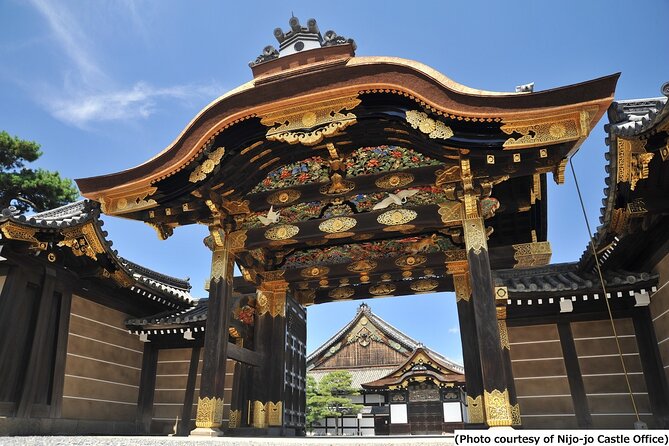
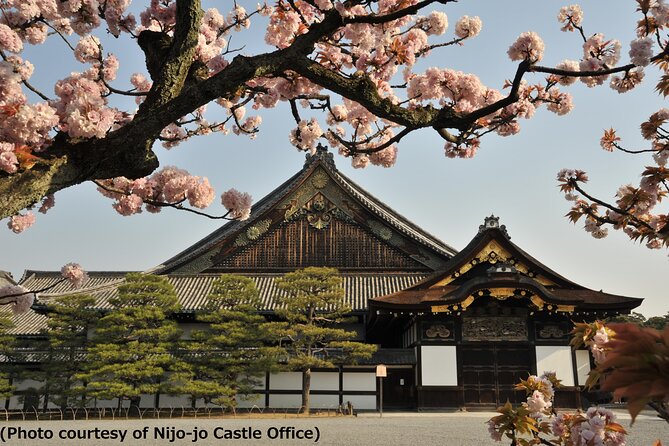
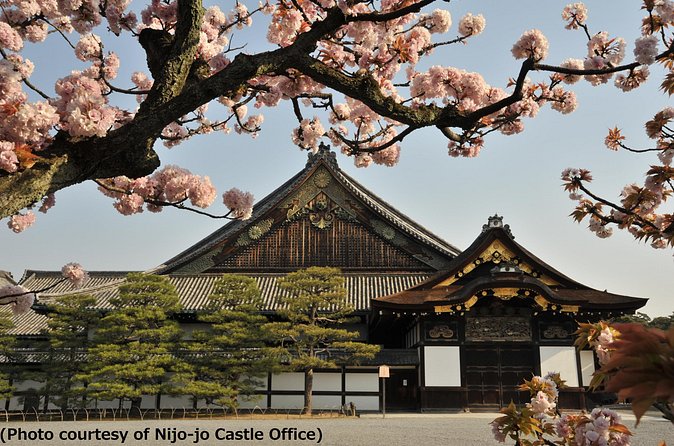
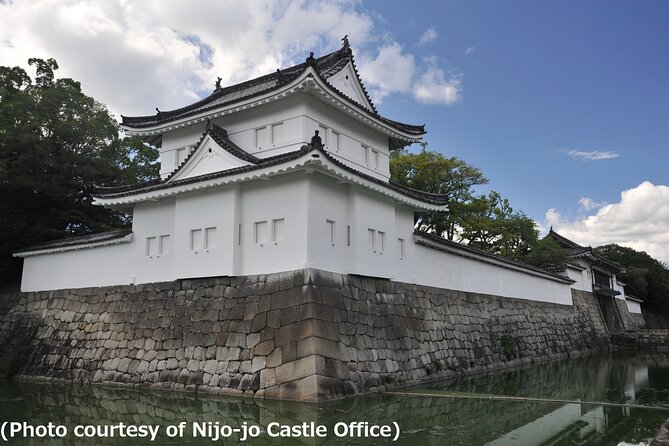
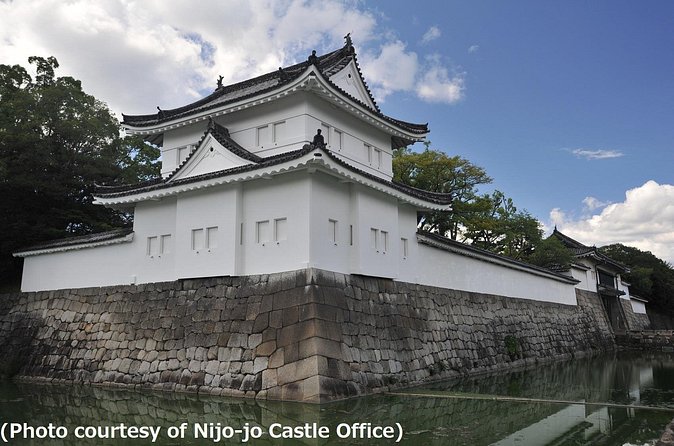
The morning is built around contrast. You begin with Nijo Castle, a UNESCO World Heritage site completed in 1626, tied to the Tokugawa Shogun and positioned to support the Kyoto Imperial Palace. Outside, it can feel stern, almost like a fortress mood set to historical drama. Inside, the contrast is what tends to land for people: gold leaf and lavish interiors against the castle’s solid, intimidating shell.
You get about 50 minutes at Nijo Castle, and admissions are included. That is enough time to see the big features and get a sense of the place without turning it into a multi-hour deep dive. If you love art details and old building craftsmanship, it is still worth it, but you will be moving. Think of it as a guided highlight walk.
Next is Kinkaku-ji, the Golden Pavilion, also UNESCO. You have around 45 minutes, with admission included. The building is covered in thin layers of pure gold and framed by a pond, so the scene is built for that instant “wow” photo moment. You do not need to be an architecture expert to appreciate what your eyes catch here.
One practical tip: arrive with your camera mode ready. The Golden Pavilion area tends to draw lots of attention, and light can change quickly with clouds. If you want your best shots, focus on getting a couple of angles early, then use the remaining time to slow down and watch how the setting shifts.
- Osaka Go Karting Tour with Funny Costume★ 5.0 · 2,658 reviews
- Osaka Castle: Museum and Tower Entry Ticket★ 4.5 · 2,380 reviews
- Osaka: Shinsekai Food Tour with 13-15 Dishes at 5 Eateries★ 4.8 · 2,204 reviews
- Osaka Food Tour: 13 Dishes at 5 Local Eateries★ 5.0 · 2,149 reviews
- Hungry Osaka Street Food Tour:15 Tastings & 3 Drinks with a Local★ 5.0 · 1,727 reviews
Kyoto Imperial Palace, Fushimi Inari, and the Walk You Should Plan For
After the Golden Pavilion, the tour moves toward imperial heritage at Kyoto Imperial Palace. You get about 40 minutes, and admission is listed as free. Even if you are not an expert on Japanese political history, the palace helps you understand the layers of power in Kyoto: how the emperor’s residence functioned until about the 19th century.
There is also an important reality check. The Kyoto Imperial Palace is closed to visitors on Mondays, and on days when there is an Imperial Household Agency event. When it is closed, the tour visits Kitano Tenmangu Shrine instead. If the closed day falls on the 25th, the swap is to Nishi Hongan-ji Temple. If you care about seeing the palace specifically, you should check which day you are going.
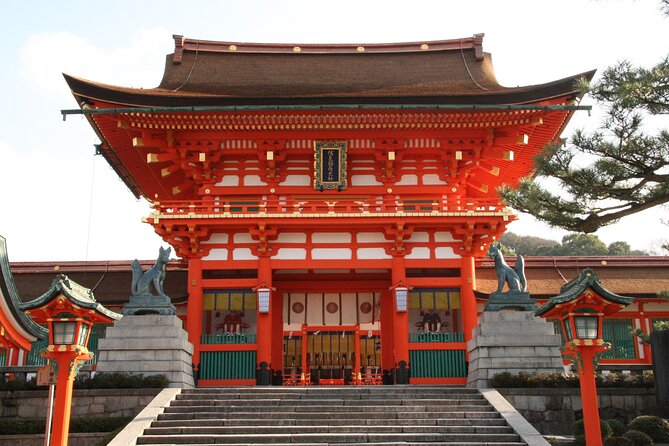
Then comes Fushimi Inari Taisha, the shrine known for vermilion torii gates. You get about 30 minutes, and it is admission free. Here is what you should know before you arrive: you walk from the parking lot to the shrine grounds, about 15 minutes one way. That means your “30 minutes” includes getting there, not just looping around the main torii areas.
Fushimi Inari works best when you approach it like a climb with breaks. The torii corridor is iconic, and even if you do not go all the way up, the gate rhythm is the experience. It also gets crowded, so try to time your photos between groups rather than stopping dead in the middle of a path.
Sanjusangendo Hall and Kiyomizu-dera: The Two Stops That Often Feel Like the Payoff
Sanjusangendo Hall is one of those places that makes you stop counting because the scale is the point. You explore Japan’s longest wooden structure, and it houses 1,001 life-size Buddhist Kannon statues. Admission is included, and you have about 30 minutes.
The layout can feel overwhelming at first, but the guide’s job here is useful: they explain what you are seeing and how it connects to the broader tradition of Kannon. If you are someone who normally zones out in museums, this is one of the few temple interiors that still grabs people, simply because the visual repetition hits your brain in a strong way.
Then you finish at Kiyomizu-dera, about 1 hour 10 minutes, with admission included. Kiyomizu is one of Kyoto’s most photographed temples, and the setting helps. You get sweeping views from the terrace, plus the historic shopping lane leading up to the temple, which adds that street-life texture to the religious site.
This stop is also where your timing and weather matter. Heavy rainfall can turn a day frustrating, but even then, you usually get the scenic payoff if you can stay dry for the main viewpoints. If it is clear, take advantage of the open terraces and watch the crowd flow. You will see people rushing, but you can usually find a quiet corner long enough to enjoy the view.
Lunch Choices and How to Pick the Right Option

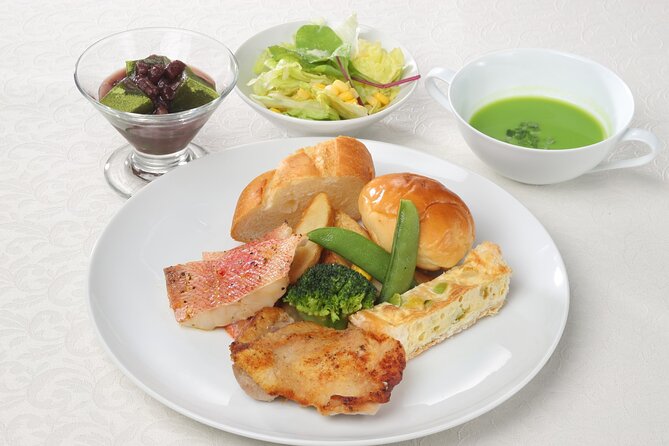
Lunch is one of the few moments where you can actually reset during the day. But the tour does not automatically include it. If you book the option with lunch, you get a Japanese-style meal in the form of a set menu.
You have two lunch paths depending on what you selected:
- Western-style set menu (with an option for vegetarian if you inform them at reservation time)
- Indian vegetarian thali set menu, with a listed selection of curries, vegetable pakora, yogurt, naan or roti, rice, salad, and a non-alcoholic drink
A key limitation: halal, gluten-free, and other meal requests are not available. So if you have strict dietary needs, double-check what is offered and choose your option carefully.
One practical advantage: people tend to be happy with the lunch compared to typical tour meals, partly because it is a set format that keeps the day on schedule. If you choose No Lunch, the tour gives you free time in the Kyoto Station area, which can work well if you want to eat exactly where you want and keep your options open.
Guide Style and Group Size: How to Make the Most of the Talking Part
This tour runs with an English guide interpreter fee included, and it is also supported by assistants on the train segments. That matters because Kyoto is spread out, and getting from one stop to the next is half the battle.
Where you will feel the tradeoff is group size. The cap is 40 travelers. Some people love the energy and humor, and there are stories about guides being funny and making history feel human. One guide name that pops up in the mix is Hiro-san, noted for history and humor, plus helpful support when people had questions.
But if you are mid-group and everyone is walking, hearing can be difficult. A couple of patterns show up: the guide voice might be too soft in a crowd, or there can be moments where there is a lot of information while you are trying to move. If you want the narration, position yourself so your ears are pointed toward the front when the guide starts explaining.
Also, bring a small mindset shift. You are not sitting at a lecture. You are walking through living spaces. If you miss one explanation, it is not the end of the day. Focus on the physical scenes, then ask questions when you get a natural pause.
Weather, Temple Closures, and the Backup Plan That Keeps the Day Moving
Kyoto is weather-proof in the sense that it always has something to see, but rain can still change how pleasant your day feels. Heavy rainfall has, in some cases, spoiled the experience and made temple time feel less fun. If you are going in rainy season, pack a compact umbrella or rain shell and keep your shoes ready for wet stone.
Then there are closures. The tour already plans around major site schedules, which is useful because you are not left scrambling with “closed” signs.
- Kyoto Imperial Palace: closed to visitors on Mondays (or the following day if Monday is a holiday), and on Imperial Household Agency event days. Swap destinations can include Kitano Tenmangu Shrine, and on 25th closure days, Nishi Hongan-ji Temple.
- Nijo Castle: closed on Tuesdays in January, July, August, and December. If closed, you visit Ryoan-ji Temple instead.
One more reality point: the order of activities can shift based on road conditions and congestion. That is normal in Kyoto. The tour is designed to handle it, but you should keep your expectations flexible.
Who This Tour Fits Best, and Who Might Prefer a Different Plan
This is a great fit if:
- You want to see major Kyoto icons without spending half your day on transit research.
- You have a short visit and want structure.
- You enjoy guided history explanations while still having time for photos.
It is not ideal if:
- You hate crowds and standing.
- You want long, slow wandering time per site.
- You prefer to control timing completely, especially at places like Gion or along the Kiyomizu shopping lane.
One thing I like about this tour’s design is that it gives you an easy “anchor day.” You can treat this as your Kyoto highlights tour, then spend your remaining time on your own in neighborhoods you care about. Some people even extend the experience by returning on their own after the guided day ends, especially if they want more time in areas like Gion.
Should You Book This Kyoto Day Trip?
Book it if you want maximum Kyoto visibility with a minimum of planning headaches. The lineup is strong: castles, a gold-leaf pavilion, an imperial palace setting, torii gates, 1,001 statues, and the terrace views at Kiyomizu-dera. With admission and guided interpretation included, the price starts to make sense, especially if you do not want to build your own day route from scratch.
Think twice if you are sensitive to noise and crowd flow, because the group size can make it hard to hear the guide during walking moments. If you book anyway, solve that problem with small habits: sit near the front when you can, wear comfortable shoes, and plan for a long day that moves.
If you are unsure, consider this rule: if you only have one Kyoto day, this tour is the practical way to cover the big targets. If you have multiple days, use this as a base day, then add your personal favorites after you see how you want Kyoto to feel.
FAQ
What time does the Kyoto 1 Day Tour from Osaka start?
The tour starts at 7:15am.
About how long is the tour?
The duration is about 11 hours.
Where do I meet the tour in Osaka?
You meet at Hotel Granvia Osaka, 3-chōme-1-1 Umeda, Kita Ward, Osaka.
Where does the tour end?
The tour ends at Osaka Station around 6:30pm, and there is no drop-off back to your hotel.
Which UNESCO World Heritage sites are included?
The tour includes Nijo Castle, Kinkaku-ji (Golden Pavilion), and Kiyomizu Temple.
Is Kyoto Imperial Palace included on every tour day?
Kyoto Imperial Palace is visited when it is open. If it is closed, the tour visits Kitano Tenmangu Shrine instead, and if the closed day falls on the 25th it visits Nishi Hongan-ji Temple.
Are seats reserved for the Osaka to Kyoto train?
No. The tour uses public transportation with non-reserved seats between Osaka and Kyoto, and seating is not guaranteed.
Is lunch included?
Lunch is included only if you select the With Lunch option when booking. If you choose No Lunch, you have free time to eat on your own in the Kyoto Station area.
What kind of lunch is offered?
Western-style set menu is offered with the With Lunch option. If you select the Indian thali option, the lunch is a vegetarian thali set menu with curries, vegetable pakora, yogurt, naan or roti, rice, salad, and a non-alcoholic drink.
Can I cancel for a full refund?
Yes, you can cancel for a full refund up to 24 hours in advance of the experience start time.
Newest Osaka write-ups from the Loving Japan desk



1-Day Tours, side by side.
 ★ 5.0Mt Fuji and Hakone 1-Day Bus Tour Return by Bullet TrainFrom $16326,383 reviews
 ★ 5.01-Day Tokyo Bus TourFrom $12914,250 reviews
 ★ 5.0PERFECT KYOTO 1-Day Bus TourFrom $12913,518 reviews
 ★ 4.0Mt Fuji & Hakone Cruise, Drum Show Bullet Train 1 Day from TokyoFrom $1497,413 reviews
 ★ 5.0Peaceful Hiroshima & Miyajima UNESCO 1 Day Bus TourFrom $1295,309 reviews
 ★ 4.8Fushimi Inari, Kinkakuji, Bamboo Grove 1 Day Bus TourFrom $1224,316 reviews
 ★ 4.5DisneySea 1-Day PassportFrom $572,726 reviews
 ★ 4.6Tokyo Disneyland 1-Day PassportFrom $572,512 reviews