
REVIEW · 1-DAY TOURS
Kyoto Top Four Highlights Day Trip from Osaka or Kyoto
Kyoto in one long day, done right. This tour strings together Nijo Castle and the Arashiyama Bamboo Forest with easy transport and a guide so you spend less time figuring things out. The catch: it is packed, and temple admissions cost extra.
I like that the day is built around the exact kind of places that are hard to line up on your own, especially when you are hopping between neighborhoods. Guides also matter here, and the reviews highlight a pattern: clear directions, good pacing, and extra care with the group, including examples like Theodore Chan sending instructions via WhatsApp and helping motion-sickness folks by seating them up front.
It also helps that the tour includes an air-conditioned vehicle and runs about 9 hours, so you are not doing a full DIY marathon. Budget for lunch too, since it is not included, but you are given time to eat independently.
In This Review
- Key Highlights I’d Prioritize
- One-Day Kyoto From Osaka or Kyoto, With a Plan That Holds Together
- Nijo Castle: Feudal Palace Architecture Without the Confusion
- Kinkaku-ji Golden Pavilion: A Temple Stop That Works Even With Limited Time
- Arashiyama in Chunks: Bamboo Forest, Black Torii, Kimono Forest, and Togetsukyo
- Arashiyama Rilakkuma Tea House: A Lighthearted Detour You Might Actually Enjoy
- Senbon Torii at Fushimi Inari: Thousands of Gates When the Day Is Long
- Price and Value: What $67 Covers, and What You Still Pay
- How the Day Feels: Pacing, Time for Yourself, and Guide Communication
- Who Should Book This Kyoto Top Four Highlights Trip
- Should You Book It or DIY?
- FAQ
- FAQ
- What’s included in the tour price?
- Are lunch and admissions included?
- How long is the day trip?
- Which stops are part of the route?
- What’s the group size limit?
- Can I cancel for a full refund?
Key Highlights I’d Prioritize
- A true highlights circuit in 9 hours covering Nijo Castle, Kinkaku-ji, Arashiyama, and Senbon Torii
- Air-conditioned vehicle plus a guide, so you are not wrestling with transit timing
- Free time sprinkled in, giving you room for photos, calm walking, and bathroom breaks
- Key admissions cost extra, including Nijo Castle and Kinkaku-ji
- Arashiyama variety in one stop, bamboo, a black torii at Nonomiya Shrine, Kimono Forest, and Togetsukyo Bridge
- Senbon Torii comes late, so stay with the group to avoid missing the final stretch
Still weighing up options in Osaka? These are the ones our reviewers rated highest.
- Osaka Go Karting Tour with Funny Costume
★ 5.0 · 2,658 reviews - Osaka Castle: Museum and Tower Entry Ticket
★ 4.5 · 2,380 reviews - Osaka: Shinsekai Food Tour with 13-15 Dishes at 5 Eateries
★ 4.8 · 2,204 reviews - Osaka Food Tour: 13 Dishes at 5 Local Eateries
★ 5.0 · 2,149 reviews
One-Day Kyoto From Osaka or Kyoto, With a Plan That Holds Together
The big value of this day trip is focus. Kyoto is huge, and trying to hit Nijo Castle, Kinkaku-ji, Arashiyama, and Fushimi Inari in a single day usually turns into a transport puzzle. This tour already does the heavy lifting by routing you through those areas in a logical order, with an air-conditioned vehicle and a guide to keep you on track.
You also get a realistic pacing model for a day like this. Nijo Castle gets a full hour, Kinkaku-ji gets 40 minutes, and then Arashiyama unfolds as a cluster of short stops where you can actually move and look. The tour runs about 9 hours, so yes, it is a long day, but it is not a rushed blur where you are only standing outside.
Group size is capped at 45, which usually helps with organization on bus days. Still, this is not a private tour, so you should expect that you will sometimes walk in a crowd, especially at the most famous photo stops.
Nijo Castle: Feudal Palace Architecture Without the Confusion
Nijo-jo Castle is where the day starts, and it is a smart first stop. The site was built in 1603 as the Kyoto residence of Tokugawa Ieyasu, the first shogun of the Edo Period, and the palace buildings are considered some of the best surviving examples of castle palace architecture from that era. The tour schedules about 1 hour here, which is enough time to see the main areas without turning it into a research trip.
One practical point: admission is not included. You will need to pay the castle and Ninomaru Goten Palace ticket separately, listed as ¥1,300 per person. If you hate surprise costs, plan for it right away so you can just enjoy the visit when you arrive.
A helpful thing about having a guide early in the day is orientation. Nijo Castle is not just one building you point at, it is a complex designed to feel like a power center, so you benefit from knowing what to look for. The reviews repeatedly praise guides for explaining the places clearly and keeping the group moving at a pace that still leaves you room to explore.
If you love Japanese architecture and court-era details, this stop is a strong foundation for the rest of the day.
Kinkaku-ji Golden Pavilion: A Temple Stop That Works Even With Limited Time
Next up is Kinkaku-ji, the Zen Buddhist temple famous for the Golden Pavilion. It is UNESCO World Heritage, and its standout feature is that dazzling golden exterior paired with serene gardens. The tour sets aside about 40 minutes, which is often the sweet spot for a single temple visit when you have a full schedule.
Again, you will pay the temple admission separately, listed as ¥500 per person. Since tickets are not bundled, I recommend you treat this day trip like a “guided plan plus add-on admissions,” not an all-in package.
Why this stop makes sense on a highlights circuit: Kinkaku-ji is one of Kyoto’s most instantly recognizable images. Even if you are not a temple superfan, it is a visit that gives you a real sense of Kyoto’s visual identity. With a guide, you are less likely to waste time circling and more likely to see the best angles efficiently.
Possible drawback: with a fixed schedule, you may not get the same slow, lingering pace you would on a half-day solo visit. For most people, that is fine, but if you want long contemplative temple time, plan at least one additional day in Kyoto beyond this tour.
- Hungry Osaka Street Food Tour:15 Tastings & 3 Drinks with a Local★ 5.0 · 1,727 reviews
- Osaka: Tea Ceremony Experience★ 4.9 · 1,426 reviews
- Osaka Kickstart: Hotspots & Hidden Gems Tour★ 5.0 · 1,306 reviews
- Osaka: Hotspots & Hidden Gems Walking Tour Private or Group★ 4.9 · 1,300 reviews
- Deep Backstreet Osaka Tours (Option to add Dinner)★ 5.0 · 1,290 reviews
Arashiyama in Chunks: Bamboo Forest, Black Torii, Kimono Forest, and Togetsukyo
Arashiyama is where the tour becomes more like a walking route through different moods. You get a quick orientation stop in the Arashiyama area, then the heart of the experience is the bamboo and shrine sequence.
Arashiyama Bamboo Forest is scheduled for about 40 minutes. This is the classic Kyoto symbol, tall stalks creating a calm tunnel effect that feels very different from Kyoto’s busier streets. You might run into crowds at peak times, so it helps to move steadily and prioritize your photo spots early in the time window.
Right after that, you visit Nonomiya Shrine, known for its distinctive black torii gate. The tour gives about 20 minutes here. This is a nice contrast, because it slows the day down. Many people focus only on big landmarks, but a shrine like this gives you an extra layer of Kyoto spirituality and atmosphere without requiring a huge time commitment.
Then comes the Arashiyama Kimono Forest, described as 600 clear acrylic cylinders, each standing 2 meters tall and wrapped with vibrant kimono fabrics. The scheduled time is about 20 minutes, and it is a fun, colorful break in the middle of all the traditional architecture. Since it is also a modern art-style installation, it helps keep the day from feeling like one long temple loop.
Next is Togetsukyo Bridge, the iconic bridge spanning the Katsura River. You get about 15 minutes. Even in a short slot, a bridge stop can be valuable because it gives you a wider view than the shrines and forest paths.
Overall, the Arashiyama portion works because it is multiple “micro stops” rather than one long, exhausting hike. It fits people who want to see a lot but still want a few moments to breathe.
Arashiyama Rilakkuma Tea House: A Lighthearted Detour You Might Actually Enjoy
One of the more unexpected stops is Arashiyama Rilakkuma Tea House. The tour allots about 15 minutes. The brand is based on the character Rilakkuma, and even the explanation is part of the charm: a bear in a relaxed mood.
This stop is not about cultural monuments in the same way as Nijo Castle or Kinkaku-ji. Instead, it is a quick, low-pressure break where you can reset, grab a snack or drink if you want, and keep moving without the stress of figuring out where to eat in the middle of Arashiyama.
If you are not into pop-culture stops, you might find the time a bit short or the theme a little random. But given how packed the day is, I think this kind of break can be genuinely useful, especially if you prefer a tour that keeps energy levels steady.
Senbon Torii at Fushimi Inari: Thousands of Gates When the Day Is Long
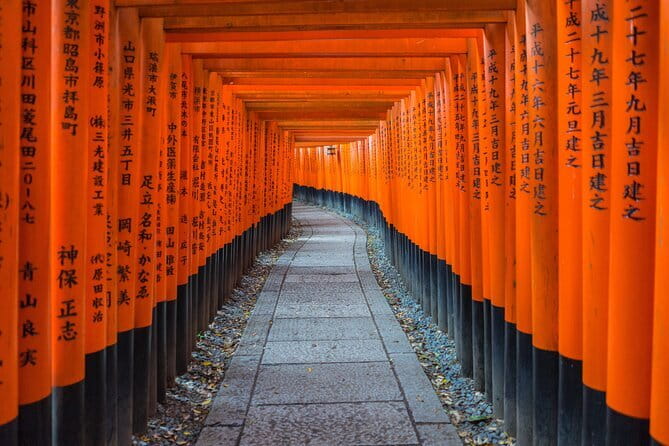
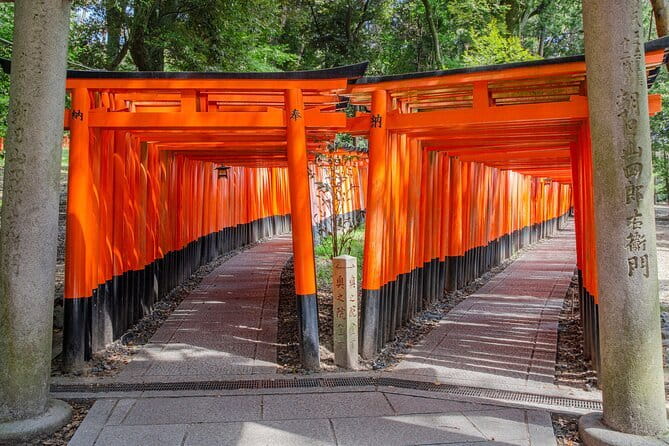
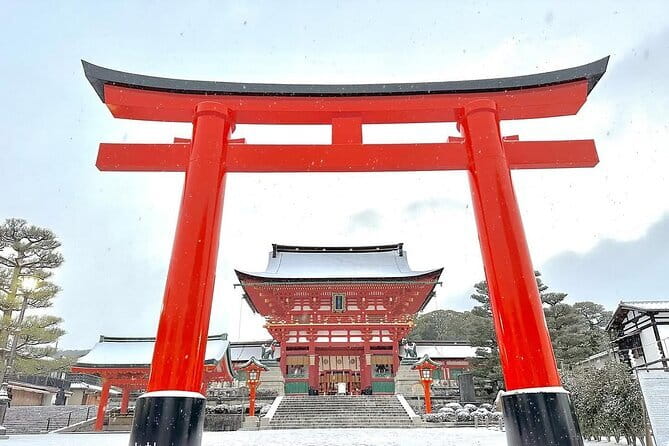
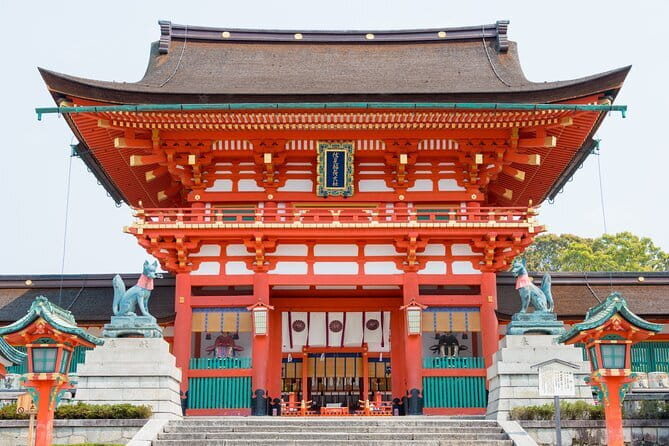
The final major highlight is Senbon Torii, the thousand torii gates area connected with Fushimi Inari Taisha. The tour description notes that there are around 30,000 Inari shrines in Japan, and Fushimi Inari is the head shrine. Here, the signature is the Senbon Torii, with thousands of vermilion red torii gates.
You get about 1 hour 10 minutes at this stop, and that is important. Walking through torii gates is one of those experiences where the real value comes from slow movement and repeated looking. You need enough time to enter the flow and then stop for photos without feeling like you are constantly checking your watch.
One caution from the overall experience pattern: since Senbon Torii is near the end of the route, you do not want to fall behind. There was an instance in the feedback where someone left the group partway through and missed this late stop, which suggests the schedule depends on everyone staying together during the final stretch.
If you love symbolism, this is also a strong “Kyoto wrap-up.” It is visually striking and unmistakably Japanese, and it gives the whole day a coherent ending after the castle and temple visits.
Price and Value: What $67 Covers, and What You Still Pay
The listed price is $67 per person, and what you get for that is solid for a one-day plan: an air-conditioned vehicle and a guide for a full approx. 9-hour itinerary. You also get a mobile ticket, which is practical when you are moving between stops.
What is not included is crucial for budgeting. You will pay:
- Nijo Castle and Ninomaru Goten Palace: ¥1,300 per person
- Kinkaku-ji temple: ¥500 per person
Total admissions listed: ¥1,800 per person.
So how do you judge value? If you are the kind of person who hates planning, this tour is buying you structure. The guide role matters because it reduces time-wasting and helps you understand what each site represents, not just where to stand for the picture. The reviews also emphasize guides who give clear instructions and keep the group organized, with examples like Brian and Amy being praised for organization, plus Theodore Chan being noted for sending detailed WhatsApp guidance and helping with motion-sickness seating.
If you are comfortable building your own day and know how to sequence Kyoto sites by transit, DIY could be cheaper on paper. But once you factor in time lost figuring out routes, meeting points, and ticket timing, the $67 starts to look like paying for stress reduction.
How the Day Feels: Pacing, Time for Yourself, and Guide Communication
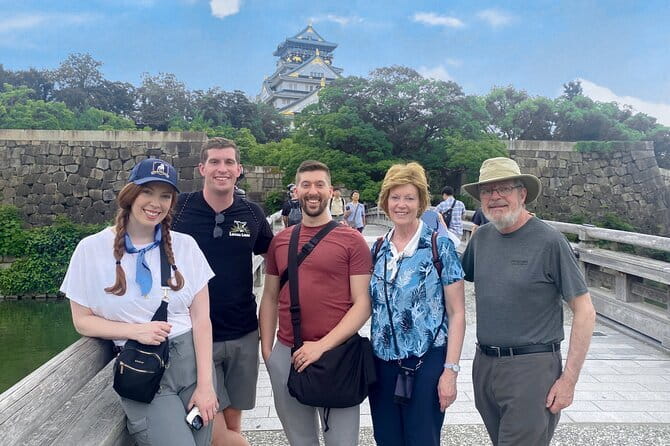
The schedule is tight but not chaotic by design. You get a mix of guided time and free time, so you can split your attention between learning and just wandering. The Arashiyama segment is especially friendly to that style of travel because it is multiple short stops that let you move and reset.
Guides are a big deal on tours like this, and the feedback shows a repeated theme: people valued guidance that was organized and entertaining, along with practical directions on how to move through each attraction and how to get back to the bus on time. Names showing up in the reviews include Teddy or Theodore, Amy, Jackson, Anson, Charlie, Saki, and Brian, and they are credited with being patient, funny, and good at keeping the group together.
One smart detail you may benefit from is advance communication. One review specifically mentions Theodore Chan sending instructions via WhatsApp the day before, asking about motion sickness. That suggests that if you mention a concern when booking, a guide might be able to adjust seating. Not everyone will get that exact level of personalization, but the pattern is there.
The only real downside is unavoidable: all these iconic spots in one day means you will not have the luxury of slow, repeat visits. It is a highlights sampler, not a deep immersion.
Who Should Book This Kyoto Top Four Highlights Trip
This tour is a strong match if you:
- Want major Kyoto sights in one day without building a routing plan
- Like having a guide explain what you are seeing, especially for Nijo Castle and Kinkaku-ji
- Prefer a day with air-conditioned transport and a structured schedule
- Are traveling with limited time in Kyoto and want an efficient use of that time
It may not be ideal if you:
- Want long unhurried temple time, hour after hour
- Hate tour groups and prefer silent, independent sightseeing
- Want to skip modern pop-culture style stops like the Rilakkuma Tea House, though you do not spend long there
For families, note that you should indicate stroller or large luggage when booking, since the tour asks for that at the time of reservation.
Should You Book It or DIY?
Book this if your priority is efficiency and seeing Kyoto’s biggest signature moments in one organized day. The price is not just for transport, it is also for a guide keeping the day coherent, plus the convenience of a mobile ticket and an air-conditioned vehicle.
DIY might win if you have multiple days in Kyoto and want to linger at fewer sites. You would also DIY if you want full control over arrival times at places like the bamboo forest and Kinkaku-ji.
My practical call: if you only have a day, and you want the “top four” experience without the planning burden, this tour is a sensible, high-likelihood option.
FAQ
FAQ
What’s included in the tour price?
The tour price includes an air-conditioned vehicle and a guide. It also uses a mobile ticket.
Are lunch and admissions included?
Lunch is not included, though time is provided for independent dining. Admission tickets are not included for Nijo Castle and Kinkaku-ji.
How long is the day trip?
The duration is about 9 hours.
Which stops are part of the route?
The tour includes Nijo Castle, Kinkaku-ji, Arashiyama (including the bamboo forest area), Nonomiya Shrine, Arashiyama Kimono Forest, Togetsukyo Bridge, Arashiyama Rilakkuma Tea House, and Senbon Torii (Thousand Torii Gates).
What’s the group size limit?
The maximum group size is 45 travelers.
Can I cancel for a full refund?
Yes, free cancellation is available. You can cancel up to 24 hours in advance for a full refund.
Newest Osaka write-ups from the Loving Japan desk



1-Day Tours, side by side.
 ★ 5.0Mt Fuji and Hakone 1-Day Bus Tour Return by Bullet TrainFrom $16326,383 reviews
 ★ 5.01-Day Tokyo Bus TourFrom $12914,250 reviews
 ★ 5.0PERFECT KYOTO 1-Day Bus TourFrom $12913,518 reviews
 ★ 4.0Mt Fuji & Hakone Cruise, Drum Show Bullet Train 1 Day from TokyoFrom $1497,413 reviews
 ★ 5.0Peaceful Hiroshima & Miyajima UNESCO 1 Day Bus TourFrom $1295,309 reviews
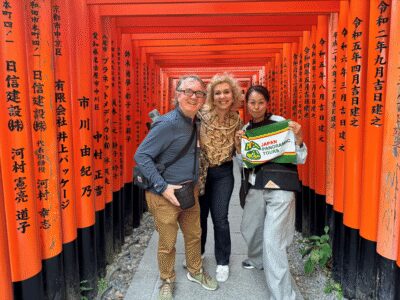 ★ 4.8Fushimi Inari, Kinkakuji, Bamboo Grove 1 Day Bus TourFrom $1224,316 reviews
 ★ 4.5DisneySea 1-Day PassportFrom $572,726 reviews
 ★ 4.6Tokyo Disneyland 1-Day PassportFrom $572,512 reviews