
REVIEW · DOTONBORI AND OSAKA STREET FOOD
Nostalgic Osaka walk, totally different from Dotonbori
Osaka has a quiet side most miss. This small-group walk through Karahori shows a slower, more lived-in Osaka that feels worlds away from Dotonbori’s chaos. I love how you get out of landmark mode and into neighborhood mode fast, guided step by step through everyday streets.
I also love the mix of craft stops and old-house shops, so the history comes with smells, textures, and real local tastes. Chieko-san points out details you would otherwise walk right past, like how the terrain hints at the area’s older moat lines and how machiya townhouses have been reused over time. One possible drawback is that it is a walking tour with some slight uphill or downhill, plus narrow lanes where residents still live, so you’ll want comfortable shoes and you must be extra quiet and respectful.
You get a choice of a morning or afternoon slot, and the route starts and ends near central Osaka so it fits cleanly into a normal sightseeing day. Expect about 2 hours, a mobile ticket, bottled water included, and a guide who can also suggest what to do next once the walk ends.
In This Review
- Key things that make this tour special
- Karahori feels like real Osaka, not a theme park
- What 2 hours with up to 6 people actually means for you
- Meeting point near Tanimachi, plus how the route behaves
- Tatami to bonito to chocolate: why this stop order works
- Inoue Seijosho, how tatami starts as a material
- Karahori Shopping Street, daily life in a quieter Osaka
- クーデリーカフェ, a renovated-house break
- Maruyo-shoten, a bonito shop with serious age
- chocolatier Ek Chuah, Kura Main Shop
- Len – Karahori Residence, a traditional house turned commercial
- The alley café near the Osaka Castle original moat wall
- Souvenirs and snacks that feel like Osaka, not luggage filler
- The real value: getting your bearings in a neighborhood
- A few things to consider before you book
- Who this tour suits best
- Should you book this nostalgic Osaka walk?
- FAQ
- How long is the tour?
- What is the price per person?
- Are there different times to choose from?
- Is bottled water included?
- What about meals, coffee, or tea?
- How big is the group?
Key things that make this tour special
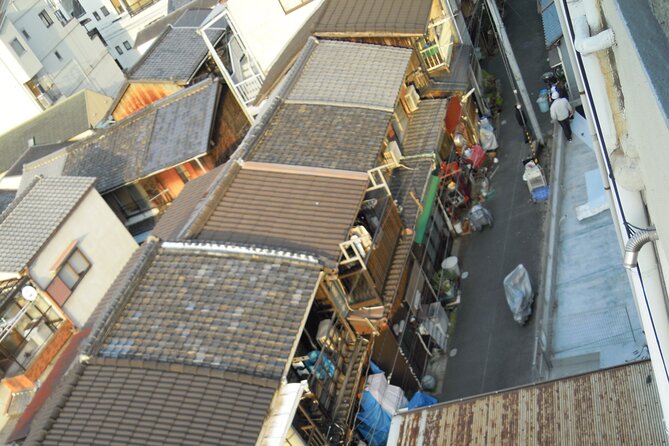
- Off-the-main-path Osaka: you walk through Karahori’s older neighborhood streets instead of repeating the same Dotonbori loop
- Chieko-san’s street-level storytelling: she connects what you see to how people lived, shopped, and worked
- Craft and food stops with a local feel: tatami materials, a centuries-old bonito shop, and chocolate made for real fans
- Old houses turned into shops: machiya and renovated spaces help you picture the past, without it feeling like a museum
- A small group size: max 6 travelers keeps the pacing human and the questions flowing
- Respect-first walking: the route includes hidden paths where residents still live, so you walk carefully and quietly
Still hungry on Dotonbori? A few more crawls
- Osaka: Shinsekai Food Tour with 13-15 Dishes at 5 Eateries
★ 4.8 · 2,204 reviews - Osaka Local Foodie Walking Tour in Dotonbori and Shinsekai
★ 5.0 · 985 reviews - Osaka: Dotonbori District River Cruise with Drink Discount
★ 4.2 · 876 reviews - Ultimate Osaka Walking Tour: Castle, Dotonbori & Hidden Gems
★ 5.0 · 862 reviews
Karahori feels like real Osaka, not a theme park
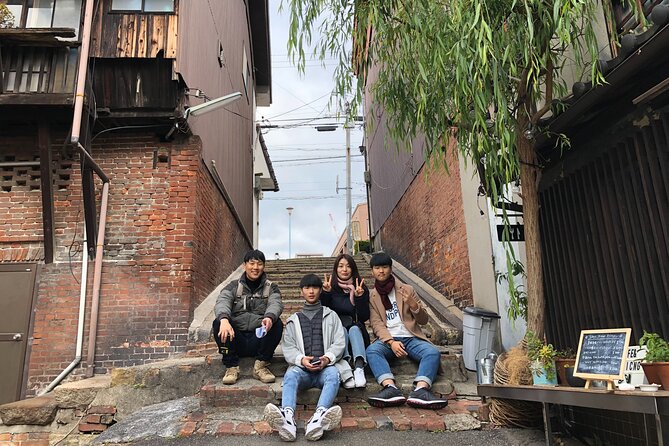
Osaka is famous for food and lights, but that is not the whole story. In Karahori, the mood changes quickly. The streets narrow, the pace slows, and you spend time with places that feel like they belong to people who live there, not just people passing through.
This is the big value of the tour: you get a guided way into the neighborhood side of the city. Dotonbori can be loud and overwhelming, and you end up making choices by guesswork. Here, the guide keeps you moving in a thoughtful sequence and helps you notice things that would be easy to miss when you are just wandering.
What 2 hours with up to 6 people actually means for you
Small groups are not just a comfort feature. They also shape the experience. With a max group of 6, you can ask questions without feeling like you are holding up a parade, and the guide can adjust pacing when a shop owner is explaining something or when a lane is a little tighter than expected.
Chieko-san’s style comes through in how the walk is handled. She is careful about neighbor relations and she keeps the group from crowding or disturbing residents in the quiet sections. That matters a lot in an area like this, because part of what makes Karahori special is that it is still a working neighborhood.
You’ll also like that the tour format is designed for city-day logistics. It runs about 2 hours, it returns to the meeting point, and it has a morning or afternoon departure so you can plan around your bigger Osaka sights.
Meeting point near Tanimachi, plus how the route behaves
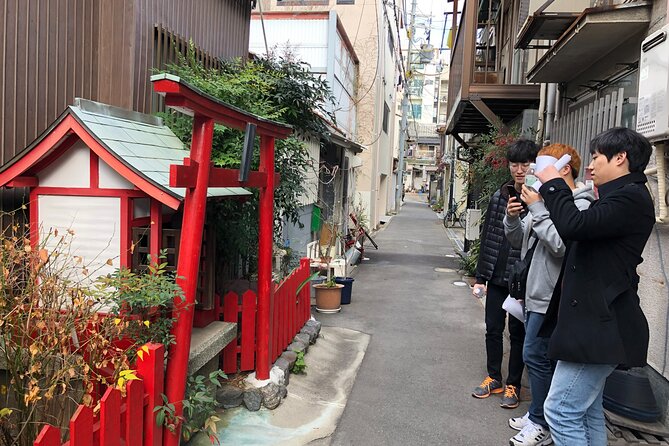
The tour meets at 6-chōme-2-24 Tanimachi, Chuo Ward, Osaka, 542-0012. It ends back at the meeting point, which keeps your day simple.
From there, expect walking through a mix of shopping streets and small side lanes. The itinerary includes free-entry stops and time to browse, but the overall style is still a walk. So you will want shoes you can trust on uneven or slightly sloped pavement. The good news is the pace feels natural, because the tour is paced by short stops, not by long stretches of nonstop walking.
One important note: if you are late by more than 15 minutes, you cannot join the trip. That is a fair rule since the group timing respects other guests and keeps the route from unraveling. Plan to arrive early, and if you need to pause for photos, do it when the group is stopped rather than during the hidden-lane sections.
- Hungry Osaka Street Food Tour:15 Tastings & 3 Drinks with a Local★ 5.0 · 1,727 reviews
- Osaka: Tea Ceremony Experience★ 4.9 · 1,426 reviews
- Osaka Kickstart: Hotspots & Hidden Gems Tour★ 5.0 · 1,306 reviews
- Osaka: Hotspots & Hidden Gems Walking Tour Private or Group★ 4.9 · 1,300 reviews
- Deep Backstreet Osaka Tours (Option to add Dinner)★ 5.0 · 1,290 reviews
Tatami to bonito to chocolate: why this stop order works
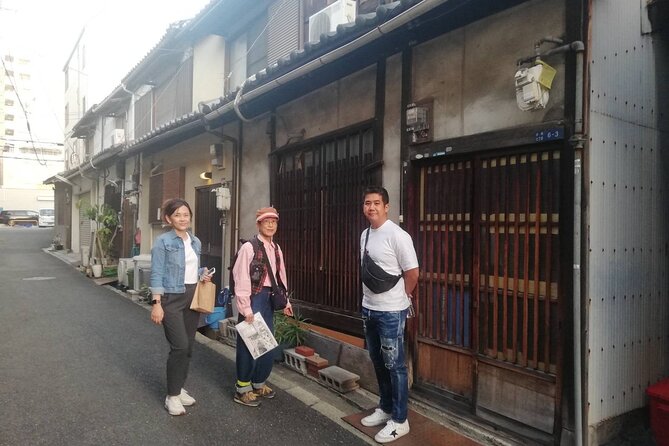
The route is built like a story you can walk through. You start with a traditional material craft, move into neighborhood shopping street life, then shift into specialty foods and renovated old-house spaces. By the end, you are looking at the neighborhood from multiple angles: daily commerce, artisanal goods, and old Osaka structures repurposed for now.
Here is what to expect at each stop, and what makes it worth your time.
Inoue Seijosho, how tatami starts as a material
The first stop is Inoue Seijosho, where you see how tatami mats are made. You’ll also get a look at the tatami material and a tatami-making machine.
This matters because tatami is one of those things people recognize, but few people ever see from the inside. Seeing the materials early in the walk gives you a baseline for what counts as truly traditional, especially when later stops focus on long-running local businesses.
Karahori Shopping Street, daily life in a quieter Osaka
Next is Karahori Shopping Street. This is a local, daily-life shopping street, and it is also tied to the nostalgic, historical side of the neighborhood.
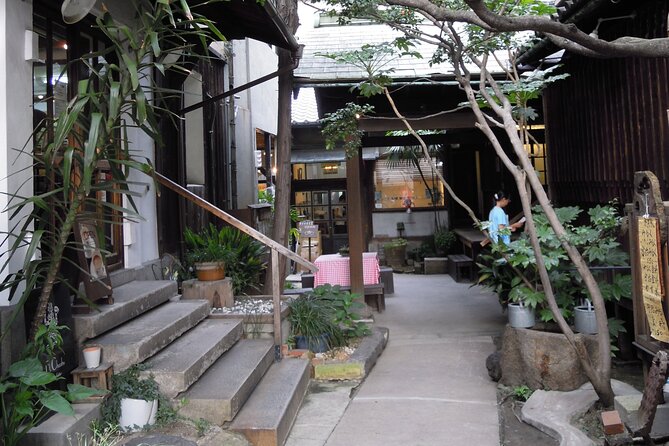
You will notice old houses and machiya that are over 100 years old. That age is a clue to what you are seeing: this is not just decoration. It is a living streetscape where older structures still shape how people move, shop, and do errands.
One practical tip here: take your time while you are at street-level. The best observations are often at eye height, like signage style, shop entrances, and the way people pass each other in narrow spaces.
クーデリーカフェ, a renovated-house break
Then you hit a hidden café in a renovated old house. The goal is simple: see what people do for coffee and snacks in older Osaka structures, not just buy souvenirs made for mass tourism.
You’ll also get a chance to look for shopping items that you might not find in typical airport souvenir shops. Even if you do not buy anything, the browsing feels more personal here.
Since meals are not included, this is a good moment to check the menu, decide if you want a treat, and plan your own eating for the rest of your day.
Maruyo-shoten, a bonito shop with serious age
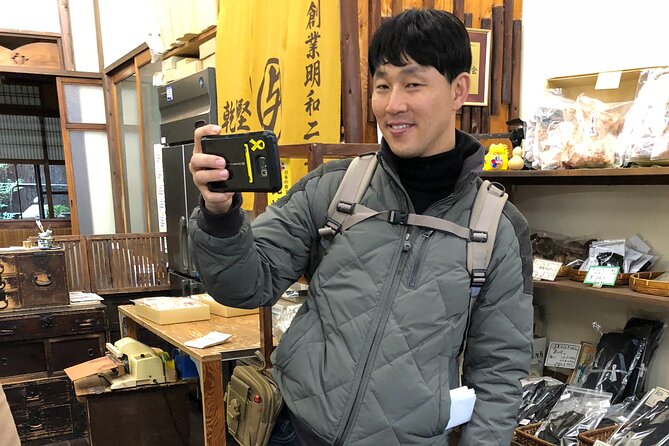
A quick stop follows at Maruyo-shoten, a bonito shop established in 1765. That is more than 250 years of continuity, which is rare enough to make this stop feel anchored in authenticity.
You learn what authentic bonito means, and you get a taste of how traditional ingredients connect to Osaka’s food identity. This is the kind of place where you come away with a better sense of why local products matter, beyond just taste.
Even though the stop is short, it is a useful reset after the café and shopping street. It brings you back to one of Osaka’s core themes: food craftsmanship.
chocolatier Ek Chuah, Kura Main Shop
If you have any sweet-tooth curiosity, this is a highlight. You stop at chocolatier Ek Chuah, specifically the Karahori Kura Main Shop.
The tour frames this as one of the most delicious chocolate shops in Osaka. Even if you do not consider yourself a chocolate expert, you’ll likely appreciate how the neighborhood setting makes the experience feel different from walking into a generic chain.
This stop also works well for gift shopping. Food gifts are often easy to carry home, and this one feels tied to place.
Len – Karahori Residence, a traditional house turned commercial
Next is Len – Karahori Residence Refurbished Commercial Complex. This is a traditional house renovated into a shop complex.
This is where you can look for unique souvenirs that do not feel like the same items you see everywhere. The attraction is not just the shopping. It is the setting. When you see an old structure repurposed well, you understand what preservation can mean in real life.
The alley café near the Osaka Castle original moat wall
The last stop is a hidden café in an alley, with a view nearby to the Osaka Castle original moat wall. The wall is said to remain since the 15th century.
This is a quiet, reflective ending. You finish the walk with a piece of older Osaka you can place in time. The feeling of the alley space plus the moat-wall context makes the neighborhood story click.
It also ties back to one of the tour’s strongest ideas: the city’s past is not always behind glass. Sometimes it is right beside a café wall, or embedded in how the ground sits under your feet.
Souvenirs and snacks that feel like Osaka, not luggage filler
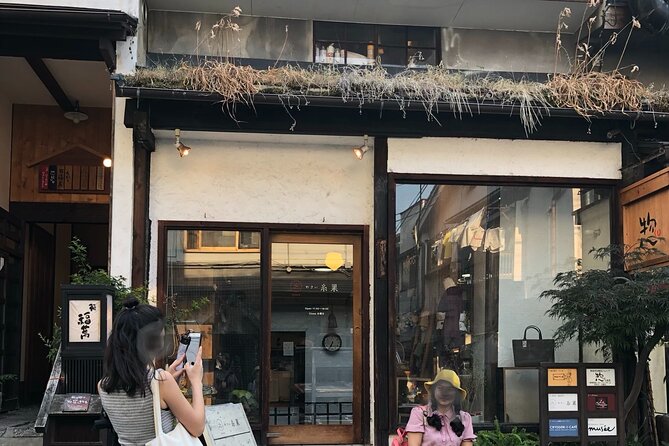
One of the most satisfying parts of this walk is that the purchases you might make actually match the places you walked through. The tatami-focused start, the century-old bonito shop, and the chocolate stop all fit the idea of buying something that tells a story.
You also have a practical edge: the tour time is short, about 2 hours, so you do not want a shopping spree that eats your day. The stop sequence gives you compact chances to browse and decide what you genuinely want.
Also, bottled water is included. That small detail helps, especially on warmer days when you want to focus on the route and not spend the whole walk hunting for a drink.
Just remember: meals are not included. If you get hungry, buy your own snacks or drinks at the local shops and cafés you pass. Coffee and tea are also on you, unless you choose to purchase it at a stop.
The real value: getting your bearings in a neighborhood
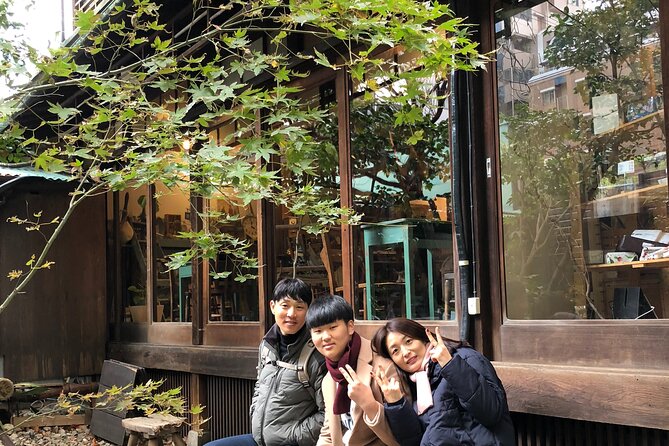
A big reason to do this tour is navigation and interpretation. Karahori is not the kind of place where everything is obvious from a map. Even if you are comfortable wandering, you might not understand what you are looking at, like how old structures have been reused or why certain lanes feel the way they do.
Chieko-san helps you make sense of the terrain and the neighborhood patterns. The walk includes explanations about local life, not just facts. You learn how people shop, how shops exist in historic houses, and how everyday Osaka can look when it is not staged for crowds.
This is also why it is a good alternative if you feel like your Osaka trip is leaning too much toward the famous zones. You still get food, history, and shopping, but you experience them with a totally different tone.
A few things to consider before you book
- Expect walking. There can be slight uphill or downhill sections, so comfy shoes matter.
- Hidden paths can involve quiet residential areas. The tour explicitly asks you not to disturb inhabitants during those parts. Treat it like a neighbor’s street, not an attraction.
- Late arrival can mean you cannot join. If you get delayed and you are more than 15 minutes late, you will not be able to start the tour.
- Food is on your own plan. Bottled water is included, but meals, coffee, and tea are not.
If any of those points worry you, you might still enjoy the experience, but you should plan accordingly with pacing and expectations.
Who this tour suits best
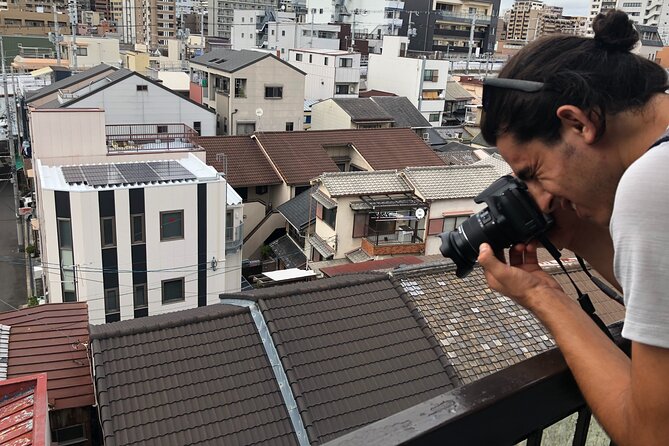
This is a great fit if you want Osaka with less noise and more human scale. I’d especially recommend it if you like:
- neighborhood streets and old structures, even when they are a bit worn or quietly practical
- shopping that is smaller, more personal, and more gift-worthy than typical department-store souvenir counters
- a guide who gives practical context about everyday life, not just dates and legends
It is also ideal for couples or solo travelers who want conversation time but still want an organized route. With a max of 6 travelers, you can ask questions, practice Japanese if you like, and actually learn from the walk without rushing.
Should you book this nostalgic Osaka walk?
I’d book it if you want a second side of Osaka beyond the big, flashy areas. The price is reasonable for what you get: a guided 2-hour route, bottled water included, a small group size, and multiple focused stops that connect craft, food, and old Osaka structures.
Skip it if you hate walking, dislike narrow lanes, or need a tour that is mostly indoor or low-movement. This one is built around moving through real streets, including sections where residents still live, so it rewards curiosity and good manners.
If your Osaka itinerary is crowded, this walk can act like a palate cleanser. It gives you history you can see, food stops that make sense, and a calmer neighborhood experience that feels genuinely local.
FAQ
How long is the tour?
It runs about 2 hours.
What is the price per person?
The price is $36.13 per person.
Are there different times to choose from?
Yes. You can choose a morning or afternoon tour slot.
Is bottled water included?
Yes, bottled water is included.
What about meals, coffee, or tea?
Meals are not included. Coffee and tea are also not included, so you would buy them yourself at local shops or cafés if you want them.
How big is the group?
The tour has a maximum of 6 travelers.
Dotonbori, Still Hungry


Newest Osaka write-ups from the Loving Japan desk



Dotonbori and Osaka Street Food, side by side.
 ★ 4.8Shinsekai Food Tour with 13-15 Dishes at 5 EateriesFrom $532,204 reviews
 ★ 5.0Osaka Local Foodie Walking Tour in Dotonbori and ShinsekaiFrom $111985 reviews
 ★ 5.0Osaka Bar Hopping Night Walking Tour in Namba (3 bars, 6 tastes)From $98958 reviews
 ★ 4.2Dotonbori District River Cruise with Drink DiscountFrom $12876 reviews
 ★ 5.0Ultimate Osaka Walking Tour: Castle, Dotonbori & Hidden GemsFrom $73862 reviews
 ★ 5.0Kuromon Market Food Walking Tour in Osaka (6 stops, 6 tastes)From $50550 reviews
 ★ 4.9Namba Pub Bar Crawl with a Local GuideFrom $30424 reviews
 ★ 5.0Ramen and Gyoza Cooking Class in DotonboriFrom $70378 reviews
Filed on these lists too