
REVIEW · PRIVATE
Osaka: Private Japanese Traditional Ceramics Experience
Pottery lessons work best when they feel human, not rushed. This one pairs private attention with a choice of Japanese gastronomy ceramics, taught at a calm, historic house in south Osaka.
I like how flexible the format is too, with morning and afternoon sessions, plus instruction in English, Spanish, Catalan, and Japanese. One thing to plan for: your fired pieces need about 1.5 months to finish, and shipping fees are not included.
In This Review
- Key highlights at a glance
- A private ceramics workshop in south Osaka, not the tourist lane
- From Teradachō Station into real Osaka (and a Showa-era vibe)
- Picking your ceramic set: sake, sushi, or a tea bowl
- Inside the studio: how the lesson actually feels
- What you take home: the souvenir dish plus your fired pieces
- English, Spanish, Catalan, and Japanese: how language affects the experience
- Price and value: what $94.13 gets you
- Who this pottery workshop is for (and who might look elsewhere)
- Practical tips before you go
- Should you book this Osaka ceramics experience?
- FAQ
- What items can I make in the workshop?
- How long is the pottery experience?
- Is this a private experience, and what languages are available?
- What souvenir is included?
- Can the pottery be shipped home, and how long does it take?
- What is included in the price, and what is not?
Key highlights at a glance
- Private workshop means you get personalized guidance instead of being one face in a crowd
- Choose your project: sake set, sushi set, or chawan for tea
- Multilingual instruction in English, Spanish, Catalan, and Japanese
- Historic setting in a century-old two-storey house in south Osaka
- Snack-and-sip break with green tea, coffee, or water during the class
- Take-home souvenir includes a small sushi dish and a sakura-shaped chopstick rest
Still weighing up options in Osaka? These are the ones our reviewers rated highest.
- Osaka Go Karting Tour with Funny Costume
★ 5.0 · 2,658 reviews - Osaka Castle: Museum and Tower Entry Ticket
★ 4.5 · 2,380 reviews - Osaka: Shinsekai Food Tour with 13-15 Dishes at 5 Eateries
★ 4.8 · 2,204 reviews - Osaka Food Tour: 13 Dishes at 5 Local Eateries
★ 5.0 · 2,149 reviews
A private ceramics workshop in south Osaka, not the tourist lane
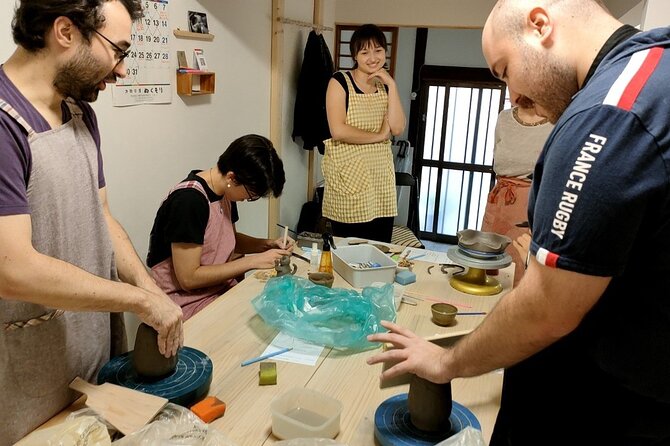
This experience is built for people who want a hands-on souvenir with context. Instead of just making something pretty, the class connects the clay work to Japanese everyday culture, especially the way food and serving pieces matter.
What I like is the tone of the activity: relaxed and teacher-led, in a small studio setting. You’re not trying to keep up with a fast demo, you’re learning what to do and why you’re doing it.
Also, the location helps. The workshop is in south Osaka, near local food shops, and the walk from the station gives you a real sense of the city beyond the usual routes.
From Teradachō Station into real Osaka (and a Showa-era vibe)
You start at Teradachō Station (2 Chome-3 Tennojichokita, Abeno Ward). Getting there is straightforward because it’s near public transportation, so you can slot it into a day without stress.
Then comes the best kind of warm-up: walking through a more residential part of Osaka. One review described it as an Osaka contrast to the big-name neighborhoods, and I think that’s the point here. You get a small, local-feeling stroll before you sit down to make something.
You’ll be in a century-old two-storey house, which changes the whole mood of the workshop. It feels less like a factory class and more like visiting a crafts space where people keep their routines.
Picking your ceramic set: sake, sushi, or a tea bowl
At the workshop, you choose what you’ll make from three options, all tied to Japanese food culture:
- Sake set: a small bottle and glass
- Sushi set: a sushi plate plus a chopstick holder
- Chawan for tea: a tea bowl
This choice matters because it shapes the forms you’ll work on and the final look you’ll take home. If you’re the type who travels with a theme, sushi sets are the fun, visual choice. Tea bowls feel more traditional and grounding. Sake sets sit right in the middle, with a classic serving vibe.
Also, the class is designed for people with any skill level. You’re working with clay, learning the process, and getting corrections while you go, which is especially helpful if you’ve never touched pottery before.
- Osaka Go Karting Tour with Funny Costume★ 5.0 · 2,658 reviews
- Osaka Castle: Museum and Tower Entry Ticket★ 4.5 · 2,380 reviews
- Osaka: Shinsekai Food Tour with 13-15 Dishes at 5 Eateries★ 4.8 · 2,204 reviews
- Osaka Food Tour: 13 Dishes at 5 Local Eateries★ 5.0 · 2,149 reviews
- Hungry Osaka Street Food Tour:15 Tastings & 3 Drinks with a Local★ 5.0 · 1,727 reviews
Inside the studio: how the lesson actually feels
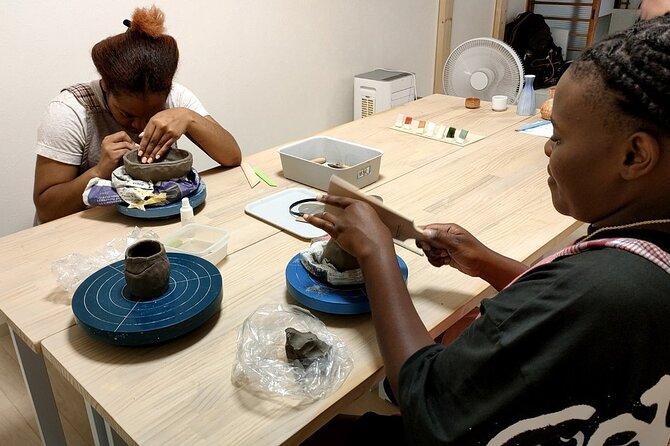
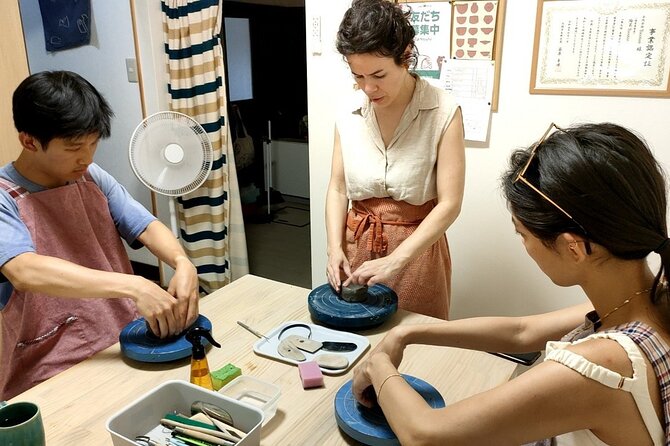
The class runs about 2 hours. In that time, you’ll work with clay to create your chosen piece, and you’ll get explanations that go beyond technique.
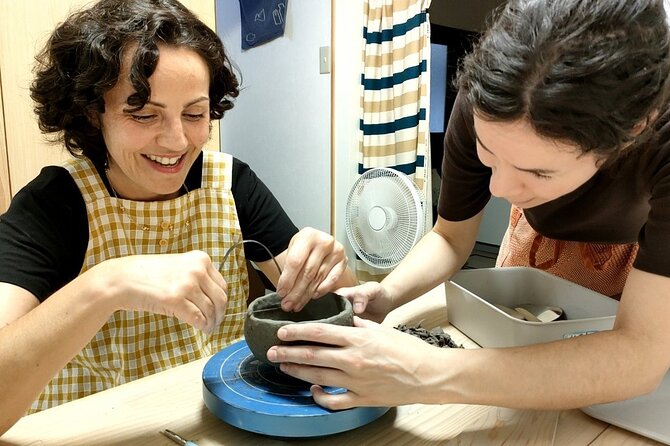
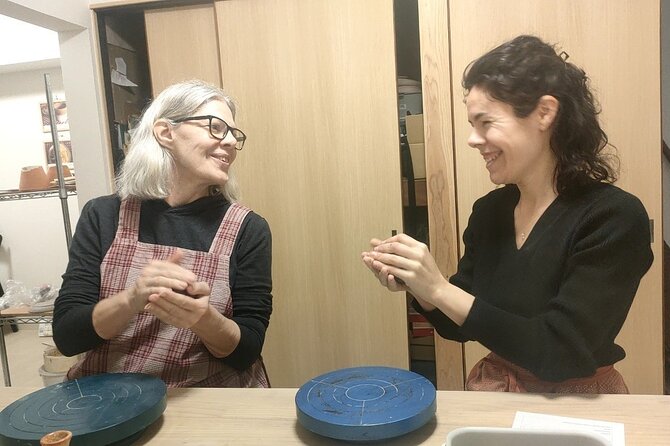
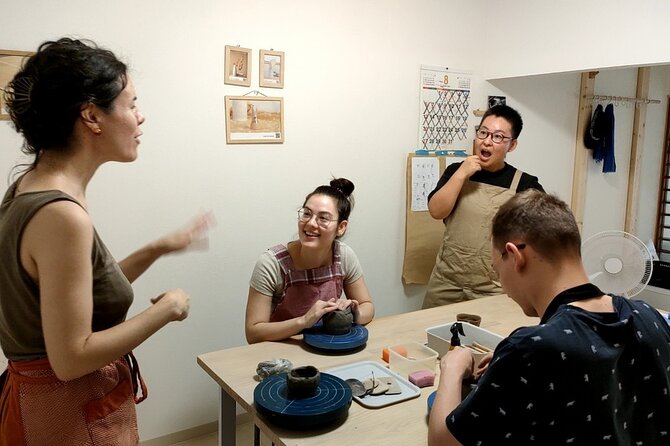
A big theme is culture, and the teaching team includes Anna and Ryo. They talk about Japanese art and tradition during the session, and that changes the experience from a craft lesson into something more meaningful.
From the way the workshop is described, this is hand-building pottery, not wheel throwing. If you’re used to seeing pottery made on a wheel, this will feel different in a good way, because you’ll build up the shape yourself and learn how form comes from patient shaping and careful finishing.
You’ll also be welcomed in a way that keeps the class comfortable. The workshop includes Japanese green tea, coffee, or water, so you’re not just sitting and working dry clay with no break.
What you take home: the souvenir dish plus your fired pieces
Even if you’re focused on your main project, you also receive a built-in souvenir. You’ll get:
- a small plate for sushi decorated with traditional glaze
- a sakura-shaped chopstick rest made by Anna
That’s a smart setup because it guarantees you leave with a finished reminder right away, even while your custom piece is still drying and firing.
Your own pottery comes next. The workshop pieces are fired and finished later, and it takes about 1 month and a half to ship pottery. Shipping fees are not included, but if you want, they can send your finished work to your home.
So you’re choosing between two kinds of results:
- a ready-to-go souvenir from the studio
- a custom piece that arrives later after firing
If you hate traveling with fragile items, the later-shipping option is a big plus. If you’d rather keep everything with you during your trip, you’ll want to plan your schedule around the final pickup, but the provided info specifically emphasizes shipping as the method for taking pieces home.
English, Spanish, Catalan, and Japanese: how language affects the experience
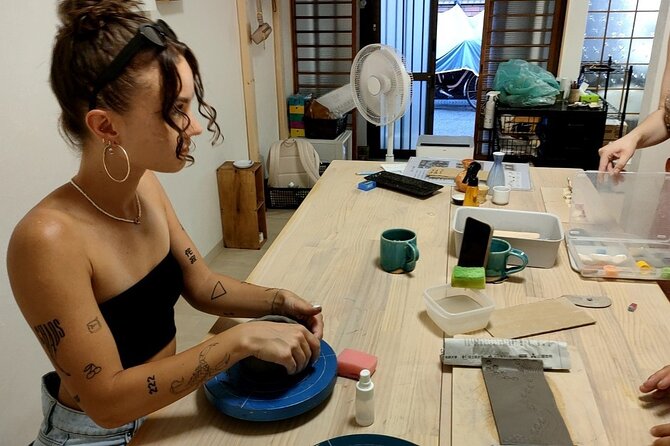
This is one of the standout practical details. The workshop is offered in English, Spanish, Catalan, and Japanese.
Language matters more than people think in a pottery class. When you understand the instructions clearly, you waste less time on guesswork. You also catch the cultural explanations as they happen, which is where the workshop gets its personality.
Spanish and Catalan are especially important here. If you’re a Spanish or Catalan speaker, you might find it hard to locate ceramics classes that comfortably support those languages. This one explicitly offers them.
Price and value: what $94.13 gets you
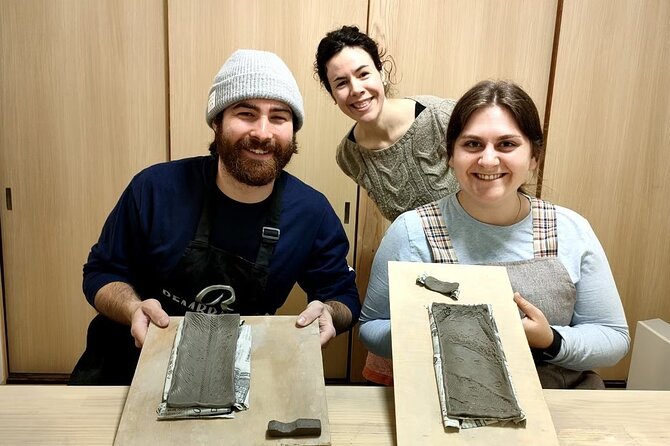
At $94.13 per person, you’re paying for much more than time at a workbench. The price includes:
- instructor time
- material costs
- firing fee
- the sushi dish and sakura chopstick rest souvenir
- Japanese green tea, coffee, or water
- tax
So the money goes toward the parts that are usually the invisible expenses in craft workshops, especially firing. Without firing included, you’d often feel like you’re paying twice, once for the lesson and again for finishing.
The private format also affects value. A private experience typically means you learn faster, get more direct corrections, and feel more comfortable asking questions. Here, private instruction is the norm, and that’s why so many people feel the class is calm and supportive.
The big watch-out is shipping. The timeline is clearly stated, but shipping cost is not included. If you plan to send your custom piece home, budget for that extra fee when comparing options.
Who this pottery workshop is for (and who might look elsewhere)
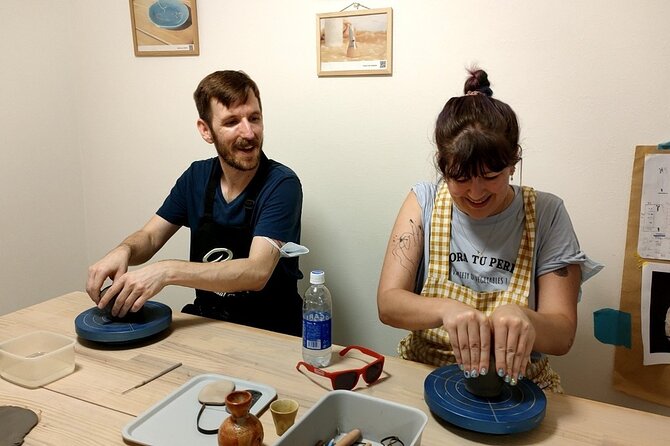
This is a strong fit if you want:
- a hands-on activity that produces something you can use or display
- a small-group or private setting
- a cultural craft experience, not just a tourist demo
- a ceramic project tied to Japanese food, like sushi plates and sake sets
It’s also a good choice for beginners. The class structure is set up for most travelers to participate, and the teaching style seems designed for learning step-by-step.
You might reconsider if you’re very short on time or you hate waiting for items to finish. Your custom pottery takes about 1.5 months for shipping, and shipping fees are extra. If you need something in your hands immediately, plan differently.
Practical tips before you go
Here are the details that will help you make the most of the 2-hour session:
- Pick your ceramic set based on what you’ll actually enjoy owning. Sushi sets are dramatic and food-themed. Tea bowls feel more traditional. Sake sets are compact and giftable.
- Come with a flexible mindset. Hand-building takes time to get comfortable with the clay, but that’s where the fun is.
- If you’re shipping, plan for the delayed arrival. The workshop’s timeline is part of the experience, so treat it like a “future souvenir,” not an instant one.
- Wear clothes you don’t mind getting a little clay on. Even if the studio is clean and controlled, pottery work can still be messy in small ways.
Also, keep an eye on weather. The experience notes it requires good weather, and if it’s canceled due to poor conditions, you’ll be offered another date or a full refund.
Should you book this Osaka ceramics experience?
I’d book it if you want a private craft class that’s genuinely centered on Japanese food culture ceramics, taught in multiple languages, and held in a real south Osaka neighborhood. The combo of a historic studio, an included fired-work souvenir (sushi dish and sakura chopstick rest), and private instruction makes the value feel solid.
I’d hesitate only if you need your pottery immediately or you’re not interested in the idea of waiting for finishing and shipping later. If you can handle that timeline, this is the kind of workshop that leaves you with a personal object and a clearer sense of how everyday Japanese serving pieces connect to tradition.
FAQ
What items can I make in the workshop?
You can choose one of three options: a sake set (small bottle and glass), a sushi set (sushi plate and chopstick holder), or a chawan for tea (a tea bowl).
How long is the pottery experience?
The workshop lasts about 2 hours.
Is this a private experience, and what languages are available?
Yes, it is a private tour or activity, so only your group participates. The class is offered in English, Spanish, Catalan, and Japanese.
What souvenir is included?
You receive a small Japanese traditional dish for sushi, decorated with traditional glaze, plus a chopstick holder shaped like a sakura flower made by the instructor.
Can the pottery be shipped home, and how long does it take?
Yes, if you want, the pieces made during the workshop can be sent to your home. It takes about 1 month and a half to ship your pottery, and shipping fees are not included.
What is included in the price, and what is not?
Included are the instructor, material costs, firing fee, the sushi dish and sakura chopstick rest souvenir, green tea, coffee or water, and tax. Shipping fees are not included.
Newest Osaka write-ups from the Loving Japan desk



Private, side by side.
 ★ 5.0Tokyo 6hr Private Tour with Government-Licensed GuideFrom $1553,902 reviews
 ★ 5.0Private Tour to Mt. Fuji and Hakone (Fully Licenced Operator)From $4971,910 reviews
 ★ 4.9Mount Fuji Full-Day Private Tour from Tokyo (Customizable)From $3931,470 reviews
 ★ 4.8Private City Highlights Tour with Local GuideFrom $1061,433 reviews
 ★ 5.0Private Custom Tour: Tokyo in a DayFrom $1591,432 reviews
 ★ 5.0Kyoto 6hr Private Tour with Government-Licensed GuideFrom $1551,369 reviews
 ★ 5.0Tokyo Customized Private Tour: See Top Attractions in 1 DayFrom $1451,351 reviews
 ★ 4.9Hotspots & Hidden Gems Walking Tour Private or GroupFrom $331,300 reviews