
REVIEW · FULL-DAY
Osaka’s Best and Brightest: Private Full-Day Tour by Vehicle
Osaka in one day, without the subway stress. This private full-day tour strings together the city’s biggest landmarks and the neighborhoods locals actually hang out in, with a fluent English guide doing the translation work. You get a plan you can trust, and you spend less time hunting for train lines and meeting points.
I really like the ease of a private vehicle for moving between stops. I also like that your guide is both the driver and the English translator, which keeps the day smooth and lets you ask questions without awkward pauses. Plus, the pace feels intentionally planned, so you are not sprinting from one check-in point to the next.
One thing to consider: it is a packed highlights day. You will do some walking and you will have limited flexibility to replace whole blocks of time on the fly, since traffic and timing still matter. And food is not included, even though lunch is built into the schedule.
In This Review
- Key highlights that make this tour work
- Why a private Osaka car day beats hopping trains
- The ride starts right: pickup, pace, and group size
- Osaka Castle: iconic views with real context
- Shitennoji: older than you expect, calmer than you fear
- Shinsekai: Osaka’s funhouse neighborhood
- Abeno Harukas and Tennoji: lunch plus the view
- Kuromon Market: fast tastes, strong atmosphere
- Dotombori: the neon finale (and how to enjoy it)
- What the best guides do differently (Thomas, Hugo, Kevin, Ferdinand, Lito)
- Price and logistics: is $600 per group good value?
- Who should book this tour
- Should you book it? My honest call
- FAQ
- What is the duration of this Osaka private tour?
- How many people are allowed per group?
- Do you get hotel pickup?
- Is admission included?
- Is food included in the price?
- Is there a fluent English guide?
- Can the itinerary change based on interests?
- Is a child seat required?
- What is the meeting walking level like?
Key highlights that make this tour work
- Hotel pickup inside central Osaka (JR Loop Line area) means you start relaxed, not scrambling
- Private vehicle with your fluent English guide as driver cuts through language and routing headaches
- A tight route of iconic Osaka plus local-feeling neighborhoods like Shinsekai and Dotombori
- Frequent, story-led stops so the sights make sense, not just look good on photos
- Flexible timing at key moments (like adjusting after Osaka Castle if your legs need a break)
- Local lunch guidance in the Tennoji area to fit what you actually like
Still weighing up options in Osaka? These are the ones our reviewers rated highest.
- Osaka Go Karting Tour with Funny Costume
★ 5.0 · 2,658 reviews - Osaka Castle: Museum and Tower Entry Ticket
★ 4.5 · 2,380 reviews - Osaka: Shinsekai Food Tour with 13-15 Dishes at 5 Eateries
★ 4.8 · 2,204 reviews - Osaka Food Tour: 13 Dishes at 5 Local Eateries
★ 5.0 · 2,149 reviews
Why a private Osaka car day beats hopping trains
Osaka is easy to get around, but it can be exhausting when you only have one short window. This is designed for days when you want to see a lot but still keep your head clear. A private vehicle means you do not lose time transferring on trains, lining up with crowds, or getting turned around when you come up from the wrong station exit.
What I like here is the way it turns logistics into comfort. You sit, the guide handles directions, and you can focus on the places themselves. In the reviews, guides such as Thomas, Hugo, Kevin, Ferdinand, and Lito are repeatedly praised for being friendly and making the day feel personal. Many also mention the “one day, done right” feeling: the route makes sense, the timing works, and the guide adds context instead of giving you a boring script.
The route also hits both sides of Osaka. You get monumental sights like Osaka Castle and major temple history at Shitennoji. Then you move into the city’s fun, neon-world energy with Shinsekai and Dotombori. It is the kind of mix that helps you understand why Osaka is different from Tokyo and Kyoto.
The ride starts right: pickup, pace, and group size
This tour is for a group of up to 6 people, and it is private, meaning you are not sharing the van with strangers. For families, friend groups, and couples, that matters because you can move at a pace that fits you. If someone wants a quick photo stop, it is easier to work in. If legs feel tired after a morning walk, the day can be adjusted.
Pickup is offered in central Osaka, within or along the JR Loop Line area. If you stay outside that zone, there is an additional fee for pickup. Starting from a hotel is a big deal because it removes the stress of meeting up at the wrong time with the wrong sign, especially if you are dealing with jet lag.
Time-wise, the tour runs about 7 hours 30 minutes. The itinerary is a model course, and it can change based on what you want to prioritize. Traffic can also shift timing, which is normal in any city. Still, the consistent message from guides and guests is that the day stays organized and does not feel rushed.
One more practical detail: admission fees are included. The stop list shows multiple locations as ticket-free, but the key advantage for you is that the guide handles the process so you are not scrambling for cash, ticket booths, or downloads while the day keeps rolling.
Osaka Castle: iconic views with real context
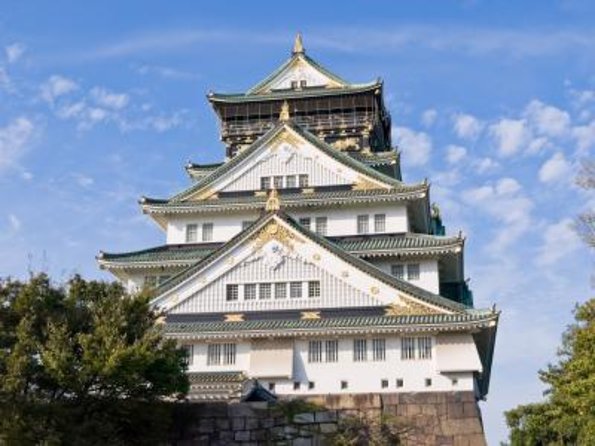
Osaka Castle is the headline stop for a reason. Even if you have seen castles in other cities, this one tells part of Japan’s story in a very Osaka way. You start with the castle grounds for about an hour, which gives you time to walk and take in the mix of history and scenery.
The guide adds the story so you are not just looking at stone and walls. This helps most on castle days, because it is easy to feel like you are reading a placard for every 10 steps. With a fluent English guide, you can get the main threads first, then wander the grounds with better understanding.
Practical tips for this stop:
- Wear shoes you trust. Even if the pace is comfortable, the grounds involve walking.
- Expect a lot of photo angles. There are several good spots, and the day is built around getting pictures without sprinting.
- If crowds are heavy, the guide may plan your route to keep you moving smoothly.
One advantage that shows up in the reviews: after Osaka Castle, some guides adjust the plan to match your energy. If you have “tired legs” later in the day, you can keep the day enjoyable instead of pushing through it like a forced march.
- Osaka Go Karting Tour with Funny Costume★ 5.0 · 2,658 reviews
- Osaka Castle: Museum and Tower Entry Ticket★ 4.5 · 2,380 reviews
- Osaka: Shinsekai Food Tour with 13-15 Dishes at 5 Eateries★ 4.8 · 2,204 reviews
- Osaka Food Tour: 13 Dishes at 5 Local Eateries★ 5.0 · 2,149 reviews
- Hungry Osaka Street Food Tour:15 Tastings & 3 Drinks with a Local★ 5.0 · 1,727 reviews
Shitennoji: older than you expect, calmer than you fear
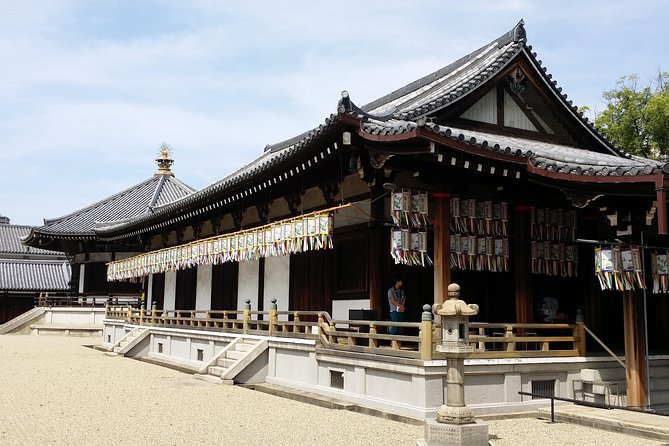
Shitennoji is often described as the oldest Buddhist temple in Japan. Whether you are into temple architecture or not, that “oldest” detail changes how you look at the place. You get about 45 minutes here, long enough to stroll the grounds and take in the layout without feeling trapped in one spot.
This stop works well in the overall day plan because it is a reset. After the castle, you move from monumental walls to a more reflective environment. The guide keeps the stories interesting without turning it into a lecture. That is the sweet spot for most travelers: enough background to understand what you are seeing, then time to just experience it.
In the reviews, some visitors highlighted that they enjoyed the quieter atmosphere during off-season timing, which can make the temple feel more spacious even though it is a major sight. If you are visiting in busier seasons, you can still benefit from having a guide to manage where you pause and when you move.
What to watch for here:
- You may have some walking on paths through the grounds.
- If you prefer minimal crowd contact, ask your guide if they can shift your order slightly within the overall schedule (the day is flexible based on interest and pacing).
Shinsekai: Osaka’s funhouse neighborhood
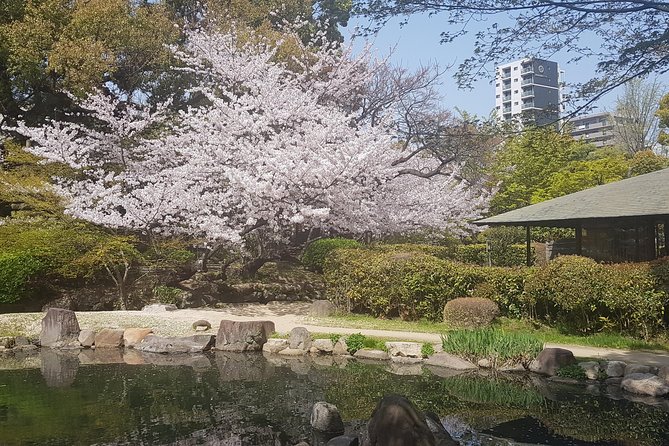
Shinsekai is one of those places that feels like it is lit by a different calendar. It has that odd, nostalgic, fun-for-all-ages vibe. The atmosphere is built around games, street life, and the kind of fashion and food that is unmistakably Osaka.
You only have about 30 minutes at Shinsekai on the model itinerary, so treat it like a taste, not an all-day wandering block. In that short time, you can still get a lot: a feel for the neighborhood energy, a quick look at the local culture, and enough photo-worthy moments to remember it later.
This is also where the guide’s “areas locals love” approach helps. Shinsekai can feel like a theme park if you only look at the obvious signs. A good guide helps you notice what people are doing around you, where the best snack energy is, and which little side streets are worth a quick detour.
Because the tour is private, you can shift your emphasis. If you want food focus, you can ask for snack stops nearby. If you want photos and street scenes, you can point your camera in the right direction without wasting time.
Abeno Harukas and Tennoji: lunch plus the view
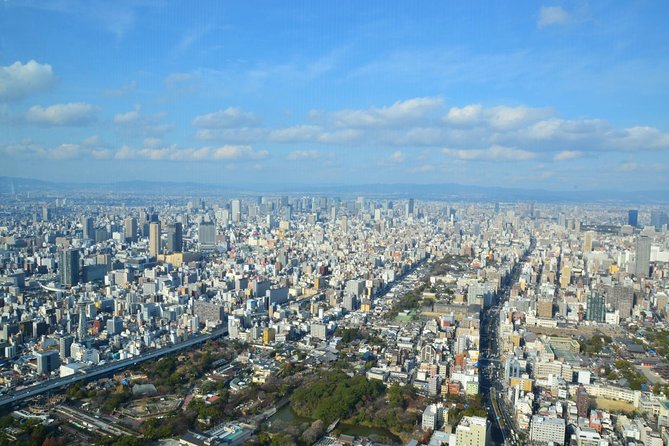
The day’s middle stop is where you switch from “walk and look” to “eat and reset.” At Abeno Harukas, you have about 1 hour 40 minutes planned, with lunch in the Tennoji area and time to go up the Harukas building.
This is the tallest non-tower building in Japan, listed as 300 meters in the tour information. The value is twofold:
1) You get a big skyline perspective that helps you orient yourself in Osaka.
2) You also get a scheduled break that prevents the day from turning into constant walking.
Lunch is not included in the tour price, but the itinerary is designed with a lunch stop in the Tennoji area. In the reviews, many guests praise guides for taking them to local places they genuinely liked. That is worth a lot if you do not want to spend your afternoon choosing between restaurant options you cannot read.
A Harukas visit is also a smart move for families and mixed ages. If someone wants a quieter break after earlier sightseeing, this is where you can regroup. If others are excited about the view, you can split the mood without splitting the group.
Kuromon Market: fast tastes, strong atmosphere
Kuromon Market is a feast for the senses, especially if you are even mildly curious about Japanese food culture. You get around 25 minutes here. That is not enough time for a full meal, but it is perfect for sampling and getting a feel for what Osaka eats when it is not performing for tourists.
The market is described as offering fish, meats, fruits, and a lot of different vendors. In practice, what you will love is the intensity. It is loud, busy, and full of color. The trick is to keep your expectations realistic: this is a quick tasting stop.
How to make it work:
- Go in with one or two snack targets, then let the smell and lines decide the rest.
- If your group includes kids or picky eaters, ask your guide for simple choices.
- Wear layers. Markets can be warm inside and cooler outside depending on the season.
Also, you are on a schedule. The guide will keep you moving so you still get the final big Osaka neighborhood moment without rushing.
Dotombori: the neon finale (and how to enjoy it)
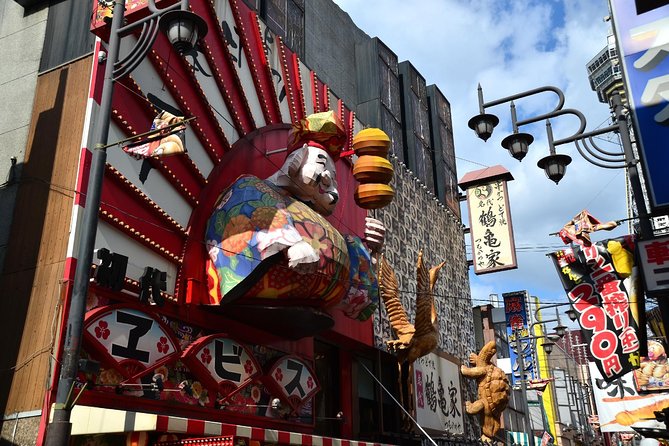
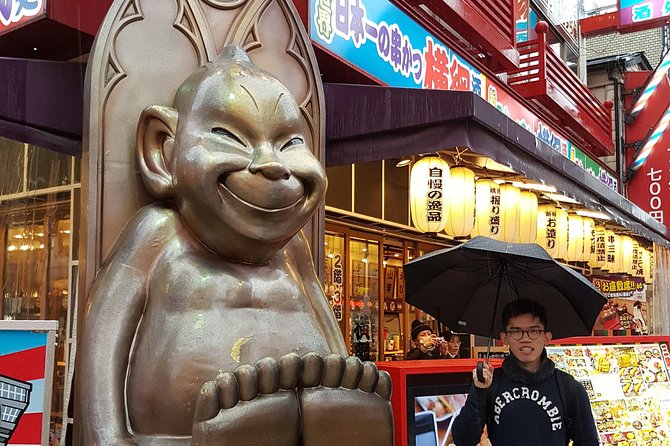
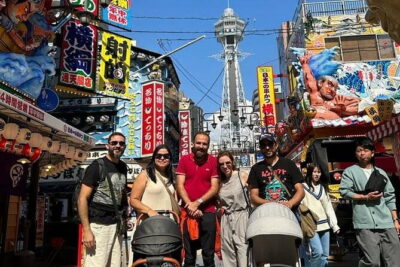
Dotombori District is where Osaka turns up the volume. This is the area with the famous Running Man sign, and it is also where you see the street-level energy that people associate with Osaka: lights, signs, food stalls, and constant motion.
You get about an hour here, with some flexibility. The guide plans the route based on what you care about. The tour description highlights that you will not just do the obvious landmark. You may also pass by back streets, areas related to kitchenware, and other sights picked to match your interests.
This is a good finale stop for a private tour because it lets you absorb the city’s vibe after the more structured sightseeing. By this point, you already learned how Osaka’s history ties into its culture. Now you get the present-day Osaka, the kind you can come back to later with a better sense of where you are.
What to watch:
- Expect crowds, even if timing helps.
- Keep an eye on where you are meeting your group member, especially if your group splits for quick photo angles.
- If you want a snack or dessert, do it now, not later, so you do not miss the rest of the neighborhood route.
What the best guides do differently (Thomas, Hugo, Kevin, Ferdinand, Lito)
The biggest quality driver here is the guide. Not just translation, but personality and pacing. Across the guides named in the reviews, the common thread is that they treat the day like a conversation, not a checklist.
Thomas, for example, is described as social and friendly, with a pace that feels relaxed. Lito gets praised for being engaging and interactive, making the busy day feel like it flew by. Kevin stands out in multiple reviews for balancing well-known highlights with less common sights and for making lunch feel local and genuinely enjoyable. Ferdinand is mentioned for careful attention and flexibility, like adapting after Osaka Castle if people got tired. Hugo earns repeated praise for clear English and for sharing insights into Japanese culture and history while also pointing out less crowded, more local-feeling spots.
If you are the type who wants stories but not a lecture, this is your format. You are walking through big names, but the guide adds meaning while keeping the mood fun. It is also why many people recommend this tour as a fast way to learn Osaka before planning the rest of their trip.
Price and logistics: is $600 per group good value?
This tour costs $600 per group, up to 6 people. That price is private and includes a fluent English-speaking guide who drives, plus all related fees and admission fees.
On value, here is how I think about it: if you are traveling solo or as a couple, private transportation plus an English guide will always feel pricey compared to trains. If you are with a group of 4 to 6, the math gets better fast because the guide and vehicle cost are spread out.
The best way to judge the value is to ask yourself what you are buying:
- You are buying time saved by not sorting routes and meeting points.
- You are buying a smoother day, fewer stress moments, and better navigation.
- You are buying context, which helps you enjoy the sights more when you only have one day.
For people on short Osaka stays, this can be one of the most efficient ways to feel like you actually learned the city instead of just collecting photos.
One caution: food and drinks are not included. Lunch is part of the plan, but you should budget extra for meals. That is typical for Japan sightseeing days, and having a guide pick a local place can make that extra spending feel less random.
Who should book this tour
I would point you to this tour if:
- You have limited time in Osaka and want a smart hit list.
- You dislike getting lost and prefer a guided path.
- Your group has mixed ages or different walking comfort levels.
- You want both iconic Osaka and local-feeling neighborhoods like Shinsekai and Dotombori.
You might look elsewhere if:
- You want complete control to wander for hours with no schedule at all.
- Your top priority is one specific food quest or one specific site you want to spend all day on.
- You prefer to do everything at your own pace with no guide driving the day.
Should you book it? My honest call
If you want an organized, high-impact Osaka day with less transportation stress, this is a strong choice. The private vehicle, fluent English guide, and the mix of major landmarks and neighborhoods give you the best chance of leaving Osaka feeling like you understood the city, not just passed through it.
If you are cost sensitive, price this like a tradeoff: you are paying to buy time and reduce hassle, not just to ride in a car. Also plan on spending extra for meals. With that in mind, it is an easy yes for most groups of 2 to 6 who want a single-day Osaka plan that actually works.
FAQ
What is the duration of this Osaka private tour?
It runs for about 7 hours 30 minutes.
How many people are allowed per group?
The group size is up to 6 people.
Do you get hotel pickup?
Pickup is offered within or along the JR Loop Line area, with an additional fee if you are outside central Osaka.
Is admission included?
Yes. The tour includes all admission fees.
Is food included in the price?
No. Food and drinks are not included, even though lunch is part of the day’s plan.
Is there a fluent English guide?
Yes. You get a professional, fluent English-speaking guide, who also serves as your driver.
Can the itinerary change based on interests?
Yes. The plan is a model course, and timing or guest interests can cause changes.
Is a child seat required?
Children under 6 years old or under 140 cm MUST use car seats, and the child seat cost is 1,000 yen payable on the day of the tour.
What is the meeting walking level like?
The tour recommends a moderate physical fitness level, and the amount of walking can be adjusted based on what you like.
Newest Osaka write-ups from the Loving Japan desk

Full-Day, side by side.
 ★ 4.5From Tokyo: Mount Fuji Full-Day Sightseeing TripFrom $684,970 reviews
 ★ 4.9Mount Fuji Full-Day Private Tour from Tokyo (Customizable)From $3931,470 reviews
 ★ 5.0Hiroshima / Miyajima Full-day Private Tour with Government Licensed GuideFrom $2021,298 reviews
 ★ 5.0Tokyo Private Full-Day Tour by Car or VanFrom $321684 reviews
 ★ 4.7From Tokyo: Must-Visit Mount Fuji Highlight Full-Day TourFrom $69532 reviews
 ★ 5.05 Top Highlights of Kyoto Full Day Bike Tour (E-bike option)From $172511 reviews
 ★ 5.0Full Day Biking Tour Exploring the Best of KyotoFrom $119498 reviews
 ★ 4.5Mt. Fuji, Hakone Full-Day Private Tour with English Driver GuideFrom $495458 reviews