
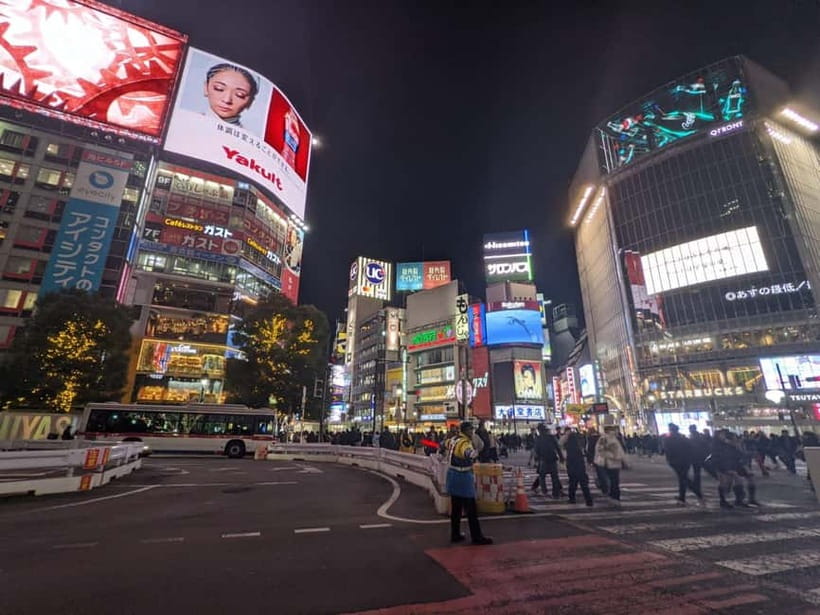
REVIEW · SHIBUYA, SHINJUKU AND HARAJUKU WALKS
Shibuya: Pachinko Gaming Experience
Pachinko in Shibuya is pure Japan flavor. I like that this experience gives you clear, practical rules coaching, and I also like that it places pachinko inside Shibuya street life, not in a vacuum. The only real drawback is that the pachinko gaming fee is extra, so you will want a small budget buffer beyond the $19 price.
Over one hour, you get a live English guide, plus translation and interpretation, which matters a lot when the parlor is loud and fast. The group stays small, capped at three participants, so questions do not get lost in the crowd. You will also have to follow the age limit, since it is not suitable for children under 18.
You start near Hachiko Memorial Statue, on the right side, by the lottery ticket booth, and your guide will be holding a blue tablet. That makes it easy to find, even if you are juggling train transfers and Shibuya sidewalks that never feel empty.
In This Review
- Key things to know before you go
- Why Pachinko Belongs on Your Shibuya Checklist
- Meeting at Hachiko: Finding Your Guide in Busy Shibuya
- What You Learn First: Pachinko Basics Without the Newbie Chaos
- Inside the Parlor: Lights, Noise, and Smart Etiquette
- How the One-Hour Format Works for Real Learning
- The Coach Factor: English Support and Positive Momentum
- Price and Value: Is $19 Worth It?
- Who This Shibuya Pachinko Lesson Suits Best
- Final Call: Should You Book This Pachinko Experience?
- FAQ
- How long is the Shibuya pachinko gaming experience?
- How much does it cost?
- Where do I meet the guide?
- What is included in the tour price?
- What is not included?
- Is the tour suitable for children?
- Is the tour wheelchair accessible, and what group size should I expect?
Key things to know before you go
- Starts at Hachiko so you can plan your Shibuya day around a landmark
- Small group of up to three means you get time to ask questions
- Rules and gameplay coaching so you do not feel awkward as a first-timer
- English live guide with translation and interpretation for the parlor language
- Focused on “how to play” basics, including buying your first set of metal balls
- Positive, patient guidance is a theme, including an approach described as optimistic when you start getting hits
Other routes through the west side of Tokyo, compared
- Tokyo: Shinjuku Food Tour (13 Dishes at 4 Local Eateries)
★ 5.0 · 6,603 reviews - Tokyo Bar Hopping Tour in Shinjuku (All-You-Can-Drink + Dinner)
★ 5.0 · 3,587 reviews - Official Street Go-Kart in Shibuya
★ 5.0 · 3,435 reviews - Tokyo: Shinjuku Food Tour (15 Dishes and 4 Eateries)
★ 4.9 · 2,033 reviews
Why Pachinko Belongs on Your Shibuya Checklist
Shibuya is famous for fashion, neon, and late-night energy. Pachinko fits right into that same rhythm, because it is not just a game, it is a social habit. The machines have been entertaining people for almost a century, evolving from early mechanical play that took inspiration from Western pinball into the modern, high-tech parlor style you see today.
What I like about doing pachinko as a guided experience is the context. You are not only learning how to launch metal balls, you are learning why Japanese players treat the parlor like a place to hang out, watch others, and share reactions. In one hour, that matters. You come away with an actual feel for the culture, not just a screenshot of flashing lights.
And yes, the lights and sound are intense. That is part of the point. But without a guide walking you through the basics, first-timers can feel clumsy fast. This tour is designed to prevent that.
Meeting at Hachiko: Finding Your Guide in Busy Shibuya
Your meeting point is near the Hachiko Memorial Statue, on the right side. The key detail: look for the lottery ticket booth, and meet your guide in front of it. The guide will be holding a blue tablet, which is a simple visual cue you can spot even when the area is crowded.
Arrive about five minutes early. The setup is straightforward, but Shibuya can swallow time, especially when you are trying to orient around train exits. If the guide does not show up, the tour states they will treat it as no show after 20 minutes, so keep an eye on the start time.
If you get lost, the instructions tell you to contact the provider directly. Do not wait until you are hours away. In a one-hour activity, timing is everything.
What You Learn First: Pachinko Basics Without the Newbie Chaos
This is a “learn the game while you’re there” experience. You get an explanation of the rules, plus translation and interpretation to help you understand what the parlor expects. That is the value for your first visit, because pachinko has its own logic and local rhythm.
You will start with the fundamentals, including purchasing your first set of metal balls and learning how to launch them toward the machine’s playfield. That sounds simple on paper. In real life, the motion, timing, and machine behavior can feel confusing until someone shows you what to look for.
The tour is also explicitly about avoiding the awkward, clunky, embarrassed feeling that many first-timers get. With coaching, you learn how to act like you know what you are doing, even if you do not yet. The goal is not to turn you into a pro. The goal is to make the experience comfortable, fun, and actually playable.
One more expectation to keep straight: coaching can improve your technique, but it does not guarantee winnings. The best outcome is you understand the game mechanics well enough to enjoy it, and you can measure your success with something real, like better control and fewer mistakes.
- Mt Fuji and Hakone 1-Day Bus Tour Return by Bullet Train★ 5.0 · 26,383 reviews
- 1-Day Tokyo Bus Tour★ 5.0 · 14,250 reviews
- Tokyo: teamLab Planets TOKYO Digital Art Museum Entry Ticket★ 4.6 · 9,779 reviews
- Mt Fuji & Hakone Cruise, Drum Show Bullet Train 1 Day from Tokyo★ 4.0 · 7,413 reviews
- Tokyo Mt Fuji 5th St & Hakone Cruise Bus Tour w/Bullet Train★ 4.4 · 5,024 reviews
Inside the Parlor: Lights, Noise, and Smart Etiquette
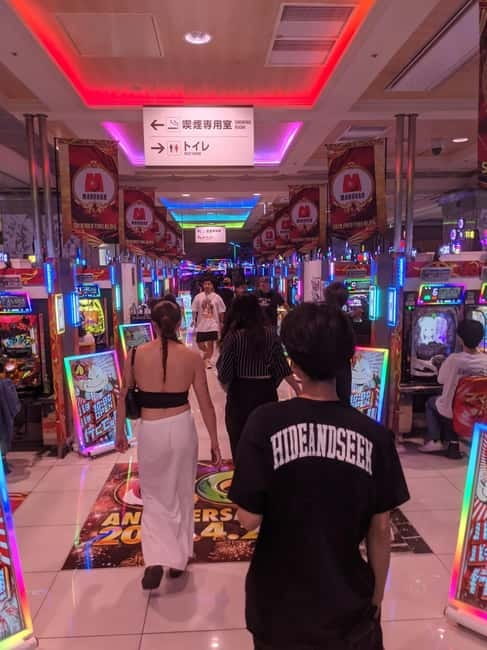
Once you step into a traditional pachinko parlor, you get the full sensory picture. It is dazzling, loud, and crowded in a way that feels very different from quieter tabletop gaming. That is also why having someone translate and interpret in real time is so helpful.
You will be shown the gameplay basics and supported while you try your first attempts. Since the tour includes rules explanation, you should not be left guessing which buttons to use, when to launch, or what you are supposed to pay attention to.
A practical tip for you: go in ready to watch, then copy. The guide’s job is to help you understand what matters in your motion and timing, but you still learn by observing what your machine is doing. You also learn the unspoken rhythm, like how to queue, how to move when you are done, and how to stay calm when the sounds ramp up.
Also, plan for extra cost. The pachinko gaming fee is not included, so you will pay for the balls and play separately at the parlor. Think of the $19 as paying for the guided instruction and the cultural orientation, not as a ticket that covers your machine time.
How the One-Hour Format Works for Real Learning
One hour is a tight window, but it is the right length for first contact with pachinko in Shibuya. You get a guided introduction, you enter a parlor setting, and you learn the basics with help nearby. You do not spend half your day traveling between multiple stops or trying to master a complex skill set.
This time structure matters because it keeps your brain from freezing. When you are in a loud environment, the faster you get clarity on rules and motion, the more you enjoy yourself. That is exactly what this tour is designed to do: get you playing with guidance before you decide the whole thing is too confusing.
The small-group size helps here too. Limited to three participants, it stays easier to ask questions without shouting over the machines. Several comments highlight that there is enough time for questions, and that the guide explains clearly. In a venue where details get lost fast, that kind of pace makes a difference.
The Coach Factor: English Support and Positive Momentum
A guide can make or break a pachinko experience. The parlor environment is not gentle, and the learning curve can feel steep without a translator.
This tour runs with a live English guide and includes translation and interpretation, so you can actually understand what you are doing. That support is not just nice. It keeps you from turning a fun activity into a silent guessing game.
In one account, the guide named Ing was described as explaining the unique game clearly. Another theme in feedback is optimism and patience, including moments where the guide stayed upbeat when the first-time play started producing hits. That mindset matters, because pachinko can feel frustrating if you believe you should win immediately.
Your takeaway: if you are worried you might look clumsy, this is the setup to reduce that stress. You are learning with someone right there to correct your approach and keep you moving at an achievable pace.
Price and Value: Is $19 Worth It?
At $19 per person for a one-hour guided session, the price is mostly about instruction and interpretation, not the gaming cost. The pachinko gaming fee is not included, and drinks are also not included. So the real cost depends on how much play you choose to do inside the parlor.
That said, I still think the value makes sense if you are a first-timer. Pachinko can be hard to decode quickly on your own. You would need to figure out rules, machine basics, and how the parlor works while also trying to manage the noise and crowd energy. Paying for coaching reduces the guesswork, and it also saves time.
Where this price shines is the “avoid embarrassment” part. If you want to try pachinko without the feeling that you are fumbling in public, this format helps. It gives you a framework, and once you understand the basics, you can enjoy the experience even if winnings are modest.
Who This Shibuya Pachinko Lesson Suits Best
This tour fits best if you want a guided first taste of Japanese gaming culture. It is a strong choice for adults and for teens who are at least 18, since it is not suitable for children under 18.
It also suits you if you:
- like hands-on activities
- want English support in a noisy environment
- are curious about Shibuya nightlife culture beyond the usual shopping and photo stops
- prefer a small group, where your guide can respond to your questions
One more plus: the tour is wheelchair accessible. That means it is designed with mobility access in mind, which is not something you can assume for every nightlife-style experience.
If you are hoping for a deep, multi-session mastery plan, the one-hour format might feel short. But for learning the rules, playing with coaching, and understanding how pachinko fits local life, it is a solid entry point.
Final Call: Should You Book This Pachinko Experience?
If your goal is simple and specific, yes, book it. I would choose this tour when you want to try pachinko in Shibuya with an English guide, learn the core gameplay basics, and avoid turning your first attempt into an awkward mess.
Just go in with realistic expectations:
- You pay $19 for guidance, not for machine time.
- The parlor fee and drinks are extra.
- You will learn enough to play and understand the culture, but you should not expect guaranteed winnings.
If you are still on the fence, ask yourself this: do you want pachinko as a learning experience, or do you just want to wander through Shibuya on your own timeline? If learning and comfort matter to you, this one-hour plan is a good match.
FAQ
How long is the Shibuya pachinko gaming experience?
It lasts 1 hour.
How much does it cost?
The price is $19 per person.
Where do I meet the guide?
Meet near the Hachiko Memorial Statue, on the right side by the lottery ticket booth. The guide will be holding a blue tablet.
What is included in the tour price?
You get a guided tour, an explanation of the rules for the pachinko game, and translation and interpretation.
What is not included?
The pachinko gaming fee and drinks are not included.
Is the tour suitable for children?
No. It is not suitable for children under 18.
Is the tour wheelchair accessible, and what group size should I expect?
Yes, it is wheelchair accessible. The group is small, limited to 3 participants, and the tour is in English with a live guide.
West Tokyo on Foot: Seven More


Newest Tokyo write-ups from the Loving Japan desk






Shibuya, Shinjuku and Harajuku Walks, side by side.
 ★ 5.0Shinjuku Food Tour (13 Dishes at 4 Local Eateries)From $866,603 reviews
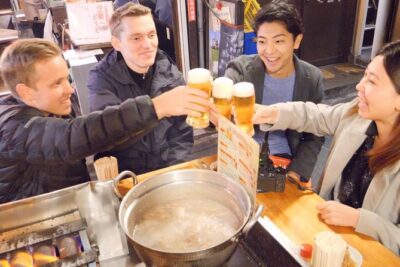 ★ 5.0Tokyo Bar Hopping Tour in Shinjuku (All-You-Can-Drink + Dinner)From $1063,587 reviews
 ★ 5.0Official Street Go-Kart in ShibuyaFrom $763,435 reviews
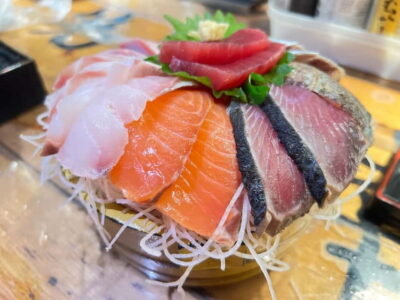 ★ 4.9Shinjuku Food Tour (15 Dishes and 4 Eateries)From $852,033 reviews
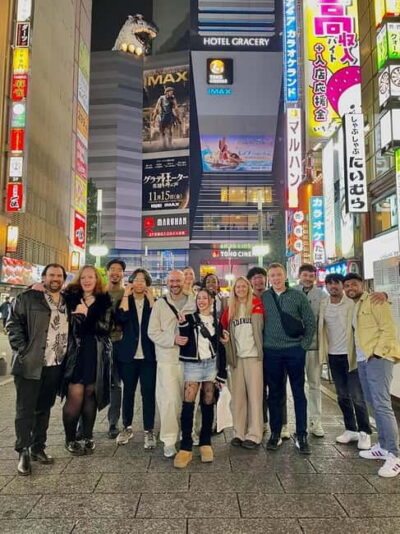 ★ 4.9Shinjuku Local Bar and Izakaya Guided Walking TourFrom $341,794 reviews
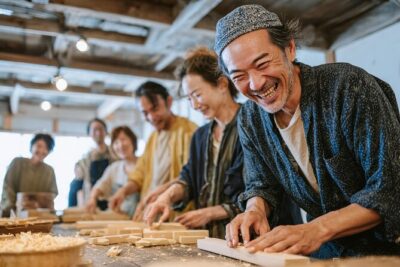 ★ 5.0Tokyo Shinjuku Chopsticks Making ClassFrom $201,763 reviews
 ★ 5.0Tokyo Shinjuku Sumo Show & Experience with PhotoFrom $791,750 reviews
 ★ 4.9Street Kart Experience in ShibuyaFrom $741,484 reviews
Filed on these lists too