
REVIEW · SHIBUYA, SHINJUKU AND HARAJUKU WALKS
Tokyo Shinjuku Chopsticks Making Class
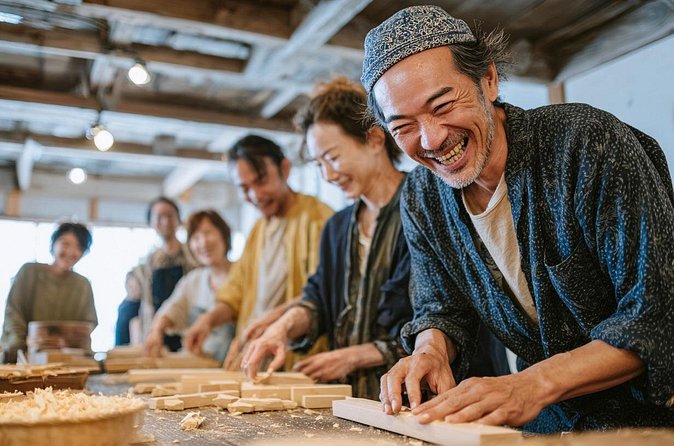
Tokyo chopstick making is oddly satisfying. In this one-hour Shinjuku workshop, you shape raw wood into your own pair using a traditional kanna hand plane, with staff who guide you through each step. You can pick from different wood types, and the class has a relaxed, hands-on rhythm that works well for first-timers.
I particularly like two things about this experience: the focus on beginner-friendly technique (so you are not “learning woodworking for a week”), and the chance to choose your wood style and finish so the final chopsticks feel personal. Staff members often work one-on-one when you hit a snag, and multiple helpers are on hand.
One consideration: the session can get busy, especially at peak times, so you may feel some speed if the room is packed and instructors are stretched. A few people also felt pressured to upgrade wood or add engraving, so decide your spending before you get seated.
In This Review
- Key moments that make this class worth your hour
- Shinjuku chopsticks, real craft in one focused hour
- Where to meet in Nishishinjuku (and why location details matter)
- The kanna hand plane: what you are actually doing at the bench
- Wood choices, sanding, and oiling for a chopstick that feels right
- Engraving and premium woods: how to plan your budget
- Timing in Shinjuku: when it feels smooth and when it feels hectic
- Who should book this class, and who might not love it
- Should you book Tokyo Shinjuku chopsticks making?
- FAQ
- What is the duration of the Tokyo Shinjuku chopsticks making class?
- How much does the chopsticks making class cost?
- Where is the meeting point for the activity?
- Will I receive a ticket for this experience?
- Is the class limited in group size?
- Can I choose the type of wood for my chopsticks?
- Is engraving included in the price?
- Is public transportation nearby?
- Is service animal access allowed?
- FAQ
- Can I cancel for a full refund?
- What happens if I cancel less than 24 hours before start time?
Key moments that make this class worth your hour
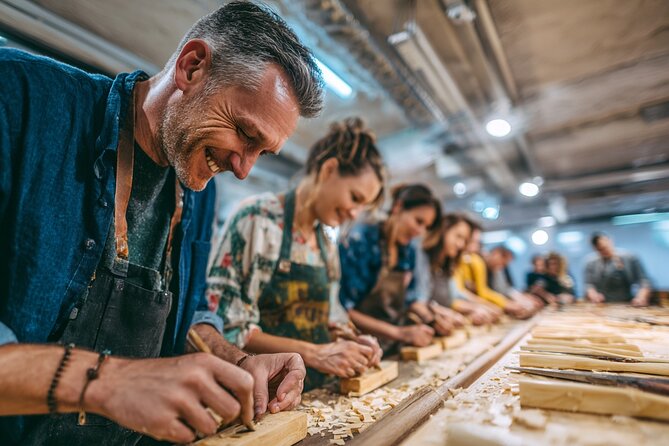
- Traditional kanna carving: you shape the chopsticks by hand, not by shortcut tools.
- Guides who troubleshoot: clear English support from instructors like Tom and Yuki, plus patient coaching from staff such as Masa, Nana, Ken, and Sayaka.
- Wood selection is part of the fun: you start from two free wood options, then premium woods are available.
- Hands-on pace with real tools: sanding and oiling help your chopsticks go from rough to smooth.
- A keepsake you actually made: you leave with a unique pair, with engraving available as an extra.
- A structured workshop floor: the setup is organized with multiple workstations, so the class moves efficiently.
Other routes through the west side of Tokyo, compared
- Tokyo: Shinjuku Food Tour (13 Dishes at 4 Local Eateries)
★ 5.0 · 6,603 reviews - Tokyo Bar Hopping Tour in Shinjuku (All-You-Can-Drink + Dinner)
★ 5.0 · 3,587 reviews - Official Street Go-Kart in Shibuya
★ 5.0 · 3,435 reviews - Tokyo: Shinjuku Food Tour (15 Dishes and 4 Eateries)
★ 4.9 · 2,033 reviews
Shinjuku chopsticks, real craft in one focused hour
This is not a “watch and take a photo” demo. It is a short woodworking class with a clear goal: leave with a functional, good-looking set of chopsticks made from raw wood. The core action is using a traditional Japanese hand plane, the kanna, to shave and shape the grain.
For me, the appeal is that you can feel progress fast. You start with plain sticks, then the instructor helps you get the surface flatter, smoother, and more symmetrical. As you work, you get an up-close look at how grain direction matters and how tiny changes to your hand angle affect the result.
That time limit is also a benefit. An hour in Shinjuku is easier to fit than a half-day class. It keeps things lively, and it also means staff can guide you through the essential steps: shaping, smoothing, and finishing. The souvenir quality is the payoff. Even if one stick is a little imperfect, you still end up with a pair you can use at home or gift to someone who appreciates handmade travel mementos.
Where to meet in Nishishinjuku (and why location details matter)
The meeting point is 7-chōme-4-5 Nishishinjuku, Shinjuku City, Tokyo 160-0023, Japan. The activity ends back at the same meeting point.
This matters in Shinjuku because the area is dense and navigation can be frustrating when you are juggling trains, streets, and your first day in Tokyo. You do not need to overthink it, but you should treat the meeting address like a must-find waypoint. Save it in your phone, and give yourself a little extra buffer time so you can check in calmly.
Good news for logistics: the workshop is near public transportation, and you get a mobile ticket. That typically makes check-in easier than paper-only tours. Also, the maximum group size is 32 travelers, so it is not a huge cattle-call setup.
If you are traveling with kids or multiple generations, timing and crowd level matter even more. A class that is convenient to reach and easy to find makes the whole day smoother, especially if you are also doing Shinjuku nightlife or dinner plans after.
The kanna hand plane: what you are actually doing at the bench
The class starts with the idea that your chopsticks begin as raw wood and become polished, functional utensils. The tool is the kanna, a small hand plane used in Japan for fine shaping. Even if you have never used one before, the instruction is built around simple, repeatable steps.
Here is what the experience is designed to do for you:
- You shave the wood down gradually, learning how to control the plane for cleaner cuts.
- You shape the surface so the chopsticks feel even and comfortable.
- You get guided help if you make a mistake, and staff can help you adjust your approach.
Several instructors are known for patient coaching and clear explanations in English, including Tom and Yuki. Others like Masa, Ken, Sayaka, Mimi, and Nana show up in the feedback as calm, encouraging teachers who stick with you when you are learning hand skills.
You should expect some physical effort. Wood planes require controlled pressure and steady motion. It is not extreme, but it is more hands-on than, say, making a simple craft from pre-cut parts. If you choose a harder or more difficult wood, the work can feel more demanding, so consider your comfort level when you pick your material.
Make something to take home. Other workshops
- Tokyo Shinjuku Chopsticks Making Class★ 5.0 · 1,763 reviews
- Chopstick Making Workshop in Ginza★ 4.8 · 1,366 reviews
- Tokyo Sumo Experience: Chanko & Mochi with a Former Pro★ 4.8 · 567 reviews
- Kintsugi Experience: Art of Golden Joinery in Tokyo★ 5.0 · 467 reviews
- Tokyo Chopstick Making Workshop with Artisan★ 5.0 · 466 reviews
Wood choices, sanding, and oiling for a chopstick that feels right
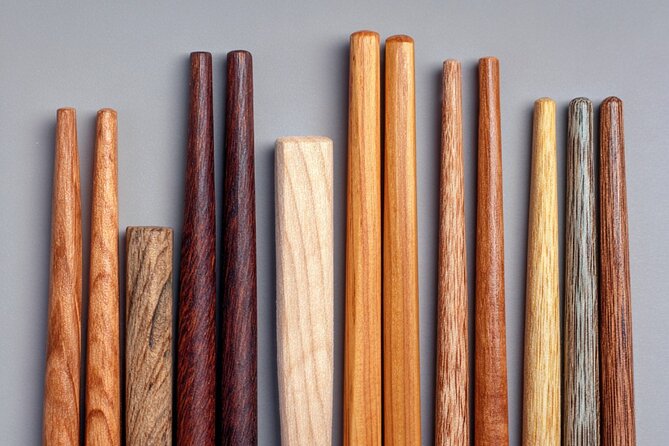
One of the biggest upgrades you get in this class is choice. You can pick from a variety of Japanese woods. Two wood types are free, and premium woods are available for a small upgrade.
That wood choice is more than aesthetics. Different woods can change how the surface feels as you shave and sand, and they can also affect the scent you notice while working. When the grain is visible, it also helps you see why your technique matters. Slow, even shavings often look better and sand down more smoothly.
Once shaping is done, the class guides you through smoothing and finishing. The process includes sanding and oiling, which is key for two reasons:
- It reduces roughness so the chopsticks feel good in your hand.
- It helps protect the wood and brings out the color of the grain.
I also like that staff support you through the finish. Multiple people describe receiving a good introduction to shaving, sanding, and oiling. That is exactly the part beginners usually worry about, and it is where guidance pays off.
At the end, you take home a set that is truly yours. Many people emphasize that their chopsticks felt unique because they selected the wood and personalized the result.
Engraving and premium woods: how to plan your budget
The base price is $20.00 per person, and the class includes the core crafting process and guided instruction. The trade-off is that there are optional upgrades on top of the starter package.
Premium woods are available beyond the two free types. In addition, engraving is offered as an extra option. One common reference is a cost of 2,000 yen for engraving, which some people added because it turns the chopsticks into a longer-lasting memory.
Here is how I recommend handling this decision so it does not sour the experience:
- Decide ahead of time whether you want engraving. If you do, plan for it as an extra cost rather than an on-the-spot surprise.
- Choose your wood based on how much effort you want. Some woods may be harder to work, and staff may have to adjust guidance based on how quickly the group is moving.
- If you are watching your spending, consider using the free wood choices. You still get a personalized handmade souvenir.
A few people felt the room was busy enough that staff expectations shifted toward purchasing upgrades, and that can feel uncomfortable if you already paid for the class. Your best defense is simple, walk in with a clear plan for what you are willing to pay, and focus on the experience at the bench.
Timing in Shinjuku: when it feels smooth and when it feels hectic
This is one of those experiences where timing matters more than you might think. The workshop can be busy, and the guidance team can only assist so much when the room is full and everyone is working on similar steps at the same time.
People also mention that it is a good idea to avoid going in the middle of the day. If you pick an off-peak slot, you are more likely to get the relaxed, un-rushed feel people love. If you go during a high-demand window, you may feel the pressure of the schedule even if staff are trying their best.
The setup helps. There are multiple tables and workstations, and the organization is designed for smooth flow. Still, when you are new to a hand plane, you need a bit of mental space. If you are being rushed, it is easier to make mistakes and harder to enjoy the craft.
My advice: treat this like a focused appointment. Do not schedule it right after a stressful train connection. Give yourself time to settle in, ask questions, and take your time with the first stick. When you slow down at the beginning, the rest often goes better.
Who should book this class, and who might not love it
This workshop is a strong fit for:
- Beginners who want a hands-on craft with real technique, not a craft kit.
- Families. The activity is interactive, and people report that it works across ages, including multi-generation groups.
- Anyone who likes practical souvenirs. These are not just decorative objects, you make something you can use.
- People who enjoy personalization. Choosing wood types and optionally engraving makes the souvenir feel tied to your trip.
You might want to think twice if:
- You dislike craft classes that involve tools and physical effort. Using a hand plane takes some strength and control.
- You are strongly price-sensitive about add-ons like premium woods and engraving.
- You need quiet, calm instruction time. Peak-hour crowds can make the room feel hectic.
If your priority is “maximum Tokyo sightseeing with minimal work,” you might prefer a different activity. But if you want something memorable that engages your hands and gives you a tangible take-home item, this is hard to beat for the time and price.
Should you book Tokyo Shinjuku chopsticks making?
Book it if you want a short, guided craft with traditional technique, a good souvenir outcome, and the chance to choose your wood. The class is designed for first-timers, and the staff reputation for patience and English communication suggests you will not feel lost at the bench.
Skip or choose a careful timing if you think the room could feel crowded for you, or if you strongly prefer experiences without any pressure to upgrade. Go in with a budget plan, aim for an off-peak time slot, and treat the hour as your time to learn a small skill.
If you do that, you should leave with chopsticks that actually feel like part of your Tokyo story.
FAQ
What is the duration of the Tokyo Shinjuku chopsticks making class?
The class is about 1 hour.
How much does the chopsticks making class cost?
It costs $20.00 per person.
Where is the meeting point for the activity?
The start location is 7-chōme-4-5 Nishishinjuku, Shinjuku City, Tokyo 160-0023, Japan.
Will I receive a ticket for this experience?
Yes, the experience uses a mobile ticket.
Is the class limited in group size?
Yes, the maximum number of travelers is 32.
Can I choose the type of wood for my chopsticks?
Yes. You can choose from a variety of Japanese woods. Two types are free, and premium woods are available for a small upgrade.
Is engraving included in the price?
Engraving is offered as an optional extra, not listed as included in the base description. (One review notes a 2,000 yen engraving cost.)
Is public transportation nearby?
Yes, it is near public transportation.
Is service animal access allowed?
Yes, service animals are allowed.
FAQ
Can I cancel for a full refund?
Yes. You can cancel up to 24 hours in advance for a full refund.
What happens if I cancel less than 24 hours before start time?
If you cancel within 24 hours of the start time, there is no refund.
Made by Hand, and Yours to Keep


West Tokyo on Foot: Seven More



Newest Tokyo write-ups from the Loving Japan desk


Shibuya, Shinjuku and Harajuku Walks, side by side.
 ★ 5.0Shinjuku Food Tour (13 Dishes at 4 Local Eateries)From $866,603 reviews
 ★ 5.0Tokyo Bar Hopping Tour in Shinjuku (All-You-Can-Drink + Dinner)From $1063,587 reviews
 ★ 5.0Official Street Go-Kart in ShibuyaFrom $763,435 reviews
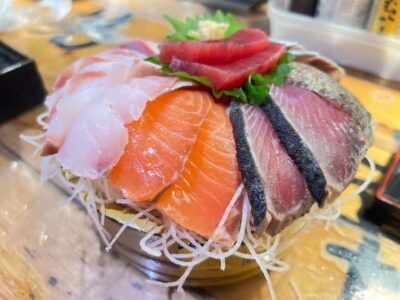 ★ 4.9Shinjuku Food Tour (15 Dishes and 4 Eateries)From $852,033 reviews
 ★ 4.9Shinjuku Local Bar and Izakaya Guided Walking TourFrom $341,794 reviews
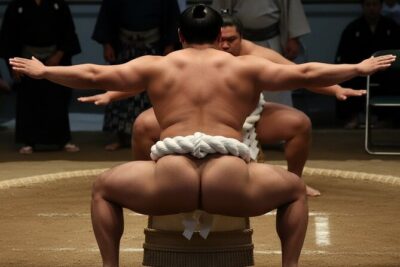 ★ 5.0Tokyo Shinjuku Sumo Show & Experience with PhotoFrom $791,750 reviews
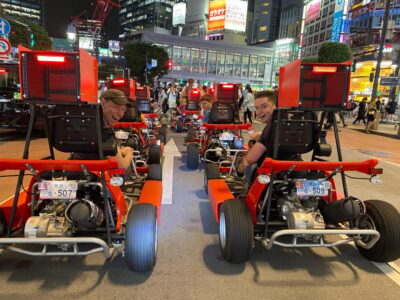 ★ 4.9Street Kart Experience in ShibuyaFrom $741,484 reviews
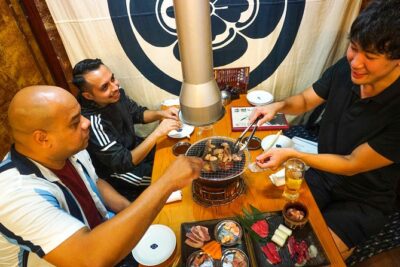 ★ 5.0Tokyo Night Foodie Tour in Shinjuku – Seasonal Sushi, Wagyu BeefFrom $1111,161 reviews
Filed on these lists too